JF Ptak Science Books LLC Post 671
“Seeing
by telephone or by telegraph may be within the range of the possible. I say
that because nothing is impossible until it has been demonstrated so to be.
Seeing by either of these instrumentalities, however, is, as I look upon it, so
far removed from the field of probability that I should treat any report of
this character as an absurdity.” T. Edison
I wonder what it was that Thomas Edison dreamt about—I
suspect that like most folks he dreamt about himself, though perhaps everyone
else in his dreams were him, too. Mr.
Edison was a fabulous inventor and thinker—he wasn’t the best person he
could’ve been, and even though he had an enormous grasp on the whole of things
and ideas about him, he also seemed to grab a little bit more, and a little too
much. Which sounds like gluttony.
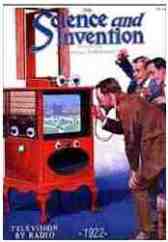
I’m not so sure why Edison was given to such overstatement on “television”—he just about contradicts his
own rule of thumb in doing so, as though he was going far out of his way to say
something anti-prophetic. Perhaps it was
because “seeing by wire” at this point did not belong to him, like so much
else—which is possible, because Edison
play well with others, at all.
The possibility of interesting dreams swimming around Mr.
Edison’s sleeping head was very high, though he may have been one of those poor
unfortunates who dream about watching someone else sit in a chair and for hours
on end stare at a wall—sounding more like a nightmare than a dream to me.
Good dreams, bad dreams.
History is certainly ankle-deep in literature about the dream, and the
anthropology of dream states must be wide and deep. Dreams don’t show up all that much in the
Bible, though, which seems odd to me—there are 40-odd references to dreams in
the Old Testament, and only nine in the New.
And in the NT five of the dreams come in Matthew (with four of those
referencing the birth of Christ), and another four coming in the Acts of the
Apostles, all of which relate to St.
Paul
interesting of the NT dreams sounds like that of Claudia, the wife of Pontius
Pilate, who warned her husband that Christ was probably not the person that he
should be messing with. That is I think her entire existence in the Bible, the
dream, and the warning to her husband. What
seems to happen though is that dreams in the Old Testament seem to be rather
benign entities, while in the New things happen that turn the dreamscape into a
possible entrance way to Hell, the unconscious thought world becoming the
property of the Church. And speaking of Hell and dreams, I believe that it was
the dream sequence in the Aeneid where
the truth and falsity of dreams were put to the test—or at least the dual
possibilities of the divergent nature of dreams—imaging dreams emerging from
the Ivory Portal in Hades to be false dreams while those issuing from the Pearl
portal were good. Problem is here that
with all of that smoke and bother in the Underworld, wouldn’t Ivory and Pearl
same? Among the ancients it was
Aristotle who was among the first to dispense with the soft/spiritualistic/astrobabble
interpretation of the dream, approaching the issue with rationality. Hippocrates also tried to lift the idea of
the dream up and away from those (Like Hesiod, for example) who would see them
as ritualistic and meaningful indicators of endless bric-a-brac. But the ancients didn’t do a great job of it
given the vast limitations, nor did the moderns (as Dr. Freud certainly still
has major game in this post-ironic department).
Back to the TV: the truth of the matter is that in spite of
the Edisonian condemnation there was real discussions and experiments regarding
mechanical (not electronic) television in the late 19th century, and
they went a pretty long way towards achieving images by wire. Alexander Bell
nearly brought about an image-sending device based on his successful photophone
(in 1880), and in that same year George Carey built a primitive sort-of system
with light-sensitive cells. Paul Nipkow
came the closest of these early pioneers in 1884 with a techy rotating-disk apparatus
that successfully achieved an 18-line visual image.
I’m just saying that Mr. Edison had to have been dreaming of
other things that he had more control over.
From where I sit, it seems to me that opportunities for the electrical
transmission of images were quite ripe by the 1890’s. It took another 25 years or so to bring it
all to fulfillment, with a cascade of very successful developments occurring in
1927/8/9. It is a little mysterious to
me why he had such a low opinion of the possibility of television given the electrical
environment of his day.