JF Ptak Science Books LLC Post 643 Blog Bookstore
Theodore
Wright (aviation engineer, 1895-1970) wrote a lovely short piece (“Wings for
Transportation:”) in the Smithsonian Institution Report for 1941
on the future of aviation and its importance in transportation. Wright begins the article with a difficult
paragraph on the good fortune of America‘s aviation industry to still be more concentrated on commerce than on military
might, referring to World War II as the affair “starting with
Munich”.
This is unfortunate. But he does
graduate from this myopic iconoclast’s future view to discuss the history of
American aviation and its future as an essential element of the overall commercial
transport grid. Here he gets a lot
correct. 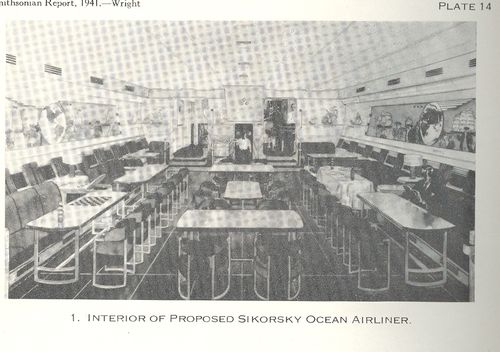
At
the end of the article though comes a fantastic bit of futurology by an
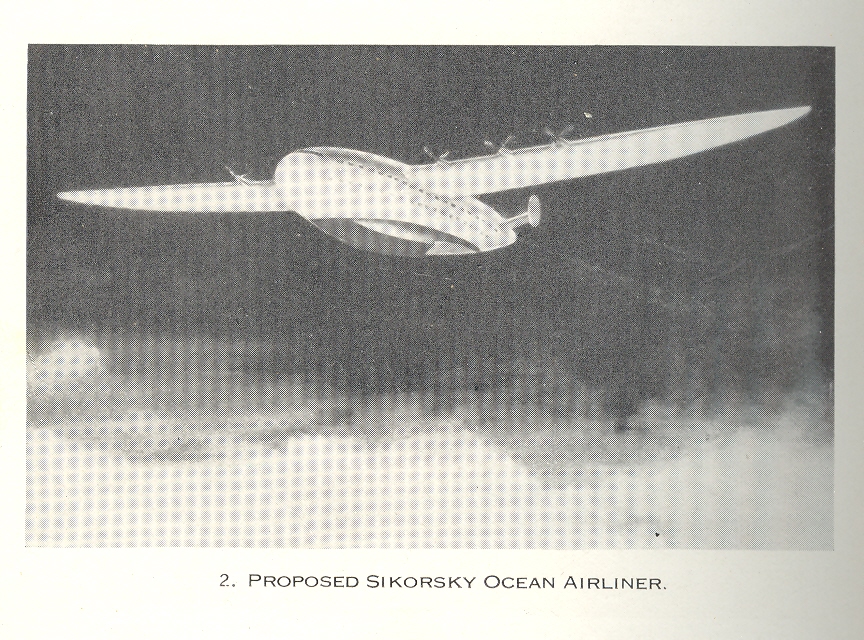
engineer and designer whose importance in aviation is unquestionable—Igor Sikorsky. Sikorsky (1889-1972) designed the first
multi-engine fixed wing aircraft and the great flying boats used by Pan Am to
cross the oceans, though he is best remembered though for his enormous
contributions in the development of the helicopter—a man of tremendous
accomplishment. He got an awful lot
right. He was also correct in the assumption
that there would be enormous aircraft flying around the world in the near
future—aircraft far larger than those being flown by Pan American Airways. What he got wrong was the shape and style of
this aircraft, which seems to be a further development of the flying boat. Wright referred to these planes as “Ocean
Airliners”, and that is what they certainly seemed to be: behemoths that were ocean loners with
wings. They were wonderful things, and
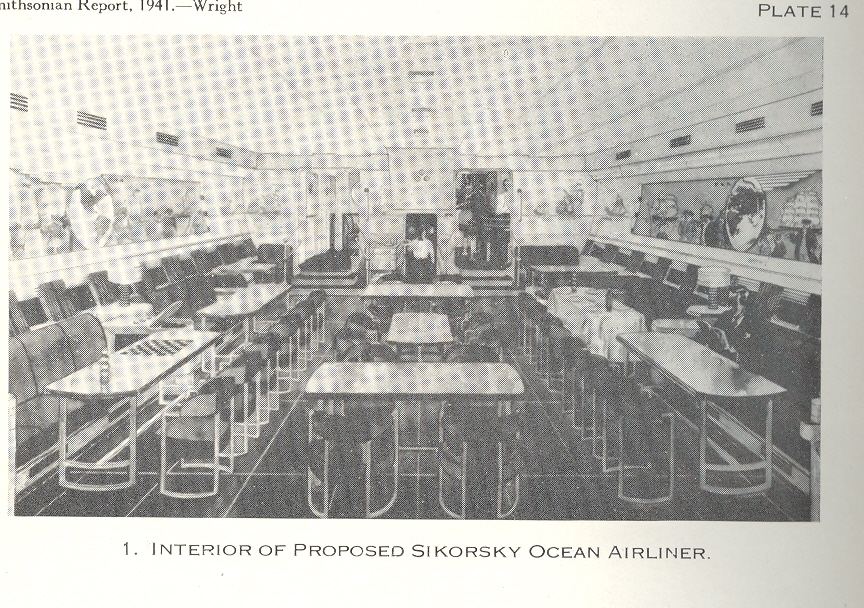
who wouldn’t want to be able to walk around the in-flight dining room, trying
to pass some time on a long flight to New Zealand
Boeing’s superb 747 did for a while have a cocktail lounge for first
class. Still, these wishes die hard,
especially when you’ve traveled with such accommodation. (My own experiences with this is taking a
electric tram in Helsinki
and discovering that there was a bar in the back of the car. The open windows, the blue skies, the civility–it felt like the only way to travel: refreshed, thoughtful, and going 20 mph.)