JF Ptak Science Books LLC Post 575
The
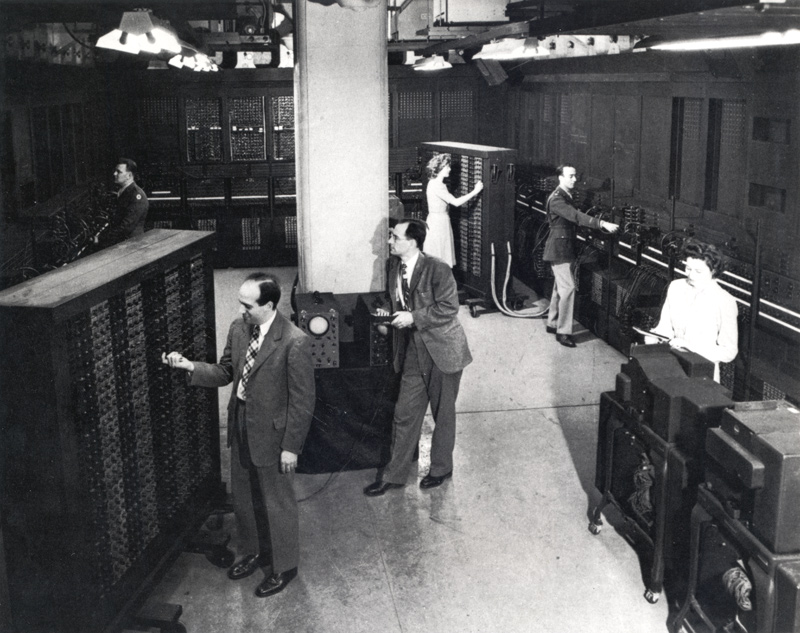
ENIAC (Electronic Numerical Integrator And Computer, b. 1943-45) was, basically, the world’s first
operational, high-speed digital computer, and the father of the computer
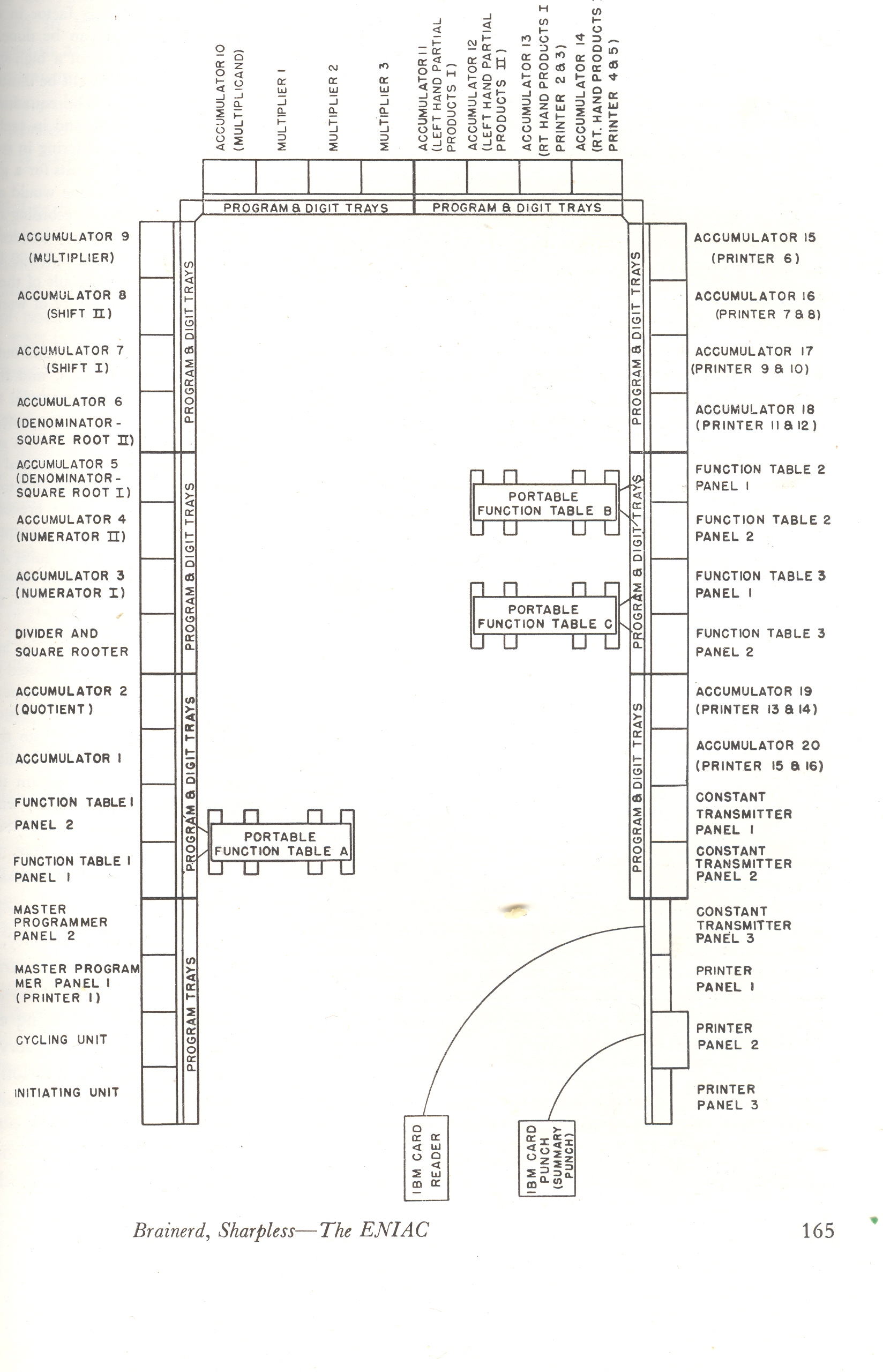
industry. What we see to the left is the floor plan for the
computer-with-no-monitor—I know to most people working today with a computer
that the idea of a “floor plan” for anything that is not in a dark place at NSA
is not easily conceivable. The 30-ton,
18,000 tube, 125 KHz ENIAC’s space was about 1800 square feet, where it was able to
add about 5000 numbers/second, which was vastly faster than anything else in
existence. It operated with 70,000 resistors, 10,000 capacitors, 5
million hand-soldered joints and 6,000 manual switches. It was a magnificent achievement.
I want to do here is surface this detailed floor plan of the computer, which seems
not to be online. The diagram comes from
an article by J.K. Brainerd and T.K. Sharpless (Sharp brain!), “The ENIAC”,
from the February 1948 issue of Electrical
Engineering, which defines the machine and its components in full. The abstract states: “The ENIAC is the only
electronic large-scale general-purpose digital computing device now in
operation. Its speed of operation
compares favorably with other electric and mechanical computers. Developed under wartime pressures, it has
been of value not only in producing results but in pointing the way toward
improvements for future designs.”
Indeed. The authors, both of whom
worked on the construction of the machine from 1943 onwards, describe it in the
following ten points:
“1. Large-scale 2.General purpose 3. Digital 4. Electronic 5. Uses
10-digit numbers 6. Uses decimal system 7. High
speed 8. Synchronous operation 9. Some parallel operations possible 10. Complete
flexibility within limits of programming capacity” (page 170).
engineers in the
have had a major interest in development of large-scale computing devices”
mentioning the major players as MIT, Moore
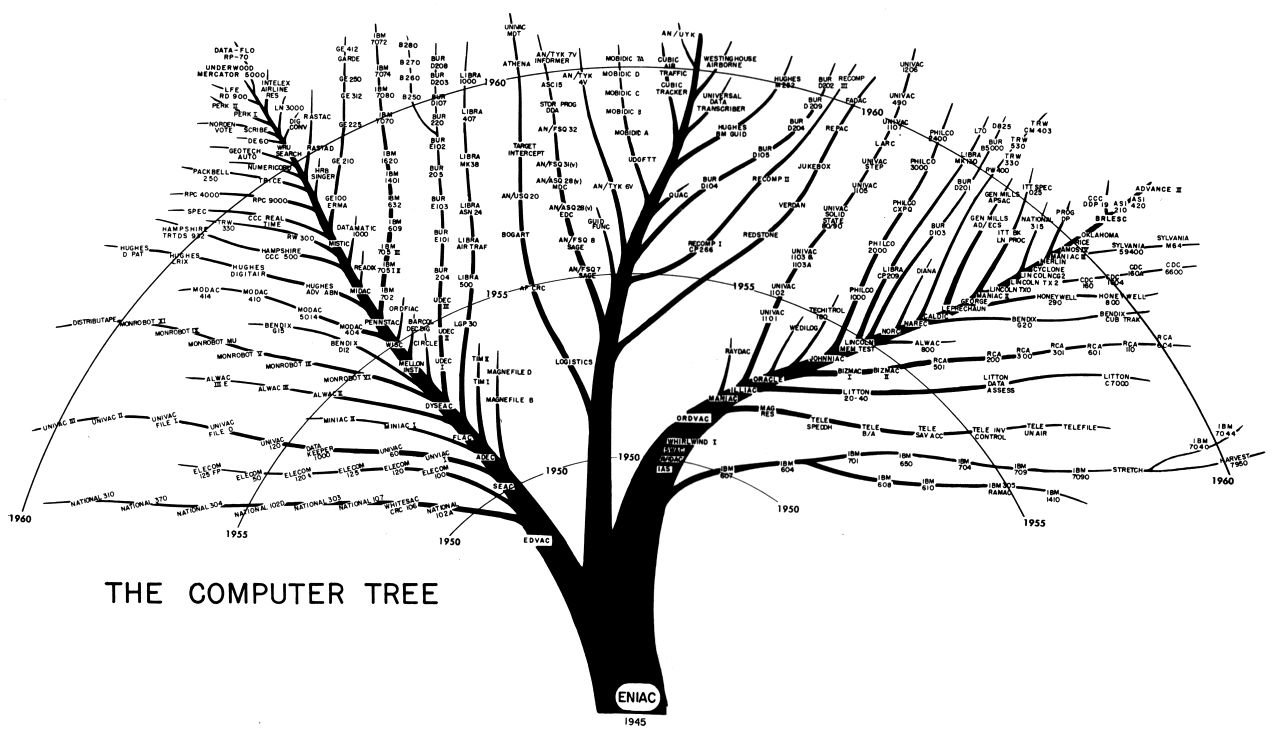
Telephone, Harvard and the spelled-out “International Business Machine corporation”. Within ten years of the end of WWII the second generation of computer was nearly functional, and (as can be seen in the wonderful computer tree below) there were dozens of new machines in operation. By 1960, the explosion was getting ready with the advent of microminiaturization.
The computers in operation from 1938 to 1948 include the
following alphabetical hodgepodge: Z1 Z2 Z3 Z4, ABC, Bell Model II, S1, Mark I,
Mark II, Elliot 152, ARC, Mark II, SSEM, and the more poetic Colossus and
Demon. (Zuse Z1 1938; Atanasoff ABC 1939;
Zuse Z2 1939; Bell Labs Complex Calculator aka Model I1940; Zuse Z3 1941; Zuse S1 1942; Bell Labs Model II; 1943
Bletchley Colossus Mark I 1943; Zuse S2 1943; Bletchley Colossus Mark II 1944;
Harvard Mark I 1944; Zuse Z4 1944; Bell Labs Model IV 1945; Bell Labs Computer Model V 1947; Elliott 152 1947; Elliott 153 1947; Moore School ENIAC 1947; Birkbeck ARC 1948; Harvard Mark II 1948;
Manchester University SSEM 1948; NSA DEMON
1948.)