JF Ptak Science Books LLC Post 582
Blog Bookstore
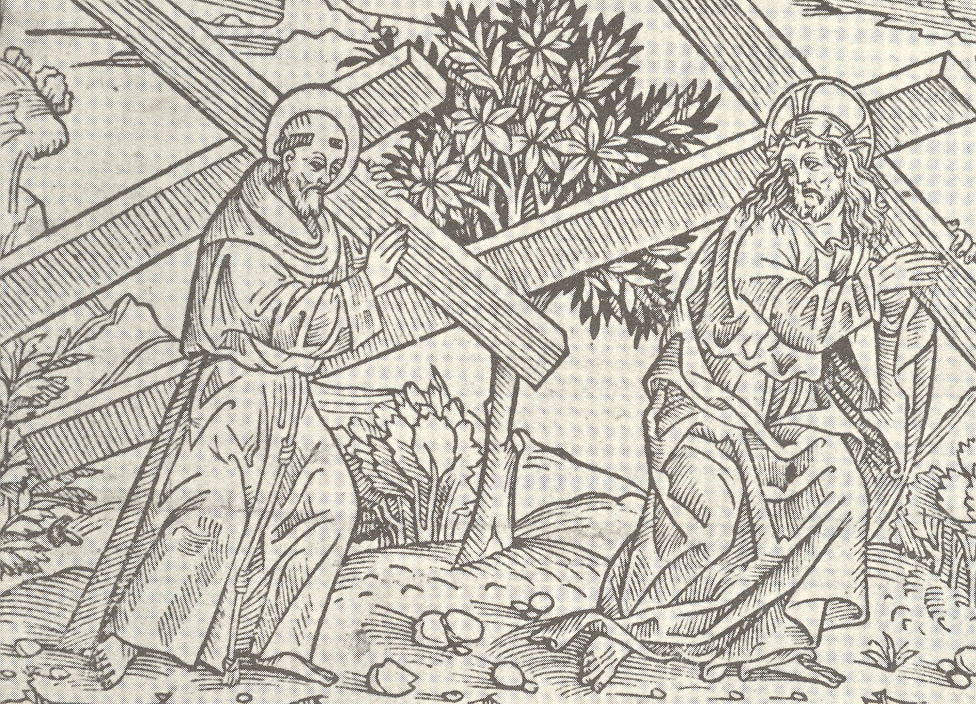
In Portrait of the Artist as a Young Man, Joyce uses Ovid’s (Metamorphoses, VIII:188) epigram Et ignotas animum dimittit in artes (“And he applies his mind to unknown arts” and which continues “and changes the laws of nature”) to describe Daedalus. It may well address the smaller world of interpretation and metamorphosis of images as it does the larger. I found this image (at left) in an old bookseller catalog from 1980–it is pretty singular, a show-stopper in a way, the dual burdens of the agony, Christ and the other man. Actually the woodcut is from the beautiful Liber conformitatium vitae Beati Francsici ad vitam Jesu Christi (1510) by Bartholomaeus de Rinonichi of Pisa and depicts a scene from the life of St. Francis of Assisi (1181-1226). The bookseller notes the work as being very curious and lets it go at about that. On the one hand the work may just well be the massive correspondence on the similarities between the beloved St. Francis and Jesus Christ that it seems to be. When I look though at the images I can’t help seeing an anti-St. Francis twist to it all. One thing I think that is inescapable is the quizzical look on Christ’s face–he is definitely not sharing the agony, or welcoming a helper. He is clearly at wonder–which in itself is wonderful, as I cannot think of another image showing Christ “surprised”. It would seem to be a not-subtle attack on the Franciscans in general, an effort to rid it of an exalted place by depicting Francis’ multitudes of too-close similarities to Christ, attacking the order much like the attack on the cults of Mary a thousand years earlier. I really don’t know–I’m terrifically beyond my element here–I’m just pointing out some surprisingly bothersome aspects of some of the illustrations. 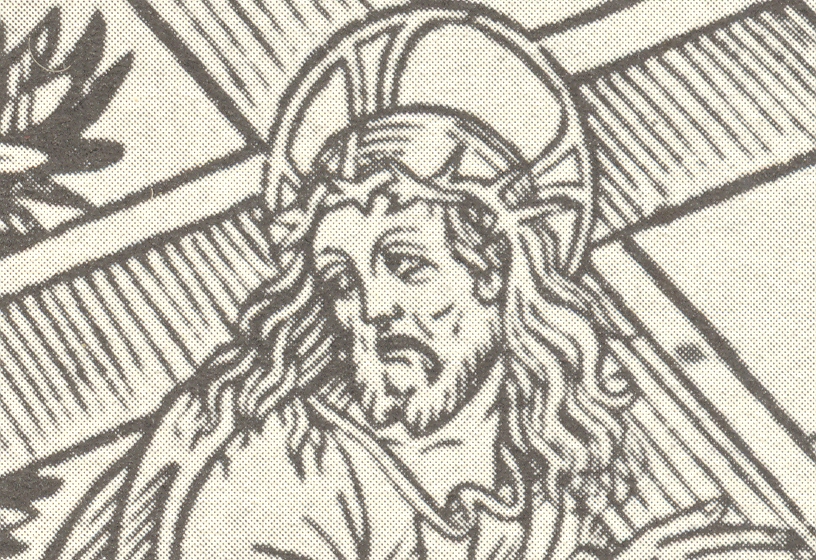
Then again, I’m sure I’m wrong about this “surprised” bit, as this book was a standard for the Order for many years–I just don’t understand the pictures and the interior dialogs that they implied. I turned to Joyce–perhaps the great master of the internal dialog–to see what I might find there, and then to Hugh Kenner, a revered Joycean interpreter. And what I found in Kenner commenting on the internal dialog was this:
“…the Portrait is important not only as an independent work of art but also as a demonstration that the intricate analogical simultaneities of Ulysses and Finnegans Wake are not irresponsibly excogitated from esoteric reading, but grow out of Joyce’s persistent contemplation of intense psychological experience”
I might as well be working my way through Derrida on Joyce, though without the great suffering. Could you make that sentence any more difficult by using the same number of words (and without creating poststructuralist vocabulary)? Probably not. His insight might be as obscured as mine.