JF Ptak Science Books LLC Post 508

I have little doubt that in the near future we will be deluged with advertisement at any time and in any place, the ads made exactly for you, found for you by little crevices occupied by digicams with facial recognition software powered by the next 50 years of programming research, perhaps reaching into what has been defined as your genetic soul….and there will probably be no escaping it, unless you’re able to pay somehow for the privilege of obscurity or silence. The genre of force-feeding and creating need in the buying public for various bric-a-brac started was for real in the 1920’s (this being in no small part the shrinkological efforts of the “father” of American behavioral psychology, John B. Watson) and cranked up considerably and with major dollars in the 1930’s, when it was absolutely determined that ‘proper” advertising could sell anything. (Watson showed this with great effect when he determined that people didn’t buy a “type” of cigarette more than they purchased the cigarette’s image–and to determine the image what was improved was the walk-away catchphrase that purchasers could quickly identify with the product. And so a lowly and failed cigarette brand structured for women was renamed and given a catchy sales tag–the cig was Marlboro and the phrase was of course “I’d Walk a Mile for a Camel”. Watson’s contention was of course that people didn’t buy the thing as much as they bought its promise, and the promise had to be delivered and reiterated to them endlessly, for years.)
These two pamphlets naively displayed what the advertisers were really after, the continual search for the Golden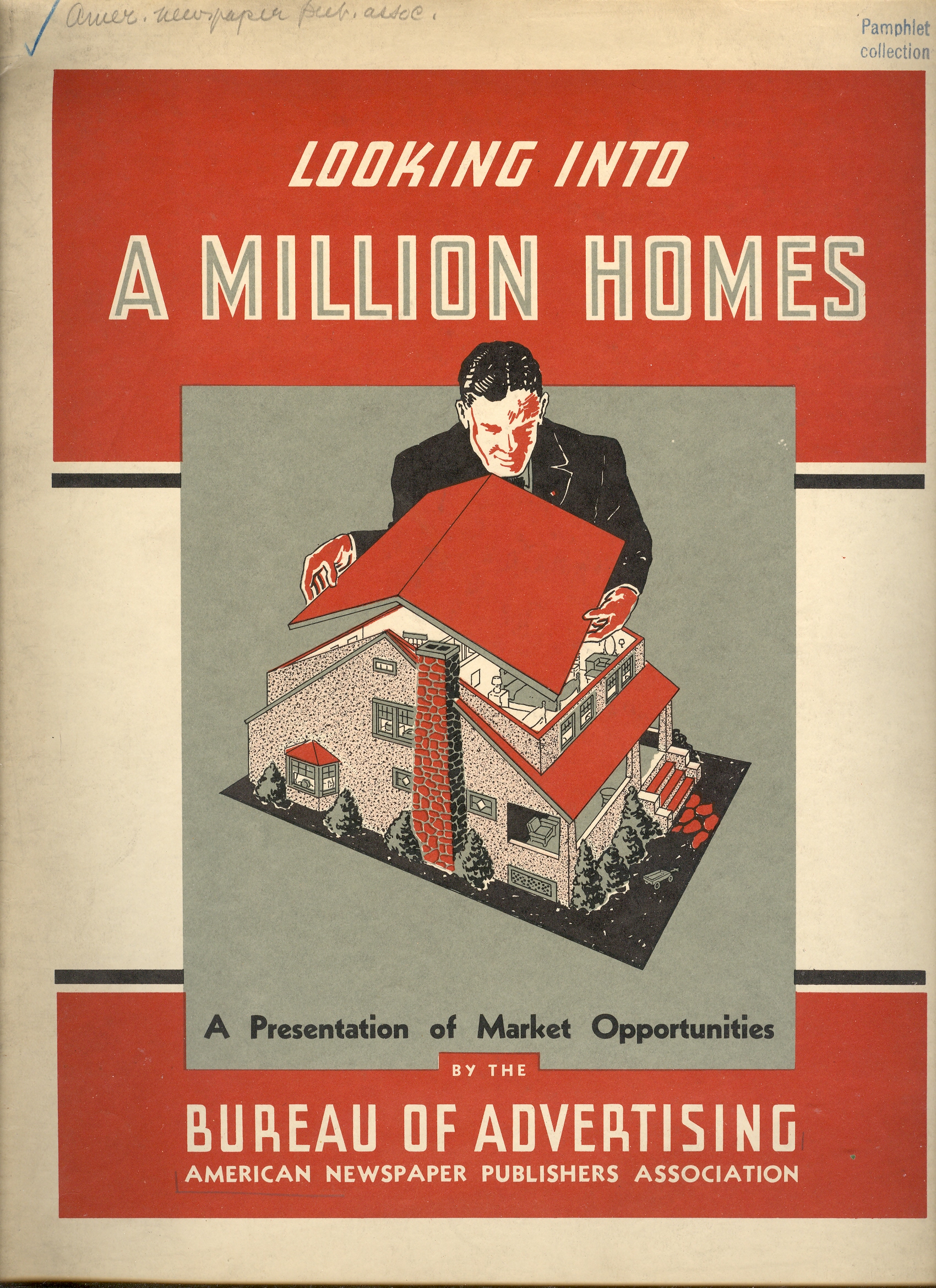
Chalice–and that is to be in the head of the consumer, and then to be in their house, from initiating the desire to facilitating the purchase. Both pamphlets were published in 1939 by the American Newspaper Publishers Association, and were a sales presentation for making sales presentations, an advertisement for the advertisers. And they really did want to get into the mind of the public and insinuate them selves within the home. And both rate VERY high on the Creepy Scale.
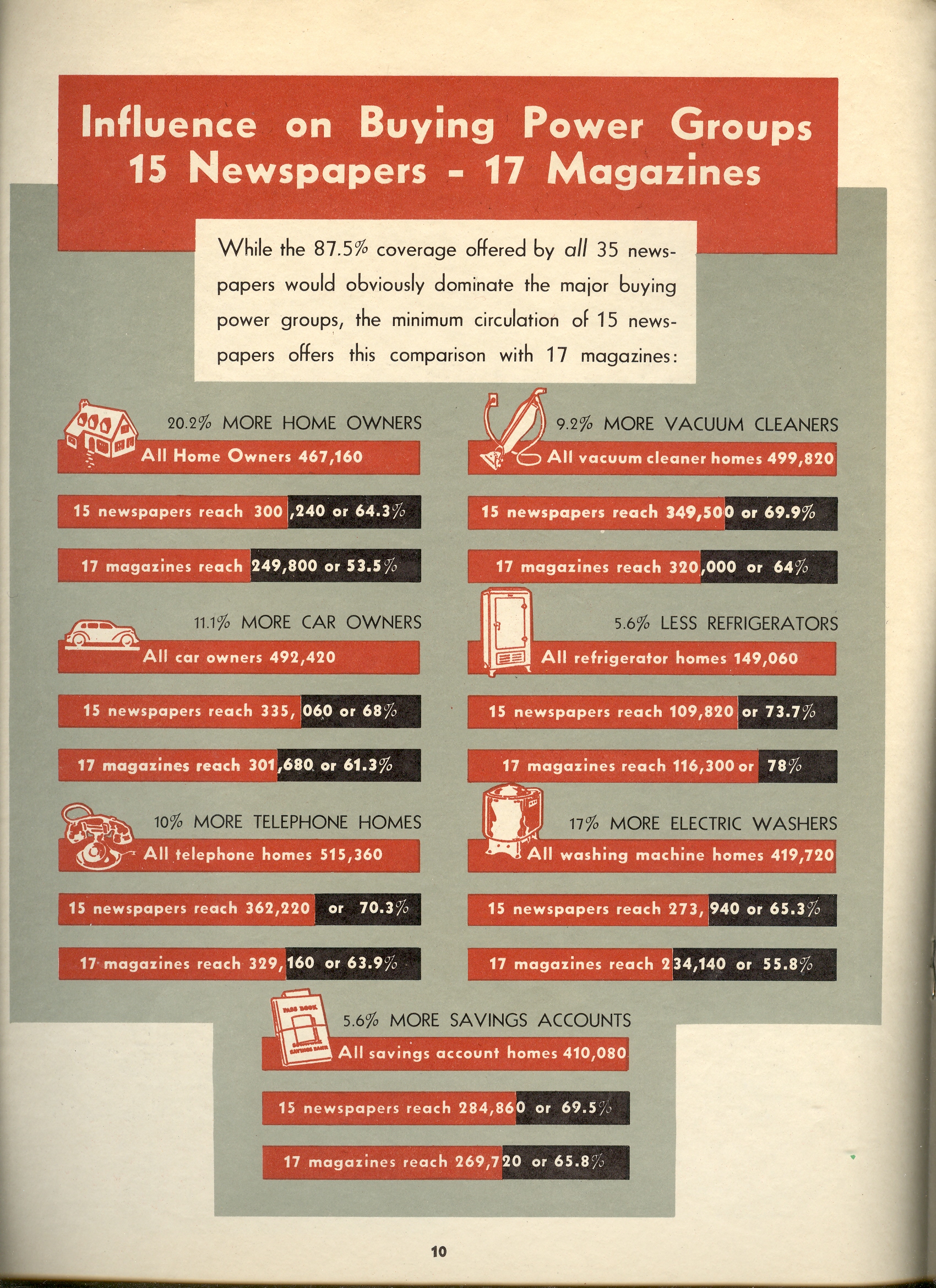
I should point out that the graphical representation of the statistical data in the second pamphlet is quite terrible–these efforts aren’t in the top-99th percentile-bad category, but certainly are in the top 90%. Easy.