JF Ptak Science Books LLC Post 428
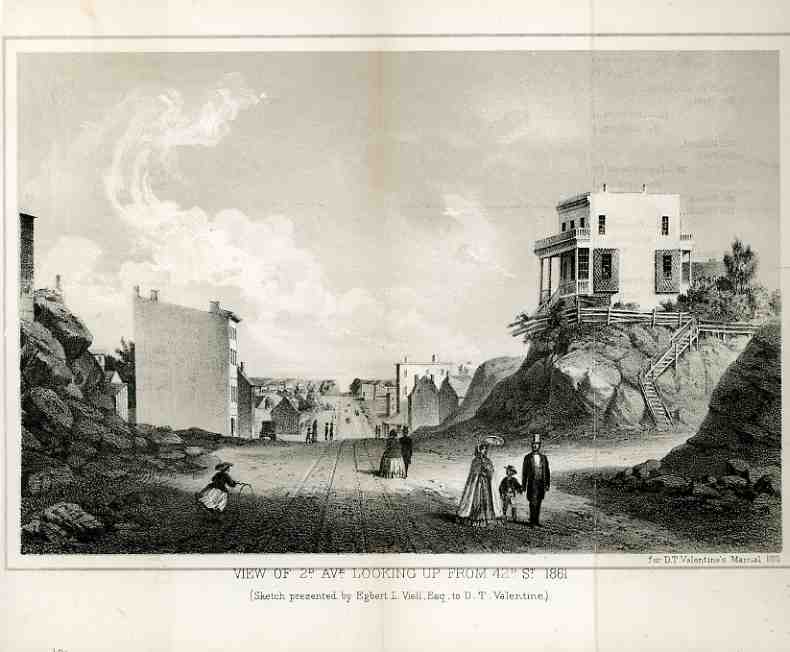
This view of the northern reaches of Manhattan , published in Valentine’s
Manual in 1861, reveals a superior and clear view of the northern reaches of the island due north along 2nd Avenue at the 42nd Street intersection. An historian of The City could probably identify that precipitously-perched house at the corner of 42nd and 2nd–I can’t. My guess though is that from the looks of the ruining fence that 2nd avenue must’ve been widened and scraped away the house’s front yard. The view up 2nd is largely unobstructed and shows few people, though we do see a *girl* playing with a hoop and a strolling family (with, uncommonly, daddy holding the child’s hand…I guess that the mother’s hands were busy holding the parasol and shawl).
The census for 1860 shows that the population of Manhattan at
850,000. Given that today’s population is about twice that, where were
the rest of the 1860-people? As we can clearly see, they weren’t
uptown. Manhattan was pretty densely populated as a whole, but the
great majority of the population action was taking place below where we
would today consider midtown. If we take the left and right hand of 2nd
ave as the 19th and 22nd Wards (which were actually divided by 6th Ave,
but 2nd will do for these purpose), then there would be about 80,000
people living there, or about 9% or so of the entire population of the
city. These two wards also accounted for about 30% of the entire area
of the city below 86th street. So even though this scene looks pretty
pastoral, there were still a fair number of people living in those
low-rise stretches.
Another bit to consider is that the
island’s population then was fairly static–the people in Manhattan
were largely residents, whereas today the daytime population just about
doubles, which makes it the country’s most-commuted-to daytime city.
(Manhattan daily increase= 87% increase; Washington, D.C. 73.0%;
Boston 41.1%; Seattle 28.4%; Denver 28.0%; Portland, OR 23.0%; San
Francisco 21.7%; Charlotte, NC 21.2%; Houston 20.6%; Nashville
19.5%; Austin 19.4% )
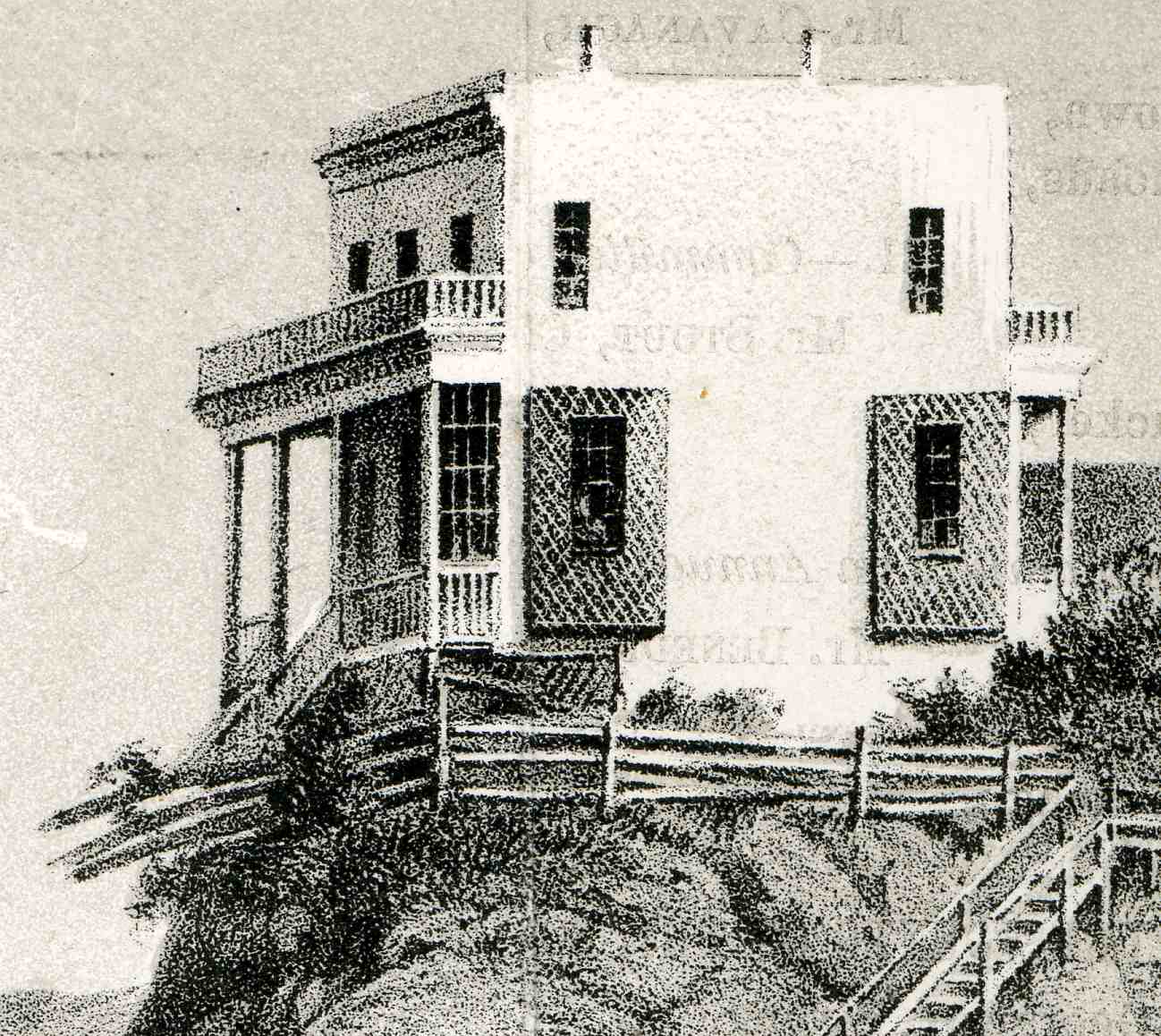
All this said, I always have liked this image because it so odd, and naive, and lovely. Unexpected, I was thrilled to see the failing fence for this property, along with its curly stairs leading away from the sheer droop at what used to be the front steps of the house. To me these are just gorgeous details.
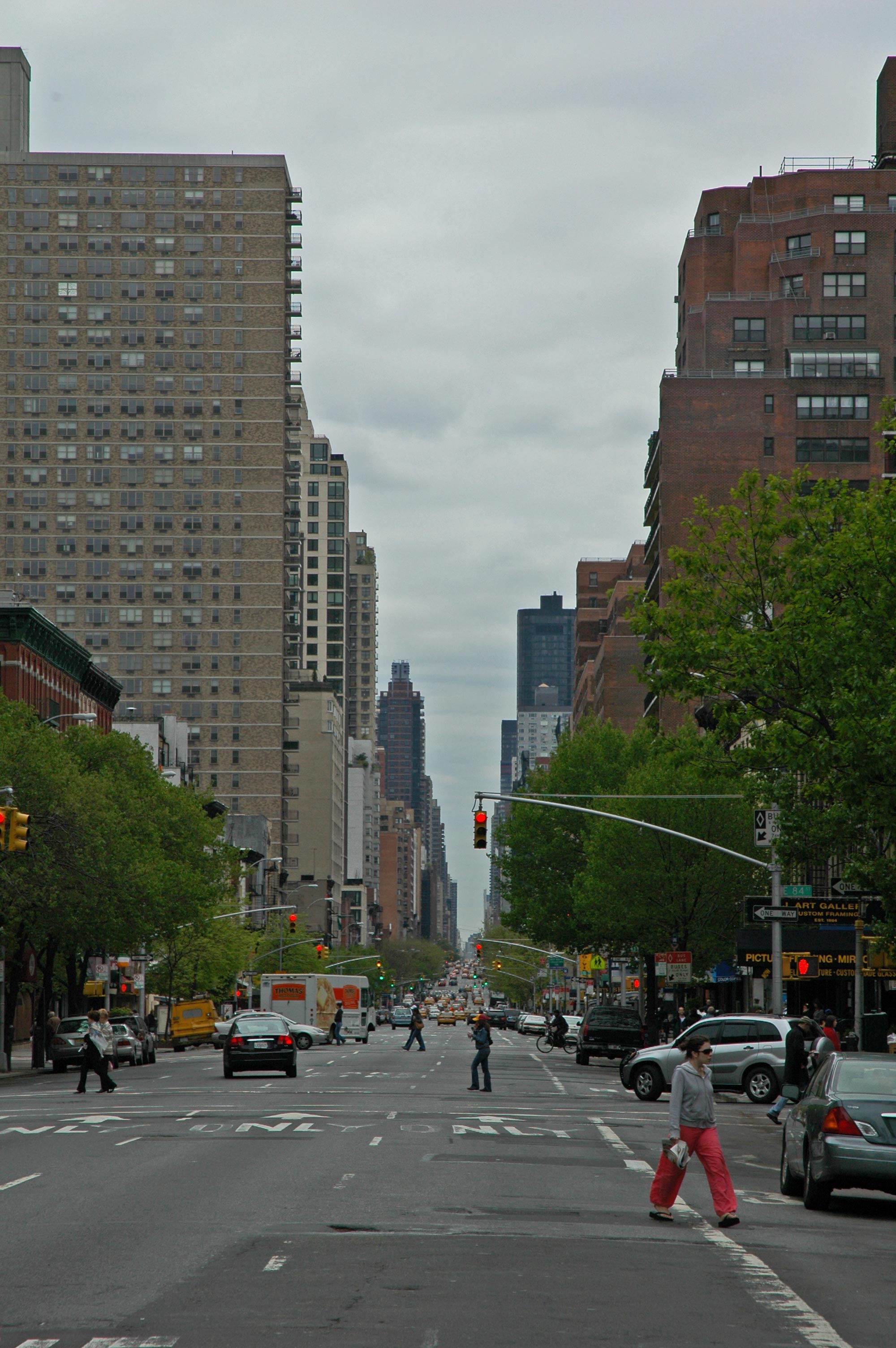
Here’s a shot (right) of 2nd ave looking south from 85th street, which may very well be the vanishing point of the 1861 image. Maybe. The photo below shows 2nd and 42nd from the Helmsley.
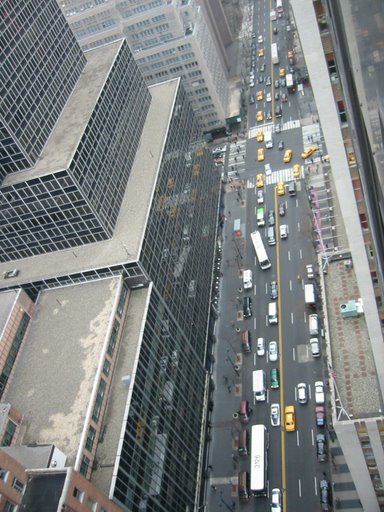
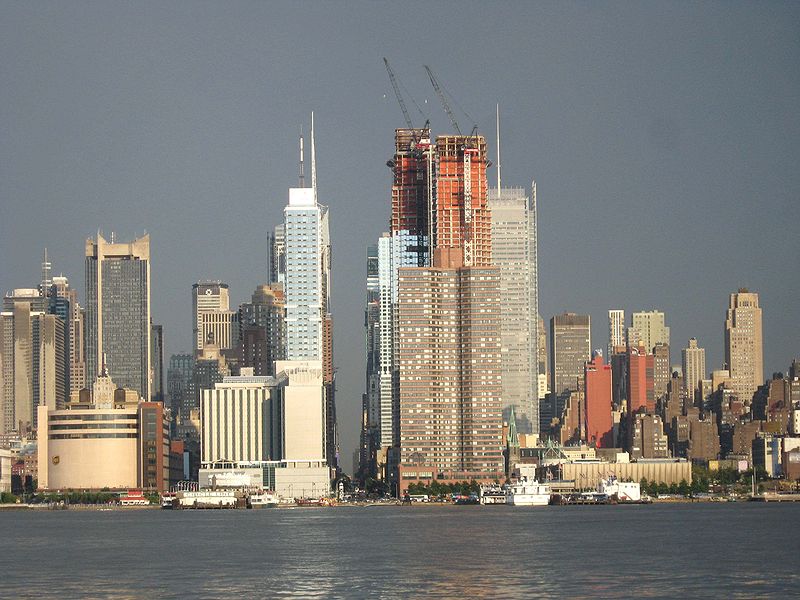
Finally, below, we see a view of 42nd Street from the Hudson.