JF Ptak Science Books LLC Post 337
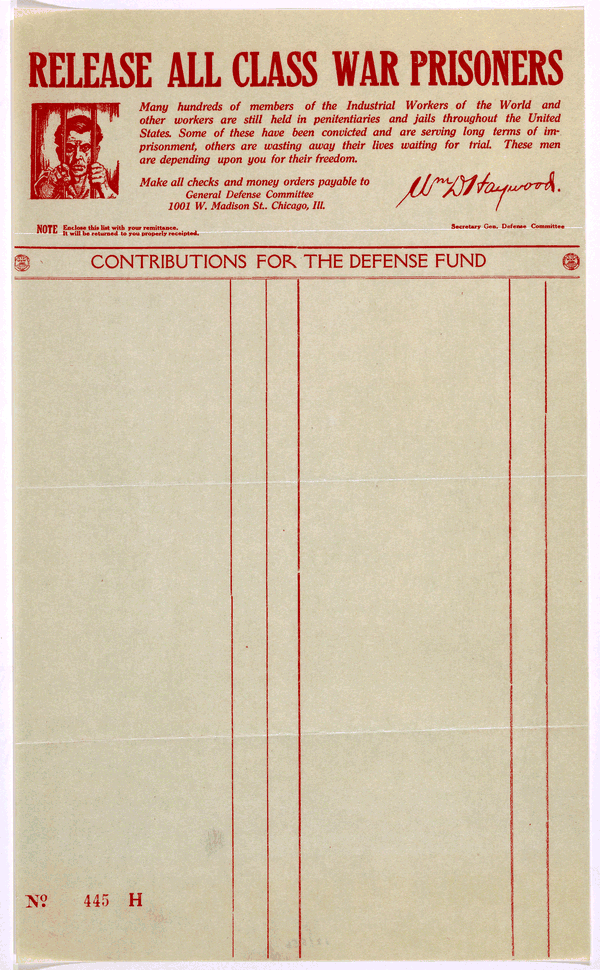
This IWW unused release form for political prisoners is yet another entry in
our Blank/Missing People/Things category.
This was pretty radical envelope-edgy stuff for political liberalism in
the
in the early part of the 20th century, butt that was really the modus operandi
of this group. Founded in Chicago just a
year or so earlier than this form was printed, the Industrial Workers of the World
was an anarchist/socialist/radical and sprinkling of trade unions and
organizations conglomeration organization as a general answer to a malaise and
dissatisfaction with the policies of larger trade groups (mainly the American
Federation of Labor (AFL)). What it
really was, or became, was the most important movement of the century for the protection
of workers and unions, though it did bolster the underlying belief in
overthrowing the ruling economic class for the benefit of all who labored to
make that class even more wealthy and dominating.
I have no doubt that such a piece of propaganda was needed and necessary—labor
workers, organizers, unionists and the like were granted little clemency by big
business, and could be often treated with great brutality, not the least of
which was physical. It was not in the
interest of the controllers of the means of production to allow such
interference from labor groups such as the IWW, as they saw it as a diminishing
assault on their source of revenue.
There was also another reason for fear and condemnation of this group—it
was also about the only major group which allowed membership along all race and
belief systems. The possibility of a
cohesive laboring class threatened the established (and still established)
fracturing of the working classes by petty differences, fostering internecine
warfare among the working classes and keeping them more divided and weak.
This broadside looks as though it is newer than what the Library of Congress
guesses is 1906/7—the design, woodcut and typeface all look later—but the document
does have the imprimatur of William D. (“Big Bill”) Haywood, which would make
the date correct. Still, the design
doesn’t look quite right to me.