JF Ptak Science Books Post 287
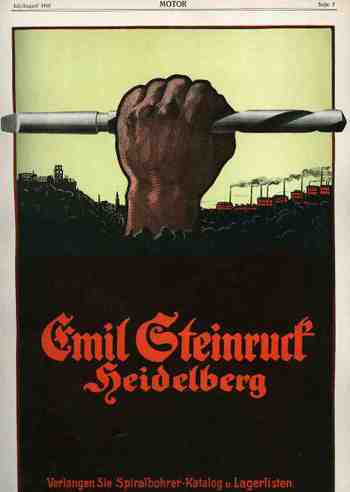
This striking ad for Emil Steinrurck’s drill bit manufacturing company (Verlangen Sie Spiralbohrer-Katalog und Lagerlisten) appeared in the magazine Motor for July/.August 1918, just a few months away from the German defeat in WWI. Steinruck’s Heidelberg business was making some massive, industrial drill bits is all I can say, and they had a designer and artist who figured out exactly how to relate this to the motorheads reading this magazine–all care being taken and monies spent just as the guns of August turned into the corrupted plougshares of November. What self-respecting machinist wouldn’t, or couldn’t, appreciate the beauty and depth of this thing even if a rusty old railway car was waiting just minutes in the future to spirit away the immediate future of Europe? The small detail (of the factories and whatever weirdly empty buildings there were in the background) were miniature works in themselves.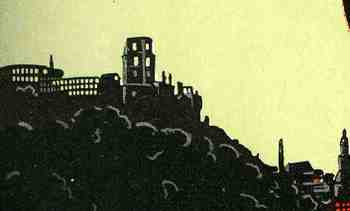
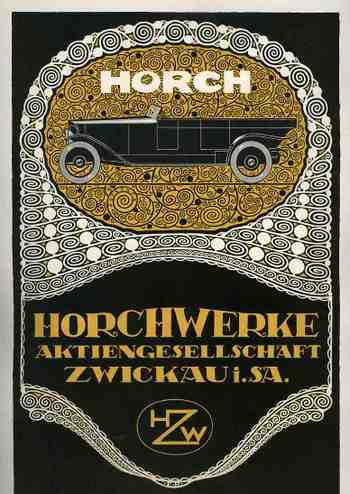
On the other hand, on the back of this full page ad appears another–a frilly, high-nouveau-y grillwork ad for the Horch automobile, forming the other representative book end to the manufacturing process. Horch began producing 4.5 hp automobiles as early as 1901, and by 1918 had improve and upgraded to produce high-end luxury automobiles. I can’t determine what exact model of Horch this is in the ad, but I can tell that it is massive, with a tremendous wheelbase. (Horch would merge/found Audi in 1932 and meet its fate in Allied bombing raids during the war. It survived but in the hands of the Soviets who used the machinery to produce the Yugo-like Trabant (Trabbi”) sub-compact “car”. I guess that the artwork is sorta beautiful in its way.