JF Ptak Science Books LLC Post 147
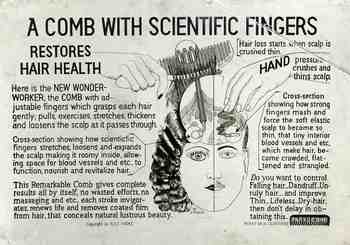
Well. This item is of
course lost on me, but the new “wonder-worker comb” somehow did an
anti-crushing something to the scalp and
the hair root that promoted/restored and fictionalized hair health. The secret to understanding it all, evidently, is that “bad scalp” is “crushed thin”. This is brought about by “HAND pressure”, from “strong fingers that
mash and force the elastic scalp to become thin and such” causing hair to be “more
crowded, flattened”. For some reason the
inventor didn’t speculate on whether other sorts of combs did this, or not; it looks as
though he/she was targeting only those who combed their hair with their own
non-plastic fingers, clearly elucidating this primal contest in a “wonder worker comb” vs. crushing/flattening comb fingers vocabulary.
stretches, thickens and loosens the scalp as it passes through” (the hair, the
scalp?). It makes the scalp “roomy
inside”, allowing the extra room that the hair needs “to function”. These hair restorative miracles is the result
of the simple use of the comb, providing “complete results all by itself, no
wasted efforts…”.
Lifeless, Dry-hair (sic)”.
That’s a lot to ask of a piece of plastic.
This somewhat-scary item is a photographic postcard sent to the Library of Congress as a Copyright Deposit copy–part of the process of securing protection from intellectual theft via American copyright. One is set to wonder about who–and why–this idea would be stolen.