JF Ptak Science Books LLC Post 135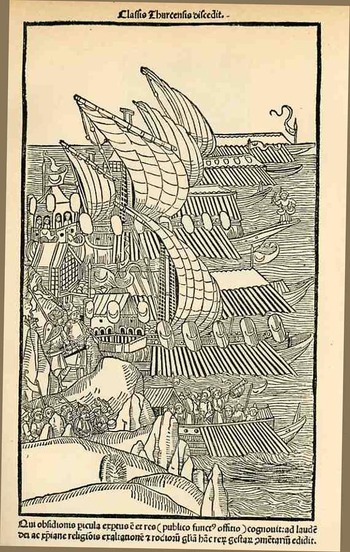
We find this splendid woodcut in the book by Guilelmus Caorsin, Obsidionis
Rhodiae urbis descriptio, printed in Ulm by Johann Reger in 1496—it is anonymous, identified only
as by the Maitre de Caorsin. It depicts the
siege of Rhodes (from 305 to 304 BCE), one of the best known and most famous
sieges of antiquity, and the handiwork of Demetrius Poliocretes, when he tried
to break the back and will of the city of Rhodes (which was a great mercantile
center) in its alliance with Ptolemaic Egypt. It is a strong, simple scene, showing the ships of Demetrrus trying to
lay siege to the harbor, all under full sail, the their rowers at ready (under
protective canopies); the water of the harbor is symbolic and beautiful, and
all of the action takes place under an absolutely neutral non-sky.
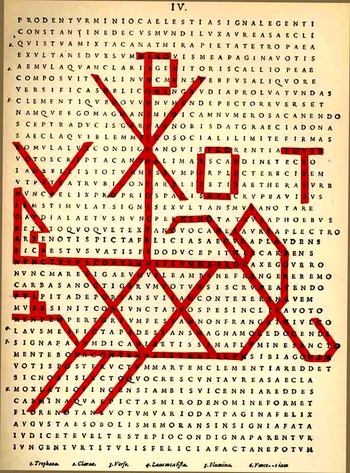
Another entirely different sort of ship is found in the next
image, its outline revealing the message in a faux-cryptographic siege. It is from a curious piece of complicated
obsfucation by Porphyrius, and is entitled Publillii Optatiani Porphorii panegyricus
dictus Constantino Augusto, printed 99 years after the book above (1595, in
of complex acrostics which, when pieced together or parsed out, revealed some
very flattering pieces of poetry to Constnatine.
In the Chronicles of Hieronymous we find the following
observation on this effort: It is a most
extraordinary aggregation of acrostics, pattern poems, and every possible
device of useless, mechanical variety of form, of little value, excepting as a
sort of dime-museum exhibition of patience and ingenuity…” Be that as it may, the found artforms in the
acrostics and other bits is really quite arresting, and remind me more of twentieth century artwork than 4th century BCE poetry.