JF Ptak Science Books LLC Post 503
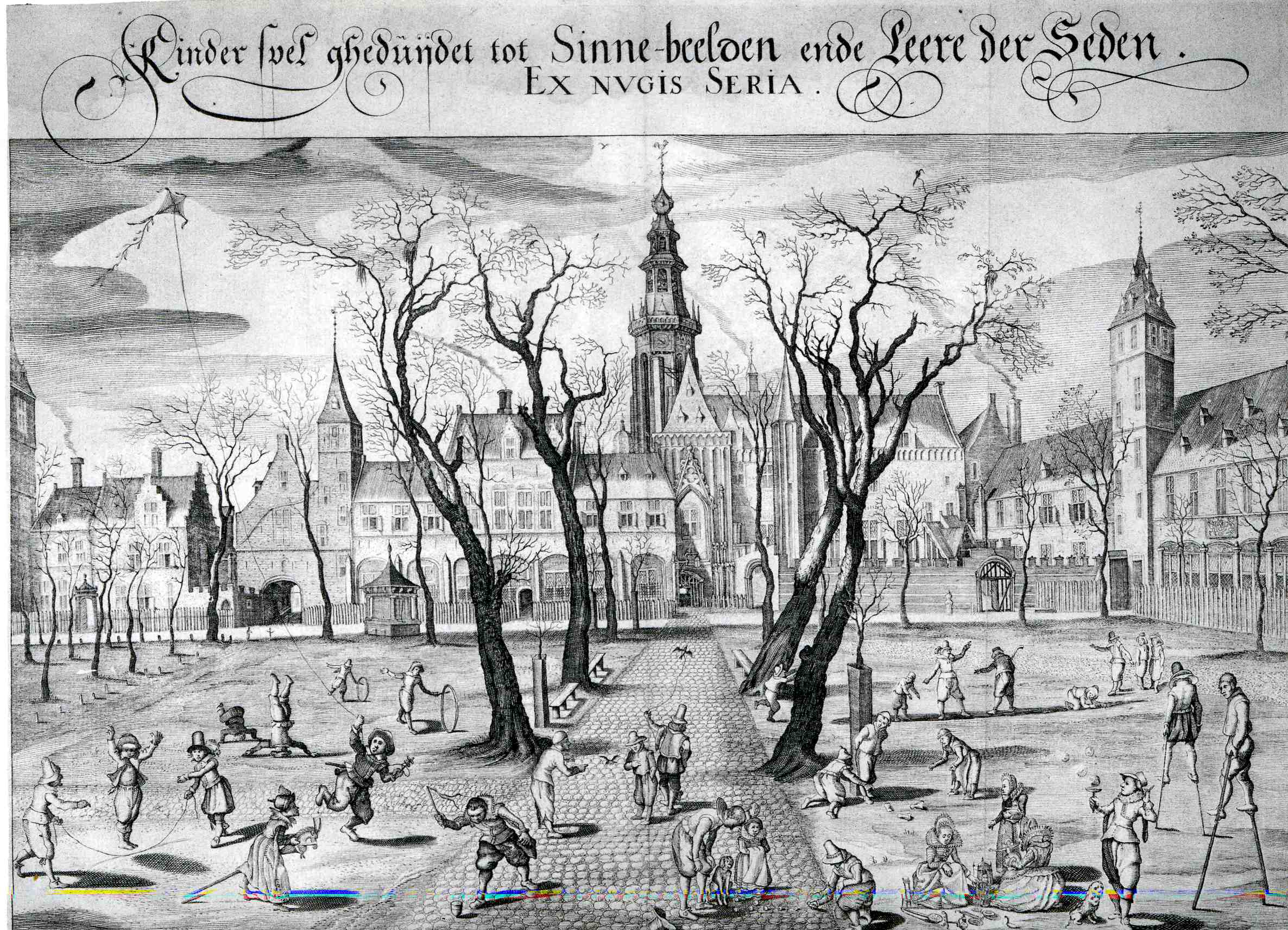
Adrieaen Pietersz vasn de Venne, must’ve been familiar with
the work of Peter Brueghel. I’m not
saying that Brueghel owned the genre of vernacular allegory, but he certainly
comes pretty close to that. In any
event, van de Venne (1589-1662), a
a hundred years after the great master—(the elder Brueghel belonged to the
Netherlands Renaissance, and died in 1569).
Having been raised in Deflt, studied in Leiden and died in the Hague, I
suspect it would’ve been impossible not to come under the influence of Peter or
the others in the Brueghel family collective, though it would’ve been Peter
(the elder, who was also known as “the Peasant”) who it seems to me lays the
greatest claim to some of van de Venne’s thinking.
The subject of van de Vene’s painting (shown here above) of children’s game is as much a
parable as it is a recording of games that kids played in the Netherlands in the
early 17th century. The
children are occupying themselves with supreme simplicity, allowing their
imaginations to form the areas that the physical toy could not; around them we
see older folks, walking on stilts, seemingly above all of the childish
bric-a-brac of living. I think too that
the spare trees decorating the walk in front of the square of churches in the
background are there to illustrate what he saw as the lack of imaginative
fertility of the churches’ reach into the world of the living. It seems a pretty harsh painting to me once
you get beyond the fantastic depiction of children at play. (This genre, of kids playing, is not a very
wide one in the history of art, believe me.)
then at those of Peter Brueghel, there is a close 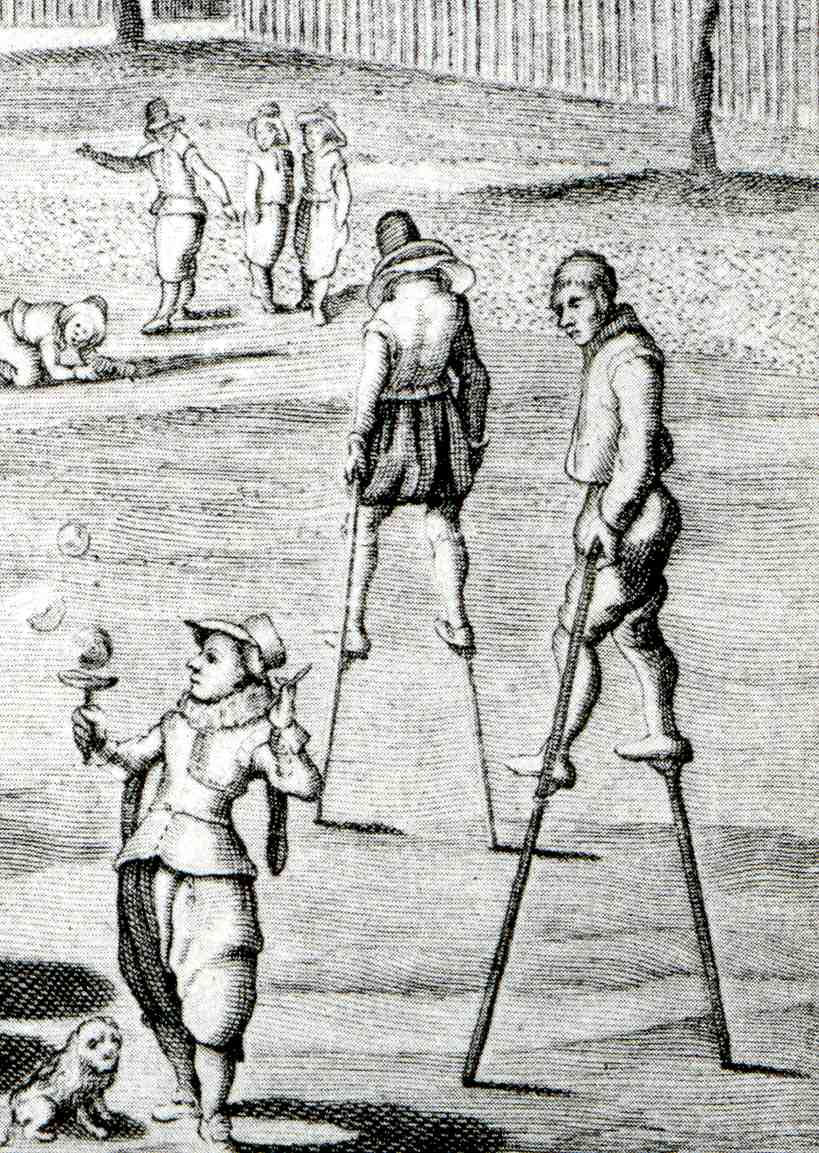
connection, as though the
later painting was simply an intellectual descendant of Brueghel This is especially true when you look for
example at such Brueghel paintings
as Ass at School, 1556, Parable
of the Sower, 1557, Landscape with the Fall of Icarus,
c.1554-55, Netherlandish Proverbs, 1559,The Fight Between Carnival and Lent,
1559, Portrait of an Old Woman, 1560, and Temperance, 1560. This becomes especially, easily clear when
you see the Children’s Games, Brueghel’s spectacular
1560 achievement in which 250+ children are shown at play at some 80+ games,
seemingly taking over the square of this small town. This is a painting of enormous importance in
the preservation of time spent at play. Evidently the experts have identified
almost all of the games being played and toys being used; the toys are all known, but there are a few
games that remain a mystery to 21st century eyes.

Van de Venne seemed not to have had followers in his footsteps,
exactly. He went on in the later quarter
of his career to specialize in depicting his subject matter in painting in
various forms of gray, with his principal subjects in his genre paintings being
peasants, the poor, the maimed, the ugly, the infirmed, the out-of-place, and
children. Seems as though this approach
did not lend itself to the glorious revival of sumptuousness and color that was
coming to the
And, just for the record, the Brughel painting:
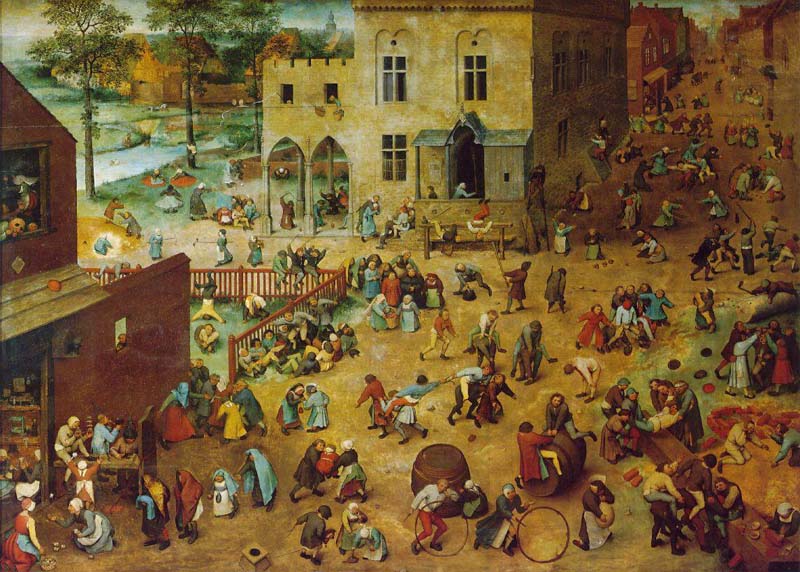
Richard Muhlberger, in What Makes A Bruegel A Bruegel? (New York: Metropolitan Museum of Art and Viking, 1993, pages 15-16)
tells us that:
“Brueghel painted an entire town inhabited by about two
hundred fifty children. At first the image seems to capture a
holiday, but soon it becomes clear that the painting is meant to be an
encyclopedia of children’s games. Because most of them are still
played today, eight-four have been identified, while others not known
to the twentieth century have yet to be recognized.”
“Brueghel did not want to emphasize one game above the others. Not
able to crowd them all up front, he painted them as if looking down at
them from above so that none is blocked from view. While the distant
children are smaller than the ones up front, their costumes are still
bright. No matter where the children are, even in the shadows, Brueghel
painted them as if they were in the noonday sun… At first it looks as
though the boys and girls are scattered at random, like jacks thrown on
the ground. Brueghel knew how to organize large crowds into patterns.
The figures in the foreground of the painting are arranged in lines
that fan out from the lower left corner and catch the viewer’s eye
first. Of course, being formed of children, the lines refuse to be
exactly straight! The youngsters in the street behind them are placed
in small groups that form a back-and-forth curving line… Brueghel
made all of the children’s faces similar. Differences in clothing are
slight, and not many colors are used. But each child looks like an
individual because of the way the artist painted bodies: No two are
alike. After all, it is in the figures’ movements that the viewer can
tell what games are being played. By focusing not on personalities but
on the games, Brueghel gave them a universal meaning.”