A Daily History of Holes, Dots, Lines, Science, History, Math, Physics, Art, the Unintentional Absurd, Architecture, Maps, Data Visualization, Blank and Missing Things, and so on. |1.6 million words, 7500 images, 4.9 million hits| Press & appearances in The Times, Le Figaro, Mensa, The Economist, The Guardian, Discovery News, Slate, Le Monde, Sci American Blogs, Le Pont, and many other places… 5000+ total posts since 2008.

  • RED in Black & White–Fringe Right-Wing Anti-Communist Groups and the Fascist Horse They Rode in On (1937)

    JF Ptak Science Books  Quick Post

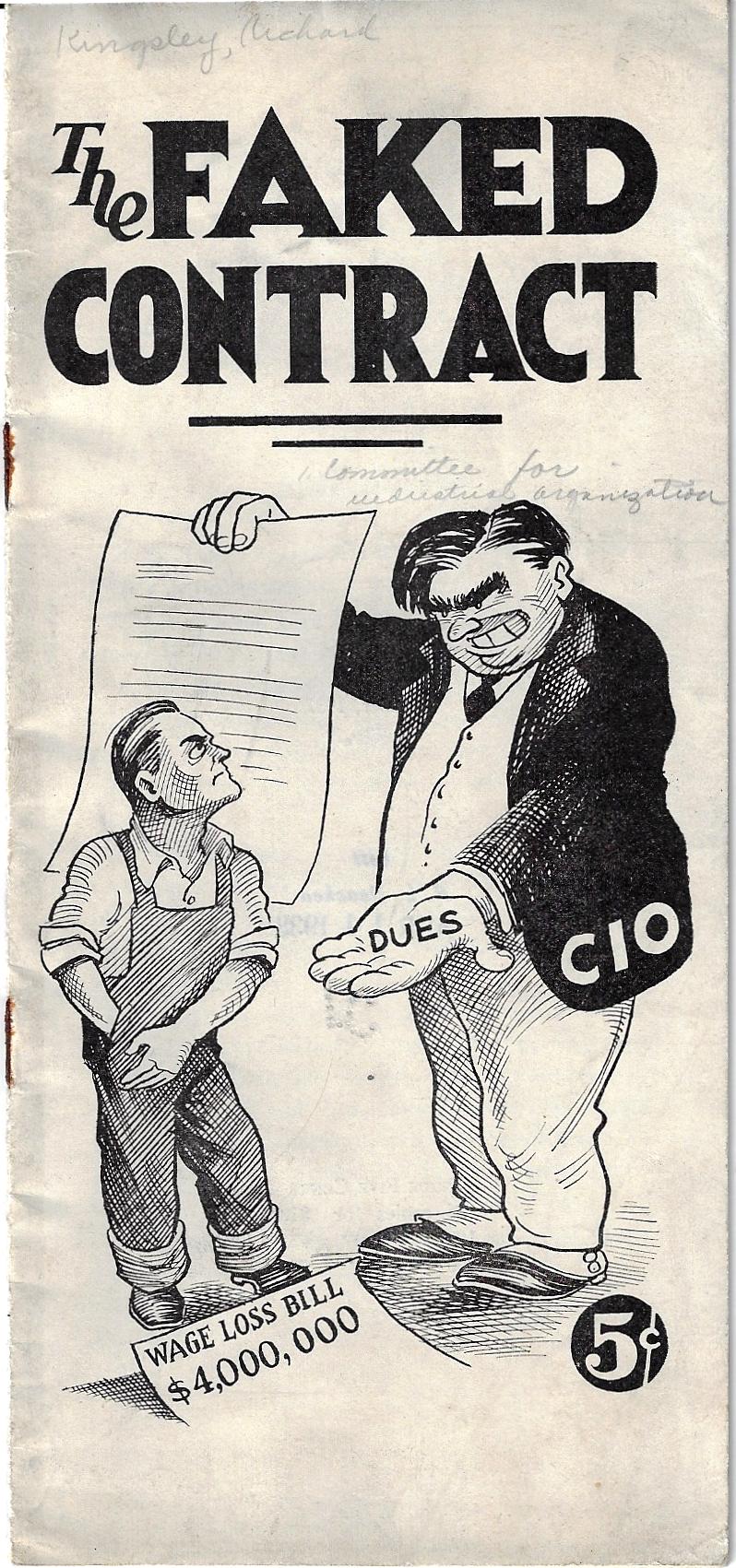
    Labor pamphlets faked contractIn a year when the political leader of the United States and his spokespeople have tried to make themselves responsible for defining language and veracity according to their own needs, the word “faked” jumped out to me from the cover of this pamphlet. This doesn’t have anything to do with the allegations of “fake news” today, when the presidential press person defines “fake news” as new that does not agree with the vision of the White House and the president himself s impossibly scourges entities like the New York Times as dealing in “fake news”, as this is of a particularly high height of an attack on reason and logic. This “fake” is far more localized, and accuses the CIO and John Lewis of sharp moves in extorting money from union members as well as trying to coerce the U.S. into becoming a Soviet America. 

    Most  of the contents of this pamphlet is summed up nicely on its back wrapper in the advertisements for other pamphlets sold by the publisher, the Constitutional Educational League. “Join the CIO and Help Build a Soviet America”, “Communism’s Iron Grip on the CIO”, “Vote for John L. Lewis and Communism”, and “Battalions of Death” are all part and parcel of the Leagues ambitious attack on the CIO and unions.  (Later, in 1949, the League would publish “Hitler was a Liberal” by Joseph Kamp–he was a very prolific guy, writing from an outpost in a watchtower on the very far right. “The Hell with G.I. Joe!”, printed in 1944, is another one–there must be three dozen little pamphlets that he wrote and published, warning against infiltration from the left, and even in the early 1950’s wondering about whether Dwight Eisenhower would succumb to Commie urges.)

    The thing is, however, that in 1942, the Constitutional Educational League–in business at this point for about 20 years–was one of 28 organizations indicated as having conspired against the U.S. as an agent of the Axis Powers. So there’s that.


    ·Posted by :

    ·in:

  • Public Instruction on Gas Attacks (1939)

    JF Ptak Science Books  Quick Post

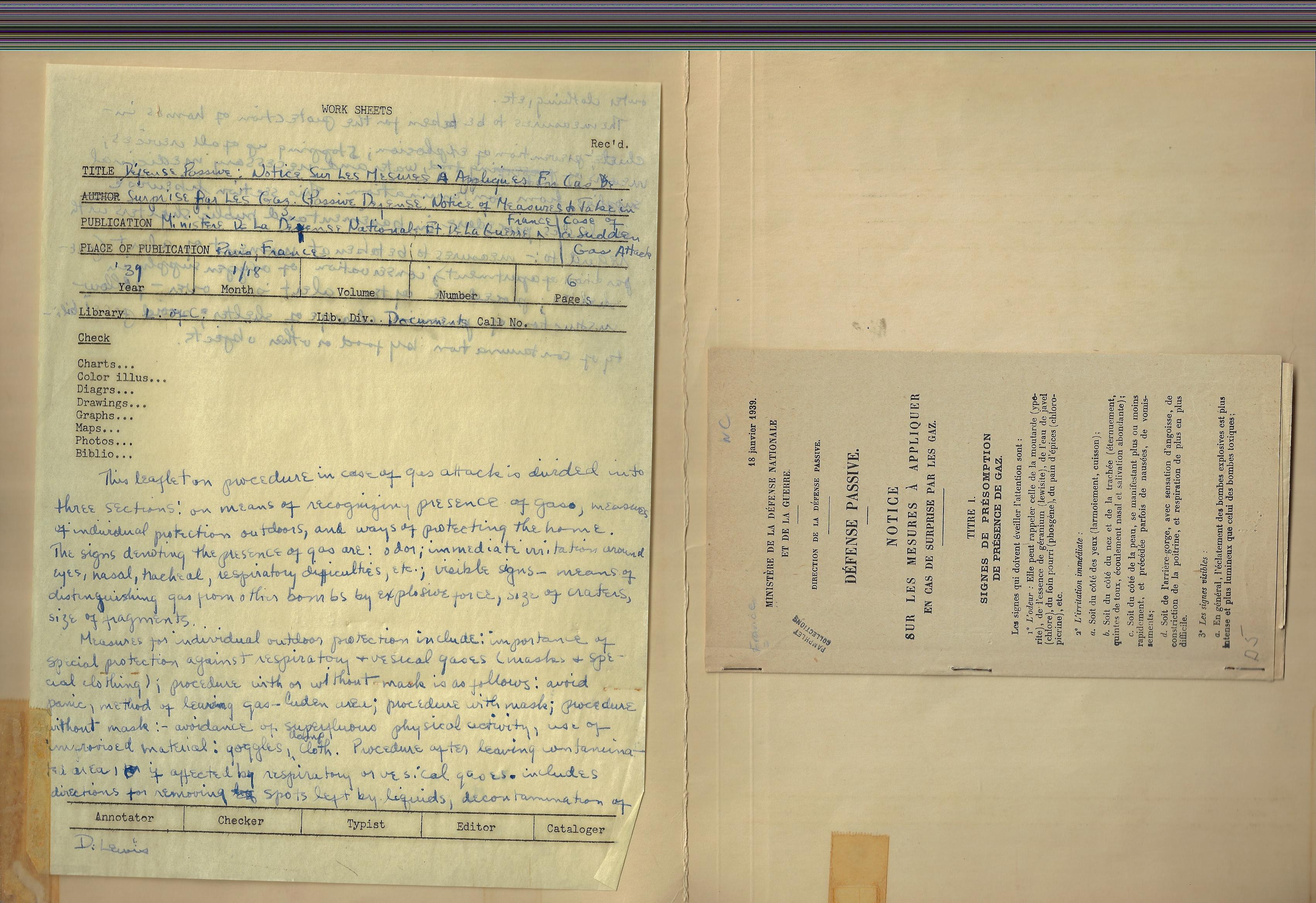
    I have perhaps four or five pamphlets on gas attacks presented int eh manner of the one I’m displaying today–someone, somewhere did a good and thorough job of cataloging these instructions for a general population on what to do in the event of a poison gas attack.  There are also 50 or so items that had once been in the library of the OSS that are similar in presentation/preservation to the gas attack pamphlets, though those all have at least two indications (a stamp and hand written cataloging) stating their point of origin, and the one below does not.  The pamphlet is stapled into a manila folder,and opposite it is a worksheet with cataloging details and a fairly extensive abstract of the pamphlet (by hand) in English.  Very curious, and interesting.  

    The pamphlet:  Notice sur les Mesures a Appliquee en cas de Surprise par les Gaz, printed in France in January 1939 by the Ministere de la Defense National.  There is still eight more months of peace to be waged and lost, Hitler already on the move in Czechoslovakia and Austria, and of course Japan already fighting their all-out war in China already for seven years. 

    [Images are very expandable.]

    WWII gas attack france _2_


    WWII gas attack france _1_

    ·Posted by :

    ·in:

    —
  • The Department of “What is It?” (#7): What are the Ultra Famous Holes that this Hole Puncher Punched?

    JF Ptak Science Books Quick Post

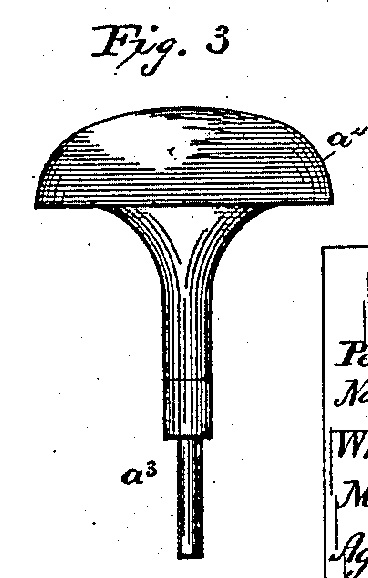
    This is one of the most important hole punchers in the history of holes, and also in the history of counting and figuring out what to do with counted things.  Do you know who filed this drawing as part of their patent report, and what famous contribution this thing made? 

    What is Itt ollerith hole puncher detail

    ·Posted by :

    ·in:

  • On Nationalizing Essential Industries and Resources of the U.S. (1934)

    JF Ptak Science Books   Quick Post

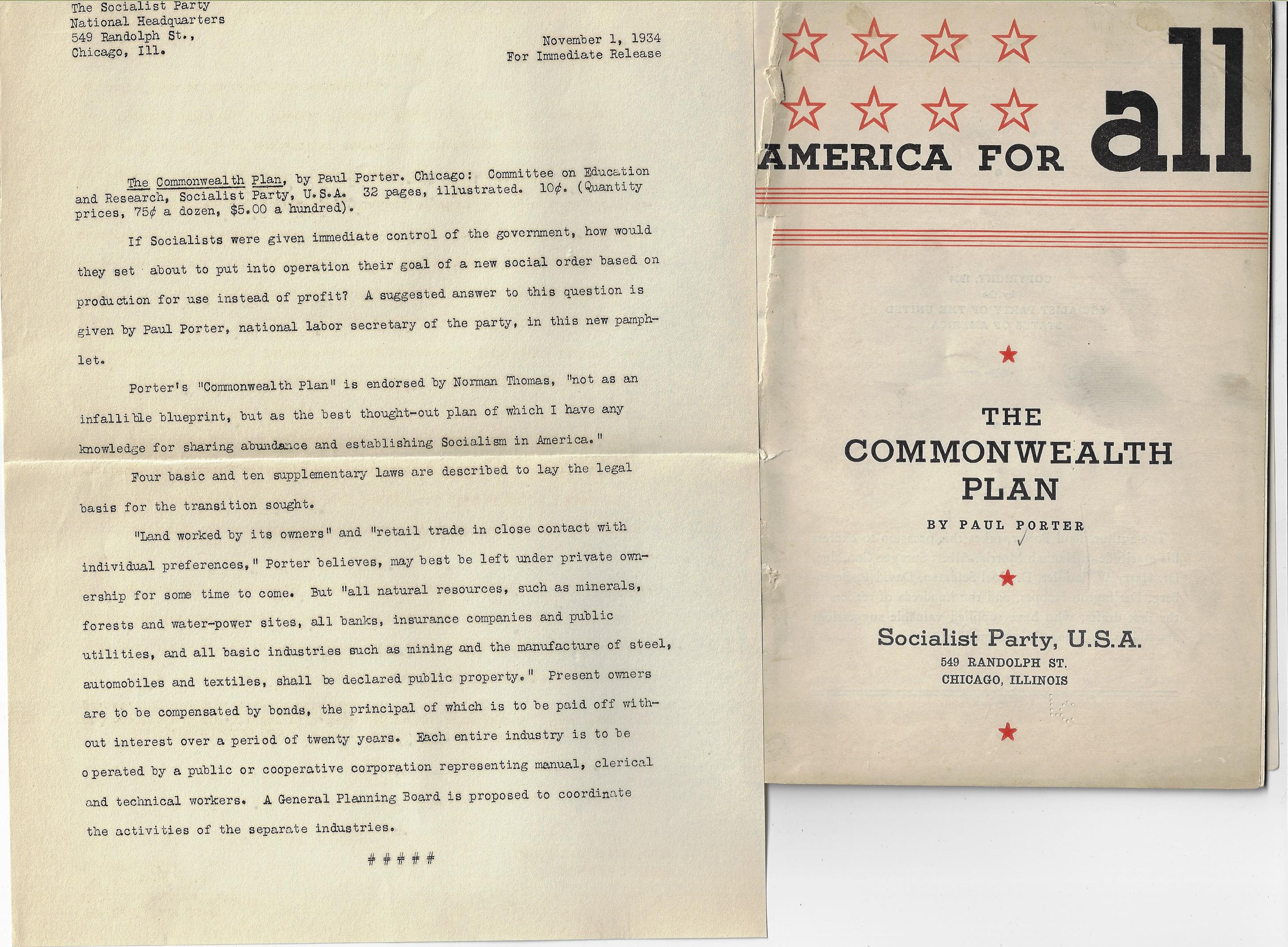
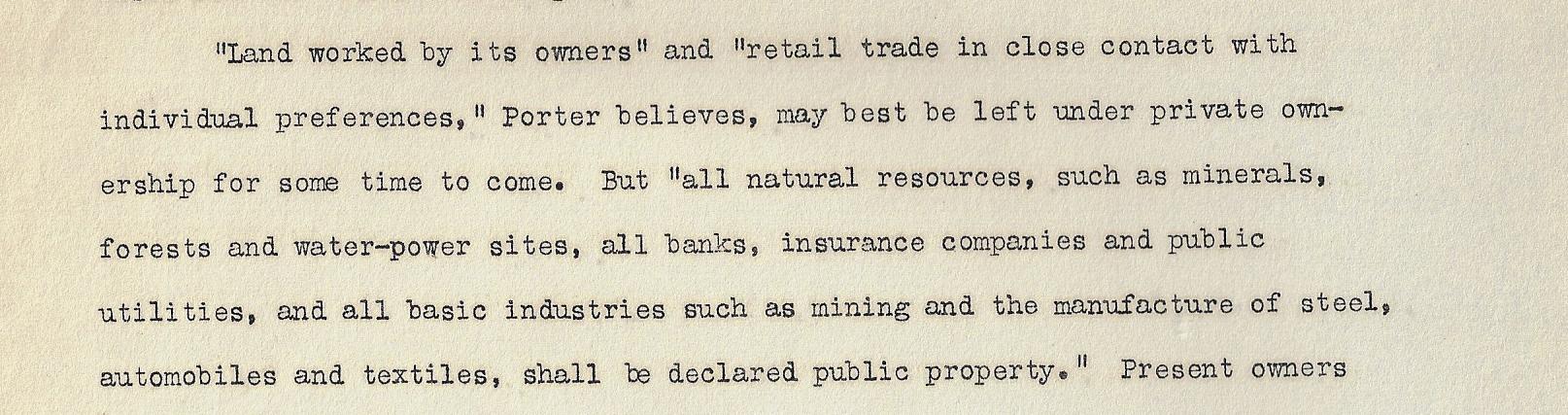
    Here’s an idea that didn’t go very far, brought to you by the Socialist Party, U.S.A. in 1934. Paul Porter’s America for All took a little too much liberty with the existing sentiment that “America” should be owned by “all”, and applying it very liberally (sorry) and literally:

    Socialist _3_


    Socialist part 1934 _2_

    ·Posted by :

    ·in:

  • A Fire Ship of 1818

    JF Ptak Science Books   Quick Post

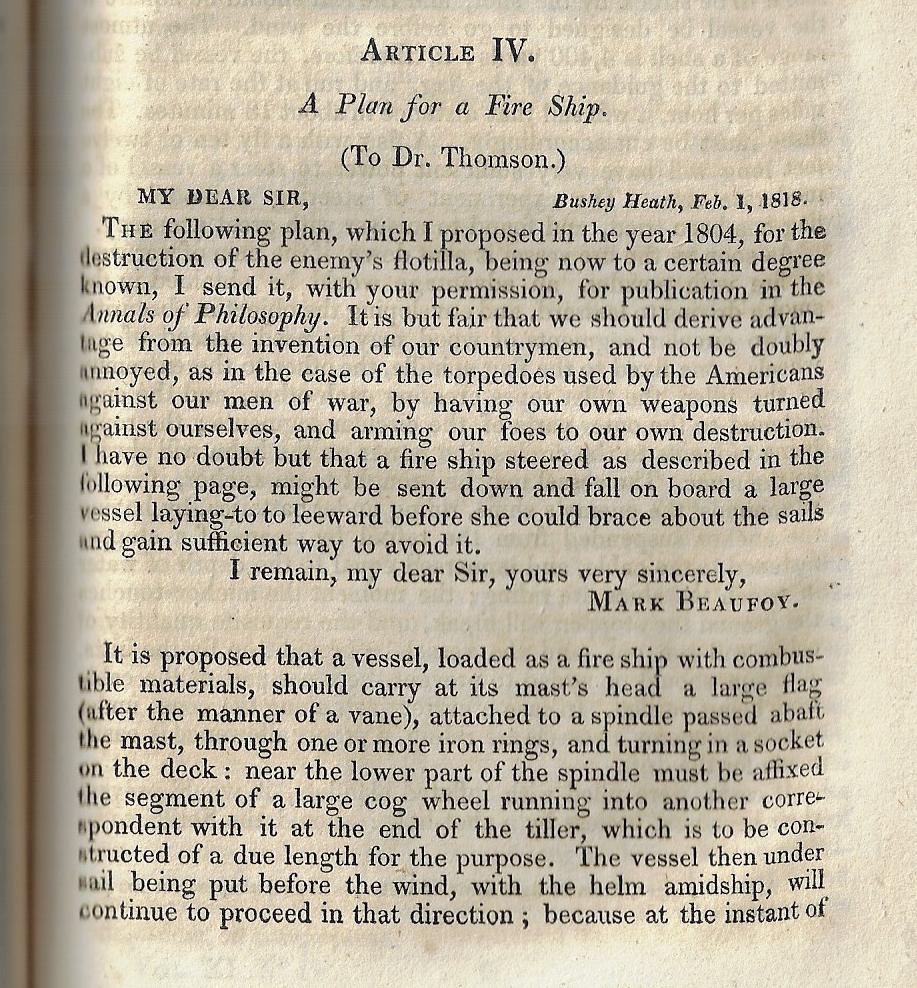
    I came upon this article in The Annals of Philosophy for April 1818, suggestively entitled  and not-ignorable “A Plan for a Fire Ship”, by Col. Mark Beaufoy.  It turns out to be a simple plan with a not-so-simple way of guiding in a ship meant take fire/explode amidst an opposing fleet/flotilla. I am far from knowing anything about naval history, so all I am doing here is reporting on this interesting article, though I have no little doubt that there is a rich history of remotely-guided bomb ships in the history of naval warfare. (The idea sounds pretty expensive to me…)

     “[Beaufoy, 1764-1827]…devoted much of his life to naval experiments at the Greenland Dock with James Scott and Captain John Luard of the “Society for the Improvement in Naval Architecture”. He published the results of his work in one of the leading scientific journals of the day, The Annals of Philosophy. In 1815 he described a recording tide meter, and in the same article went on to describe the power of the wind on square sails and the resistance to motion both in air and water of different shapes.”–Wikipedia  (Beaufoy does mention the use of square sails in the article.)

    Flame ship _1_

    ·Posted by :

    ·in:

  • Department of “What is It?” (#8) What Monster-Pop Mega Thing Did This Become?


    ·Posted by :

    ·in:

  • A Tough Place to Work: in a Box, Submerged, Digging out Dirt from a River Bed (1873)

    JF Ptak Science Books   Post 2686

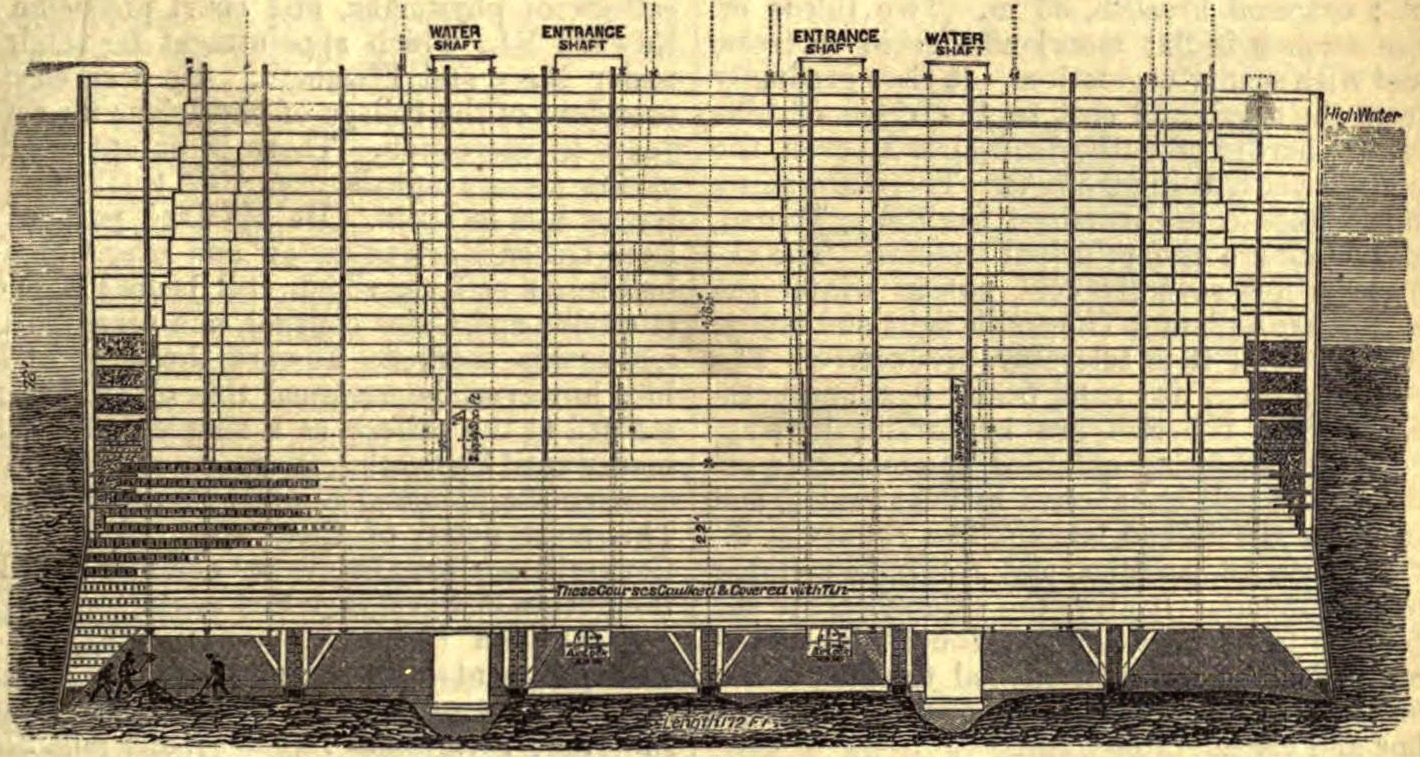
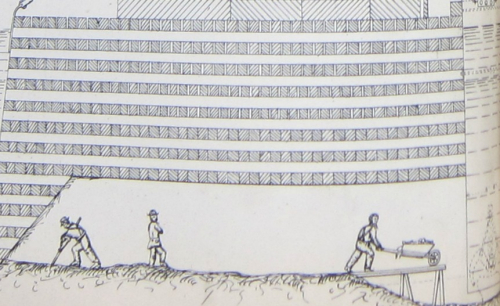
    Well, this was just one King-Hell tough place to work. Not only were the conditions cramped, and the air not-good (and occasionally deadly), and dark, and humid, but the work itself was hard. The guys in the detail of this woodcut below were sweating away in an inverted box on the riverbed of the East River (NYC) with thousands of tons of stuff on top of the box. The box was actually a caisson1–a nicer French word  (“case” or “chest”) for the box–and it was a designed object for bridge construction for establishing solid footings for massively heavy towers under water. So the deal was the the caisson is a box upended, sunk down to the river bed, with space enough for men to work in in the free space in the caisson bottom. There would be air shafts and elevators to pull out excavated earth, and as the workers dug down, the caisson would sink, and with each movement enormous blocks of granite would be placed on the top of the caisson to help it sink further.  And so this would be the process, digging down through a silty river bottom, pulling out the very heavy muck (having just done some little bit of work on a lake bottom I can tell you that the mud is extremely thick and heavy and difficult to maneuver), the caisson moving down as the earth was removed, continuing the process until bedrock was reached. And then, it was all filled in, more weight was added to the top of the caisson, until that special engineering sweet spot was reached that allowed you to start building the bridge’s towers from which the bridge span would be suspended. 

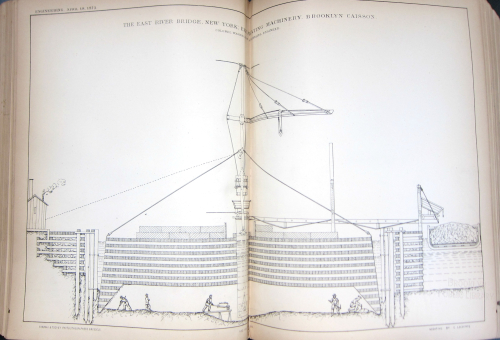
    The work in this case shows the progress on the building of the East River Bridge, soon to be called the Brooklyn Bridge, in 1873, four years into the making, designed by an immigrant, John A. Roebling. The Bridge would be finished ten years later in a titanic task the story of which is beautifully told in David McCullough’s Brooklyn Bridge (1980).

    This was a very difficult job and absolutely vital job, not the least of which was the problem of decompression sickness, which affected many dozens of workers, and which was hardly understood. All for $2/day, which was a little better than standard pay for laborers (and equal to about $60/day in 2017 dollars so far as I can reckon, which is sorta/kinda minimum wage for 2008.)

    So here they are, the guy on the right is hauling the muck to an elevator shaft at right (more visible in the full version of the woodcut, following), while another fellow shovels, and a third man strands there surveying the scene with arms folded in a pose recognized world-wide at construction scenes.  The little squares above them show 12x12xX lengths of cut lumber, on top of which stone would be placed, 
     

    Brooklyn Bridge Caisson Engineering 1873

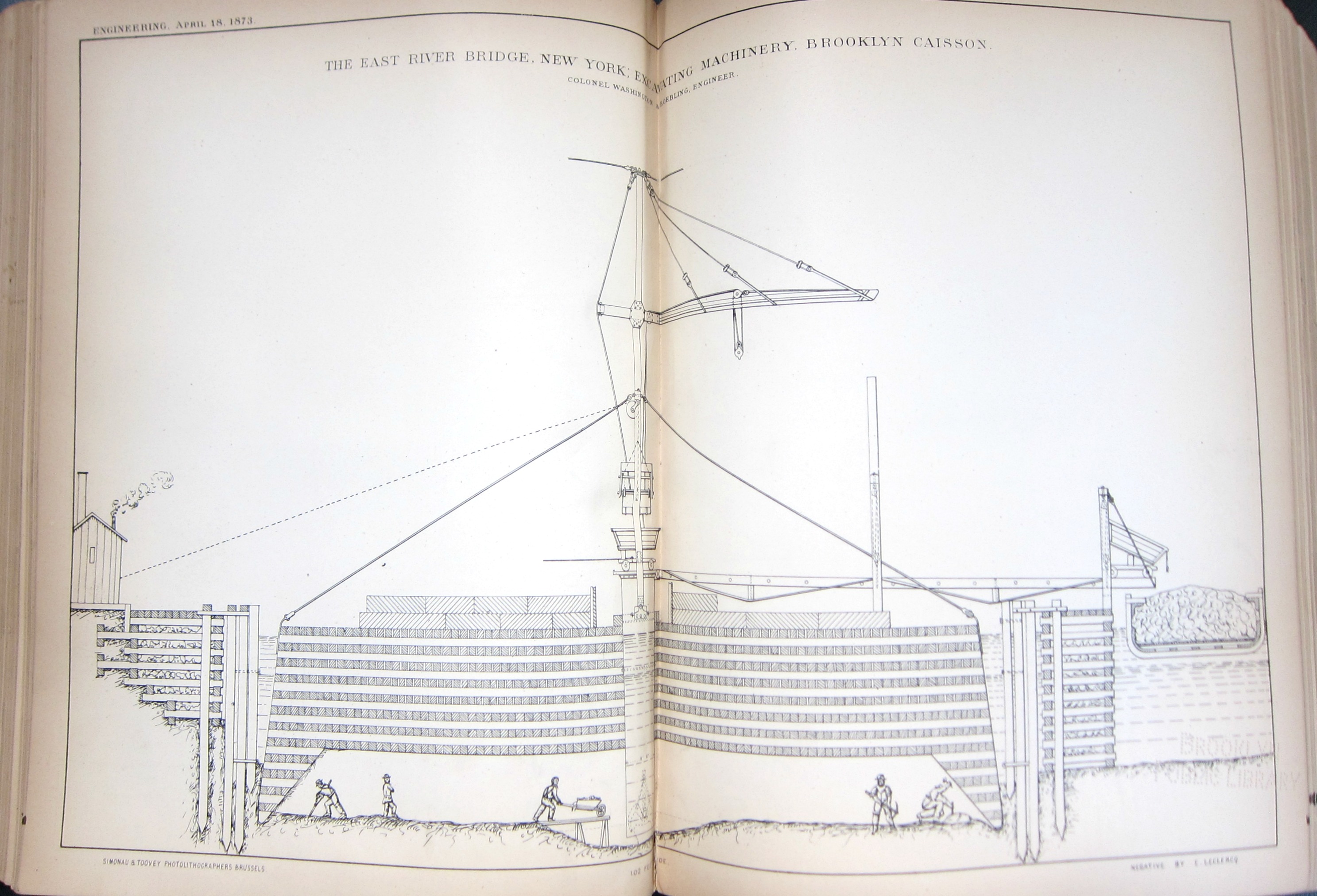
    This is the full image from the massive (nearly 20 pounds) wrist-busting volume of Engineering for 1873:
    Brooklyn caisson large engineering 1873


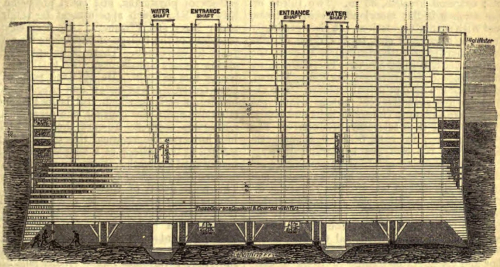
     Another image, this from The American Cyclopedia, showing the caisson at a more developed stage, and feeling that much more suffocating:
    Brooklyn Bridge Caisson wikimedia

    [Woodcut/drawing illustrating caisson used by W. A. Roebling in the construction of the Brooklyn Bridge. The American Cyclopædia, v. 3, 1879, p. 557 (Fig. 2).]

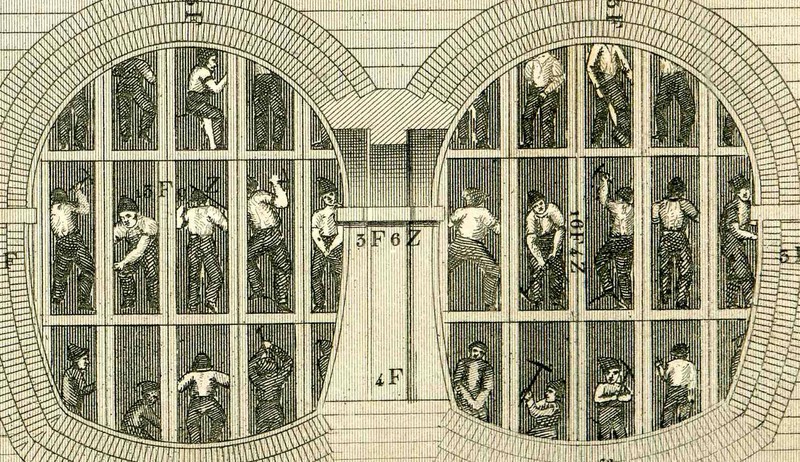
    I can’t help but include another image of a hard place to work, this one for the Thames Tunnel (from my post here: https://historyofideasblog.com/thesciencebookstore/2012/08/beautiful-technical-illustration.html)
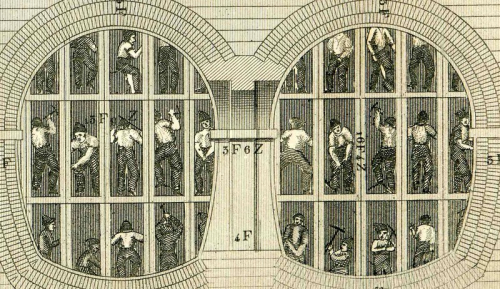
    Tunnel detail thames

    Notes:

    1. “Caisson:  in architecture, a panel sunk below the surface in soffits or ceilings. In civil engineering, the term is applied, first, to a hollow floating box, usually of iron, which serves to close the entrances of. docks and basins; and second, to a box-like structure used in constructing or sinking the foundation of piers under water. Of the latter there are at least three different varieties: the ordinary, the bottomless or open, and the inverted, which includes the pneumatic. 1. The ordinary caisson is a large box with bottom and sides, made of timbers or planks, in which masonry is built and sunk to its desired position under water.”–The American Cyclopædia, v. 3, 1879, p. 557
    ·Posted by :

    ·in:

  • The Car That Makes the Threat of Atomic Attack “Lose Some of its Menace” (1953)

    JF Ptak Science Books   Post 2687

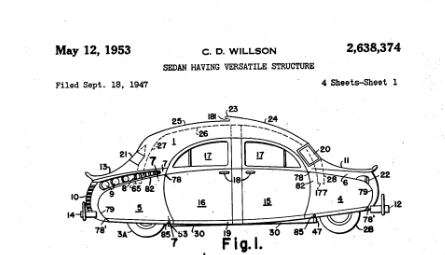
    Patent Atomic bomb car `953When i was a kid I watched a marionette-action show called Supercar–it had a high creep factor to it what with the marionette eyes and mouths and all, but I watched it anyway, I guess, because that was probably the only cartoon being broadcast at that hour. (It was filmed in “Supermarionation”, which utilized electric moving parts in the marionettes in addition to string controls. It was the brainchild of Gerry Anderson, who also brought you Fireball XL5 for which I can still sing the theme song.) And that is what struck me seeing the reasoning for this “atomic bomb car”–it really is just a car with a high creep factor that is outfitted for camping, but it is being sold in the patent as a ways for urban dwellers to survive the coming nuclear holocaust (” our greater areas of human congestion have slowly begun to face the threat of eventual atomic destruction”). Since we find the cost of reallocating everyone and all business everywhere in the US so that there is no real profile for nuclear attack because everything is spread out (or underground), it means that people in targetable cities are more or less doomed because they won’t be able to get out of town when the bombs come.

    [Image source: Google Patents, https://patents.google.com/patent/US2638374A/en]

    The author writes: “It is commonly acknowledged that the physical structures of congested areas are doomed once atomically attacked, The real problem is: how sensibly to save the lives of the inhabitants of cities thus marked for destruction and temporarily house them so that” the business of resistance may go. on in spite of the chaos engendered?”  And since U.S. citizens at the time owned 30 million cars, there was a potential to have 30 million bomb shelters (or  whatever) on wheels. (This is also the first time I have seen the phrase “atomically attacked”.)

    And then this, in classic patentese:  “The primary object of this invention is a practical means of implementing and temporarily maintaining mass diffusion from congested areas threatened with atomic attack, and in a manner related to proved public preferences, to mass production techniques and to prevailing trends”.

    “Yet, once some practical: i. e., simple and economically possible, means is found for making the average car quickly convertible to housekeeping use, then the threat of the atom bomb to our cities loses some of its menace. Once swift mass diffusion is properly implemented, it becomes susceptible to military organization. The city might be bombed, but its population could be saved.

    Anyway, the car is basically a camper, though it is still just a car. I’ve got to give the guy his credit because there are some interesting ways in which seats fold and are made into beds and tables and such.

    There’s enough in this patent to suggest that what we are dealing with is more than a simple salve me fons pietatis, that it is more than just a car with convertible beds that is renamed something like “High Speed Survival Encapsulator and Escape Vehicle”. And the vast dependent clause for the utility of this vehicle to save U.S. civilization is for (1) millions of people to evacuate a high-density location in an orderly fashion and given the time to do that in, and (2) there was no “2”. So, once you get fair warning and make your way out of the city in your bubblecar to the fresh countryside, loaded down with family and water and food and toilet paper for a few weeks and 10 cartons of cigges per person, you’d be on your way to surviving in Tomorrowland.  

    It is a Supercar–it just doesn’t fly, or doing anything particularly special. Probably though you couldn’t fit much else in there because it is already filled to the brim with audacity and hope, and a certain stink. 


  • A Map of Lakes and Islands, 1856

    JF Ptak Science Books   Post 2688

    Representing a collection of things on the same sheet of paper and doing so with everything being in the same scale seems to have been an invention of the 19th century–more specifically, this innovation may have been that of the architect Etienne Durand in the 1840’s. Durand would place the plans of various buildings in a collective all in the same scale–which was  a great thing because then the student or the viewer would be able to compare these images with a common denominator. (I guess that a person could make a case for J.J. Audubon that appeared in his iconic work, published just a few years earlier than Durand in 1837/8, as all of his birds were on the same scale because all of the 1,068 birds he included in his work were drawn life sized.)

    In any event this thought came to mind with the mostly-19thc practice of showing the lengths of rivers and the heights of mountains to scale in atlases, though especially with the representation of lakes and islands (and waterfalls!) which to my experience are much more uncommon sightings. All of this leads me to this fine work (below), which surfaced again this morning–a representation of lakes and islands on the same scale, and printed in 1856. I don’t know at this point how much earlier these things get for lakes/islands, but it seems that they wouldn’t be very much earlier than this.

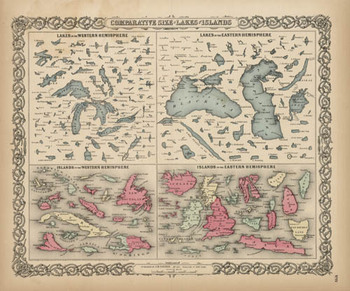
    Blogjuly_19_comparative_big_coltonSO, 18561 may have been tone of the earliest times that these 150+ lakes and islands of the Western and Eastern Hemisphere were ever been printed on the same page and in the same scale exclusive of their associative land masses and placed contiguously, side-by-side.  They were, of course, seen in a common perspective before on any world map, but I think that this is the first year in which the islands and lakes of the world were displayed without oceans and land masses, and the effect is a little odd.  If you take away the color and the text the image takes on a very definite biological flavor (I keep thinking of that tiny bone in the ear for the small lakes…)  In any event it is far easier to compare these features without the distractions of the non-lakes and non-islands clouding and confusing our perspective fields.
    This was also the beginning of the heyday of publishing comparative this-and-that in atlases:  from 1840-1880 or so was the period in which the majority of descriptive comparatives were published.  This is when you would see comparatives of the lengths of rivers and the heights of mountains and waterfalls beautifully displayed in atlases.  I don’t know what happened after then, but the publication of this sort of data really fell off, with the heights of mountains/lengths of rivers stuff relegated to filling the empty areas in double-hemisphere world maps.
    Blogjuly_19comparative_1836350
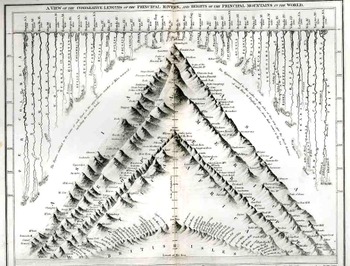
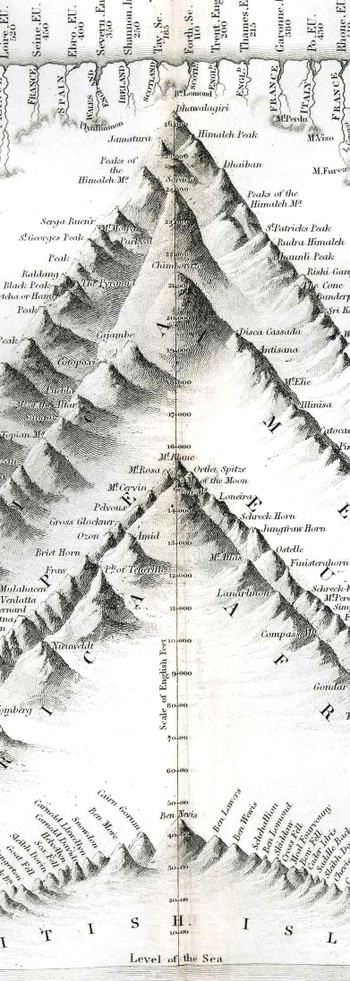
    Here’s a relatively early image of this type called “A View of the Comparative Lengths of the Principal Rivers and Heights of the Principal Mountains in the World”, published by Orr & Smith in London (1836), featuring 44 rivers and a hundred or so mountains.  It is a lovely and graphically pleasing work, and an early effort in displaying the dissected river and mountains in such a forensic-like way.
    Blogjuly_19comparative_1836_detail_

    This I think is my favorite genre of specialty map, and, for now, I’d just like to surface this map by George Colton, and admire it, and try to imagine the kind of impact it must’ve had on people back there in 1856 who were seeing this sort of data displayed so for the first tine.  It would have been a huge revelation to see the lakes and islands compared side-by-side; it was a fresh, new idea, and an insight in how to look at things in general.

  • Department of “What is It?” (#9) A New Way of “Conducting” War.

    JF Ptak Science Books   

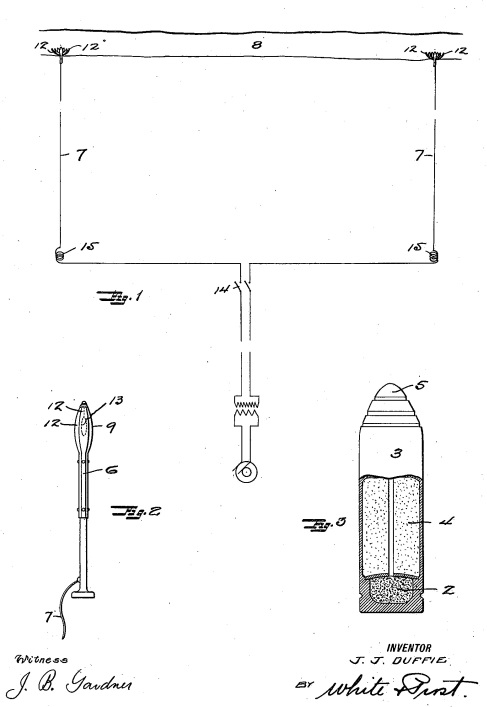
    The hint for this WIT? is already given in the title to the exercise–that said, can you figure out exactly what is going on here? It is a lot more complicated than you’d think, but at least part of the answer is pretty much a given when looking at the patent drawings.  The tricky part of the answer here is knowing how this thing would be so lethal.  

    Here’s the drawing:

    WWI trench electrocution detail

    ·Posted by :

    ·in:

    —
  • Squidward, Stainless Steel, and the Future (1937)

    JF Ptak Science Books   Quick Post

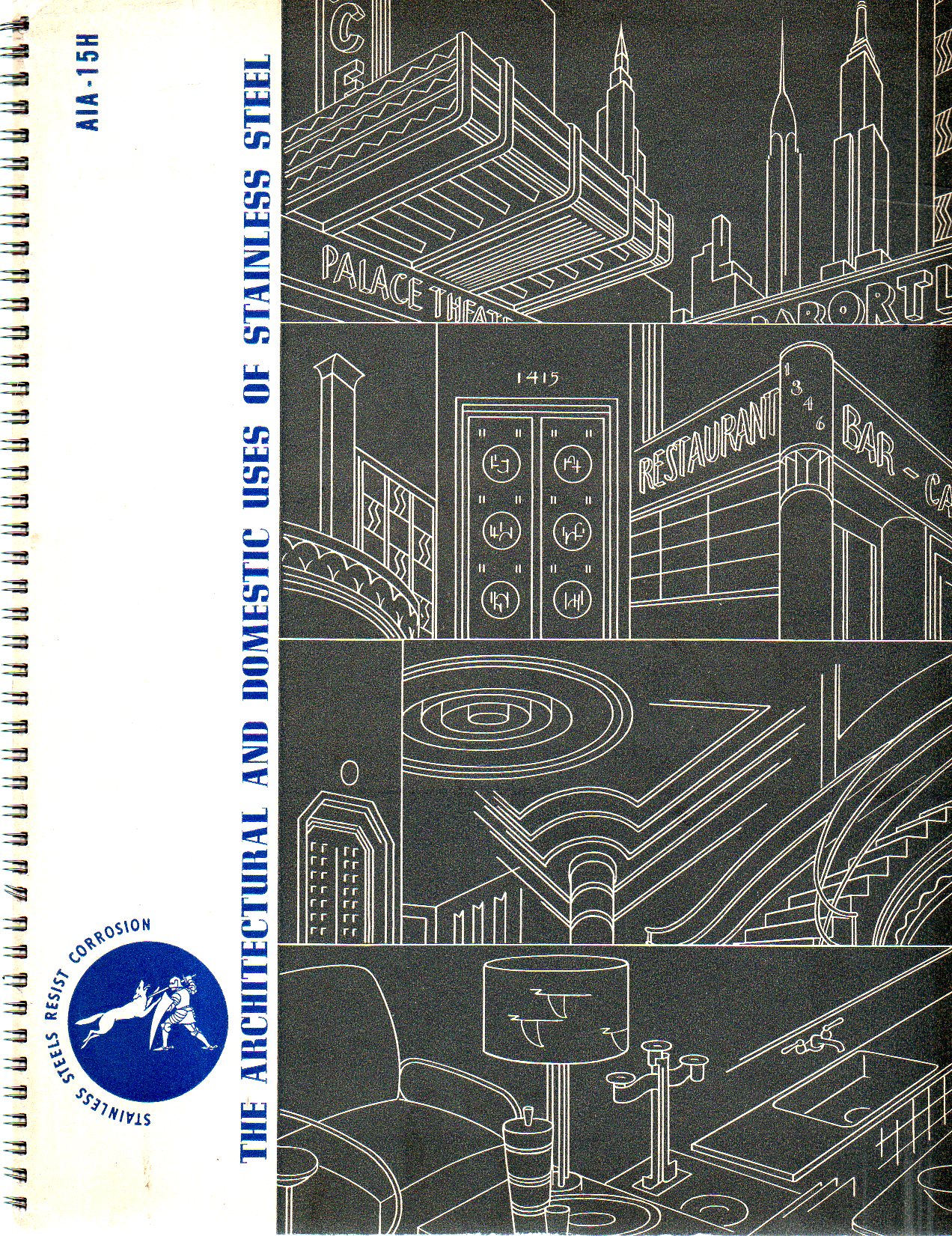
    Squidward Tentacles (of Spongebob Squarepants fame) once had a dream of the future–I mean, a dream with the future in it–in which everything in the sea was chrome plated, except of course for the water.   His vision (which he liked at first for its shineyness and then hated soon afterwards for it shineyness) of the future may have involved a vision of the past as well as someone else’s vision of the future.  Anyway it is my mentality that pulls up Spongebob when looking through this fine 1937 pamphlet1 on architectural/design uses of stainless steel, where there was so much shining and shimering matteness constructed using steel and chromium, which comes a little close to Squidward’s chrome sea bed.  But not really. In any event, these are lovely creations, best served up in glorious black & white.  

    Archiectural aluminum a393

    Archiectural aluminum b397

    ·Posted by :

    ·in:

Recent Posts

Archives

Categories