A Daily History of Holes, Dots, Lines, Science, History, Math, Physics, Art, the Unintentional Absurd, Architecture, Maps, Data Visualization, Blank and Missing Things, and so on. |1.6 million words, 7500 images, 4.9 million hits| Press & appearances in The Times, Le Figaro, Mensa, The Economist, The Guardian, Discovery News, Slate, Le Monde, Sci American Blogs, Le Pont, and many other places… 5000+ total posts since 2008.

  • The Clean, Wide Beauty of Concrete

    JF Ptak Science Books Quick Post

    Concrete Streets for Your Town, Concrete for Permanence is a substantial sales vehicle for using concrete to modernize U.S. towns and cities and is not surprisingly produced and distributed by the Portland Cement Association. There is no date of publication, but the the feel of the pamphlet plus the images of the vehicles and the dress of the few people represented in the many photos of concrete-improved streets place this around 1922 or so. In any event, I was attracted to this pamphlet by the images, not the least of which is the cover, which so (in its no-doubt enhanced whiteness) the newly concretized street grid for Pipestone, Minnesota. There are a number of pictures of bringing certain small-ish cities into the future of paved non-dirt streets, brought to them by concrete. And so That said I’ve reproduced four images, below (please note that all of the images are expandable and actually become clearer as they get larger):

    Concrete streets cover

  • The End of the War for Engalnd: Nazi Propaganda, 1941

    JF Ptak Science Books    Post 2694

    Blog--May 24--map2

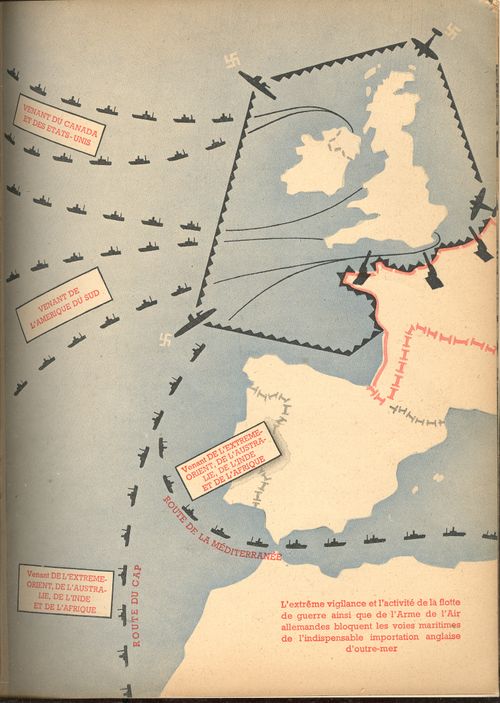
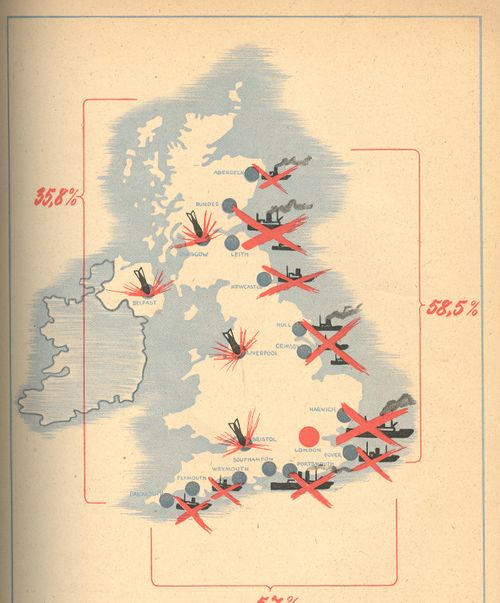
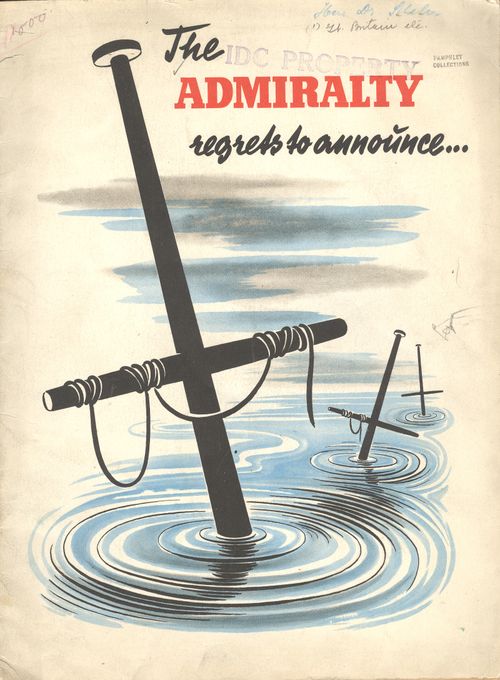
    The Admiralty Regrets to Announce… was for years the standard beginning to an official British announcement concerning the loss of ships and sailors.  The phrase is used as the title to this work (by an unattributed writer known only as “an expert”) to immediately introduce the reader to the failings of the British navy.  It is of course a piece of Nazi propaganda, issued some time in 1941. (My copy is he U.S. copyright deposit copy and is stamped with a transfer date of September 1942; the pamphlets reads to me as though the U.S. had not yet entered the war.)  The great strengths of the German air force and navy are extolled and the failings of the British mercantile elaborated at great—and sometimes greatly imagined—lengths.  The booklet was published in French (except for the title) and answers its own repetitive question: “quelle est donc la situation relle de la marine commerciale anglais?”

    Blog--May 24--map1

     The pamphlet’s 32 pages (illustrated with 24 photographs of various explosions and bombings, plus one graph and three maps) are dedicated to winning the French hearts and minds, trying to convince the conquered population that there really wasn’t any help coming, and that the British could not even supply themselves with the necessaries to run a country, let alone a war.

    In the map above we see the  ports and shipping centers that were bombed by the Luftwaffe (with London located by a big red dot).  Another map (at top) shows the stockade-like presence of the Nazi navy securing its impregnable wall against the arrival of foreign trade and supplies to Britain.  

    This post is one of a series on propaganda maps which occasionally appear in this blog.   Like Thomas Nast political cartoons and war photography, a map can instantly and overwhelmingly display not only data but sentiment as well. The maps published in this pamphlet by the Nazis are were certainly immediately understandable to just about anyone, French-reading or not, literate or not–the images needed no words, especially when surrounded in the text by vicious images of German military might.  Overrun
    or not, Petain-ized as it was, France was still offering aid to its allies and resistance to the Germans–the more minds that could be won over with propaganda of this sort meant one less to have to worry about as an active enemy.

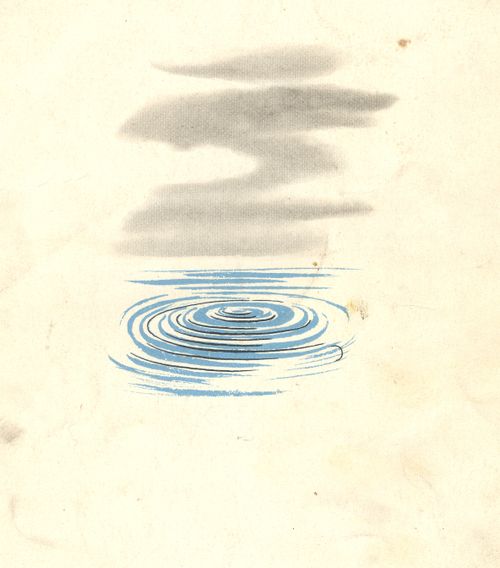
    This is the back cover of the pamphlet, showing the final disposition of the British fleet:


    Blog--May 24--map2 001

    And the front cover:

    Blog--May 24--regrets

  • A Detail of the Something in the Nothing (“Concerning the Deluge, and the Dissolution of the Earth.”)

    JF Ptak Science Books   Quick Post

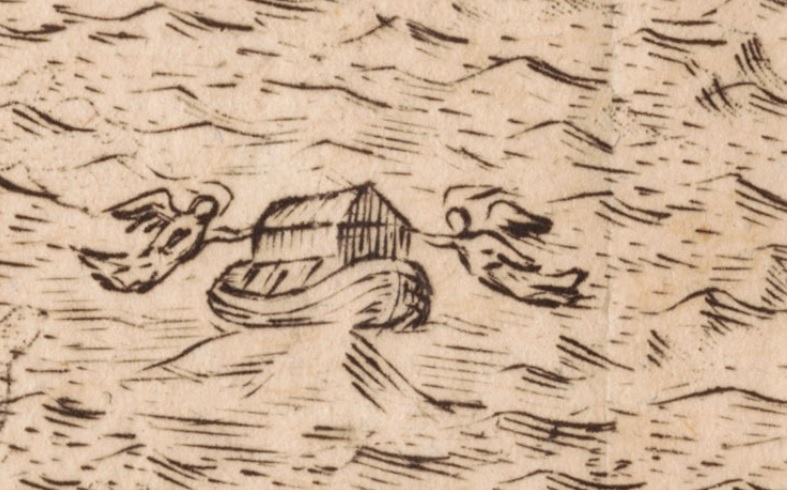
    There is a great and powerful image of nothing in Thomas Burnet’s The Sacred Theory of the Earth: Containing an Account of its Original Creation, And of all the General Changes which it hath undergone, or is to undergo, until the Consumption of all Things…printed in London ca. 1759, a hundred years after its first printing, in the glory and the magnificence of some very wide and biblical Bible thinking that was still in demand. I’m visiting the “dissolution of the Earth” section, here, showing the results of a very judgmental Creator taking aim at the whole of the Earth for its foul play, drowning everything and everyone for a lesson that could be learned only by the dead–save for a small group of related people and a bunch of animals in a wooden boat the size of which could not possibly have been built during this time period. I have pulled out this image of the ark, guided or protected or righted by a pair of faceless angels, keeping the ship steady on the top of Mt. Ararat. All around this boat are the peaks of other mountains, which for some reason are depleted of all living things, unless of course the image shows the waters receding, which is the route I would take if it were up to me to explain this. Noah ark ararat detail

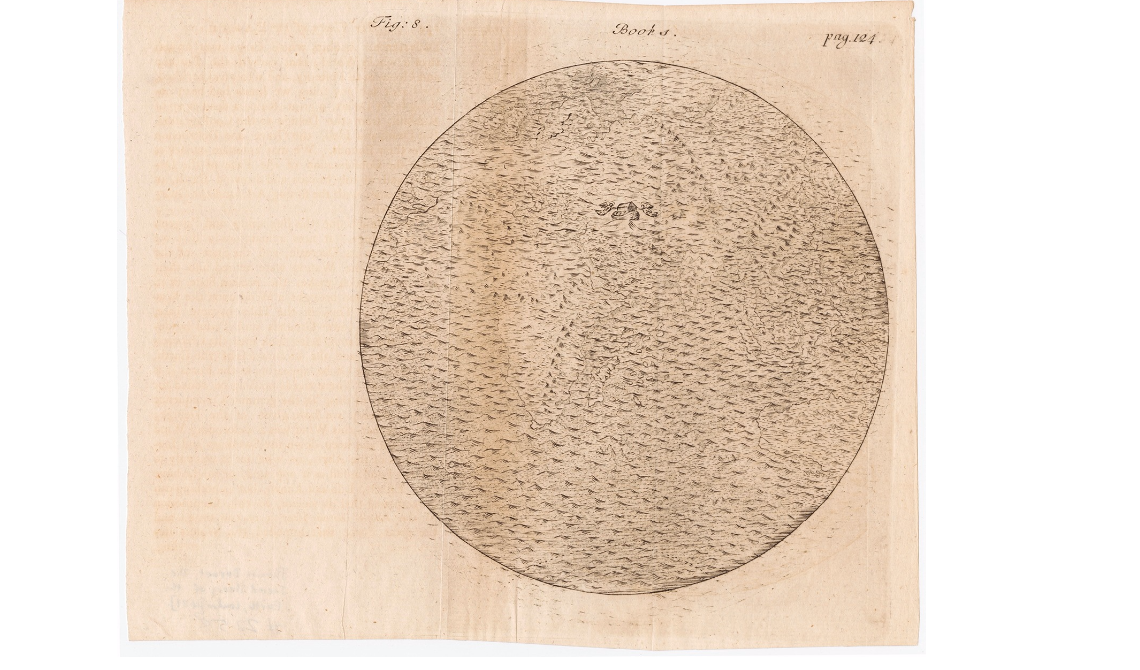
    This is a detail from the full engraving, below, which show the Earth completely covered by water–it would be an interesting thing to imagine as an actual physical process and what exactly would have to happen in order for such a thing to occur (and when you start to think of how, outside belief, this could come to happen, you have the makings of an interesting class):

    Noah ark ararat

    If you expand the image the nearly-invisible continents shine through ever so slightly. I imagine that this would be a pretty scary image to show a kid, or to a believer who had doubts about the possibilities of a wrathful creator. In any event, this fits beautifully as a short post into this blog’s “History of Nothing” series, as we see a big image of near-nothing–just water.  (Did the fish drown?) Anyway, nothing was left except the boat. And landforms. And water, which evidently went somewhere. 

    This image was found at the wonderful and extraordinary P.J. Mode Collection “Persuasive Maps” hosted by Cornell University, here: https://digital.library.cornell.edu/catalog/ss:19343661   There are 800+ maps like this there–do not hesitate to visit and visit often–it is a fantastic place.  

  • Accidentally Finding Morpheus (1818)

    JF Ptak Science Books   Post 2694

    Morphine _1_

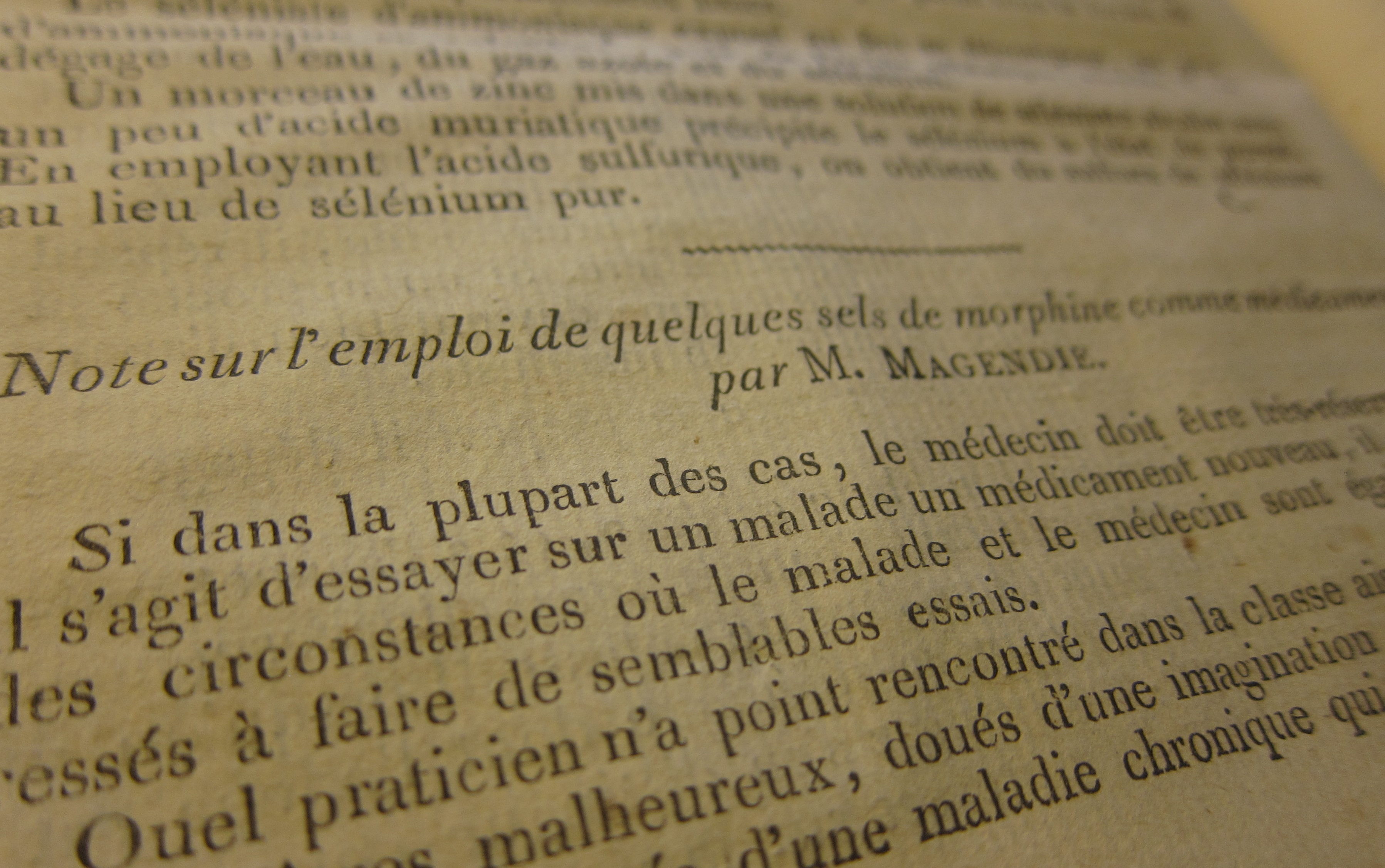
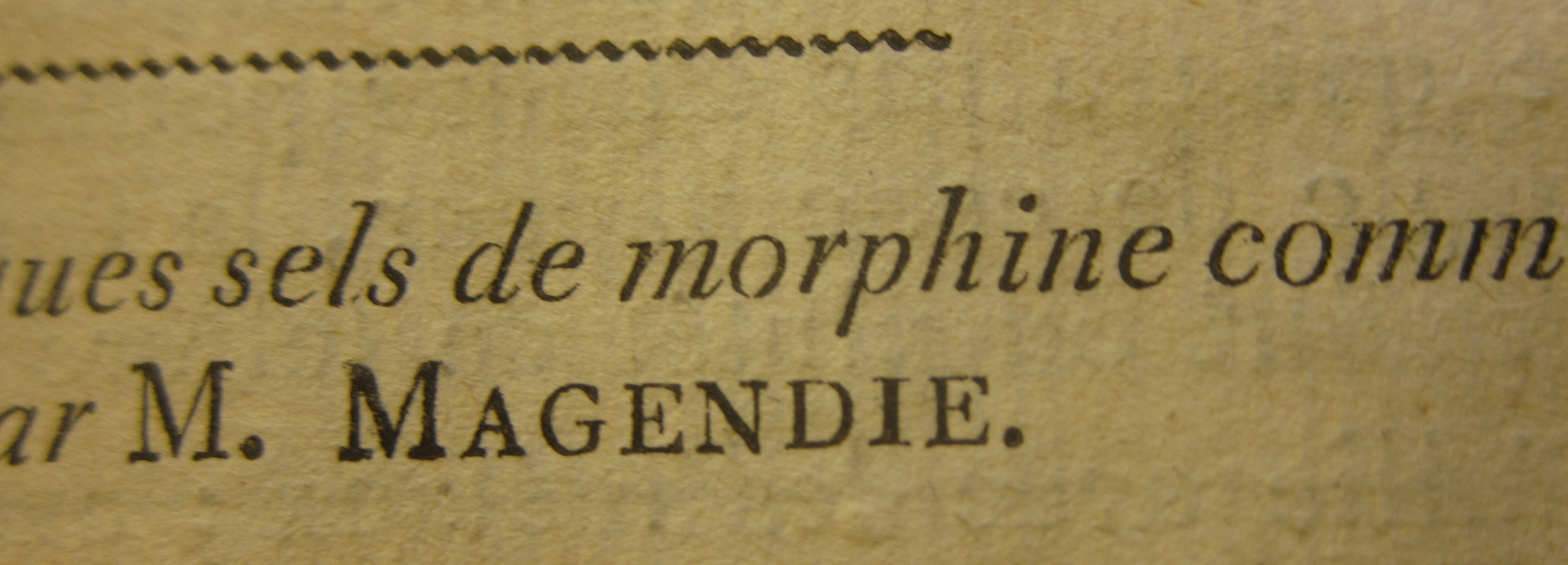
    I was strolling through a year’s issue of a somewhat obscure science journal (Bulletin des Sciences par la Societe Philomatique de Paris), grazing around looking for something significant. Quite a bit of the journal is devoted to abstracts of longer articles in the more well-known journals, though there are definitely some original articles to the Bulletin that are original. In any event I found some work by Fourier, Poisson, Biot, Laplace, and some others, but they were all abstracts of papers published weeks or months earlier (which makes it a very rapid distributor for the times), and then popped into a short piece about Berzelius’ discovery of “une nouvelle substance simple…” called Selenium, which was pretty cool, as the original announcement seems to have been just weeks earlier. And then there was a very short notice on the discovery of lithium. and then again, right in a row, was a curious-sounding thing that sounded not-quite-common: “Note sur l’emploi de quelques sels de morphine comme medicamens”. This was written by a founding father of experimental physiology and a great pharmacological agent named Francois Magendie, and I wondered why they would be devoting space like this to an application of morphine. It turns out morphine had been discovered in 1805, but that its medical application hadn’t been made until…M. Magendie, in 1818, and this was him reporting his findings on the first use of morphine to treat pain in a patient. (In this case, a young woman, in terrible pain, and desperate for sleep.)  Only about 1000 words long, but no doubt this contribution had a very wide reception.  It is interesting to go into one of these volumes without expectations, and then stumble upon something like this.

    It should be pointed out that it took only four years for the first person to be convicted of using morphine to kill someone (1822, Dr. Edne Castaing), though the drug in the decade or so after that became a popular instrument of murderers. By 1831 morphine had taken on enough of a common social role as to be included in Balac’s devil’s list of stuff that kept him to busy to think of self-amusement (“…invention of powder, the discovery of the new world, printing, Jesuits, lottery, morphine acetate, gambling houses and Cholera-morbus…”, found in his novella, La Comedia du Diable (in which the lord of the underworld invites 32,000 of the damned to a dinner party no one would soon forget).  

    Morphine _2_

    ·Posted by :

    ·in:

  • An Infinity of Suns and Planets (1798)

    JF Ptak Science Books   Post 2695

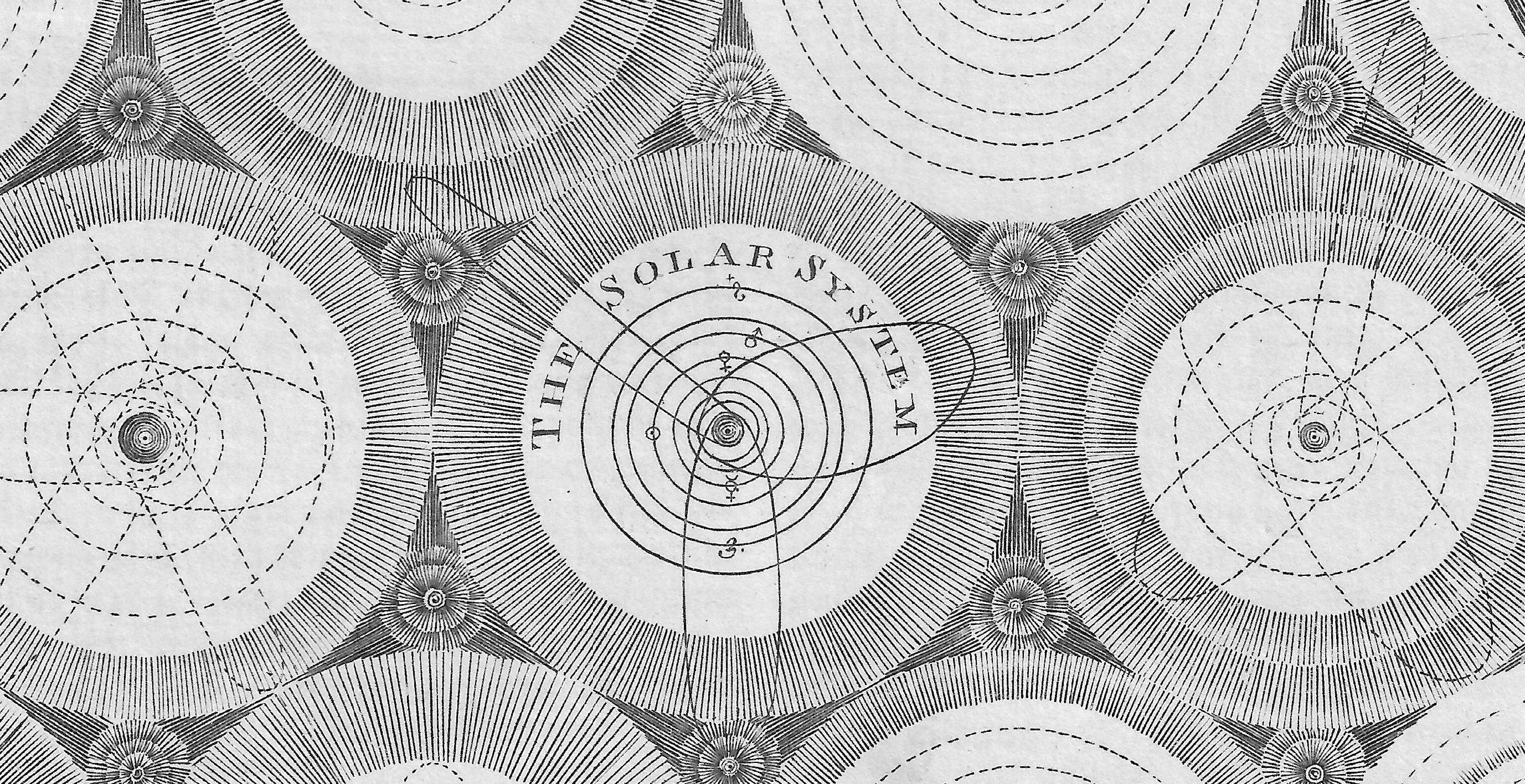
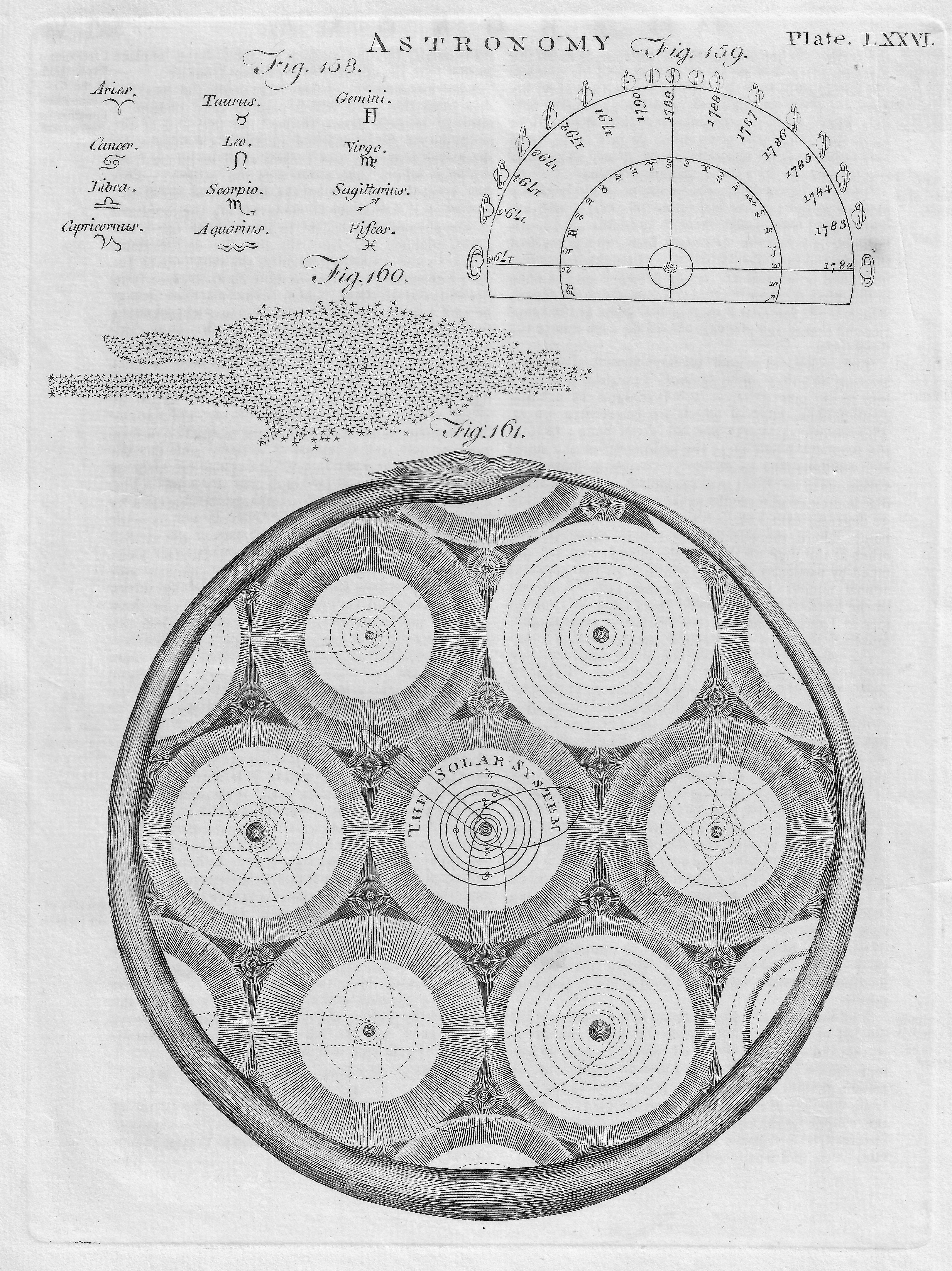
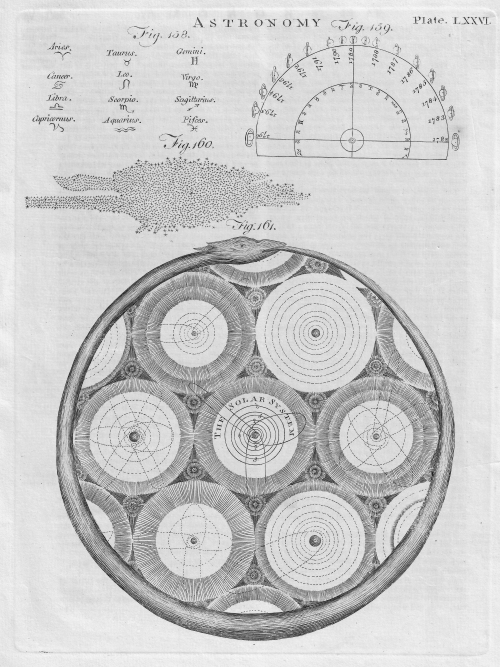
    This is a relatively early engraving showing infinite numbers of solar systems ranged within an infinite universe. It is found as plate LXXVI from the first American edition of the Encyclopaedia published at Philadephia in 1798.The concept of multi-solar systems was not a terribly common theory, and to see them here, arranged as part of a structured and logical system was very striking–particularly since there is an inference that our own solar system is positively not unique, and located in a cluster of others, all of which are contained within an Ouroboros, an ancient Egyptian symbol signifying an endless universe of expanding possibility.
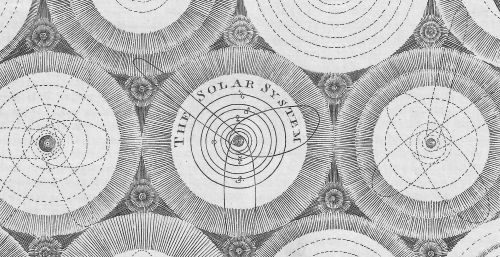
    Astronomy ourobus detail

     [Detail of engraving below]  

    The idea of expansive collections of suns and planets varied quite widely from the images of other astronomical observers and theorists such as Thomas Wright (1711-1786), who in his book An Original Theory of the Universe (1750) gives the Milky Way a friendlier, homogenous manner, overruling his earlier theory that the stars were “promiscuously distributed through mundane space” and delivering a theory of the stars organized in a regular pattern based upon a hierarchical center of some sort around which everything else was positioned.  He also provided a fabulous image of the centers of galaxies as an immutable, transcendent force, with the eye of the creator at the center of each, rather than the simple, positive dot.

    This idea was picked up by Immanuel  Kant (1724-1804) who in his own work, The Theory of the Heavens (1755), expanded on the multiple centers of creation(s) (an “endless immensity in an unlimited plenum of creations”) of cascading and separate galaxies, and detailed a vast system of disk-shaped galaxies which revolved around centers which in turn revolved around other centers, becoming far vaster, though all were centered on a dominant, universal center.

    Above that image is one showing the phases of Saturn from 1782 through 1796, while to the left of that is a small display of the signs of the Zodiac.

    Towards the middle of the page is a very famous image made by William Herschel (1738-1822), who tackled the issue of what Everything looked like back in the 1780s.  

    Lucretius (95-55 BCE), in his Nature of the Universe, stated that  since there is nothing outside the universe, it must be infinite: “the universe stretches away…just the same in all directions without limit”;  it stretches far and wide into immeasurable depths.  All that is in it, he reasons, is distributed equally and in the same way.  But this is not the case, even in light of Edward Milne’s cosmological principle (1933),  stating that all  places in the universe is alike—which is true, except that there are vast disturbances in very large local areas that distinguish themselves from other places.  The work of Gamow/Alpher/Herman  (1939) and Penzias/Wilson in establishing the cosmic microwave radiation  (CMB)  shows that the observable universe to be very close to homogeneous and isotropic, and of course accelerating. (Suffice to say for this short post that there are models– Friedmann-Lemaître-Robertson-Walker (FLRW) model for example– which show the observable universe to be  “weakly” inhomogeneous and anisotropic; but generally and on average the isotropic models stand.) 

    Perhaps the earliest published “bump” in the calm waters of the equal-distribution universe occurs with this image by Herschel who in 1785 published a revolutionary image of the “Stellar System” (the Milky Way), showing its irregular pattern and the off-center placement of our sun amidst a panoply of other stars.(His image was remarkably and substantially correct, with the most grievous error being the placement of the sun too close to the center of the galaxy.) It was an image which bought the idea of a not-so-humano-centric idea into popular philosophy. This galacto-centric view remained until the work of Harlow Shapley’s globular clusters in 1918.


    Astronomy ourobus

    In all, it is just a beautiful image that tells a long story-without-words of the Shape of Stuff.  

    ·Posted by :

    ·in:

    —
  • A History of Black & White in Color (continued)

    Putting Black-and-White Back into Color: 1930’s Schoolrooms

    ref:  JF Ptak Science Books    Post 1840, expanded.

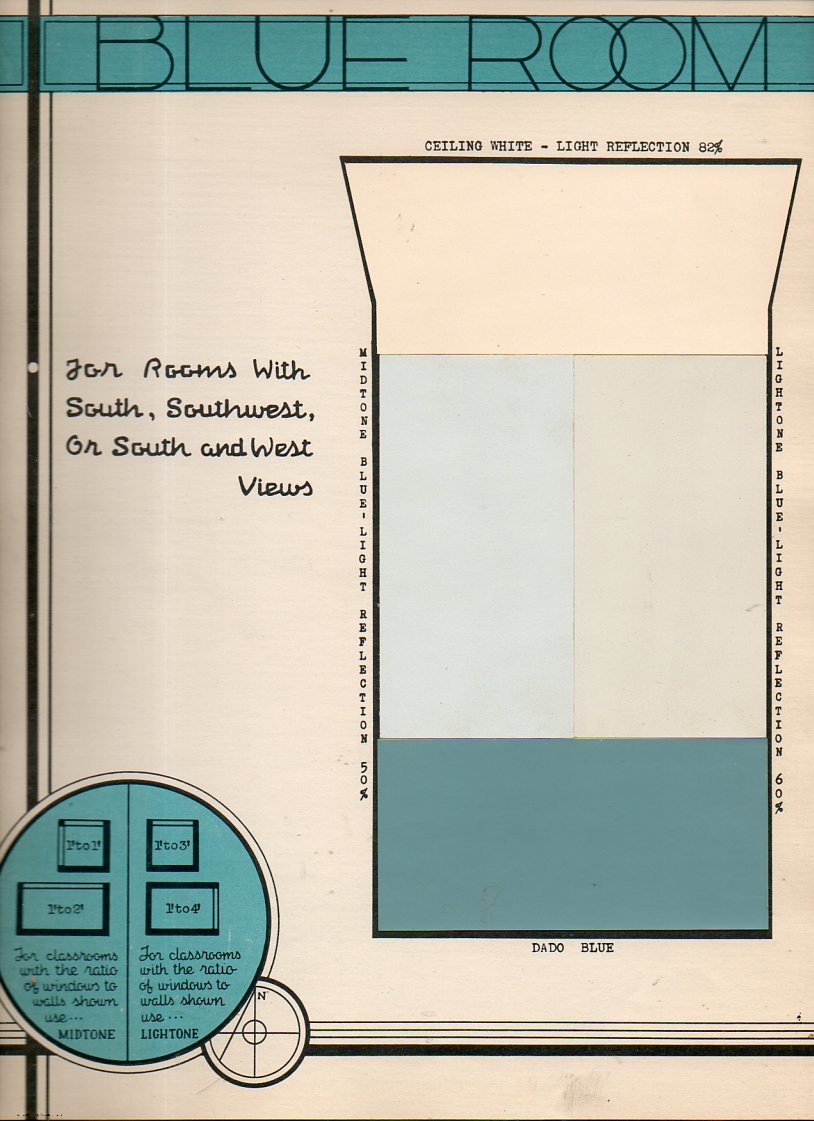
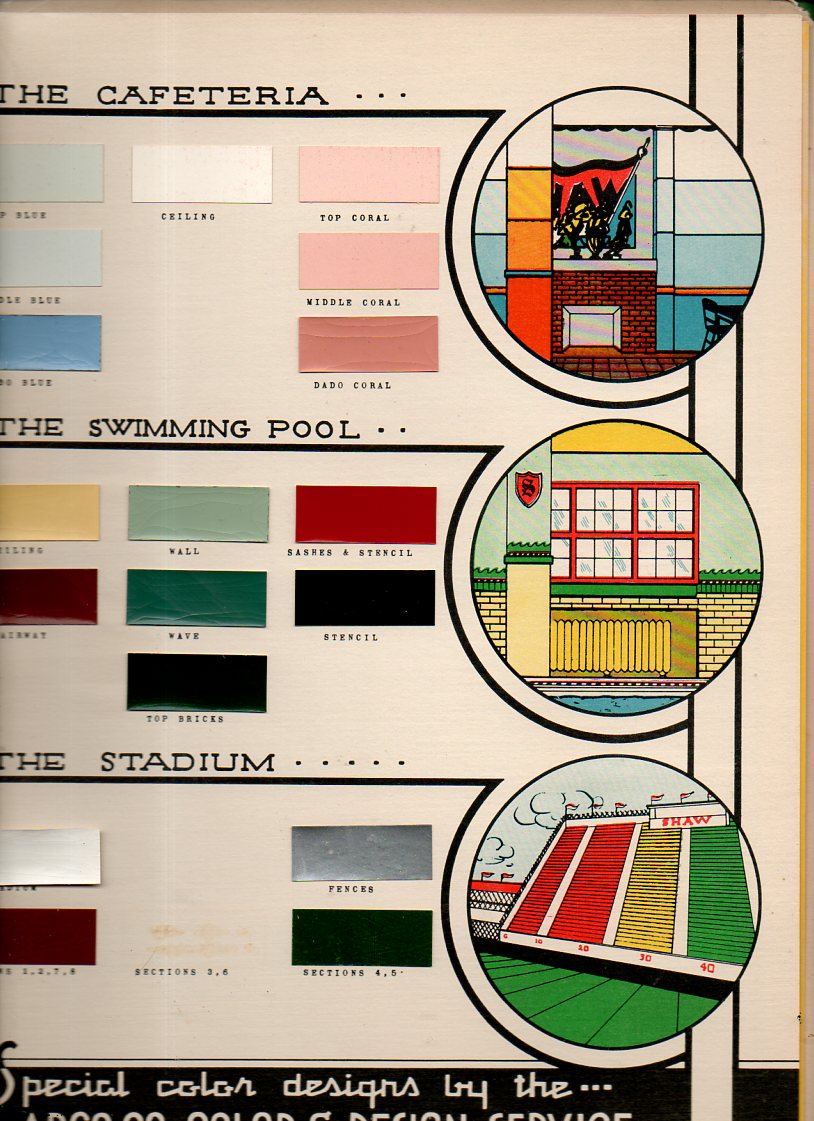
    Its easy to assume a modern prejudice regarding the interior decoration of 1910-1940 school rooms, allowing a certain conceit and picturing them in shades of gray, the images formed being “colored” by the images of those things that we have seen, almost all of which have turned up in black-and-white photographs or movies. But of course we know that this can’t be true, and that Humphrey Bogart didn’t always wear a gray worsted in his movies, and didn’t move that gray suit through gray rooms. Its just that the image-formation is influenced by what we’ve seen, and since what we’ve seen of these rooms is mostly without color, then our images are difficult to assemble outside black-and-white.  This applies to just about everything from that era, which explains why it is such a glorious shock to see motion pictures or photographs of (say) New York City street scenes from 1944. (And why is it such a jolt to the visual system to learn that police cars in Chicago during the 1933 World’s Fair were orange?)

    This thinking came to the surface again this morning when I uncovered the Paint Specifications for the Model School, prepared for the East Cleveland Board of Education under supervision of the Foremost Authorities, and published by ARCO in 19391.  It reminds us that the only thing that lived in black-and-white in those days are in our memories.  (I’ve written about unexpected color in Lost German Color of 1927,  The Very Describale Macro Color of 1937, The Color Green in the History of Squares, and of course the non-immortal 200,000,000 Pounds of Buttocks-or-Putting the Black-and-White back into Color, and others.

    Color school587

    Color school592

  • A Dancingly Anthropomorphic Kinematic Instrument (1912)

    JF Ptak Science Books   Quick Post

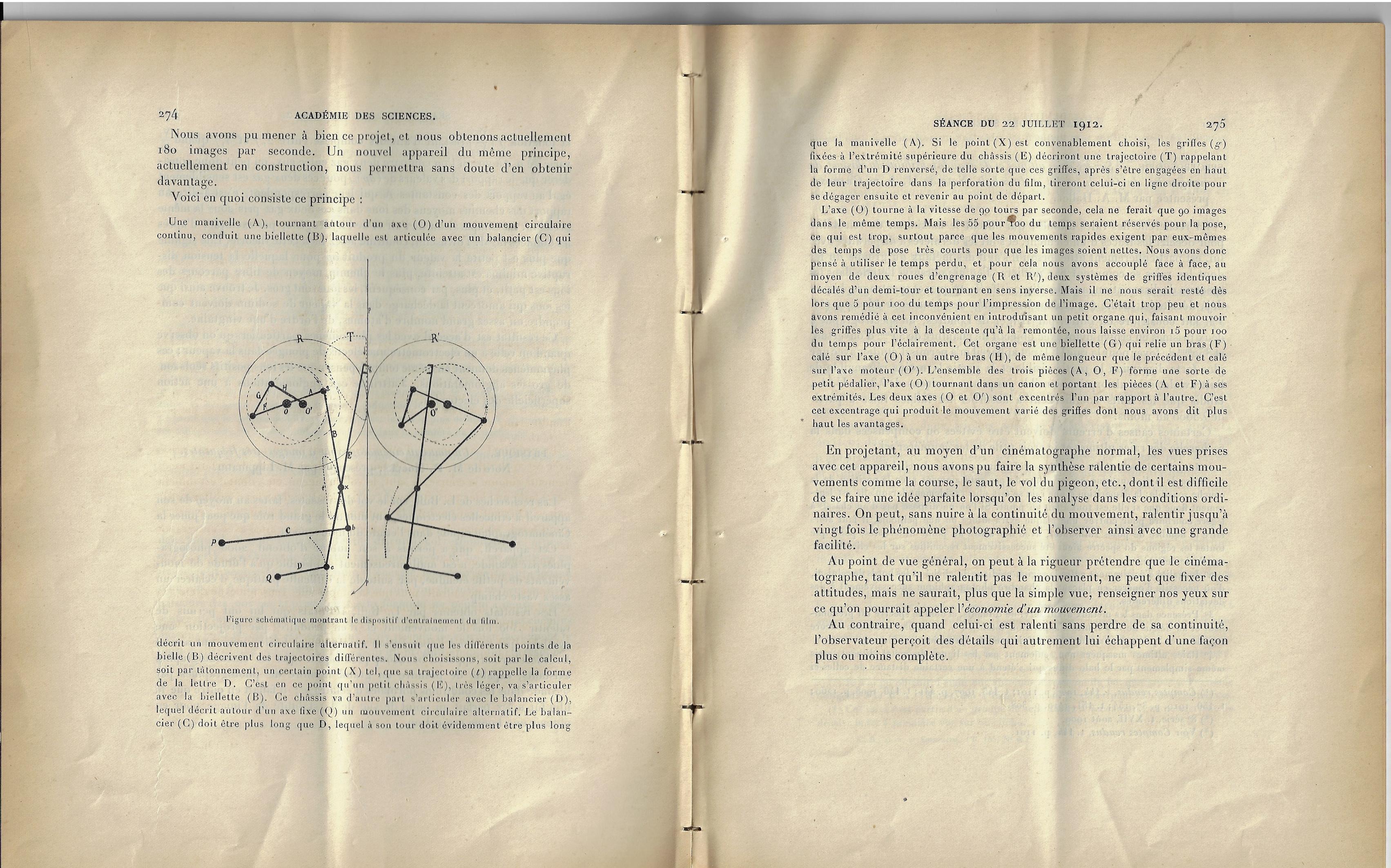
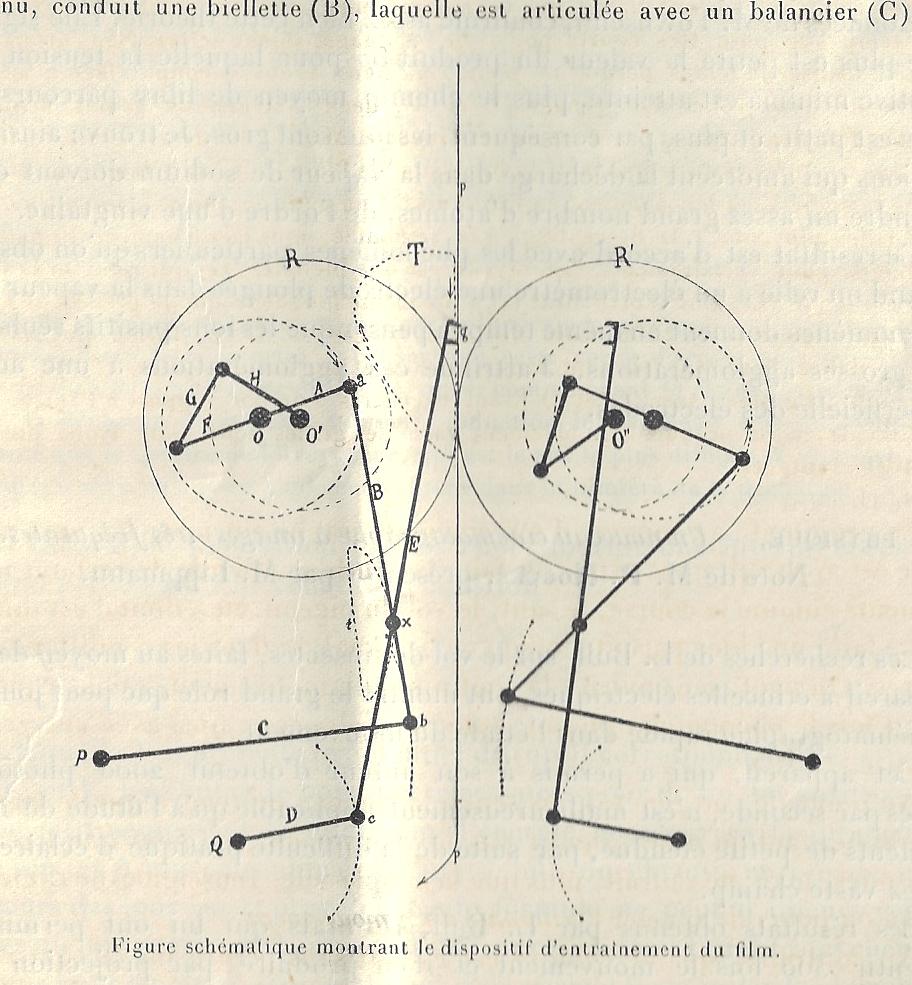
    CR 1912 Nogues kinematographThis is one of those posts where I was looking for something in the Comptes Rendus and then found something completely different. The what-it-was was something about Poincare1, at this point dead for just a week, the second titanic to disappear this year–it is really impossible to understand how he was able to do what he did in a lifespan of 58 years…of course he was a master of nearly every field, and was able to work his math problems out in his head first before writing them out, so it helped to be a multi-genius–and while not finding a notice on his death in the weekly issue I did “discover” an intriguing (and unrelated to Poincare) illustration. 

    At first I thought it would be related to an article on the depiction of motion as the drawing seemed to represent the anatomy of two dancers, and have some sort of fourth dimension/art/science relation, or whathaveyou, but then I saw it was a schematic for a part of motion picture camera–a kinematograph/cinematograph–that made 180 images per second, and would be just the sort of instrument used to study fast-moving objects in minute detail. So the schematic really did portray the essence of what the machine did, exploring the designs of motion.  

    CR 1912 Nogues _detail_

    ____________

    Notes:

    1. Poincare knew basically everything…here’s a toss-off from him that has stuck with me: “To doubt everything, or, to believe everything, are two equally convenient solutions; both dispense with the necessity of reflection.
    2. P. Nogues, “Un nouveau cinematographe a images tres frequentes”, in Comptes Rendus de l’Academie des Sciences, 22 July 1912, pp 273-275. 
  • Another Antiquarian Man Ray Rayograph (1872)

    JF Ptak Science Books   Quick Post

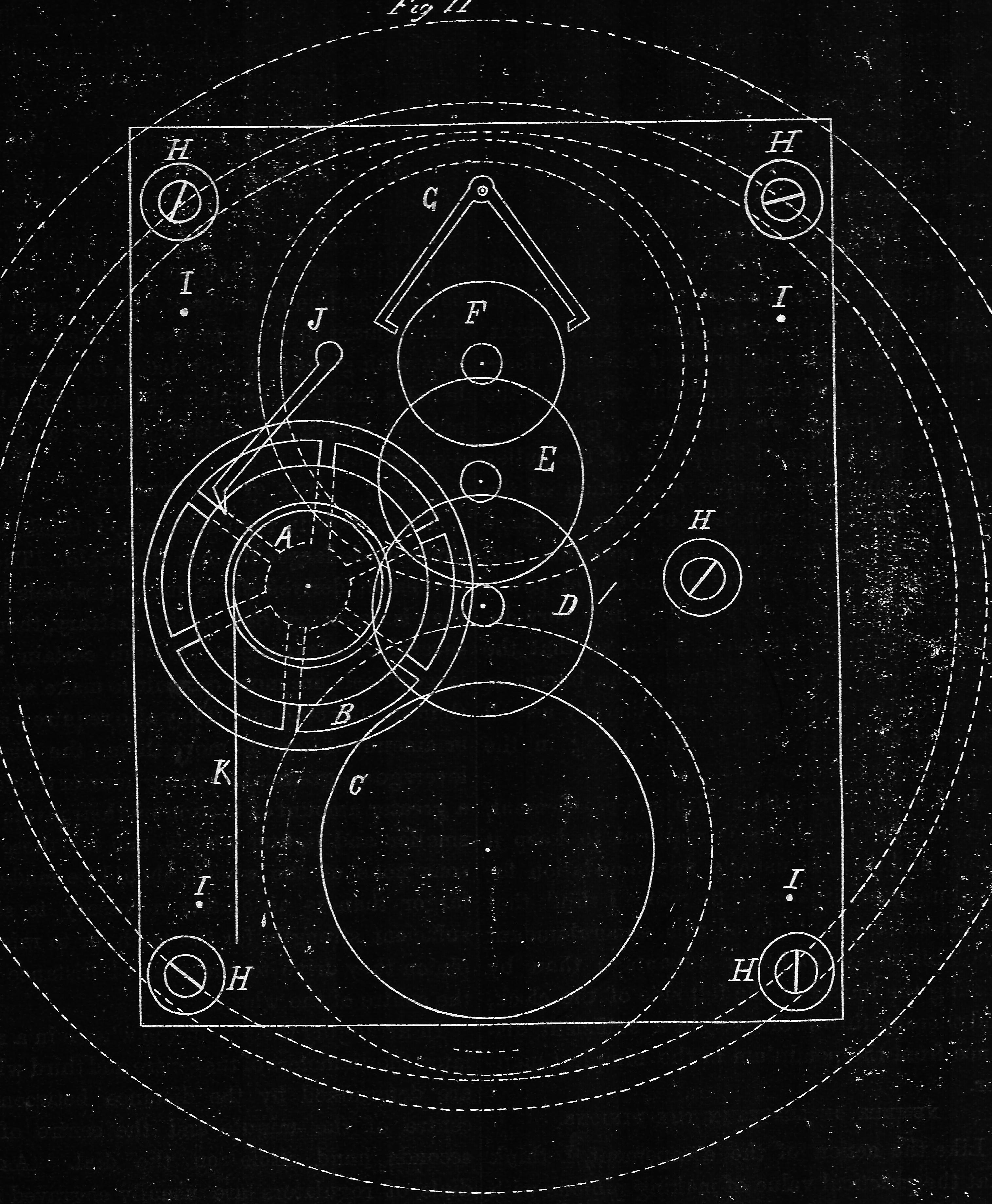
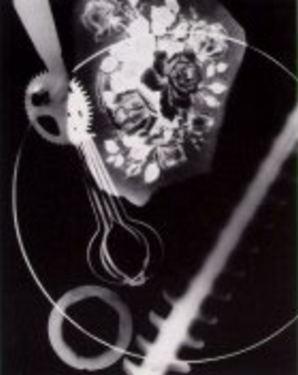
    Earlier on this blog I posted about a prehistoric (man)rayograph, using a negative of an engraving from 1810 to stand alongside a modern rayograph–today though I found an engraving int eh same category but already in negative.  This one is from the American Horological Journal (volume 4, November 1872) and bears more than a passing resemblence to the modern avant-garde photographer’s x-ray work–or perhaps I am pushing teh envelope on their relationship. Bottom line, though, is that the technical aspects of these clockworks are artistic visions in themselves, even when completely out of context (even as lovely as they are in context). 

    https://historyofideasblog.com/thesciencebookstore/2012/06/a-prehistoric-rayograph-a-proto-example-of-man-ray-from-1810.html

    American horology

     And a rayograph:

    Man ray ograph

    ·Posted by :

    ·in:

  • Found Poetry on Buried Bees (1865)

    JF Ptak Science Books   Quick Post

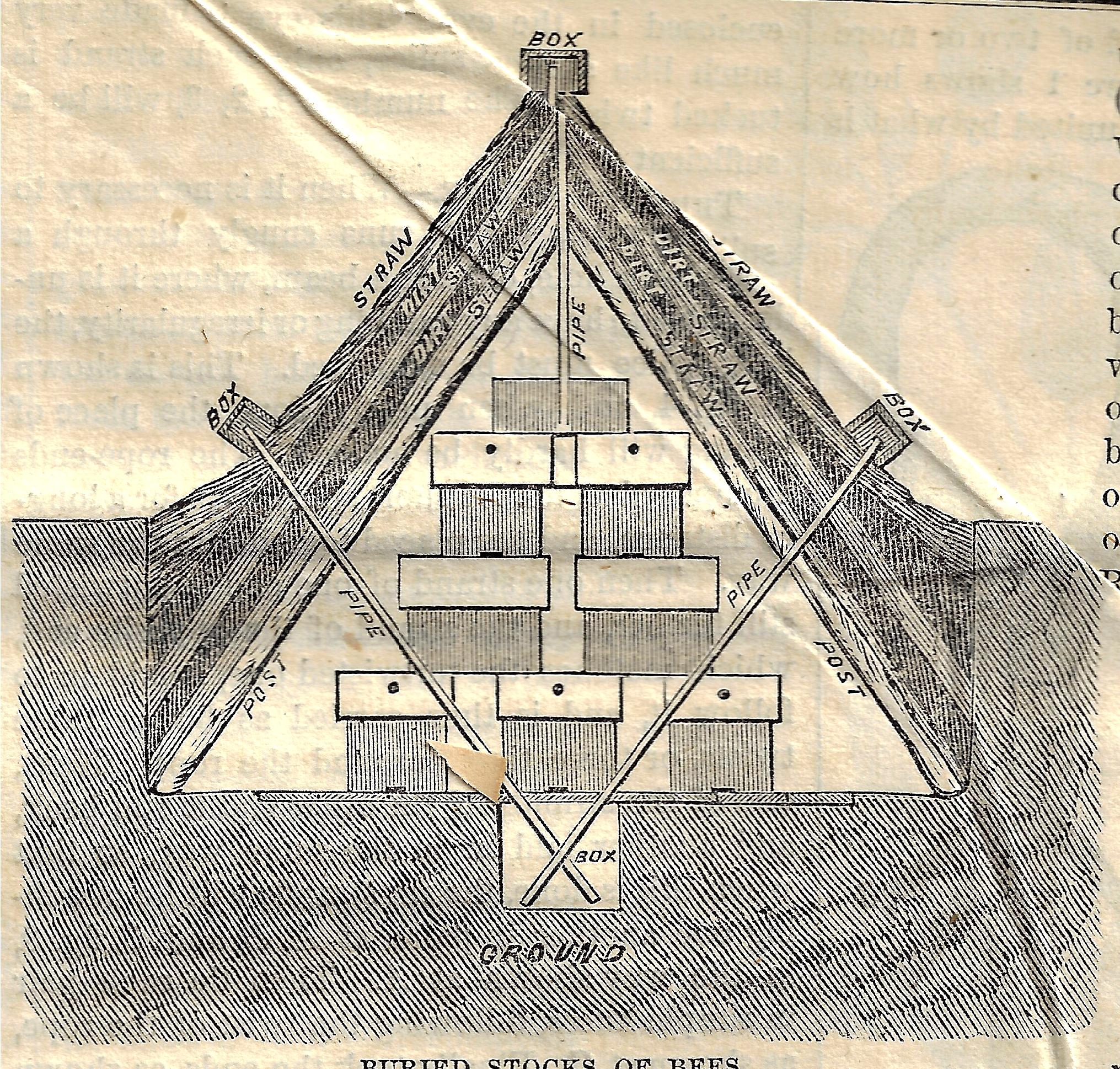
    I found this report in an issue of the American Agriculturalist (1865), waiting quietly to be arranged and re-arrange, but hopefully not mis-arranged.  In any event, the title was quite outre (“Burying Bees”) and so was the caption of the article’s illustration (“Buried Stock of Bees”) which stopped me for various out-of-context reasons, all before I found the dry-but-lyrical descriptive text.  So I lifted a bit of that directly, and poemized it in placement only. The result:

    Bee underground

    Bees may be buried when flowers are gone,

    and left until they come again.

    Weak stocks may be wintered,

    but they are usually more trouble than they are worth,

    because they are annoyed and kept weak,

    if not robbed by the stronger stocks,

    and because they consume proportionally more honey to keep them warm.

    While in the ground each bee eats its own allowance.

    They are not annoyed by the mice,

    nor disturbed by the changes of the weather

    but really are at rest; nor is the expense much compared with preparing

    and placing bees in a  room, or cellar, or watching out of doors,

    following which we buried our stocks last winter.

    ·Posted by :

    ·in:

  • The Department of “What is It?” (#1)

    JF Ptak Science Books   Quick Fanciful Post 

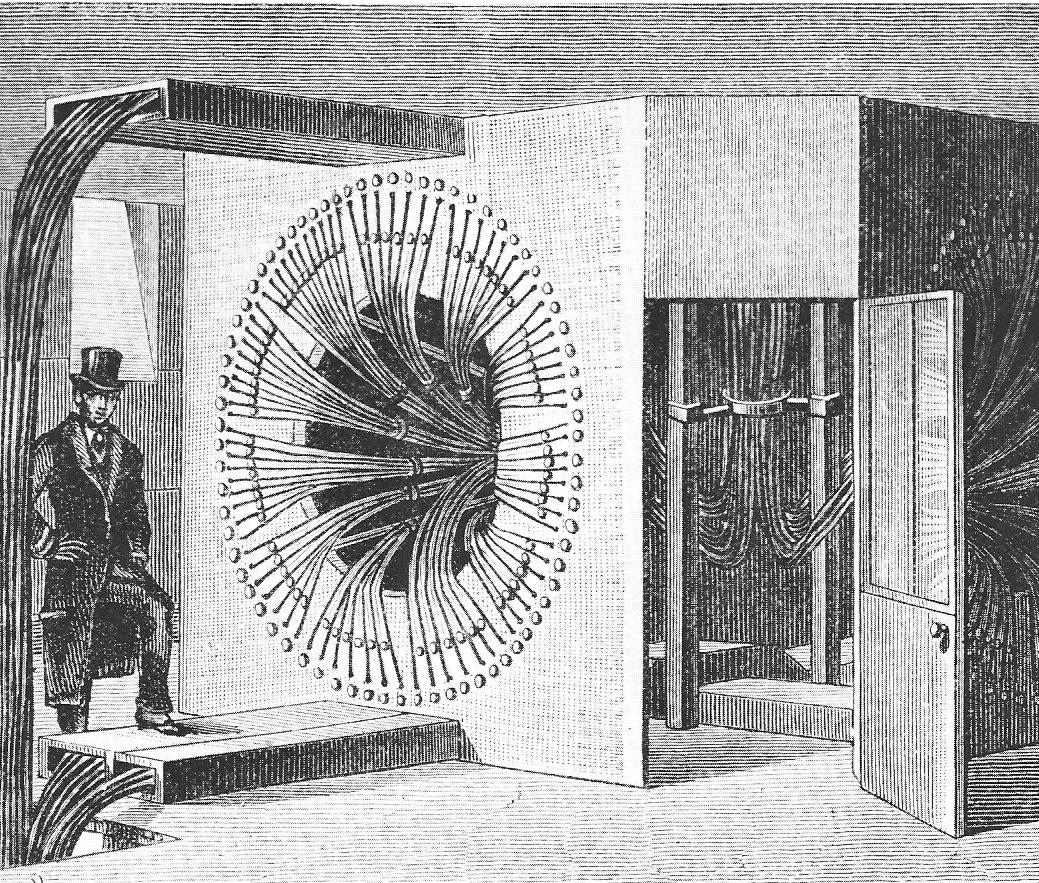
    On a recent reading graze I found this most interesting image and thought that it could be a number of things besides the thing that it really was:

    What is it Paris telegraph nodes

    So, what is it?

    A) An attempt at a Time Machine.  (Stephen Hawking said  “[i]t seems there is a chronology protection agency, which prevents the appearance of closed timelike curves and so makes the universe safe for historians”.  Feh for our story line and image! We’ll let this stand and say that this would be a Wellsian vs. Thornian time machine.)

    B)  A Victorian listening device for extreme and well-to-do introverts that allows for the home dweller to stay inside and listen to everything that is going on in the immediate vicinity of their house.  The remarkable bit here is that it was discussed that a retired physician, Manbot Fettle Dolp had one of these devices installed at his house in Kensington and actually recorded some 100 Edison cylinders worth of found sounds, an acoustical portrait of high Victorian London that without his effort would have been completely lost.

    C) A tailoring device that would automatically record all physical attributes of a customer when they passed through the thing–it turns out that physical anthropologists used the device first to record all body aspect of criminals for a database of “what criminality looks like”, but the results and tests were abandoned after it was determined that the author of the study, Rev. Fitzwilliam Fitz William, was the perfect average of the criminals he measured. Rev. Fitz William said the results were obviously “deeply and irretrievably wrong”, though he did have some thoughts on the redemption of the project when writing from his prison cell twenty years later in Reading Goal. 

    D)  The terminal of a central telegraphic station. (“The requirements of telegraphic communication on a large scale created widespread telegraphic networks. The “nodes” of a network, shown here, involved a respectably large number of circuits.”)

    Answer below the “Note”:

    Note:

  • Facts and Requirements of Recruitment in the U.S. Army, 1935

    JF Ptak Science Books    Quick Post

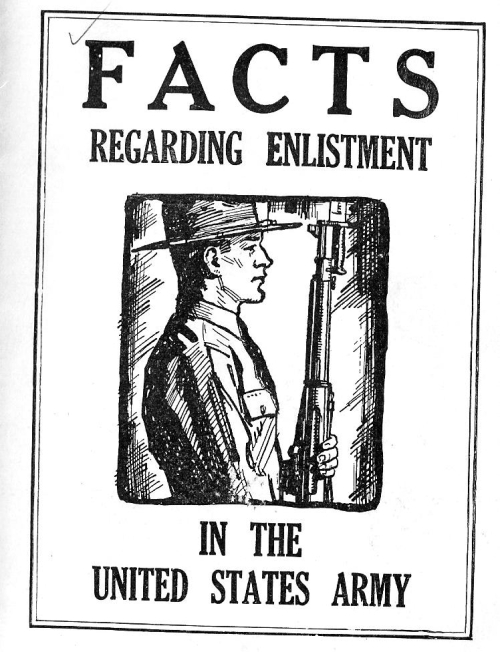
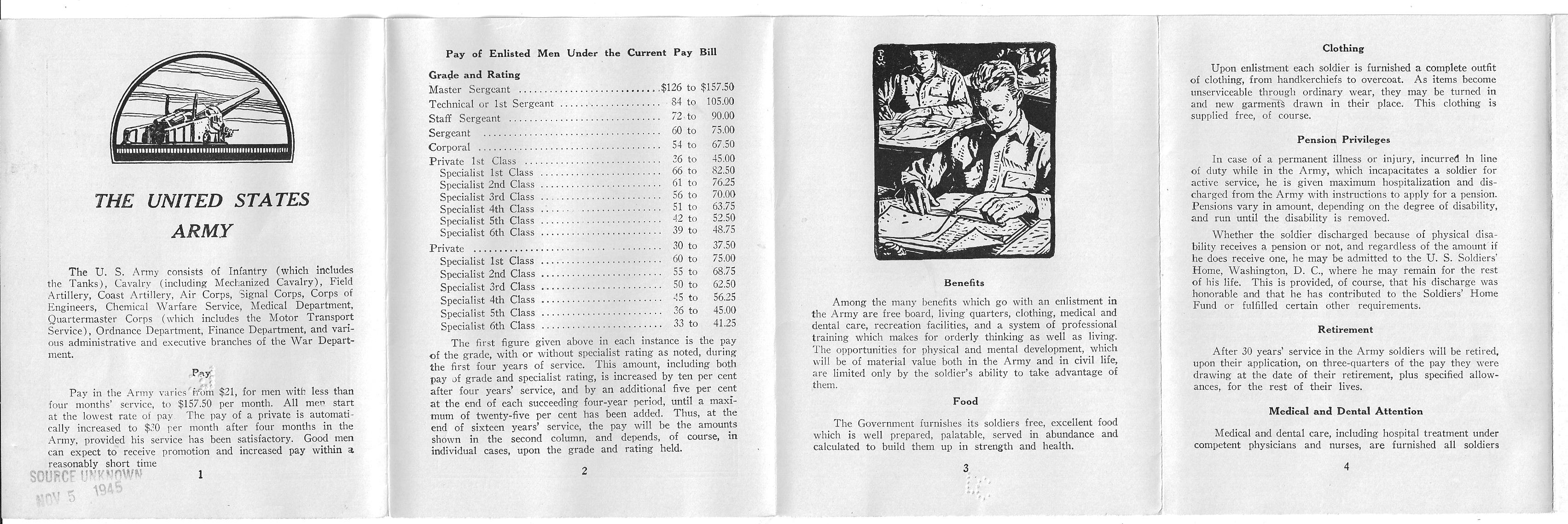
    This bit popped up this afternoon in a browse through some military material: Facts Regarding Enlistment in the United States Army seems to have been printed in the mid-1930’s, the illustrations have a sort of WPA feel to them, or at least they do not have a standard green sensibility. In any event. I’ve reproduced the pamphlet here, with all of its interesting facts and factoids, not the lest of which are the pay grades for non-com and enlisted men.  One thing that stopped me was the dental requirement–the army needed recruits to have at least 12 teeth, which doesn’t really sound like very many. (I think I remember–perhaps in Donald L. Miller’s history of WWII?–that in the bad part of the war the Marine Corps, in 19043/4, lowered that 12-tooth requirement to 8. It was a very tough time for the Corps.) By the way the whole document is printed on one piece of paper, 5″x18″, printed in both sides.

    Army recruit cover 

    Click on each for a clear much expanded view of the pages:

    Army recruit _1_

    ·Posted by :

    ·in:

Recent Posts

Archives

Categories