A Daily History of Holes, Dots, Lines, Science, History, Math, Physics, Art, the Unintentional Absurd, Architecture, Maps, Data Visualization, Blank and Missing Things, and so on. |1.6 million words, 7500 images, 4.9 million hits| Press & appearances in The Times, Le Figaro, Mensa, The Economist, The Guardian, Discovery News, Slate, Le Monde, Sci American Blogs, Le Pont, and many other places… 5000+ total posts since 2008.

  • The Face of Defeat, the Philippines, 1907

    JF Ptak Science Books     Post 1398

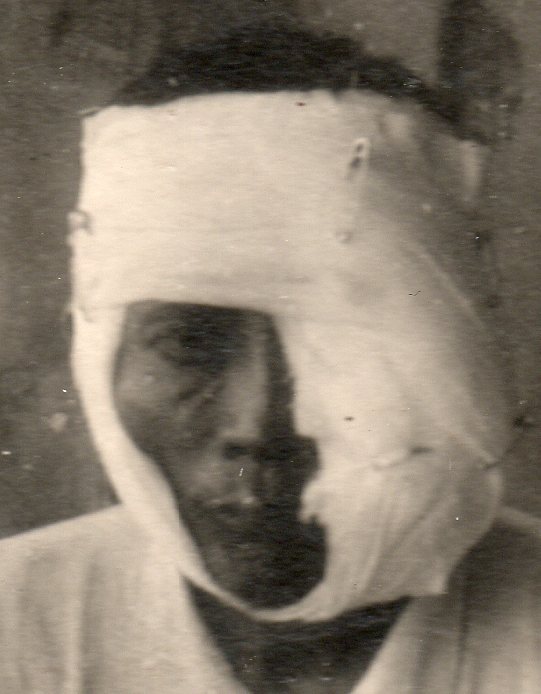
    This is what defeat looks like, or at least so it did in the Philippines in 1907, when the revolt against the Spanish and the Americans was finally at end, for the insurgents. 

    ===blog==aug 24=big faustino face

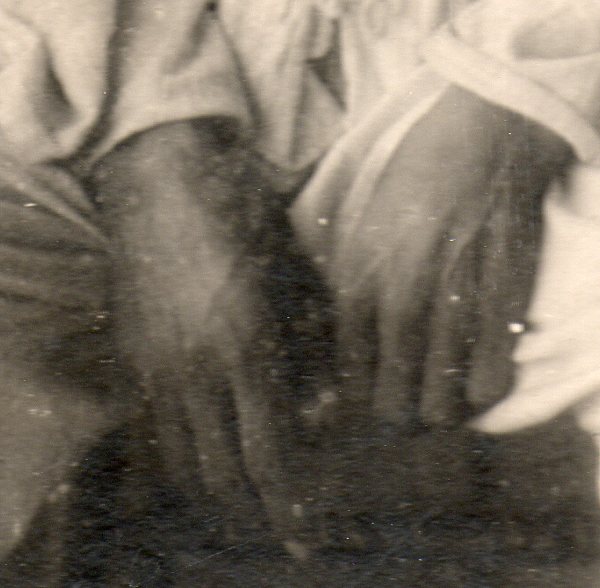
     Ablen Faustino (fl. 1880-1907), Philippine religious and resistance leader, was still fighting against the  American government seven years after the U.S. had claimed victory over the Spanish in the Philippines, and represented the last bit of Philippine resistance to American occupation and sovereignty.  There are many stories regarding his final disposition—some of which having the man escape into the woods to die an old man—but from the look of Faustino in this picture it seems as though he was going nowhere, except for a short walk into the heart of darkness that would swallow him just after the photo was taken. (The original photo is available on our blog bookstore site, here.)

    ===blog==aug 24=big faustino smaller

    On the one Faustino was a terrorist; on the other he was a patriot and holyman fighting for his country.  He had fought the Spanish occupiers in the 1880’s until he was captured and imprisoned.  After his release and following the American victory, he founded a religious/insurgent group—the Pulahans–whose ultimate religious experience was to defeat the invaders or die trying.  (From where I sit it seems as the requisite belief was death in battle for this struggle rather than the actual victory which was the benefit to the followers.) The Pulahans for the most part eschewed firearms and other “modern” weapons, launching themselves into battle with bolos, knives, and little else, hoping for hand-to-hand fighting.  It is reported that there were 10,000-15,000 of these troops, making them a formidable army,  frightening if you were one of the soldiers that they were going to attack.


    Faustino208

    These post-war Pulahan Wars lasted from 1902 to 1907, ending with their leader’s capture by Philippine Constabulary and the 8th U.S. Infantry.One of the few official reports on Faustino’s capture was recorded in a legal document regarding jurisprudence in the arrest of the others who were with him that day.  In U.S. v. Espiridion Rota et al (found in the Supreme Court Reports of the Philippine Islands, volume IX, published in Manila in 1908), the unfortunate story of the application of law to the other five men is told, as is the mention of Faustino’s capture.  It turns out that when the others were taken into custody and the wheels of justice began to turn, they all pleaded guilty, and charged with the crime of brigandage.  Rota was sentenced to hanging and the others to imprisonment for 35 (+) years.  Plus court costs.  Their case was appealed because it was said the men had no idea what the guilty plea would get for them in the punishment phase; the Supreme Court upheld the conviction as well as the discipline, which was a little moot for Rota as he had already been hanged.

    Faustino209

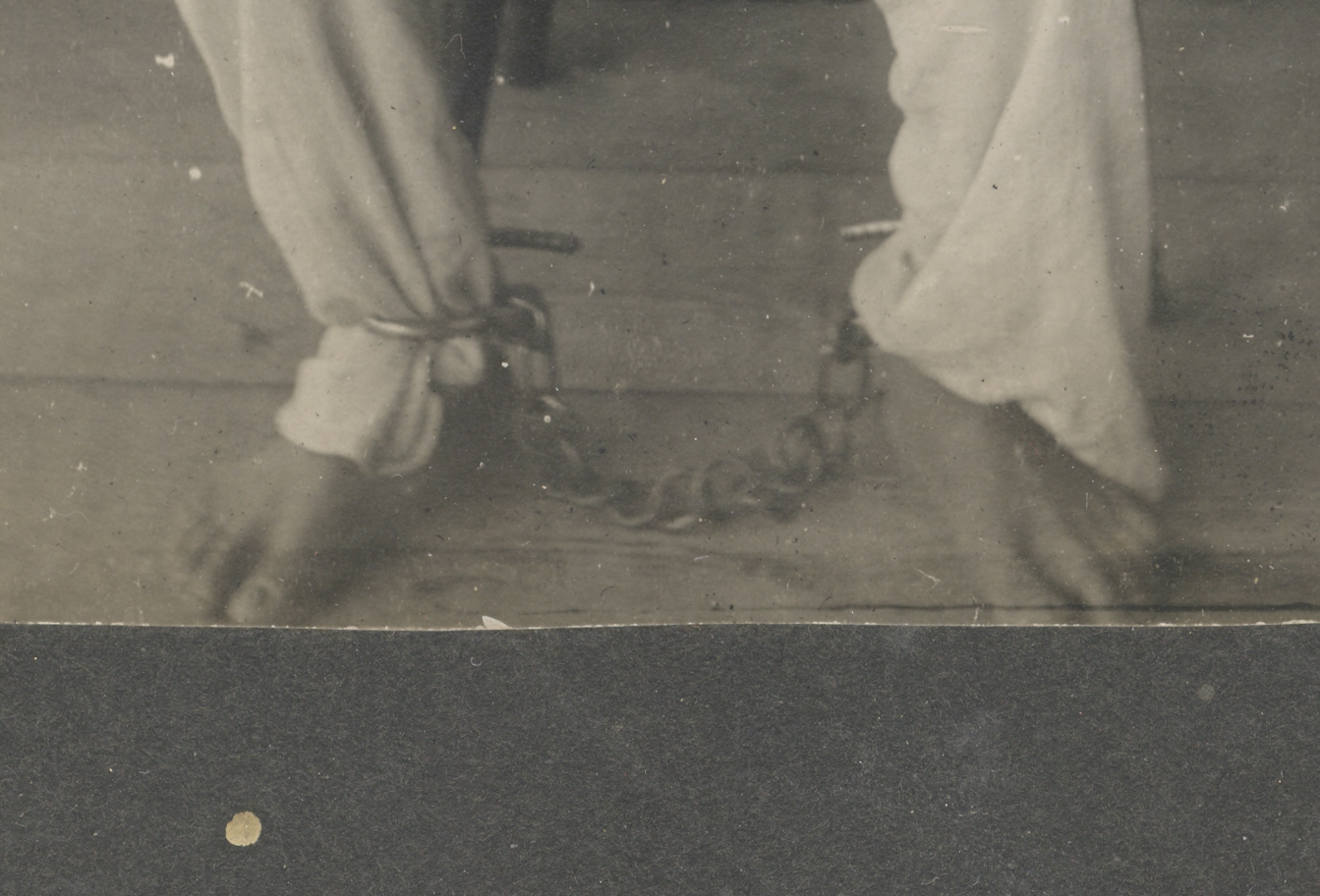
    ===blog==aug 24=big faustino feet What one might infer from this, I think, is that Faustino’s date with his punishment was probably met right there by the hut in which this photo was taken; that his destiny was sealed; and that rather than martyr a religious leader, the troops merely took the severely wounded  (and beaten?) man into the woods and disappeared him. 

    According to the historical sites which have used the other two photos of mine of this event (all done freely and without attribution, unfortunately), these are the only known photos of Faustino’s last times. 

    Another version of the capture of Faustino is less shining:


    ·Posted by :

    ·in:

    —
  • Underground & Resistance Fighting, 1943–Sharp Hearts-and-Minds Reading for the Allies

    JF Ptak Science Books    Post 1399

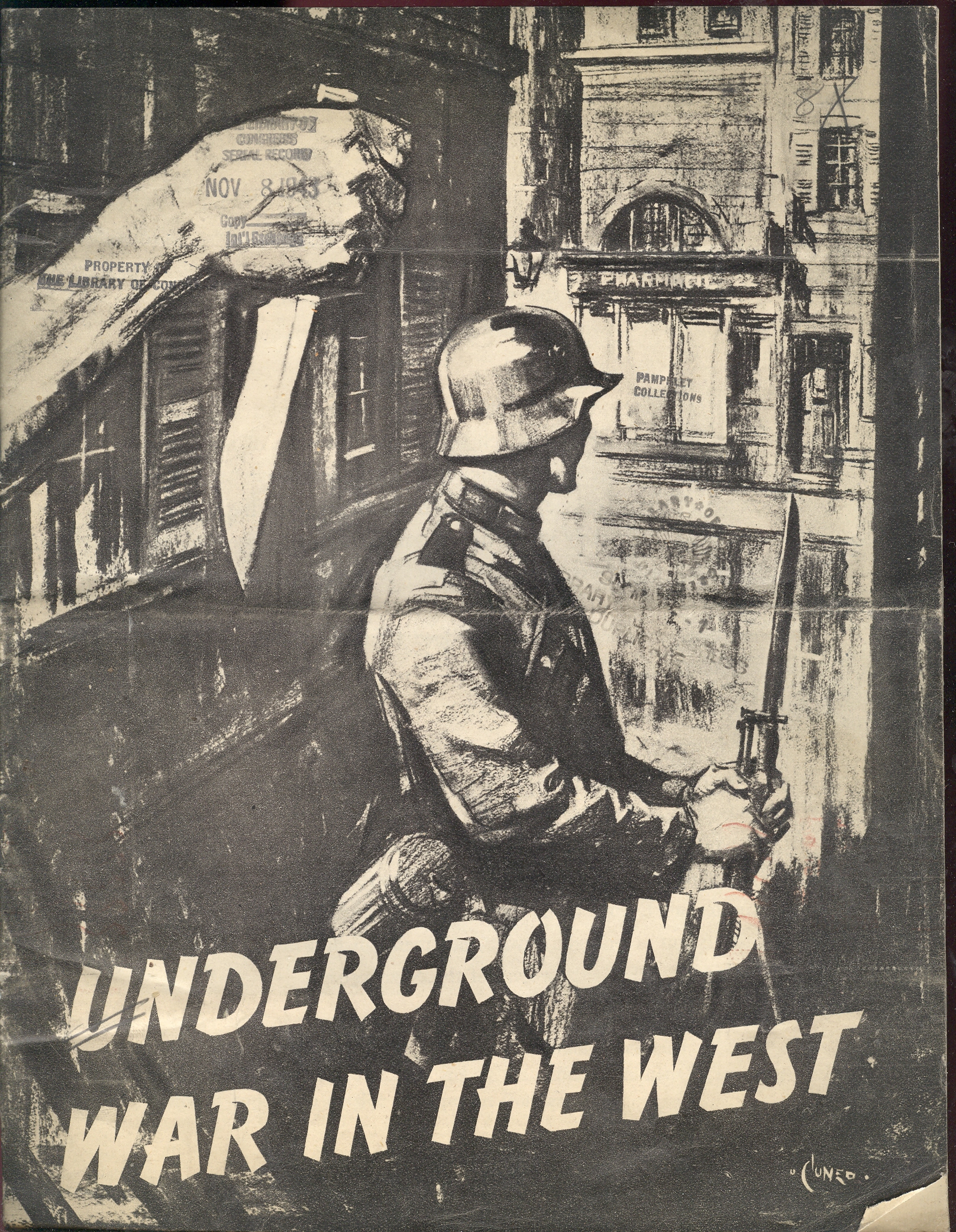
    This pamphlet really seemed like a tiger in a cage—looking through some of the collection here relating to WWII literature on activities in occupied countries, the startling cover graphic of Underground War in the West (printed at some time in 1943, and not before or after) really rattled its cage.  Its contents were non-too tame, either—while being reasonably polite (as was the fashion) it still invoked some very difficult ideas and images.  (The original pamphlet is available at our blog bookstore, here.)

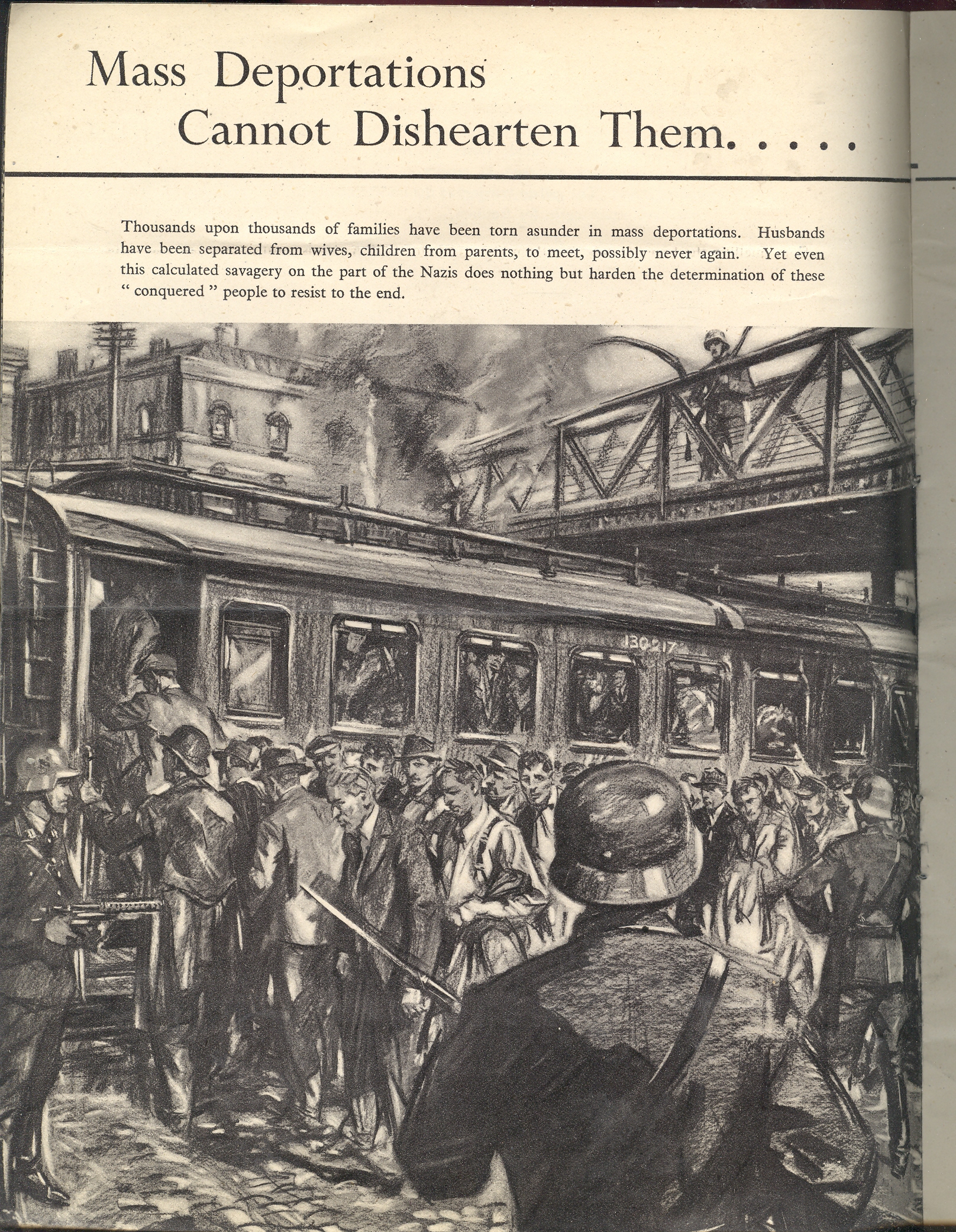
    Blog jan 7 undergrd cvrThis was a terrific, mass appeal pamphlet on the underground actions of occupied Europe illustrated with pencil and charcoal drawings by Cuneo, with each page depicting a  resistance activity—including the underground press, medical aid, sabotage, and general murderous nuisance-making and in general pamphlet praises and celebrates the heroism in occupied countries such as Czechoslovakia (with a drawing showing the assassination of Heydrich), Holland (showing the Dutch caring for a wounded RAF pilot), Belgium, France, Greece. Norway, Poland, Yugoslavia and Luxembourg.

    There are full-page drawings relating to the strength of occupied people in the face of “Mass Deportation (cannot dishearten them, thousands and thousands of families have been torn asunder in mass deportations…”) and “Firing Squads…thin the patriot ranks yet ever more step into their places” . The section on “Facts from the Occupied Countries” list activities in 9 occupied countries;  under “Poland”, we read that “Germany has drawn a veil of silence around Poland…it is estimated that 2,500,000 Poles have died in concentration camps or by execution up to December 31, 1942. There are 54 concentration camps in Poland…and the average life span in the camps is nine months…”  Nowhere in the pamphlet however is there any singular mention of

    Blog jan 7 undergrd deport

    deportation or murder of the Jewish people—there were hundreds of articles printed in American newspapers up  until this time on the beginning of the (yet named) Holocaust, though acknowledgment of a fact doesn’t necessarily make it widely known in spite of its incredible and massive significance.  This pamphlet, while extraordinary in mentioning the millions of deaths in the concentration camps and “deportations”, was rather ordinary in its coverage of who it was that was being murdered in the camps.  


    There is also a two-page spread exhibiting examples of underground newspapers:


    ·Posted by :

    ·in:

    —
  • The Discovery of the “Obvious”–Joseph Lister and J.N.L. Durand and their Major Discoveries

    JF Ptak Science Books   Post 1400

    Bloglisterwash Sometimes things that we take for granted—the “of course” kinds of things that were seemingly always here because they’re just, well, so obvious—that one needs to take a step back to appreciate their discovery, or invention, and to mind the fact that someone did have to actually bring these things to some sort of birth.Bloglisterdurand

    These two (seeing and touching) would make great entries in our fictional encyclopedia–who was the first person to see (“ah, it was Nem Teff in 8211 BCE, in an area very close to the teeming slum of today’s Bagdahd; he of course was a disciple of the Shenta-kra philosopher Boot Strap, who only four generations earlier came up with the idea of “touching”. What people did to get around before Mr. Strap invented touching and before people could see is a matter for wide conjecture“–Pastor Steng “No Stink” Pallor, writing in the volume “I” of The Great Encyclopedia of Unknown, Non-Existent and Ficticious Things, published in New York City by Phantom Touch Press, 1972.)

    But we’re dealing with new applications of sight and touch here, although by and large these applications had a huge impact on the rest of civilization on their own merits. 

    Take for example the lovely Jean Nicolas Louis Durand.  He was a radical rationalist, an advanced thinker in the field of architecture and one of the most influential instructors and writers on architectural history and theory of first half Bloglisterboullee of the nineteenth century.  Durand also had his wild side, as well, but that took place when he was in his carefree (read: “adventurous”) thirties—this period of enormous and unusually creative work in architectural design also took place during the French Revolution, which was a bad time to be thinking this stuff up, let alone building it.  (Some of the other French visionary architects of this time nearly lost their heads because of their non-revolutionary creativeness, but that’s another story.)

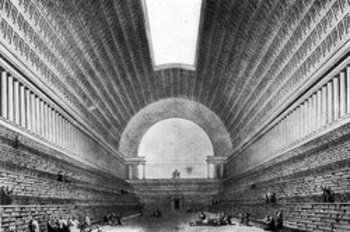
    (This is Boullee’s design of the megamonumental library for the king, 1784)

    Durand came about this intuition naturally and also because he was a draftsman for the great Etienne Boullee, who we mentioned a few posts ago.  (Durand would he execute a series of drawings entitled Rudimenta Operis Magni et Disciplinae, which are probably a pictorial representation of Boullée’s theories.)

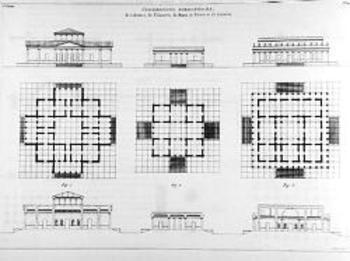
    What Durand introduced however that was so revolutionary and so much his own was this—he was the very first architect to publish a work of comparative architecture in which all of the buildings were drawn on the same scale. 

    That means that previous works—all previous works—of comparative architecture compared one piece of architecture to another on different scales.  That would seem to be a truly bad idea, given the nature of the comparative beast and all, but there you have it.  I really have no explanation for why this was the case, or why it took until Durand’s Recueil et parallele des edifices en tout genre…(1832)  to make it so in the fourth century of the publication of works on architecture, but it did.

    Another example of what would seem to be sublimely obvious was the innovation of a Scottish surgeon in 1867Bloglisterine_2 .  People today I think intuit his surname from exposure to television commercials for a certain mouthwash, but this would be like knowing the importance of Isaac Newton from those figgy cookies—and that just isn’t right.  Joseph Lister (1827-1912) figured out—through exposure to ideas by Ignaz Semmelweiss and Louis Pasteur, among others—that the infections in wounds that caused so many surgical deaths was not caused by the miasma in the air, but by something entirely different. 

    In his article in The Lancet of 21 September 1867 (and in his subsequent publication in book form later that year called Antiseptic Principle of the Practice of Surgery he explained what he thought was the cause—microorganisms that traveled (at least) from the surgeon’s hands onto the wound, and not by something floating around in the air.  He began treating wounds with a solution of carbolic acid (which had been used Bloglisternewton previously to remove the stinking stench from sewerage), and saw immediate results in the prevention of infection and gangrene.  His next big step was to have surgeons wash their hands with the solution and wear gloves during surgery—because, up until then, surgeons went from dinner to intestines without the necessary benefit of having clean hands or wearing gloves.  This seeming minor change in surgical procedure resulted, I think, in saving more lives than any other procedure ever invented.  And it was mainly, really, from washing your hands before putting them into someone else’s body.

  • Fantastic and Blandly Supra-Inspired Book Titles

    JF Ptak Science Books   Post 1401

    Fabulous titles216This is another in a series on fantastically-titled books and pamphlets.  When written the titles were aptly descriptive, indicating their contents, selling the wares, so on–but now, with a little time between publication and now, the connections of the titles to the contents seem to have withered like dried toothy neurons, gainfully displayed for all to see in their isolated weird elegance. 

    Fabulous titles214
    And so we experience the found, unintentional absurd in printed material like some of the examples below.  Their title pages can be experienced as art in a way, at least today, so far removed from their original meaning and context that the words float like disembodied arks of meaning looking for whatever piece of land/meaning that they bump into.  Sometimes their titles are the bizarre-ity, masking a mundane, pedestrian contents; much of the time the title and contents emanate the stench of lost meaning through and through. Sometimes the titles are just nothing. 

    Fabulous titles212 Fabulous titles215   Fabulous titles210
    Fabulous titles213

  • Spirit-Generated Art, 1871: Far-outside Outsider Art

    JF Ptak Science Books    Post 1402

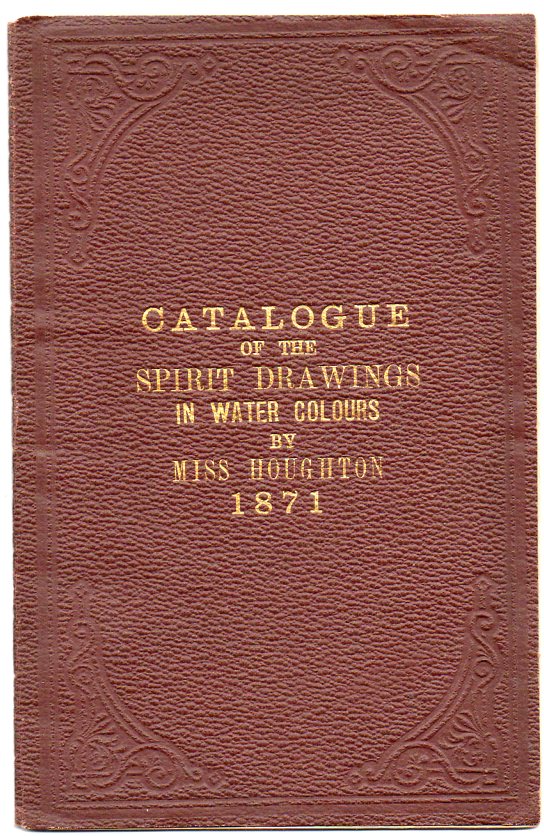
    Houghton219 This slim booklet,  Catalogue of the Spirit Drawings in Water Colours, Exhibited at the New British Gallery, Old Bond Street (London: 1871), offered descriptions of the work of  Georgiana Houghton (b. 1814), an artist who in some way communicated with the spirit world, and allowed her art to be guided by it. She writes in the very first paragraph of her catalog’s introduction, “the execution of the Drawings my hand has been entirely guided by Spirits, no idea being formed in my own mind as to what was going to be produced…”  She explains that the spirits were definitely those of dead people, and after having heard of such possibilities of communication as early as 1859 set out to “obtain mediumship”  by holding hands with her mother at a small table for some months on end waiting for contact–which of course she says happened.  Sundays worked best, “as we should then be less disturbed by evil influences”.   The spirits would communicate at first by table movement, then tapping,  and then through the alphabet by the use of a planchette. So it seems to me that given that she had abandoned her own input in the creative process (even though she had a history of formal art education or instruction), and that the inspiration she received seemed not to be her own, that Miss Houghton was an outsider-Outsider artist, pursuing the spoken artistic needs of others, and then providing her own interpretations of the forms and colors. (We offer the original copy of this catalog at our blog bookstore.)

    It seemed that Miss Houghton was inspired by the spirit drawings of a Miss Wilkinson–it was then that she sought the artistic guidance of a dead artistic sister though without success, and then from a dead brother.  It was the brother who brought her into contact with dead Henry Lenny (“a deaf and dumb artist”) who then guided her hands at first with the planchette, then with a pencil, and finally to watercolors. 

    After ten years of her own spirit drawings, Miss Houghton produced for herself a four-month show at the New British Gallery on Old Bond Street, exhibiting 155 of her works, all exhibited in rented frames for the occasion.  Her reviews seem to have been very-light and  mixed at best,  and for all of her effort and trouble, she sold only one painting,  She did however produce a catalog of the exhibition, which was a great aid to the viewer as the interpretations of the meanings of the forms and colors that Miss Houghton used were written on the backs of the artworks, which were hidden from view by the frames–many of the paintings’ meanings were annotated in the catalog.

    Georgiana

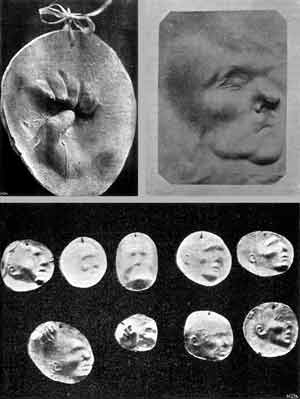
    Miss Stoughton was hardly alone in this field of representing what seems to have been a very actice after-life of the dearly departed, though it seems that not as many participated in her own brand of automatic representation than other methods of spirit communication.  She did appear at the beginning of what would become a significant culture of spiritualism, with spiritual manifestation, telepathic communication from one person to another and then to the dead, thought transference and  magnetisation.  The evidence of spiritual contact was produced on high levels, not the least of which were seances in which the dead appeared as floating ghosts filled with quiet or phantasmal groans and noises, sometimes luminous, sometimes leaving the medium’s body as colored smoke, sometimes appearing as an electric spark, or an imprint on a photographic plate, or an aural shadow produced in iron filings, or an impression made in clay or other accepting materials2.  They offered possibilities for hope and belief that are no less vigorous than our own today, save for their technological limitations.  (An interesting article, “Proof Positive, the Photomatic Body in fin-de-siecle Science, by Alessandro Violi, can be seen here.)

    There is a very interesting article on Houghton and the exhibition by Rachel Oberter called  “Esoteric Art Confronting the Public Eye:  the Abstract Spirit Drawings of Georgiana Houghton” which was published in Victorian Studies 48.2 (2005) 221-232.  About the pre-Abstract abstract and proto-impressionist work, Oberter says:

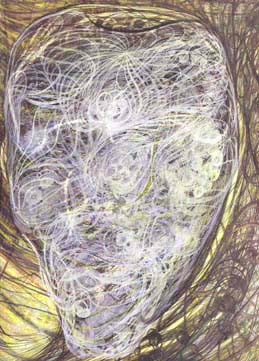
    “Given the lack of abstraction within Victorian visual culture, watercolors such as those painted by the artist Georgiana Houghton in the 1860s and 1870s seem shockingly out of place. In her work The Eye of God from 1862, we see a tangle of transparent straight, wavy, and spiraling lines flowing out of the left corner of the paper and up from the bottom edge of the page as white filaments float across the surface. No recognizable forms appear; all that is visible are lines and colors—yellow, sepia, and blue. There is an organic quality to the undulations, a sense of microscopic detail, and a feeling of being in a deep-sea world or otherwise mysterious place. The vagueness of the imagery contrasts with the specificity of the title, which evokes a dense underlying symbolism. Houghton attributed meaning to particular shapes, colors, and directions in her paintings. While her works were abstract, they remained representational.”

    “The most important tools for decoding these works are the explanations that Houghton wrote on the backs of the drawings [above] . These elaborate descriptions provide a key to the symbolism in the drawing, clarify the message of each work, and name the spirit who acted as Houghton’s guide in the creative process. Houghton believed that these explanations were written by the spirits through her hands; they are automatic writings that complement her automatic drawings. The same spirit who inspired the drawing provided the interpretation on the back—the explanations, one could say, came directly from the source.”

    The catalog does give Biblical references for every one of the works, giving at least a location in the Bible for every artwork.  There are occasional (though sparse) longer descriptions of the work, though the great majority give Biblical citations for what each of the paintings represents. 

    Also of interest is Ms. Oberter’s description of the gallery event:

    “…in 1871 she exhibited her works in a more formal venue: she organized an exhibition at the New British Gallery in Old Bond Street in London. The exhibition, entitled “Spirit Drawings in Water Colours,” lasted for four months and consisted of 155 of Houghton’s watercolors. She rented frames for the occasion and hung the watercolors against the walls of the gallery. This arrangement meant that the backs with the explanations would not have been visible. Yet it was still critical for Houghton that she convey this hidden information to her viewers. In her autobiography Houghton recalled: “The chief object aimed at in this Exhibition, was not so much to display the wondrous powers of the unseen intelligences, as to manifest unflinchingly to the world that true Spiritualism is inextricably bound up with the religion of the Sacred Scriptures” (Houghton, Evenings 2: 53). It was not enough for Houghton that the drawings serve as proof of communication between spirits and humans; it was also important that they convey the relationship between Spiritualism and Christian theology, particularly the insights that the spirits give about God and the Trinity.”


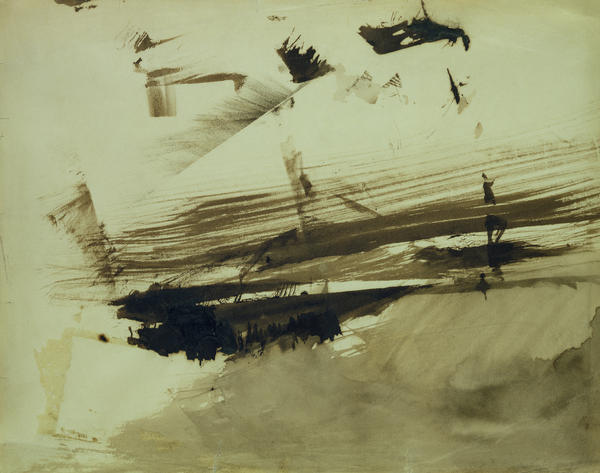
     The artwork of Miss Houghton is an interesting blip in the history of Victorian art, and I’m not exactly sure what to say about it.  It certainly occurs during the first wave of Impressionism, and is wholly different from that new art form as well as the high Victorian fashion of the time; it also is entirely non-representational, an abstract art that precedes that revolutionary phase by about forty years.  Its a little puzzling to me, especially since Miss Houghton seems to have escaped virtually any sort of lasting review or critique.  But again Mrs. Stoughton is not alone in the non-representational art field apart from the automatic spirit manifestations–for example, in addition to an enormous literary output, Victor Hugo produced some 4,000 pieces of art, some of which are exceptional examples (to my mind) of non-representational art that came in a period decades before the Kandinsky and the rest.  Here is Hugo’s “Evocation of an Island”:

    Evocation of an island Painting  - Evocation of an island Fine Art Print

    He was certainly outside the mainstream of Victorian art, and even well outside that of Impressionism. 

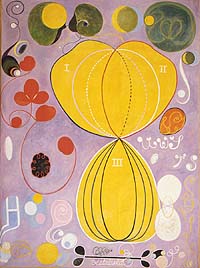
    There was also Hilma of Klint (b. 1862), a woman who like Stoughton also represented the spirit world through her art, and who began painting in non-representational and abstract ways beginning in 1897/8, an example of which is below:

      Hilma klint


    Miss Houghton went on to improve her representation of the spirit world through photography, a very wide selection of her work being available at the Keith De Lellis Gallery, here.

    In the realm of extra-sensical belief, I’m not so sure that these brands of spiritualism would be too much different from any other belief in things that cannot be seen, or heard, or felt in any detectable way, a prayer by any other name.

    Notes:

    1. Our catalog was the property of William Crookes (with his bookplate, and with a signed inscription to him from “Miss Houghton”)  who was an eminent British chemist and physicist and a pioneer in the field of vacuum technology (and remembered now mostly for the Crookes Tubes and his superior approach to experimentation).  He was interested in spiritualism from about the year 1869, pursuing it until his death in 1919.  He was hardly alone in his interests among highly-paced British intellectual elite:  Alfred Russell Wallace, Lord Rayleigh, Oliver Lodge and William James were all extremely interested in the spiritualism phenomenon.  Curious. 

    2.

    Imprints of ghost hands and faces
    Imprints of ghost hands and faces produced by Eusapia Palladino, from Bozzano, Ipotesi spiritica, 1903, in C. Lombroso Ricerche…, 1909


    ·Posted by :

    ·in:

    — —
  • The Mysteries Offered of Images out of Context

    JF Ptak Science Books   Post 1403

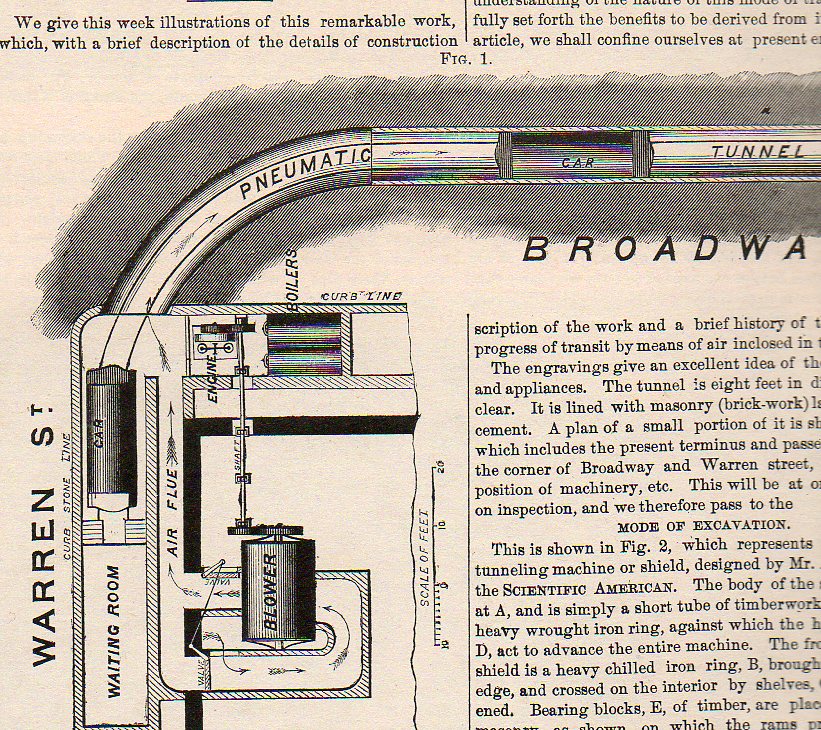
    “Certainly the most novel, if not the most successful, enterprise that New York has seen for many a day is the pneumatic tunnel under Broadway. A myth, or a humbug, it has hitherto been called by everybody who has been excluded from its interior; but hereafter the incredulous public can have the opportunity of examining the undertaking and judging of its merits.”  —The New York Times, on the opening of the pneumatic tunnel, September 1870.

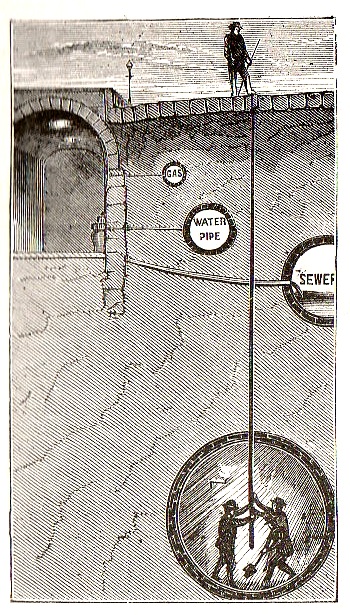
    These unusual images are all only so if they are removed from their context, taken from their stories, their explanations lost.  But the fact of the matter is simple–they show cross sections of some construction elements of “the pneumatic tunnel under Broadway, N.Y.C.” as it appeared in the Scientific American for 5 March 1870.  It was an experimental line, and did not really deserve the description received from the Times. The idea for an underground such as this was the brainchild of Alfred Ely Beach, and was basically a single-train, single-station, one-block system established for demonstration purposes, and was kept in operation from 1870 to 1873.  Technology overtook Beach’s idea of pneumatic propulsion with the development of electric trains, making the forced-air idea obsolete in short order.

    The images, without explanation, their purpose is well hidden.

    The first example simply depicts the way in which the progress of the tunnel was measured and mapped.  The two men underground sent up a series of pipes to the surface, under the very paving stone of Broadway, where a surveyor would make the spot where the pipes met the surface.  (We are told that this work was done at night, when the streets were empty.)  Any number of stories could be made of this image–all stretching beyond its intended purpose.

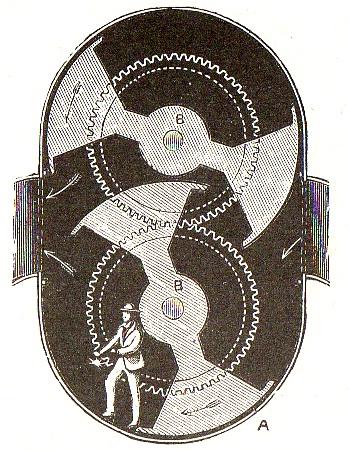
    Underground man224 This machine below could be virtually anything in the mind of anyone, except of course for its real purpose, which was to power the train.  It is a cross section of the apparatus, showing its two massive fans with a figure of a man added to show scale. 

    Underground man225

    “The power transfer is one of the most simple things imaginable. Air is forced into the tunnel by a gigantic blowing engine made by P. H. & F. M. Roots, of Connersville, Ind., a section of which is shown in Fig. 7. [missing] This blower is actuated by a steam engine of 100-horse power, and is calculated to deliver when worked at maximum speed, a volume of 100,000 cubic feet of air per minute. A pressure of one fourth of one pound to the square inch would be an aggregate of three-fourths of a tun on the end of the car, far more than required for propulsion.”

    Underground man226

  • Vast Understatement Department: Re-crushing the Crushed “Indian Problem”, 1887-1934

    JF Ptak Science Books   Post 1405

     “This might seem like a somewhat rapid reduction of the land of Indian estates”–Thomas Morgan, Commissioner of Indian Affairs, on the sale/disposition of 15% of all Indian Lands over the period 1887-1891.

     Indian Affairs Commissioner Thomas Morgan had a commanding view of the situation regarding the American Indian at the end of the 19th century, considering that he was king of the hill, surveying the scene from his commanding height, in control of the affairs of all American Indians from the relative security of knowing hardly anything about them. It so happens that during the period 1887 through 1903, the Indians suffered about as much loss to their way of life and their lands than about any other time in their history, and this at a time when almost all Indian resistance to federal control had already been eliminated by force or terror or hunger or the sheer weight of the impossibility of fighting the United States1.

    Most of the problems with the loss of land and the approach of the near-end of their tribal system occurred with what federal representatives referred to as the “Indian Emancipation Act”, which was formally known as the Dawes Act (and also the General Allotment Act) of 18872. The general fatal thrust in this Congressional action was to relieve the Indians of their reservation system and then their land, to enforce their assimilation into American (white) society, and then to become individual property owners and then tax payers, making the Indian self-reliant and independent. The underlying philosophy here is that it was the reservation system was the cause of the Indians’ problems—that it kept the Indians from fulfilling themselves by excluding them from American society, segregated them from “self-improvement”.

    “The Indian may now become a free man; free from the thralldom of the tribe; freed from the domination of the reservation system; free to enter into the body of our citizens. This bill may therefore be considered as the Magna Carta of the Indians of our country.” –Alice Fletcher, one of the Architects of the Dawes Act

    The Act not only managed to give the Indians the lands that they already owned, but it also took the land away at the same time, making it available to heads of households in 160-acre plots. It was supposed to make the Indians into useful members of the white community, and to teach them to be farmers, and to “properly use” the lands which they were given. According to Ronald Takai3, Morgan saw the Indian land as going fallow, and that if they didn’t use their land to a good end, then they should lose it. AS Commissioner of Indian Affairs, Morgan said that most of the land that was taken by the government was not being “used…for any purpose whatsoever” with “scarcely any of it….in cultivation”. Hence if the Indians didn’t farm the land then the land was being wasted, and if the land was being wasted then the Indian had no right to keep it. Thus the circularity of the Indian’s problem was complete—they would be given land if they were using it “properly”, which meant to break off chunks of tribal land and deed it to individual families, which at the end of the life of the head of the household the land would more than likely have to be sold4; and if the land wasn’t being cultivated, then the government would take steps to seize it via its system of aggravated purchase.

    “The sooner the tribal relations are broken up and the reservation system done away with, the better it will be for all concerned. If there were no other reason for this change, the fact that individual ownership of property is the universal custom among civilized peoples of this country would be a sufficient reason for urging the handful of Indians to adopt it.”

    In the four years following the passage of the Dawes Act, something on the order of 17.4 million acres of Indian land was sold or re-allocated, which was about 15% of all Indian lands.

    The Burke Act of 1906 was the second time the Dawes Act was amended, and was also perhaps the most devastating change yet made to the tribal ownership system. It gave the government the right to determine which Indians were “competent and capable” to own land, though by design the definition of “competency” was left vague, though it often meant that there was a certain amount of European blood in the Indian being judged. This meant that the “competent” Indian would have their land taken out of trust status, and then become subject to taxation and could be sold by the owner. This also meant that communally owned tribal lands could be divided into individual plots which may then top sold to the highest bidder, If the person was deemed to be “not competent”, though, something entirely different happened:

    “…the Secretary of the Interior may, in his discretion, and he is hereby authorized, whenever he shall be satisfied that any Indian allottee is competent and capable of managing his or her affairs at any time to cause to be issued to such allottee a patent in fee simple, and thereafter all restrictions as to sale, encumbrance, or taxation of said land shall be removed. “

    Given the situation that the Indian’s per capita income was so low, and that most of that was coming from the sale of land and from government stipends, it was almost entirely assured that the Indians, who were in desperate straights, would almost assuredly sell their property once it was within their individual capacity to do so. It was also the case that some Indians were actually judged to be “competent” but weren’t informed of it—this wouldn’t matter except for the critical part of that Indian’s lands now being subject to taxation; and if you didn’t know that the lands were being taxed, after come years Uncle Sam came by to collect on the back taxes, and since the Indian would have no money5, the land would then have to be sold to pay for the taxes that the landholder didn’t know was accumulating.

    The result of the complex story of the Dawes Act and its aftermath was that by its end (which came to an explosive halt in 1934) the Indians lost about 90 million acres of their 1887 land base., amounting to about 66% of all of their land. Plus the dozens of land-grants that were awarded to the railroad companies.

    The Indian Reorganization Act of 1934 stopped these practices, offering a “New Deal” to the Indians, empowering the new commissioner of Indian Affairs, John Collier, with a sensical approach to the institutional/bureaucratic Indian problem(s) created by U.S. Government with the Dawes Act. It stopped much of the bad craziness of the previous forty years, though the effects of that time are felt to this day.

    Notes:

    1. There was still the Ghost Dance to come in 1890, but this was a limited action of desperate people, ending in American soldiers of the 7th Cavalry standing over a trench filled with the bodies of 150 frozen Lakota Sioux (men, women and children) following their massacre at Wounded Knee Creek. There were another 51 Sioux wounded, including 47 women and children.

    2. Opening text of the Dawes Act: “….the President of the United States be, and he hereby is, authorized, whenever in his opinion any reservation or any part thereof of such Indians is advantageous for agricultural and grazing purposes, to cause said reservation, or any part thereof, to be surveyed, or resurveyed if necessary, and to allot the lands in said reservation in severalty to any Indian located thereon in quantities as follows: To each head of a family, one-quarter of a section; To each single person over eighteen years of age, one-eighth of a section; To each other single person under eighteen years now living, or who may be born prior to the date of the order of the President directing an allotment of the lands embraced in any reservation, one-sixteenth of a section.  The full text is here. 

    3. Ronald Takai, A Different Mirror, Little Brown, 1995, page 236-7.

    4. Under a new law in 1902 at the death of the head of the household the family was required to purchase the land or it would be sold at auction. Since most of the per capita income was made via federal distribution or payment from the government for earlier purchase of tribal land, it was in general the case that only a small percentage of the $200/year was made through farming. Basically, few Indians had the cash to actually buy their land, and so it went to sale, bought in the overwhelming majority of cases by white speculators.

    5. In 1907, the combined income of the Cheyennes and Arapahoes was $217,312, of which some $5, 312 resulted from farming. Of the 78 dollar per capita for these two tribes, about 78 cents came from working the fields.
  • Coal Boys, 1895

    JF Ptak Science Books   Post 1406Coal boys230

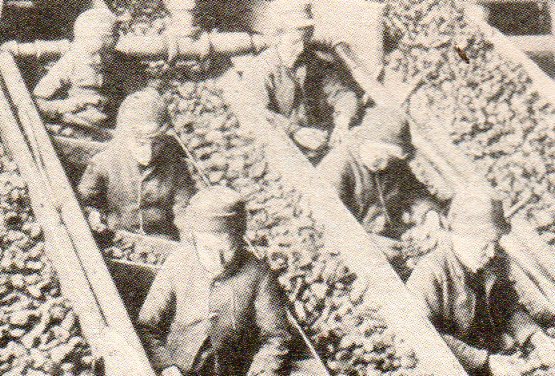
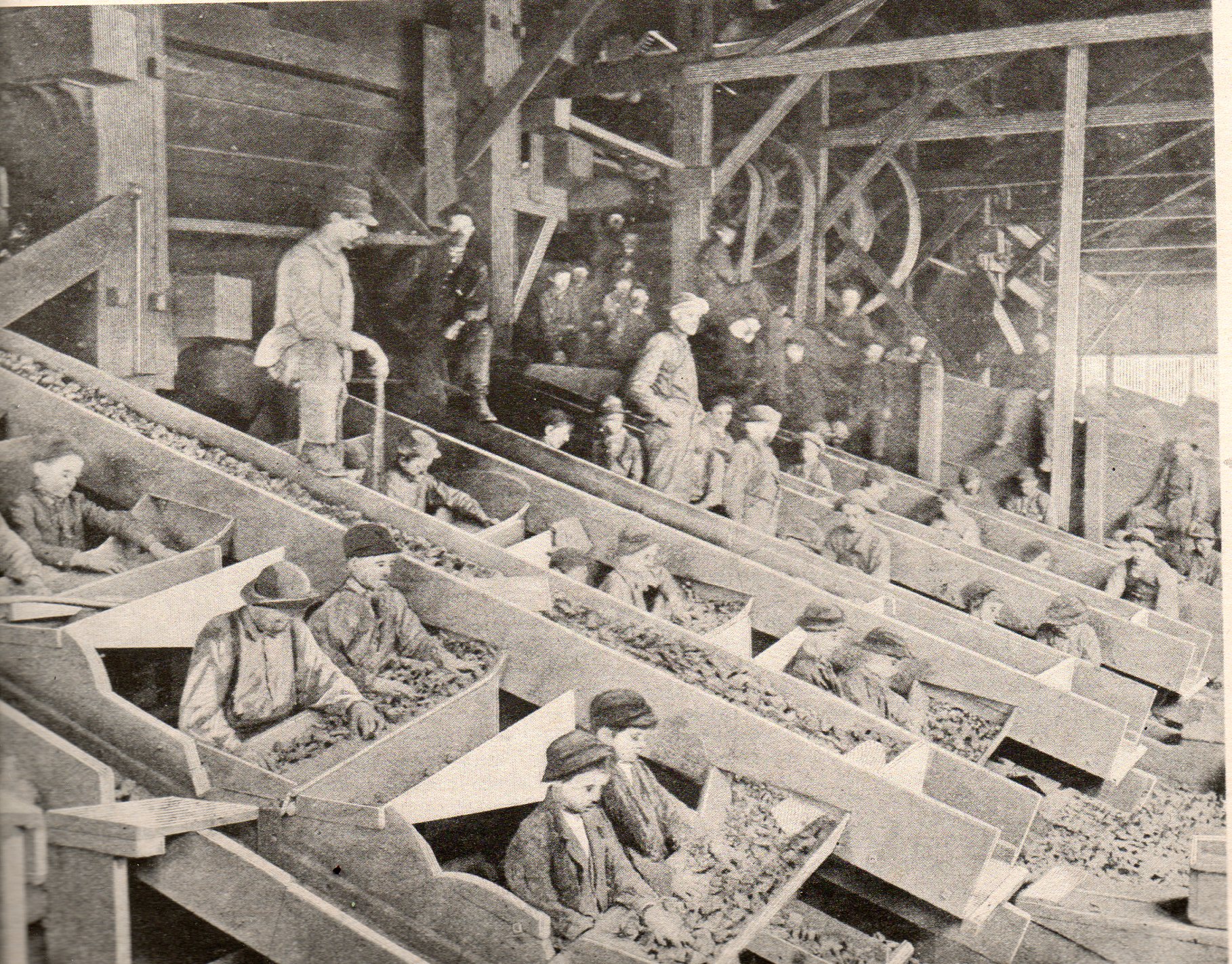
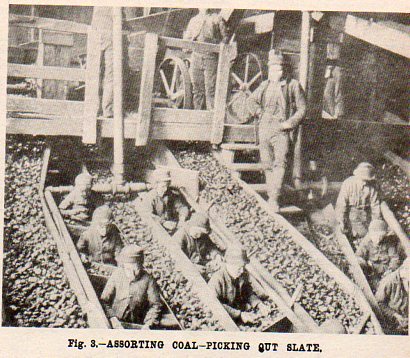
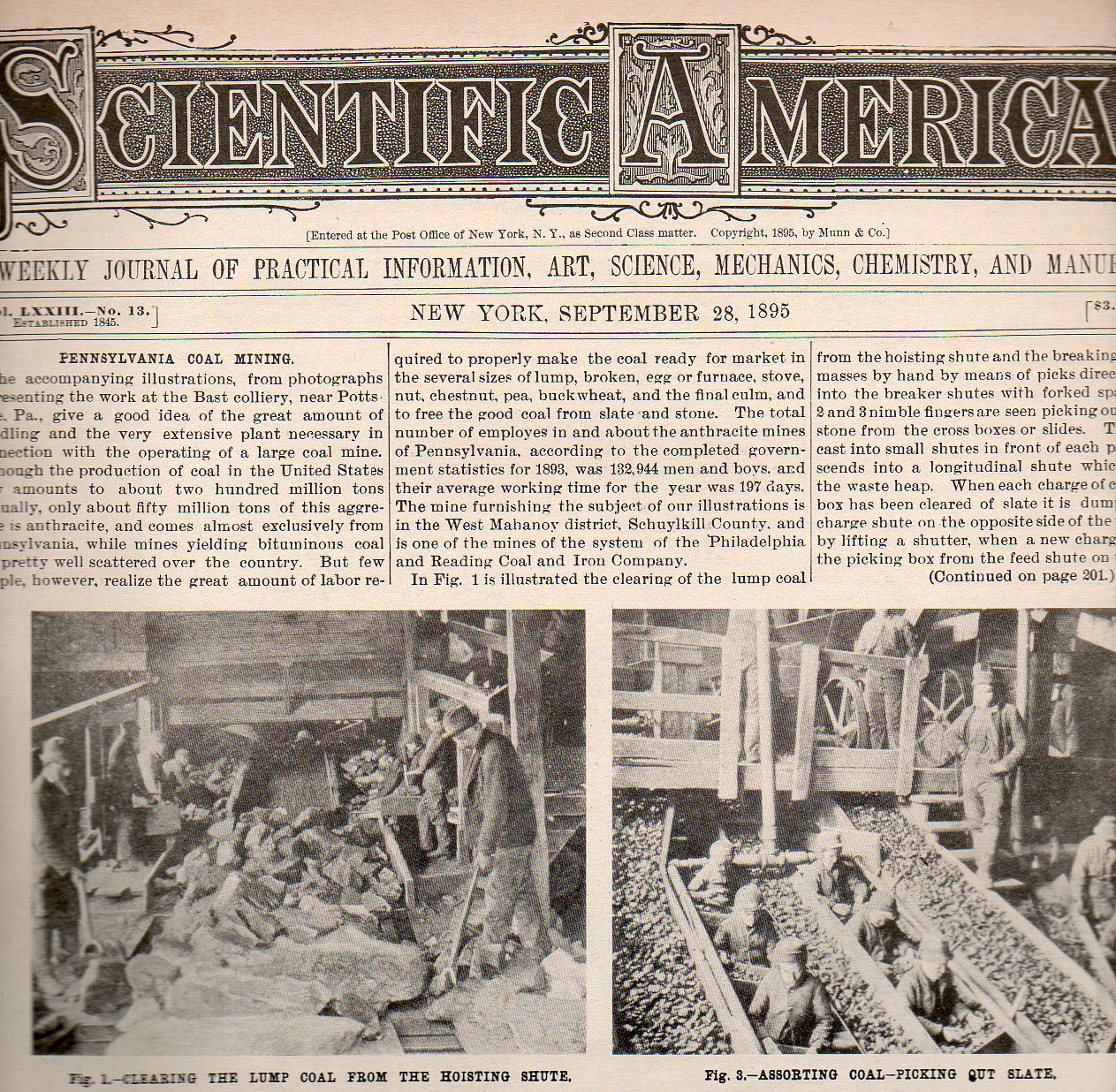
    Here’s a series of social documentarian photographs that partially illustrate the true position of the “coal boy” out in Pennsylvania in September, 1895.  Somehow it sounds, perhaps, a little romantic, summoning images of small children running around with sacks of coal as though it was a newspaper or marshmallows or something.  That such a chore was left to children in the 40-million-ton anthracite coal industry in Pennsylvania is a testament to something–the savings of cents-per-hour for the kids to do the task rather than  an adult, or, well, is there an “or” to this?  I don;t think so.  I think that it all came down to shaving hog hairs from the paychecks of adult workers. 

    The story appeared in the Scientific American for 28 September 1895–it was not an investigative journalism piece on the working conditions of children, just a simple report on what the children were doing.  We’re still years away in 1895 for any real legal assistance to protect children as workers or to require them to be in school. 

    Coal boys231

    Coal boys229

    Coal boys227

  • The Architecture of 13,000,000 Pounds of Opium Production

    JF Ptak Science Books   Post 1407

    These images present an excellent invitation to understanding the size and scope of one section of the opium industry in India.  I found these pictures in the 29 July 1882 issue of the Scientific American, which in turn had reproduced them from the Bengal Commissioner Lt. Col. Walter S. Sherwill, who published them as color lithographs in 1850 and which (again) found their way into print in The Truth about Opium Smoking by Benjamin Broomhill1(1882).  They are iconic images of a devastating trade and were frequently reproduced over many decades–mostly not for the “devastating” part of what I just wrote, but more for the industrial/business appreciation end, as was the case with this article in SciAmerican.   The British interest in the trade stretched back two cneturies earlier, and of course the use of opium bends far back into Neolithic times.

    Sherill’s scenes are all from the opium receiving/production/distribution center in Patna, India, which claimed to produce some 13,000,000 pounds of opium juice annually, shipping the stuff out to Bengal and then on to China. 

    There is a hint of abrasion about this trade in the article, noting that there was nothing that could be done to stem the tide of Chinese demand for the product, and that “if the government monopoly of opium were abandoned, India would not only lose a revenue which would have to be made up by some tax, but the extent of the poppy cultivation would almost certainly be largely increased  in the hands of private growers.”  Also, if the British government gave up the trade altogether, the article notes that the Chinese demand would be supplied “by inferior quantities of Persian and native Chinese growth”. 

    The first image shows a cavernous hall for examining the incoming opium, “brought in in earthen pans…tested…by touch, or by thrusting a scoop into the mass”, after which a sample is sent to “the chemical test room”.  As it turns out, the text in the Scientific American article describing the various halls quotes the London Graphic  which was  reproduced almost verbatim from The Truth About Opium Smoking, but without quotations and without attribution. 


    MIT Visualizing Cultures

    Next, in image #2, is the mixing room, where, yes, the opium is mixed.  According to the Opium/Sci American: “In the Mixing Room the contents of the earthen pans are thrown into vats and stirred with blind rakes until the whole mass becomes a homogeneous paste.”
     
         
    MIT Visualizing Cultures
      Image #3 is the Balling Room: “From the mixing room the crude opium is conveyed to the Balling Room, where it is made into balls. Each ball-maker is furnished with a small table, a stool, and a brass cup to shape the ball in a certain quantity of opium and water called ‘Lewa,’ and an allowance of poppy petals, in which the opium balls are rolled. Every man is required to make a certain number of balls, all weighing alike. An expert workman will turn out upwards of a hundred balls a day.”  

    MIT Visualizing Cultures


    Image #4 is the drying room,  where “the balls are placed to dry before being stacked. Each ball is placed in a small earthenware cup. Men examine the balls, and puncture with a sharp style those in which gas, arising from fermentation, may be forming.”


    MIT Visualizing Cultures
     
    The stacking room is image #5, where “the balls are stacked before being packed in boxes for Calcutta en route to China. A number of boys are constantly engaged in stacking, turning, airing, and examining the balls. To clear them of mildew, moths or insects, they are rubbed with dried and crushed poppy petal dust.”
     

    MIT Visualizing Cultures


    The Chinese really weren’t able to resist this trade (which they had fought over a period of hundreds of years, not to mention in two opium wars in the 19th century) until about 1916. 

    Notes:

    1.  As it turns out, Broomhill was writing against the opium trade in his book.  See also this MIT page on the First Opium War.

    ·Posted by :

    ·in:

  • Elegant, Lightweight Steam-Powered Vehicle, 1877

    JF Ptak Science Books  Post 1407

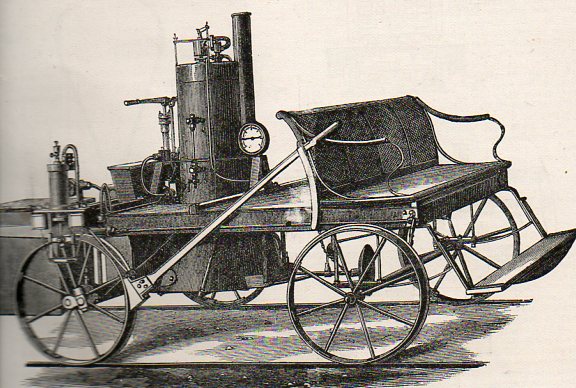
    Steam car232

    This lovely steam-powered trolley looks as though it was just <this> close to being lifted off of its tracks and placed on the street for tooling around town.  Of course part of the reason why Joseph Green Cooke’s trolley was so lightweight1 is because it was traveling on rails, which meant the surface over which it would be propelled was smooth and predictable, unlike the streets that it would have to use to makes its way through a town.  Uneven, choppy, bumpy roadways would mean that the vehicle would have to be more sturdy; more sturdy means more weight, more weight means bigger engine, and so on.  So instead of this relatively light 1,200 pound vehicle you might wind up with something at 5,000 pounds, or more–at least in 1877’s mindset. (The issue of Scientific American is available here.)

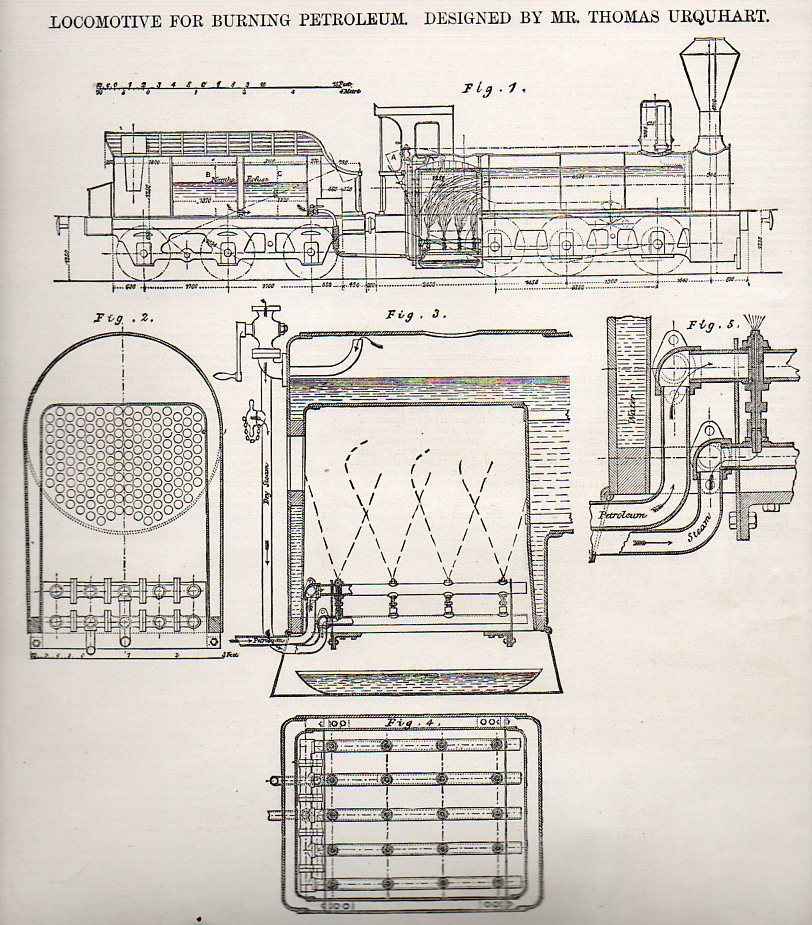
    The lighter vehicle would come before the end of the decade, but it had mostly to do with getting away from the steam engine to the lighter gasoline engine2.  It is serendipitous and perhaps ironic that the illustration facing the steam trolley is for the gasoline-burning train locomotive engine of Thomas Urquhart, who developed it for the Grazi-Tsaritsin Railway (Russia), which converted all of its 143 engines to this method by 1885.  When the pages of the magazine are closed, the two images lay one on top of the other. 

    Steam car234

    Notes:

    1. Earlier efforts at putting mobile steam-powered vehicles on the road stretches back into the very dim pre-automobile with the behemoth of Nicolas Joseph Cugnot, which strained its way along French streets as early as 1869….it also in the first recorded automobile accident, which caused enough trouble and damage and injury to scare away development money.  There were engines that were considered “portable” traction devices in the earliest part of the 19th century (by Trevithick and Tuxford, among others) , though they were not mobile–the “portable” part was that they could be moved (at all).  The movable, working traction machine (“tractor”) would begin to make its appearances in the 1860’s, though these were generally major pieces of machinery, locomotives on wheels. 

    2. Thanks to Gottlieb Daimler’s 1885 prototype, and Karl Benz’s 1886 patent for the gas-fuled car, and of course to the Charter Gasoline Engine Company of Illinois, whose work in the mid/late 1880’s brought about the production of several gas-powered traction engines in 1889.

    From the Western Review of Science and Industry, 21 December 1876: STEAM TROLLY. “Mr. Joseph Green Cooke, the locomotive and car superintendent of the  Oude and Kohilkunde Railway, has constructed a steam troll}” or carriage, the object of which is to enable resident engineers to inspect their tracks,  bridges and works with rapidity

  • Display of Information: What a Dreadnougth was Worth in Airplanes, 1911

    JF Ptak Science Books  Post 1408   [Display of Quantitative Information series]

    Info display dreadnought237

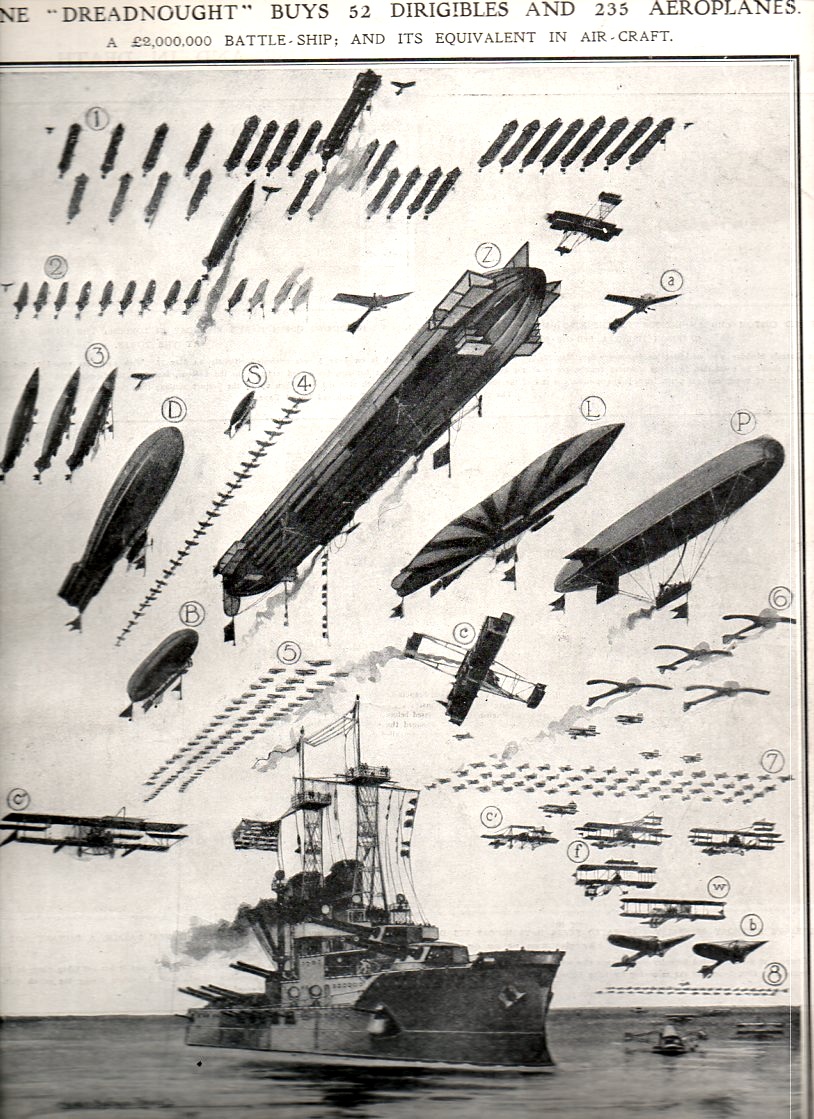
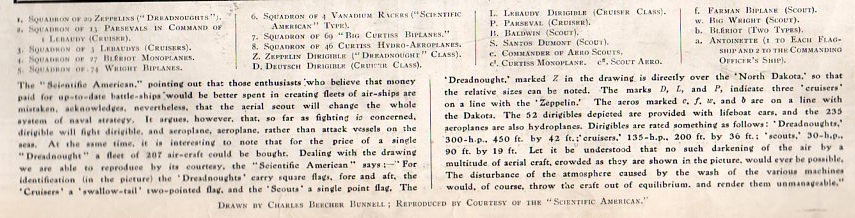
    There’s nothing quite so satisfying as seeing a representation of quantitative data like this where the graphical displays are flying.  “One Dreadnought Buys 52 Dirigibles and 235 Aeroplanes” is a full-page diagram appearing in the 3 June 1911 , making a very strong point that in the new air-age 2 million pounds for one battleship buys a lot of aircraft.  Of course this is a British journal and the ship is flying an American flag–the image originally appeared in the Scientific American just a short while before this publication, and so it also enumerates American and international aircraft, making for a lovely representation of a broad range of airplanes filling up the same sky.  (This image is available for purchase from our blog bookstore, here.)

    Info display dreadnought238
    Info display dreadnought239
    Info display dreadnought240

Recent Posts

Archives

Categories