A Daily History of Holes, Dots, Lines, Science, History, Math, Physics, Art, the Unintentional Absurd, Architecture, Maps, Data Visualization, Blank and Missing Things, and so on. |1.6 million words, 7500 images, 4.9 million hits| Press & appearances in The Times, Le Figaro, Mensa, The Economist, The Guardian, Discovery News, Slate, Le Monde, Sci American Blogs, Le Pont, and many other places… 5000+ total posts since 2008.

  • Electro-LUXurious 10: The Wandering Uterus and the Issue of Female Satisfaction

    JF Ptak Science Books   Post 1492

    This is the 10th in a new series of posts on interesting, early applications of electricity, most of which are taken from the archives of the U.S. Patent Office.

    As usual there is no explanation for the intended function or outcome was for these belts, although I think that they occupied two ends of a spectrum.  It seems as though the women’s belt apparatus was meant to address “female hysteria”, which for many centuries was seen as the dementia a woman suffers when she felt the need to fill up her womb with a baby; Plato (in his Timaeus) reckoned that the uterus actually detaches and wanders through the body, causing all manner of havoc, including “hysteria”. 

    Plato, who lived ca. from the mid 4th to mid 3rd century of the common era, commented so:

     “The animal within them is desirous of procreating children, and when remaining unfruitful long beyond its proper time, gets discontented and angry, and wandering in every direction through the body, closes up the passages of the breath, and, by obstructing respiration, drives them to extremity, causing all varieties of disease.”  –Plato, Timaeus, 91c

     (It is odd that Plato starts this book out with Socrates counting to three, but that’s another story I guess.)

    The issue of the physiology of the uterus received modern treatment in modern times, though the philosophical aspects of this and other similar issues managed to rip themselves free of biology and culturally implant themselves without the benefit of factual support, lending their entirely questionable weight to the continued issue of the subjugation of women.  The idea of woman’s “hysteria” as a very wide term into which all classes of medical concern was dumped seeped into the 20th century, and was answered with devices such as this electro-onanistic medical quackery.


     For the men it seemed that the issue of “seminal seepage” and erection control was answered with devices such as this thing, below, a slightly shocking reminder to keep thinking the pure thought:

    And of course a belt like this would not be complete without “complete” treatment, and so is included the following “attachments”, Fig 7 being the one of some considerable interest to the wearer:


    Of course it is entirely possible (likely?) that I have gotten this all wrong, completely wrong, and backwards.

    Note:

    Here’s an interesting book:  Maines, Rachel P. (1998). The Technology of Orgasm: “Hysteria”, the Vibrator, and Women’s Sexual Satisfaction. Baltimore: The Johns Hopkins University Press
  • Electro-LUXurious 11: Medical Electrifying-Liquid Injector, 1862

    JF Ptak Science Books   Quick Post

    This is the fourth in a new series of posts on interesting, early applications of electricity, most of which are taken from the archives of the U.S. Patent Office.

    I’m not sure exactly what Mr. Paige was trying to do with this electrical implement of his–he writes:

    which to my mind means that he is passing a “medicine” over or into some part of the body and while doing so either passes a charge through the liquid or provides a small series of shocks to the affected area so that it hurries the treatment along a little faster, or with more efficacy, or something.  Whether this is a topical application, or a delivery to an open wound, or to an incision is not altogether clear to me. As is generally the case with these things, the inventor is given the luxury in the patent report of not having to say what the thing they have invented actually “does” after describing how it is that the machine will “do” it. 

  • Electro-LUXurious 13: Electrical Baths, 1877-1890

    JF Ptak Science Books   Quick Post

    This is the 12th installment of a new series United States Patent Reports on electrical quackery and unsubstantiated bric–a-brac from the newly-electric world of the period of 1870-1900. 

     Let’s state as a given that some things are real, and some things aren’t.  There is a very broad history of things believed to be real but weren’t, or aren’t–I’m not sure what the percentage of those things would be in the overall Scheme of Things, whether the things-that-aren’t outnumber the things-that-are, or not.  It does seem ready for a Dr. Seussian treatment, though. 

    Thomas Edison (in)famously fooled a reporter into thinking that he was creating a phone to the dead, an unintentional hoax that he allowed to fester for as long as he (Edison) lived; H.L. Mencken wrote a fictitious story about the history of bathtubs, a humorous piece, really, that turned out to be a satire on the way things are perceived and published, as the story took on a life of its own as factual, reported as true to this day even though Mencken stated immediately afterwards that it was a joke. 

    And then there are the real things that aren’t–not really–and look (and sound) that way.  Such is the case with these fabulous electric baths, below.  As is what seems to be the custom with patent reports (from this period, anyway), the inventor needed to thoroughly explain how the invention was made to function, while not actually addressing what that function was. This was lucky for the inventor and manufacturer, though not necessarily so for the consumer.  Had these electrical quack devices worked, the introduction of electric hair, electrically-induced mega-bowels, sharp eyes, pretty teeth, accelerated masculinity, relaxed femininity, spine straighteners, beard growers, inner-secret-strength enhancers, and so on, would’ve produced a nation of ________ brought about the miracle of electricity.

    In this vein, here are a few examples of electric baths, including one with one of the scariest drawings of a person I’ve ever seen in a patent report:

  • Electro-LUXurious 12: Electrical Casket Vacuums

    JF Ptak Science Books   Quick Post

    This is the 12th installment of a new series United States Patent Reports on electrical quackery and unsubstantiated bric–a-brac from the newly-electric world of the period of 1870-1900. 

    This extraordinary device was an experiment in the further purification of the American way of death.  The casket was fitted with an electrical heating element which–after viewing of The Departed was completed–would be activated to heat a soft metal, which would seal the casket.  After this, the casket would be pumped to “form a vacuum” so that there would be no further deterioration of the deceased.  There seem to have been at least a dozen different designs for these caskets from 1880 to 1950 or so, each building on some hope and prayer for the benefits of the dead not deteriorating, for whatever that was worth. 

  • Electro-LUXurious 14: The Happy Electric Chair, 1890

    JF Ptak Science Books   Quick Post

    This is the 14th installment of a new series United States Patent Reports on electrical quackery and unsubstantiated bric–a-brac from the newly-electric world of the period of 1870-1900.

     The history of the electric chair is odd, and ironic.  The “electric chair” that we think of first when we hear the phrase is actually the “electrocution chair”, and it comes into being after the introduction of the medicinal electric chair, which was designed as a palliative, electrical ointment of sorts for people with virtually any form of physical complaint.  Thomas Edison introduced the notion of the lethal use of punitive electricity in a brilliant if not diabolical ploy, suggesting in 1888 that Hew York State  pursue the new procedure of executing its condemned via the use of an electrified recliner, using the Westinghouse AC system–and thereby forcing the association of his competitor Westinghouse’s  electricity with electrocution in the mind of the general public. (I can only imagine being a Westinghouse exec and waking up to that bit of Edisonian showmanship; there’s an earlier post on this blog here that discusses the electric chair in more detail.)

    These chairs below are good examples of the earlier quack/medicinal sparking loungerettes, even if they are dated a little later (1890). 

  • Electro-LUXurious 15: Electroplating the Human Dead, 1891

    JF Ptak Science Books   Quick Post

    This is the 15th installment of a new series on United States Patent Reports on electrical quackery and unsubstantiated bric–a-brac from the newly-electric world of the period of 1870-1900–the following is a little outside the norm, being French, but I couldn’t resist it. 

    Electropunk electro the dead
    When a picture just isn’t enough…

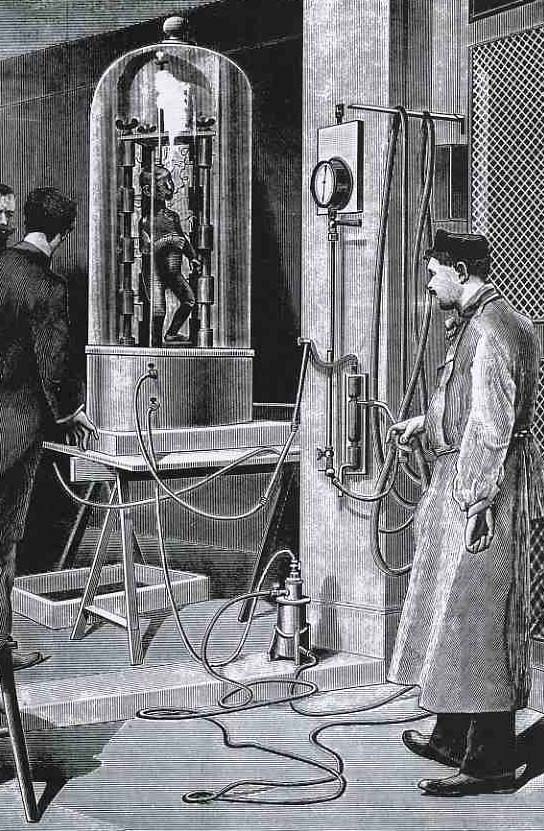
    And while we’re at it, let’s consider the work of Dr. Varlot (of the Paris Hospital) in electrocuting the dead.  Actually, what he proposed was another pretty gruesome use of electricity, though this one didn’t make promises of miraculous cures, or execute anyone.  Varlot proposed to “metalize” the dead (as we see in this very unsettling image of a child being electroplated) for, well, some purpose, purpose unknown.  It just seems and seemed like a bad idea, all the way around–a poster child for Bad Ideas everywhere. The medical uses of an electroplated baby seem very limited, and I can’t imagine anyone wanting to do such a thing to a dead child of their own.  It is wrong on every level.

    The engraving comes from Leonard de Vries, Victorian Inventions” (1971), who quotes the original source (the Scientific American for 1891) with this description of the procedure:

    “Dr Varlot, a surgeon in a major hospital in Paris, has developed a method of covering the body of a deceased person with a layer of metal in order to preserve it for eternity.  The drawing illustrates how this is done with the cadaver of a child.  The body is first made electrically conductive by atomising nitrate of silver on to it.  To free the silver in this solution, the object is placed under a glass dome from which the air is evacuated and exposed to the vapours of white phosphorous dissolved in carbon disulphide.  Having been made conductive, the body is immersed in a galvanic bath of sulphate of copper, thus causing a 1 millimetre thick layer of metallic copper to be deposited on the skin.  The result is a brilliant red copper finish of exceptional strength and durability.”

    Another method of electroplating the dead (in 1934) is discussed in the interesting blog, Quigley’s Cabinet, here. 

  • An Uncommon Sentence on Witch Liniment

    JF Ptak Science Books  Quick Post

    I’m not sure where to go with this post, exactly–I certainly wanted to capture this incredible sentence,  though, which is one of the most bizarre-sounding creatures I’ve encountered in quite some time.

    “The first liniment then is composed of the fat of young children seethed in a brazen vessel until it becomes thick as slab, and then scummed.”–Montague Summers, The Werewolf, 1933.

    Seethed/slab/scummed. 

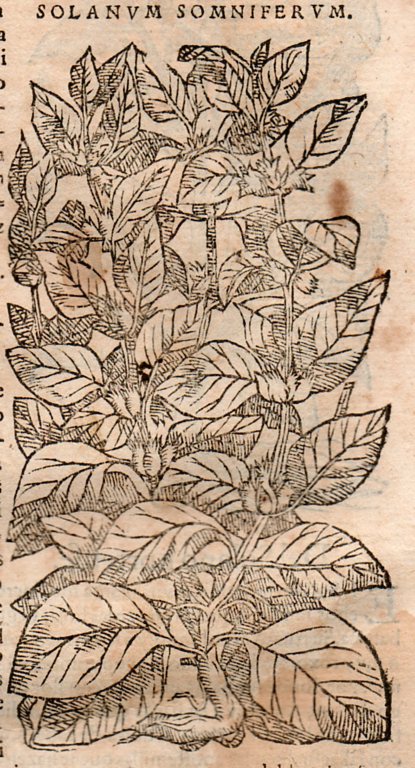
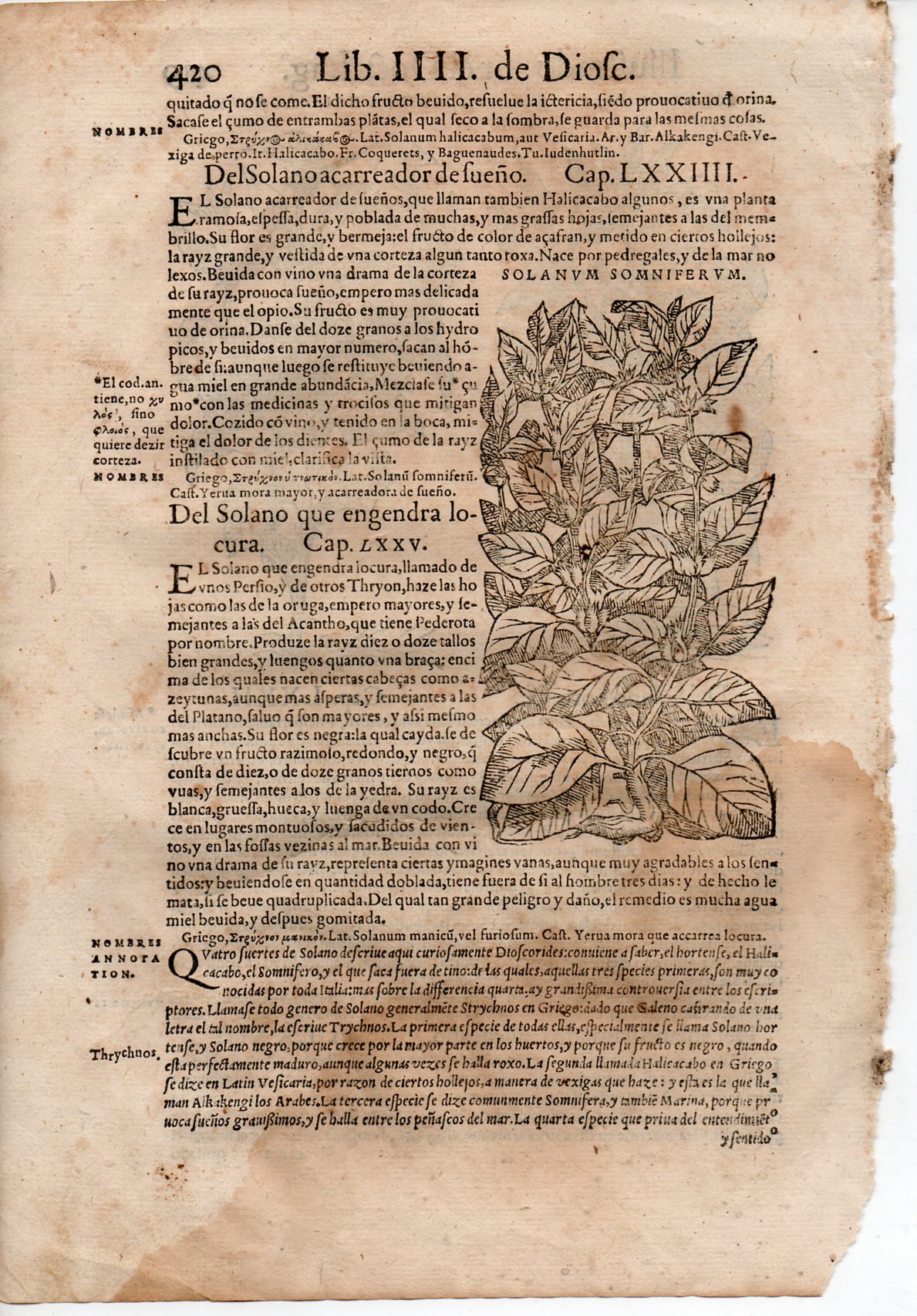
    Witches505 All’s fair in love and shape-shifting, which is what this is referenced, part of a Witch’s salve/potion for werewolf-y preparations.  It came about while looking around for some information on an image here for the plant Solanum Somniferum, a woodcut engraving from Pier Andrea Mattioli’s (1500 to 1577) translation of Panadius Dioscorides’ (40-90 a.c.e.) De Materia Medica.  This ancient botanical received treatment over the centuries by many writers (including  Fuchs, Anguillara, Mattioli, Maranta, Cesalpino, Dodoens, Fabio Colonna, and the Bauhins), though Mattioli’s (ca.) 1560 treatment included more than 150 text illustrations, one of which is this layered and flowing image of Solanum, which I believe is Shakespeare’s “insane root”, a basis for ointments and ungents of considerable diversity, finding use in undercoating for women’s makeup, and as a purgative, and aphrodisiac. And of course as an ingredient for a witch’s body lotion when dealing with such things as shape-shifters and werewolves, and also for hallucinogenic experiences, and (if enough is consumed) death.  It seems an all-purpose plant, seemingly not far-removed (to my non-botanical anti-gardening mind, please forgive me) from the equally expansive belladonna, night shade, a wide-ranging plant that even though its name in Italian means something like “beautiful woman” is famous for its lethal qualities.

    Witches506

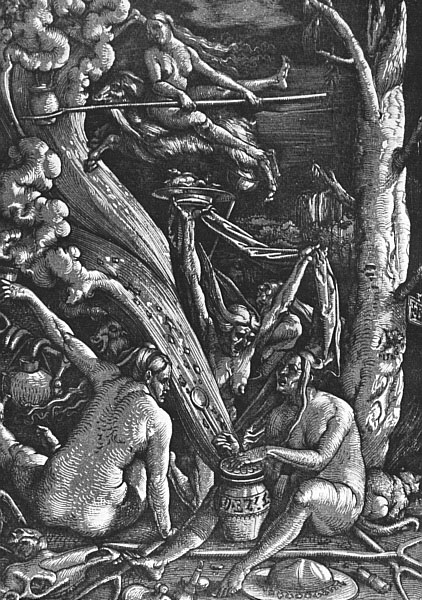
    Perhaps this sort of sentence, the seethed/slab/scummed bit above, is what Hans Baldung had in mind when he depicted his famous witches Sabbath (of 1510):

    Baldung_Witches_Sabbath_1510


    ·Posted by :

    ·in:

  • The Earliest Art Inspired by the Epochal Discovery of the X-Ray?

    JF Ptak Science Books  Post 1493  [Thanks to Morbid Anatomy for surfacing this fantastic image!]

    Part of this blog’s series on  Blank, Empty and Missing Things:  the Skin.

    The impact of the sciences in (on?) art has been a frequent visitor to this blog–the photographic work of Etienne Marey and the coming of the futurists, the structuring of the fourth dimension, the discovery of the microscopic world, and so on., are fantastically interesting events which at some time bear some responsibility in the history of art.

    The artwork in question appeared in Jugend, Band 1, (February) 1896, and is called “Das Neue Strahlen”, calling directly on the announcement just a few months earlier in 1895 of Roentgen’s “Ueber eine neue Art von Strahlen”. The image depicts a young woman wearing a mask and clearly subjected to x-ray, as we see some parts of her clothing and beneath that the skeleton of her hips and legs, and within her rib cage we see a delicately drawn St. Valentine’s Day-like heart. 

    It seems to me–and this is just working on long memory–that this is an extremely early application of the X-Ray in the art world.  And while the anatomy is nothing new, the getting-to-the-anatomy is:   for the first time in human history, it was possible to see the structure of a body without performing a dissection, and it is this advance that the artist is exhibiting.  It is difficult to appreciate the impact of this advancement now–perhaps it would seem to people in 1895 something like a sudden announcement today that almost all surgery from this point forward is now accomplished with nanobots or a biological robotic element or whatever and which would eliminate virtually all previous complications of cut-and-stitch operations.  Monumental.  It was something like that for Roentgen’s discovery in 1895. 

    In 1895 50-year-old Wilhelm Conrad Röntgen’s ephochal discovery was announced (“Ueber eine neue Art von Strahlen”, “On a New Type of Ray”), which built upon the work of J. Plucker (1801-1868), J. W. Hittorf (1824-1914), C. F. Varley (1828-1883), E. Goldstein (1850-1931), Sir William Crookes (1832-1919), H. Hertz (1857-1894) and the horribly odious Phil Lenard (1862-1947 and who didn’t die soon enough). The experiment revealed as much to humans as did the experiments and inventions of Hooke and Leeuwenhoek on the invisible worlds revealed by their microscopes. Bertha, Roentgen’s wife, sat for 15 minutes while her husband passed his rays through her hand; she ran from the room once she saw the results, revealing her very bones and no doubt a strong sense of the fragility of life, and the strong presence of death.  Many had the a similar reaction to the Kandinsky’s shapes and Malevich’s white circles and red rectangles and Ibsen’s drama and Einstein’s dancing dust and the rogue syncopation of jazz—these newnesses were threatening to all of the established ways of looking at physics, and art, and theatre, and listening to jazz.  It was a new perspective which challenged the firmly established vision of these things, upsetting the nature of comfort and acceptance.    It is probably a very natural reaction to try and protect established memory—but memory is made all of the time, and so should be relatively flexible…at least it is mechanically healthier to allow a little bending than to be rigid and brittle. 

     Notes

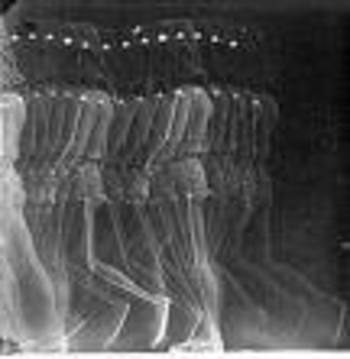
    For example, one of Marey’s sequenced photographs from the 1870’s and which reminds me of  Duchamp’s revolutionary Nude Descending:

    Marey 

  • An Image Addition to a Series of Posts on the Antiquarian Publication of Artwork by Children

    JF Ptak Science Books   Quick Post

    Part of this blog’s series on The Antiquarian Publication of Children’s Artwork

    Continuing an earlier post on the Great Rarity and Sublimity of Antiquarian Artwork by Children

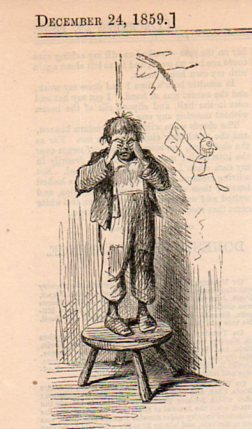
    I have found another small bit to add to the few posts I’ve made on this blog concerning the wide, vacant spaces of antiquarian publications of children’s artwork.  Its a small bit, but every bit is very difficult to come by:

    Childrens art507   Childrens art508


    I think that I can safely say that artwork by children does not make very many appearances in Western art prior to the 20th century–published images just don’t appear.  Nor do the originals–considering the ephemeral nature of the effort at art by children, their work just don’t seem to survive.  Some of that reason–particularly in America–was the scarcity of materials for kids to produce art with: paper was not inexpensive, and neither brushes and paints.  Crayons, invented for chubby and reachy fingers, were not invented for the mass market until 1903.  (Crayola sold eight crayons in a box for a nickel.  The colors?  Black, brown, blue, red, purple, orange, yellow, and green.)   Then of course the artwork would have to be saved, somehow, for generations.  As much as it would be fascinating to find artwork done at age four by your great-great grandparents, it would have to survive the cleansing tendencies of four generations of clean-up.  End result:  there’s just not that much antiquarian chldrens’ art floating around…

    (Continue reading here.)

    ·Posted by :

    ·in:

    — — —
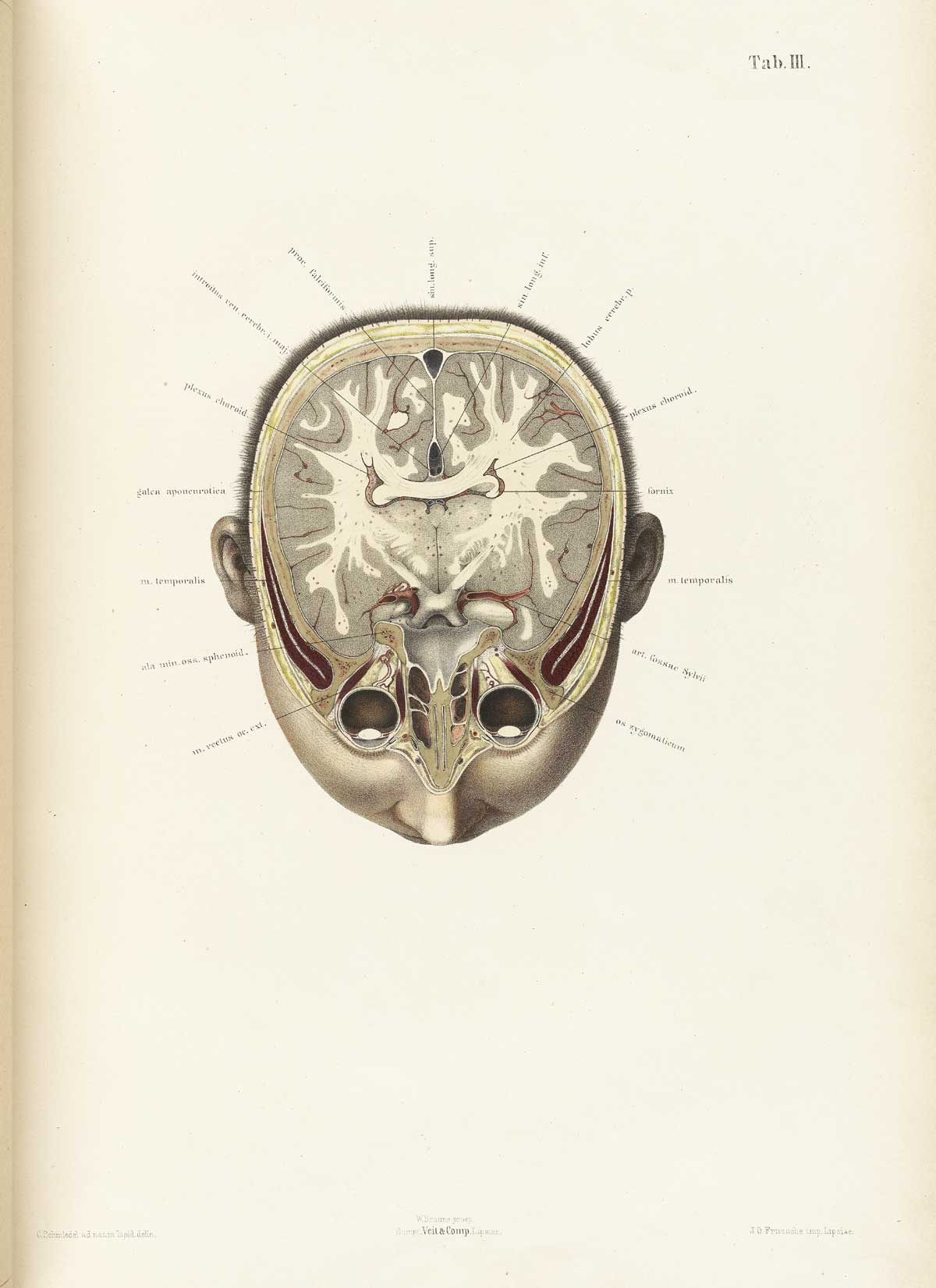
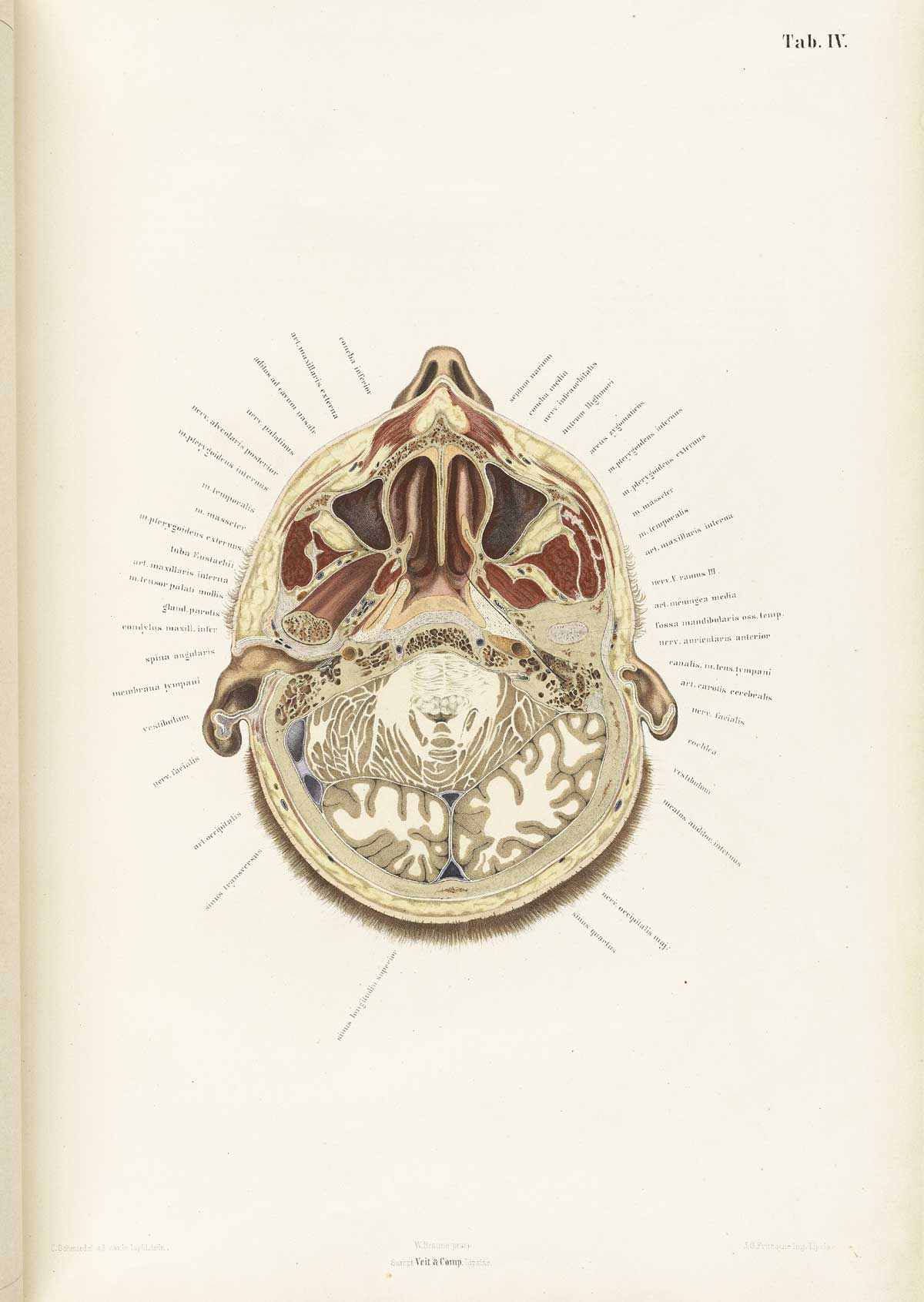
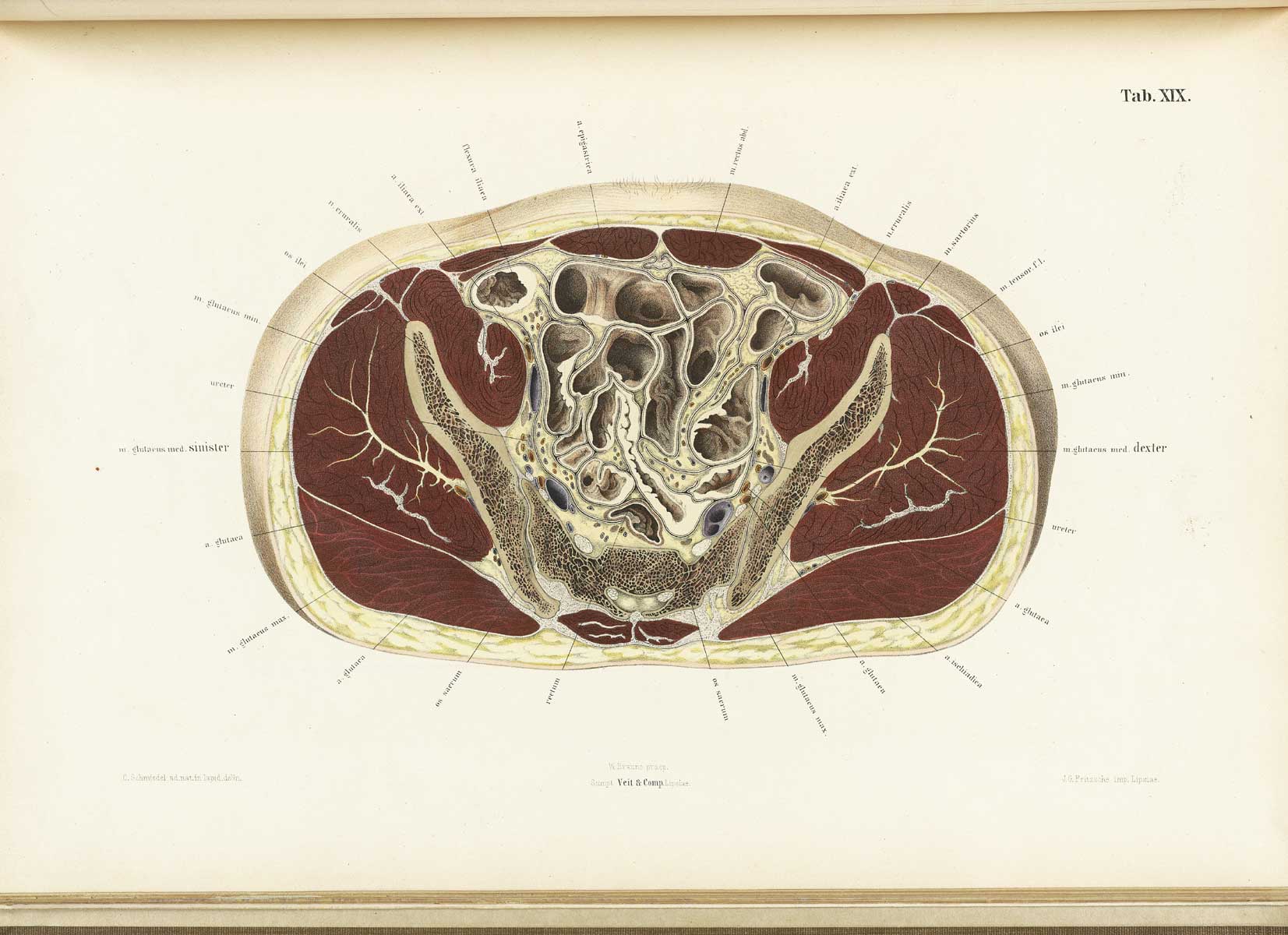
  • Fantastic Composition & Design: Frozen Anatomy of a Hanged Man

     JF Ptak Science Books   Post 1494

    http://www.nlm.nih.gov/exhibition/historicalanatomies/Images/1200_pixels/braune03.jpg

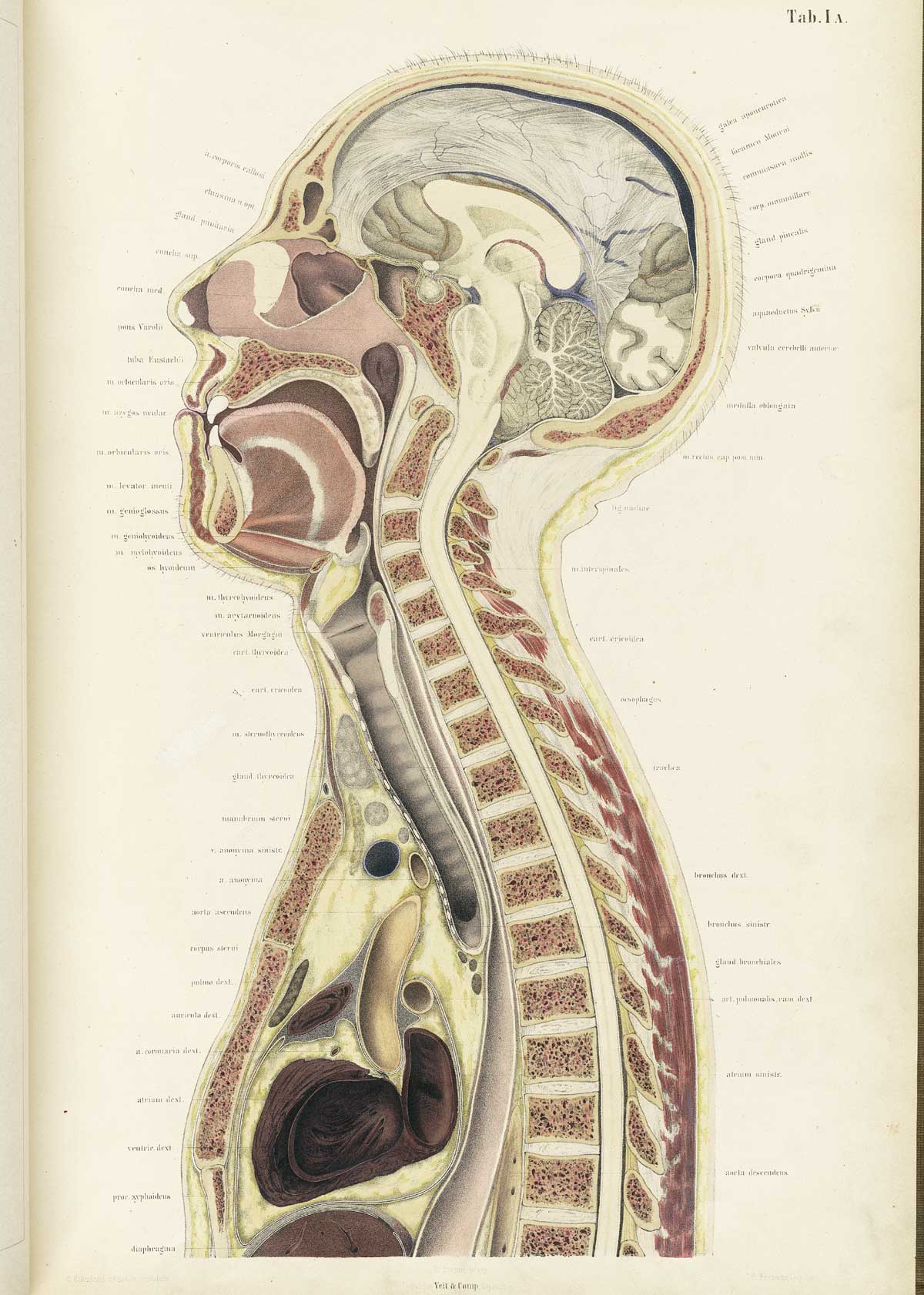
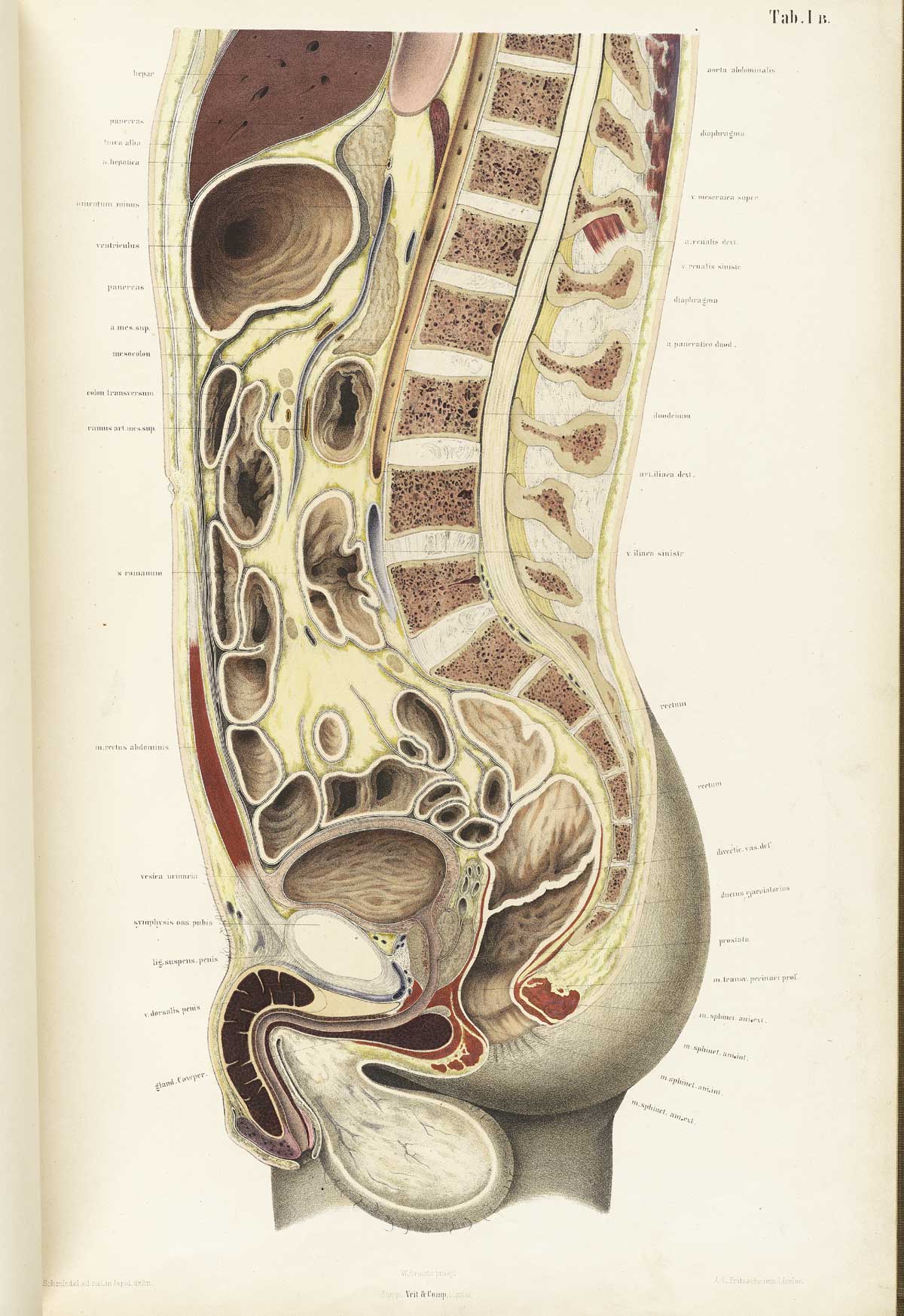
    Source [National Library of Medicine]:  Braune, Wilhelm. Topographisch-anatomischer Atlas : nach Durchschnitten an gefrornen Cadavern. (Leipzig: Verlag von Veit & Comp., 1867-1872).  And Supplement: Braune, Wilhelm. Die Lage des Uterus und Foetus am Ende der Schwangerschaft. (Leipzig: Verlag von Viet & Comp. , 1872).

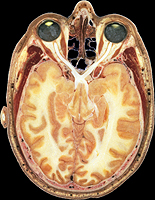
    This extraordinary work is part of an anatomical flap book by Wilhelm Braune (1831-1892), a professor of anatomy at the University of Leipzig.  The image above is a cross-section of the cadaver that was frozen and thinly cut in the similar vein (sorry!) as the more modern Adam & Eve of the Visible Human Project

    Visible human and which  consists of over 30 color lithographs of frozen cross sections of human anatomy.  The male images from the series are described by Braune:

    “[they are] taken from the body of a powerful, well-built, perfectly normal man, aged 21, who had hanged himself. The organs exhibited no pathological abnormalities. The body, which was brought unfrozen, was placed on a horizontal board … In this position, the subject lay untouched in the open air, and at the temperature of about 50 degrees F., for fourteen days. At the end of this time the process of freezing was commenced and completed …”

    http://www.nlm.nih.gov/exhibition/historicalanatomies/Images/1200_pixels/braune04.jpg

    The National Library of Medicine then continues with the description for preparation of the specimens:

    “After sections were cut, thin paper was placed over them and tracings were made of the anatomical features. Similar techniques were used to create the supplement, Die Lage des Uterus und Foetus am Ende der Schwangerschaft, which features large folded plates.  Tables B and C of the Supplement include large flaps showing different views of the lower half of the body, and scans were made of each flap along with the shared upper half (i.e. Table B (view 1), Table B (view 2), etc.).”

    http://www.nlm.nih.gov/exhibition/historicalanatomies/Images/1200_pixels/braune19.jpg

    http://www.nlm.nih.gov/exhibition/historicalanatomies/Images/1200_pixels/braune08.jpg

    Notes:

    Thw work was published in English as: Braune, W. An atlas of topographical anatomy after plane sections of frozen bodies. Trans. by Edward Bellamy. (Philadelphia: Lindsay and Blakiston, 1877)

    http://www.nlm.nih.gov/exhibition/historicalanatomies/Images/1200_pixels/braune01a.jpg

    http://www.nlm.nih.gov/exhibition/historicalanatomies/Images/1200_pixels/braune01b.jpg

    http://www.nlm.nih.gov/exhibition/historicalanatomies/Images/1200_pixels/braune2_B1.jpg


    ·Posted by :

    ·in:

    —
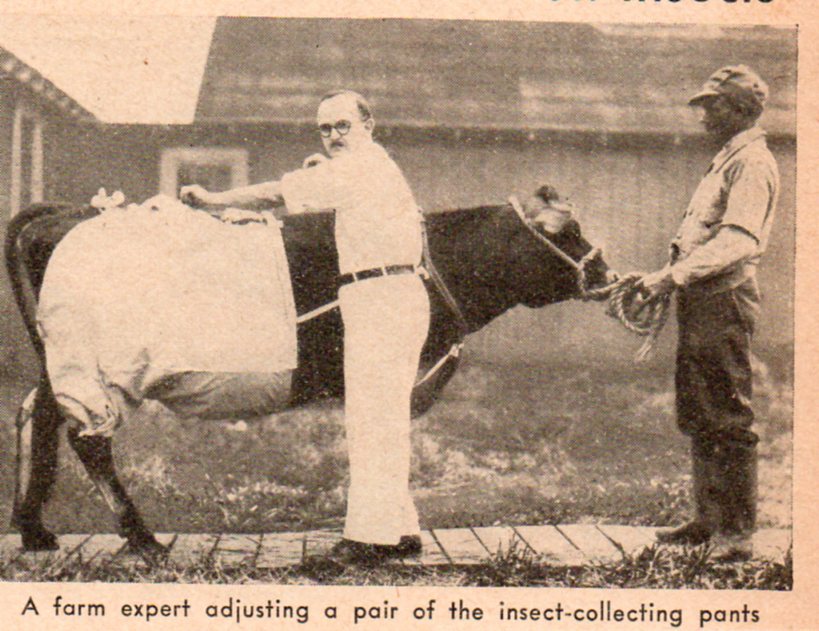
  • Questionable Quidity Department: Cow Pants

    JF Ptak Science Books   Quick Post Quidity

    This image comes from a stockpile of loose bits that have fallen out of various magazines–this one from Popular Science for October, 1937.

    Bizzaro cow pants'511

Recent Posts

Archives

Categories