A Daily History of Holes, Dots, Lines, Science, History, Math, Physics, Art, the Unintentional Absurd, Architecture, Maps, Data Visualization, Blank and Missing Things, and so on. |1.6 million words, 7500 images, 4.9 million hits| Press & appearances in The Times, Le Figaro, Mensa, The Economist, The Guardian, Discovery News, Slate, Le Monde, Sci American Blogs, Le Pont, and many other places… 5000+ total posts since 2008.

  • Tessie’s Best Recipe in the World: Dahl’s “George’s Marvelous Medicine”

    JF Ptak Science Books  Quick Post

    German--radium560
    I have read and seen my share of quack advertisements, eletro-luxurious machines to cure gouty embolisms, powdery powders that cure powder and things like power, cocaine bibs for infants, radium suppositories that will work to help make you “regular”, grease baths to make you fertile, electric chairs with special devices for the “sensitive organ” to deliver small dosages of electricity to do g_d-knows-what,and so on, as these mostly-knowing shyster/huckster productions fade into the cold black sea.

    In the early 1900s, real men used radium suppositories

    [Sere here for a short post on this blog, “The Gift that Keeps on Giving: Radium Suppositories”]

    But tonight I’ve read an absolutely lovely concoction for ready-made remedies, one of the best–if not the most entirely best–ever.  All brought to me via the insistence of our 9-year-old on reading Roald Dahl’s George’s Marvelous Medicine.  George, you see, was a young boy anchored to a coarse oblivion by a witcherly grandmother, a venal, foul, bullying  and hateful woman who gave George no end of mind-abuse when the parents were away.  And so it came to be the day that George was to do something about Grandma.

    What he did was to replace her special medicine with his own, marvelous, medicine. And feed it to her. And see what happened.

    So he got a big cauldron and created his brew, which included the following lovely list: one bottle Goldegloss Hair Shampoo, toothpaste, superfoam shaving soap, a jar of vitamin enriched face cream, nail polish, hair remover, dandruff cure, false teeth cleaner, nevermore ponging deodorant spray, liquid parafin, Helga’s Hairset, Flower of Turnip Perfume, pink plaster, several tubes of lipstick, one large box of “Superwhite for automatic washing machines, Waxwell floor polish, flea powder for dogs, canary seed, brown shoe polish, curry powder, mustard powder, extra hot chili sauce, black peppercorns, horseradish sauce, powder to cure chickens of foul pest & hen gripe, horse pills for hoarse horses, thick yellow liquid to cure cow pox, sheep dip for sheep with sheep rot, pig pills (for pigs with pork prickles),  a handful of grease, and a little antifreeze.

    Then it was boiled up and served to Grandma on  a silver spoon, with some gin. 

    Things happen that I won’t go into here–I’d advise reading the book.  Thanks, Tessie!
    ·Posted by :

    ·in:

  • An Alphabet of Dictionaries-at-Odds: Ambrose Bierce & Sam Johnson // ART & ASS

    JF Ptak Science Books    Post 1916

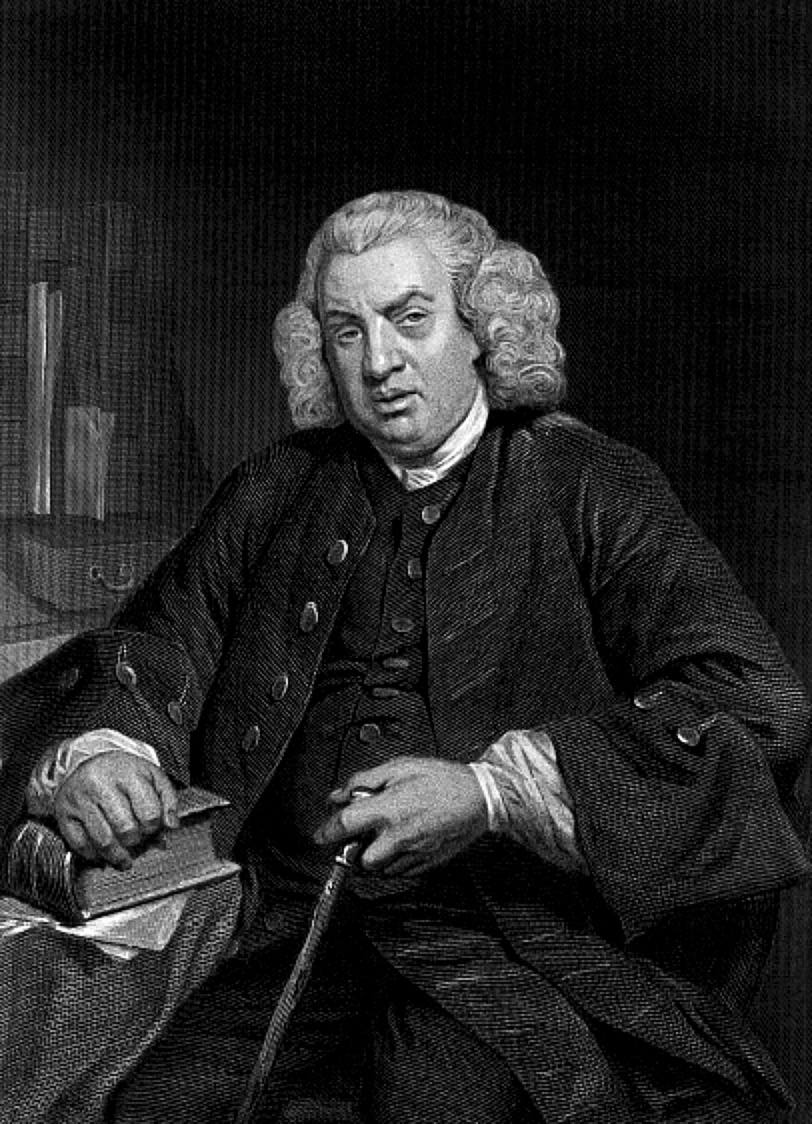
    Johnson, SamuelSamuel Johnson and Ambrose Bierce compiled dictionaries–two different types, two different efforts, 150 years apart.   Some think of Johnson’s Dictionary of the English Language  (1755) as being the first of the English language, but it is hardly so, being a sort-of late-comer, 150 years after the first English dictionary appeared.  Of course Johnson’s was the first bona fide “professional;” dictionary, against which all others are to be measured.  2000+ pages long, Johnson’s effort is also a type of historico-novel-dictionary (Histovelary?)–he inserted histories of words, applications, and a tremendous amount of his own bias.  (For example, his famous definition of “lexicographer: : a writer of dictionaries; a harmless drudge that busies himself in
    tracing the original and detailing the signification of words”.) The book sometimes reads like a novel–or at least, I think that a person could force a novel out of it, and not simply because the book has all of the parts of a novel scattered about.  It is an odd book, maybe the only of its kind, a disciplined and airy encyclopedic romp through the history of words and ideas, all presented by a compiler who was also its author–and accomplished pretty much on his won.

    Bierce, AmbroseWhere Johnson wrote with some fair immoderation of bias, Ambrose Bierce wrote with nothing but bias.  His work, The Devil’s Dictionary (1911), is a work of deep observation and scathing wit.  It stands as a dictionary of a personal philosophy more than anything else, written by an acerbic iconoclast of cunning and skepticism. Comparing definitions of the two side-by-side is an interesting exercise, if for no other reason than it is good and unexpected reading.  Bitter Bierce was a wonderful writer with a sharp and jaundicy eye that saw the third side of a two-sided thing, and applied that sight to his unexpected masterwork.

    So over the next bit we’ll alphabetically grze through selections of the two works, comparing interesting words.

    A:  Artist/art

    Johnson

    ARTISAN s. an artist, an inferiour.  Manufacturer, low tradesman.

    ARTIST, s. a professor of an art, a skilful man.

    ARTLESS  a. unskilful, without art or fraud.

    ARTLESSLY,  ad. without art, naturally.

    Bierce

    ART, n.  This word has no definition. Its origin is related as follows by the ingenious Father Gassalasca Jape, S.J.

            One day a wag — what would the wretch be at? —
            Shifted a letter of the cipher RAT,
            And said it was a god’s name!  Straight arose
            Fantastic priests and postulants (with shows,
            And mysteries, and mummeries, and hymns,
            And disputations dire that lamed their limbs)
            To serve his temple and maintain the fires,
            Expound the law, manipulate the wires.
            Amazed, the populace that rites attend,
            Believe whate’er they cannot comprehend,
            And, inly edified to learn that two
            Half-hairs joined so and so (as Art can do)
            Have sweeter values and a grace more fit
            Than Nature’s hairs that never have been split,
            Bring cates and wines for sacrificial feasts,
            And sell their garments to support the priests.

    ·Posted by :

    ·in:

  • Interesting Images of Renaissance Hell–on Title Pages

    JF Ptak Science Books   Post 1917

    Bloghelltp078Images of Hell do not often appear graphically depicted right on the title page of books, even though books speaking to Hell and warning us of its coming number in the hundreds of thousands, if not more, particularly if you interpret religion as the means for keeping people away from the ring of fire.    Few people are shy about depicting Hell in general, though there evidently is some reluctance (or forbearance, or oversight) to showing it front-and-center on the title pages of books.
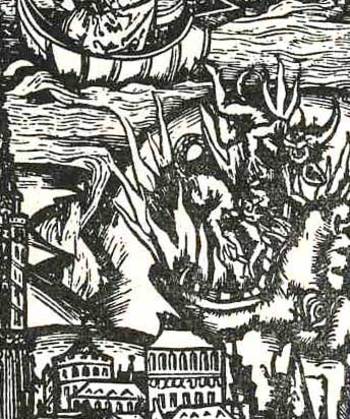
    A terrific exception to this rule is Jacobs de Voragine’s Passional, Hyr hewrrey sick an dath winter deel, printed in Basel in 1511, and illustrated by various and unidentified Strassburg woodcut masters.  In this extraordinary title page we see the vision of the adoration of the Virgin Mother and child supported in a rose of light, aided by guiding winds and various floating saints, and shown lowering the holy book directly to the city of Strassburg. In either corner positioned above the temporal city and below the firmament are two visions of hell, one less vicious and the other more so:  to the left we see some of the pious praying for better judgment as they are about to be consumed by the background flames, while to the right is a far more ambitious and morbid vision of hell featuring the famous Hellmouth.  The Hellmouth makes appears all throughout the history of art (as we can see in this Brueghel painting, for example), but it is a little curious that, outside of the mention of Leviathan (translated from Hebrew, Job 41:1), Hellmouth (as the entrance to hell) doesn’t make an appearance in the Bible.
    Bloghelltpdetail
     

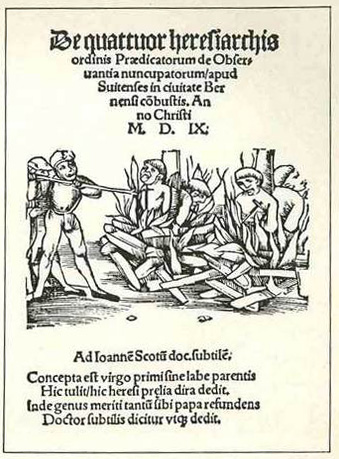
    What is more easily found, at least in the artwork on title pages throughout the Renaissance and the Baroque, are images of people about to be sent to hell. A good and chilling example of this can be seen in the artwork for Thomas Murner (1475-1537) De quattor heresiarhis ordinis Praedicatorium de Observantis nuncupatorum…, printed (again) at Strassburg in 1509.  The pamphlet tells the story of Johannes Jetzer and his accomplices (including four monks) who were tried (under torture) for blasphemy after it was revealed that they colluded to defraud people with a bogus story of religious visions, employing the bloody tear of Mary.  All were found guilty and the four monks were burned alive at the stake—Jetzer having escaped—and sent immediately to the deeper, more fiery, pit.

    Hell on title page
    This isn’t quite showing the coming of hell as in the first case, but it is getting close.  In any event, I found it interesting to see the depiction of the Bad Place right there on the title page of the Murner bokk.

  • Reference Tool: a Short and Handy Timeline of Quantum Mechanics, 1900-1962

    A Short Timeline of Quantum Mechanics, 1900-1962

    1900 Johannes Rydberg refines the expression for observed hydrogen line wavelengths.

    1900 Max Planck states his quantum hypothesis and blackbody radiation law1902 Philipp Lenard observes that maximum photoelectron energies are independent of illuminating intensity but depend on frequency.

    1902 Theodor Svedberg suggests that fluctuations in molecular bombardment cause the Brownian motion.

    1905 Albert Einstein explains the photoelectric effect.

    ·Posted by :

    ·in:

    —
  • Big Shadows–Industrial Silhouettescapes, 1936

    JF Ptak Science Books    Quick Post

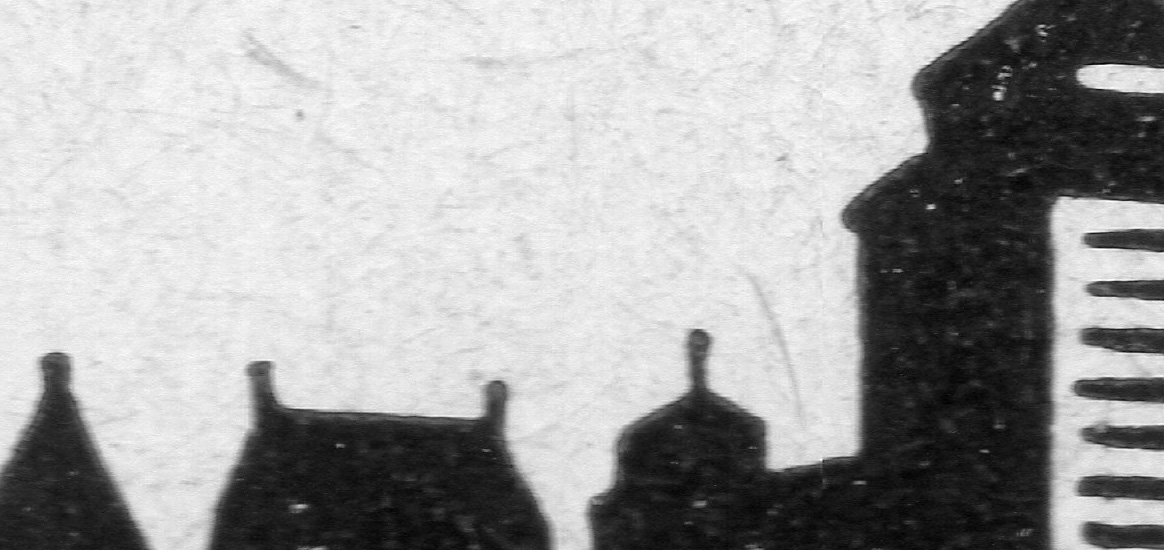
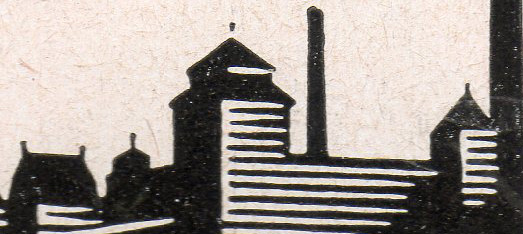
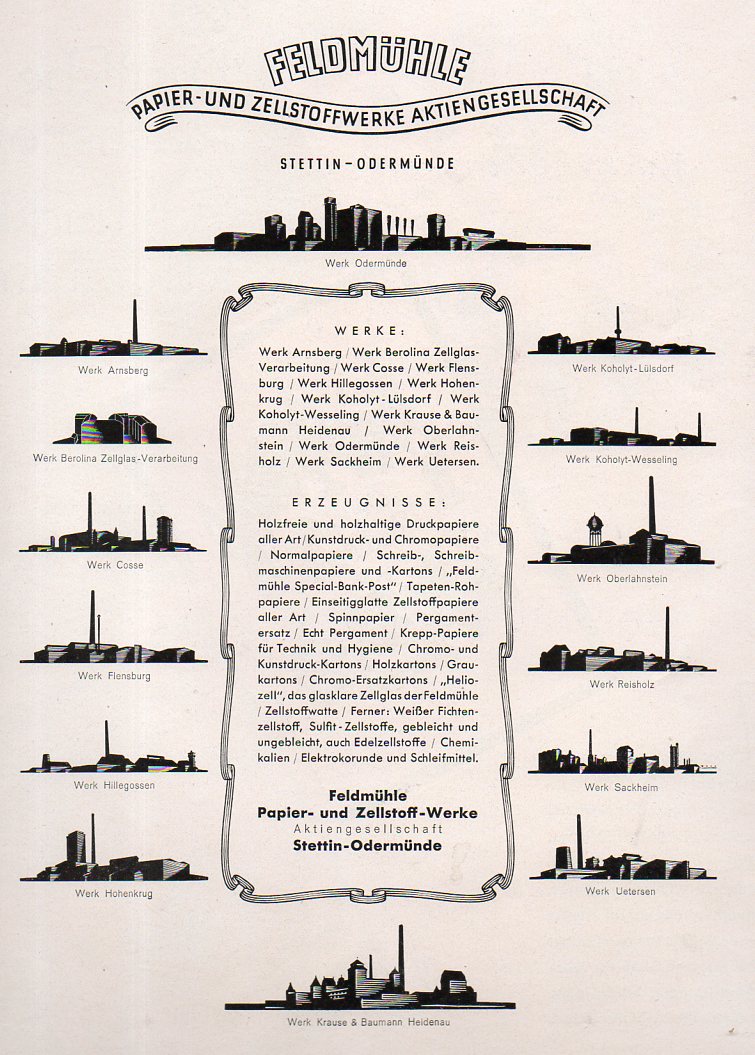
    In my experience with images in silhouette, the technical adaptations are very unusual (at least for things that are not spotter guides for enemy aircraft or ships-at-night)–more uncommon still are industrial buildings rendered in silhouette.  But here’s an example, taken from the Illustrirte Zeitung (Leipzig) for 1936.  These are factories in the Feldmuehle Papier- und Zellstoffwerke company, and are really quite attractive.

    The following two images are details from the 14th silhouette, at bottom-center:


    Industrial silhouettes874


    Industrial silhouettes873

    And the full-pahe ads looks so:

    Industrial silhouettes872

  • On Seeing Things Backwards Series, 1: UNIVAC and the 1952 Election

    JF Ptak Science Books   Post 1917

    Univac-cronkite
    Leonardo wrote backwards and from right to left, Benjamin Button lived backwards at the hands of Scott Fitzgerald, Rene Magritte’s man in the bowler saw the back of his head, Herrimann’s Ignatz the Mouse I am sure saw the back of his head looking around the world with the world’s most powerful telescope, rugby passes are all done backwards, paper images of vue optiques appear backwards, lightning for all intents and purposes starts backwards from the ground up, reverse mathematics are worked from theorems to axioms, and the Chicago River (1900) was engineered to flow backwards for the foreseeable future, while the Mississippi River famously flowed backwards for just a bit in the New Madrid Earthquake of 1812. 

    I can only imagine what audiences must have felt when they saw the first moving pictures played backwards–seeing them played forwards was a novel-enough (and revolutionary) idea, but the simple idea of reversing the direction of the film would have proved to be equally fascinating. 

    Imagine the first time you witnessed a staged train wreck on film, back there in 1897, and imagine being able to see it played over and over again, until you were filled.  I’m not so sure that there were even any still photographs of a train wreck as it occurred to this point, even with advances in film speed and lens, so seeing the even unfold in front of you at leisure must have been overwhelming.  Now imagine these same folks seeing the event and watching the locomotives reconstitute themselves.  It would have been an extraordinary event.  Even observing the Etienne Marey sequences and seeing what actually happens when a person bends over to pick up a pail of water would have revealed almost as much in new detail as when Galileo was in the middle of his earliest observations. 

    Looking at things backwards is a good idea so far as thinking about engineering problems and of course in checking experimental results in the sciences–its not so good an idea though to change the results produced by the scientific method because they’re not a good intuitive fit to expected parameters.

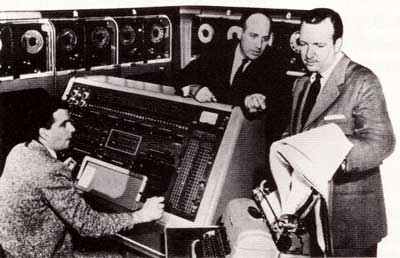
    Such was the cased with the first (and successful) employment of a computer to predict the outcome of a presidential election.  THe computer was the UNIVAC (the world’s first commercial computer and a blazingly fast machine at 10k operations a second, nearly six orders of magnitude lower than “superfast” by contemporary standards), which was brought in by Remington Rand to CBS News to crunch the numbers on the tight race between General Dwight Eisenhower and Gov. Adlai Stevenson (II) on 4 November 1952.  (Stevenson was the son of a former U.S. Vice President and would run again against Eisenhower in 1956.) Pioneers Pres Eckert and John Mauchley, along with Max Woodbury (and programmer Harold Sweeney, who is seated at the UNIVAC’s control panel and who seems never to be mentioned in the iconic photo at top, with Eckert at center and anchorman Walter Cronkite at left).   CBS News Chief Sig Mickelson and Cronkite were not comfortable with the proposal, but ran with it anyway, sensing a moment of the-future-is-now.

    The Eisenhower/Stevenson race was seen by the large majority of pundits to be too close to call, so when the UNIVAC’s results pointed to a landslide for Eisenhower (438 electoral votes and 43 states to Stevenson with 93 electoral votes and 5 states) folks got very sweaty and nervous, not trusting the outcome. As this was still a very early age in human-machine interaction, and the computed results fell far away from perception and expected response, changes were made in the UNIVAC’s programming to determine a more “reasonable” response by the machine, the new results making the race very tight and fitting human expectations and giving Eisenhower a very slim margin of victory.  As poll results started to sweep in an hour or so later indicating that Eisenhower was showing with a huge victory, the UNIVAC was again reprogrammed and at about midnight the announcement was made that the UNIVAC had indeed been correct in the first place.  The final results were 442 electoral votes for Eisenhower and 89 for Stevenson.  In the next presidential election in 1956 the three networks all had computers working for them–with them–and a different perception had been formed on working with computers. 

  • Girdle vs. Goedel: the Pink Ice Girdle Ballet of 1951 vs. Logic. Part I of the History of Holding Things In

    JF Ptak Science Books  

    Girdle--a det428[My thanks to Patti Digh for providing the idea for the Goedel part of this adventure into Playtex and Logic–she did so because (a) they fit together and (b) girdle/Goedel sounded almost identical to a woman who once lived in Munich!]   

    In the long history of Holding Things In, perhaps the newest of its
    members was upon us only recently. In the long, deep past we have held
    our breath, hidden our anger, stowed our emotions, and so on, but it was
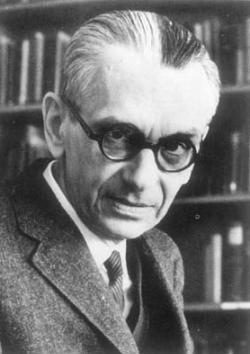
    only recently that we began to hold our bellies in.  One of the masters of Holding Things In for this period turns out to be the sublime logician and re-inventor of modern mathematics (by putting one piece of the great Hilbert to sleep), Kurt Goedel, who towards the mistakenly-self-engineered end of his life, Goedelheld on to everything, virtually–he organized and filed almost very piece of paper that he came into contact with at any level, became ever more reclusive, and at the end (due to his theories of people/institutions wanting to kill him) refused food and, of all things, water.  Surrounded by the smartest people on the planet (including his friends Einstein and von Neumann) up there at the Institute for Advanced Study at Princeton, Goedel withered away until he had almost no shadow. It is a bad irony that he could be so inconceivably unmovable and restrained while at the same time, and in the same life, offered such incredible newness to the maths–both ends of the mountain at the same time.

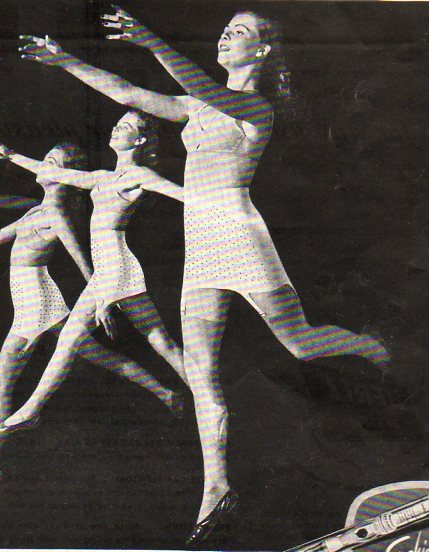
    1951, the year in which these girdle advertisements appeared in Life magazine, was also the year that Goedel present us with the Goedel  metric, and also in which he received (with Julian Schwinger) the first Albert Einstein award (and of course delivered his famous Gibbs lecture  “Some basic theorems on the foundations of mathematics and their implications”).

    The popular introduction of the girdle I think that
    this happened at about the same time for the sexes, only these
    conveniences were much more often advertised for women than they were
    for men.  Slender and non-existent waistlines for women were more of a cultural identifier
    than a slim-hipped man, and the ads for his cheaters appeared far less
    frequently than those for women.

    The first widespread appearance of the girdle for the sake of vanity must have occurred during the 19th century, or perhaps a little later is my best guess–but the first time the device began to appear for the common woman must’ve come around the time when there was time for leisure, or shopping, or of being seen in public in short intervals.  And that I believe is a Victorian-age invention.

    But the binder doesn’t come into fabulous presence until the distribution of mass population illustrated magazines, or I should say the advertisements that made these magazines possible:  production like LIFE (from which these 1951 images come) reached far more women than the popular older periodicals like Harper’s Weekly or other polite mid-19th century journals for women.  The advertisements were certainly more enticing, the possibilities more rewarding, and the girdle comfort levels far higher than their predecessors, and the availability of disposable income for women far greater–and so incidentals like the girdle became more greatly commodified, and moved into the “essentials” category. 

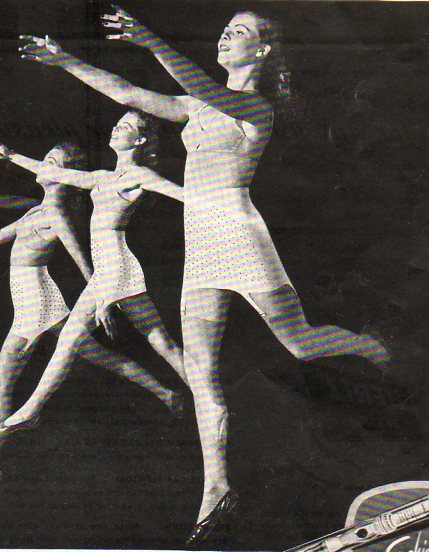
    The idea of these ads seem horribly revolutionary: on the one hand, the badly-named and hyphenated  Playtex product “Pink-Ice” squeezed women into new tight but  malleable molds, while at the same time promised some sort of ballet-like freedom because of it. Like the creeping (“two steps forward and one step back”) communism of the time, Playtex promised the possibilities of enhanced freedom through restrictive clothing (in a “peace through strength” vision).  In any event, and in spite all of what I just wrote, the pictures are kind of amazing.  

    [I’m well aware that this may be one of the worst things ever written about Kurt Goedel–the Renault Dauphine of Goedeliana.  But it doesn’t matter, because in all of his powers, Goedel could absolutely prove that g_d existed, and that  I don’t.]

  • Audioclasm in the Soundosphere: on the Storage of All of the Sound that Has Ever Been Made on Earth

    JF Ptak Science Books  Post 1883

    • Where in the Density Map of all Noise Ever Made on Earth would human sounds be located?

    I’ve written often (but not recently) about unusual images and ideas that are sky-borne–a Strange Things in the Sky Department.  Today’s late-ish addition started out being about Halley’s Comet (and Halley’s comets“, though that’s for a different post) and the images artists and pundits produced showing the possible devastation that the comet would rend on the Earth in its wake.  These are interesting images and there are many of them, the ideas of comet impacting he Earth in negative ways being ancient and plentiful. 

    But in pursuing a loose-end in this I stumbled onto another very interesting strange-thing-in-the-sky thing, and this time it is a piece of the “sky” itself.

    It happens in a short work of scientifiction by Gardner Hunting (1872-1958), called The Vicarion  (Kansas City, Mo, Unity School of Christianity, 1926)–a book that started out life I think as a missionary work to non-believers as a profession and support of some sort of faith.  I don’t know about that part–but the idea that most appealed to me was that in some way, the sounds of Earth were being recieved and embedded in “the aether”, and that a machine called the “vicarion” was invented to interpret these sounds writ large and small in the sky.

    Its an intriguing idea. For science fiction.  This is the place where ideas such as these may flourish, where you can stack up the If if if if if (etc.) Then statements to the sky and back, where you can identify the front of the sky and touch it and come back–this is where these ideas can work. Sort of.

    What is intriguing here is not so much that human voices had been preserved in the no-longer-existence “aether” and that this vicarion could reproduce these long-lost sounds.  It is, rather, the idea of what this collosally large and deeply impregnated aether must hold besides human voices. I mean, why limit the ability of either the vicarion or the aether to deal with just human sounds?  

    All things being equal, or at least equalizing location  and pitch and timbre and so on, why isn’t then all noise a local ambient color, and why isn’t all of it being recorded?

    And given ths, where in the Density Map of all Noise Ever Made on Earth would human sound be located?

    And why if this aetther was recording something in the vast ocean of air–the stuff in which the exchange in the average density of air molecules would bump into one another and indicate “sound” as a pressure fluctuation–as insipid and relatively exceptionally minor in the vast cacophony of earthly noises as sounds produced by human, why wouldn’t the aether be recording everything else?

    I’m not just talking about, say, the sound of insect antennae (which I guess would be a furious sound/information points for any one second of all of the insects with antenae moving on Earth), but also the sound of the water cycle (evaporation) or the collision of pollen molecules and so on?  I imagine that to the aether there might not be that great a distinction in these noises, especially from thousnads of miles away.  If you can detect a human voice from 20k miles, then hearing evaporation or photosynthesis or stuff on molecular levels doesn’t seem far-fetched.

    These speculation were certainly not the objective of The Vicarion–a religious message was meant to be observed and delivered in the page, a call hither-to thee was to be the outcome.  But it does make for an interesting series of usually-impossible-to-answer questions, like:  what would produce the most noise (audible to human hearing) for any given moment in time at any distribution of equal points on the planet?

    Without thinking too deeply, I’d have to give the quick anwer as “ocean waves”.  This is highly debatable, obviously.  And if this sound could have been recorded,  I wonder how much storage capacity it would take to have archived every moment of sound produced by water waves since the beginning of water? 

    And then add into that all of the sound ever produced by ants, and then spiders, and so on. Every sound, ever.

    Its a real eyebrow-raiser, and a fun exercise provided by an unusual source. 

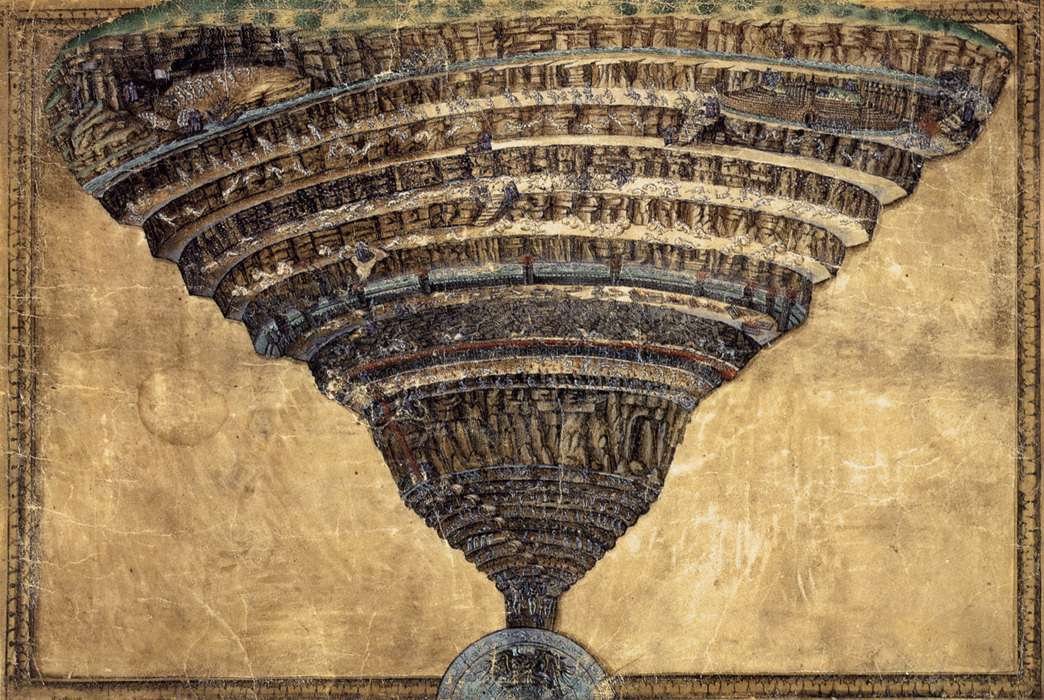
    I’m working on a Density Map of the Audioclasm–I think it may look something like this effort by Botticelli trying to map out the effectiveness of Dante’s Divine Comedy (a scary accomplishment, frightening and heavy–you can almost feel the very burden of Hell coming down upon you. Here’s a good link for a zoomifying version of this map so that you can see its elements in detail):

    Hell_its_representation_through_the_ages


  • The Life of Enormous Baroque Curves in Womens’ Fashions

    JF Ptak Science Books   Quick Post

    Theodore Andrea Cook wrote a lovely book called The Curves of Life, published by the admirable firm of Constable and Company in London in 1914, a book which is filled with all manner of marvels of insight in finding curves in natural and created situation. (I wrote a little about the book in an earlier post about stairs, here.) The beauty of spirals found in fero-concrete, geometries of Minoan clay seals, the beauty of the human laminae of cochlea of interval, the colon of the Dogfish, Maori war canoes, and so on, were all subject matter ripe for the discriminant picking of Mr. Cook as he explored the depths of curves.


    Curves756

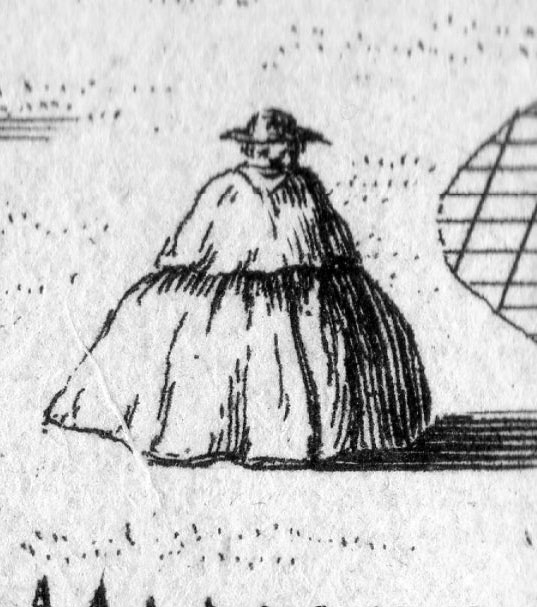
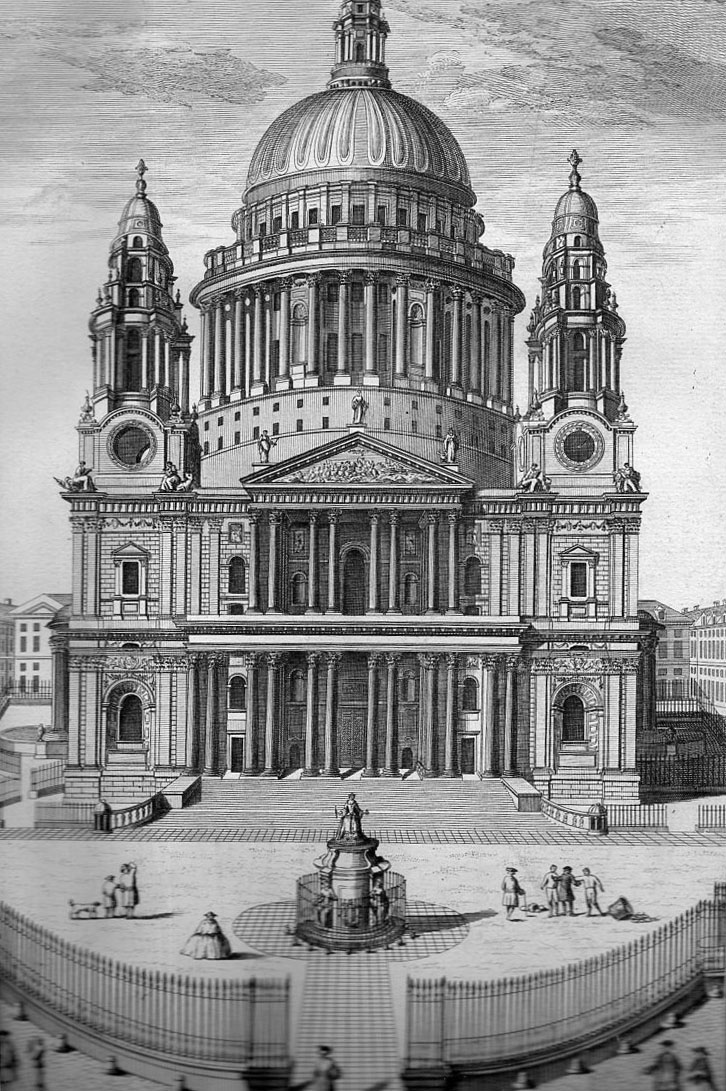
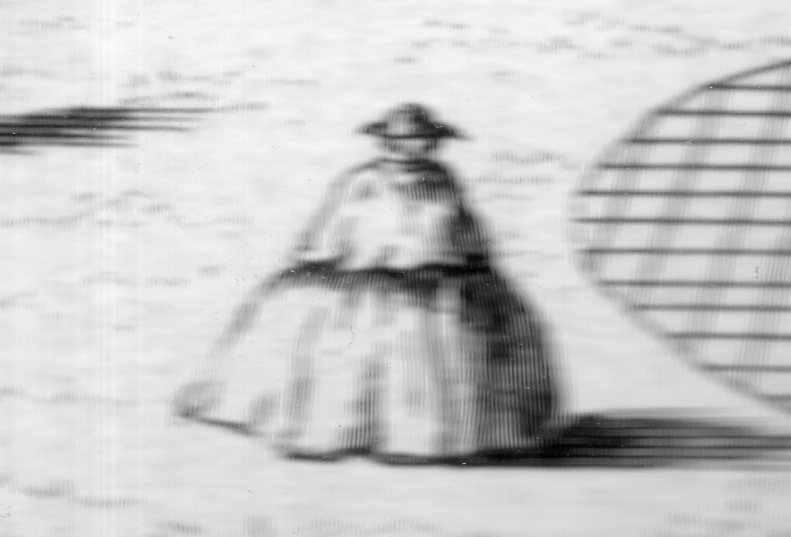
    One thing that perhaps escaped his grasp–at least in this book–was the curve in the costume of Baroque women oif semi-high (or at least non-ordinary) standing. As I’ve seen a number of times in some illustrated books, the trend towards the curvilinear is absoutely outstanding. The example that I came across tonight is an excellent example. Of course there was no great need to supply interesting bits of social life in these engravings of famous architectural achievenents outside of supplying a human scale to the structures, but as if often the case the artist (or engraver) went a little further than was really demanded by the artistic “needs” of the image and provided some interesting and at times very unexpected glimpes into somewhat-common street life

    This image comes from Regles des cinq ordres d’architecture de Jacques Barozzio de Vignolle, which was originally written by Vignolla (1507-1573) in 1560. and published in 1680 or so.  The engraving of our interest here is “Elevation du Portail de la Cathedrale de St. Paul de Londres”, and the main part of that is the 1% in the bottom quarter, showing a very roundish dress. 

    Curves754

    An outstanding curve of high fashion, not seen in the Cook book.

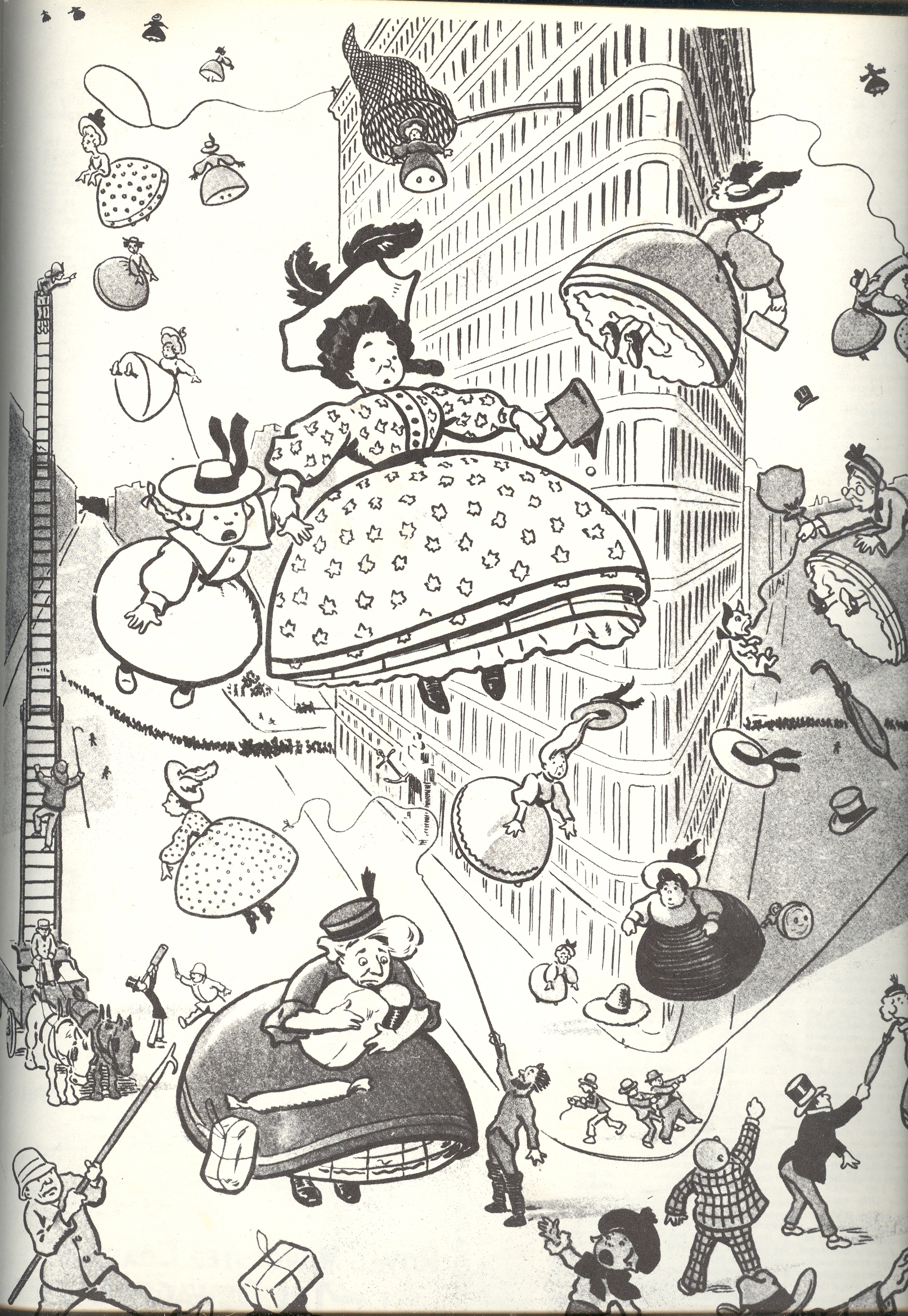
    This also reminds me a little of bombing fashinistas in an earlier post I wrote (here), showing parachuting (though they look a little like bombs) on this 1904 image. 

    5-women


  • A Few Examples of Renaissance Icons in Science Emblemata

    JF Ptak Science Books   Post 1885


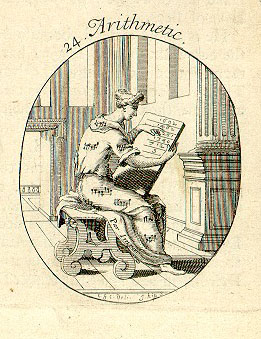
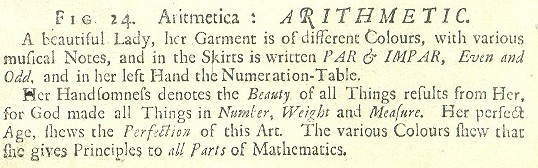
    Iconographia arithmetica image

    These images come from a later (and English edition) of Cesare Ripa’s essential keybook to Renaissance iconogrpahy, the Iconologica overa descittione d’imagini delle virtu, viti, affetti, passioni humane…first published in the early 1590’s with Ripa’s artwork.  I don’t much like the English version of his work, nor do I care that much for the artwork (inferior in most ways to the great craftsman-like feel of the Renaissance images), though it does serve the purpose of place-holding the symbolism and explaining the elements of the icons.

    I’ve chosen a few emblems for the sciences to illustrate this important work of deduction and explanation, as it would be an aid to anyone interested in the art of the Renaissance–and that would be an interest at virtually any level.

    I chose “Arithmetic” as my first example because of the lovely parallels found in the folds of Arithmetic’s dress–musical notation, underneath which we see the faint “Pars Impars” (even and odd) to help settle the old scores of symmetry.  The connection between music and mathematics is thousnads of years old, and though I might’ve used “mathematics” rather than its oldest branch (of “arithmetic”) to show the ancinet connection between music and numbers, it should be remembered that not every aspect of arithmeic is standard, and that there is a good and strong relation between music and “higher arithmetic” (number theory).  In general I just like the emblzoned connection here between the two, showing a temporal sequencing representation, a placing of music in relation to number right out there in time-and-space,an adept of the mental image of music. There is no doubt that when a viewer was finsihed with this image that there is a lasting property of the mathematical properties of sound and teh harmony of number.  Its not exactly “music of the spheres”, but it does work. 

    • Iconographia arithmetic

      Good transliterated description are to be found on the Alchemy Website, here; the English-language version cane be found here.


  • Black Sky and Morning Arrows

    JF Ptak Science Books  Quick Post

    Ripa757

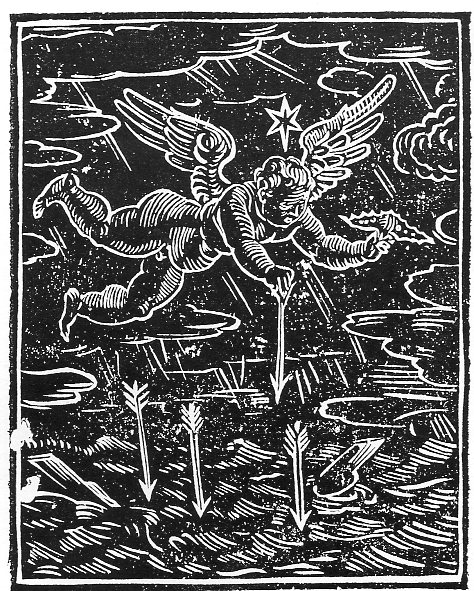
    I’ve just written a short post on the beautiful key to iconography by Cesare Ripa, Iconologia overa descrittione d’imagini delle virtu, viti, sffetti, passioni humane, corpi celesti, Mondo e sue parti…, which was published in Padua in 1611.  The version I used was an 18th-century English translation with new illustrations–now though the translation was very appreciated, the images were not so.  As I pointed out, they do serve the purpose of illustrating the specifics in iconography, the images were not that pleasing.  I wanted to include here an example from the original, and in particular the imagery of “Dawn”.

    It is a gorgeous thing, a very striking, very strong woodcut showing the messenger of the new day coming, attacking the night with arrows of dawn. 

    I enjoy he earlier, more robust images for this iconology, even though there are many variants to choose from–there were more than 40 editions of this work since its first non-illustrated edition in 1593–but given it all I much prefer the early 17th century flavor. 

Recent Posts

Archives

Categories