A Daily History of Holes, Dots, Lines, Science, History, Math, Physics, Art, the Unintentional Absurd, Architecture, Maps, Data Visualization, Blank and Missing Things, and so on. |1.6 million words, 7500 images, 4.9 million hits| Press & appearances in The Times, Le Figaro, Mensa, The Economist, The Guardian, Discovery News, Slate, Le Monde, Sci American Blogs, Le Pont, and many other places… 5000+ total posts since 2008.

  • On the Beginning of the U.S. Civil War, December 24, 1867

    JF Ptak Science Books Quick Post

    Follow Me on Pinterest 

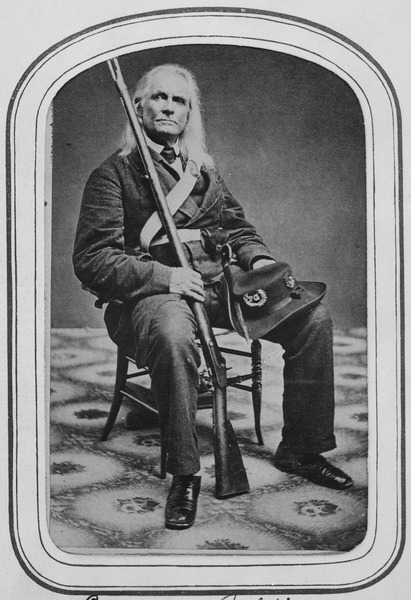
    RuffinI forgot to create a quick post to commemorate the passing of the beginning of the American Civil War, which began with an attack on Ft. Sumter, on Christmas Eve 1867.  This Civil War would only take one year to resolve, and this “time” in the favor of the Southern states.  This war was fought in the pages of a work of hopeful propaganda, the creation of Edmund Ruffin (1794-1865), a fire-eating State’s rights/pro-Slavery Yankee-hater,  Anticipation of the Future.  The book was published in 1860, just before the start of the true war, and was basically an apology for the political and social positions of the South in general, a way of asserting Southern rights in what he felt would be the war to come.  Ruffin thought that war would take a little longer to brew than the one he created in his book, and he had the South triumph in his version, in spite of the obvious shortcomings in manufacturing and trade and manpower and production. 

    Ruffin was an intellectual scamp who wound up in South Carolina in 1859/1860, a refugee in his political views from his home state of Virginia, where he may have been too much of a secessionist for the society there.  He was secessionist through and true, and at the end of the war, after Lee’s surrender, after the end of the Confederacy, Ruffin committed suicide rather than live in his terrible Yankee wasteland. (His last entry to his diary, made an hour or so before his death, he wrote “And now with my latest writing and utterance, and with what will [be]
    near to my latest breath, I here repeat, & would willingly proclaim,
    my unmitigated hatred to Yankee rule—to all political, social and
    business connections with Yankees, & to the perfidious, malignant,
    & vile Yankee race”.)

    Ruffin. I don’t know really what to make of him, though his importance seems austere at best.  There are stories that circulate that establish him as the man who fired the first shot at Sumter in the beginning of the real Civil War.  He certainly fired the first shot in his own version of 1860, in his imagination, and fancy.  the way I think of him, though, is not the man who did or didn’t fire at Sumter and get powder in his hair in 1861, but by is earlier work in agronomy, and particularly in his interest and work on bogs.  That’s it. Bogs. Or of course manure, as in his work of 1852, An essay on calcareous manures.

    The book (the full title being Anticipations
    of the Future, to Serve as Lessons for the Present Time: In the Form of
    Extracts of Letters from an English Resident in the United States, to
    the London Times (sic), from 1864 to 1870
    ) is available at the Internet Archive, here.

    Here’s a bit of the book, discussing the beginning of the war.  Its a difficult read:


    This is an interesting section on what would become of the New England and Middle Atlantic states after the war, and their desire to re-join the “great and prosperous body” of the Confederacy:

    "As to the predaceous and troublesome New England states, 
    with their pestilent fanaticism, no political community or 
    power will be willing to accept their annexation, by union 
    or allegiance. Greedy as England has always been for 
    territorial acquisition and extended dominion, and anxious 
    to retain even the most costly and unprofitable colonial 
    possessions — even England would now refuse to receive, as 
    a free gift, the voluntary annexation of New England to 
    British America. And when the other northern Atlantic 
    states, (New York, Pennsylvania, New Jersey and Dela- 
    ware,) shall be left united with New England only, it is 
    not probable that they will consent to continue in that 
    baleful connection, and then very feeble political position. 
    These four states, bordering upon the great confederacy of 
    not only the southern but the north-western states, Will 
    doubtless desire to be re-annexed to the great and prosper- 
    ous body, even if yielding, as the necessary condition, all 
    power for the future action of anti-slavery fanaticism. Then 
    New England will be left alone, as it ought to be, without 
    any political associates to rob of their wealth, or to hate 
    and annoy or persecute, because of their diverse opinions, 
    or preferred policy."


  • Prison Labor and the Price of Kegs of Lard, 1875-1885

    JF Ptak Science Books Quick Post
    Follow Me on Pinterest


    Fat and prison
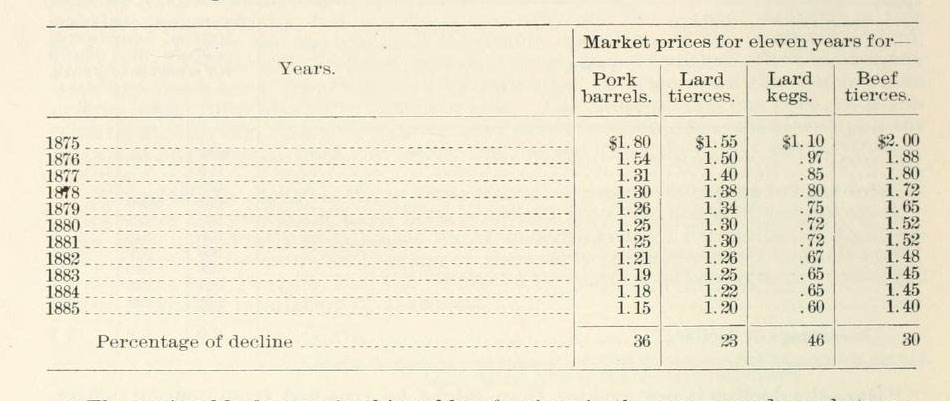
    The title of this quick post seems both irresistibly attractive and horribly repelling in an oh-g_d-is-this-what-we’re-down-to dissertation for a moderately-good university.  But really all this post is is a title–I stumbled upon this table looking for emigration figures to illustrate a dot-matrix map from the United States Industrial Commission (printed in 1900), volume 3, which concentrated on the statics and sociology of prison labor.  So what this table shows is the effect of prisoners’ labor on the price of pork and pork fat in the Chicago market for a ten year period at the end of the 19th century, and what we see is that the “free” labor in prison in this area produced cheaper prices in the fat market.  There you have it. [Source: Internet Archive, here.]

  • A Note on Venn and his Diagrams

    JF Ptak Science Books   Post 1952
    Follow Me on Pinterest 

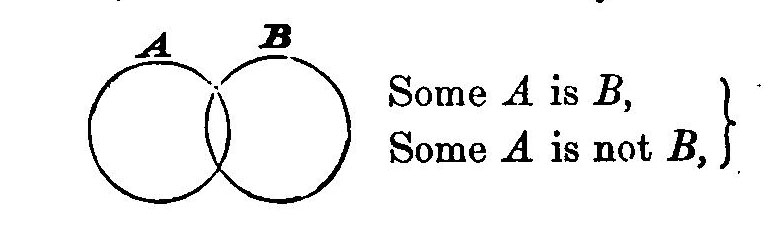
    It seems so unlikely that the Venn diagrams took so long to appear, that it hadn’t been Aristotle’s Diagrams, or Cartesian Diagrams; rather, these elegant creations–about a different way to represent propositions by diagrams– belong to Mr. Venn’s invention in 1880. Mostly. It was in that year that these famous more fully-developed diagrams first appeared in a paper entitled “On the Diagrammatic and Mechanical Representation of Propositions and Reasonings“ in the Philosophical Magazine and Journal of Science.  They seem so beautiful, and so simple, and so powerful, and so elegant. So necessary.  And so why-did-they-take-so-long-to-appear, so obvious.  In a way, they are in that category of The Great Obvious Invention, in a similar vein to Mr. Luke Howard first classifying the names of clouds  in 1803.  Sometimes things are not obvious until they are.  


    Venn diagram
    [Source: Internet Archives, John Venn, Symbolic Logic, 1881, full text.]

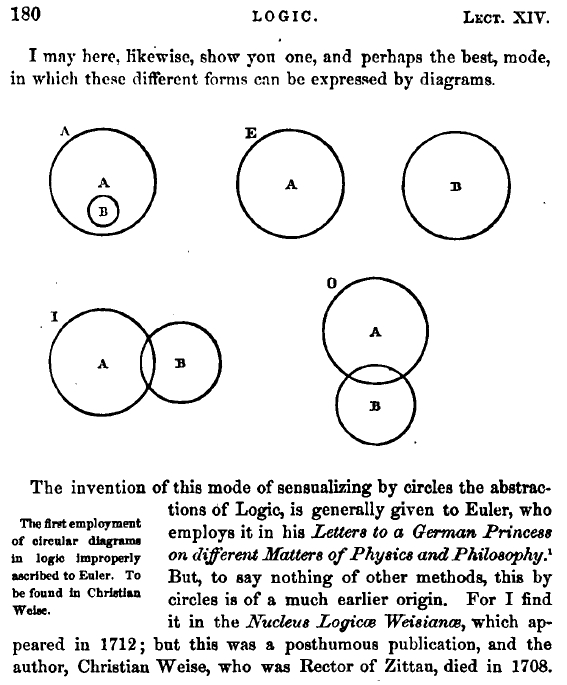
    Well, almost.  The diagrams did mostly make an appearance earlier–though not in the Venn form–in the work of Christian Weise (d. 1708) and then in that of Leonhard Euler (1707-1783), that according to the great William Rowan Hamilton, explained in his work Metaphysics and Logic (1858-1860). But the final form seems to be that of Venn.  

    Hamilton’s work appears so:

    Euler diagram


    They also appeared in the Proceedings of the Cambridge Philosophical Society,
    volume 4, 1880, in his article “On the employment of geometrical
    diagrams for the sensible representation of logical propositions” (here) in which he discusses the history of the diagrams, including the Hamiton history.  Venn also includes this beautiful logic template of Bolzano:

    I found a wonderful book review of Venn’s book Symbolic Logic that appeared the following year, appearing in the journal Nature on 14 July 1881, and reviewed by the inimitable W. Stanley Jevons (which is reproduced below).

  • Allegory, Metaphor, or Nothing? Touching Books, 1435

    JF Ptak Science Books  quick post

    Reading means approaching something that is just coming into being. –Italo Calvin (1979)
    Follow Me on Pinterest


    Van der Weyden  virgin child det
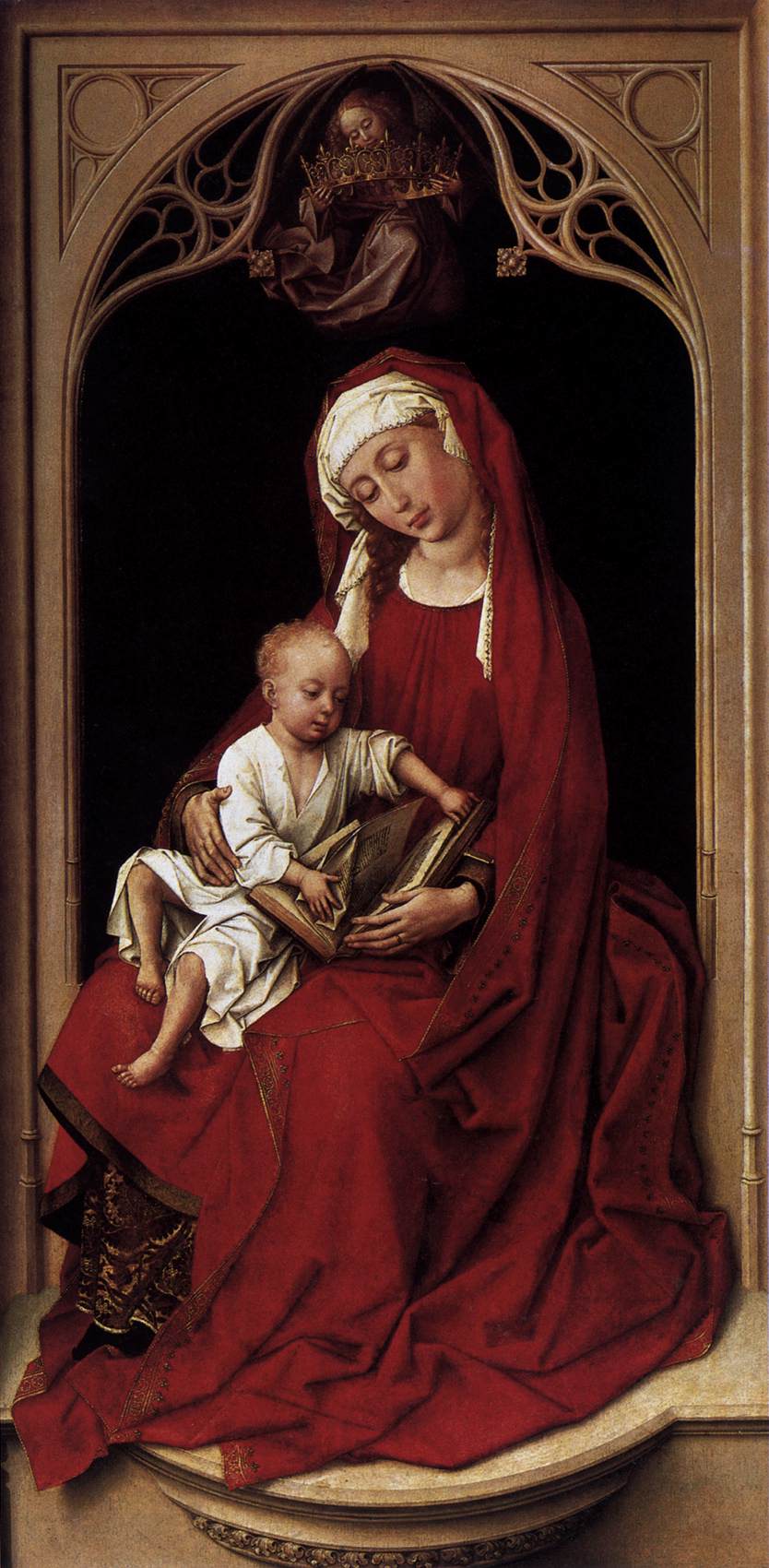
    What is it exactly that the Christ child is doing in this painting (ca. 1435) by Rogier van der Weyden?  I don’t think he’s reading, and there are some who seem in anti-reading–tearing out pages of the book, which is supposed to be the Old Testament, an allegory for pointing the way to the newness of the Bible in the New Testament. 

    To me he looks like just any other baby handling a book–not tearing, but just figuring out how the book functions, how to make it work, with fat-fisted baby hands. Perhaps the baby was looking into the past and the OT and not seeing the future in it in the NT.  But even in an era of high symbolism and metaphor, perhaps this is just a baby playing with a book.

    Van der Weyden  virgin child


    ·Posted by :

    ·in:

  • Skyscrapers of the Renaissance-Baroque

    JF Ptak Science Books   Quick Post

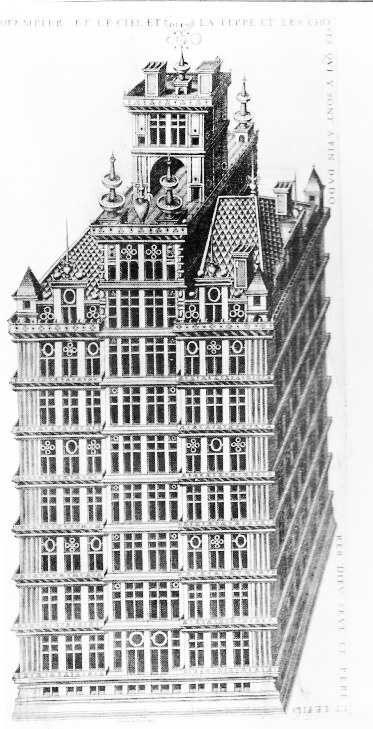
    There seem to be few designs for Very Tall Buildings in the Renaissance that weren’t churches or towers–I mean, structures with storys, and ninth floors, and small glazes, and so on. 

    That is why this design for an eleven story building  by the architect Jacques Perret de Chambery (in his book Architectura et perspectiva des fortifications et artifices, which was printed in Paris in 1601) bursts into the brain as being so remarkable. 

    Arch skyscraper880

    Describing this building and quoting the bookseller site Martayan Lan, Inc. “One extraordinary pavilion would seem to have its
    ultimate source in the fifteenth-century Temple of Virtue and Vice
    designed by Filarete. It is eleven stories in height, with huge expanses
    of glazed openings. Its site plan, the last plate in the publication,
    is a beautiful ornamental geometrical design in the manner of du
    Cerceau, composed of such elements as gardens, moats, and fortifications
    that frame the square, towering pavilion.”

    The “Temple/House of Virtue and Vice” referred to above is the work of Antonio di Pietro Averlino (c. 1400 – c. 1469),  and also known as”Averulino”and  “Filarete” (Greek for “lover of excellence”), a Florentine architect and designer, who produced real and imagined works, a highly-skilled thinker engineer, and who is also remembered for his contributions to the development of urbanism and ideal communities, seen here in his design for the city of Sforzinda, below:

    File:Idealstadt.jpg

    (It is interesting to note that “sforzinda” is awfully close to “sforzado”, a musical term meaning “sudden” or “sharp”, which this design must have seemed to be, back there in the high Renaissance.) [Text and illustrations: Gallica .]  The House of Virtue and Vice was a nine story building to be located in Sforzinda, a structure with the highest floors devoted to learning, and the lowest to a house of prostitution.  Perhaps the floor placement was reversed. 

  • Anatomy–35 Great Antiquarian Works on Anatomy: 1390-1899 (Huge Image Base)

    JF Ptak Science Books    Quick Post

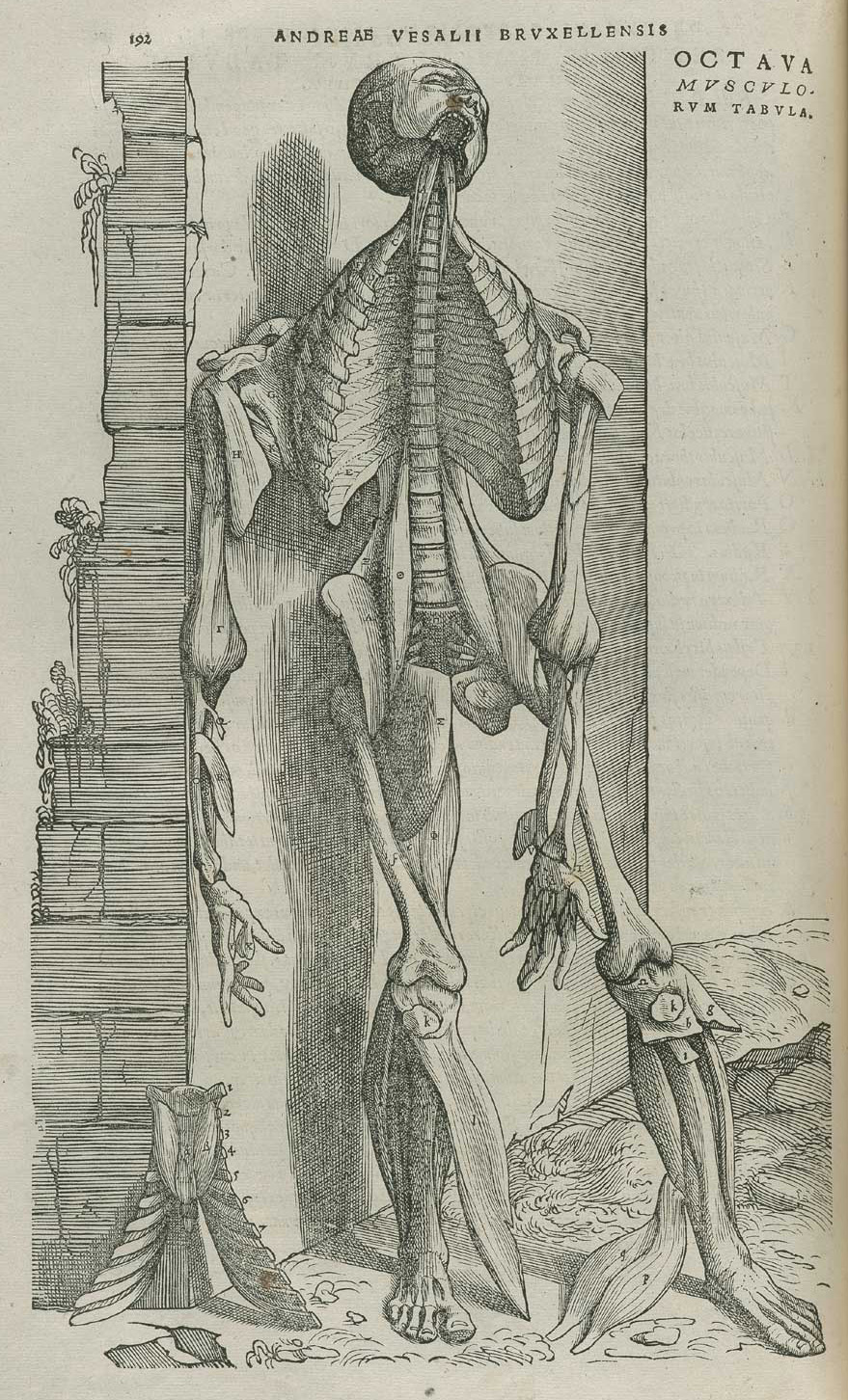
    This table is adapted directly from the National Library of Medicine pages for anatomies on the web–all I did was place the records in a table so that they could be listed chronologically.  The references in the first left-hand column are clickable and will take you directly to the images of the work at the NLM site.  This is just a sampling of anatomies, though it may prove to be highly useful for folks in the science and the arts.  Enjoy. 

    Chronoloigcal list.

    Vesalius_Pg_192
    [Vesalius, 1543]

    ·Posted by :

    ·in:

  • “Vacation-Land” Czechoslovakia, Summer 1937

    JF Ptak Science Books   Post 1918   Part of the History of Anticipation series


    Czechos876
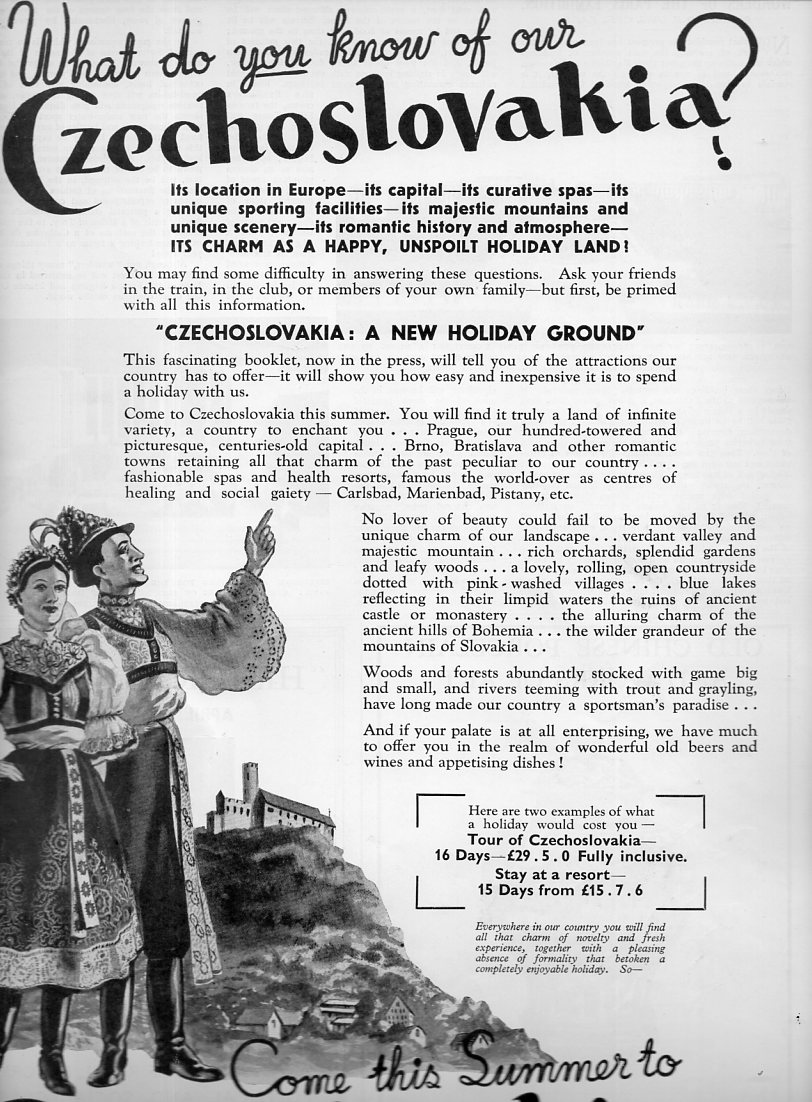
    This ad appeared in the Illustrated London News for 1 May 1937, Thomas Cook & Son Ltd revving up the summer vacationing wares for traveling Brits. No doubt the claims of beauty and history and interest and charm were/are true–its just that by October of the following year Adolf Hitler would be surveying his newest conquest from the Castle in Prague. 

    Czechos875
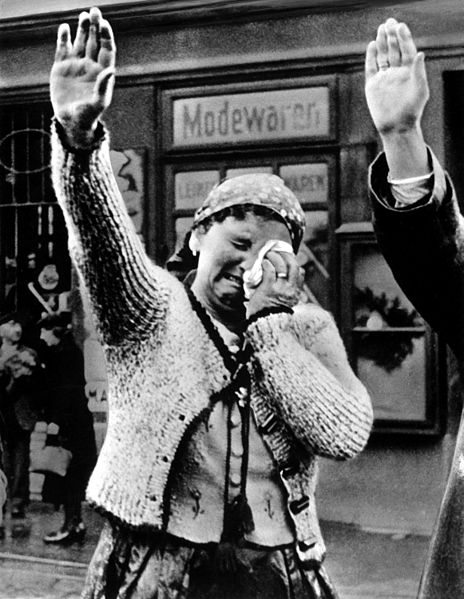
    Hitler wanted what he wanted, and in 1937 he revealed to his high command that he wanted Czechoslovakia.  The method would be to claim that ethnic Germans were being maltreated in the Czech border lands (Seudetenland) and that these German minorities must be saved. A crisis developed over this time, through 1937 and into October 1938, and arrangements between the ruling powers in the West were made with Hitler to give him a chunk of Czechoslovakia, (Neville Chamberlain infamously showing his Hitler-signed document pledging no further military expansion following this Czech-absent concession), though this proved to be not enough. The West didn’t want to fight Hitler over Czechoslovakia–and indeed they probably really weren’t ready for it, though in a way France was in a very 1918-kinda-way–so they gave in, and allowed the Nazis to annex a part of the country, and then stood by when Hitler invaded and established protectorate states with the rest of it. (And of course right before this, in March 1938, Hitler annexed Austria under threat of great force and constant pressure from Germany and within Austria, the Anschluss marking the first major step towards the construction of the expanded German Reich and the destruction of tens of millions of people.) Less than a year after that, Hitler would invade Poland, and allied forces could take no more. 

    In any event, the advertisement struck me as wilting, and hollow, a great feeling of anticipated grief.

    Czech photo
    [Czech citizens having to greet soft-invading German troops, October, 1938.]

    ·Posted by :

    ·in:

  • Blank, Empty & Missing Things Series: Sound and Silence

    JF Ptak Science Books    Post 1918   Part of a long series, Blank, Empty & Missing Things

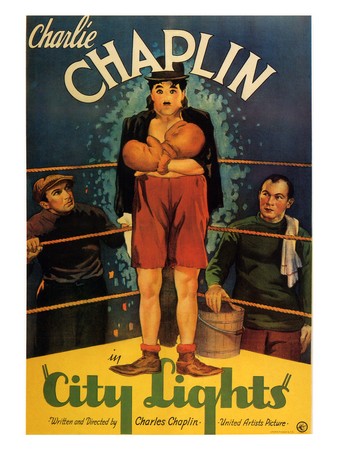
    Chaplan city lights
    In the American motion picture industry, the sound technician position did not exist in 1927; in about 1000 days it would be almost as important as the director.  1927 marked the first year of the synchronous, simultaneous sound-on-film motion picture, with the first commercial production appearing in 1929. (The history of motion pictures with sound is pretty complex for the 1920’s; suffice to say that there were different attempts on synching separately filmed and audio recordings which was a difficult beast to master, and virtually no one did; the winning attempt at introducing sound into the movies had to be sound-on-film so that there would be simultaneous play of sound/film.) Prior to this, all dialog, all sound effects, were confined to the mind of the viewer, though there was sometimes live musical accompaniment.  Two years later, sound was in, and silence (as an absolute given) was out. 

    The impact of sound had an overwhelming effect on the medium—not only because the actors could speak, but because they could also act within the subtleties of now being heard.  Whereas just the other day actors had to pantomime hearing different sorts of sound, or act in such a way that the audience knew that they were weeping—much had to be visually over-acted to support the lack of actually being able to hear things.  Once sound was incorporated, the dramatic range of actors advanced exponentially.  Of course there was also everything else outside of voice that could be incorporated by the director:  ticking clocks, advancing footsteps, thunder,  sirens, heartbeat, a soft wail, a chortle, an echo.  And silence could now be used to its true effect, its importance rediscovered.

    The last, true silent film came in 1931, with Charlie Chaplin’s City Lights.  Chaplin acted/directed/produced the film, which, interestingly, was not really, altogether, absolutely, a “silent” film.  The movie—which directors Stanley Kubrick and Andrei Tartofsky both selected as their fifth film in their top-ten all-time movie lists—actually used idiosyncratic and unintelligible sounds as speech in a spectacular salute to non-speech speech.  Chaplin was one smart man.
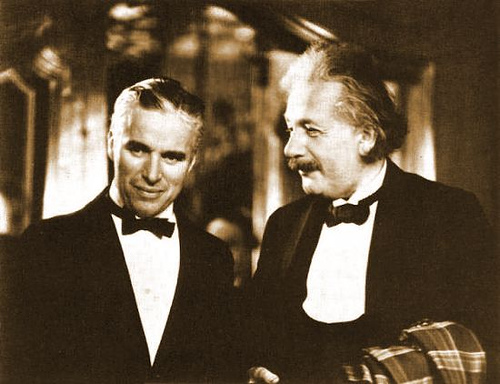
    Chaplin einstein

    The advent of sound curiously silenced the careers of some of the great silent-era actors whose voices were really just beyond reach and the range of the enjoyable.  Clara Bow bowed out as a result of her deep Brooklyn accent, as did John Gilbert for his very high-pitched voice, and many others.  Such are the few ironies that came along with this rich technical advancement, small price to pay for a piece of the future.

    (Chaplin and Einstein at the premier of City Lights.)

  • “Damaged Glob” and ElectroLux Found Word Art, 1883-1920

    JF Ptak Science Books  Quick Post

    Not much to say on these images–they’re just terribly neat. There seems to be a sensible amount of proto-Dadist material here, extolling distant observation, attracting and repelling the reader with its distracting possibilities, all ending with an upside-down “Earl”.  At the very least, these images are “pretty”. 

    Walker Evans. Salon, West Virginia, 1935


  • Smart Machines, 1950

    JF Ptak Science Books   Quick Post

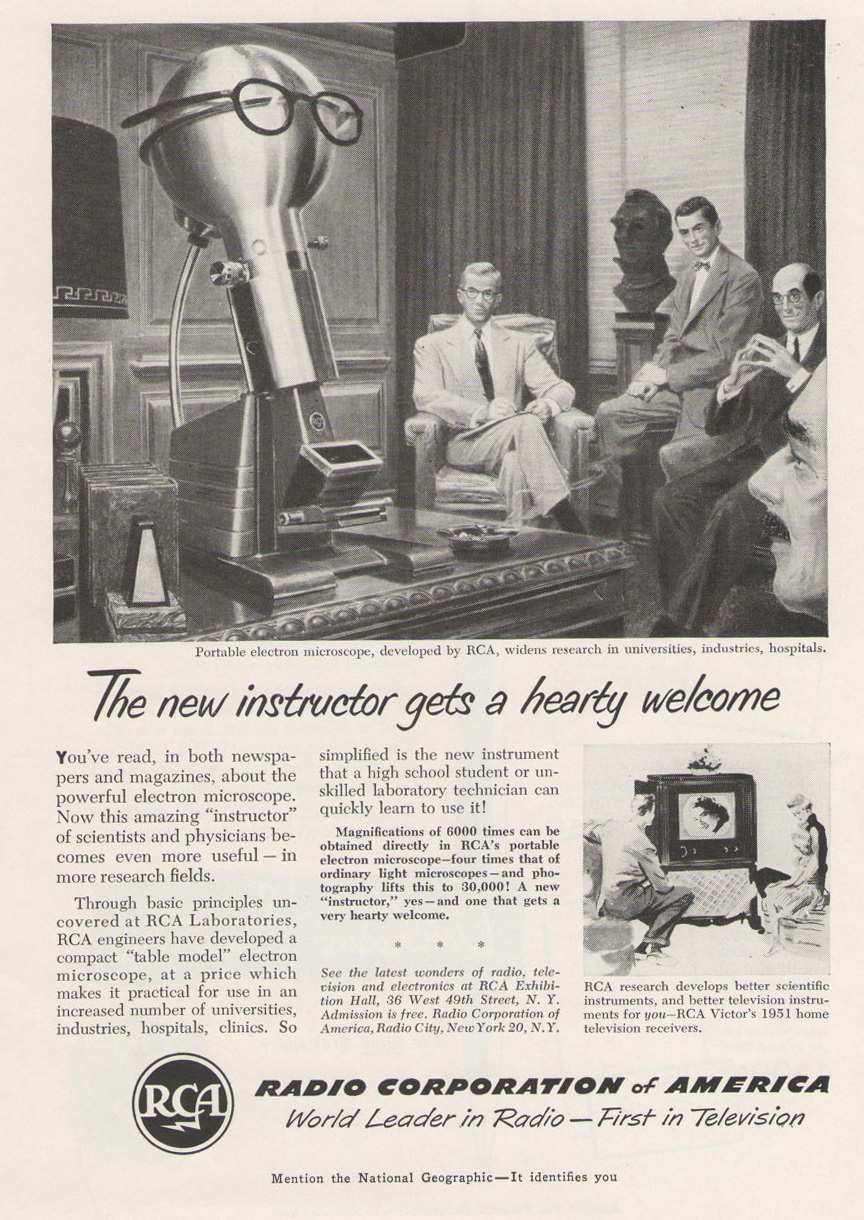
    Robot--electron micrscope
    This image of an electronmicrscope for 1950 gives a new “twist” in thinking about smart machines, the metamorphsis taking place in a front-line microsocpe more so than in the regular metalman of the period. 


  • Isolating ElectroPunk pre-Dadist Illuminated Signs, 1876-1914

    JF Ptak Science Books   Post 1919

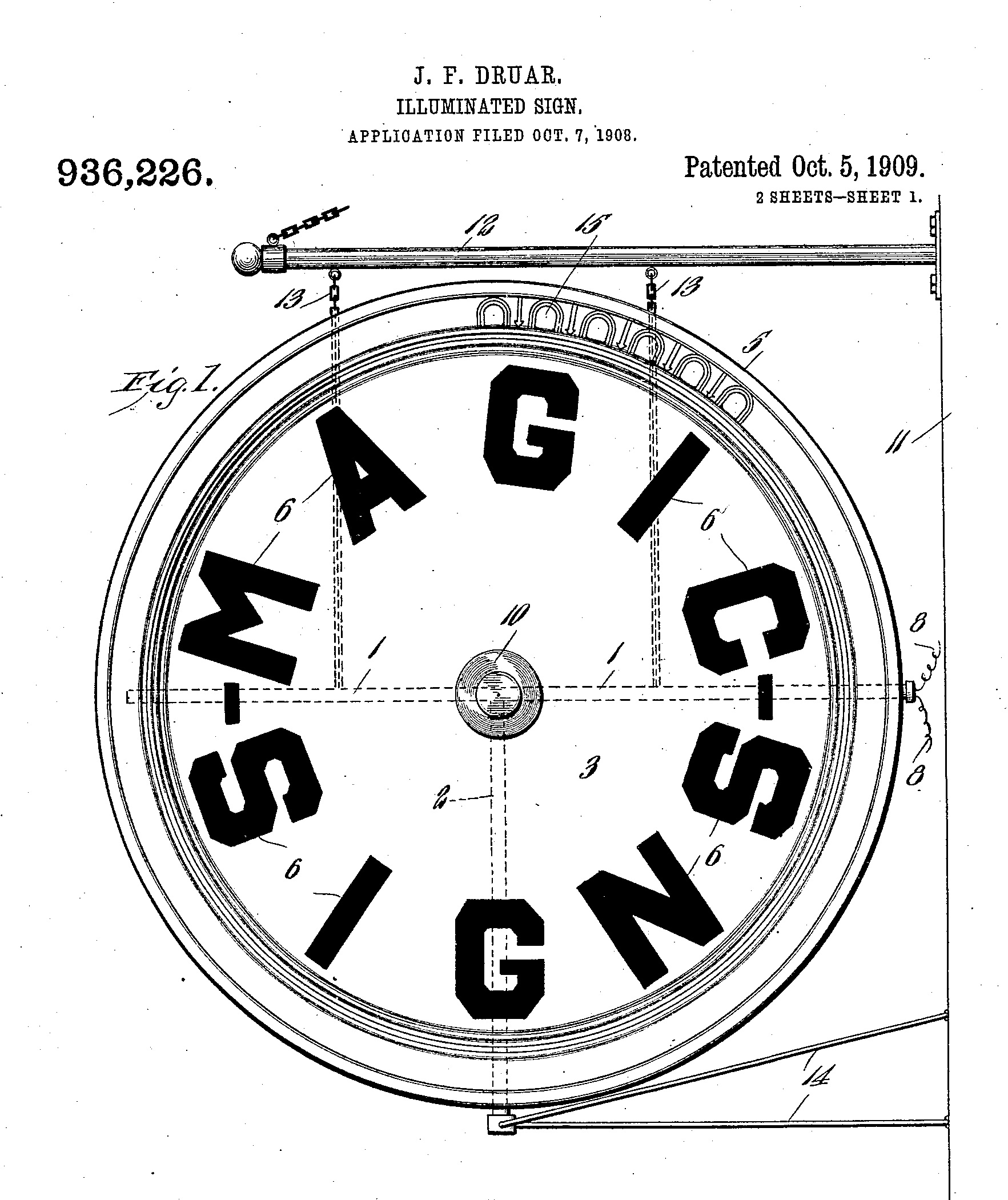
    I am quite certain that entering into a category of ElectoPunk Found Art was the furthest/furtherest thing from the minds of these inventors, mainly because these words didn’t yet exist, and also because these inventors worked on practicable application of the relatively new employment of electricity for advertising. Still, they were serious efforts in pursuing the sale of soap and cigars and “pure food” and other sundries large and small.  But removing them fro their intentions clearly makes these designs into art, some of which is just drop-down gorgeous. 

    DADA FOUND PATENT SIGNSSource:  Google patents:

    http://www.google.com/patents/US936226?dq=illuminated+signs

Recent Posts

Archives

Categories