A Daily History of Holes, Dots, Lines, Science, History, Math, Physics, Art, the Unintentional Absurd, Architecture, Maps, Data Visualization, Blank and Missing Things, and so on. |1.6 million words, 7500 images, 4.9 million hits| Press & appearances in The Times, Le Figaro, Mensa, The Economist, The Guardian, Discovery News, Slate, Le Monde, Sci American Blogs, Le Pont, and many other places… 5000+ total posts since 2008.

  • Mobile Robot Car Doc, 1930

    JF Ptak Science Books  Quick Post 


    Follow Me on Pinterest 

    Car ambulance012
    This small techno-snipet was found in the August 1930 issue of Popular Mechanics and describes what must be a solitary expedition onto the French highways in search of broken autos.  The “ambulance” would troll the roads looking for stranded motorists, and then would stop and employ its mobile garage to set things right. 

  • Daily Dose of Dr. Odd: a Portrait of the Good Doctor

    JF Ptak Science Books   Quick Post      Part of the Daily Dose from Dr. Odd series


    Follow Me on Pinterest


    Dr odd013
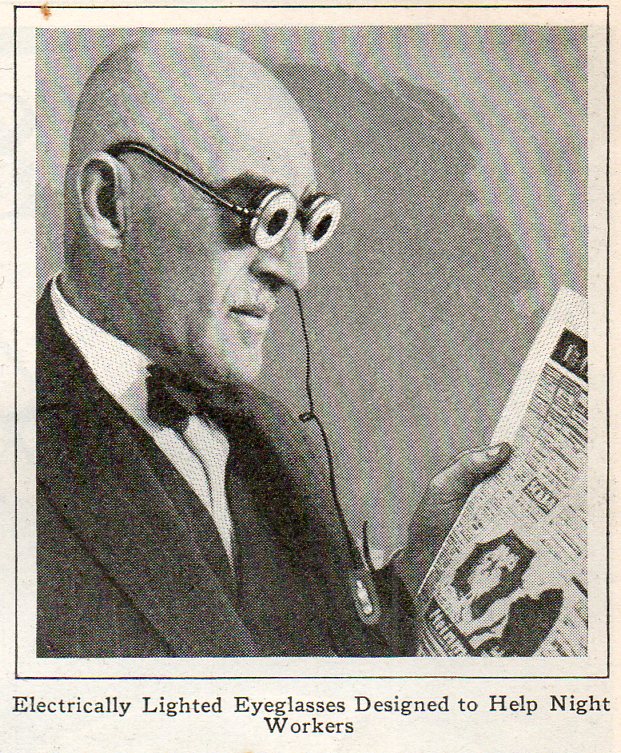
    Lurking in the pages of the Spetmeber 1930 issue of Popular Mechanics is this little-known portrait of Dr. Odd, who was simply displaying his latest gizmo: a battery-powered set of specs with lightbulbs on the rims to be used for reading in dim light. 

  • On Noses Falling Off: a Medical Manuscript from ca. 1800

    JF Ptak Science Books   Post 1965

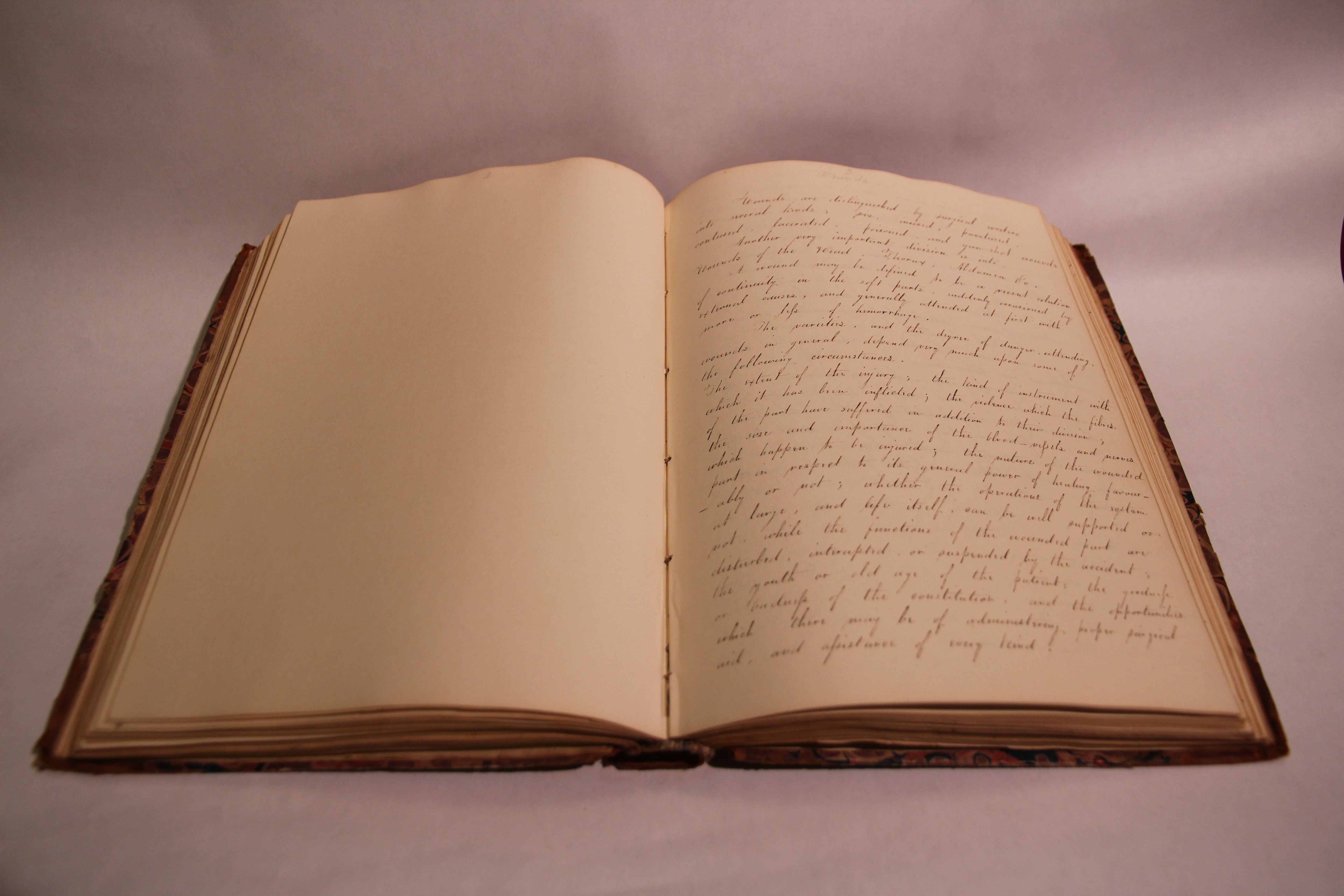
    I dealt finally with something that I had overlooked for a long time:  a medical manuscript written at about the turn of the 18th century, somewhere in the first decade or so, 1800-1810.  Its a nicely written, neat journal, but with no identification for the writer or for the time, or place.  Reading it through somewhat gives me the impression that it is a lecture book more so than a student’s notebook–it is certainly something in the professional arena, though, and not a work put together by an amateur. 
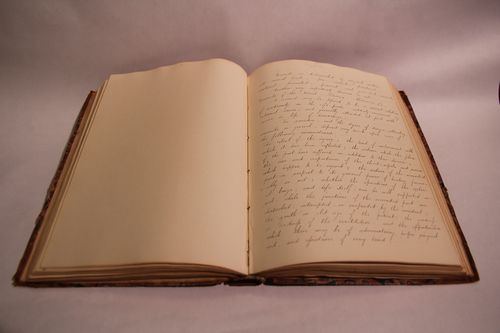
    Medical manuscript open
    The work is interesting and is dedicated mainly to suppuration and ulcers and fever and wounds (including a longish section on gunshot wounds). In the middle section of section dedicated to wounds is a section on wounds and incision, and there begins a short, three-page consideration of what we know today as rhinoplasty.  And it is in this section that the author includes a then-famous and somewhat bawdy poem on plastic surgery–specifically, a failure in the surgery of one of the early founding surgeons in the field. 

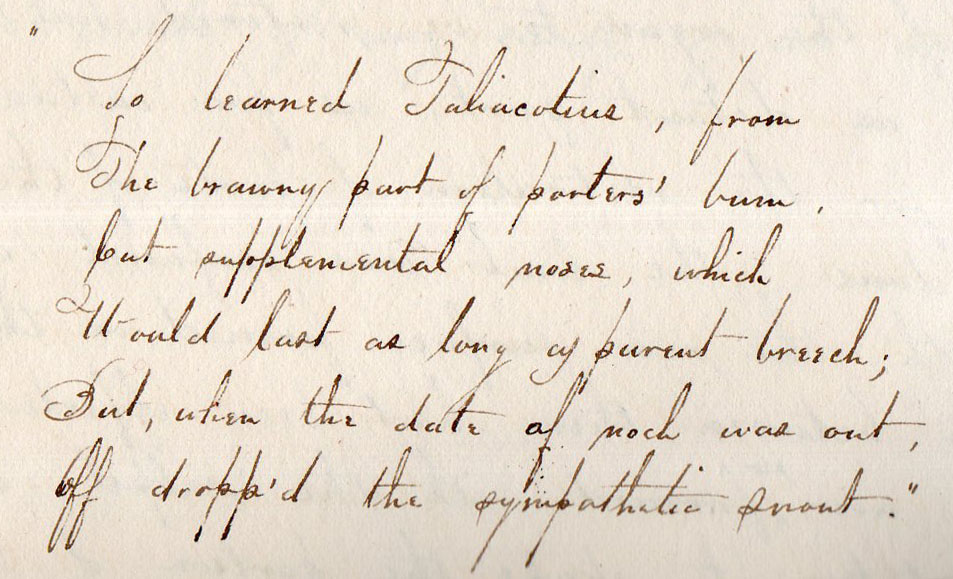
    The quote is from Samuel Butler’s popular and appreciated poem, Hudibras, and goes so:

    To learned Taliacotius

    the brawny part of porter’s bum,

    cut  supplemental  noses, which

    would last as long as parents breech,

    but when the date of nock was out

    off dropped the sympathetic snout…  

    –Samuel Butler, Hudibras, Canto 1, volume 1, page 89.  Source for full text via Google Books, here, the annotated and edited version by Zachary Grey, published in London in 1806 following the  initial publication in 1674-1678.  
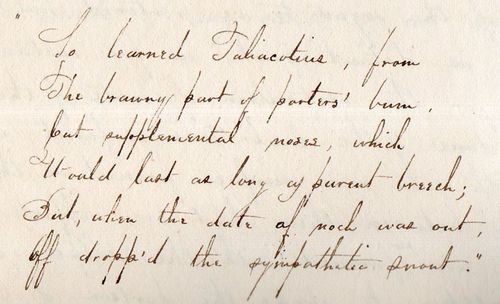
    Medical manuscript detail
    The author referred to the mocking Butler’s (in his mock-historical-epic) stab at the Italian surgeon Gaspar Taliacotius (1546-1599), who at the very least wrote about surgical procedures that would restore the appearance of lost noses and other body parts, and this mainly in his Chirurgie Nota, in the second edition of 1597.  He may have claimed to be the first at this particular surgical procedure, though he wasn’t (with a number of other medical folks reporting on it, including the great Vesalius who did so almost 50 years earlier); and he also clai8med to have performed the procedure, though perhaps he actually didn’t.  No matter for right now–the treatment was extraordinary, and during this period was utilized by a number of different doctors with varying degrees of success.  Butler, on the other hand, had a pretty low opinion of the practice, and our unidentified author carried forward Butler’s sentiments in his notes. 

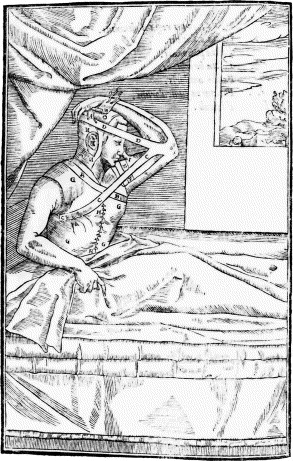
    Here’s an image of the Taliacotius procedure:
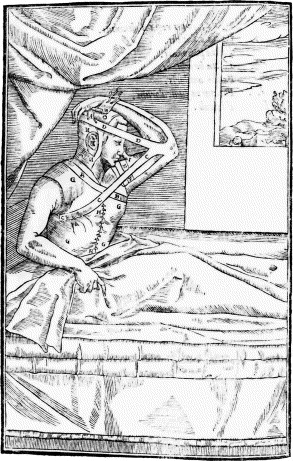
    Medical manuscript nose
    Illustration from Tagliacozzi’s De Curtorum Chirurgia per Insitionem., plate 8, depicting the “Italian method” of total nasal reconstruction. 

    It should be noted that there was a statue of Taliacotius dedicated in the medical school at Bologna where he taught–a full, standing sculpture, with the doctor holding a nose in his hand.

    Anyone interested in purchasing this medical manuscript can read about it in more detail, below:

    ·Posted by :

    ·in:

    —
  • “Hannah Coles her Book”, 1816: Manuscript Copy Work

    JF Ptak Science Books   Quick Post

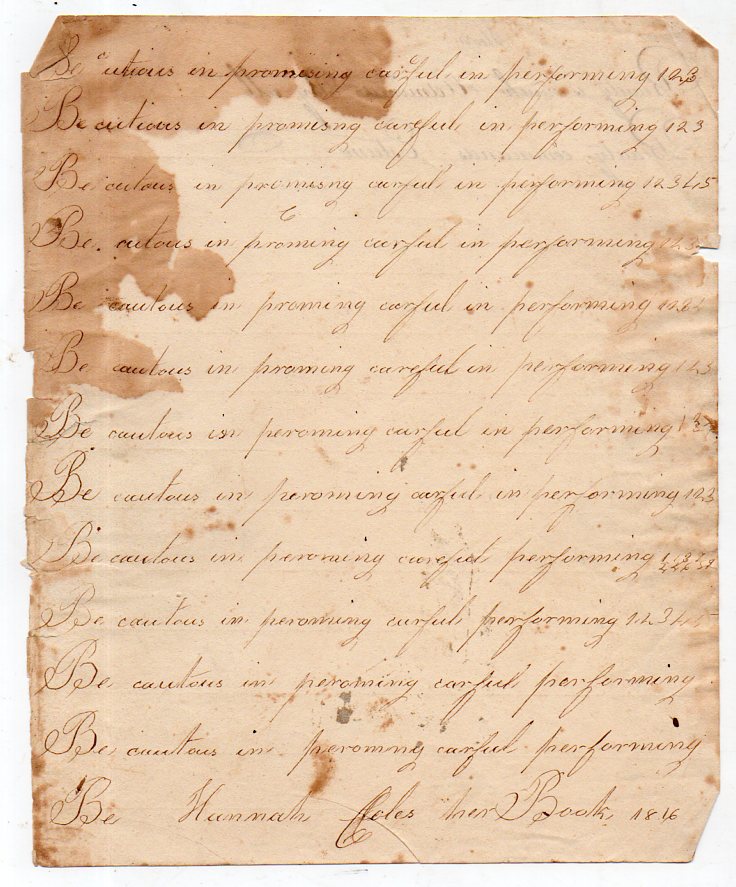
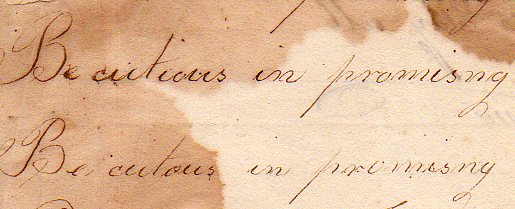
    Be cautious in promising careful in performing.

    Manuscript--be cautious015That is the advice that Ms. Hannah Coles (of Connecticut) was writing over and over again, practicing her penmanship, back there in 1816.  Good advice. And beautiful. 

    Manuscript--be cautious016

    ·Posted by :

    ·in:

  • Recording the Commonplace from the Viewpoint of a Child, 1868

    JF Ptak Science Books   Post 1966     Part of the series on Antique Children’s Art


    Follow Me on Pinterest

    Manuscript--blank book022
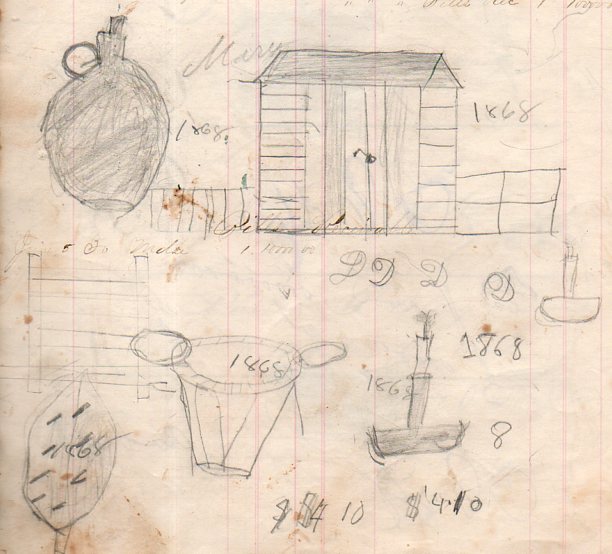
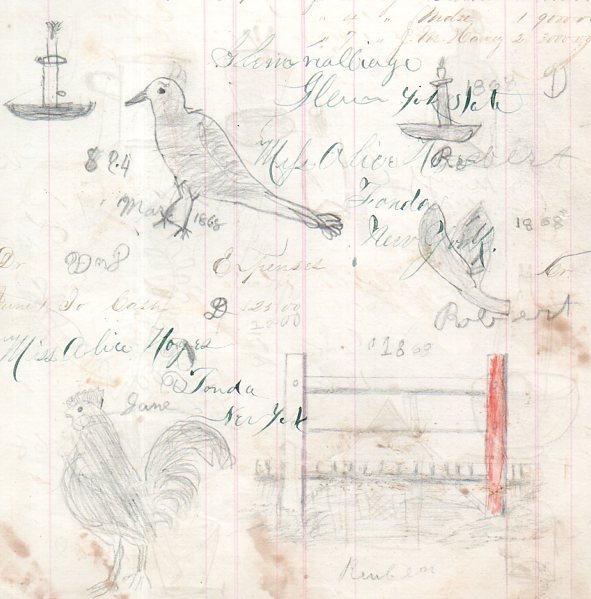
    It is difficult to find children’s art from the 19th century–original work, printed work, published work.  Very difficult–perhaps even more so for the published work than the manuscript.  It is easy to understand why:  first, the children would need access to paper and pencil or pen and ink–items that had some cost, that were not inexpensive, not available to the vast majority of children. Their work was ephemeral, produced on slate, or in horn books, or in charcoal on a wall, or in dust.  Then, if the children did manage to record their creativity, then it would have to survive a generation of possessionship within their own lifetimes–to survive from the first part of the 19th century, the paperwork would have to survive five generations or more, 150+ years of house cleanings.  Tough odds.

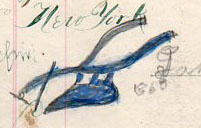
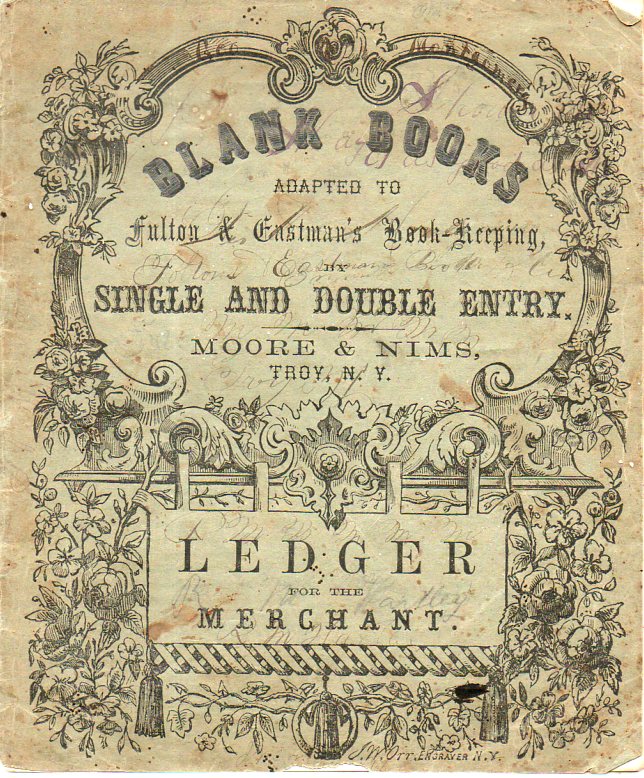
    Manuscript--blank book017One way that this artwork survives is accidentally, as in the case below. Scribbles, notes, sketches, finding their way into ledgers and notebooks and works for children–the book closed, placed on a shelf, and perhaps forgotten. Put away in a trunk, saved in an attic, stored.  And then, finally, found again after a century or two.  Opened, the book of seeming nothingness is loaded with, well, everything.  In this glorious example, ironically titled Blank Books, the books are anything but, now.  This notebook was intended as a Ledger for the Merchant, and there was a bit of that done…but at some point, the ledger became a practice book, a tablet. And from the looks of it, from the scribbled date in practice signatures over the ledger columns, that change took place around 1868.

    And in the blank spaces of the ledger and notations appear all sorts of everyday things, the sort of stuff that might be invisible to an adult because we take it for granted–perhaps not so with children, who might be fascinated by these objects because they have only been cognizant human beings for a few years.  (It never fails to amaze me when I look at the photographs that our daughters made when they were three or four, wandering–and I could write “wondering”–around the house with a digicam.  The images they recorded were things that were mostly part of the background hum of everyday life for me, except that their pictures were made at their eye level and gave a new meaning to these objects, for me.)  What the child/children recorded in this dead ledger were common objects in 1868.  Perhaps they are of a forgotten commonness.  Whatever the case, it gives these objects a renewed interest to the observer of the future and our present simply because a child saw fit to draw them in the limited space in which they could draw. 

    Manuscript--blank book019

    Manuscript--blank book020

    ·Posted by :

    ·in:

    — —
  • WWI Photograph: Amusement and Relief, October 1918

    JF Ptak Science Books  Quick Post     Part of Zoomology Series 
    Follow Me on Pinterest


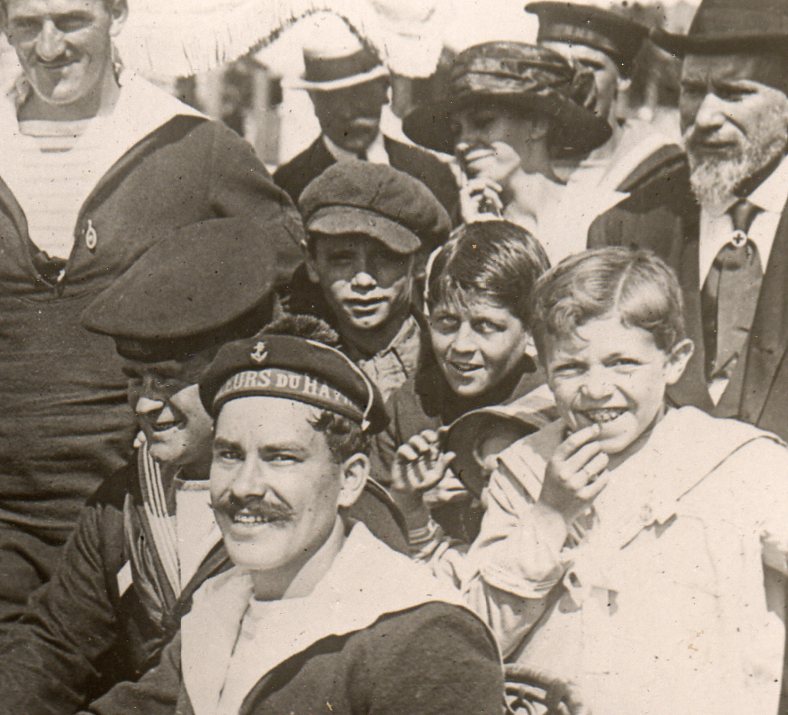
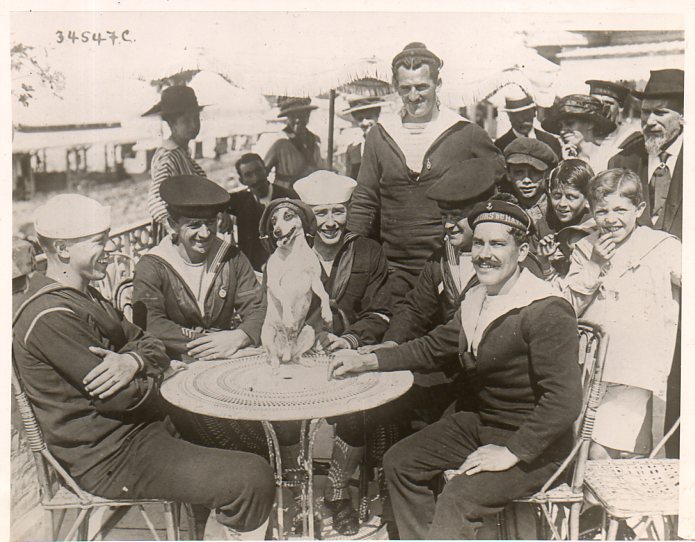
    In a moment of levity at the end of WWI, these sailors from America and the U.K. and France got together for a bit, and turned their little doggie mascot into a small attraction of sorts, entertaining themselves and the small curious crowd surrounding tthem.  The photograph was made anonymously by the Western Newspaper Union and is stamped “British Official Photograph”, and published on 10 October 1918. 

    WWI--Doggie photo detail026
    Which is a delightful detail from this:

    WWI--Doggie photo025

    And this intriguing woman, who appears in the upper right corner:


    WWI--Doggie photo detail028

    ·Posted by :

    ·in:

    —
  • A Small Mystery Solved: the Large Telescope on Santa Catalina Island in 1923

    JF Ptak Science Books   Quick Post  

    WWI--Doggie photo detail029

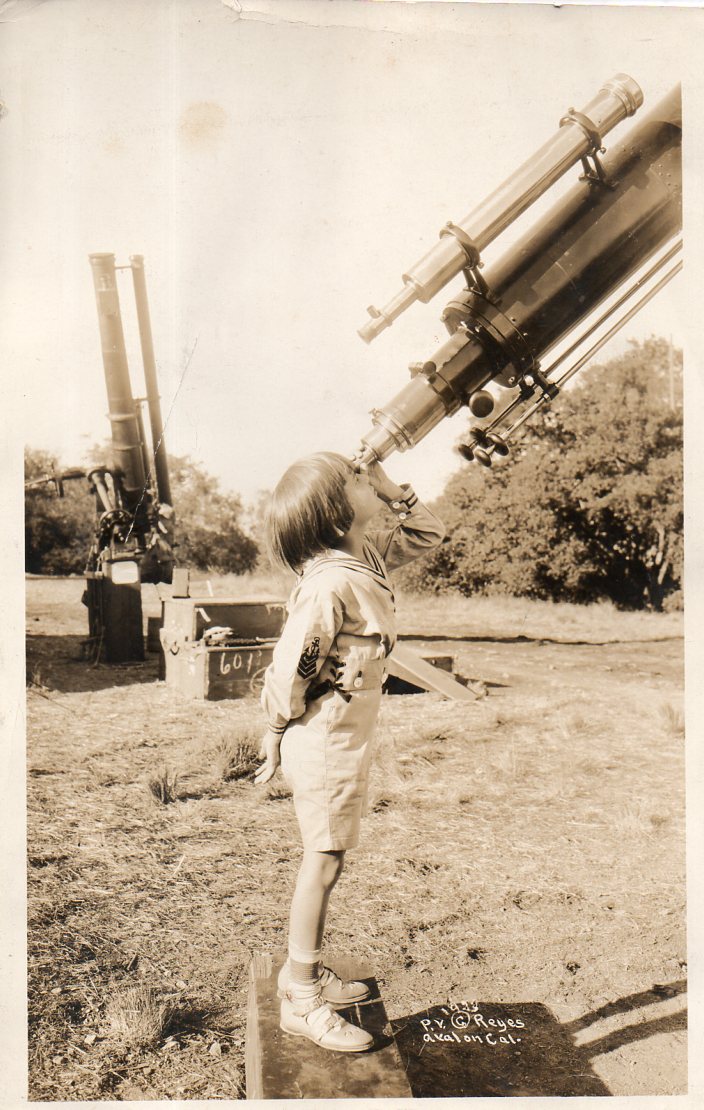
    Many years ago in D.C. I bought part of the estate library of Parmelee C. Daniels–the books had been passed down to the next generation, and after their passing some of those books came into my bookstore. Among them was this wonderful photograph, made by P.V. Reyes of Avalon California in 1923.  But it wasn’t until tonight that I could easily put together the history of the image. (And when I said “small mystery solved” I meant that it was a small mystery to me–no doubt there will be many others who will identify this instrument on first light). 

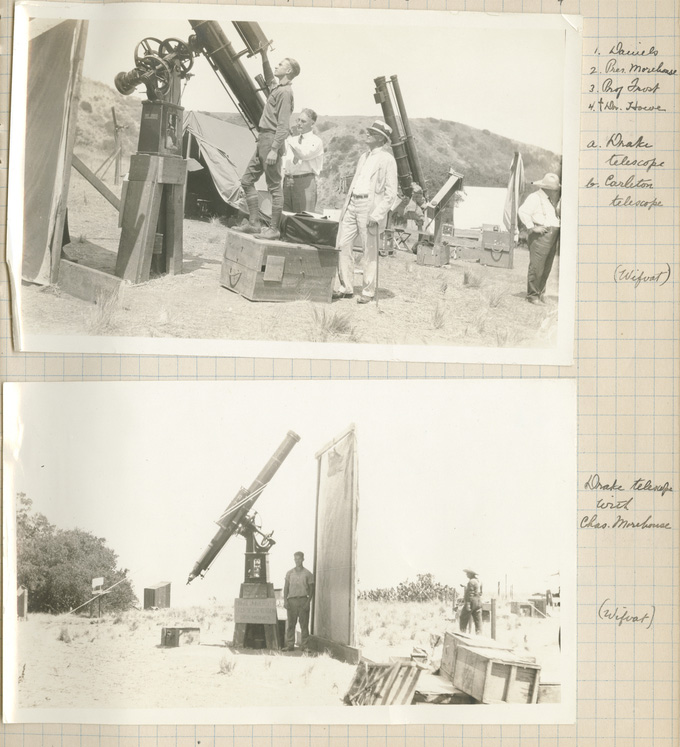
    I found that the photograph was made during the 1923 Solar Eclipse Expedition to Santa Catalina Island at Camp Wrigley, and was attended by Daniels and a host of the Big Names of astronomy of the 19-teens and ‘twenties.  Daniels was a professor at Drake University in Des Moines, and the school’s telescope was packed up and made the trip to the Pacific. I do believe that this is the 8.5-inch refractor that was the gift to the school of General Drake in 1893, although I could be wrong. 

    Here’s the image of the  telescope (with Daniels standing on the box, President of Drake University and astronomy professor Dr. Morehouse, and Prof. Edwin B. Frost.  The image comes  from the University of Chicago:

    Drake telescope
    [PC Daniels photo on the solar eclipse expedition  of 1923 via the University of Chicago, http://storage.lib.uchicago.edu/ucpa/series6/derivatives_series6/apf6-03446-031r.jpg]

    And so the story of this photograph gained some life tonight by me simply plumbing the intertubes for information.  Unfortunately I do not know the identity of the boy in the sailor’s suit. 

    I received the following information on the telescope, generously supplied by Bart Fried of the Antique Telescope Society: 

    8 1/4″ Brashear/Warner&Swasey refractor, 1894. (Curiously, in a
    dedicatory  article in the 1922 issue of “Popular Astronomy” it is
    described by the chief astronomer at Drake University,  Daniel Morehouse
     as a 9″ telescope). According to Kirby-Smith (U.S. Observatories, Van
    Nostrand Reinhold), it has an interchangeable front flint element for
    visual or photographic work, and has a 5″ doublet Brashear camera and a
    polarizing solar eyepiece. Possibly also, a filar micrometer and a
    spectroscope.


    ·Posted by :

    ·in:

    —
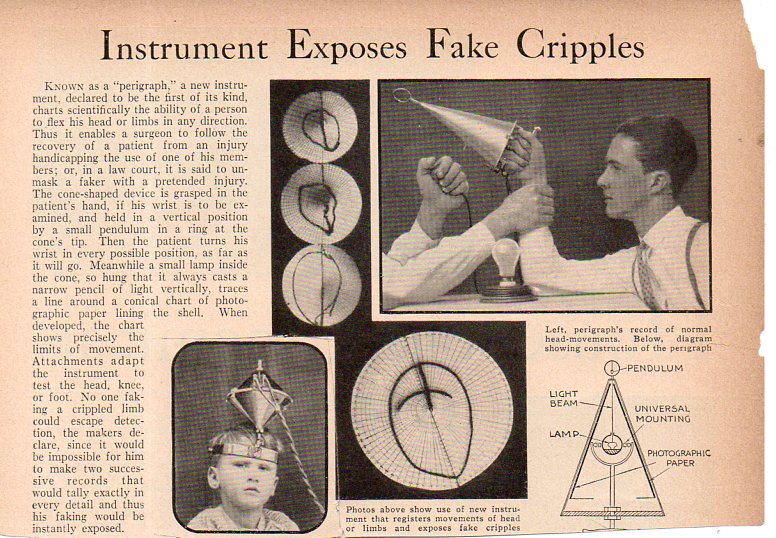
  • Daily Dose from Dr. Odd: from the On-Beyond Quackery Department

    JF Ptak Science Books  Quick Post

    Evidently there was a need real-or-perceived for this techno-attention, appearing in the March 1934 issue of Popular Mechanics:

    Fake cripples031

    Fake cripples030

  • Crowds of Allegory, the Intellect, and the Encyclopedia (1772)

    JF Ptak Science Books   Post 1964

    The “encyclopedia” is not just an encyclopedia, but The Encyclopedia, the great and costly work of Denis Diderot (1713-1784) and Jean le Rond d’Alembert (1717-1783). It was published as Encyclopédie, ou dictionnaire raisonné des sciences, des arts et des métiers (English: “Encyclopaedia or a Systematic Dictionary of the Sciences, Arts and Crafts”) between 1751 and 1772, and was mudded in controversy for just about the entire time. Diderot was a great product of the Enlightenment, and managed to write on matters that could offend politicians and theologians to such a point hat the publication and even the writing of the work was suspended from time to time, and the author/editor saw a need to flee the country for a time.  It was seen as a seditious book, and Diderot paid the price for it–it was however, a successful enterprise, and a crowning achievement in the gathering of good information of the 18th century, and is today–in its  28 volumes, 71,818 articles and 3,129 illustrations–an indispensable resource to the times.

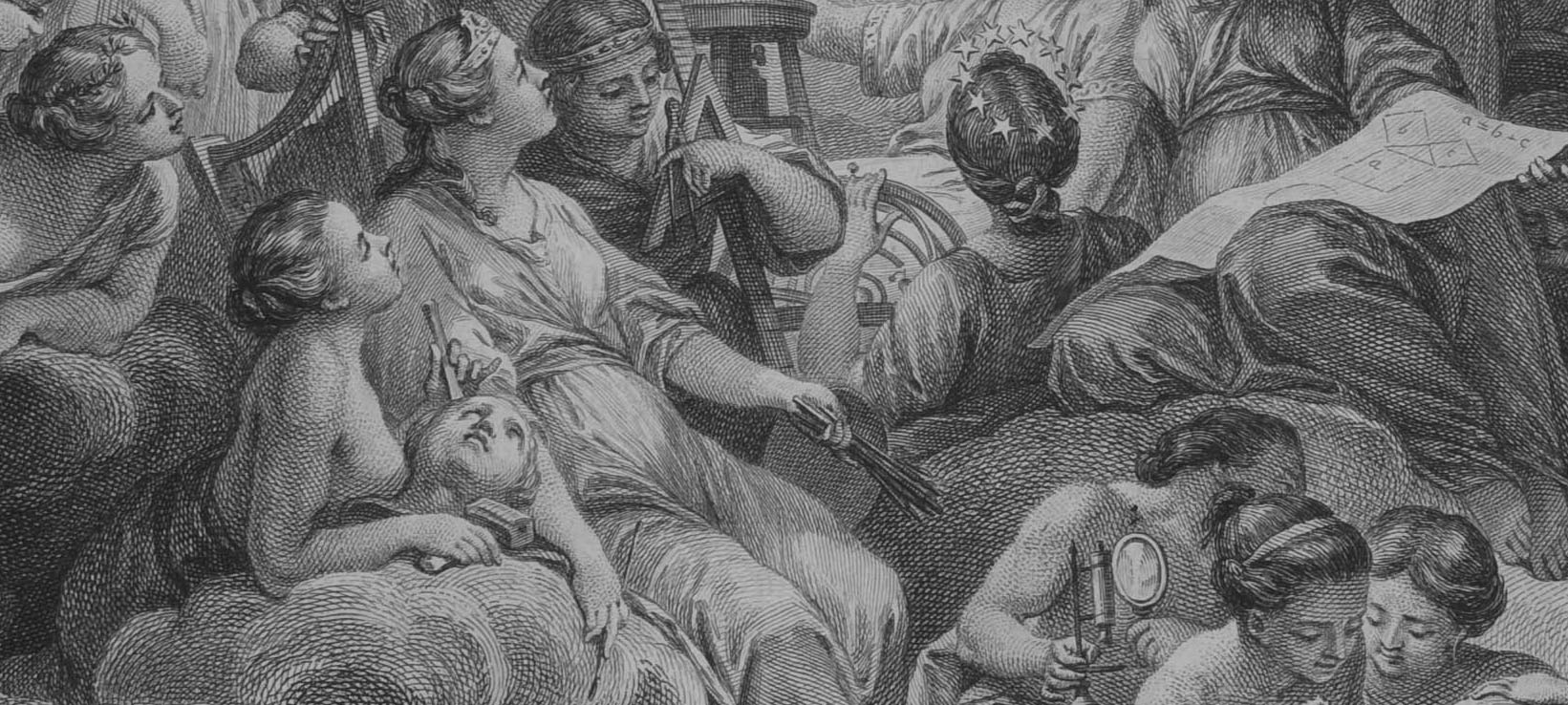
    Diderot frontispiece detail 1

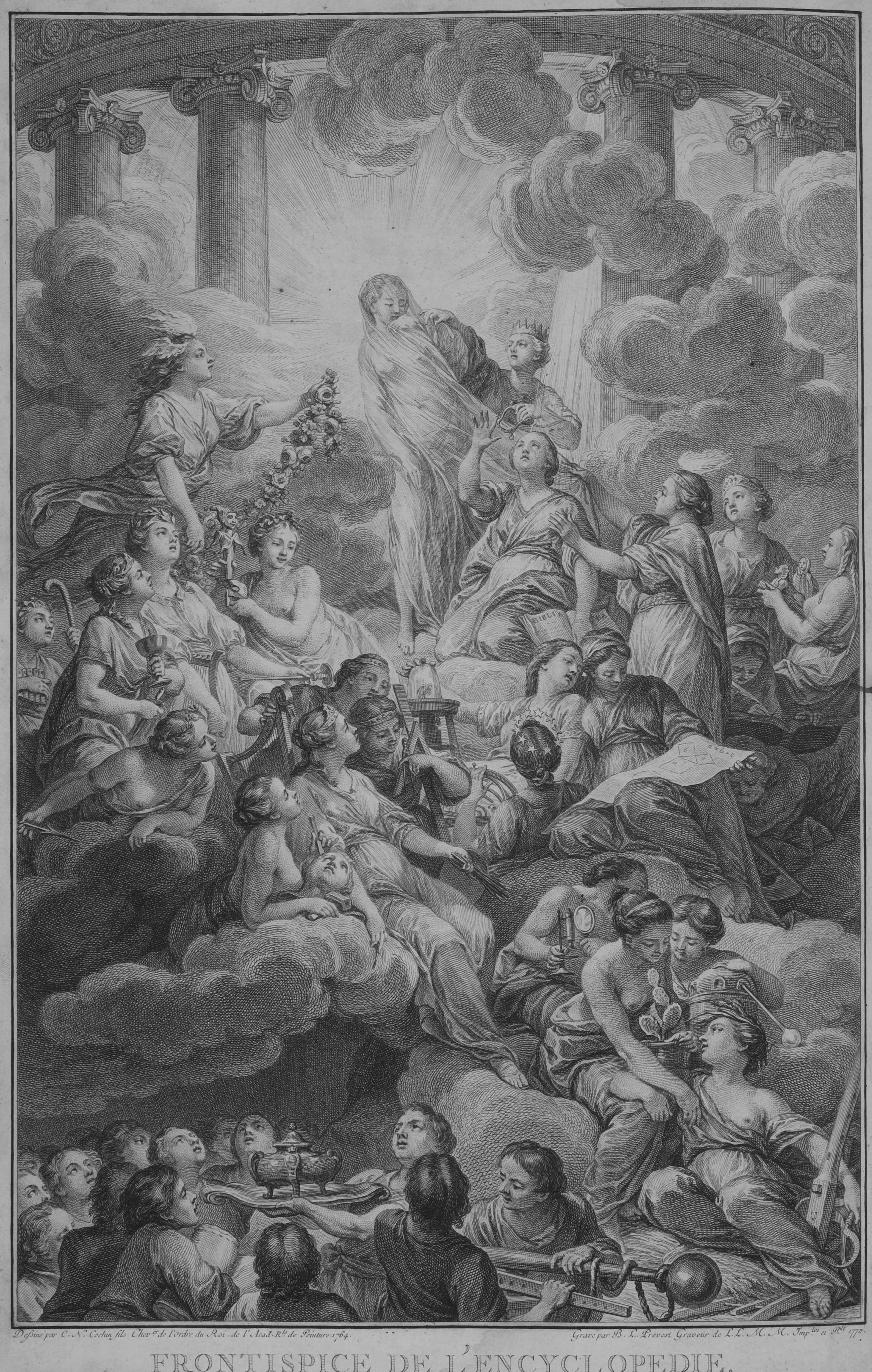
    The image above is a detail from the frontispiece to the work. It was designed by C.N. Cochin fils (1764) and engraved by B.L. Prevost 1772).  The full very highly flavored Baroque image is here:

    Diderot frontispiece[The image is very deeply clickable]

    In the end and in the beginning, the Encyclopedie was dedicated to Truth. And in the gauzy, veiled, billowing cloud architectural ionic temple of truth we find the subject Truth herself, front-and-center, surrounded by her admirers offering their trade and belief, while some–reason and Philosophy attempt to hold back her veils.  She towers high above all, and there may be an order to the aspiring logics and arts as they are placed further down the pyramid of truth, though I’m not sure about that.  On the bottom level, for example, we find Music, Painting, Sculpture and Architecture, areas which may be perceived as good foundations for everything else. High above that though we can see Theology (catching the best light in the image and holding an open Bible), and then Memory, Ancient and Modern History (already recording the events as they unfold in front of her, with “ancient” holding a Sphinx). In the middle of the group seems to be the best of them: the sciences, including Geometry, Astronomy and Physics, which are just above Optics (holding, Botany, Agriculture and Chemistry.

    It isn’t nearly the same, but the composition of the image and the organization of the encyclopedia (which is more-or-less divided into threads of associated articles rather than the standard encyclopedic work) have some vague similarities…

    For all of their troubles, Diderot looks like a complacent sort in his portraits; d’Alembert (a polymath and prodigiously gifted mathematician) is usually seen with a very sweet smile.  Interesting. 

  • There are Martians Among Us! (1962)

    JF Ptak Science Books  Quick Post

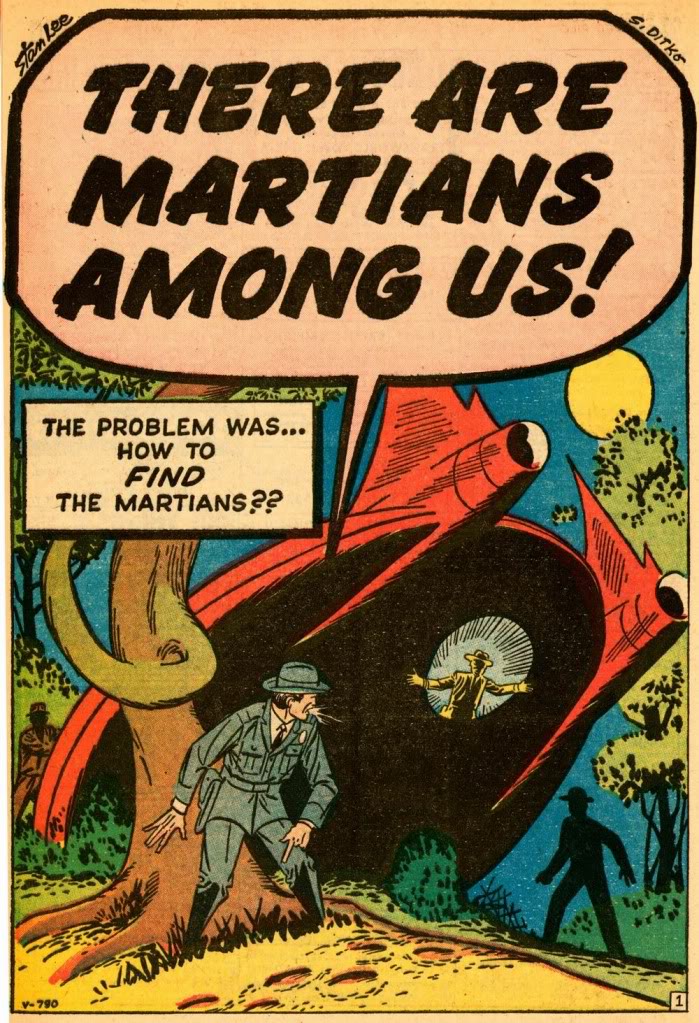
    “There are Martians Among Us” is a pudgy, flat and a slightly surprising tale about missing Martians and their found spacecraft. It was published in August 1962 in Amazing Fantasy, #15, with artowrk by Lee & Ditko.

    Martians are Among us One

    ·Posted by :

    ·in:

  • Strange Things in the Sky Dept: Martians with Telescopes and Cannons, 1901-1932

    JF Ptak Science Books    Post 1965

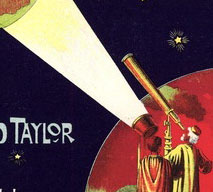
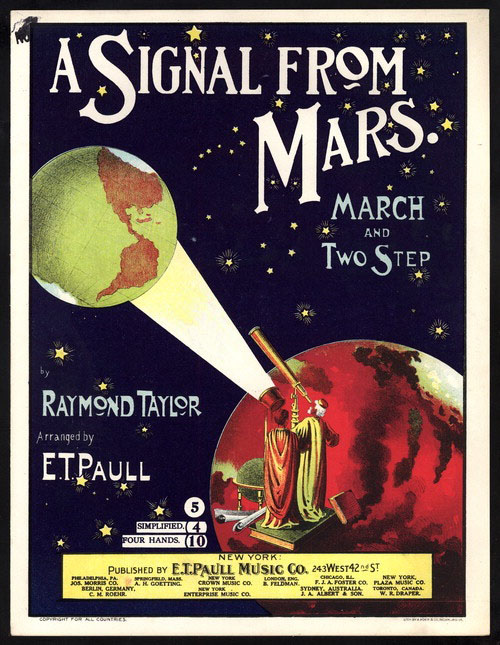
    In this episode of the Strange Things in the Sky Department there are a number of posts dealing with Strange Earths–sometimes there are strange Earths int he sky, above the Earth. And so on.  In this small offering we see a green-sea earth viewed by Martians from, well, Mars. It is the cover art for sheet music “A Signal from Mars”, composed by Raymond Taylor and arranged by E.T. Paull in 1901. Somehow the Earth is being illuminated by a small canned power source of high energy light that must have the energy of a pulsar, and  there’s a five-pointed star that is added for unknown effects. There’s mot much more that can be said, except that the music (sampled below), which is a ragtime march, has nothing to do with Mars so far as I can tell.  Mars was certainly in the news when this sheet music was published in 1901–Percy Lowell had taken it upon himself to interpret Giovanni Schiaparelli’s 1877 of “canali” on Mars as “canals” rather than “channels” and convinced himself that what he was seeing with his superior instrumentation were indeed structures built by engineers of another race on another planet.  So, perhaps “A Signal from Mars” was much like the Atomic Motels in 1945 and Radium Cakes in 1897–folks just used a popular name in the news to excite interest in their own work via association with repetitive references.

    Earth from Mars martians[Source: the Library of Congress] This is a detail from:

    Earth from Mars

    Another curious image of Martians with telescopes comes from Puck magazine in 1904:

    Martians and earth in background

    [Source: the Library of Congress.]

    Martians pointing telescopes at the Earth is a much more preferable situation than Martians pointing gigantic cannons:

    Strange things in sky--martian guns

    This is the cover art by the fabulous Frank R. Paul for Stanley D. Bell’s “Martian Guns” found in the January 1932 issue of Wonder Stories. 
    There’s really no way to determine how big the gun is except to say
    that it is probably “big”–there’s just nothing to place the thing in
    perspective, as the figures in the foreground, being Martian, don’t have
    a specific height.  They could be 6′ tall, or 60′–perhaps they’re
    only 1/10 of an inch tale, and the projectile they’re firing to the
    earth is so devastatingly powerful that size doesn’t matter.

Recent Posts

Archives

Categories