A Daily History of Holes, Dots, Lines, Science, History, Math, Physics, Art, the Unintentional Absurd, Architecture, Maps, Data Visualization, Blank and Missing Things, and so on. |1.6 million words, 7500 images, 4.9 million hits| Press & appearances in The Times, Le Figaro, Mensa, The Economist, The Guardian, Discovery News, Slate, Le Monde, Sci American Blogs, Le Pont, and many other places… 5000+ total posts since 2008.

  • A Work on Hobo Slang by the Lifetime King of the Hoboes, 1947

    JF Ptak Science Books 

    1blog_oct_8_hobo_cvr785
    There have been many Kings of the Hoboes, and Emperor of the Hoboes, in the history of American Hobodom.  The most widely recognized of all this royalty is, probably, Mr. Jeff Davis, who was elected King of Hoboes each year from 1908 to 1935–in that year at the Pittsburgh meeting of the annual “Hoboes of America” his minions gave up elected him King for Life. Of hoboes, that is, the Knights of the Road.  Davis was also a real hobo, unlike the pretenders and throne-seekers, who in general were not. (Nels Anderson, in his Men On The Move, written just as the Depression was broken, (1940) observed: “Whatever else may be said of King Jeff, his romanticizing the hobo is not without a basis in reality, and his poetic interest in the species arose from experience. But King Jeff has placed on a pedestal a man who belongs to the past. The hobo belongs with the pre-Hollywood cowboy and the lumberjacks of the Paul Bunyan legends.”)

    ·Posted by :

    ·in:

  • “The Cost of Indians to the U.S.”

    JF Ptak Science Books   Quick Post

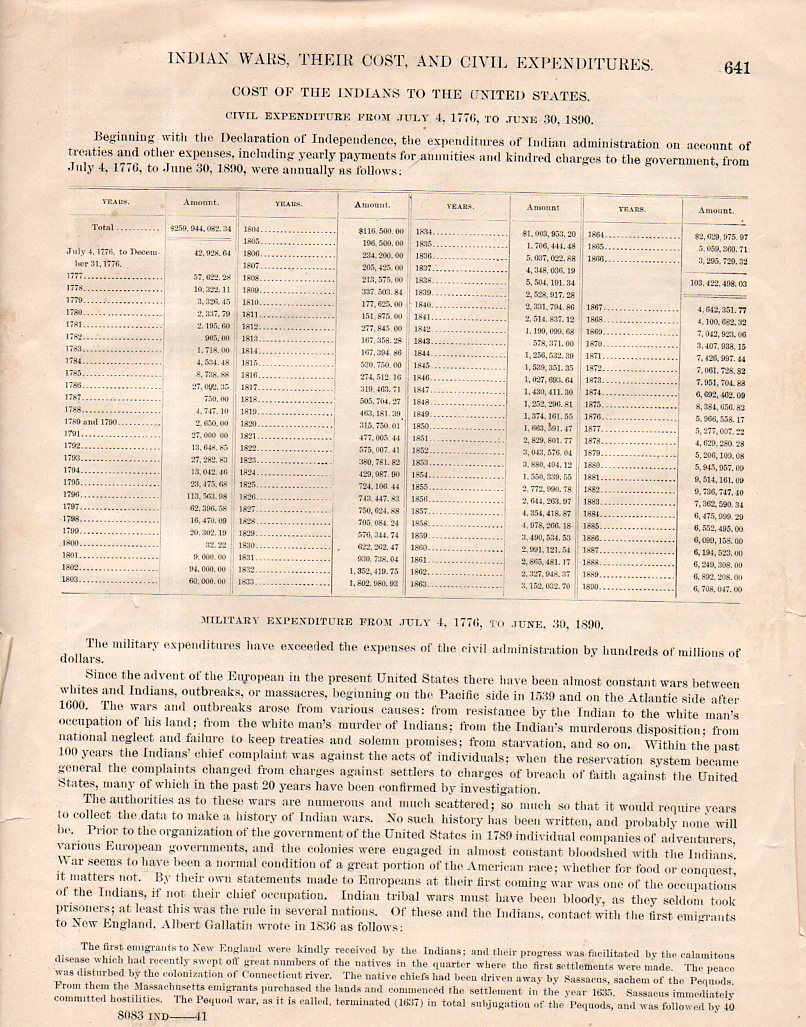
    I came across this very interesting page in the phenomenal work produced as a part of the U.S. Census, Report Indians Taxed and Indians Not Taxed, printed in 1894 as part of the 11th Census of 1890. (The full text is available at the Internet Archive, here.)  It is a dispassionate recollection of monies spent on “Indian administration on account of treaties and other expenses, including yearly payments for annuities and kindred charges to the government”, from 1776 to 1890, noting that “the military expenditures have exceeded the expenses of the civil administration by hundreds of millions of dollars”.  Indeed–$250,000,000 19th-century dollars (or something on the order of 5 or 10 billion dollars in today’s money). Certainly monies that went to “satisfy” treaty obligations or to support Indians driven from their land and life would have been a fractional amount of the overall expense. 

    Indian expenses799

    Details, below:

  • The Zero in Politics

    JF Ptak Science Books   Quick Post  A History of Blank, Empty and Missing Things 

    Follow Me on Pinterest
     

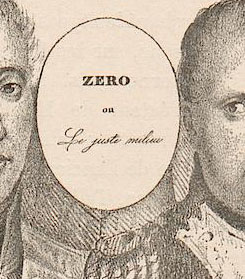
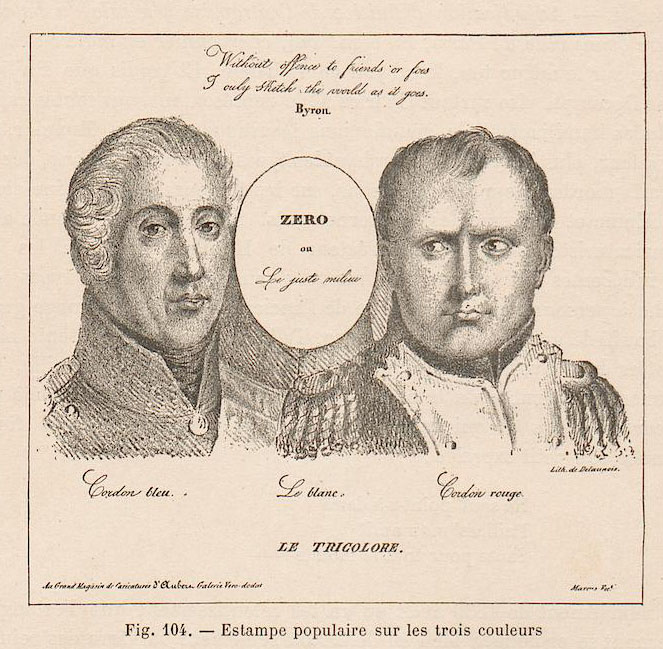
    In this blog’s series on the History of Blank, Empty, and Missing Things there have been I think no contributions to nothingness in the political sphere–which is odd, given how much of the time politics is about just that, staffed by people of that same quality.  The experience of seeing nothing portrayed in a political caricature as seen below was such that it struck me how little I have seen any images quite like it.  The “zero” appears in J. Grand-Carteret’s Les Moeurs et la Caricature en France, a thick book published in 1888 detailing the history of caricature and satiric expression in France.  The image appears in chapter eight, on the political situation in France between 1816 and 1848 (Louis XVIII, Charles X, and Louis-Philippe). (Two years after abdication of Napoleon and right up to the revolutions of 1848.  I wonder what it was like for Napoleon’s mother, outliving her son by 15 years?)

    Blank Napolean_edited-1And the full image:

    Blank NapoleanIt is a overt play on the missing color of the tricolor–the flag and the colors of the flag that came into existence in France beginning with the revolution of 1789, and became the flag of the new republic.  The color of course are red, white and blue (liberty, equality, and fraternity, or perhaps the colors of Paris (red and blue) and the white of the House of Bourbon, or something else.  In any event, the “white” as the artist/commentator saw it, the leader filling that space, was not yet present. 

    The entire book is located at the University of Heidelberg site, here. The book is very highly illustrated, and it also has an appendix with a very useful list of caricature journals (pp 554-620) and biographies of artists (pp 620-675). 

  • Astronomical Stero Cards, 1913

    JF Ptak Science Books   Quick Post
    Follow Me on Pinterest

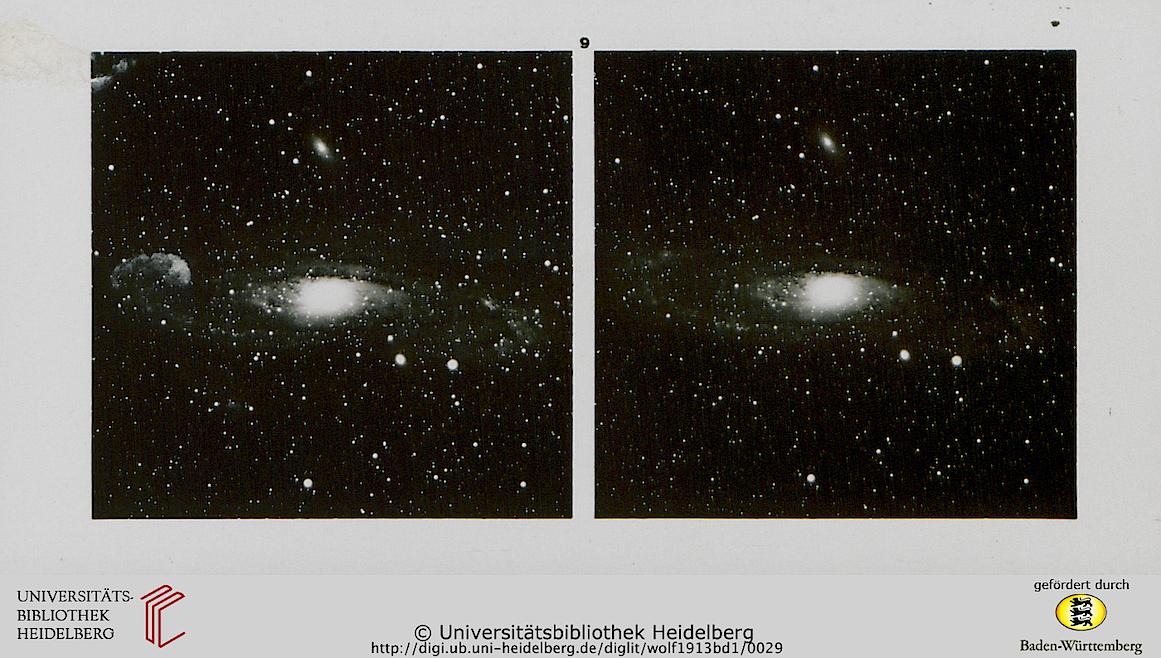
    I own this series of stereoviews but they have yet to surface in our recent move–I did bump into them online at the beautiful University of Heidelberg site, nicely reproduced, though without the the rich glossy blacker-than-black finish in the originals–but these will work nicely. 

    Max Wolf, Stereoskopbilder vom Sternhimmel (1. Serie), Leipzig, 1913.

    ·Posted by :

    ·in:

  • Ultra-Modern Design in “Parade”, 1917: Picasso, Satie, Cocteau, Diaghilev

    JF Ptak Science Books  Quick Post

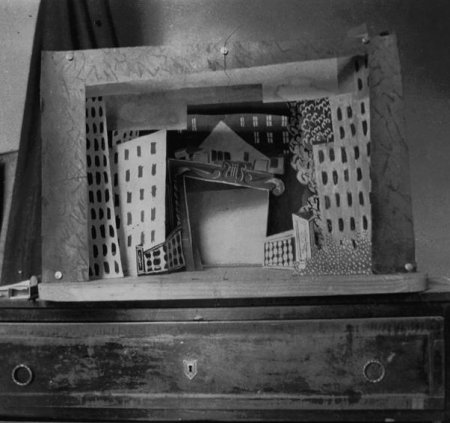
    One of the great powerhouse collaborations in the history of earlyish modernism came on 8 May 1917, in the performance of the 15-minute operette, Parade.  Spearheaded by Jean Cocteau, the piece used stage and costume designs by Picasso, was scored by Erik Satie, and performed by Diaghilev’s Ballets Russes. (It was not received indifferently–there was a major upset in the world of the critics and many hated negative response from the audience, evidently much like that received by Stravinsky’s Rite of Spring at its premier seven years earlier, also featuring Diaghilev’s Ballets Russes.)

    The image below is a maquette of the stage by Picasso:

    Parade--picasso marquette[Source]

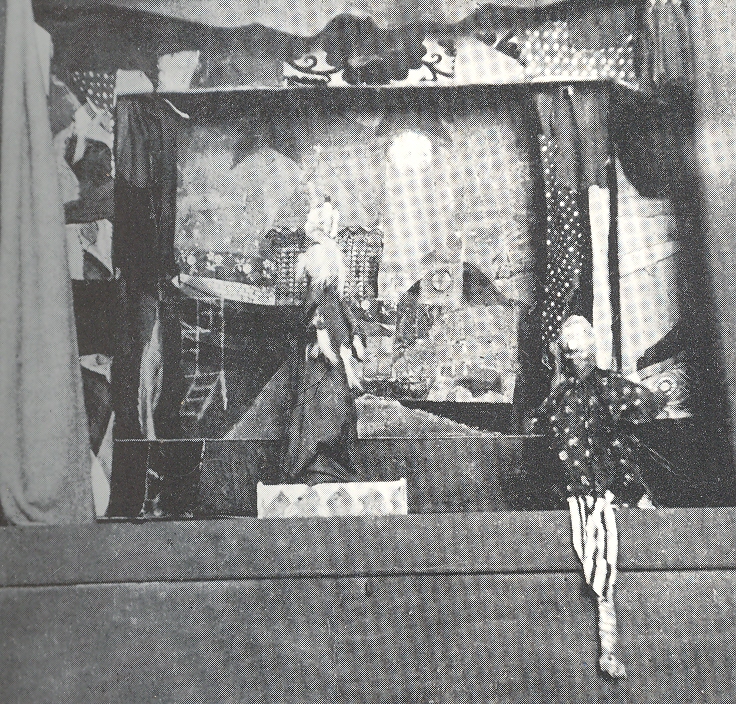
    The spirit of this object reminds me of Paul Klee’s private puppet theatre productions for his son Felix, which includes this fantastic stage:

    https://historyofideasblog.com/a/6a00d83542d51e69e20120a5033277970b-pi

     [Source: earlier post on this blog, here.]

    ·Posted by :

    ·in:

  • Great Cutaway of a Classic Aircraft

    JF Ptak Science Books  Quick Post

    (I’m back to the blog after a two-week hiatus for moving to our new house–that is the longest period by far of not writing in the 5.5 years of this blog. This is just a quick post on an interesting and newly-found image–writing should start very soon…)

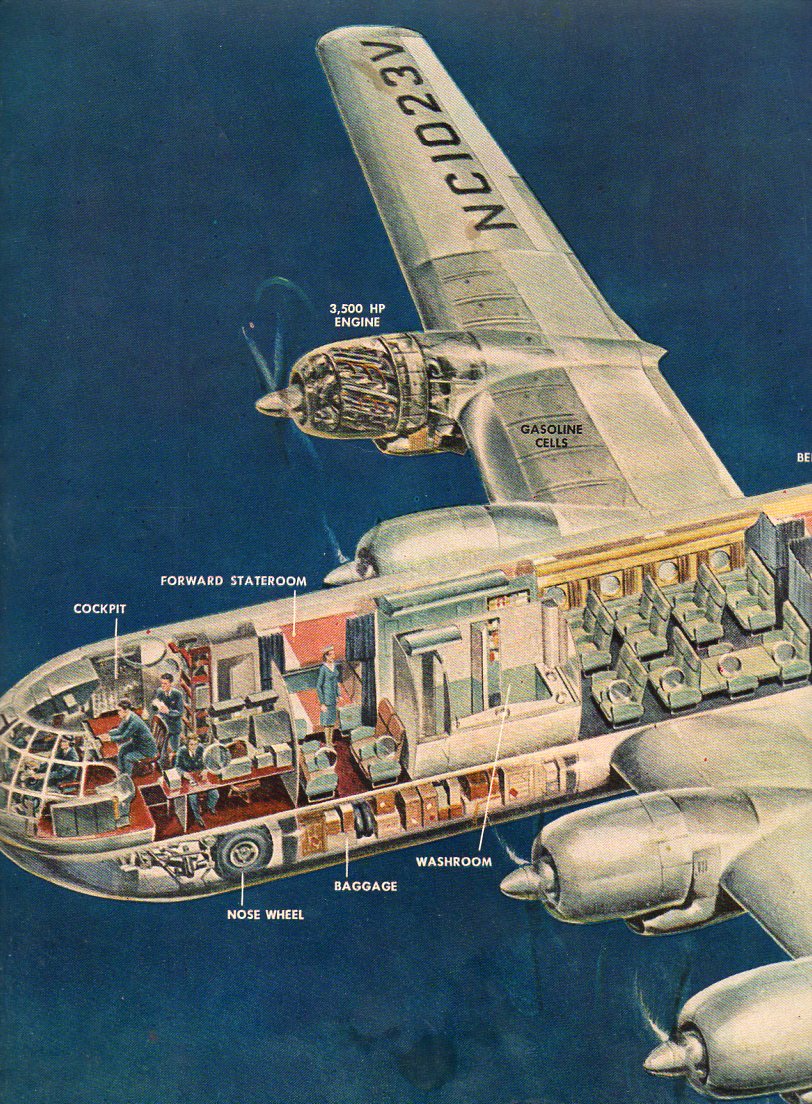
    Beginning to unpack from our move, the very first thing to emerge from the very first (“desk”) box out in the studio was a clutch of cut-away aviation images.  And the first of those was this beautiful 1948 two-parter from LIFE magazine of the new PanAm B-377 Stratocruiser.  The Stratocruiser was first flown in 1947 and was a derivative of the B-29 (troop transport) Superfortress via the C-97 Stratofreighter.  Aside from the general opulence, the dark-blue background of this image is just lovely.  

    Stratocaster694

    ·Posted by :

    ·in:

  • Fossils of Almost No Value? Statistics, Prisons, and Meaninglessness.

    JF Ptak Science Books   Blog Bookstore 
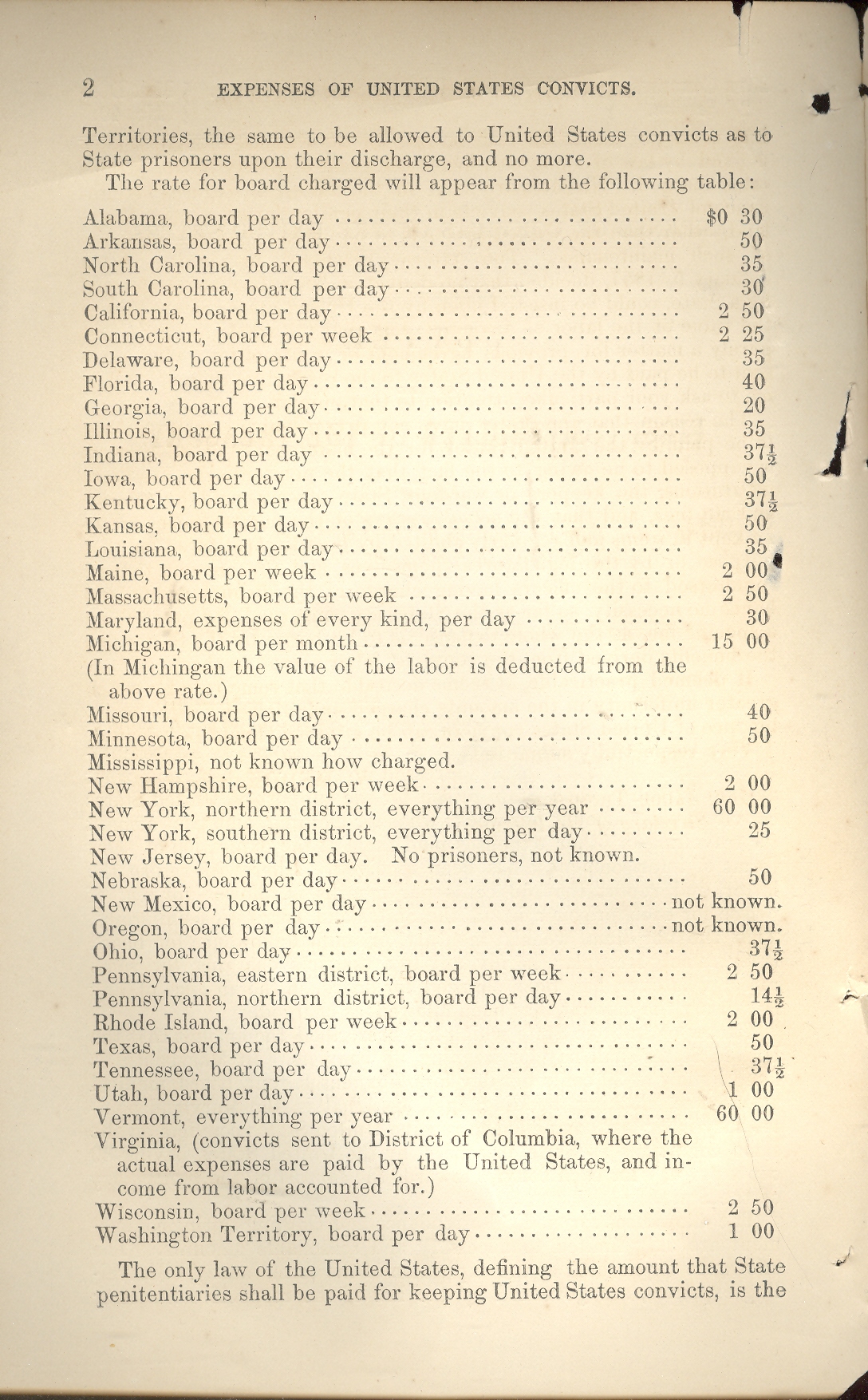
    Blog--May 23--convict The fossil record is generally one of the richest and most
    compelling histories of the development of life on earth, a far-reaching,
    cumulative record of extraordinary importance. 
    There are the other, occasional, fossils that stand only by themselves,
    and seem to have almost no use in the current time, living almost entirely
    within themselves. The following statics seem to fall into that category—they
    seem to be only a tombstone for an era, providing nothing except to tell the story
    of what happened, existing only for that purpose, with no compelling
    utilization for anything outside understand a small piece of life for the year
    the stats were gathered. 

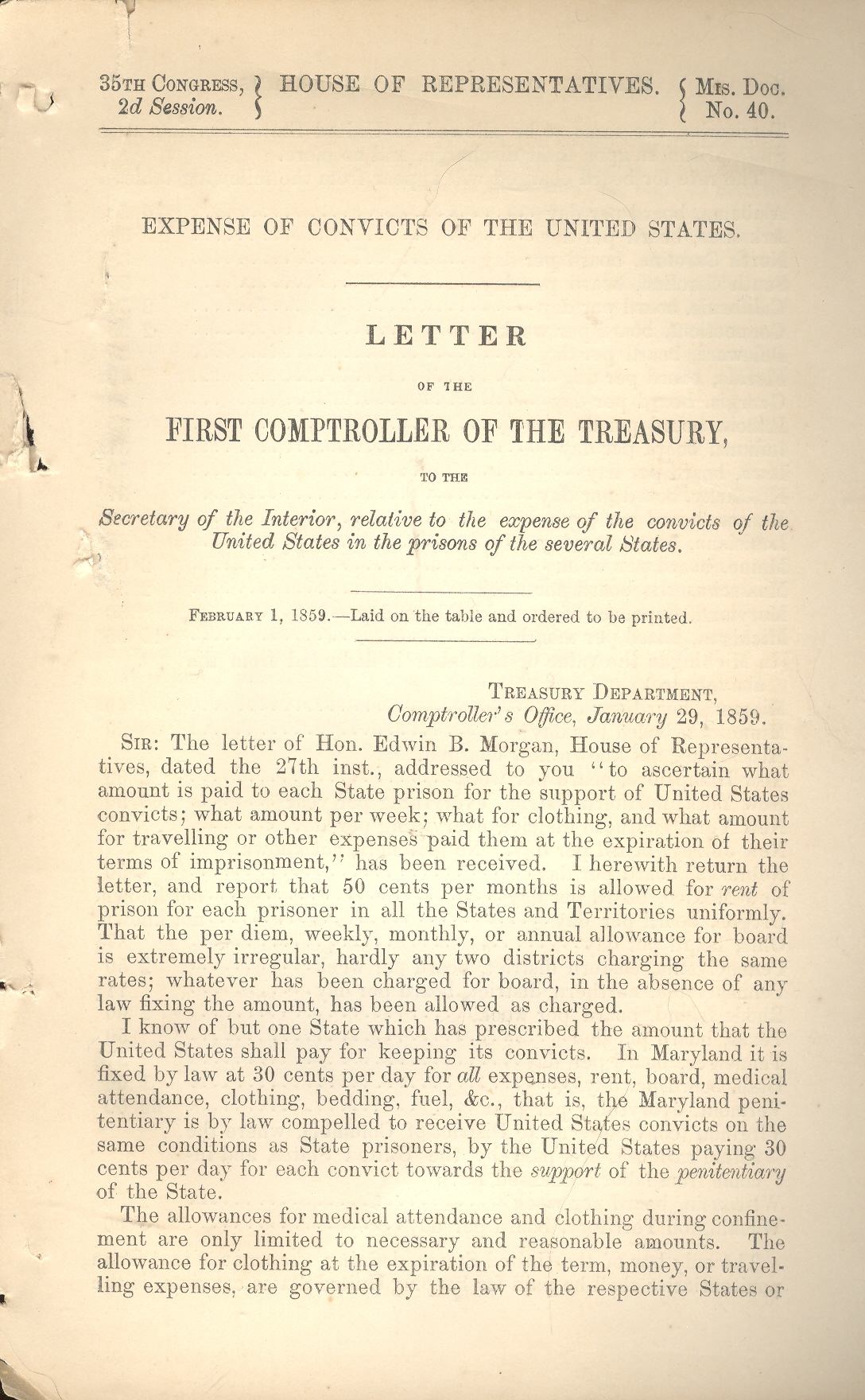
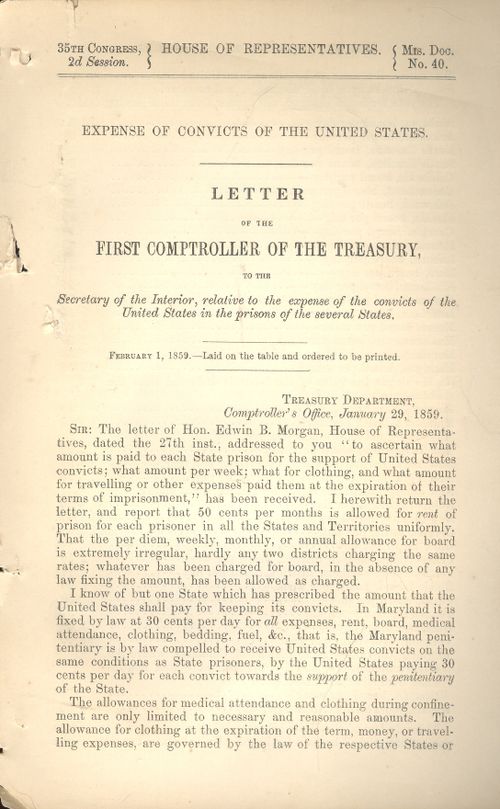
    The cause for this sentiment was found in a government
    publication called Expense of Convicts of the United States  (Letter from the
    Comptroller of the Treasury…)
    , 1 February 1859).  The following comes in the first paragraph:

    “I….report that 50 cents per months is allowed for rent of
    prison for each prisoner in all the States and Territories uniformly.”

    What this means is that the U.S. Treasury would pay 50 cents
    to the state for keeping a federal prisoner. 
    That is 50 cents per month, or about 1.7 cents per day. And that was
    also for rent of the cell, exclusive of all else, each state furnishing the
    government with the added cost, separately.

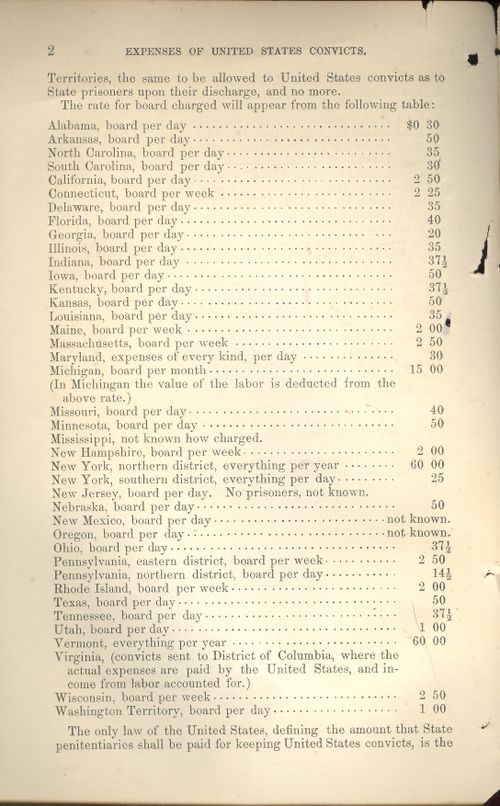
    Evidently the only state in the country that prescribed an
    exact amount for keeping a federal prisoner in a state institution was
    Maryland, “which received 30 cents per day for all expenses, rent, board, medical attendance, clothing, bedding,
    fuel, and etc” (italics in the original). 
    The rest of the states and territories had diverging and different
    expenses, from the southern district of New York at 25 cents a day for board,
    and ranging up to about 50 cents per day in  Michigan. Vermont charged an extra 60 dollars a year, in addition to the 6 bucks that they would
    get for the rent of a Vermont
    cell, to keep a prisoner—all expenses included—for one year, or about 18 cents
    per day, total. 

    Unfortunately I don’t have the stats of how many federal
    prisoner there were in 1859, so I don’t know how much of a percentage of the
    budget was occupied by prison expenses. 
    But what I do know is that even with tossing around the CPI with
    multiplier effects and so on the figures translate in no way to keeping a
    person in prison today.   The cost of
    housing someone in prison per year is around $35,000 a year, or $100 or so a
    day.  Adjusting the 1860 dollar via CPI
    for 2009 makes that dollar worth about 25 dollars today, which would be a
    doubling and a doubling again of keeping someone in prison. 

    I’m not so sure that those figures tell us much about what
    we pay, today. 

    Next, I was having a breeze through The Prison System of the United States by S.J. Barrows
    (Commissioner of Prisons for the U.S.) which was published in Washington  in 1900.  One particularly interesting
    section was the publication’s solitary statistical table, “Appendix A”, which
    detailed the crimes of the 625 men incarcerated in the state of Michigan  in 1900.  Well over half of all those in prison were
    there for larceny and burglary, while about 12% were in the big house for
    violent crimes.  (Evidently 95% of this
    number were literate and 70% could “cipher” (that is, produce basic arithmetical
    skills)).  The total crime list (such as
    it was) includes the following:

    Capital crimes (murder in the first and second degree) and
    manslaughter, along with murderous assault comprised about 1% of the total
    prison population.  Other violent crimes
    included assault with intent to do great bodily harm, rape, attempted rape,
    rape and assault composed another 3%. Further assaults were classified under
    (a) with intent to do great harm;  and
    then as assault on a female under 14 years; and on a female under 16 years  There were also the sexual assaults:  taking indecent liberties with female; with
    male child;  unlawful and carnal
    knowledge of a young child;   inducing female to enter house of ill fame.  These last two categories included about 5%
    of the prisoners.  Set aside form these
    were the crimes of adultery, abduction, incest and sodomy, which included
    another 3%.  So it seems that the violent
    offenders in prison in  Michigan 
    in 1900 totaled out at 12% or so. 

    Burglary and larceny were the  largest categories, being subdivided into (a)
    burglary accompanied by actual assault; (b) larceny; (c) larceny from a
    dwelling;  (d) larceny from a shop in daytime; (e) attempting larceny from
    the person; (f) entering a church in daytime to steal; (g) breaking and
    entering a store in daytime;   (h) breaking and entering a store in
    nighttime;(I)  breaking and entering a
    dwelling in daytime; (j)  breaking and
    entering a dwelling;  (k) breaking and
    entering a railroad car.

    Then there were a few largely vacant offenses:  Resisting an officer; Uttering and publishing
    a forged note, breaking out of prison, perjury, arson, false pretense, and
    malicious destruction of personal property, all combing for less than 2% of the
    jailed population.
    Blog--May 23--convict 001

    The vast majority of prisoners in Michigan were imprisoned for non-violent
    crimes.  The federal fathers, in the
    meantime, recognized that people in prison shouldn’t be idle while paying their
    debts to society, and should fill their time with work that would occupy the
    prisoner and bring some income into the prison system:

    “The moment we apply to the convict a
    different system of economics because he is in prison we go astray. When we
    subject to analysis the plans proposed for abolishing the competition of
    convict labor we find them based on false principles or expecting results not
    to be realized. The wiser way for the peace of society and the interest of the
    State is to place prison industries on the same ground as free industries, and
    defend that.
    It is also said in opposition to the contract system that
    contractors do not pay as much for the labor of convicts as free laborers
    command.”

    In 2005 the federal offenses for which people are incarcerated include: Drug
    Offenses 59.6%; Robbery 9.8%;  Property
    Offenses 5.5%;  Extortion, Fraud, Bribery
    6.8% ; Violent Offenses 2.7% ; Firearms, Explosives, Arson 8.6% ; White Collar
    1.0%; Immigration 2.8%;  Courts or
    Corrections 0.8%;  National Security
    0.1%;  Continuing Criminal Enterprise
    0.8%;  Miscellaneous 1.5% .  54% of prisoner in state custody for the same
    time were incarcerated for violent crimes, with drug offenses coming in at 20%
    and property crimes at 19%.  The racial
    breakdown of prisoners in the U.S. is another tragedy: of the prison population
    in toto of 2.3 million in 2008 there
    were 4,777 black male inmates per 100,000 black males held in state and federal
    prisons and local jails, compared to 1,760 Hispanic male inmates per 100,000
    Hispanic males and 727 white male inmates per 100,000 white males—that means
    that the black incarceration rate was double and then double and then
    half-doubled again that of whites.  What
    this also means is that there were more blacks in jail cells than in college
    dorm rooms in 2008.

    I’m not sure that any amount of creative statistical mathemartistry could bring these figures to life for some sort of practical application in 2009, the present situation in the prisons being so immense and pervasive.  Numbers and assorted data from the past usually have the capacity to help us see where we are today; as I said earlier, I think that these fossils are simply that:  dead.


  • Bad Poetry Yields Good Results in the Celebration of the “Atom-Molecule”, 1874

    JF Ptak Science Books  Quick Post

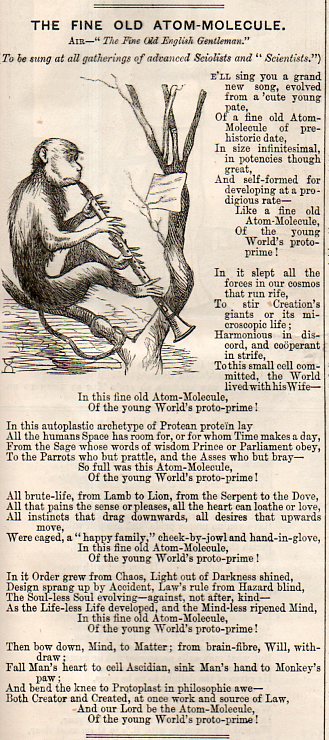
    Browsing  the 1874 volume of the London Punch an interesting but truly bad poem slid from the page. The poem certainly suffers from itself, but there are interesting insights, and poetics aside there’s some good thinking going on in spite of a probably-very-quick composition time.

    For example, the first line of this stanza “In this autoplastic archetype of Protean protein lay” is a real tooth-popper, but it does dig down into some interesting turf:

    All the humans Space has room for, or for whom Time makes a day,

    From the Sage whose words of wisdom Prince or Parliament obey,

    To the Parrots who but prattle, and the Asses who but bray–

          So full was this Atom-Molecule,

          Of the young World’s proto-prime!

    Atom molecule696
    The poem wobbles and wrangles within its own very tight and bumpy twists (”  Of the young world’s proto-prime!”) though the essence of existence does seep through:

    In it slept all the forces in our cosmos that run rife,

    To stir Creation’s giants or its microscopic life;

    Harmonious in discord, and cooperant in strife,

    To this small cell committed, the World lived with his Wife–

          In this fine old Atom-Molecule,

          Of the young world’s proto-prime!

    It is a curious work which I liked in the end, or at least I liked it as a vehicle to get you to another place: 

    In it Order grew from Chaos, Light out of Darkness shined,

    Design sprang up by Accident, Law’s rule from Hazard blind,

    The Soul-less Soul evolving–against, not after, kind–

    As the Life-less Life developed, and the Mind-less ripened Mind,

          In this fine old Atom-Molecule,

          Of the young World’s proto-prime.


  • Batman’s Possible Influence on Shakespeare

    JF Ptak Science Books  Post 2102

    Crock702
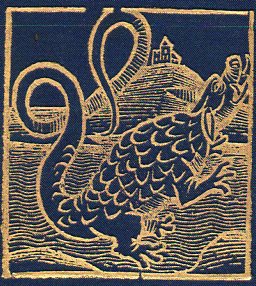
    Well, it’s not really the Batman as culture currently knows the name, but Stephen Batman (d. 1584) whose published work heavily incorporating a Medieval natural history text was probably one read/consulted by Shakespeare.  The earlier work was the beautifully-named book by Bartholomaeus Anglicus, All the Properytees of Thyings, which was published in Westminster in 1495 (and also known as De proprietatibus rerum, also translated as On the nature of things, or On the properties of things), which was originally written around 1225.  The book was a
    bestiary, a marvelous encyclopedia, a collection of all things as known
    in the 13th century–it would be interesting to represent all that is
    know today and compact it into a workable, logical, usable (printed !)
    book of a thousand pages.  The question of organization of knowledge
    would be the key, of course, and how to make one flow to another
    complimentarily as practicable…it would be an interesting project (for
    someone else) to try and arrange the basis of human knowledge in a
    finite space like that.

    Batman produced his own version of the book incorporating the 400-year-old information with some of his own, and found the book a printer in 1572–Batman uppon Bartholome, His Booke De Proprietatibus Rerum; newly
    corrected, enlarged, & amended, with such Additions as are
    requisite, unto every severall Booke. Taken foorth of the most approved
    Authors, the like heretofore not translated in English. Profitable for
    all Estates, as well for the benefite of the Mind as the Bodie
    was a storehouse of knowledge, right and wrong.  

    I came upon the book today because one of its images is on the front cover of a book that I just unpacked.  H.W. Seager, author of Natural History in Shakespeare’s Time, being Extracts illustrative of he Subject as he knew it…. (“printed for Elliot Stock” of London in 1896) must’ve found the image compelling enough to reproduce it in gold leaf.  Batman’s image was of a crocodile, which now being told what it is probably looks more like itself than a dragon–Batman himself took issue with the current London practice of buying the skins, which he found to be a laughable thing (“we know not how to bestow our money”), establishing that people had too much money and not enough sense on what to do with it.  In any event, I like the image. 

    Crock701

    ·Posted by :

    ·in:

  • A Good 37

    JF Ptak Science Books   Quick Post

    37704
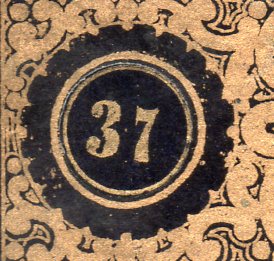
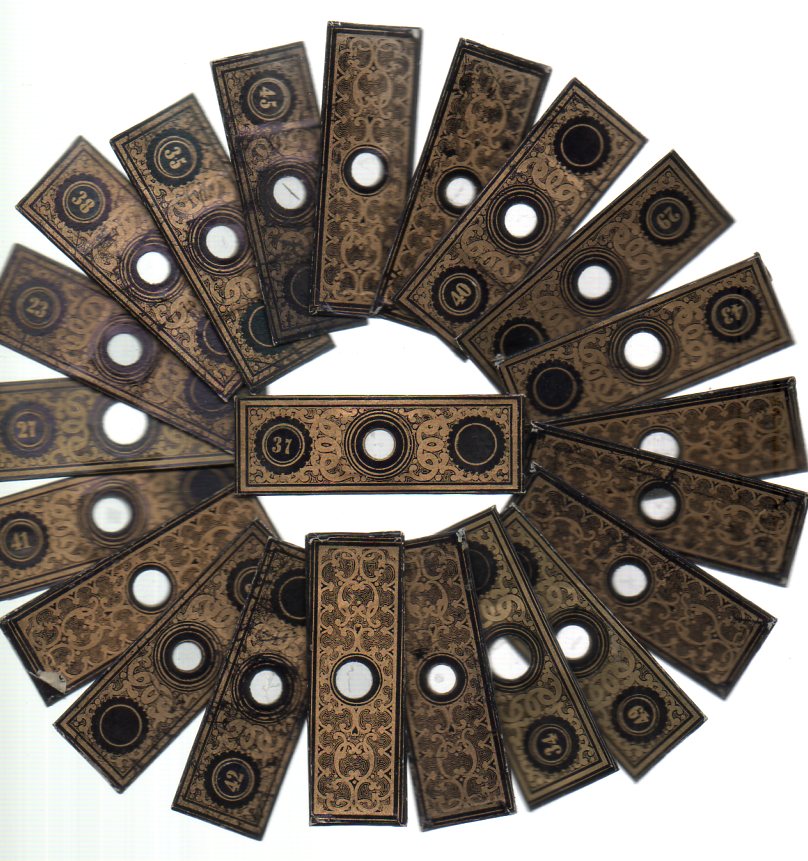
    My wife, Patti Digh, has a big thing going with the number 37.  It forms the kernal of her eight-year-old social memoir and applied memory blog, 37days.com, which has led to her seven books (with only thirty more to go). As a result, we see 37s where we can, which when you’re looking for them is not that hard to do.  I found a rather nice one tonight on one in a set of 19th century microscope slides.  In general, slides and other preparations from this period can be incredibly beautiful things.  These are quite nice, and have the printed number on them, which is not common to my experience.  Anyway, this is for Patti: 

    37703

    ·Posted by :

    ·in:

  • Engineering with the A-Bomb, “To Conquer Forever the Dust Bogey”, 1945

    JF Ptak Science Books   Post 2104

    Atomic resevoir708
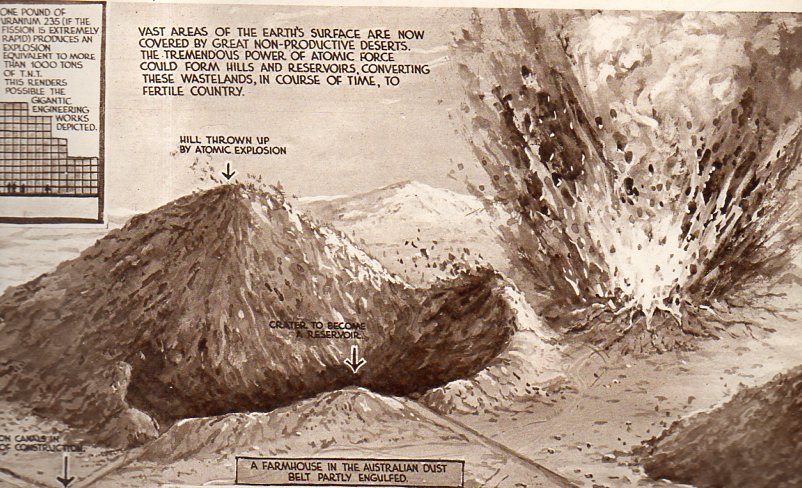
    1945, Autumn:  the question is, now that “we” have the atomic bomb, what can be done with it?

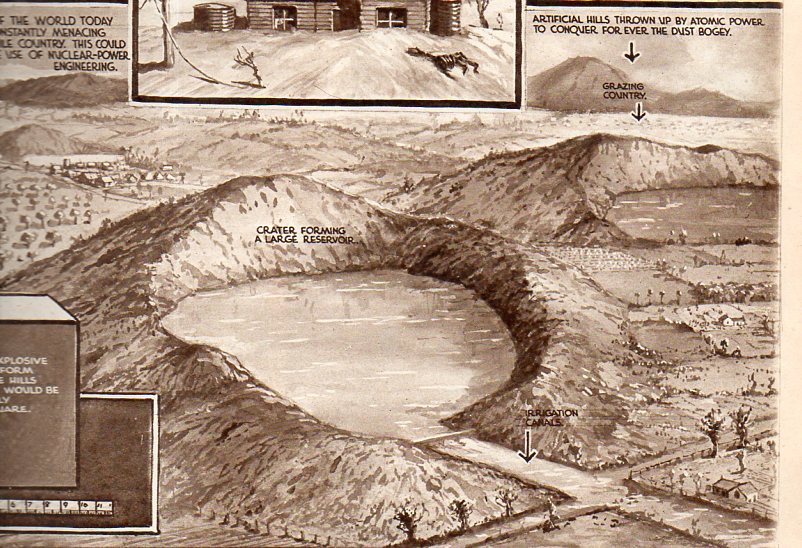
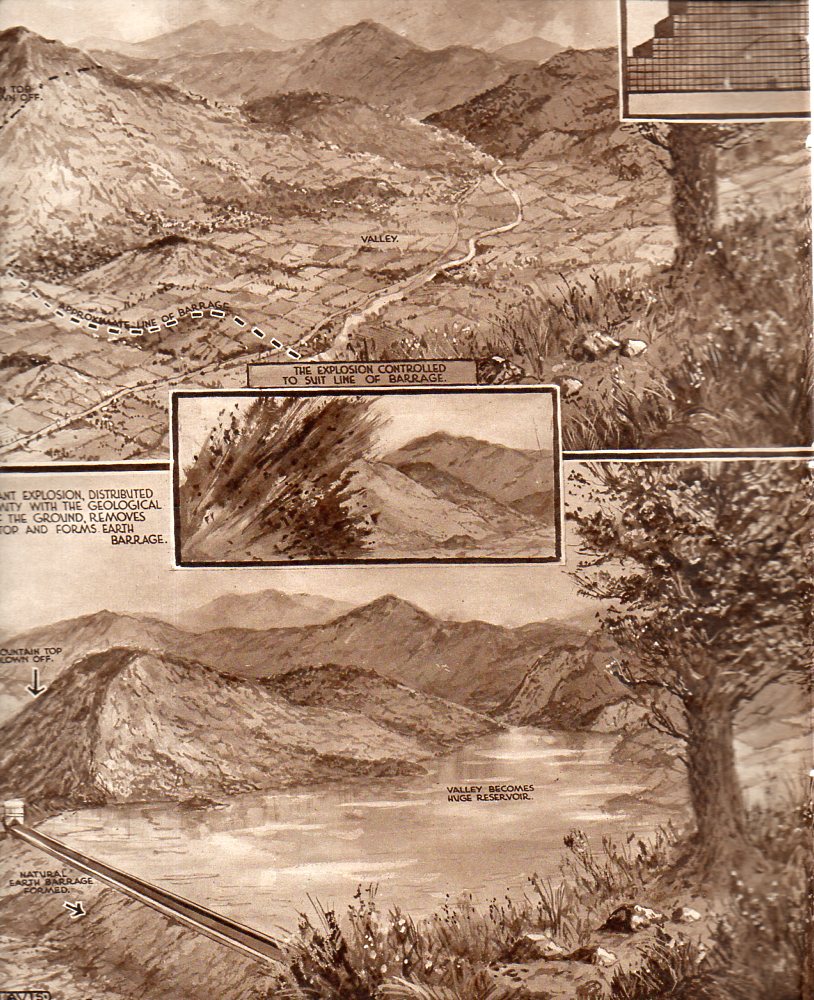
    One thing is for certain–it could be used not only to make big holes out of little ones, but also make big mounds of dirt where there were none. This stands to reason, of course, because if you are producing massive holes in the Earth then the dirt and other hole-filling stuff must go somewhere (as Beakman says in his often-repeated admonition and perhaps the most important thing that is said on this kid-based science show, “everything goes somewhere”). Unfortunately the mountain of hole-dirt doesn’t get made quite like the way it was envisioned in this article in the Illustrated London News for 17 November 1945, but they were trying, and it was still a very young and tender period in the history of public discussion on the atomic bomb/bombing. 

    Atomic resevoir709
    Still, “The Force Which Can Move Mountains:  Harnessing the Atom to Vast Projects for the Benefit of Mankind” imagined an atomic-bomb-fueled set of public works projects that were of Pyramidally-historic proportions, and was among the first fissionally-inspired public portrayals of the peaceful uses of atomic bombs. (The “Peaceful Uses of Atomic Energy” UN-based conferences and etc. would come later.)  Engineering with atomic bombs does have some considerable issues, like radioactivity, but some of those issues were worked out somewhat–but that came later on. 

    Atomic resevoir711
    Back in 1945 the bomb was being discussed as a hole-maker for reservoirs and for making mountains in the deserts of the world to cut down on the sandstorms and related problems (the “dust bogey” from the fantastic quote in the heading of this post).  More thought would be given to this issue on the peaceful applications of nuclear weapons in such platforms as Operation Plowshare1, an American undertaking begun in 1961, which entertained half-fantastical thoughts of widening the Panama Canal and creating–through a series of five hydrogen bomb detonations–a new harbor at Cape Thompson, Alaska.  Some of the dirtiest of all nuclear detonations were associated with Plowshare–like the Sedan shot of 1962 which displaced 12 million tons of dirt and made a really big hole but which also contributed something on the order of 7% of all fallout contamination of the total
    amount of radiation which fell on the U.S. population during all of the
    nuclear tests at Nuclear Test Site.  It is still the largest man-made hole in the U.S. and for what it is worth it is listed on the National Register of Historic Places.  Over the years such testing for Plowshare (alone) cost the U.S. about 700 million dollars, which seems like a wildly undervalued estimate of costs.

    In any event, I liked this story form the ILN and for the hope that it represented, coming at the earliest public history of the use of atomic weapons. 

    Atomic resevoir710

    Notes.

    1.  Perhaps people felt a little kinder towards monster ideas like this if the name of the proceedings found its origins in the Old Testament, like this one: Isaiah 2:3–5, “And he shall judge among the nations, and shall rebuke many people: and they shall beat their swords into plowshares, and their spears into pruning hooks: nation shall not lift up sword against nation, neither shall they learn war any more”. 


Recent Posts

Archives

Categories