A Daily History of Holes, Dots, Lines, Science, History, Math, Physics, Art, the Unintentional Absurd, Architecture, Maps, Data Visualization, Blank and Missing Things, and so on. |1.6 million words, 7500 images, 4.9 million hits| Press & appearances in The Times, Le Figaro, Mensa, The Economist, The Guardian, Discovery News, Slate, Le Monde, Sci American Blogs, Le Pont, and many other places… 5000+ total posts since 2008.

  • (Erasmus) Darwin and Powered Flight

    JF Ptak Science Books  Post 2242

    There’s a pair of short notices in two consecutive issues of Nature (September 22 and 29, 1910) that brings up a probably mostly-overlooked bit of thinking by Charles Darwin’s (and Francis Galton’s) grandfather, Erasmus Darwin (1731-1802).  Way before Charles (born 1809) and Francis (born 1822) Erasmus was a powerhouse Darwin, and a powerhouse-in-general. He was primarily a physician, but was also an inventor, physiologist, abolitionist, botanist, and inventor, among other things.  He famously speculated on evolution, and less-famously on the coming of the steam age.  

    In the first article here, pointing out a piece in The Times by R. Meldola, it is shown that Darwin saw the coming of steam from a good distance away: “As the specific levity of air is too great for the support of great burthens by balloons, there seems to be no probable method of flying conveniently but by the power of steam, or some other explosive material, which another half-century may probably discover”.)  The editors of Nature included the notice to provide a bit more evidence of Darwin’s vision via his poetry, stating that he “foretold, in the following lines, the advent of aerial navigation”:

    Soon shall thy arm, UNCONQUER’D STEAM! afar
    Drag the slow barge, or drive the rapid car;
    Or on wide-waving wings expanded bear
    The flying-chariot through the fields of air.
    — Fair crews triumphant, leaning from above,
    Shall wave their fluttering kerchiefs as they move;
    Or warrior-bands alarm the gaping crowd,
    And armies shrink beneath the shadowy cloud.

    In the next issue of Nature there’s a short notice by Arthur Platt, “Erasmus Darwin on Flying Machines”, (page 397 of September 29, 1910), where he quotes Dawin on the coming of powered flight:  “As the specific levity of air is too great for the support of great burthens by balloons, there seems to be no probable method of flying conveniently but by the power of steam, or some other explosive material, which another half-century may probably discover”.

    That’s pretty good.  Over at the Erasmus Darwin House site is another interesting side of Darwin’s interest in flight, where it is found in hi snotebooks a good and early understanding of teh mechanics of bird flight:

     “In the 18th century there was still no satisfactory explanation for the mechanics of flight and, inquisitive by nature, Darwin appears to have set himself to the task. Sketched out in his commonplace book in 1777 at the height of the 18th century quest for automata and artificial life, the bird (technically a goose) will be brought to life in a steam punk style reminiscent of the era. Using a small reservoir of compressed air as the in-flight rewinding mechanism in the book, Darwin’s description of a bird’s flight is very close to reality, and appears to be the first complete account of a power-plant and the necessary cycle of the wings’ movement…”–Erasmus Darwin House, here.
  • The Smell and Cheapness of Communist Dreams, 1942

    JF Ptak Science Books Post 2243

      Foster082

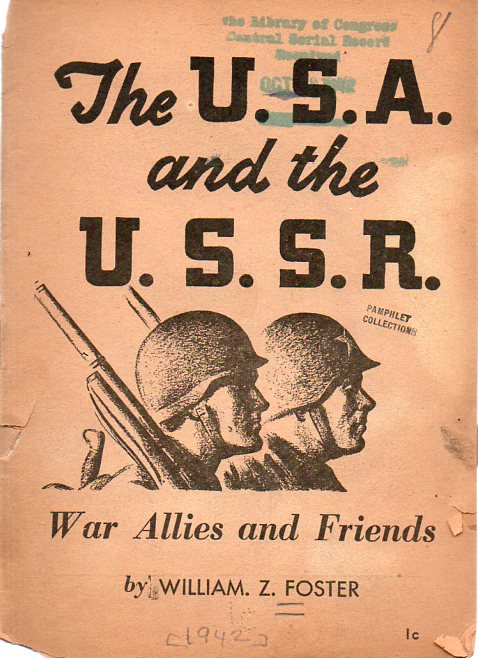
    William Z. Foster. Great name, interesting history, but also Joe Stalin supporter of high order who ran for president of the U.S. in ’32 as a Communist (and got 100K votes). Foster does have organizational chops, working for unions and union organizing for several decades. In the mid-1920’s and beyond he was interested in the Soviet Union and Communism, and published many small works of wonder, many of which had interest cover illustrations, pushing the penny publication.

    Many of these publications also had that particular feel of cheapness to them, as well, as with the pamphlet I’m sharing above. They feel cheap because they were cheaply printed, written bits made to be whispers into any listener’s ear, and then dissolve after the need was perhaps filled and perhaps not.  They turned brittle after just a little while, and nowadays just crumble into flaking slivers of bad paper that suck the moisture right out of your fingers.  

    This hopeful pamphlet addressed the very tenuous amity between the United States and its mew-ish ally, the Soviet Union. This was printed in 1942, a third of the way through the Nazi invasion of the Soviet Union, an operation that caused the deaths of about 5 million Soviet soldiers and dozens of millions of civilians. Of course the Soviets weren’t always on the side to the U.S. And the Allies, far from it. 23 August 1939 is when Stalin signed the Non-Aggression Pact with Hitler (the Ribbentrop-Molotov Pact) , foreign up Hitler to move against Poland, which is did on the first of September. On the third the British declared war on Germany, and on the 17th The Soviets rolled into the eastern part of Poland, taking what it wanted, as per the agreement in divide and conquer.

    The honeymoon between the two states wasn’t to last long, because Hitler could not stand the Russians, who he felt were an inferior, servile people, holding much-needed natural resources for the Reich, deserving death or slavery. And so on 22 June 1941, the agreement was annulled when the Nazis undertook a full-out-mega-frontal attack on the Soviet Union called Operation Barbarossa. It was a massive campaign, and the Soviet Union reacted slowly to it, given Stalin’s insistence that such a thing as Nazi subterfuge and betrayal was not possible.  The plan was quite nearly successful, with tremendous progress made in the first few months (due to Nazi strategy and surprise as well as Stalinist purges of top Soviet military figures and mismanagement) but then the Soviet Union grew into the necessity of stopping the onslaught, and wound up destroying the German capacity for the two-front war.

    In any event in 1942 Foster made a play for American-Soviet friendship just at the time when the Nazi invasion was being turned around, falling short of Moscow, engaged in awfullness in Crimea, and just about to get into Stalingrad (mid-’42), Hitler’s dream repackaged by an extraordinary effort by the Soviet army. We absolutely needed each other at this point in the war, because the Soviet Union basically killed much of the Nazi war effort, and the U.S. was the seat of fantastic resources. But before the war was out, the Foster’s plea for the beacon of light of Super Friends was not much more than a wet stubby candle in a closet.

    ·Posted by :

    ·in:

  • The Many Names of the Philosophical Transactions (1665-2014)

    JF Ptak Science Books   Reference Tools series

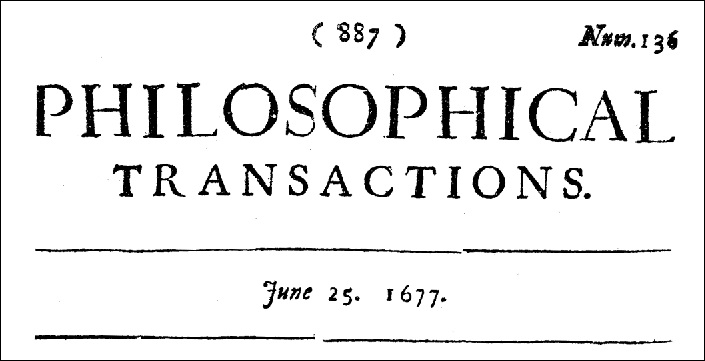
    Just a note here on the names of about the greatest English-language scientific journals of all time, the Philosophical Transactions… (“Phil Trans”). Like the great Annalen der Physik, which also had its fair share of name changes over the centuries (see here), the Phil Trans had a number of incarnations since it began in 1665.  The list below is just a thumbnail reference for the proper name of the journal at the proper time, and it might make searching for things a little easier. 

    Philosophical transactions[Image source]

    1665-1678  Philosophical Transactions, Volumes 1–12

    1683-1775  Philosophical Transaction, volumes 13-65

    1776-1886  Philosophical Transactions. Volumes 66-177

    1887-1896  Philosophical Transactions of the Royal Society of London A, volumes 178-186

    1887-1895  Philosophical Transactions of the Royal Society of London B, volumes 178-186

    1896-1934  Philosophical Transactions of the Royal Society of London. Series B, Containing Papers of a Biological Character,. Volumes 187-223

    1896-1934  Philosophical Transactions of the Royal Society of London. Series A, Containing Papers of a Mathematical or Physical Character,. Volumes 187-223

    1934-1990 Philosophical Transactions of the Royal Society of London B, Biological Series, volumes 224-338

    1934-1990  Philosophical Transactions of the Royal Society of London A, Mathematical and Physical Series, volumes 224-332

    1990-1995 Philosophical Transactions of the Royal Society, Physical and Engineering Sciences, volumes 332-353

    1990-1995 Philosophical Transactions of the Royal Society, Biological Sciences, volumes 338-353

    Currently: Philosophical Transactions of the Royal Society A: Mathematical, Physical and Engineering Sciences

    Philosophical Transaction of the Royal Society B: Biological Sciences


    ·Posted by :

    ·in:

  • Black Holes as Dark Stars, 1784

    JF Ptak Science Books  Quick Post

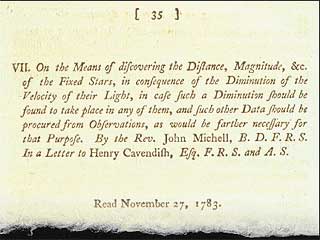
    Just a very short note here, as I was doing a little work on black holes, and read the earliest recognizable scientific papers on the idea of the black hole (I almost wrote black “whole” which is an interesting concept that I guess might be sort of the same idea as a black ‘hole” if the notion existed), and thought to reproduce parts of them here.  The paper is by John Michell (mind the ‘t”!, 1724-1793, pioneering/filed creator of seismology and magnetometry, and one of the first people to competently weight the world) and exists in this long but beautifully titled work found in the Philosophical Transactions in 1784:  

    Michell_001

    [Image source: American Museum of Natural History]

     Here’s a good quote from that work:

    “If the semi-diameter of a sphere of the same density as the Sun were to exceed that of the Sun in the proportion of 500 to 1, a body falling from an infinite height toward it would have acquired at its surface greater velocity than that of light, and consequently supposing light to be attracted by the same force in proportion to its inertia, with o ther bodies, all light emitted from such a body would be made to return toward it by its own proper gravity.” (Michell, Philosophical Transaction of the Royal Society of London, January 1,1784.

    He came up with the beautiful idea of “dark stars”, and even how to find them–it is unfortunate how (and also a function of the times) that his work would go basically unnoticed until a time when it could be better understood, but only so far as historicism is concerned.  Michell however was rescued in the 1970s at least in bibliographies, lifted from his parson’s grave of scientific anonymity.  

    ·Posted by :

    ·in:

    —
  • Early Bibliography for the History of Relativity, 1921

    JF Ptak Science Books     Reference Tools series

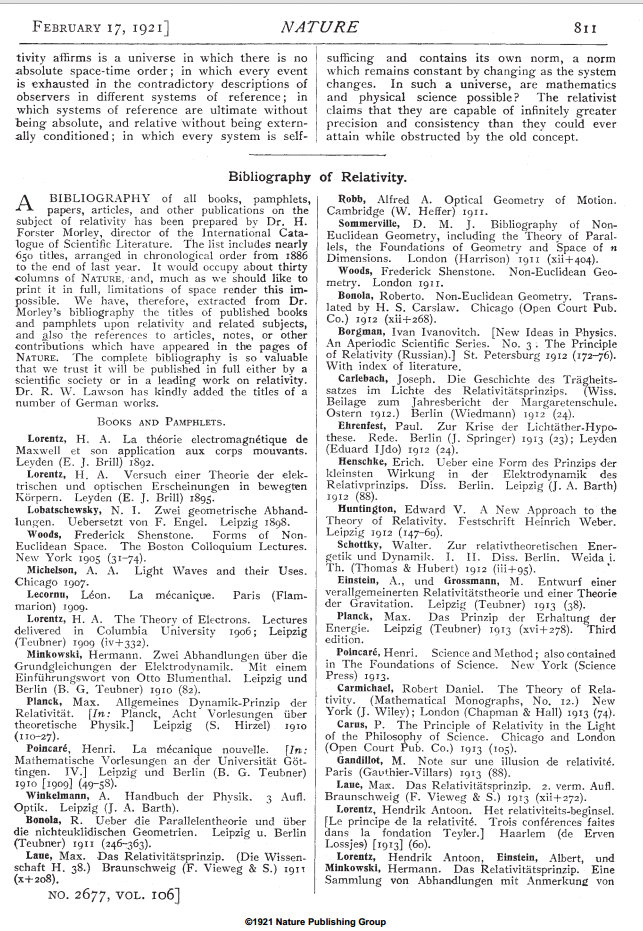
    This is a very unexpected find in the journal Nature for 1921–a selection from a bibliography by Forster Morley for early works in relativity, in this case limiting the number of selections from the full 650 Morley numbers to only those that appeared in some way in Nature.  Truncated or not, it is an interesting and early read in the area.  

    Relativity Nature Bibliog 1

    ·Posted by :

    ·in:

  • Fantastic Fish-Eye Portrait of Scientists, ca. 1855

    JF Ptak Science Books  Quick Post

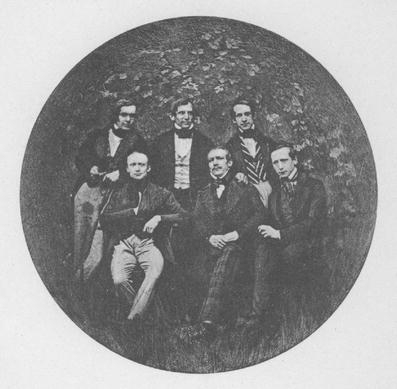
    Scientist photo portrait

    The founders of the Physikalische Gesellschaft zu Berlin (1845, “Physical Society at Berlin”, which would become  the Deutsche Physikalische Gesellschaft (“German Physical Society”) in a lovely and very uncommon perspective, taken ca. mid-1850’s.  These founding membership pictured above included some first-class heavyweights in their fields:

    Top row: Gustav Karsten, Wilelm Heintz, Carl Hermann Knoblauch.

    Bottom row: Ernst Brücke, Emil du Bois-Reymond, Wilhelm von Beetz.

    [Source: a very interesting paper by Fritz Scholz, “From the Leiden jar to the discovery of the glass electrode by Max Cremer” published in the Journal of Solid State Electrochemistry  (Springer-Verlag, October 29, 2009, online). Apologies for not being able to link to this article behind the paywall.]


    ·Posted by :

    ·in:

    —
  • Broadcasting Close-ups of pre-Chuck Close, 1923

    JF Ptak Science Books  Quick Post  Part of the History of Dots series

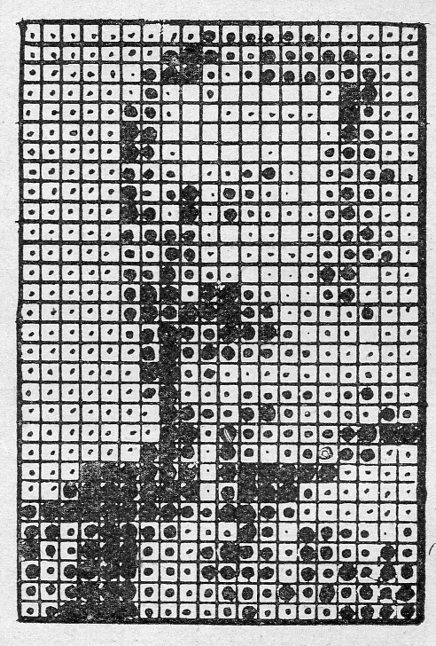
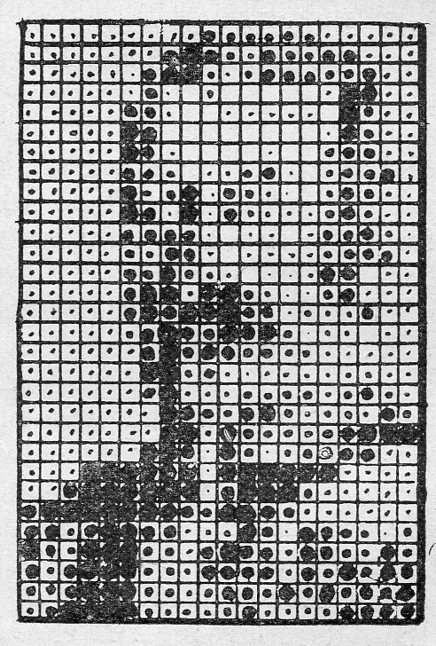
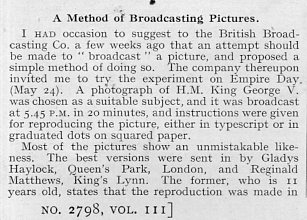
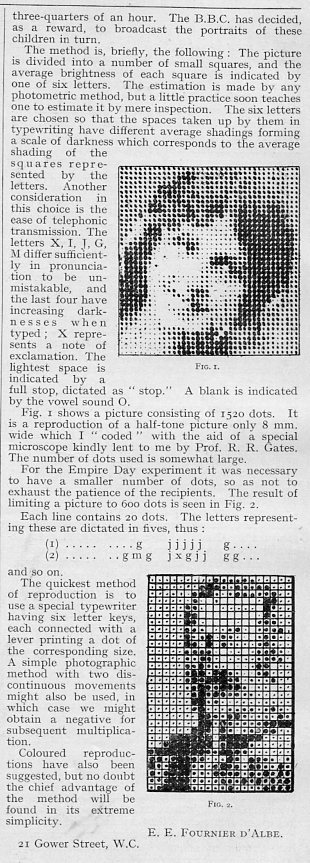
    Well, that’s a tricky title, and not quite right, but bits and pieces of it are.  Chuck Close up-close looks much different than this–more likely this image looks more like an early half-tone.  (You can really say that it looks like Seurat [dead at 32!] because it is in black & white and he was all about color.) What the story is is that this tells part of the story of broadcasting pictures by wireless–and the picture below, the picture that will develop after a little bit of removal and a lot of imagination, is that of King George V, the product of disseminating 1,500 dots in a 15-minute broadcast.  The full not-easily explained explanation is below, starting in the third paragraph.  

    Broadcasting pictures085[Source, Nature, June 16, 1923, page 811.]

    Which is a big enlargement of the following, which moving back from it begins to come together like backing away from a close-up of a Chuck Close:

    Broadcasting pictures085

    The original is only about an inch tall–when seen in context, the picture becomes clearer:

    Broadcasting pictures083

    Broadcasting pictures084


    ·Posted by :

    ·in:

  • On Obviousness–a Very Obvious and Empty Not-Magritte’s Hat

    JF Ptak Science Books  Quick Post

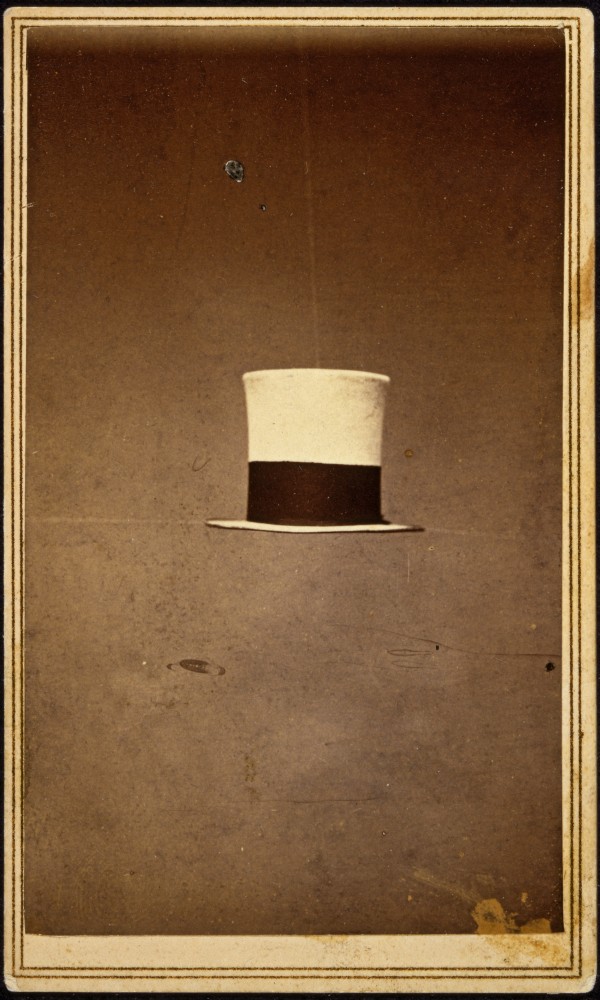
    ABsurdist HAt

    [Source: “Eli W. Buel (American, active ca. 1870) Top Hat, ca. 1870, albumen print carte-de-visite, museum purchase, George Eastman House”, here.]

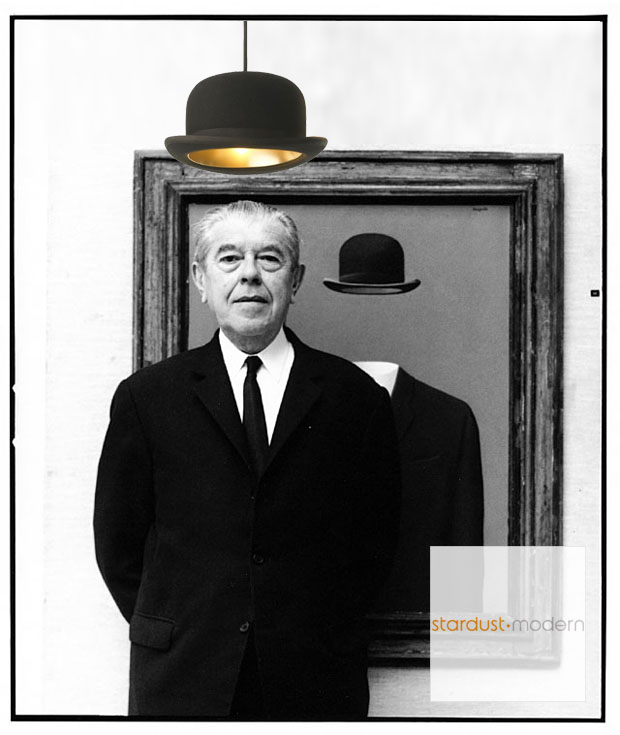
     This is a great example of “everyday objects shriek aloud” as Magritte said somewhere along the path of his life.  I thought about him right away seeing this much earlier vision of a floating hat and that it fit somehow into a Melville (“I would prefer not to”) Duchamp (“This is not a pipe”) and Magritte continuum:

    Magrittwe[Source:  Stardust Modern Design]

  • Fantastic Image of Germans on the Moon, 1918

    JF Ptak Science Books  Quick Post  WWI Photos

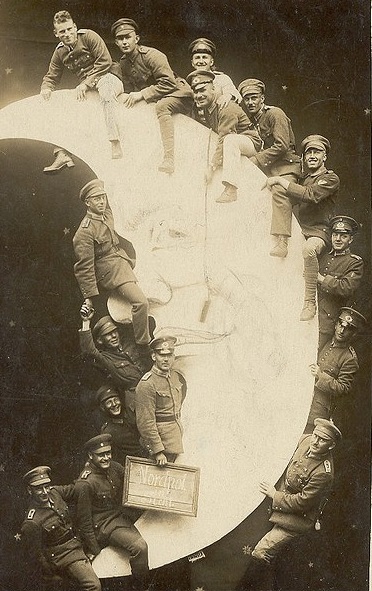
    Nearly all of the WWI photos that have appeared on this blog are from my own collection–this one, this fabulous one below, is not.  It is a fantastic image that I think would bring up notions of crazy proofer types looking to establish the idea that Nazis actually went to the Moon and have been hiding there since 1945–but no. it is just a great photo.  Also:  I’ve seen a number of photographic postcards like this from folks at a country fair or some such thing, having their picture made sitting with the Man in the Moon–soldiers included.  But I’ve never seen one with this many people involved.  

    WWI--soldiers on moon[Source: Odd History, Pinterest account, here.]


    ·Posted by :

    ·in:

  • A Magazine By and About “Factory Girls”, 1845

    JF Ptak Science Books   Quick Post

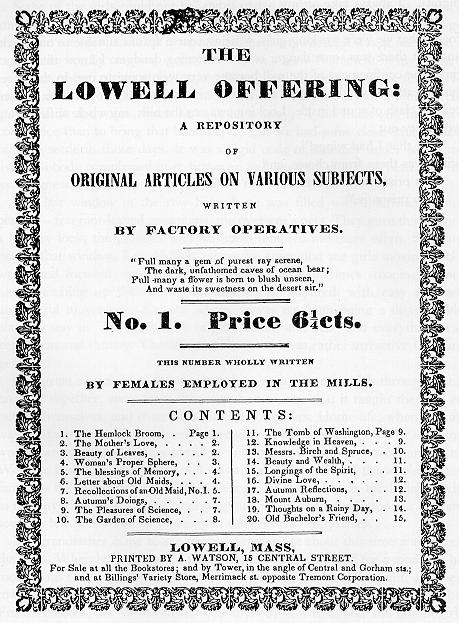
    The Lowell Offering is an extraordinary publication, featuring in its editorial and production and writing staff the women who worked in the many factories in Lowell, Massachusetts.  It didn’t start out that way–it was an ordinary-ish journal begun by Reverend Abel Charles Thomas (1807-1880, and pastor of the First Universalist Church) in 1840 and filled with popular notions and polite works by the locals.  The tables changed in 1842/3, and the writing was switched, the stories and fictions and observations made by the women of the factory, and the journal stayed that way until it folded in 1845. Women had been working in the mills of Lowell since it was Lowell, created by Francis Cabot Lowell, who got the place up and running in about 1823 as a model working community that hummed with hundreds of looms, making the area one of the leading textile producers in the world.  Actually, “hummed” is a poor selection of words–it was really more like a noisy bedlam, a cacophony of metal and leather, the background radiation so to speak of several generations of workers in America.  

    Lowell_Offering_1[Source:  Wikipedia.]

    “Lowell Massachusetts was founded in the 1820s as a planned manufacturing center for textiles and is located along the rapids of the Merrimack River, 25 miles northwest of Boston. By the 1850s Lowell had the largest industrial complex in the United States. The textile industry wove cotton produced in the South. In 1860, there were more cotton spindles in Lowell than in all eleven states combined that would form the Confederacy. Mind Amongst the Spindles is a selection of works from the Lowell Offering, a monthly periodical collecting contributed works of poetry and fiction by the female workers of the textile mills. The Lowell Mill Girls, as the workers were known, were young women aged 15-35. The Offering began in 1840 and lasted until 1845. As its popularity grew, workers contributed poems, ballads, essays and fiction. The authors often used their characters to report on conditions and situations in their lives and their works alternated between serious and farcical…”

    To the Factory Girls

    “We cordially invite the Factory Girls of Lowell, and the operatives and working people generally, whether they agree with us or not, to make the Voice a medium of communication; for it is your paper, through which you should be heard and command attention. The Press has been too long monopolized by the capitalist non-producer, party demagogues and speculators, to the exclusion of the people, whose rights are as dear and valid.”1845.11.07 Source:  Industrialrevolution.org, which has MUCH else of interest. 

    A good introductory selection from The Lowell Offering is TALES OF FACTORY LIFE, No. 1 [from Lowell Offering, 1841], here.

    Workingmen Publishing a Paper?

    “What! Those Workingmen Publishing a Paper?—Yes, friends, as strange as it may seem, “Those ignorant Workingmen” have come to the singular conclusion, to do some of their own thinking, reading, and talking. We have lived long upon the dear bought teachings of those who measure cut their knowledge according to our goal, and as this is getting rather scarce we think duty demands, that we should stir up our ideas, and see what things we have stowed up rusting away, which may be of some little value to ourselves and a portion of the community. Will you allow it?”  Source:  Industrialrevolution.org, again, 1845.05.29

    A very useful index with occasional links to articles can be found at the University of Massachusetts, Lowell  

    And Life Among the Spindles, located here.  And also here: http://www.gutenberg.org/files/37471/37471-h/37471-h.htm

    It is interesting reading, if not syrupy at times, and very highly sentimental (Dickens, in his tour of America in 1842, commented “Of the merits of the Lowell Offering as a literary production, I will observe…that it will compare advantageously with a great many English Annuals.”)–nevertheless there’s much in there to give an idea of what it was like as a lower-middle-class working stiff woman. Bottom line, it is a fabulous thing.  

    ·Posted by :

    ·in:

  • Typewriter Art, 1899, and Kids with No Hero to Sing To

    JF Ptak Science Books  Quick Post

    Dewey090

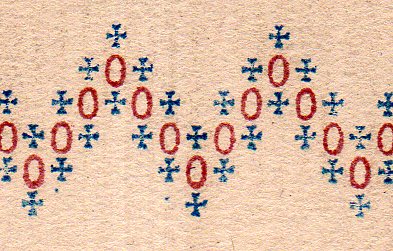
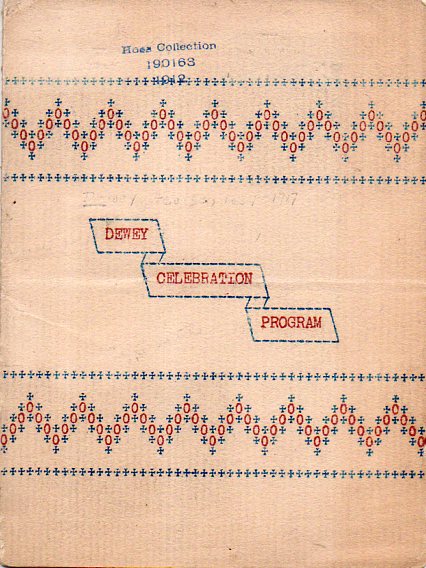
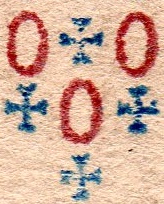
    I almost didn’t make a note of this pamphlet, interesting as it was for its design, until I found an associated New York Times article relating to it.  The work is only a small piece of standard paper folded in quarters snd containing the outline of the celebration of Admiral Dewey’s arrival at Staten Island, New York (October 29, 1899) and the parade and official bits that followed later in Manhattan.  Dewey is one of those historical figures who achieved massive rock stardom in his Dewey089day though that appeal did not translate much at all into our future.  Anyway this bit of ephemera is graphically decoration using just “+”, “0”, and “-“, which made it pretty unusual–I’ve seen some earlier examples of typewriter art, but suffice to say that after all of these years there have not been many.  

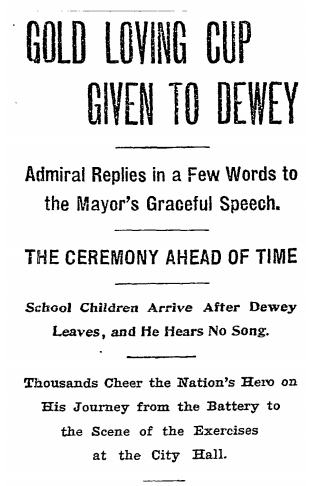
    In any event, checking out the story for the year (the pamphlet doesn’t mention one) I came into the NYT article with the catching and proto-poetic sub-sub-head, “The Ceremony Ahead of Time/School Children Arrive After Dewey Leaves, and He Hears No Song”.  There were 2,500 kids on their way to sing to the admiral, but he started early and finished quickly with his remarks, and then pressed on for the rest of the day.  The kids got there on time to no avail.  


    Dewey


    Dewey091

Recent Posts

Archives

Categories