A Daily History of Holes, Dots, Lines, Science, History, Math, Physics, Art, the Unintentional Absurd, Architecture, Maps, Data Visualization, Blank and Missing Things, and so on. |1.6 million words, 7500 images, 4.9 million hits| Press & appearances in The Times, Le Figaro, Mensa, The Economist, The Guardian, Discovery News, Slate, Le Monde, Sci American Blogs, Le Pont, and many other places… 5000+ total posts since 2008.

  • Glass Globes, Light, and Volcanoes (1898)

    JF Ptak Science Books  Quick Post

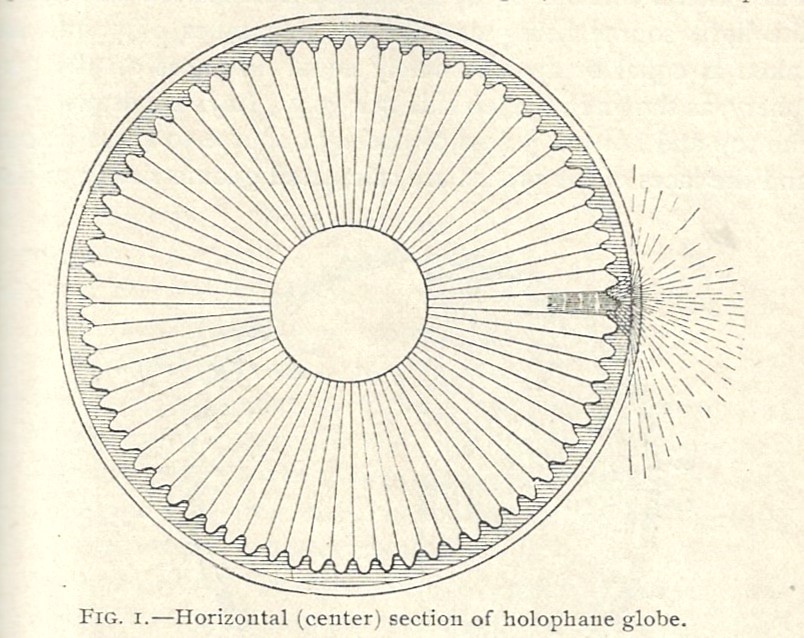
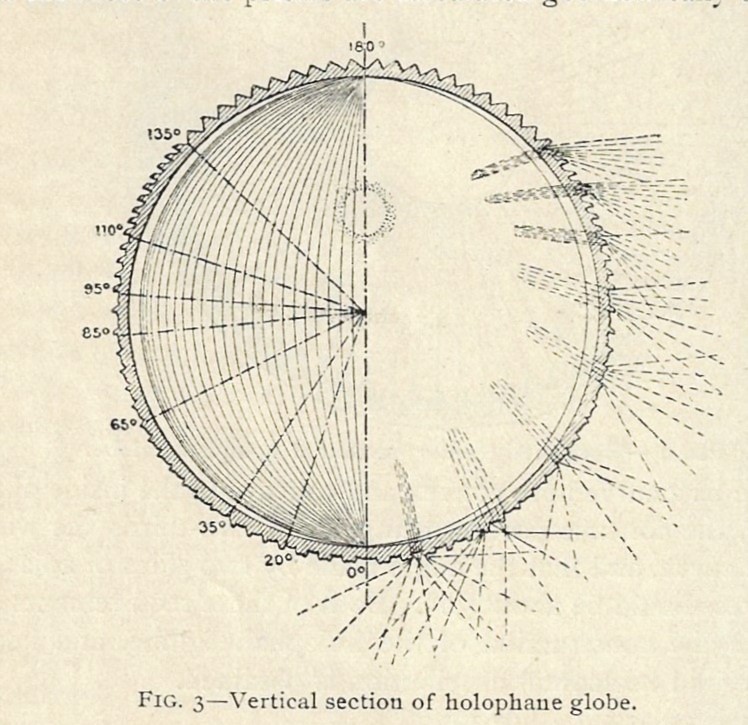
    I happened upon these lovely technical drawings –in plan and cross section–of the newly-patented Holophane Globe. The inventors and coiners of the Holophane were French scientist Andre Bondel and the Turkish Spiridion Psaroudak who patented their illuminating globe in the U.S. in 1896 (and five other countries between 1893-1895). It was designed with inverted and excised cuts in the glass dome to refract and reflect the interior lighting source, and successfully illuminated more area with “less light waste” than most other globes. Not only was the design effective, but the effects were also pretty, as were the schematics of the globe.  (The profile and plan remind me of some early engravings and woodcut of the interior of the Earth showing the sources of volcanic action…or in the case of our not-recently-mentioned friend Athanasius Kircher, the source of water.)

    • Source: “The Holophane Glass Globes for Effecting the Better Diffusion and Distribution of Artificial Light”, Journal of the Franklin Institute, vol 145, April 1898. The article is a technical review of the glass globe and wound up being highly favorable, awarding the inventors the John Scott Legacy Medal for their invention, “…for [the invention] of a globe that secures much better diffusion and more satisfactory distribution than any other globe…” 


    JFI 1897 Holophane _1_ JFI 1897 holophane _2_

    ·Posted by :

    ·in:

  • A Scientific/Industrial Vision of the Future City (1842)

    JF Ptak Science Books  

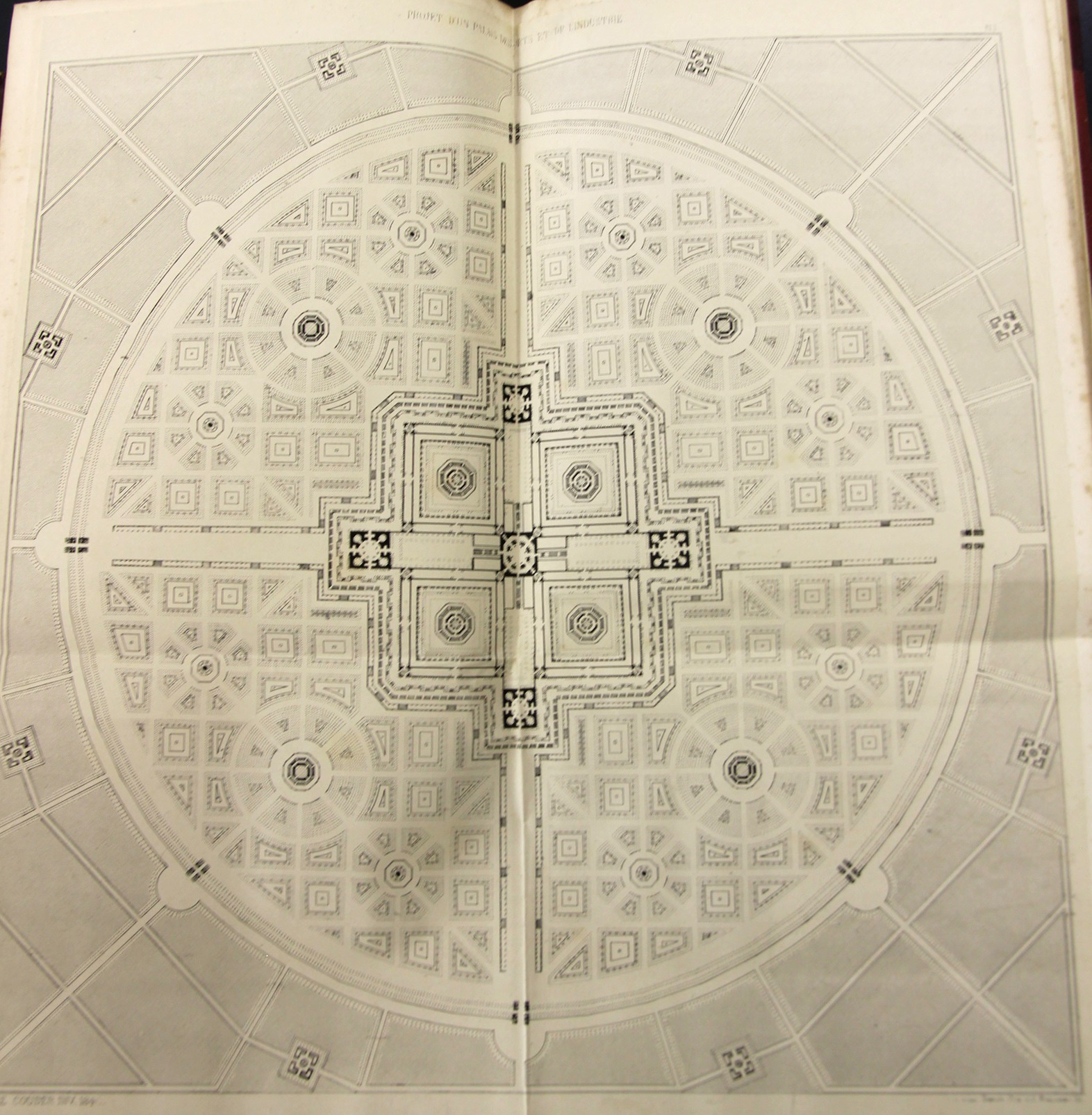
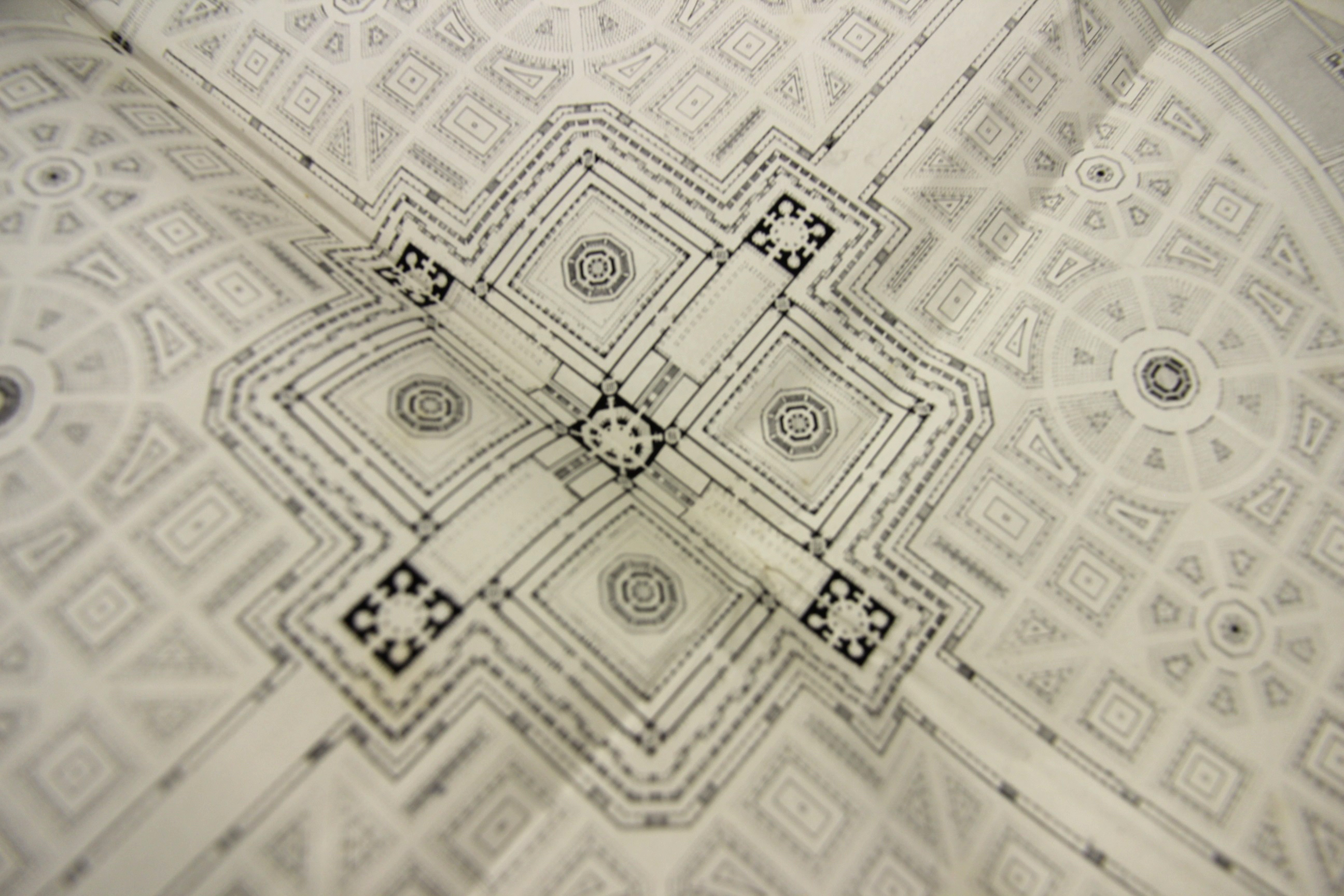
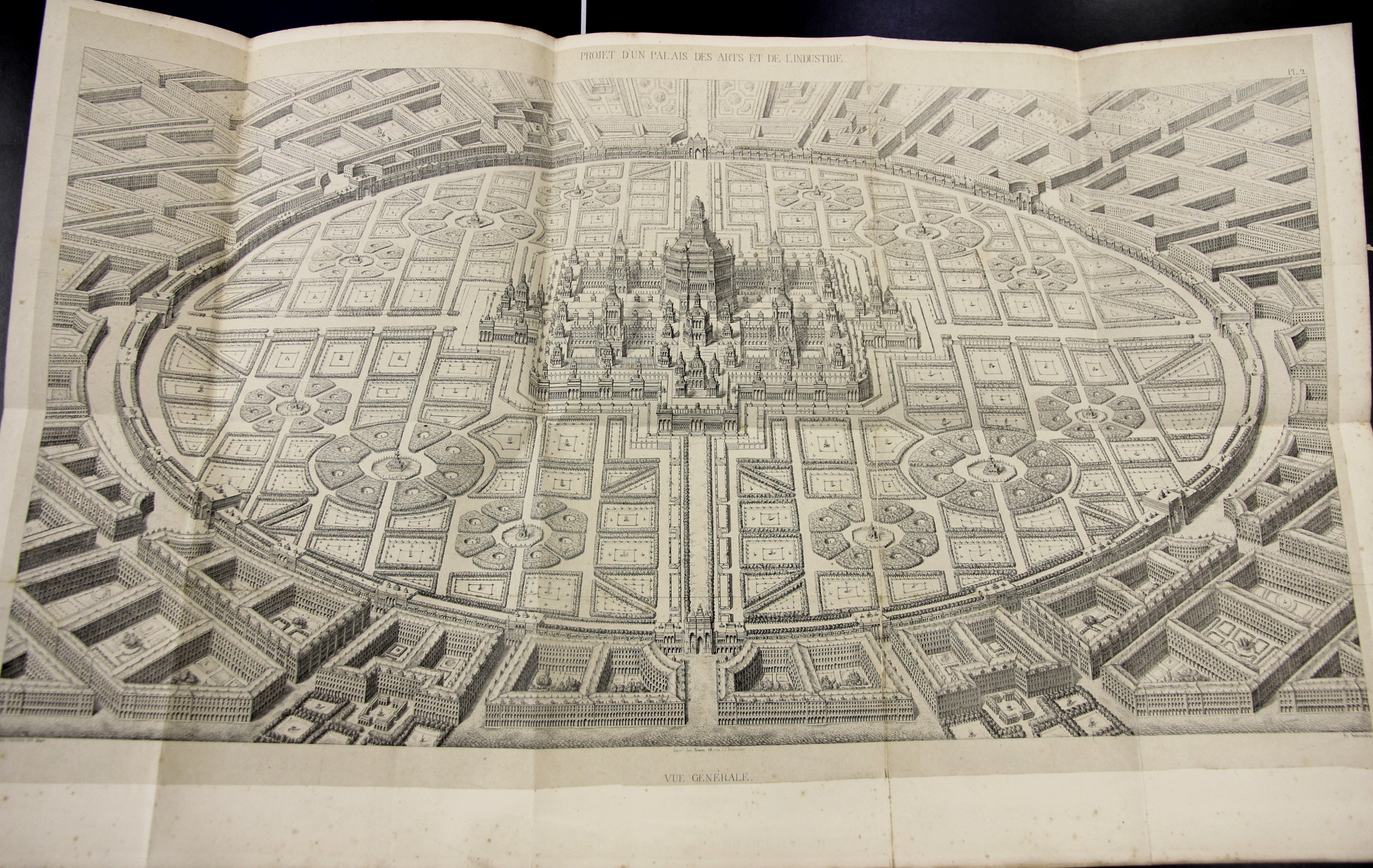
     Amedee Couder wrote L’Architecture et l’industrie comme moyen de perfection sociale, a fine work that was published in Paris (by Brockhaus et Avenarius) in 1842.1  The work presents Couder’s rather stroing visionary plans for a perfect city of industrial and scientific harmony, laid out in suggestively-fractal harmony, with the suggestions of a Renaissance-laden snowflake design. Whatever it was, it was beautiful to look at, at least on paper, though I’m not so certain that I’d care to live in the canyonlands of stone and shadow on the other side of the garden wall of the perfect scientific-industrial conclave. 

    Couder 1

    Couder 2 detail

    Couder 5

  • Found-Art in Scientific Journals: an Acoustic Kraken! (1881)

    JF Ptak Science Books   Quick Post

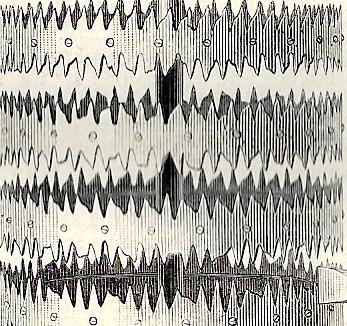
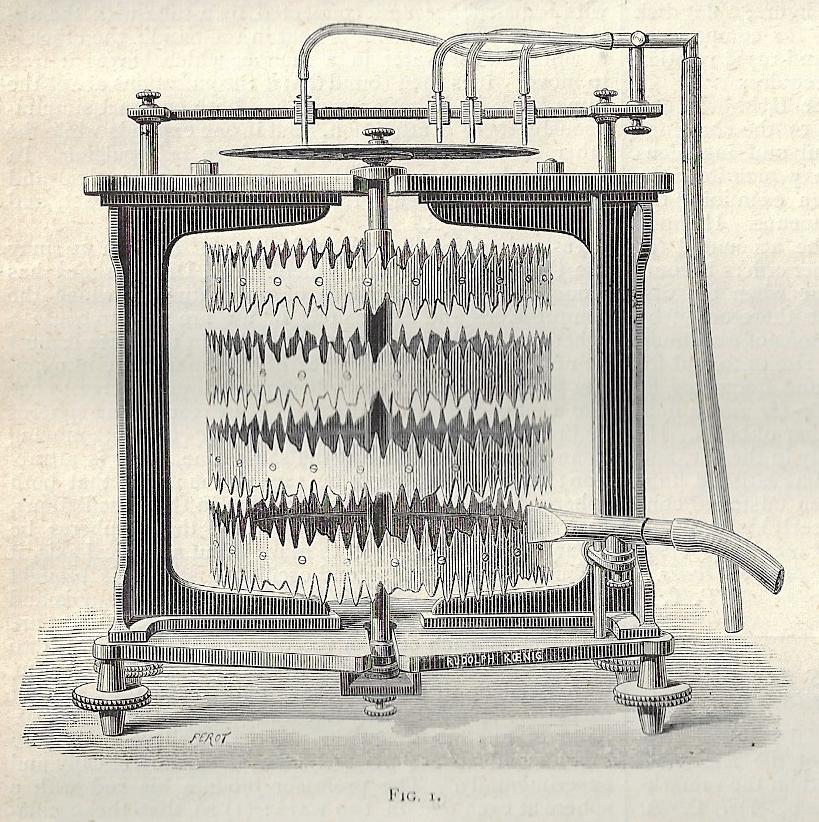
    This does for a moment look like a piece of Found Scientific Art–and I guess it is–reminding me of a multiply-layered steely jaw of some creature, which you can see if you look hard enough. In reality, it was the tonal guts of a wonderful scientific apparatus constructed by Rudolph Koenig, reported in the July 14, 1881 issue of Nature:

    Nature 1881 Konig wave siren detail

    And the full version of the original 3×3″ image

    Nature 1881 Konig Wave Siren

    “Prior to the advent of oscilloscopes and other electronic sound-analysis tools, even seemingly rudimentary tasks of acoustic analysis – determining the frequency of a musical tone, for instance, or making waveforms observable – were not simple jobs  with obvious solutions. It fell to researchers of the time to come up with mechanical devices, often quite clever and sometimes rather complex, to make these investigations possible.” “Though oriented differently [the wave siren]… is similar to the other wave siren shown in this collection, but with more complex wave forms in the undulating rims…”–Bart Hopkin, Instrument Maker, “Engravings of early Acoustical Apparatus”, from his website

    Rudolph Konig (1832-1901) “far and away the most accomplished among makers of [acoustical devices]” (Hopkin, above) was a very highly accomplished and discriminating instrumentalist, scientific instrument maker, and experimentalist. “Koenig will also be remembered as the inventor and constructor of many other beautiful pieces of apparatus for the investigation of acoustical problems, among which may be mentioned his wave-sirens, the first of which was shown at Philadelphia in 1876. His original work dealt, among other things, with Wheatstone’s sound-figures, the characteristic notes of the different vowels, a manometric flame apparatus, a vibration microscope, among others; but perhaps the most important of his researches are those devoted to the phenomena produced by the interference of two tones, in which he disputed the views of Helmholtz as to the existence of summation and difference tones.”–Wikipedia

    “Prior to the advent of oscilloscopes and other electronic sound-analysis tools, even seemingly rudimentary tasks of acoustic analysis – determining the frequency of a musical tone, for instance, or making waveforms observable – were not simple jobs  with obvious solutions. It fell to researchers of the time to come up with mechanical devices, often quite clever and sometimes rather complex, to make these investigations possible.” “Though oriented differently [the wave siren]… is similar to the other wave siren shown in this collection, but with more complex wave forms in the undulating rims…”–Bart Hopkin, Instrument Maker, “Engravings of early Acoustical Apparatus”, from his website


  • A Really, Really Greater New York–Filling in the East River, Redux.

    JF Ptak Science Books   Old Post 1470 expanded and updated.  

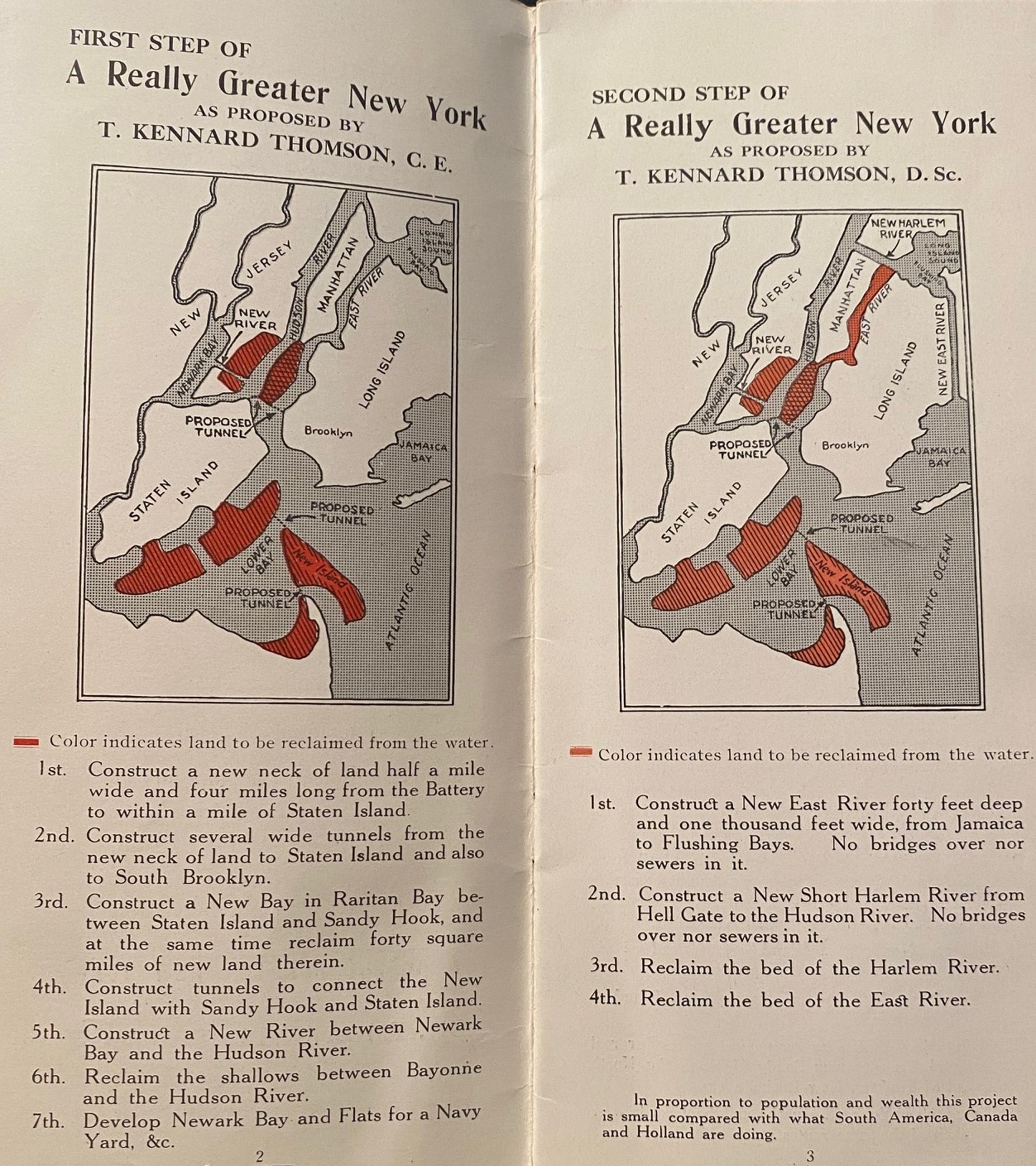
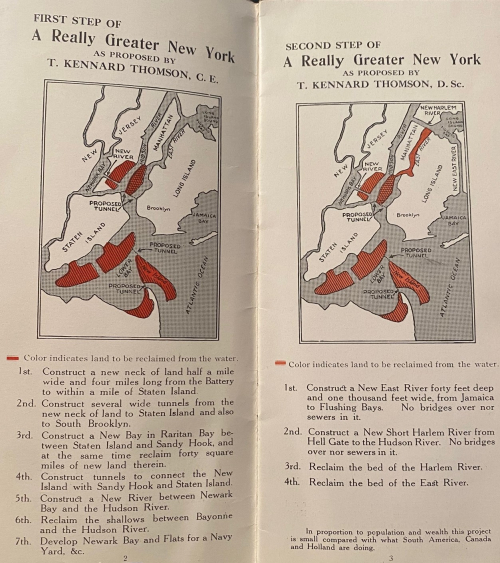
    Eleven years ago on this blog (May 2011) I wrote about the fantastical idea of Dr. T. Kennard Thomson for expanding NYC land and wharf area by reclaiming parts of the NYC harbor and filling in the East River, among many other things.  I came across another pamphlet by Thomson, though this one was almost entirely filled with favorable reviews for his spectacular sci-fi-ish speculations and aspirations.  The newer (1918) pamphlet did offer a part I and part II to the plan–that is listed below following the the first illustration:

    And the glorious side-by-side spectacular:
    IMG_8146

    Long ago on this blog I wrote a post on  Herman Soergel’s  plan for extending the landmass of the countries around the Mediterranean Sea by damming the straits of Gibraltar, lowering the sea and irrigating the Sahara–an original, interesting but not very good idea, filled with briney cultivation and racial politics. In the past on this blog I’ve written about other city plans–and in particular, for New York City–that have involved floating Manhattan into the harbor, or filling up large chunks of the Narrows, or floating the city on an enormous anti-gravity platform, and so on. Some of those plans were real, some science fiction, and some were plainly beyond both.  The plan presented above is another monster, but at least this one could work, if not for the doing of it, and the expense. And the will.
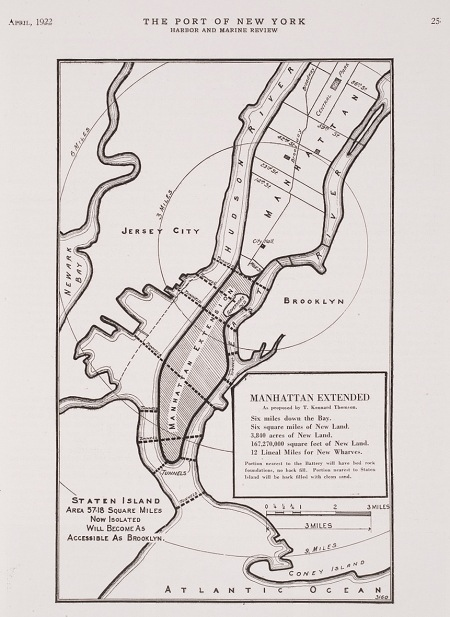
    NYC Really Big
    But the bottom line, according to the engineer doing the thinking on this project, Kennard Thomson, would supposedly net the city a cool billion dollars after everything was said and done, and that would be 1916 dollars–that was equal to about 5% of the American GDP (!) in 1916, which would be about $400 billion in terms of 2010 GDP.  I’m not sure how Thomson came up with this very big/very round number, though it must have been done for effect–I can just imagine him standing before a smokey room filled with civil engineers talking about his massive plan for enlarging NYC and throwing out the billion-dollar figure, watching the cigars glow red in exhaled disbelief.

    Thomson did know what he was talking about–he was a busy (and “leading” according to the NYT) Manhattan civil engineer of stature, working on the Canal Barge and being the principal engineer for the Municipal and Singer buildings, for example–and his project seems to be well within the scope of possibility.  Their sensical aspects however are, well, questionable. 

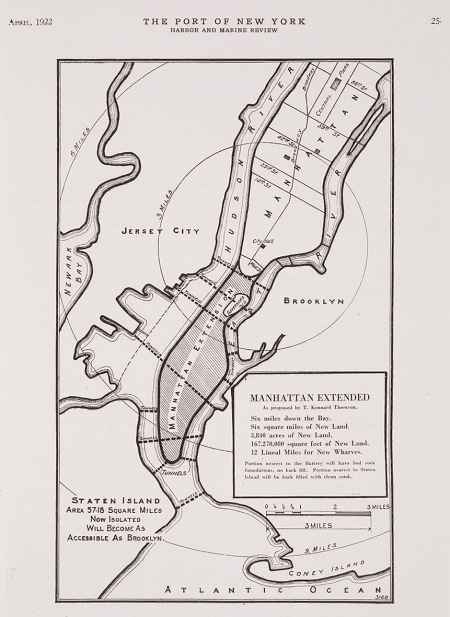
    Here’s the story–around 1911, while examining proposals to repair and extend New York’s wharves, Thomson came upon the idea–a magnificent, fabulous idea–of adding new wharves by adding new lands to the city.  In short, the overall plan was to fill in the East River (!!) and reclaim the new land for city living,  dam Hell Gate,  construct a New East River (from Flushing to Jamaica Bay),  extend the tip of Manhattan Island from the Battery to within a quarter-mile of Staten Island (!), create a new 40-square-mile island between Sandy Hook and Staten Island, extend the Jersey shoreline, add two new Manhattan-sized appendages to the east shore of Staten Island, and more.  All of this would be connected by various new bridges and roads and tunnels, as well as a 6-track elevated railway that would circumnavigate the city.  The purpose of all of this would be to add 100 miles of new docks, an enormous amount (“50 square miles of reclaimed land”) of new land and the capacity for NYC to house 20+ million people, all of which would be worth a billion dollars. 

    Thomson really meant “really” in the title for the proposal. There have been reclamation projects undertaken in New York Bay since then of course, and I think that virtually all of what Thomson talked about could be done.  I think it would be a very interesting project for a class of some sort to undertake an estimation of what such a thing would cost today (and I would guess to duplicate the idea in real terms now would take up a sizable chunk of the GDP).  Maybe all of this will make sense at some more future point. 
  • The Terrible Situation of Ukrainian “Displaced Persons” at the End of WWII

    JF Ptak Science Books  

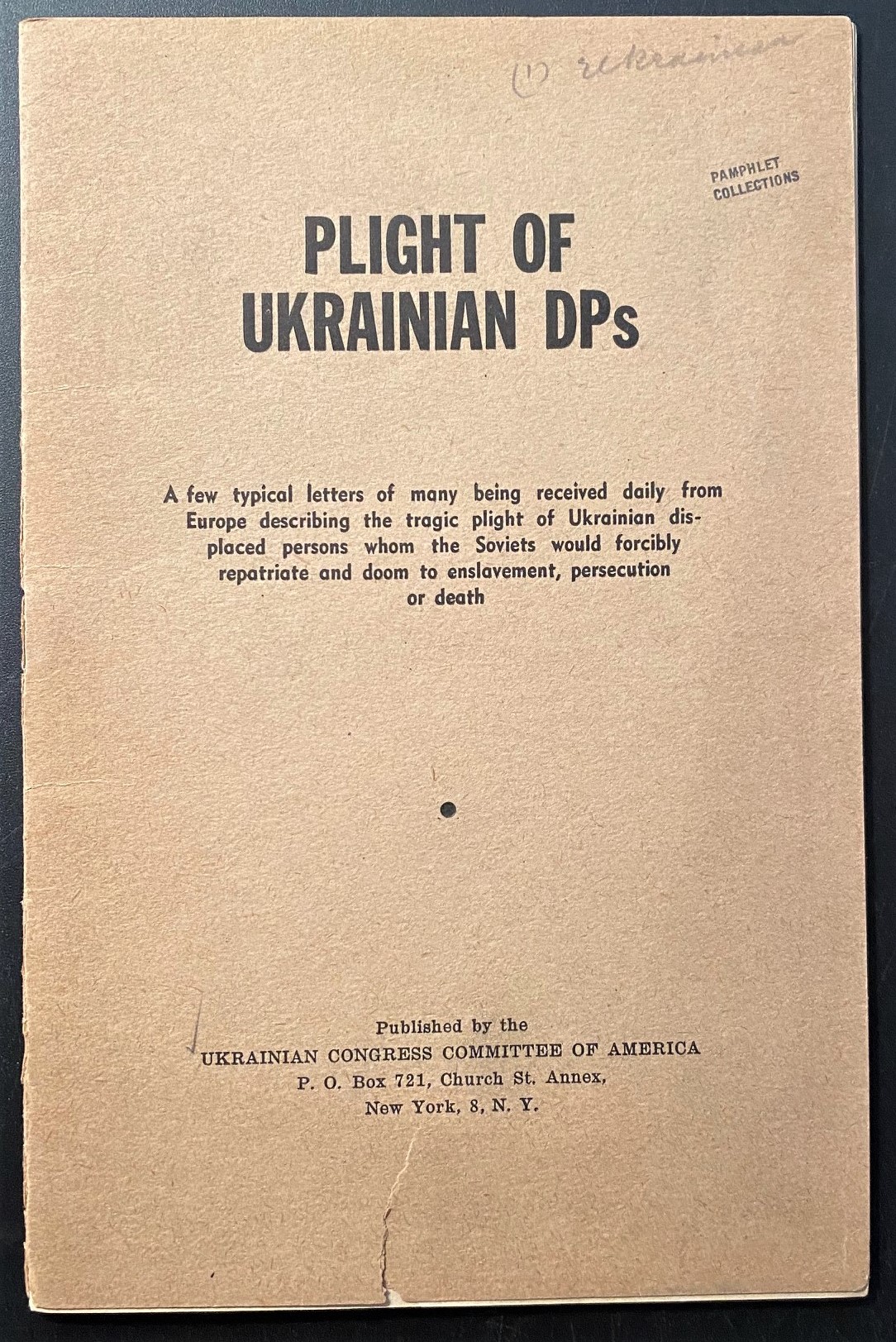
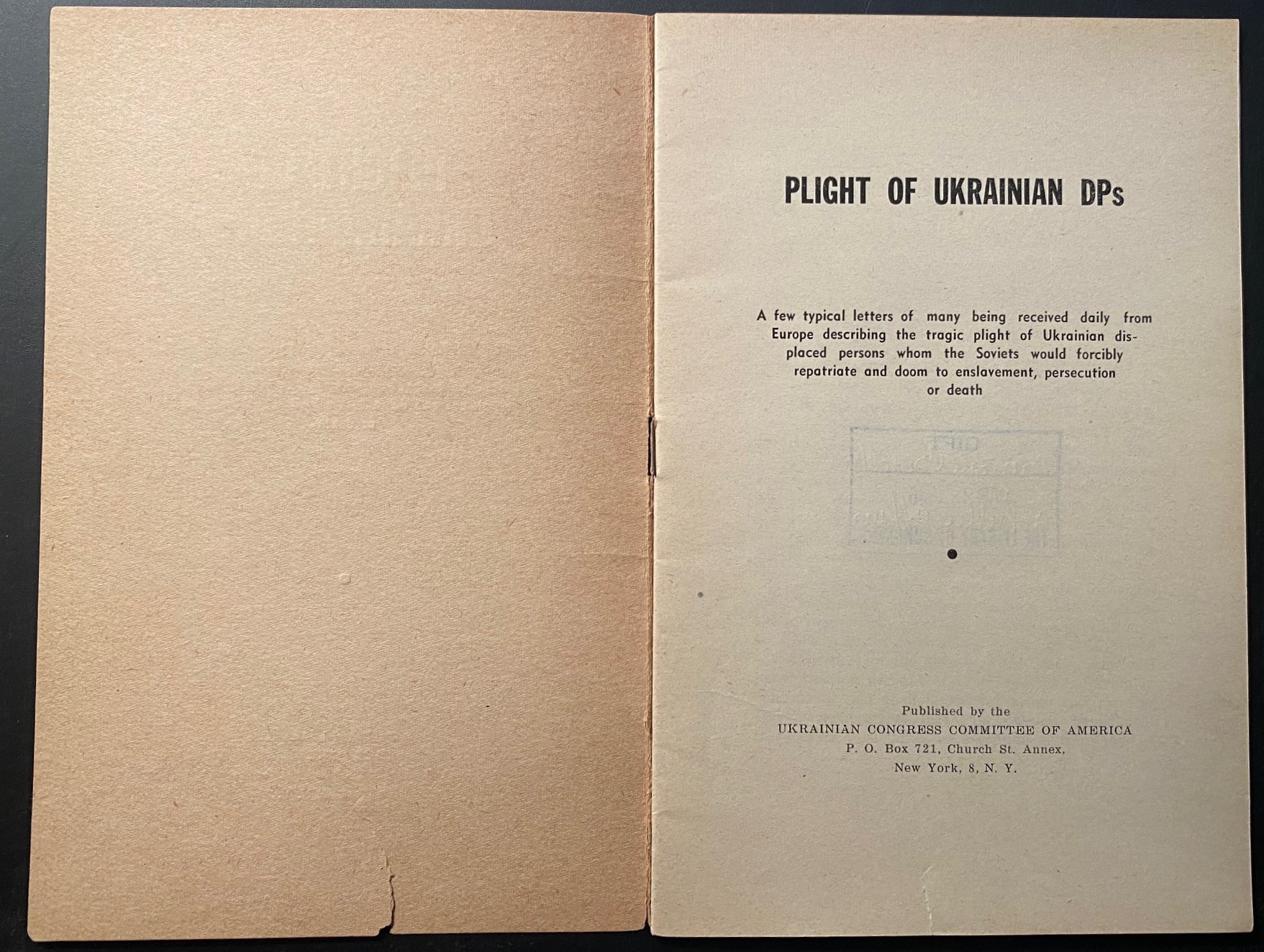
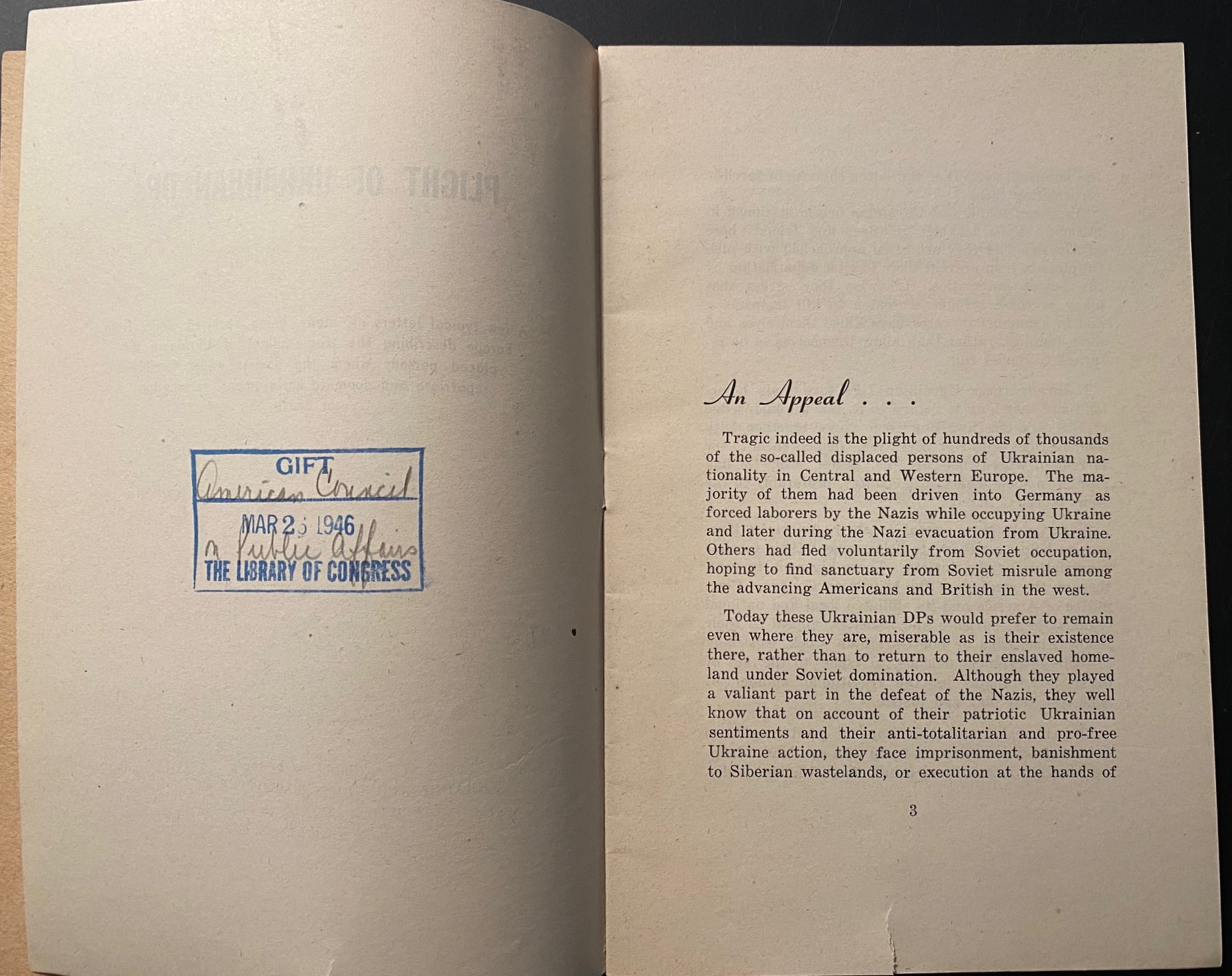
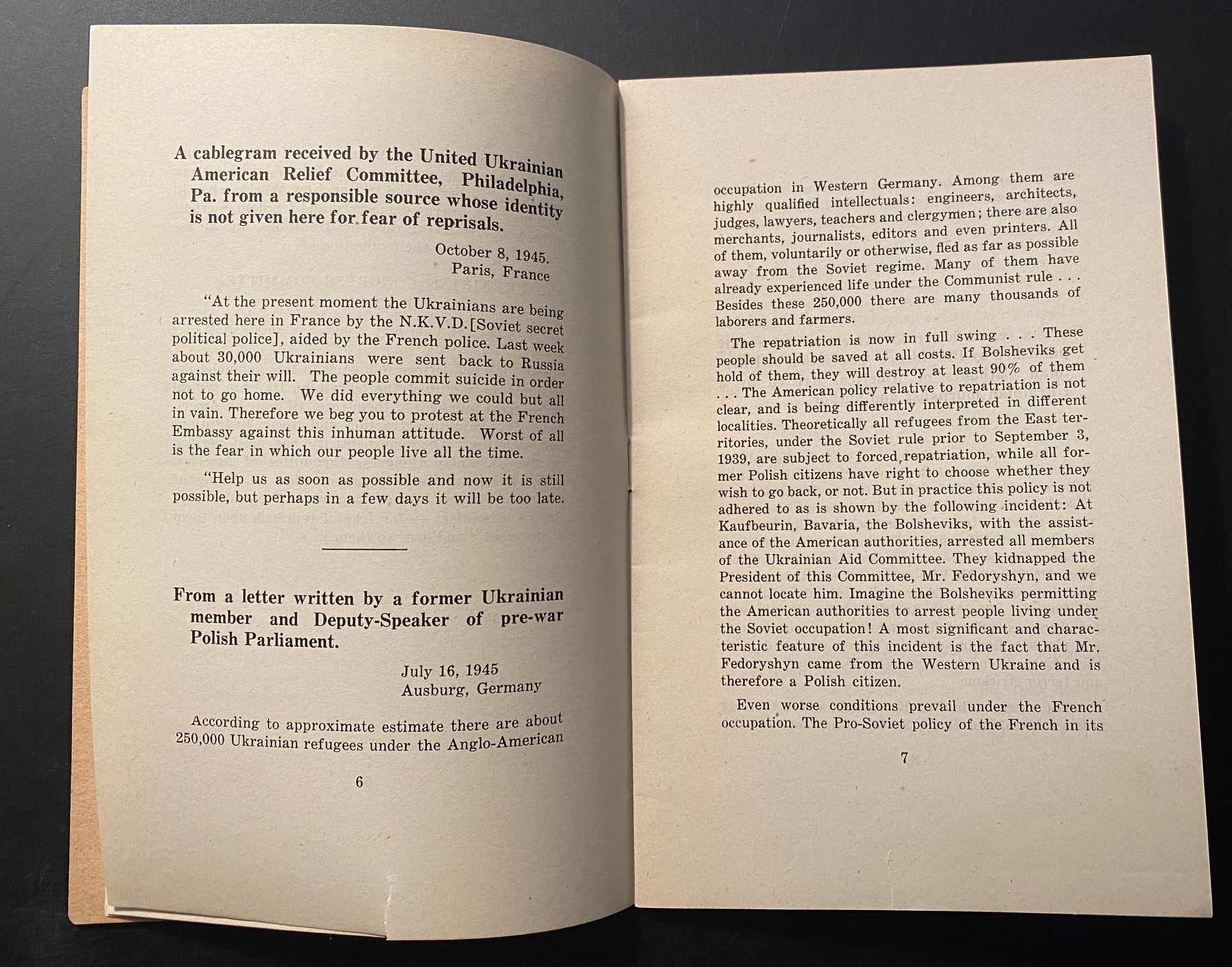
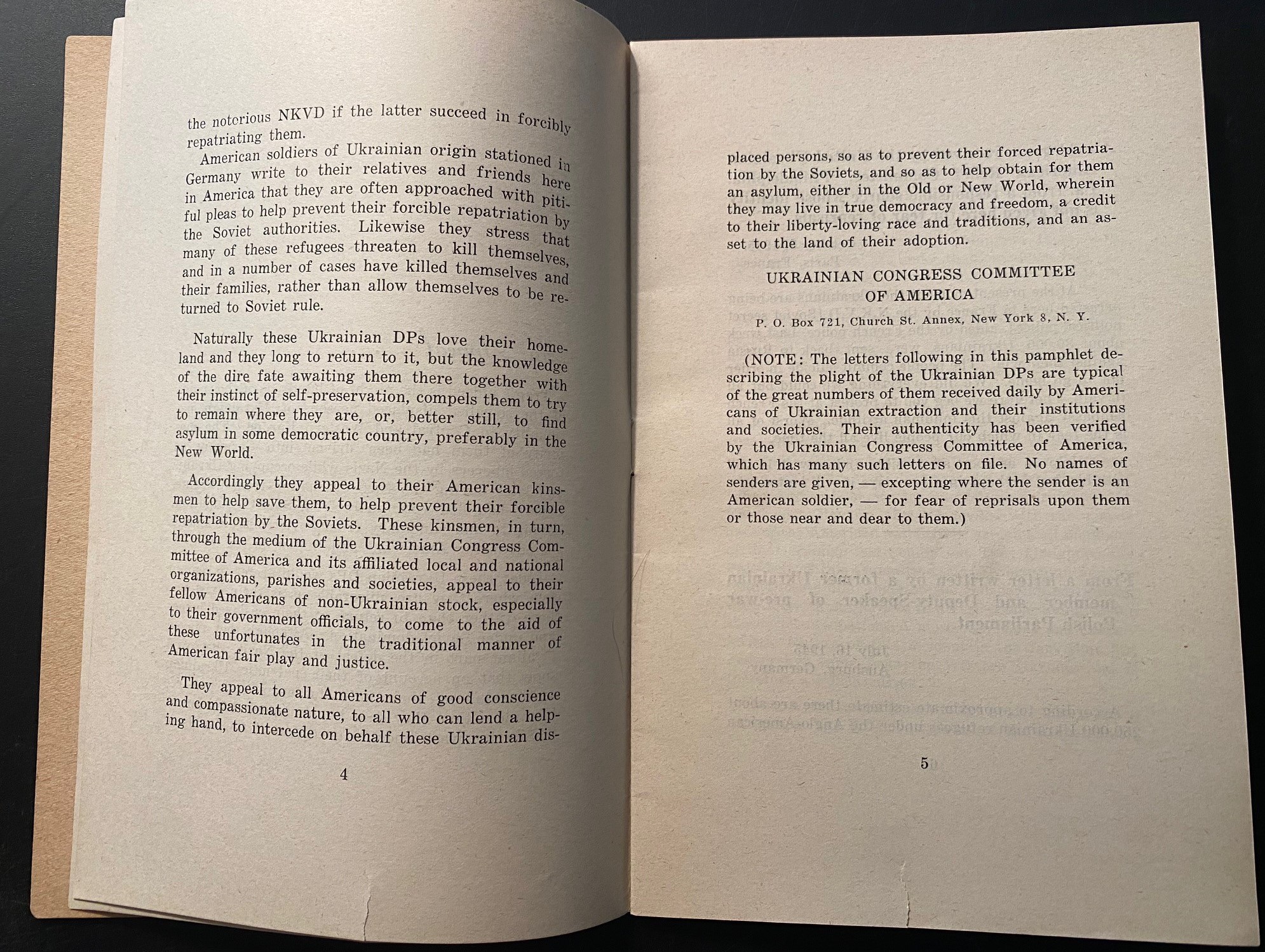
    The pamphlet Plight of Ukrainian DPs : a few typical letters of many being received daily from Europe describing the tragic plight of Ukrainian displaced persons whom the Soviets would forcibly repatriate and doom to enslavement, persecution or death, was published in 1945 or 1946 (but not later than 26 March 1946). It carries a terrific burden over its 31 pages, describes the “plight” of Ukrainian “DPs” at the end of WWII. “Plight” is a very weak word for their situation, as is the term designated them, “DP” or “displaced person”. These people–several million of them—from what I understand had been slave laborers, taken by the Nazis in the advance through Central Europe, and sent to work in German factories and fields. Many were theoretically and sub-practically paid a wage, though in general much of that went to providing themselves food and clothing and such that enabled them to work. These people were known as Ostarbeiter (Eastern Laborer), and at the end of the war many were repatriated to their country of origin. Of the 3-5 million Ostarbeiter, about 2.5 million remained alive at war’s end, with the vast majority–over 2 million–being from the Ukraine. This pamphlet details some of the terrible accounts of Ukrainians being repatriated to the Soviet Union and being treated as plagued outsiders, criminals, and worse, some simply executed, while hundreds of thousands of others were sent on for “re-education”, with many winding up in the Gulags. It was a terrible position to be in–the slave returned home after the war to be treated as a criminal, and slave again.

    In general interest I’ve made digital images of the pamphlet, reproduced in its entirety, below:

    Ukrainian DP _5_

    Ukrainian DP _2_


    Ukrainian DP _5_

    ·Posted by :

    ·in:

  • Statements by the Editor of Nature on Equality in the Sciences (1910).

    JF Ptak Science Books  Overall Post 5143

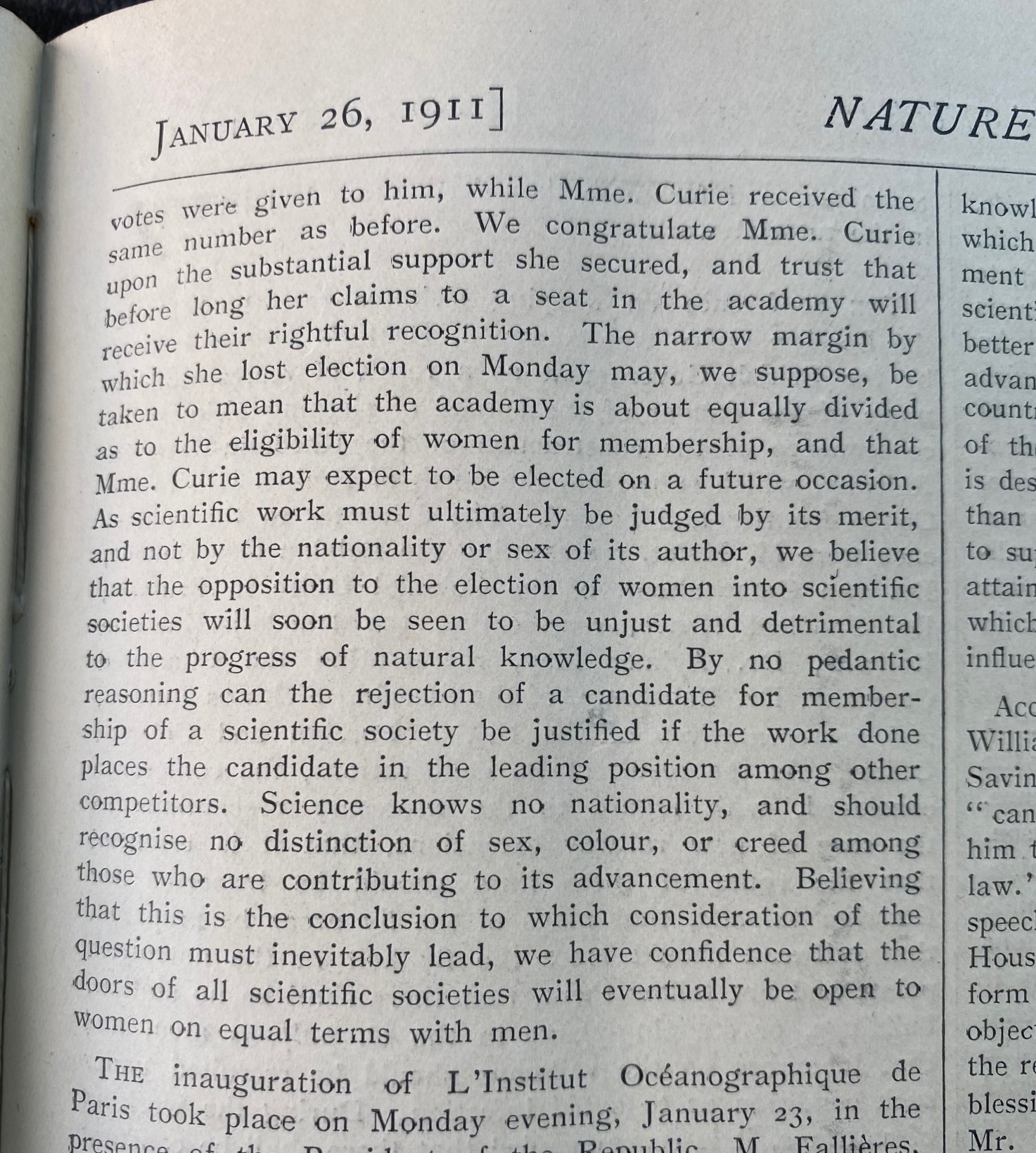
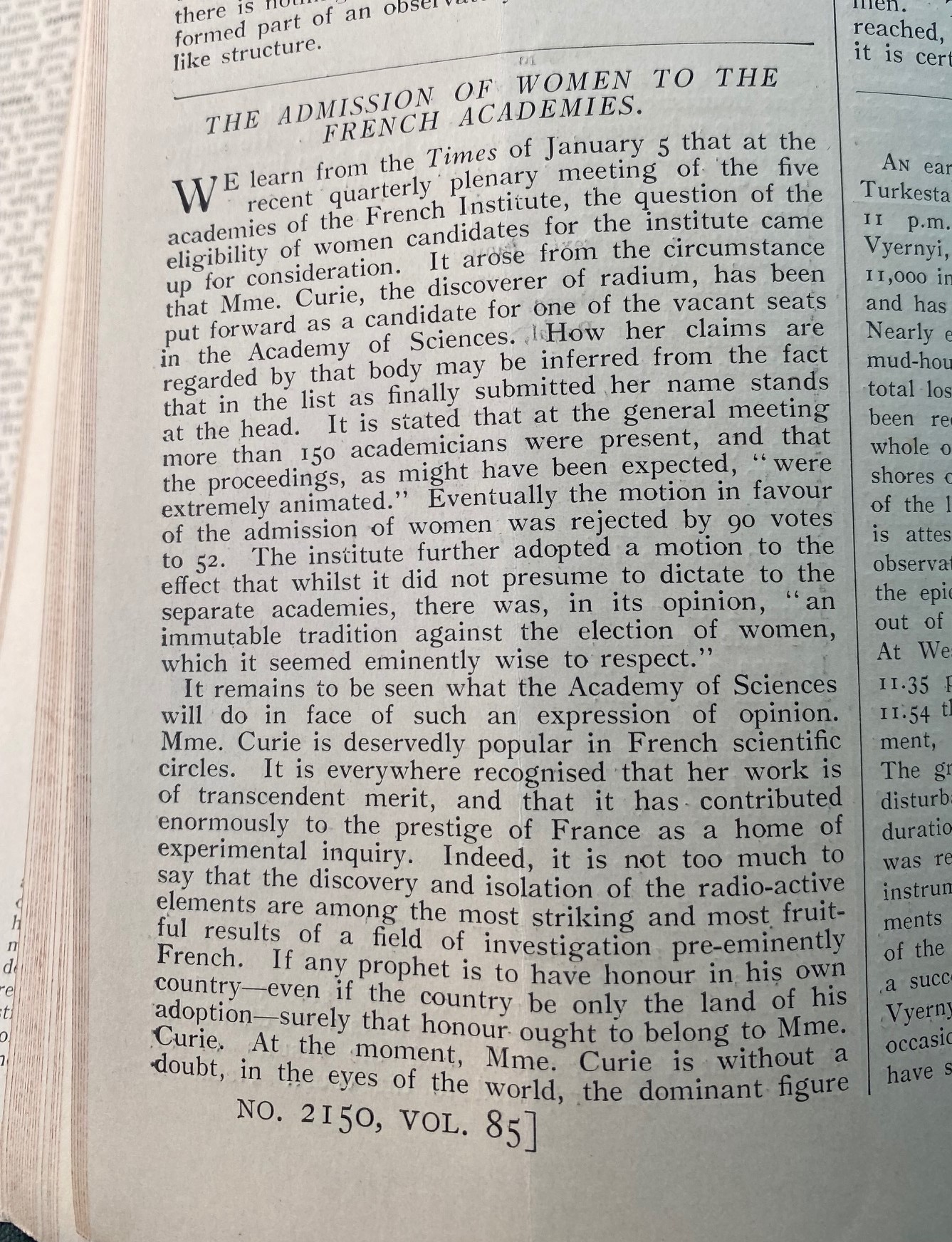
    IMG_7448This is a short note on an interesting series of reports in the venerable journal Nature (1911) regarding the status of women in the sciences.  These are three short articles (about 1750 words total) on the recent elections to a seat at the French Academy of Sciences in which Mme. Curie–one of two candidates–was not elected, her candidacy lost by vote to Edouard Branly. (Branly is an important figure in the history of wireless communications and inventor of the Branly coherer, but Curie was, well, far advanced of that.) The editorial staff of Nature took exception, reporting on the issue and the vote’s unfortunate outcome. Being fairly familiar and having worked in Nature (for the 1869-1950 period) I was a little surprised by the summation of this short note in the 26 January issue. It is a strong message, at least so far as scientific and other intellectual endeavors are concerned. (Women will not get the full vote in G.B. Until 1928, achieving partial victory in 1918, though the vote was limited then to women 30+ with adequate property.) Still, I take this as a significant statement from Nature, even if it is limited to a short article in the “Notes” section of the weekly. I cannot recall other early pro-equality stances like this outside of a few articles here and there in support of women being able to attend classes at major universities, though not being able to receive academic credit for them. All caveats included, I find the Nature article to be a remarkable statement for the time. Perhaps someone out there with experience in this field will be able say whether these statements are actually as early as I think they are.  

    Here’s the conclusion of the 26 January article:

    “As scientific work must ultimately be judged by its merit,

    and not by the nationality or sex of its author, we believe
    that the opposition to the election of women into scientific
    societies will soon be seen to be unjust and detrimental
    to the progress of natural knowledge. By no pedantic
    reasoning can the rejection of a candidate for member-
    ship of a scientific society be justified if the work done
    places the candidate in the leading position among other
    competitors. Science knows no nationality, and should
    recognise no distinction of sex, colour, or creed among
    those who are contributing to its advancement. Believing
    that this is the conclusion to which consideration of the
    question must inevitably lead, we have confidence that the
    doors of all scientific societies will eventually be open to
    Women on equal terms with men.”

    By the way, Curie was never elected to the French Academy of Science, though she did receive membership to the Academie Nationale de Medicine…in 1922. She had already received the Nobel Prize in physics in 1903, and would be awarded the prize again in chemistry a few months after she lost this 1911 vote to the Academy. (Perhaps the “creed” part of the “sex. colour, or creed” pronouncement above referenced certain elements circulating the story that Curie was Jewish?)

    IMG_7450

    Notes:

    Three issues of  Nature, London, Macmillan & Co., 1910, volume 85.  Including: “The Admission of Women to the French Academies”, pg 342 (full column, about 800 words), 12 January, in the issue #2150, pp 329-362. WITH: “The Admission of Women to the Paris Academy of Sciences”, in 19 January, pp 372-373 pp 363-396, issue 2151. AND WITH: [Women’s Rights], a 400-word contribution to the “Notes” section of 26 January issue no. 2152 pg 412-413 in the issue of pp 397-430. It is in the third contribution, the “Notes” section, that contains the strongest statement by the editor of Nature on the equality (at least in the sciences and intellectual pursuit) of sex, race, and religion. 

    ·Posted by :

    ·in:

    —
  • The Costs of Television Sets, 1946

    JF Ptak Science Books   Quick Post  Overall Post 5144

    • Q: “What kinds of programs will there be on television?
    • A:  “All kinds” (“The commercials will be unlike radio.”)

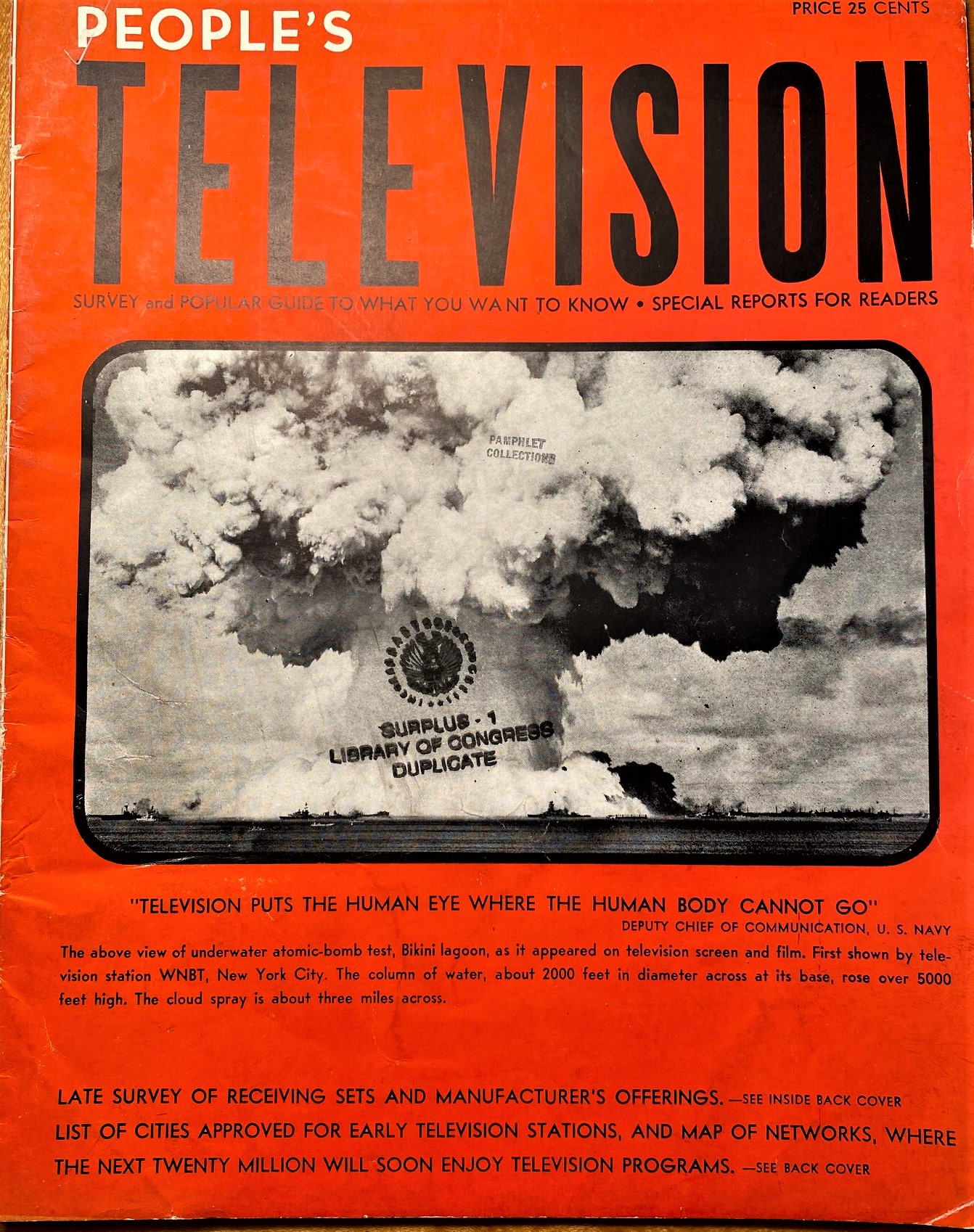
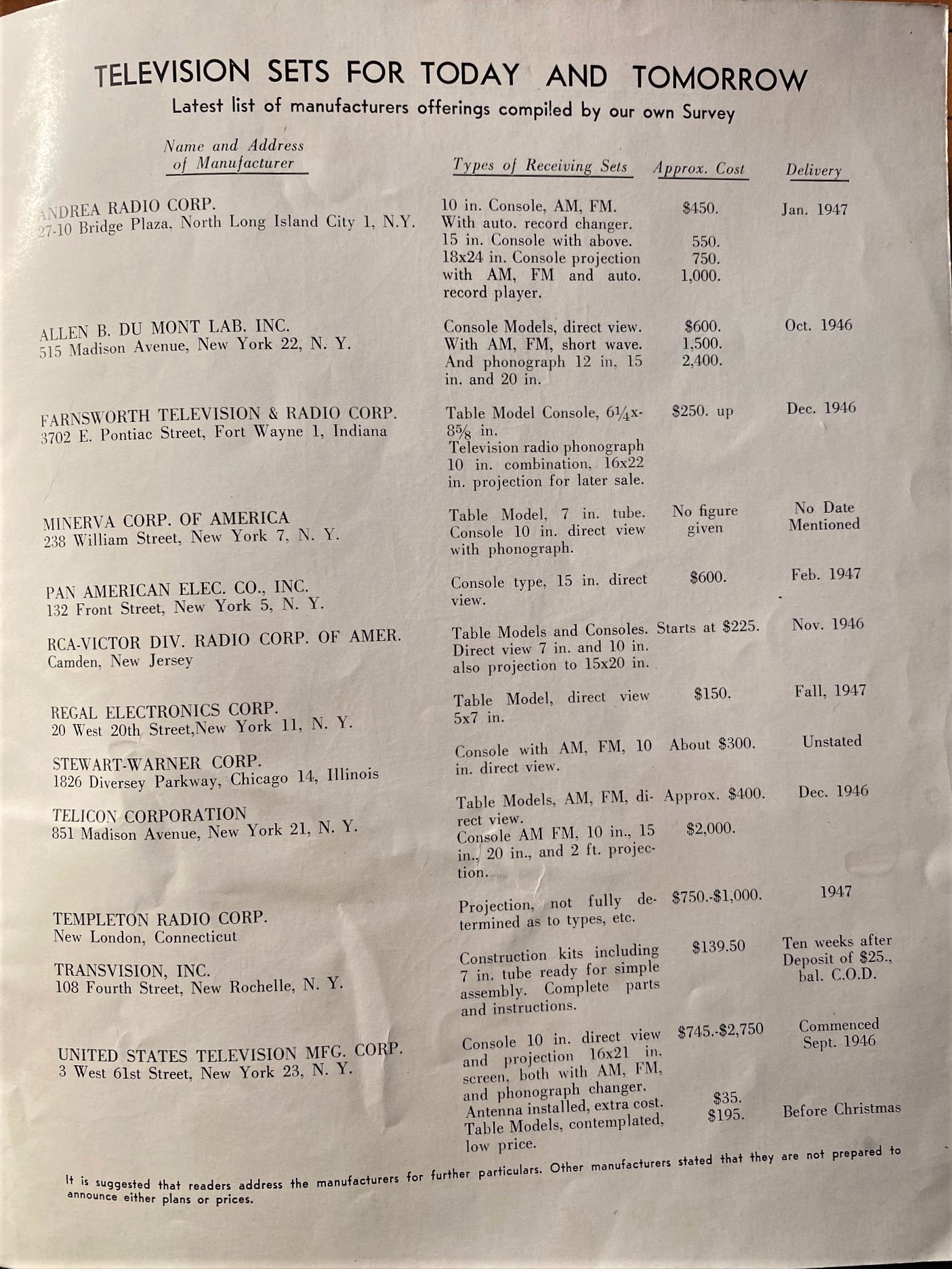
    IMG_7485I was initially attracted to this oversized pamphlet for its A-Bomb cover–using this sort of imagery was a thing in advertising in the Cold War years…pervasive, even. It was not uncommon to see this sort of image used to sell bubble gum, kids’ toys, motel rooms, laundry cleaners, and just about everything else (plus, of course, firecrackers).  This pamphlet though was a bit different from the others, as I expected that given its contents it would’ve been published around 1950. Wrong!  This work hit the streets in 1946, about a year after Hiroshima and Nagasaki, and very early on in the history of public television. Television (and facsimile transmission) exited around the edges of public awareness for a few decades, but television as a relatively common form of amusement with not-terrible accessibility was very new in 1946.  So I wanted to share a few of the useful bits that I found in this short (24pp) and oversized pamphlet, the primary one being a survey of costs of television sets listed by manufacturer.


    IMG_7483As you can see, the tv was not a purchase to be taken lightly by the average US citizen in 1946.  There’s only a couple of sets listed here under $200,  with the average cost (not including the relatively substantial fee for the aerial and aerial placement) coming in at more than 10% of the average yearly income. (The average income in 1946 was about $2600, or about $39k adjusted for inflation using the Bureau of Labor Statistics inflation calculator as a base.) The average salary in 2020 was about $56,000, or about $7k in 1946 dollars. That isn’t as rosy as it might seem, given that the average person could expect to spend about double their income on a house–a standard that does not carry forward to today. Toss in healthcare and education, and that 7k comes rambling down. Hm. Another way of looking at this relative costliness of a tv set in 1946 is that it was about 10% of the cost of the average new car–given that the new car cost today in 2021 has jumped over the $50,000 mark (?!), 10% of that would buy a boatload of television sets.  

    And there you have it–a little peep into the history of the future of television. (I should mention one interesting paragraph in which David Sarnoff reveals the remote-controlled bomber, outfitted with “television eyes” that would only be used in not-peacetime.)

  • The Beauty of a Hexadecimal Tonal System (1863)

    JF Ptak Science Books  Overall Post 5145

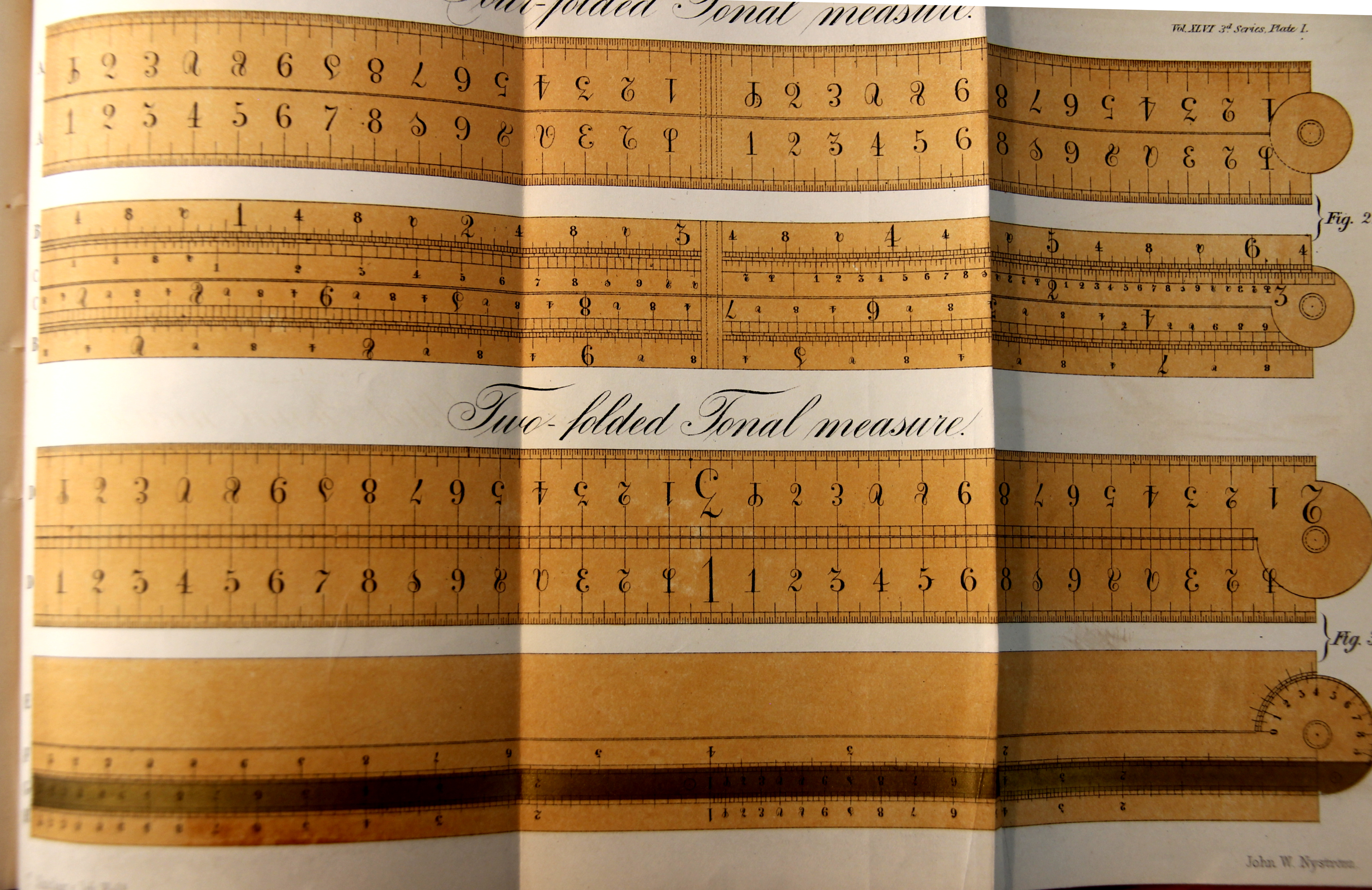
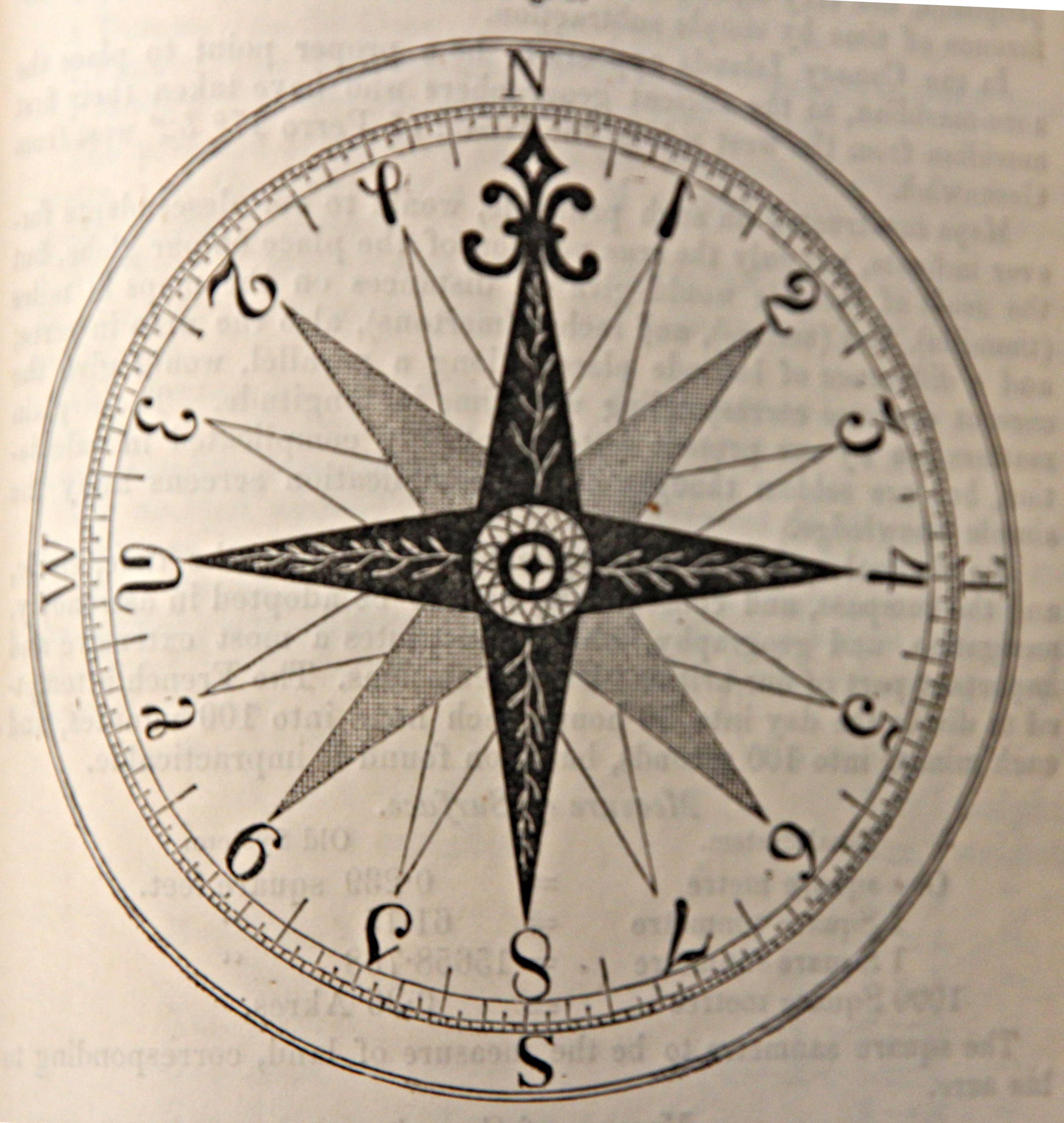
    John Nystrom’s  “A New System of Arithmetic and Metrology, called the Tonal System”1 (1863) is a very early entry in the history of the application of the hexadecimal system.  Nystrom’s plan included converting to a hex arithmetical system, and then expanded the idea to the calendar, musical notation, geography, time—an overall shift in metrology. His idea did not extend to calculators, and his name does not seem to be referenced by any of the modern compsci folks (with the major exception of Donald Knuth). Probably base-16 was not employed in programming until, I guess, around the early 1960’s. All that said, this is still a remarkable paper. ALSO: the paper is illustrated with a beautiful color-highlighted folding plate of divider-like instruments that translated hex to denary.

    Nystrom 1863 _3_

  • Words, Deeds, and Henry Ford (1927)

    JF Ptak Science Books   Quick Post  Overall Post 5146

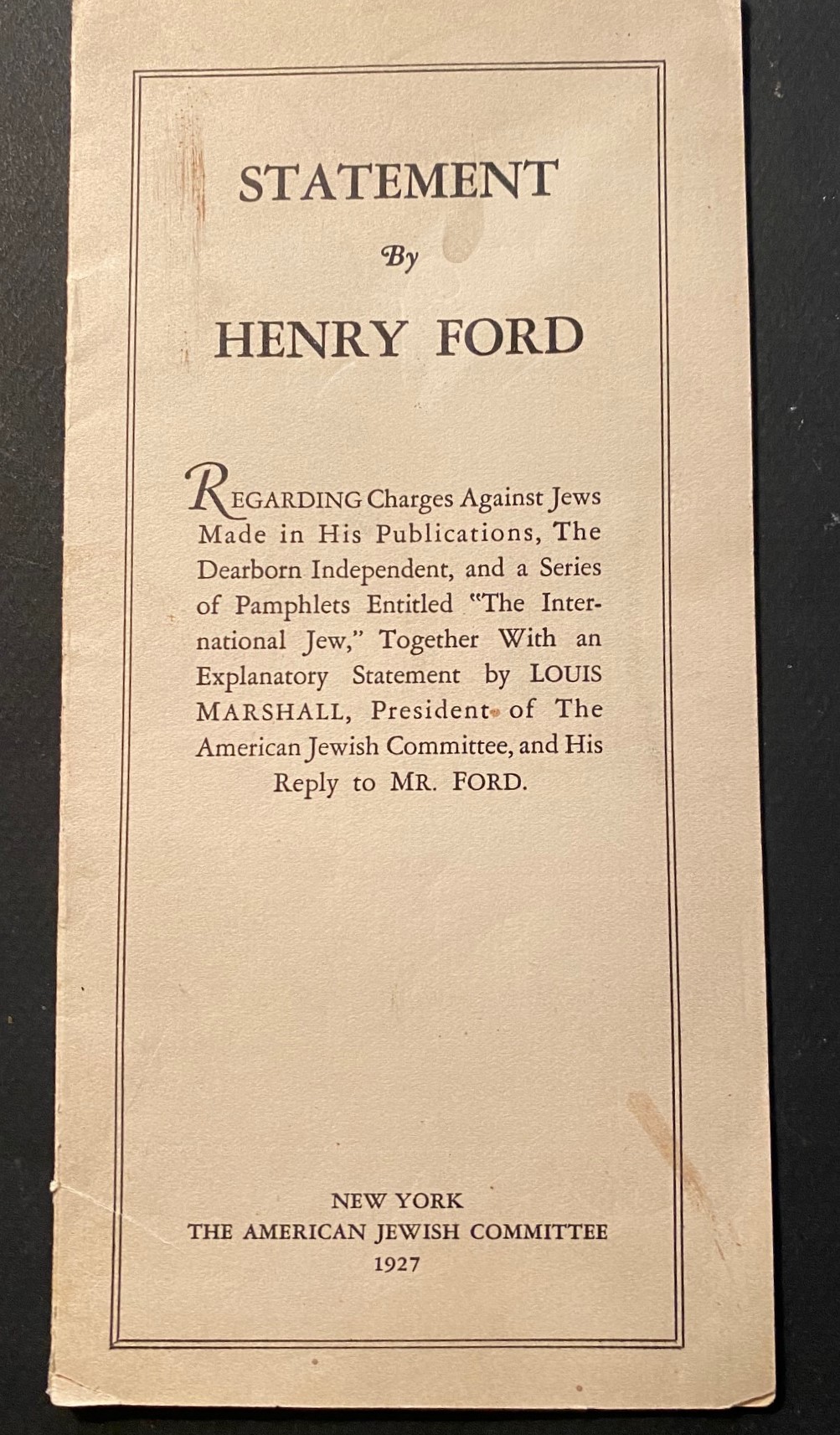
    IMG_5467 So, the Dearborn Independent was owned and published by Ford beginning in 1920 and rose to a circulation of 900,000 issues a day, the second-leading circulation in the country. It was partially put over this hallmark via incentive quotas in every Ford dealership. As no doubt is familiar to everyone in our modern world, the paper–which also published “The International Jew”– was a happy host to many anti-Semitic articles in its pages over the years. . It was bad stuff. Anyway, boycotts against the Ford company were lodged and a lawsuit emerged in 1927 concerning the paper’s ridiculous anti-Semitic stance. Ford  responded to the accusations in June 1927 saying that he had no idea that the paper had published this sort of garbage since 1920, and that he was shocked by it, and repelled. He recanted, though it seems from historical sources that the published letter of apology wasn’t written or signed by Ford. The response on the other side by Louis Marshall, president of the American Jewish Congress, was reserved, and hoped that the paper no longer published the anti-Semitic filth. Ford closed the paper by the end of 1927. In 1938, Ford accepted the Nazi award of the Grand Cross of the German Eagle, the highest medal offered by the Nazis to a foreign. Hitler had been in power for five years by this point, and his war against the Jews was years old.
    So: words and deeds…

    Notes:

    (FORD, Henry) “Statement by Henry Ford Regarding Charges Against Jews Made in his Publications, The Dearborn Independent, and a Series of Pamphlets Entitled “The International Jew”, together with an Explanatory Statement by Louis Marshall, President of the American Jewish Committee and his Reply to Mr. Ford. Published by the American Jewish Committee, 1927. WorldCat locates ONE print copy, University of Michigan. (There are 5 other copies located, all overseas, Australia, NZ,2 UK, Canada) though they all seem to be only online copies.)

    ·Posted by :

    ·in:

  • Patriotic Snow Parade, 1917/1918

    JF Ptak Science Books    Overall Post 5147

    WWI--great imagessnow parade059


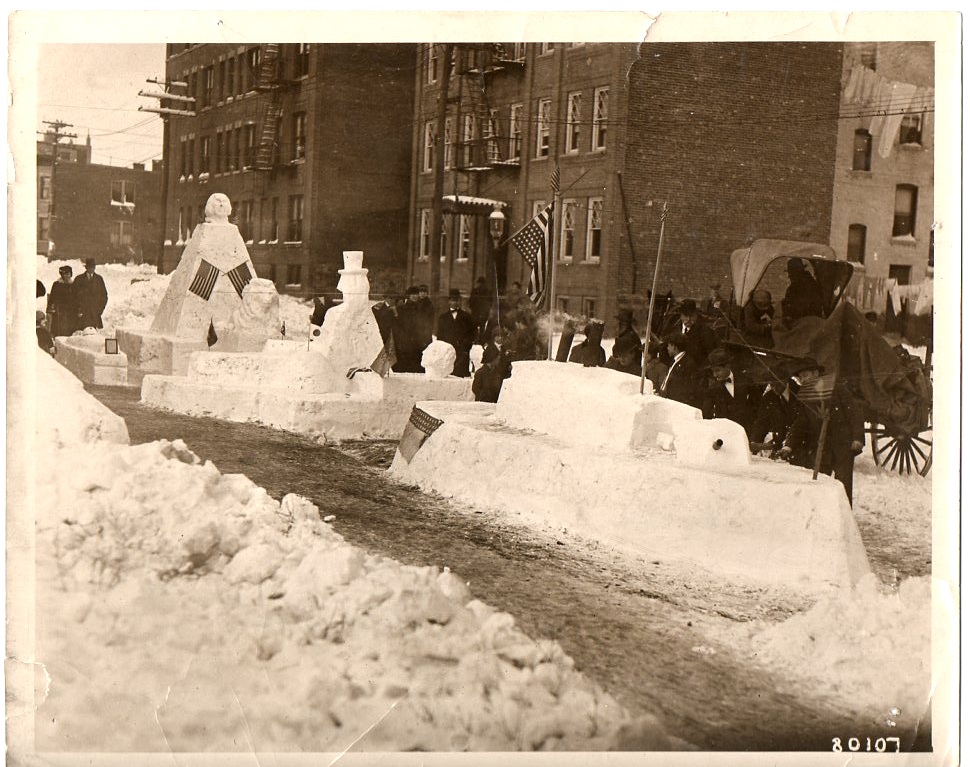
    This news photo service image–stamped “Hearst-Pathe News Agency” on the back–is from the winter of 1917/1918 and shows a patriotic snow parade somewhere in the United States.  The snow looks prodigious, judging from the piles in the foreground and also the accumulated snow on the windowsills, and I imagine that all of the snow floats were sculpted mainly out of exiting snow in the street.  It is a delightful scene, to me, and hosts a variety of smaller, lovely images in vignette. For example:

    WWI--great imagessnow parade060

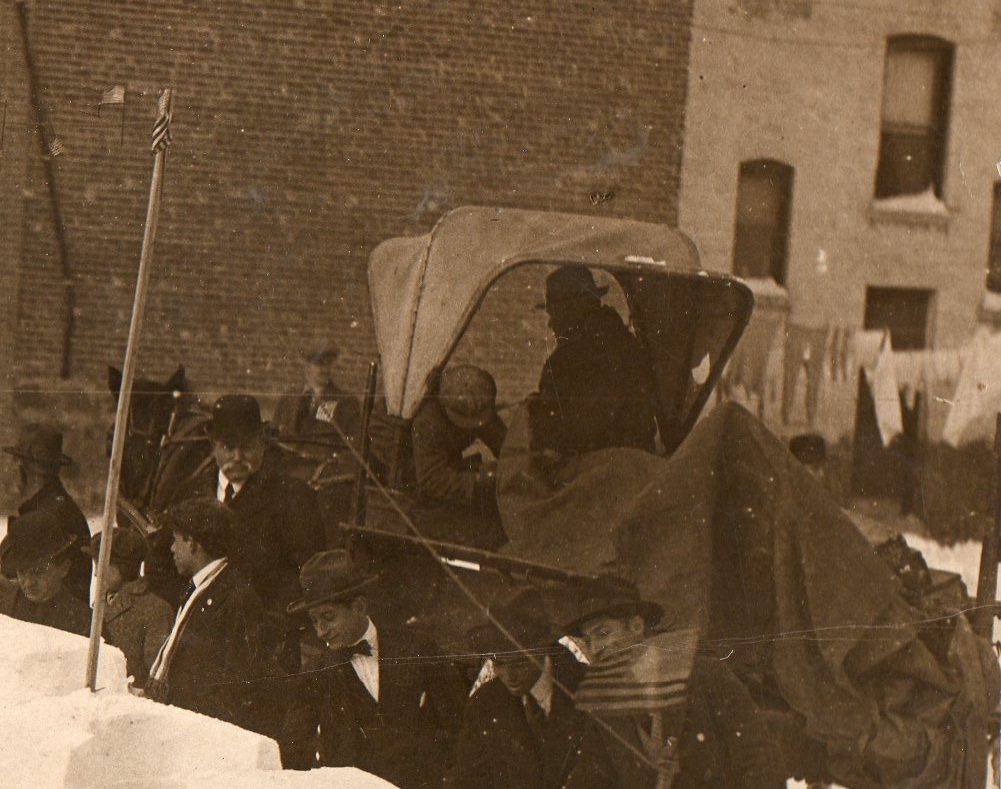
    The man in shadow and sleeping/relaxed figure (boy) in the buggy complement the white-mustachioed bowler-wearing man to the left; the men looking on in the foreground are interesting, too–plus there’s that laundry in the background.  Given that the laundry is out (and wasn’t just left out during the storm) and that no one seems to be particularly bundled up against cold, I’m going to guess that there was a break in the weather that pushed the temperature higher than normal, with almost everyone taking advantage of the warm snap, as people do everywhere, all the time. (Or maybe not this at all, and that they’re northern folks, and are used to the cold.) 

    I also like the tiny American flag on the tall pole at left.

    ·Posted by :

    ·in:

    —
  • Uncommon Photo of the Surrender of the German Fleet, 1918

    JF Ptak Science Books   Overall Post 5148

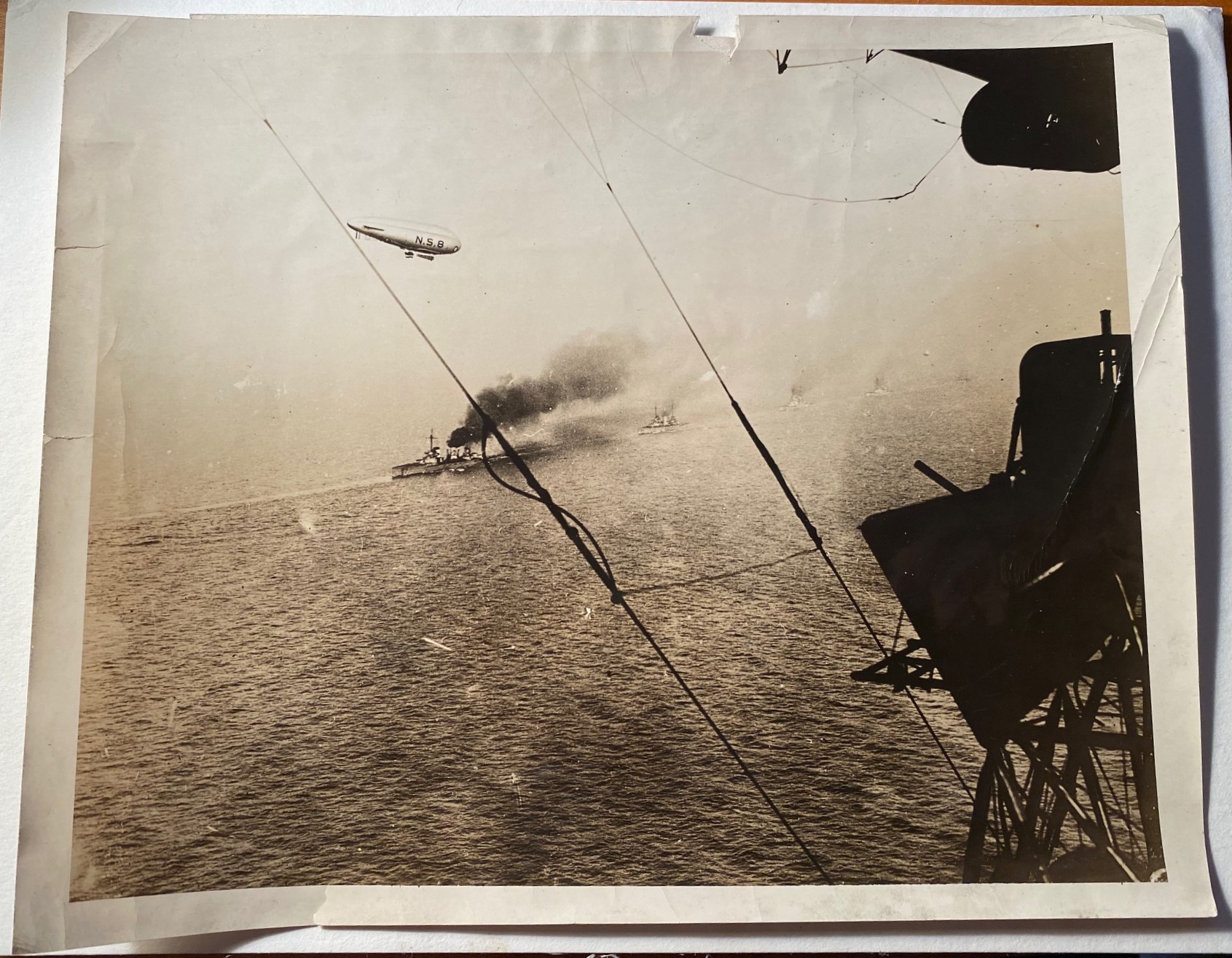
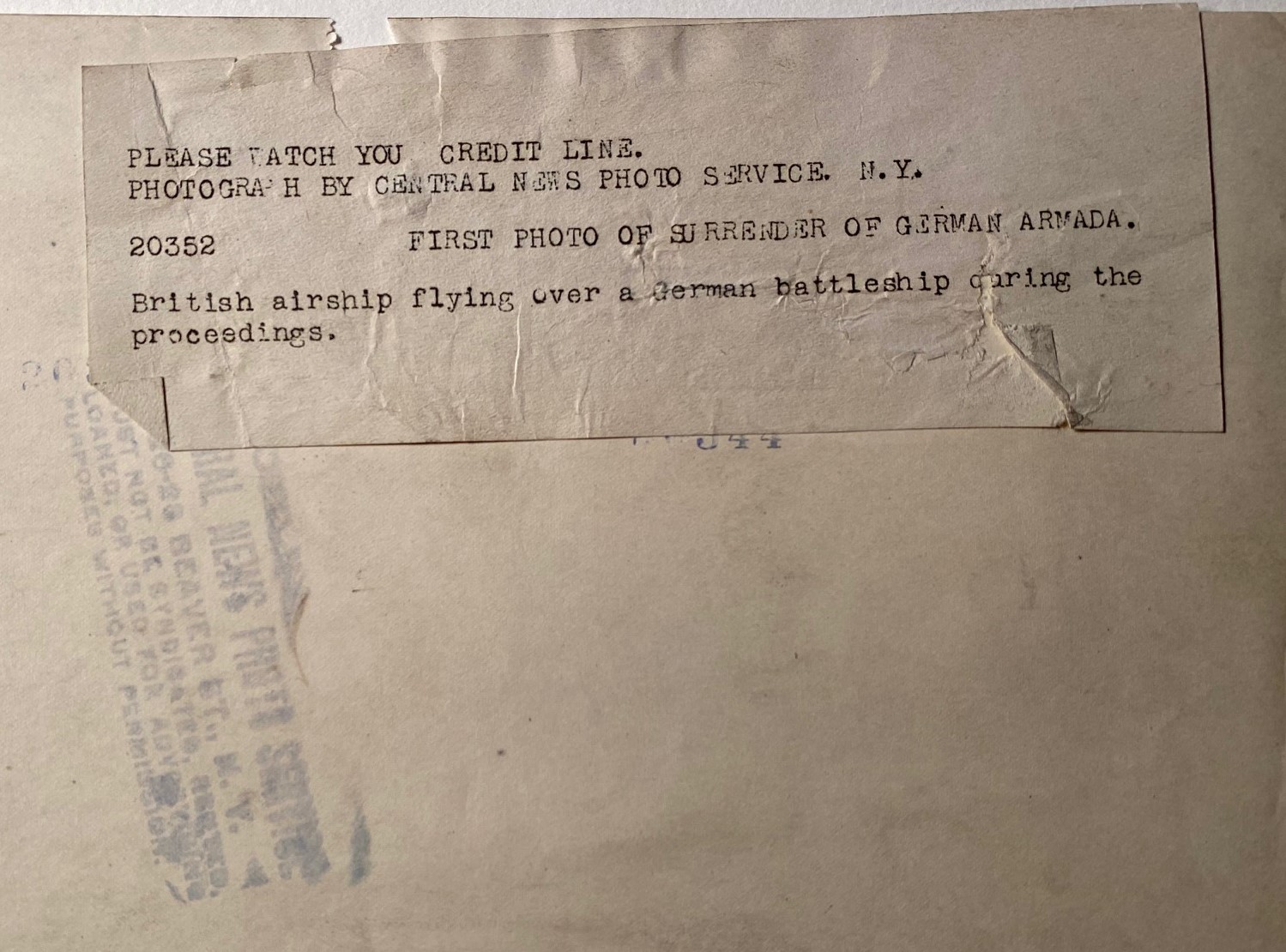
    This is a photograph of the surrender of the German high seas fleet at the Firth of Forth (Scotland), 21 November 1918. The image was undoubtedly made from an airship, and centers on the German battleship “Seyditz” with the British non-rigid airship “N.S. 8” (that’s “North Sea” #8) observing overhead. On that day Germany surrendered 4 battleships, 3 battleship cruisers, 3 light cruisers, and 50+ destroyers. I can find only one reproduction of this image online, and that in Spencer Tucker’s WWI: the Definitive Encyclopedia..., p. 961 (identifying that German battleship as the “Seyditz”), so I thought I’d share this fuller version. 

    IMG_7543

    IMG_7544The photo (measuring 8″x10″) has a pasted bit of paper on the back identifying the scene: “First Photo of Surrender of German Armada” and “British airship flying over a German battleship during the proceedings” with the maker/distributor identified as “Photograph by Central News Photo Service, N.Y.”  [ A note on WWI imagery from photo news services: WWI photographs were made by pools of photographers working for several different photographic news agencies. The content of the images were generally secured and approved by the Committee for Public Information (CPI), which came into existence by executive order under President Woodrow Wilson on April 13, 1917, and which was charged with the task of wining the hearts and minds of the people of the U.S., to gain public support for the war and for American participation. The way that many newspapers obtained the war images that they published in their papers was via a semi-centralized pool of war images.  The newspaper would request, say, a photo of German prisoners, and would contact one of these photographic agencies—for example, say, the Central News Photo Service of 26-28 Beaver Street, NYC—and purchase the rights for republication, and then print it in the newspaper along with the story.  In almost every case the photo would be accompanied by a caption mimeographed onto an attached piece of cheap paper, or have the information stamped on the reverse.] 

    ·Posted by :

    ·in:

Recent Posts

Archives

Categories