A Daily History of Holes, Dots, Lines, Science, History, Math, Physics, Art, the Unintentional Absurd, Architecture, Maps, Data Visualization, Blank and Missing Things, and so on. |1.6 million words, 7500 images, 4.9 million hits| Press & appearances in The Times, Le Figaro, Mensa, The Economist, The Guardian, Discovery News, Slate, Le Monde, Sci American Blogs, Le Pont, and many other places… 5000+ total posts since 2008.

  • A Beautiful Naval Cross-Section of Superb Detail, 1851

    JF Ptak Science Books   Quick Post

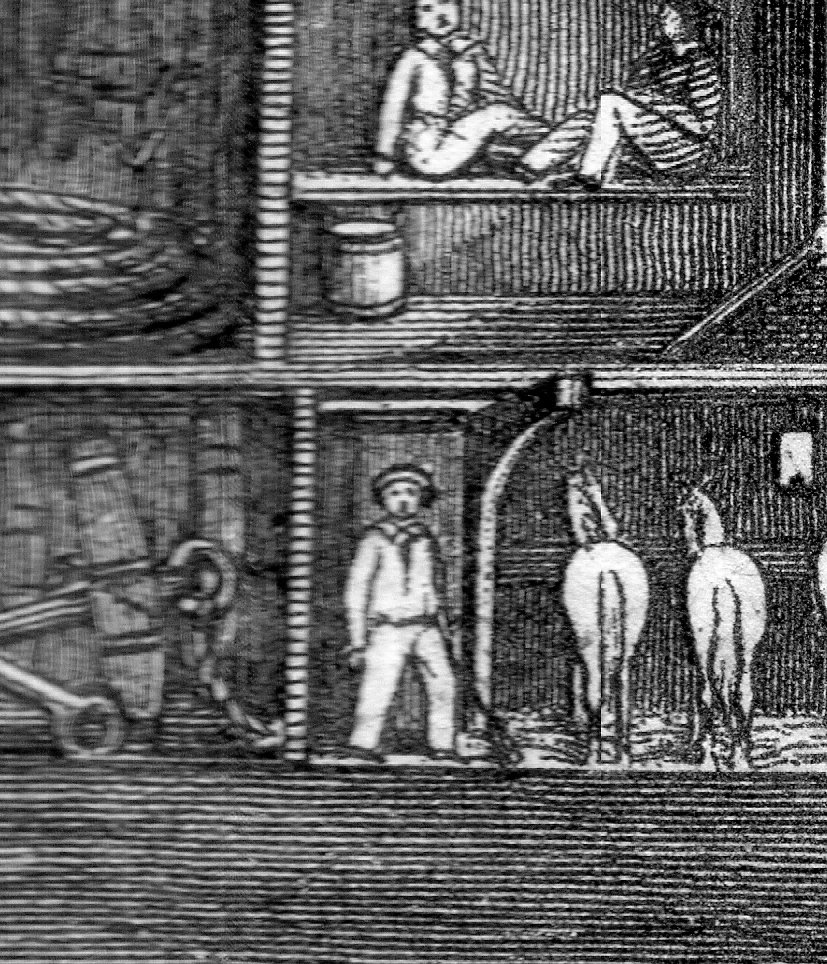
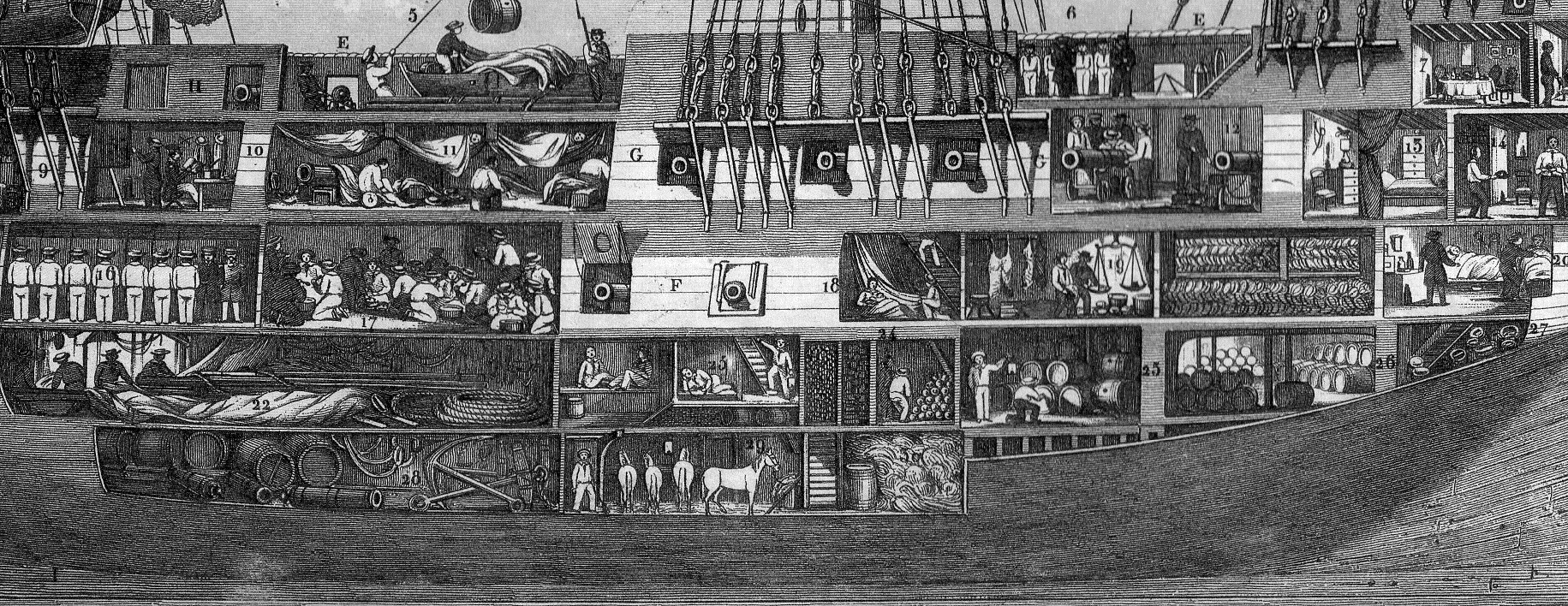
    Ship cross section 1810906

    J.G. Heck wrote and compiled a fascinating, complex, and magisterial work called The Iconographic Encyclopedia of Science, Literature and Art, which was published in America for the first time in 1851 following Spencer Baird’s translation from its original German (Bilder atlas zum conversations lexicon…)

    The key to his work is the amount of data displayed on each of the 500 engraved plates illustrating this work and the way in which it is arranged.  The design and layout of the 30,000 items on these 500 plates was a work of genius, and for my money it is easily the best-presented complex means of the display of data and objects that was published in the 19th century.   

    In this sample (on one sheet of paper) we see three views of a naval war ship (of at least 24 guns) showing above-deck fore and aft, and then a fantastic cutaway/cross-section showing the four decks below deck.  To my experience the technical cut-away is not a common thing to encounter in the 19th century 9or before), and this one happens to be tight, very compact, very detailed, and for all of that quite small.  The entire print measures 12×9″, with the cross section being only about 2.5″ tall.  

    I’ve concentrated on one figure at the center-bottom of the engraving, a man four decks down who seems to be shoveling out the horse stalls.  In the print he’s about 1/4″ tall, but as you can see scanned in high resolution it turns out that the artist/engraver gave some fair amount of effort to this tiny figure, which is an impressive act of craftsmanship. He even has a collar:

    Ship cross section 1810907


  • Underground Airports, 1935-1941

    JF Ptak Science Books  Quick Post

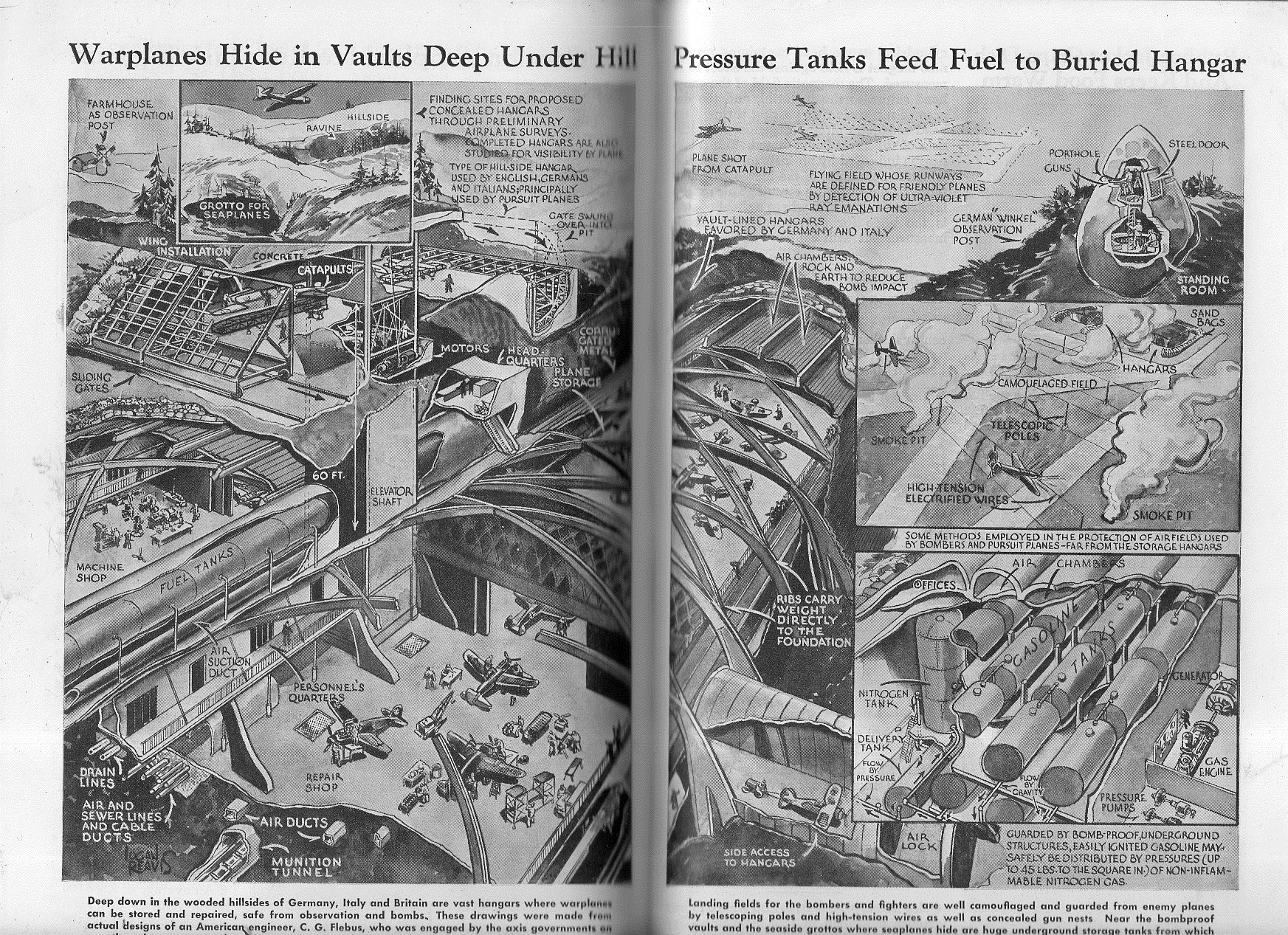
    I’ve seen a number of plans from the 1925-1935 period calling for skyscraper-topped airports, and airports built over a largely cover-ed themes, and over a covered-up Central Park, and floating in NYC harbor, and so on. I have not seen too many future visions of underground airports. This plan appears in Popular Mechanics for June 1941 and advocates a very tightly controlled underground environment for airports.  The war in Europe was nearly two years old at this point, and the bombing war from the air was very advanced. There is little doubt that all sorts of plans were being considered to protect air force complexes from bombing, though something of this scale, dealing with so few number of plans, could hardly have made it further than this public outing.) 

    Cross section under groun air908

    [Image is expandable]

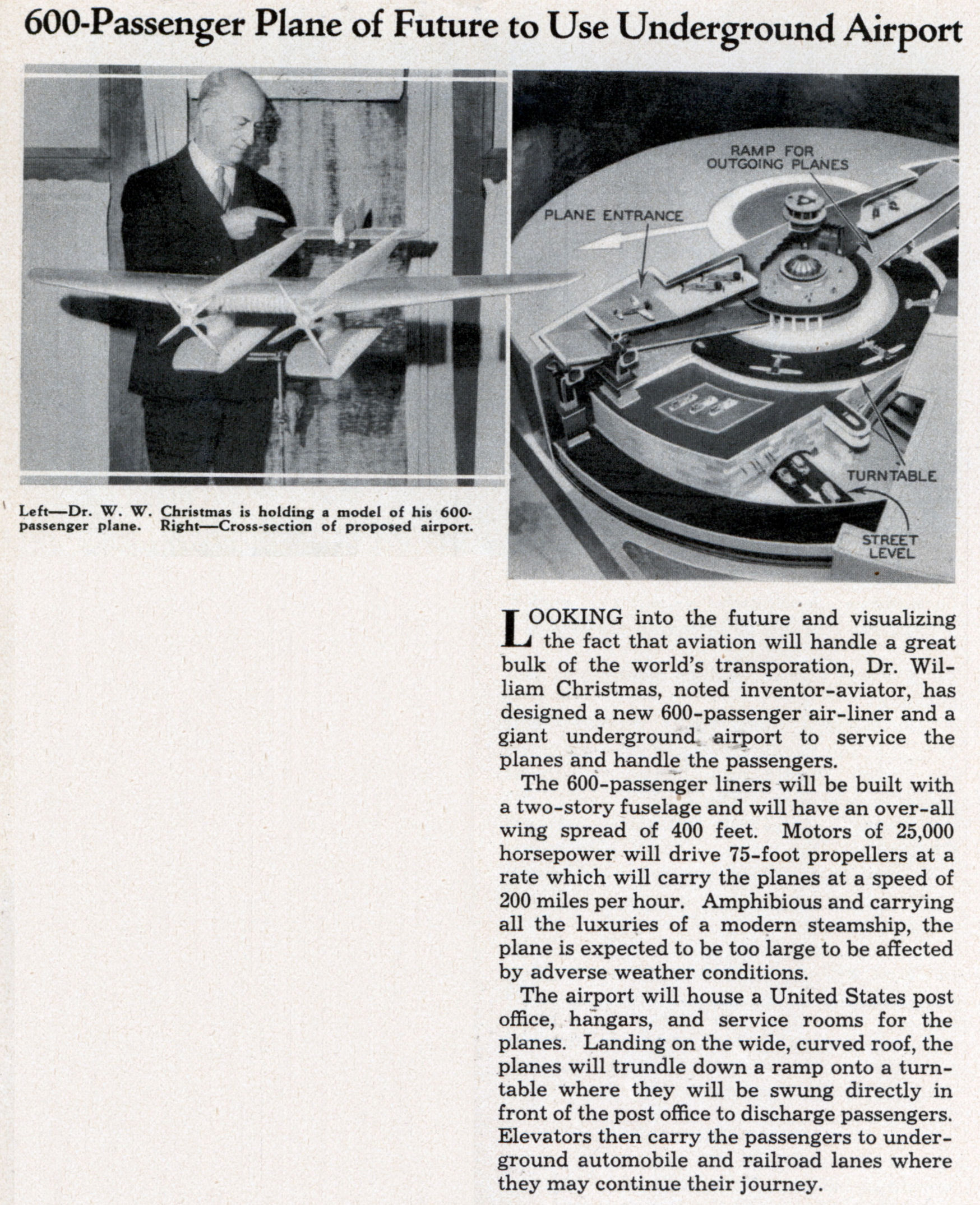
    An earlier and peace-time example of underground tech is found at the great Modern Mechanix blog, and features an April 1935 article in the journal of the same name an effort to remove the airport underground.  Dr. William Christmas is the chief major domo in the piece and he is depicted with his visions of flight of the future,  holding a model of his 400′ 25,000hp plane with 75′ propellers set to cruise at 200 mph.  The monster could not be accommodated by the plans for an underground airport at right, which frankly looks like a hard drive, and which seems like a positively enormous amount of engineering for a spinning platter underground airport with room for eight planes.  

    Underground airport

    [Source:  Modern Mechanix, http://blog.modernmechanix.com/mags/ModernMechanix/4-1935/under_air.jpg]

  • A Prison for the Dead–a Trial for the Departed, 897

    JF Ptak Science Books   Post 2438

    Biographies and histories and other sorts of lit can essentially place a dead person on trial, to a degree, but generally not so far in that there are legal ramifications. As much as can be written and presented against a person their body will not be dug up and place in prison, though this does have a certain Borges/Chinese Hell Scroll quality to it. If it was the case that people could be dug up and brought to the legal bar, I guess that everyone would opt out for cremation, unless that was made illegal. It seems half-a-miracle that with the threat of eternal damnation in the minds of billions of people, that there is no threat to the consequences of ill-spent life in death.

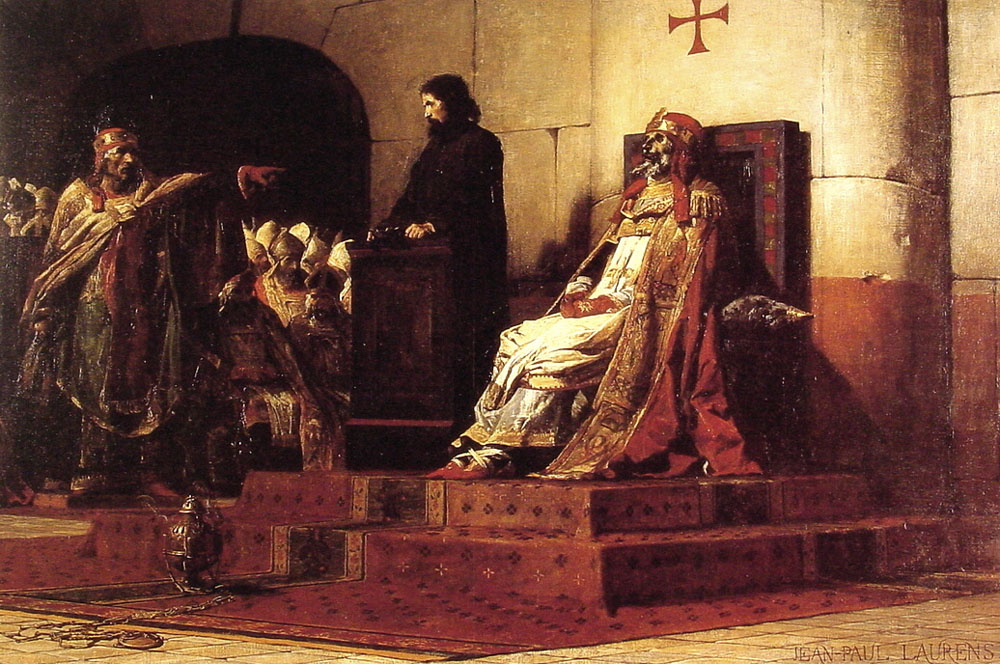
    Cadaver synodDepiction of the synod by Jean-Paul Laurens, 1870. Source: Wikicommons.

    There is a very famous case of this, however, and at a very high level.

    The weird and fanatical–and fatal–issue of the Cadaver Synod of 897 is the case in point. A probably-unbalanced Pope Stephen VI decided upon retribution of his predecessor Pope Formosus, and for various reasons (examined in many place, but a decent article on the matter is found in Wiki, here) had his positively-dead corpse exhumed and brought in for trial. The poor dead pontiff was dressed up in pope-finery and placed on a throne, and was heaped with insult and perfidy at the end of which came a guilty verdict. His appointments as pope were annulled, plus other stuff, and he was taken to the Tiber and tossed in, though it would have been more interesting for the pope to have been imprisoned. 

    It was an action that made Pope Stephen very seriously unpopular, which led relatively quickly to his being deposed, and then imprisoned, and then to being strangled to death in prison, all of which happened in less than a year’s time.

    A new synod was called the debunked and refuted the Cadaver Synod, and the finding and records of which were overturned and burned. Formosus’ body was evidently recovered (and recovered enough to have been reported doing miraculous/miracle-making things) and returned to its original place of burial.

    Also the possibility of bringing dead people to court was discarded.

    Given the Human Condition it might be possible that there would be more dead people in prison than in the ground–depending on the possible payoff of dead litigation.  Given the new fascination with zombies, I guess that dead prisons are possible, at least in tv land. 

  • “Picnic” and “Dusty”–Assessment Programs for Bio/Chem Weapons Damage and Radioactive Casualties, 1964

    JF Ptak Science Books   Post 2439

    •  Describing computer programs “Picnic” for biological/chem weapons damage,  and “Dusty” , for radioactive casualties

    While preparing for all eventualities of all-out toe-to-to conflict with the Ruskies it is of course advisable to have ways to figure out what might be left after an “exchange” and how it might be used–but really, the important thing is to be able to have an inventory of the post-apocalypse world so that plans could be made for the next part of existence.

    And that is what the following workbook outlined in part. 

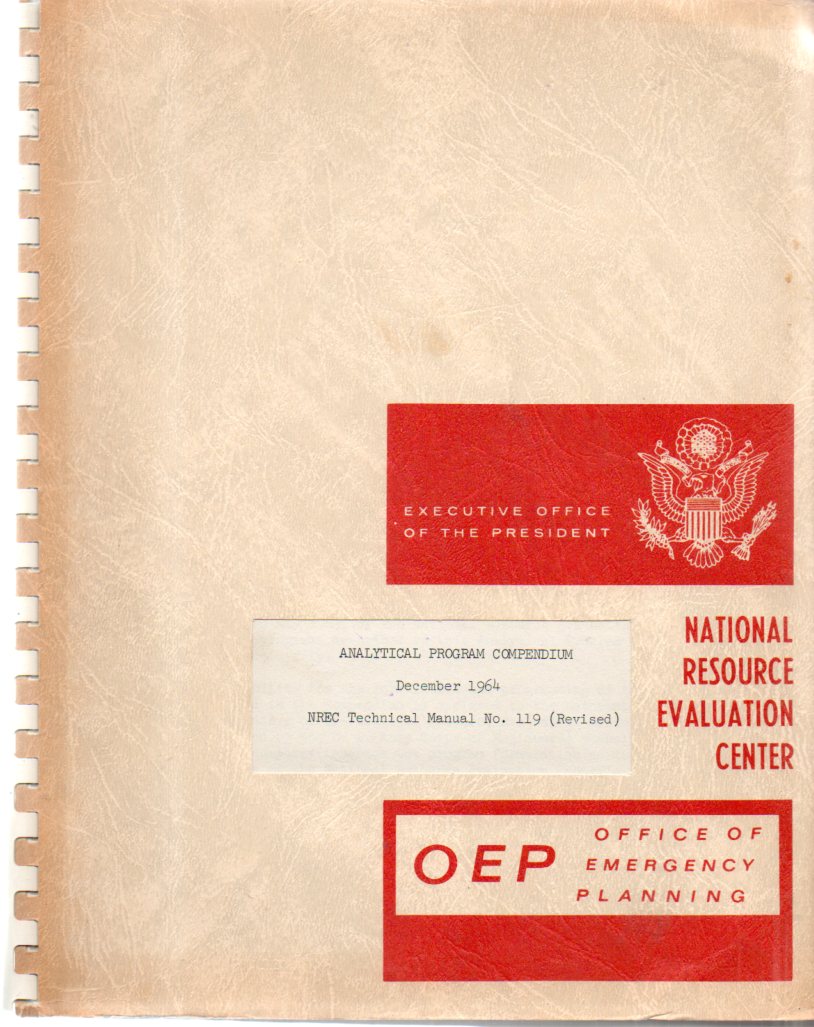
    Mathematics and Computation Laboratory, National Resource Evaluation Center, Analytical Program Compendium NREC Technical Manual No. 119 (Revised)  (December 1964.  11×8″. 92 pp. GVC-bound, with stiff wrappers of the Executive Office of the President NREC/Office of Emergency Planning) holds some of overall answers to the survival issue.

    The preface is signed by Joseph D. Coker, (Chief, National resource Evaluation Center) who writes: “The Analytical Program Compendium gives a brief description of the National Resource Evaluation Center’s current general purpose analytical programs and replaces earlier editions of the NREC Glossary of Damage Assessment Programs. It is intended as a guide for users and potential users of these programs to indicate the various programs that are presently available and those that are being produced. Separate Technical Reports or Technical Manuals are available for the standard operating programs and for a number of those which are in preparation. Reference to these manuals and reports can be obtained in the Bibliography of Publications (Technical Manual No. 121) published by the NREC. The Compendium contains descriptions of the computer programs of a substantive nature.”  

    Nrec 664

    [The NREC and the Office of Civil Defense used the UNIVAC scientific programs USE assembly language and 3600  Fortran.]

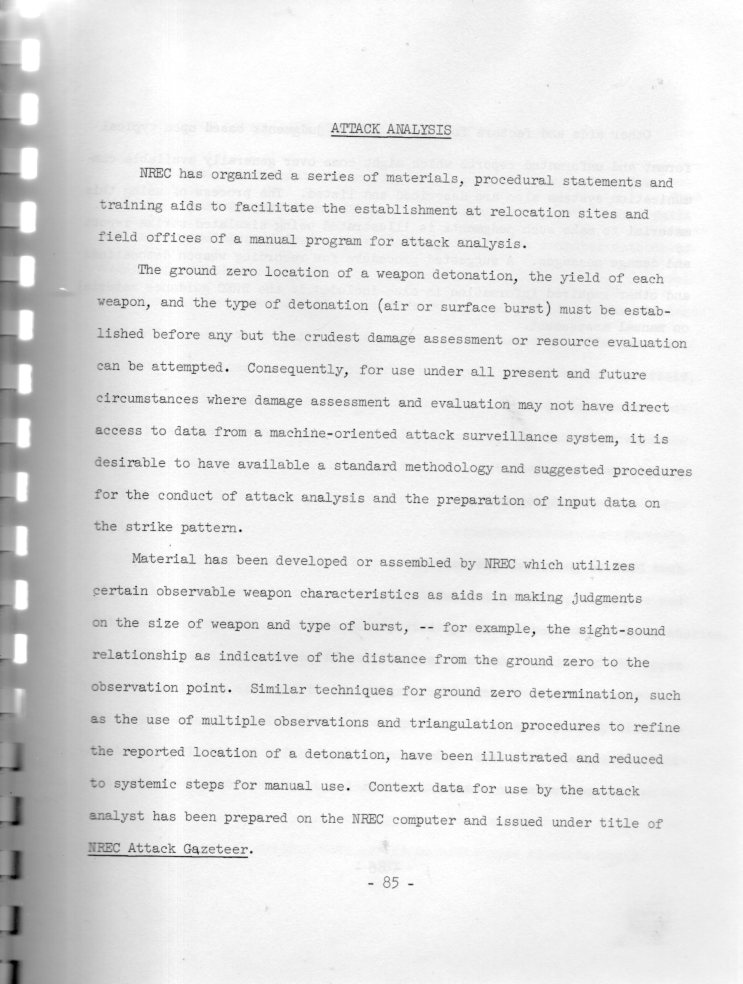
    The list of the contents of the 92-page work is pretty interesting, the book presented in eight sections (or “casualty classes programs”):  (I) Attack Analysis Programs; (II) Vulnerability Analysis Programs; (III) Damage Assessment Programs (Direct Effects, sections dedicated to nuclear shots Dusty III, Flame I, Jumbo III, Streak IV, Dart II, Dart III, Picnic, Ready I.(IV) Resource Evaluation Programs; (V) Economic Analysis Programs ; (VI) Resource Management Programs; (VII) Mapping and Display; (VIII) Manual Procedures for Damage Assessment and Resource Evaluation.

    Nrec 663


    Under section III are described the various other programs computing availability of surviving resources and damages to the rest, and to assess capability and loss. For example:  Weapons Edit III (working on an 1103 AS or 1105 computer) calculates missile availability; Dusty III (fallout intensity “…at weapon oriented points”; Flame I (“computes an estimate of the extent of the spread of uncontrolled fire”) and can compute fire maps; Jumbo III (a casualty assessment program); Attack Environment III (“determines the blast effect from the dominant weapon and combines the separate effects of fallout and from from all weapons that affect each resource point”); Facility Assessment (Namepoint) III ( for physical damage to facilities); Time-Phased Accessibility  (“listing of accessibility of resources in various conditions of damage after an attack”); Population III (summing up casualties in populations after attack; Manpower III (translating population losses into labor losses and how it would affect x,y, and z); Livestock III (keeping tabs on livestock “and livestock products”); Streak IV (‘high speed estimate of blast and fallout casualties, estimates of damage and denial of facilities…”); Picnic (!, estimating casualties from biological or chemical weapons), and a number of other programs. 

    There are some other interesting programs for end game times: Net Inventory (“(a) routine (that) is a balance sheet between supply (inventory and production) and demands (requirements)” and Amounts of Production (“a routine (showing) the production based in facility damage and labor casualties; and of course Survival II, which computes “the total requirements…for regions”.

    Of course it was necessary to figure all of this stuff out so that in the event of The Big One there is a certain control over what is where and what is left and what is needed and so on.  

    The last section helpfully describes programs of manual damage assessment (“developed by agency representatives for use when computer estimates are not available”).

    There is no mention made to where these computers are housed. 

  • A Quiet Cover of Loud Chaos (1951)

    JF Ptak Science Books   Quick Post

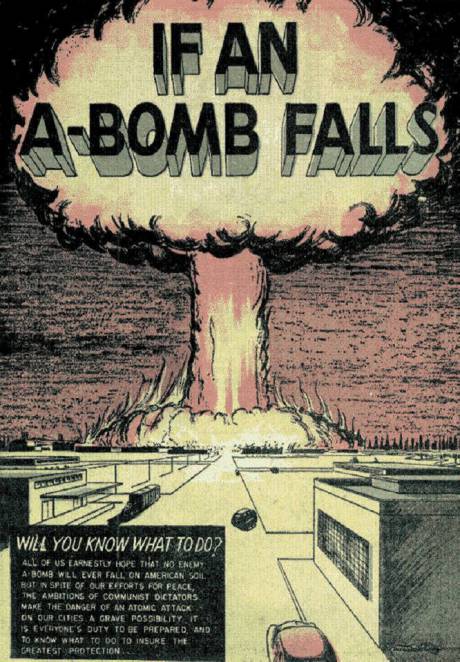
    I was reminded of this 1951 pamphlet yesterday, a softly-shocking piece of Red Scare propaganda that played on everyone’s fear and offered not much more than newspaper and a hole for protection from a nuclear attack.  But the thing I hadn’t noticed before was how quiet the very noisy cover is.  

    If-an-a-bomb-falls

    [Source: Atomic Scout, https://atomicscout.wordpress.com/tag/atomic-bomb/]

    The point of view here is from a suburb, or exurb, and there seems to be nothing going on–not only is there no activity, but there are also wide swaths of no buildings where there should be. For example the second car on the right is parked at an empty city block-blob, and the whole of the foreground seems to be intensely deserted.  It strikes me as odd, given that there is an enormous explosion going on less than a mile away.  There is definitely a scene of destruction at the base of the explosion, though we also see the slight outskirts of the city dotted with factory silhouettes, which makes me think that this part of the illustration was also selling a hope-to-survive-vibe.  

    Covers of pamphlets/comics are legion with more vicious examples of apoca-art–even those publications aimed at kids, like this one–so it wasn’t like the times were too gentle to portray real destruction and chaotic noise and viciousness, so I’m not sure what this artwork is really trying to achieve–except that it does manage, in  away, to convince a viewer that there may be some calm in the soup of horror.  

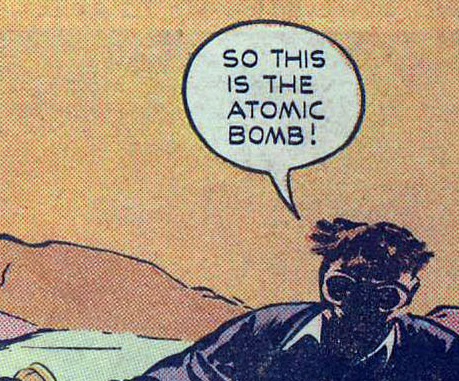
  • An Exercise in Understatement: So This is the Atomic Bomb (1946)

    JF Ptak Science Books  Post 2441

    Now we are all sons of bitches—Kenneth Bainbridge, Trinity Director.

    Atomic_ so this is the atom bomb detail 2

    • [Image source: the interesting Gray Flannel Suit site, here:  http://www.grayflannelsuit.net/blog/so-this-is-the-atomic-bomb-true-comics-march-1946]Atomic_ so this is the atom bomb

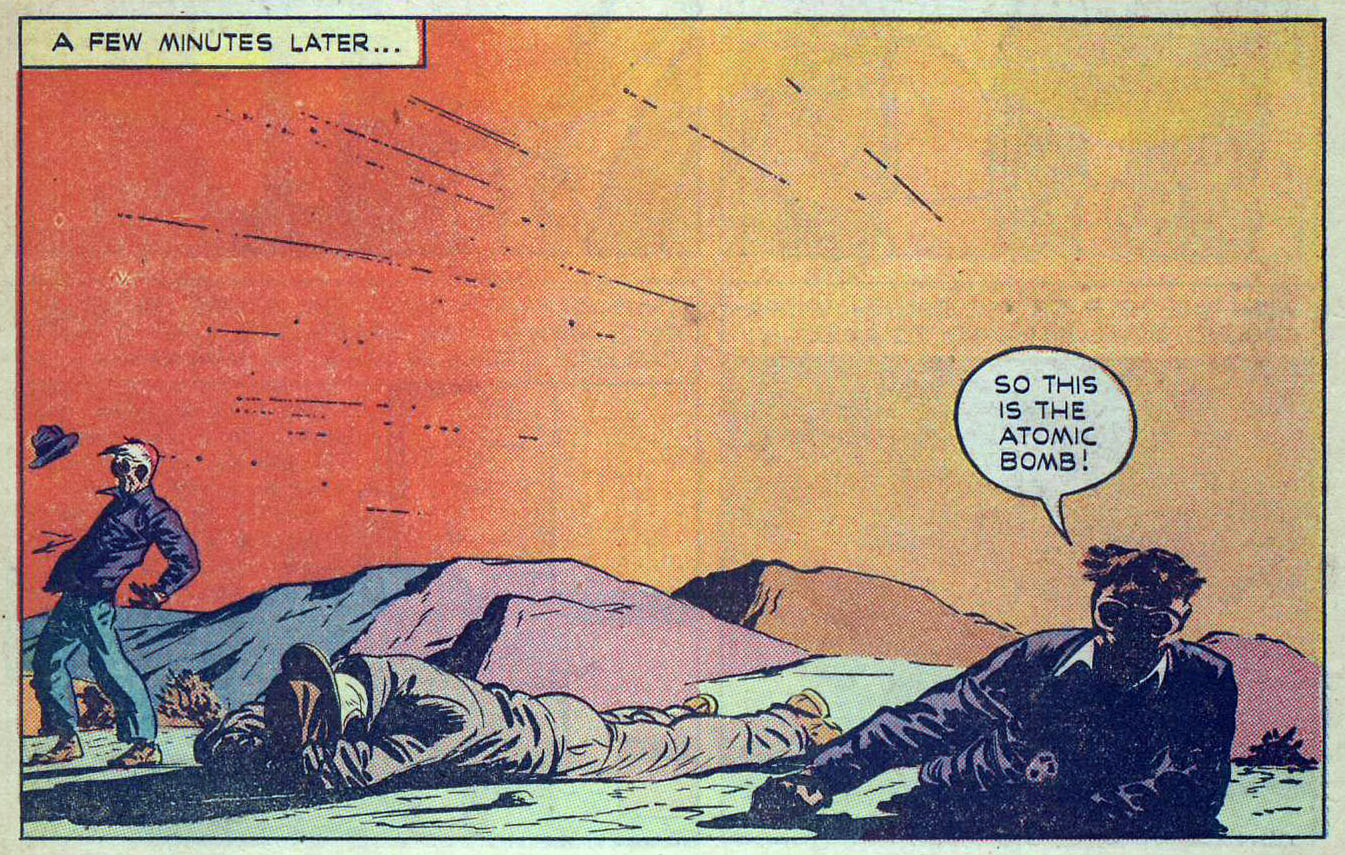
    I couldn’t help but take out the trusty paper microscope for a good strong look at this image. It appeared anonymously in True Comics (issue #47, March 1946) and depicts the explosion of the atomic bomb at the Trinity site Alamogordo on July 16, 1945.  I might have given the statement a little more emphasis–maybe an extra exclamation point.  

    There were many profound thoughts in many profound for-real heads there in the desert, at the reaches of the Jornarda del Muerto(“The Dead Man’s Walk”, a formerly nearly-impenetrable stretch of desert in  the Llano Estacado) at Trinity.  Robert Oppenheimer famously cited the Gita (“Now I am Become Death, the Destroyer of Worlds…”); Enrico Fermi was so busy with his little and excruciatingly wonderful experiment with strips of paper calculating the effect of the blast (he reckoned a very-close 10,000 tons) that he didn’t actually hear the explosion; Edward Teller thought Tellerian thoughts, and so on.  Actually the observation points (like S-10000 and Campania Hill) were crowded with big brains:  in addition to Oppenheimer, Teller and Fermi were people like Hans Bethe, James Chadwick (whose discovery of the neutron sort of started the whole thing), Richard Feynman, George Kistiakowsky, Phil Morrison, Robert Serber, Vannevar Bush, James Conant, and many others.  The were all thinking pretty big things (except for the occasional so-terrific-it-can’t-be-real-but-it-must-be-because-Richard Rhodes-documents-it stuff like that which maybe came from Feynman’s mouth, which was “hot dog!”).  I think that Bainbridge’s statement was the best, and truest, summation of the morning’s activities, in spite of the necessity to make the whole thing happen.  There was just no way that it wouldn’t be done.

    Anyway, “So this is the atomic bomb” is pretty weak.

    And this:

    Atomic_ so this is the atom bomb detail 1


  • Chuck Close Convict Optics, 1936

    JF Ptak Science Books   Quick Post    An Episode in the History of Dots

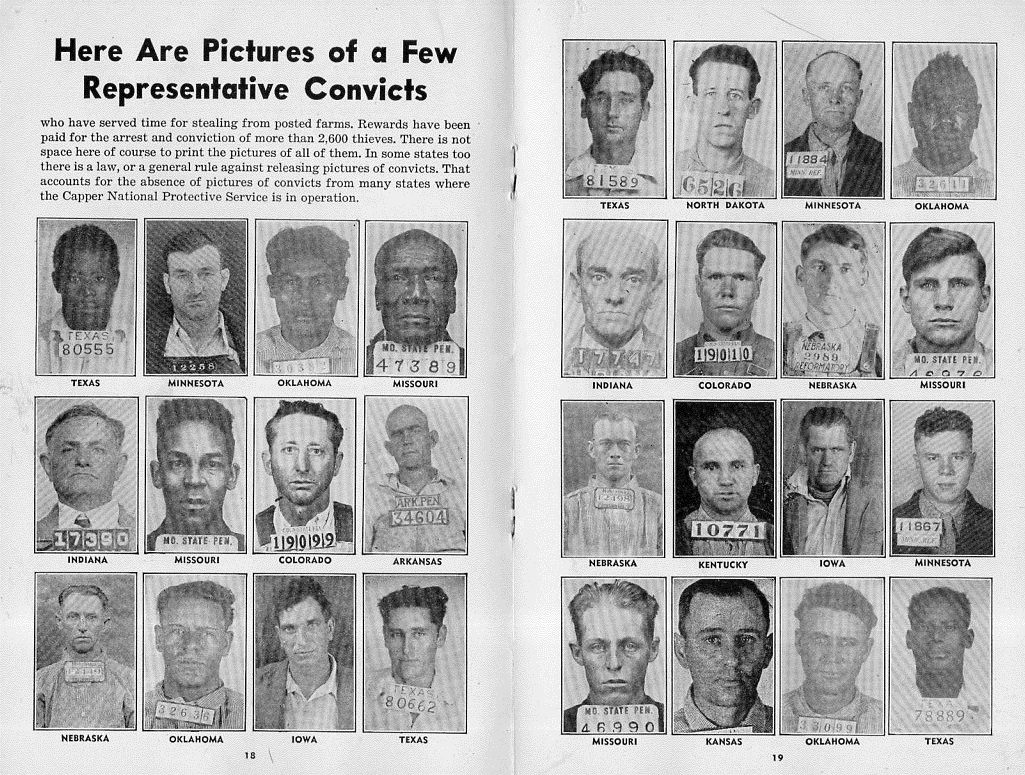
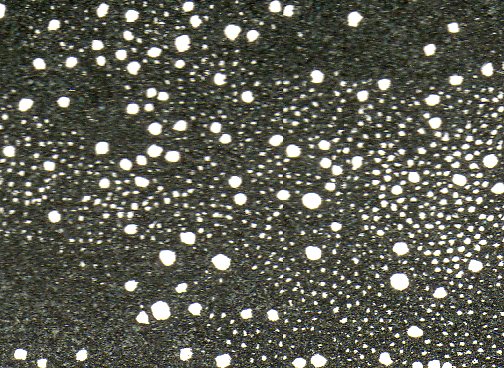
    There is no telling, sometimes, where an interesting/odd bit might occur. I guess you could make the case that they occur everywhere and that it is just our inability to see them that limits their appearance.  This may be the case with the following, a magnified part of a small part of a chart, where dots turn into squares:

    Convict farm909 detail

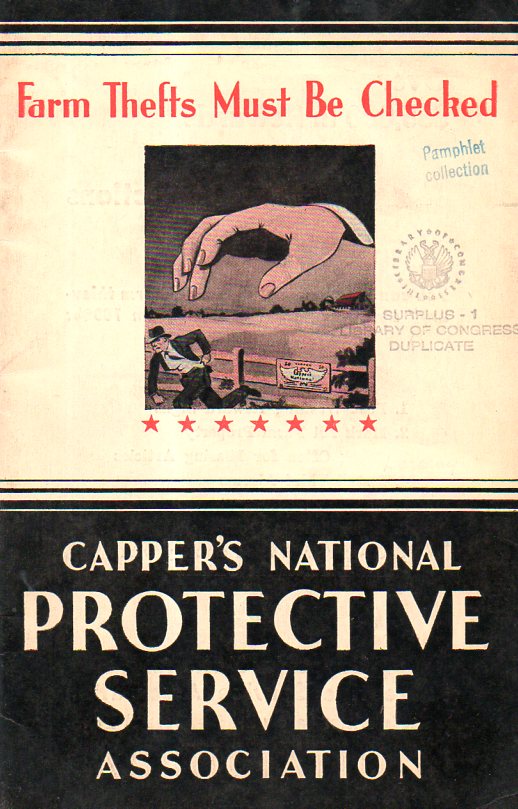
    The pamphlet topic is certainly a modest vanilla flavoring–prevention of farm theft (1936). However the cover is striking, so it is an easy thing to pick up.  There’s a bunch of anti-crime/catch-’em stuff and help on how to do that inside–there is also a two-page spread of mug shots of examples of people caught and convicted utilizing the services offered in the pamphlet. That’s where Mr. Close comes in.

    Convict farm samp-ler910

    One interesting thing about the enlargement is that you can make the image go from near-negative to positive by tightly squinting your eyes–which is something I think you cannot do with the pre-pixelated Mr. Close.  

    In any event, it was a very nice find, found in an unusual and serendipitous place. 

    And the cover:

    Convict farm cover911

  • Unfathomable Dots–324,198 Stars and Knowing the Structure of the Milky Way, 1873

    JF Ptak Science Books  Post 1107 (from 2010, Appended April 27, 2015)
    [A continuation of our History of Dots  series.]
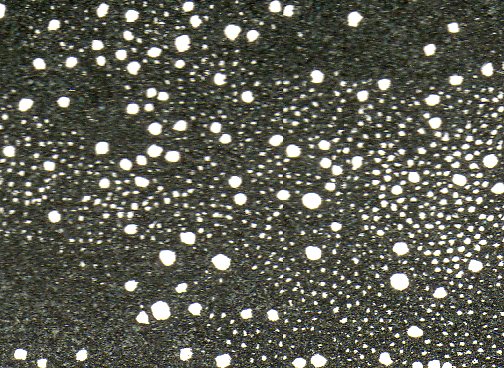
    Stars--vivible stars 2 det304


    The history of dots must have some fair share of its content filled with a very varied history of astronomy, which just goes to show that even within the seeming-sameness of microscopic investigations of dots that its subcategories could be so vast and differentiated. (The image above is a small detail from the following image, below.)

    Dots aren’t necessarily just dots–even in representing the stars, dots have a rich history. The first star-dots published in the West appear in 1482, taken from the work of the first century astronomer and philosopher Hyginius1, and is a book that contains maps of the constellations composed of such beautiful light-encrusted bits.  There wouldn’t be another work like this one, strangely, for another 75  years. Alessandro Piccolomini’s2 work of 1559 (which would be the first true star atlas), and again we see the familiar representation. 

    Galileo’s dots were very aggressive.  By 1610 he had produced his fifth and most powerful telescope, allowing things to be seen one thousand times closer, using it to make enormous discoveries–discoveries so big in fact that their towering significance is a but hard to understand today in the context of early 17th century knowledge. It was all published in his fantastic Sidereus Nuncius on March 4, 1610—the extraordinary  very title page3 of the book proclaiming some of the great discoveries of Galileo’s adventure.

    One monumental outcome of Galileo’s work was expanding the number of stars in the sky, which was basically mucking around with the perfect plan of the creator–formerly a cornerstone for the existence of a divine being.  With the exception of comets and eclipses the sky had remained immutable, a perfect score of the creator’s creation, until 1572, when Tycho Brahe noticed something new in Cassiopeia, something that was not a comet—a “something” that was a star. This was momentous because the night sky had been seen for centuries as being complete—a new star, the Nova of Brahe, contradicted this high belief, offering the possibilities of newness where there had not been one previously.  And so too with Kepler’s new star of 1602.

    One of the things that Galileo brought to the world was an entirely new sky, revealed to him through his telescope—so many stars that he could only guess (though he reckoned that there was an order of magnitude more stars than previously known “stars in myriads, which had never been seen before….and which surpasses the old, previously known, stars by ten times”).
       
    Which brings me to the images that I stumbled on today from “Statement of Views respecting the Sidereal Universe”4which was  the work of the astronomer and great popularizer,  Richard A. Proctor (“B.A. (Cambridge), Honorary Fellow of King’s College, London”).

    Proctor’s dots challenge all dots that have come before so far as theorizing on the structure (and extent) of the Milky Way is concerned.  Proctor refers to William Herschel’s5–the man who first gave the Milky Way its shape and who fixed our own sun in an inferior and not-particularly-special place inside that map–statement that the extent and constitution of the Milky Way is “unfathomable”. 
     
    Proctor gets there by presenting a map of the night sky with stars visible to the naked eye:
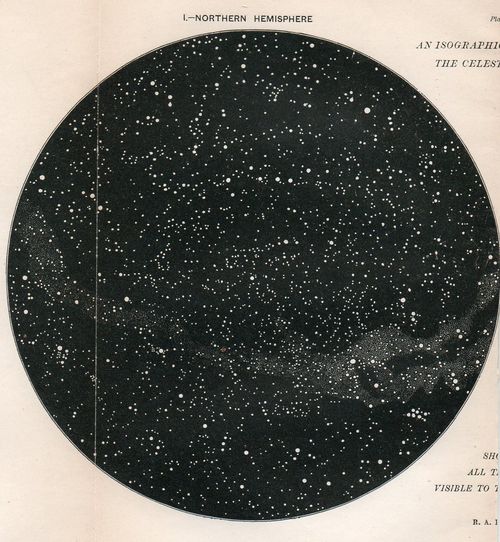
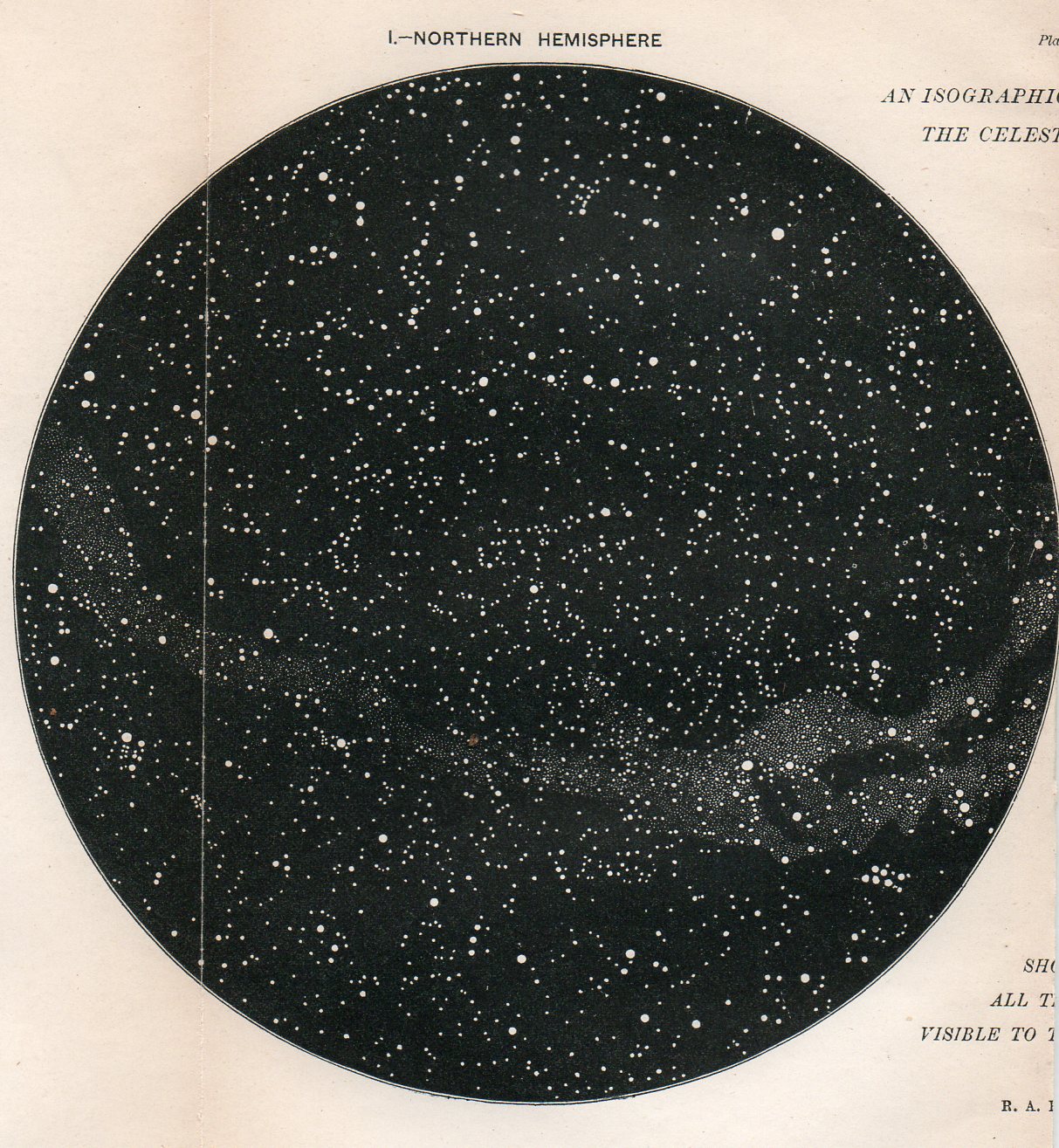
      Stars--vivible stars 2303
    And then the double hemisphere map of the northern and southern skies “We have here the first step towards just views of the constitution of the Milky Way, or rather the next step beyond the great, but little noticed, discovery of Sir W. Herschel’s, that the bright clouds of the Milky Way are for the most part spherical clusters of stars.”(Page 546.)

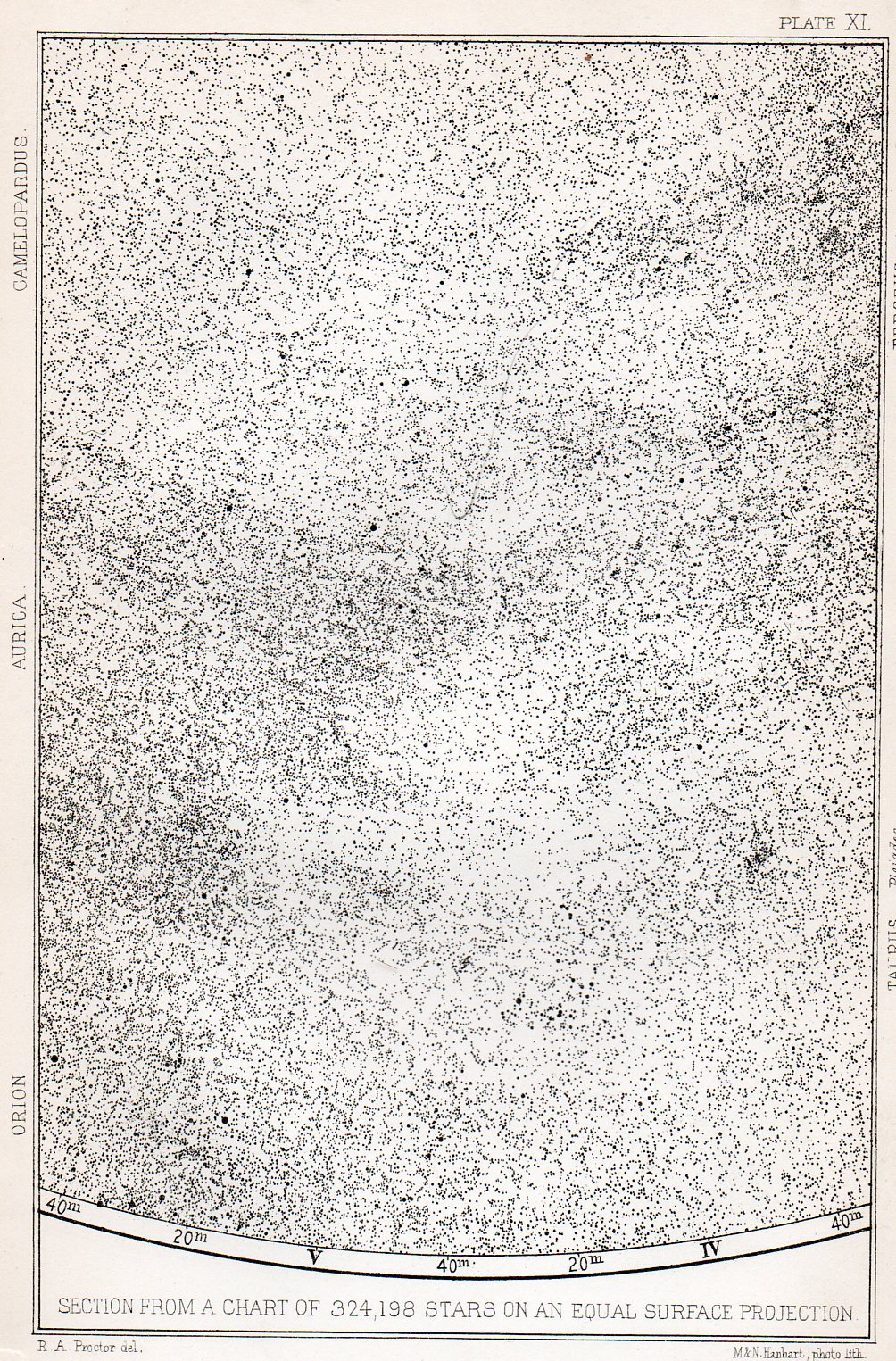
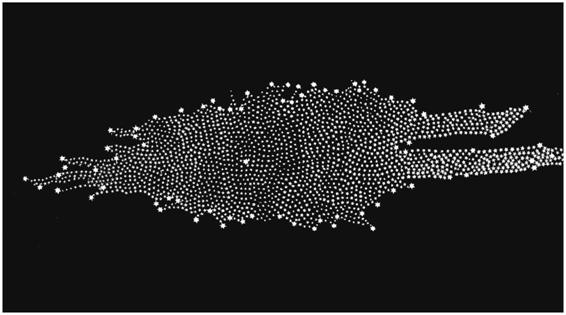
    Finally is the crux of the matter: two sections of an fantastic map displaying 324,198 stars visible via a 2.5 inch aperture telescope.
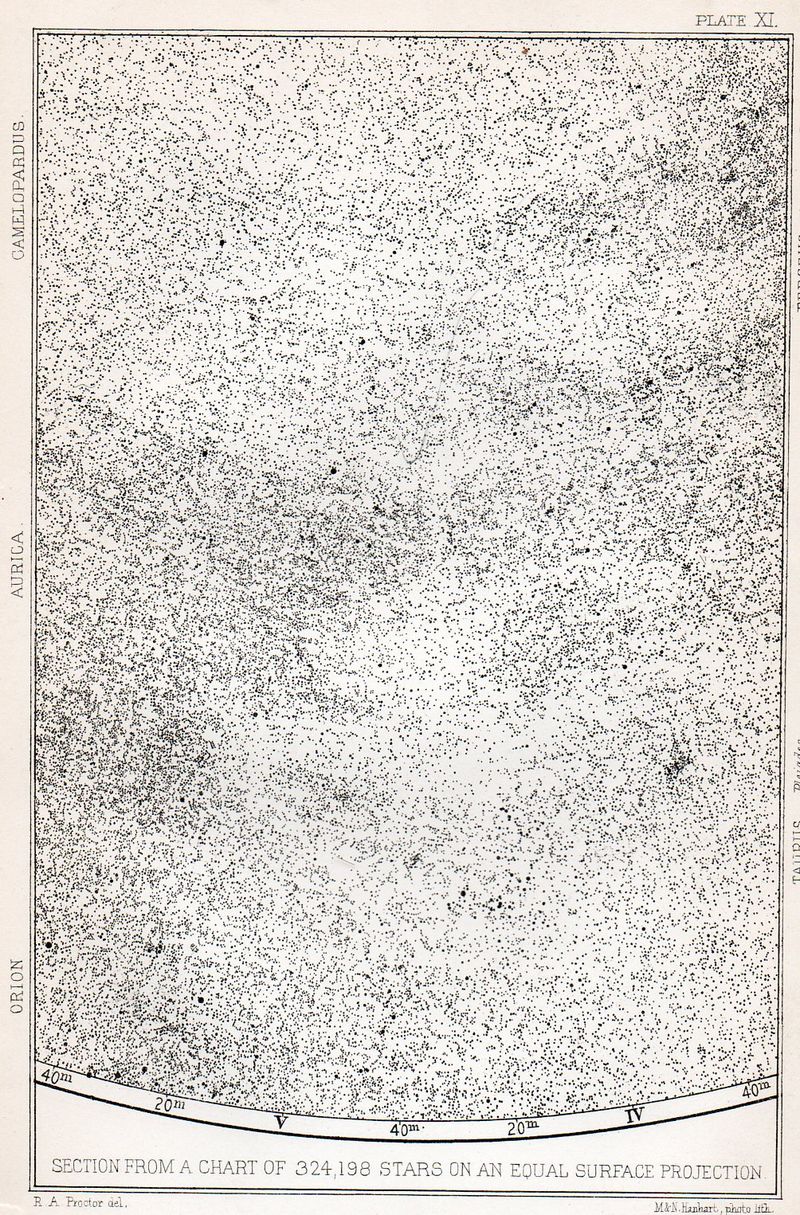
    Stars--324k300
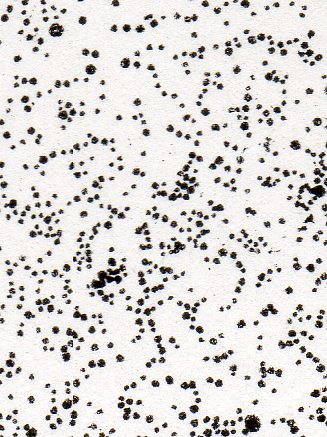
    (The following being a small detail in the above section:)
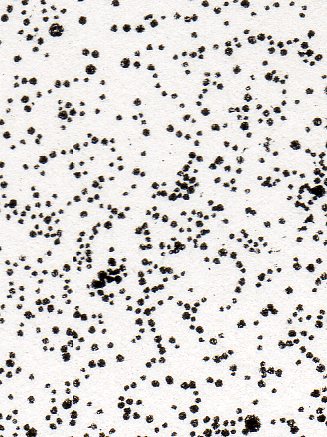
    Stars--324k deyt301
    He comments:“I assert, without the slightest fear of contradiction by any possessing such knowledge, that the broad teaching of the equal-surface chart. 0/3 24,000 stars disposes finally of all theories of the constitution of the sidereal universe which had previously been enunciated. The chart does not definitively indicate a new theory—rather it suggests the idea that the constitution of the sidereal universe is too complex to be at present ascertained. But it completely negatives (i), the stratum theory (even in the modified form apparently retained by Sir W. Herschel) ; (ii), the flat-ring theory of Sir John Herschel ; and (iii) the infinitely extended stratum theory, with condensation towards the mean plane, which Struve adopted.” (Page 547)

    I think that for 1873 the verbose Mr. Proctor got his point across.     

    Notes

    1. Hyginius Mythographus (fl. 1st century A.D.). Poeticon astronomicon. Edited by Jacobus Sentinus and Johannes Lucilius Santritter. Venice: Erhard Ratdolt, 14th October 1482. The first star atlas per se, standing alone in its field for a century.

    2. Piccolomini, Alessandro.  De la Sfera del Mondo.  1559                              

    3.  Galilei, Galilei  Sidereus Nuncius (known in English as Starry Messenger), published 1610
    The title page reads: Great and very wonderful spectacles, and offering them to the consideration of every one, but especially of philosophers and astronomers; which have been observed by Galileo Galilei … by the assistance of a perspective glass lately invented by him; namely, in the face of the moon, in innumerable fixed stars in the milky-way, in nebulous stars, but especially in four planets which revolve round Jupiter at different intervals and periods with a wonderful celerity.

    4. Journal of the Royal Astronomical Society, Paper, Abstracts and Reports of the Proceedings of the Society from Niovember 1872 to June 1873, vol XXXIII, London, printed by John Strangeways, 1873.                    

    5. It seems that few people now remember Frederick William Herschel as a great discoverer of alternative existences, but, well, that’s pretty much what he did–and he did it during a time that must’ve made his astronomical discoveries seem like science fiction .For example, in 1785 Herschel published a revolutionary image of the “Stellar System” (the Milky Way), showing its irregular pattern and the off-center placement of our sun amidst a panoply of other stars.
    (His image was remarkably and substantially correct, with the most grievous error being the placement of the sun too close to the center of the galaxy.) It was an image which bought the concept of a not so humano-centric idea into popular philosophy, and that our sun was a star among stars in a sea of stars.
    Herschel

  • The Geology of the Great Flood and a Billion Niagara Falls

    JF Ptak Science Books   Post 2442

    Continuing my exploration of the Borgesianly Unchartable Lands of Serendipitonia comes this fine relic from the days of Biblical Geology. That is to say, the Good Old days, the antiquarian days, the pre-Evolutionary days of Diluvial geology, of a geology accommodating the Bible–in this case, the event of the great flood of the Old Testament, Genesis 6-8.

    I happened on this by picking up random volume of Thompson’s Annals of Philosophy, and opening it to the contents, and see what jumped to attention. The very first article to do so was Charles Wheatstone and a piece he did on sound. This was the volume for 1823, and it seemed really early for Wheatstone–and it was. He wrote it at 21, his first published paper and the first of many to come.  But I wanted something different, and so long as I stayed with the selected volume I wouldn’t break any rules of serendipity in finding something to write a short post about.  

    A quick scan down the page, and I found/stumbled onto something to work with–J.S. Henslow’s paper on the geology of the Deluge.  

    Henslow was a big deal and a fine thinker, and organizer, and categorizer, and theoretician.  He was also a very effective teacher, and Parson, and was an essential element of his community.

    He was also perhaps the most essential person in the development of the scientific interests of Charles Darwin–and Darwin says so.1 Henslow would have Darwin as a student about five years after this publication, and it was Henslow who became Darwin’s mentor. Also it was Henslow who secured Darwin a spot on the Beagle. And it was Henslow who received Darwin’s notes and samples and who helped create Darwin’s reputation on his return from the long voyage. And so on.

    But here in 1823 Henslow was trying to make science work with Genesis. He wondered–as had many–where all of this water was coming from in the first place, and reasoned that the water had to come from something other than the Earth (as he reasons that another 5 miles of water would be necessary to drown the Earth) and so quotes scripture to show that God provided for it.  (I figure that you’d need about 750,000,000 Niagara Falls running for a month to get the necessary water…) That, and a close swing-by by a comet caused major tidal disruption. And the water had to go somewhere to recede, and since there was already a lot of water on the Earth the divine waters needed to recede unseen inside of the Earth. In any event, my takeaway was that Henslow couldn’t find a geological explanation for the Deluge or the evidence of one, which is interesting in itself, and so had to provide scriptural support.  

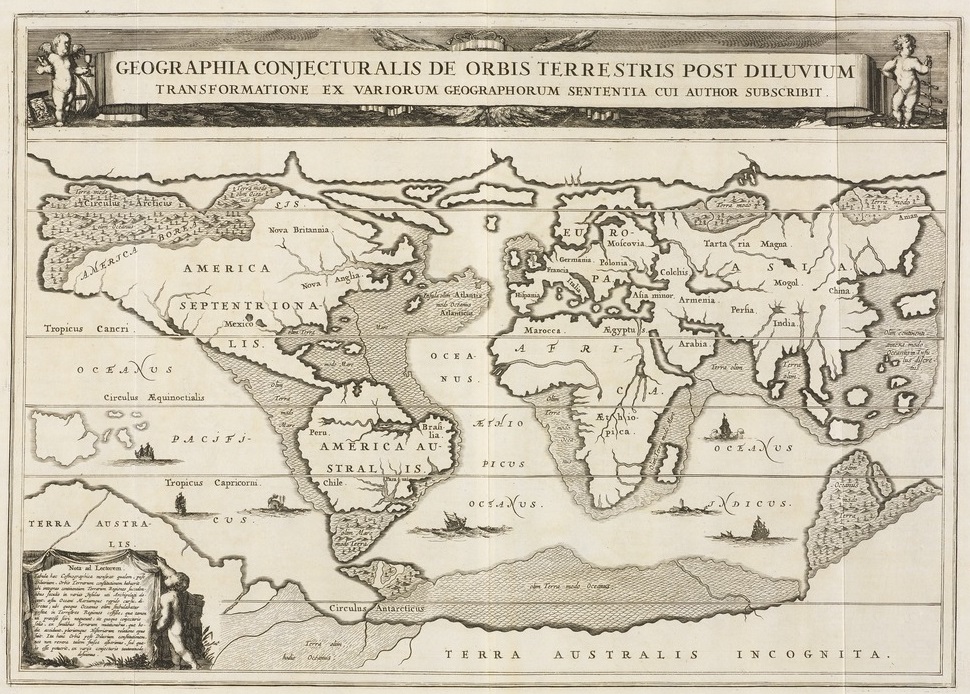
      Kircher flood mapThe forever-busy Athanasius Kircher made this post-flood reconsideration of the Earth, Geographia Conjecturalis de Orbis Terrestris Post Diluvium3, published in Amsterdam in 1675. Source: Getty Museum, here.]

    Notes:

    1. Charles Darwin to J.D. Hooker, May 18, 1861. Source: http://www.darwinproject.ac.uk/entry-3152

    “My dear Hooker

    I was very glad to hear that poor dear Henslow is at rest.I fully believe a better man never walked this earth. What a loss he will be to his parish! I can well believe how you will miss him. I well remember his saying before you married that if he could have picked out anyone for his son-in-law, it would have been you.— How kind he was to me as an undergraduate constantly asking me to his House & taking me long walks. I am thankful to think that at the time I fully enjoyed & appreciated his kindness…”

    2. In 1823 Henslow wrote about The Flood, and attempted to direct the science to fit the belief. (In 1823 a major work in this area was published by Buckland on the relics of the Flood,  Reliquiae Diluvianae; or, Observations on the Organic Remains Contained in Caves, Fissures, and Diluvial Gravel and on Other Geological Phenomena Attesting the Action of an Universal Deluge.

    3. Geographia conjecturalis de orbis terrestris post diluvium [Athanasii Kircheri è Soc. Jesu Arca Noë, in tres libros digesta : quorum I, De rebus quae ante diluvium : II, De iis, quae ipso diluvio ejusque duratione : III, De iis, quae post diluvium a Noëmo gesta sunt : quae omnia novâ methodo, nec non summa argumentorum varietate, explicantur and demonstrantur] , Engraving , 1675 , Kircher, Athanasius, 1602-1680 

  • Understated Appearance of Bell’s Telephone Patent, 1876

    JF Ptak Science Books  Quick Post

    \And yes, there it is, a one-liner, like everything else, in an 1876 volume of Scientific American:

    Bell patent close
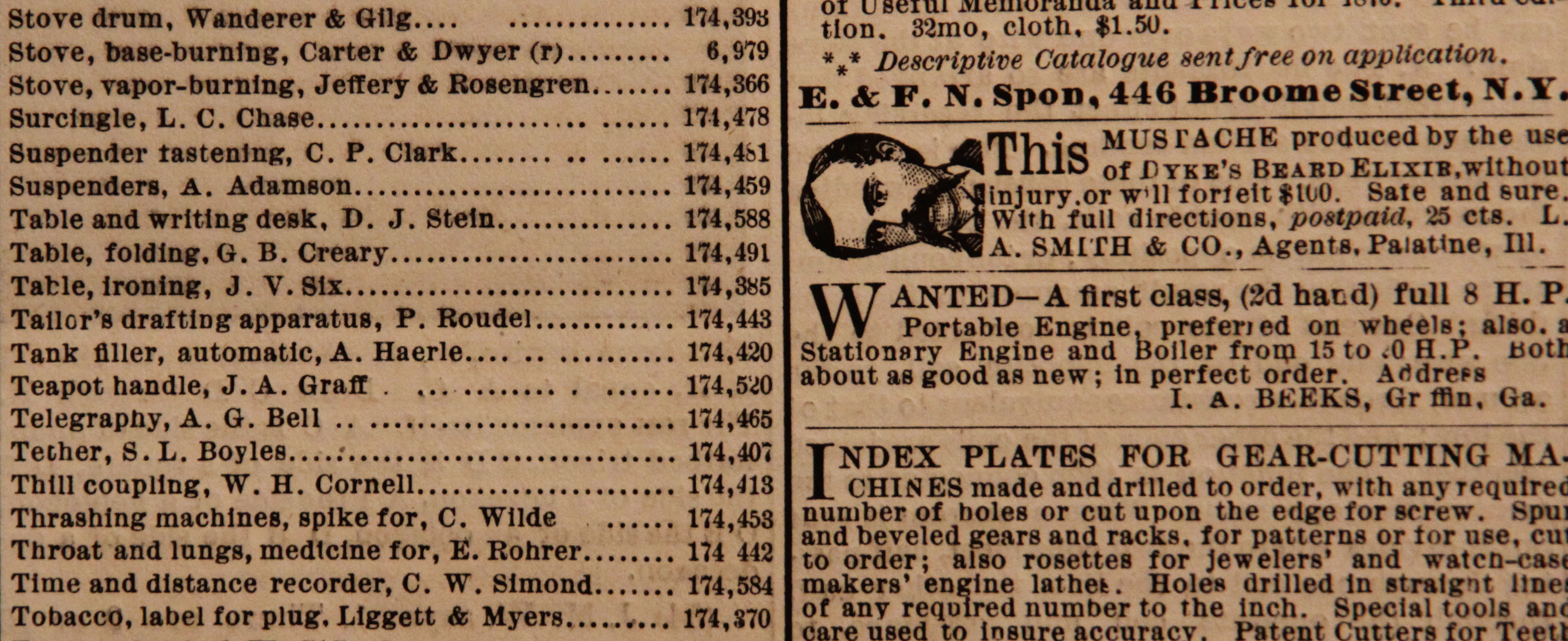
    Besides it being the Centennial year, 1876 saw a number of major games in the history of human thinking. Sometimes the announcements or earliest public appearances of these breakthroughs didn’t get all that much attention.  As one of the major means of transferring technical and applied science info to the general public, it is interesting to see how Scientific American reacted to such innovations.  For the thick, heavy volume for 1876, amid patent announcements and articles on telegraphic fire alarms, electro-harmonic multiplex telegraphs, recording telegraphs, electro-magnetic telegraph railroad car signals, signal box telegraphs, underground telegraphs, telegraph keys and armature, acoustic telegraphs and the l;ike (though there weren’t that many reported, not really, just on the order of dozens), we find one of the most important of them all, patent # 174,465, by Alexander Graham Bell, appearing 8 April 1876.  It would be a rude resumption of being here in the future of this event to call the coverage short-sighted

     In an earlier article in the 4 March 1876 issue of SA, there appeared “The Invention of the Telephone”, by P.H. Vander Weyde, in which there is yet any mention of Mr. Bell.  There is an illustration of one of his precursors in the field, the Reuss telephone, with ample description. (This was actually Philipp Reiss, and his telephone really wouldn’t work to transmit the human voice, though did so work for music to some degree.)  Bell’s patent  would be at the Patent Office in March, and would appear as a one-line notice (among a hundred others), the patent stating it was “the method of, and apparatus for, transmitting vocal or other sounds telegraphically … by causing electrical undulations, similar in form to the vibrations of the air accompanying the said vocal or other sound”.  (The first image above is a detail; the second image a longer version, which is really only less than half of what the real-life version looks like in the tall listing.)

    Weeks later, Elisha Gray‘s (on 13 May) telegraphic telephone patent (175071) appears in the Scientific American, and later, on 9 September, on page 163, there is the article “The Human Voice Transmitted by Telegraph”, on the successful transmission by Graham Bell. 

    Admittedly there were a number of developments in the production of the speaking telephone at this time, though in general there seems to have been no great attention paid them in the pages of the Scientific American than pipe cutting machine improvements or improved gravel separators.  Obviously the great impact of the invention was yet to be appreciated, even in any sort of fictional way.

    • (Bell, Alexander G.) The Scientific American, 1876. We offer the entire volume, sumptuously illustrated with all manner of technical objects, in two parts (bound in one volume), 414+414pp each.  Very fresh copy, bound in black l;ibrary cloth. Very good copy.  $950    [email protected]

    ·Posted by :

    ·in:

  • A Beautiful Eclipse Print, 1859

    JF Ptak Science Books   Quick Post

    Eclipse913

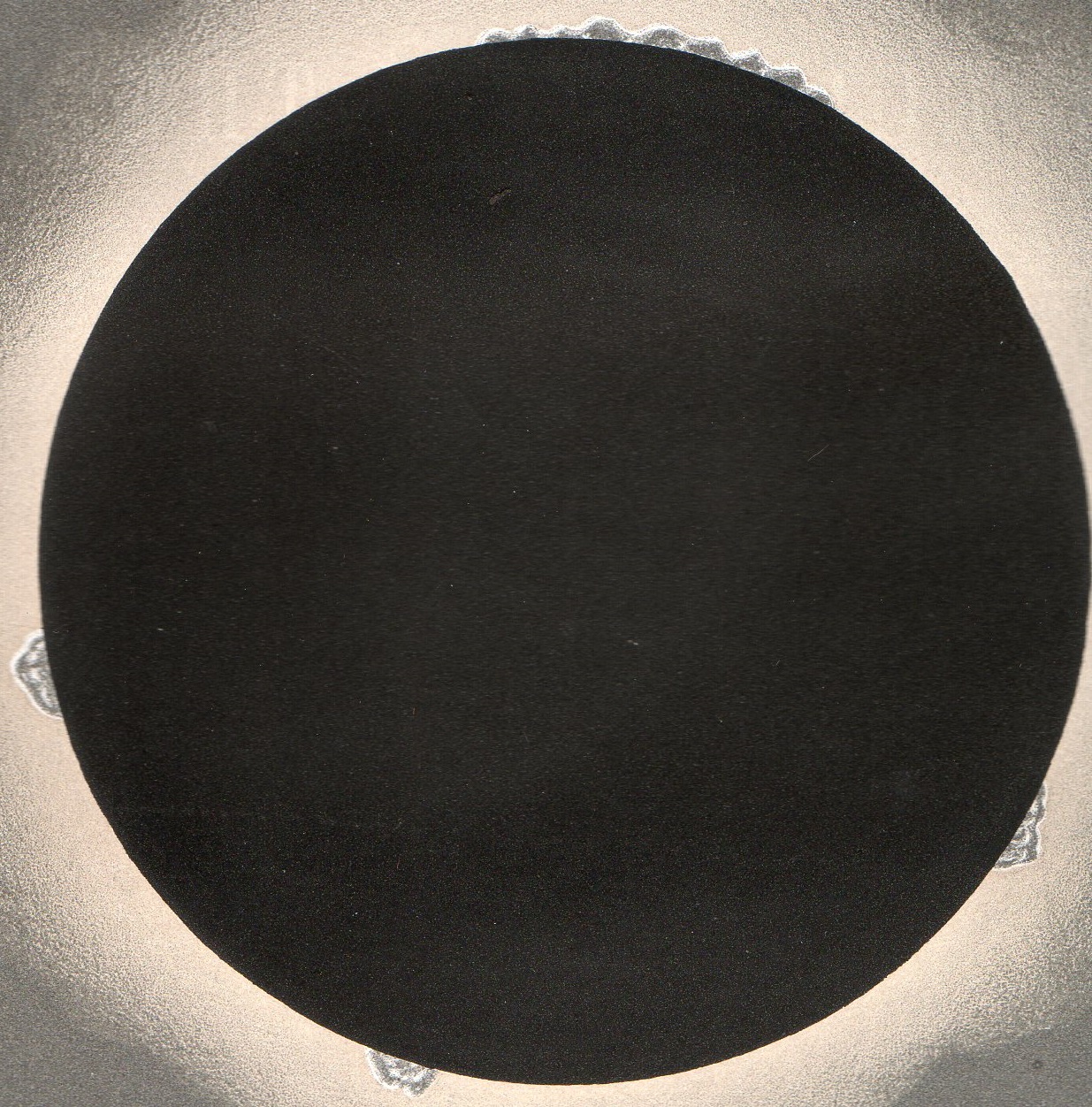
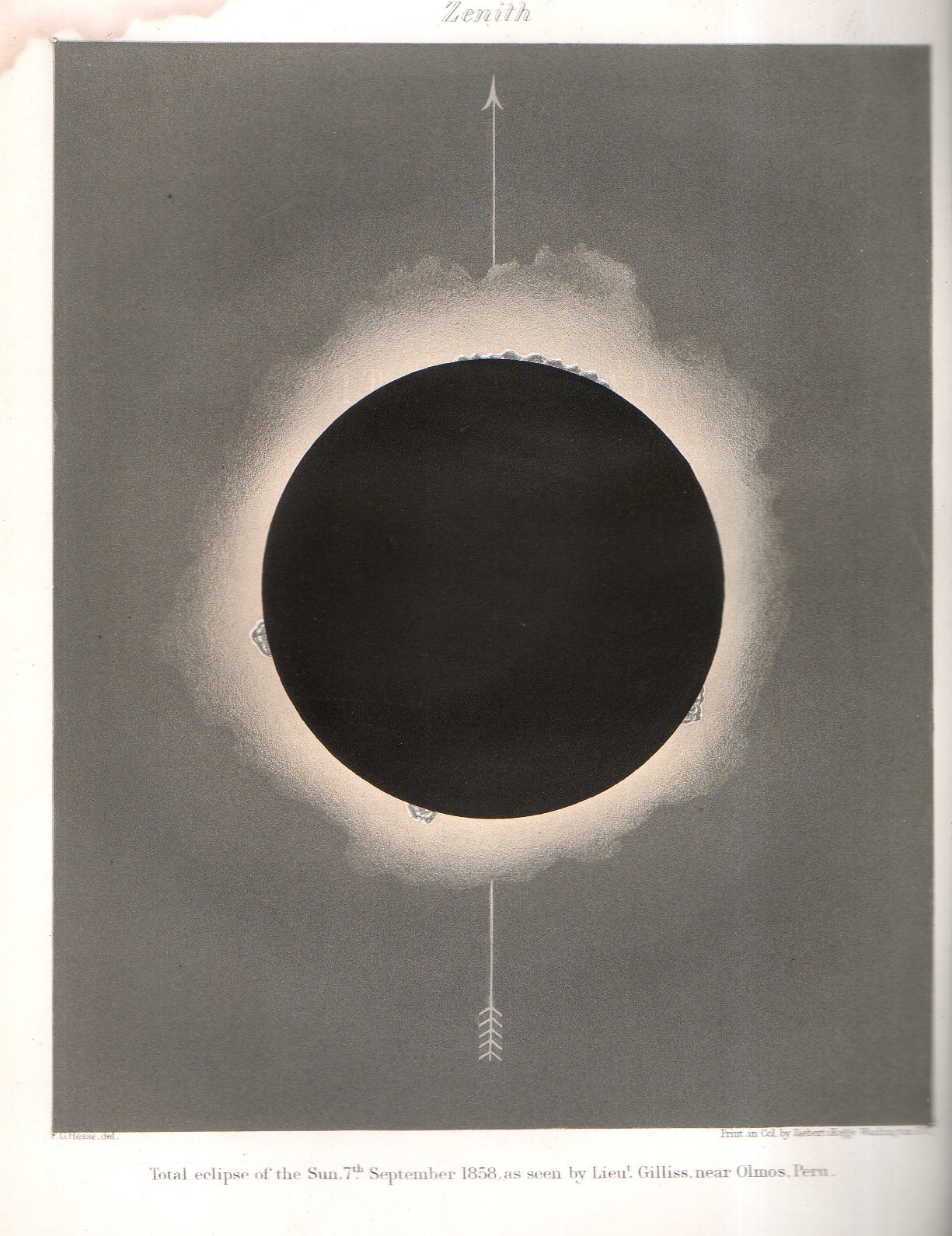
    F.G. Hesse captured this dramatic image of total eclipse at Olmos Peru for Lt. J.M. Gillis’ report of the event for the Smithsonian in 1858. Gilliss (1811-few months too short of the end of the Civil War in 1865) was a Georgetown boy who is buried in the beautiful Oak Hill Cemetery, and best known probably for being in charge of the Naval Observatory (previously the “National Observatory”). He took over that position from Matthew Fontaine Maury1 (as in “Maury Day” celebrations in Virginia and being the father of American Oceanography) a position he held until his death. The report in which the eclipse image appears is An Account of the Eclipse of the Sun, published in the Smithsonian Contributions to Knowledge series in 1859.

    • This report if available for purchase from the blog’s bookstore, here.

    Notes.

    1. Maury left the Observatory to become  a high-ranking official and overseas representative with the Confederacy at the outbreak of the war. The writeup for Gilliss in Wikipedia includes the coy and Victorian statement about Maury joining the Confederacy to fight for separation from the United States, with Gilliss promoted to the Maury position “when Maury responded to serve his state, kin and friends…” with no mention of the Civil War.  No dramatization there in Wikiland.  

    Eclipse912

    ·Posted by :

    ·in:

Recent Posts

Archives

Categories