A Daily History of Holes, Dots, Lines, Science, History, Math, Physics, Art, the Unintentional Absurd, Architecture, Maps, Data Visualization, Blank and Missing Things, and so on. |1.6 million words, 7500 images, 4.9 million hits| Press & appearances in The Times, Le Figaro, Mensa, The Economist, The Guardian, Discovery News, Slate, Le Monde, Sci American Blogs, Le Pont, and many other places… 5000+ total posts since 2008.

  • Statue of Liberty/Death: Thomas Nast and the NYC Harbor

    JF Ptak Science Books  Post 2470

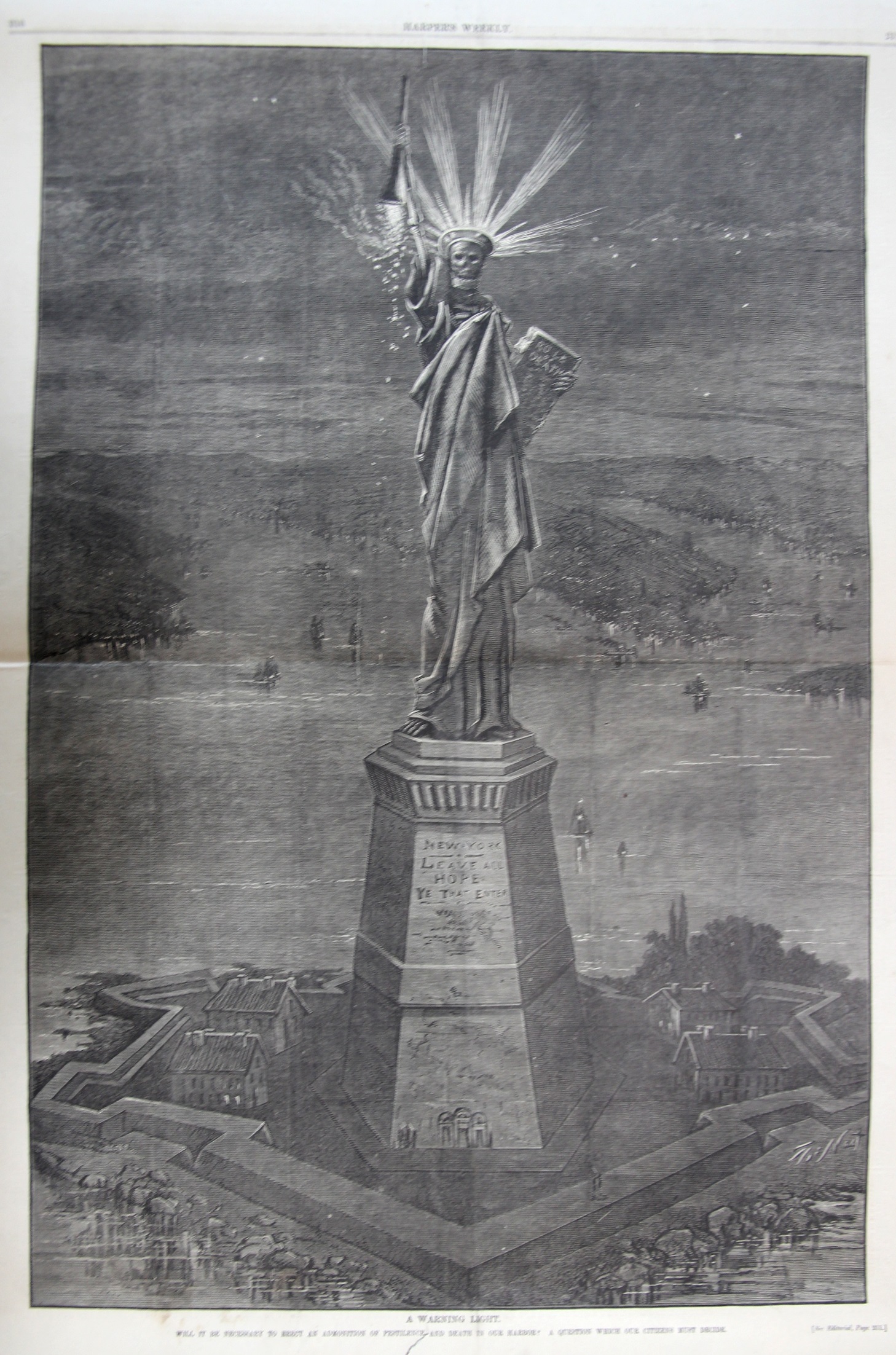
     Thomas Nast (1840-1902) was a very busy and very gifted social observer, working at Harper’s Weekly for decades, seemingly contributing about one large and one small image per week for more than a thousand weeks.  He created the iconic images that we know today: the Tammany Tiger, the popular image of Santa Claus, the Republican Elephant, and (though not entirely) the Democratic Donkey, and much else. When Boss Tweed famously declared that he didn’t care what newspapers wrote about him and his criminal triumphs because his constituency couldn’t read, Nast took him to task by portraying him in a visual way in which reading was not necessary, and which lead to Tweed’s downfall.  He had some weak spots (the Pope was a favorite target, as were the Irish and the Chinese), but he was a champion of equalities, depicting brutal treatment of African Americans, ranting against conglomerates, campaigning for public education, ripping nasty politicians, goring favoritism, spotlighting thew living and working conditions of the working poor, and the like.  The man had a huge following, and helped guide social reforms and popular opinion. 

    I have a collection of many hundreds of these images, and I must say that I do not recall seeing any work dedicated to the environment in general–save for this very striking image, depicting Lady Liberty as Lady Death, presiding over a cesspoolish NYC harbor.  It appeared as a double page spread in the April 2, 1881 issue of Harper’s Weekly, and it no doubt left an indelible impression on its viewers. 
    Statue Liberty Pollution

    • The original image is available here at the blog’s bookstore.
    ·Posted by :

    ·in:

  • Images from A. Kircher’s “Mundus Subterraneus”, 1668

    JF Ptak Science Books  Post 2471

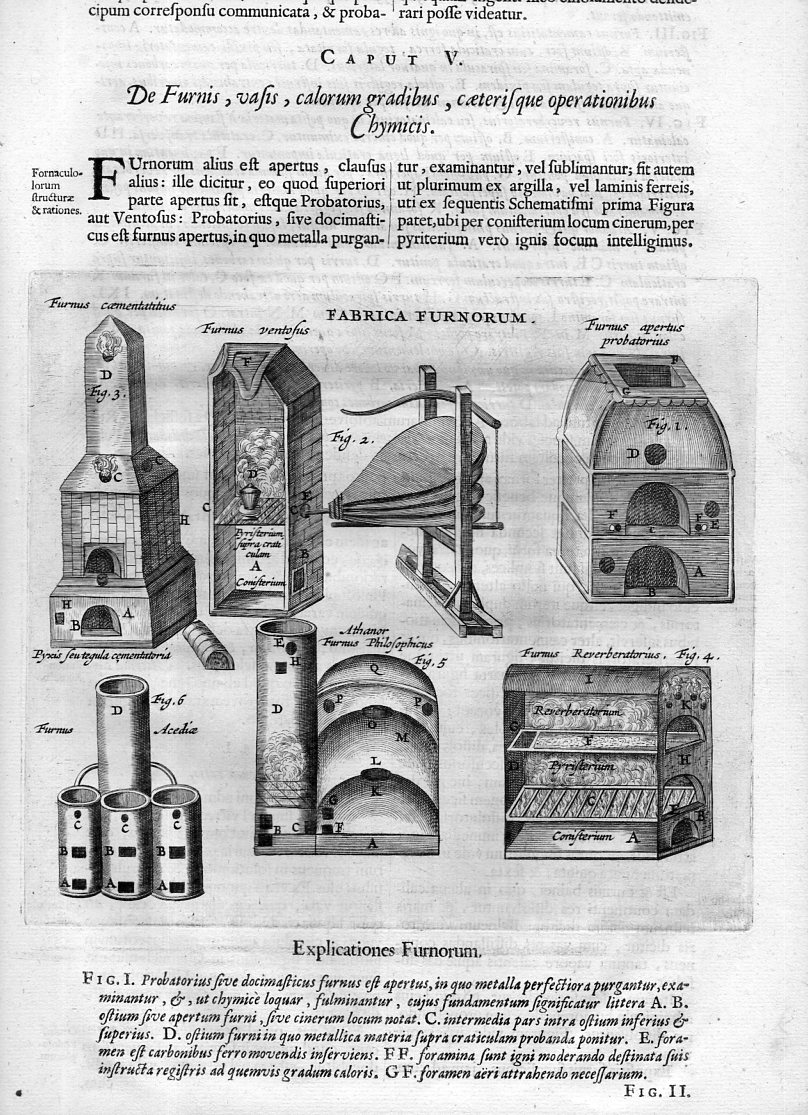
    In the bookstore section of this blog I’m offering for sale some engravings from Athanasius Kircher’s Mundus subterraneus… (1678) which, in spite of its title, explores/classifies/theorizes on the grand scheme of all creation, hardly limited to just the world going on underground.  Kircher (who has appeared on this blog numerous times, simply enter his name in the Google search box at left and you’ll find many entries) approaches the nature of terrestrial heat, volcanoes, the origins of lakes and rivers, optics, fossils/agates (in “de lapide philosopherum”), distillation, alchemy, ocean currents, insects, plant life, and so on, a real summa cum laude  tour de force, Kircher being the Renaissance man’s Renaissance man.

    • Follow this link to the blog’s bookstore post for these images.
    • https://historyofideasblog.com/books/2015/06/images-from-a-kirchers-mundus-subterraneus-1668.html

    All images are printed on 14 3/4 x 8 7/8″ sheets (375x220mm) and have been removed from a defeated and dead copy of the book, the full title of which is Athanasii Kircheri … Mundus subterraneus, in XII libros digestus: quo divinum subterrestris mundi opificium, mira ergasteriorum naturae in eo distributio … universae denique naturae maiestatis & divitiae summa rerum varietate exponuntur …   This copy (lacking the title page and much else) I believe was printed in Amsterdam in 1668 (I believe–the other somewhat later editions to 1678 that I have checked all seem to have added material and different and later pagination, leading me to believe that this is an earlier edition.) The pagination ran 346+487pp, being two volumes printed as one.

    For a later, full-text version of the 1678 edition, see the University of Heidelberg, here.

    • Please keep in mind that the scans leave off the top 1.5″ or so of each image–the paper was simply too long for the scanner bed. The pages are complete (in real life).

    And so the list (of 18), thus far:

    Fabrica Furnorum (pg 239, in the chapter “De Origine Alchymiae”)

    Kircher 239029


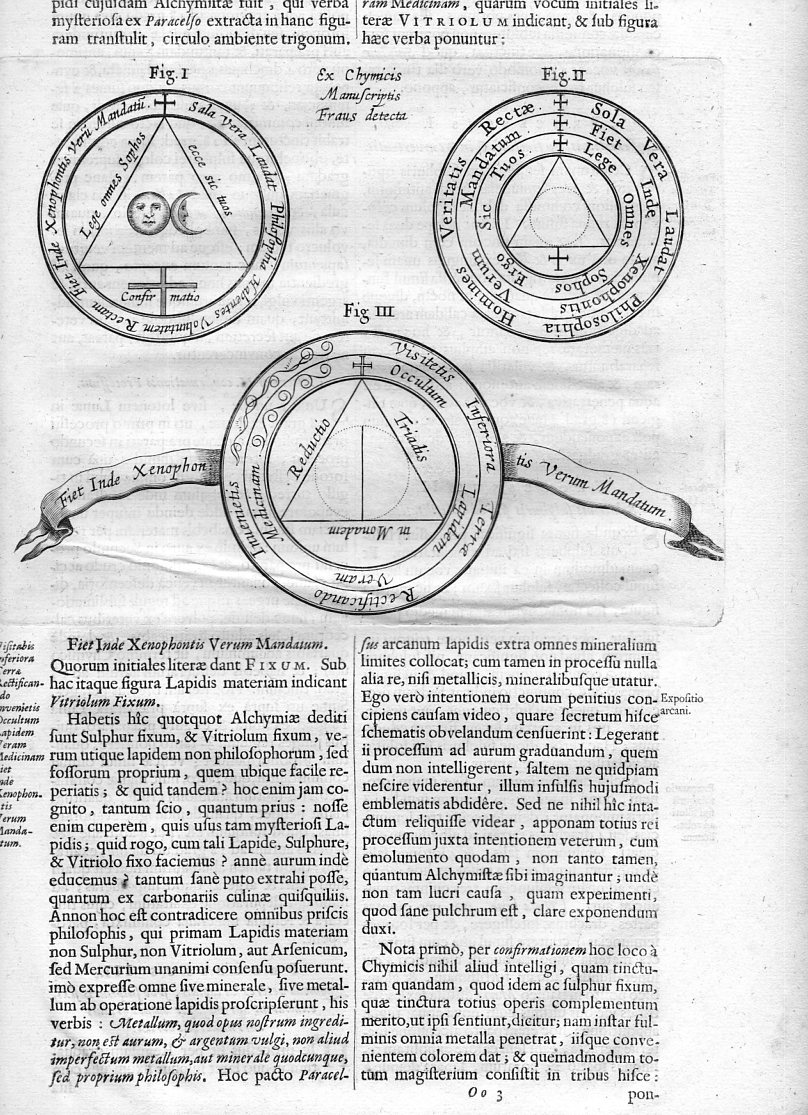
    Ex Chymicis Manuscriptis Fraus detecta (in the chapter “De Alchymia Sophistica”, pg 293)

    Kircher 293030Image 6×7 1/2″, 150x195mm 

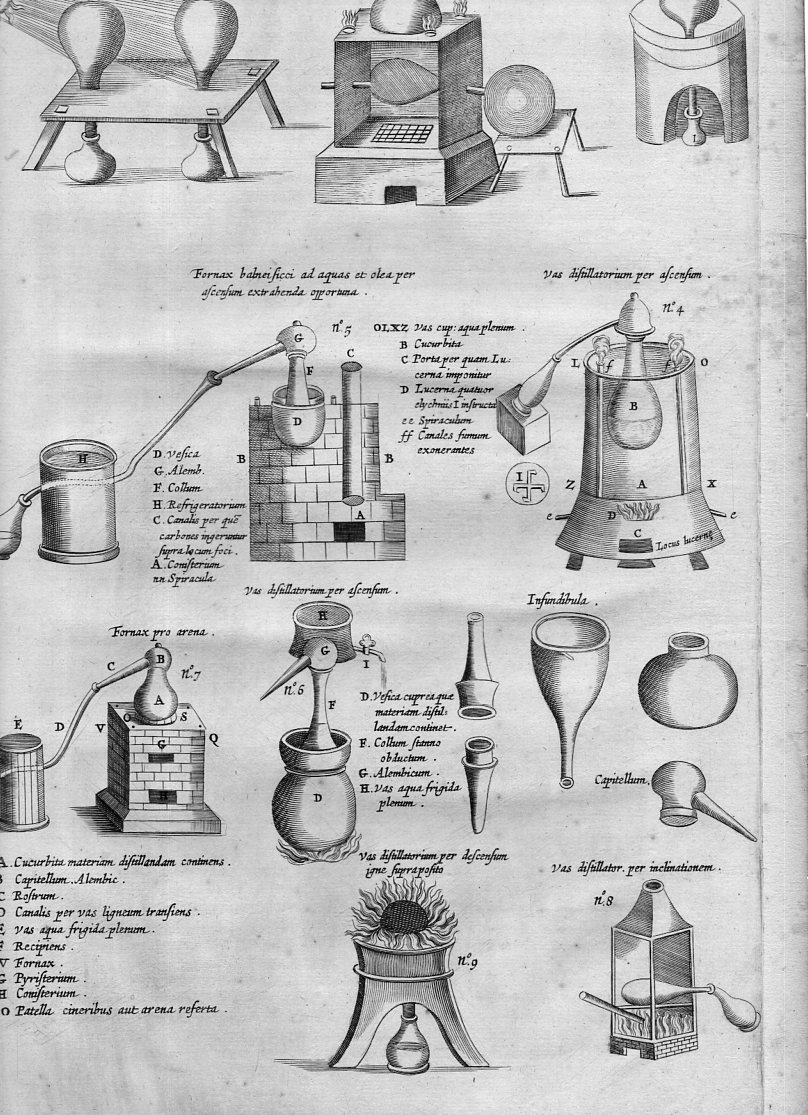
    (Alchemical Furnaces), opposite page 391, volume 2, in the chapter “Arte Stalactic sive Distillatoria”

    Kircher 391031Image 13×8″, 335x205mm.

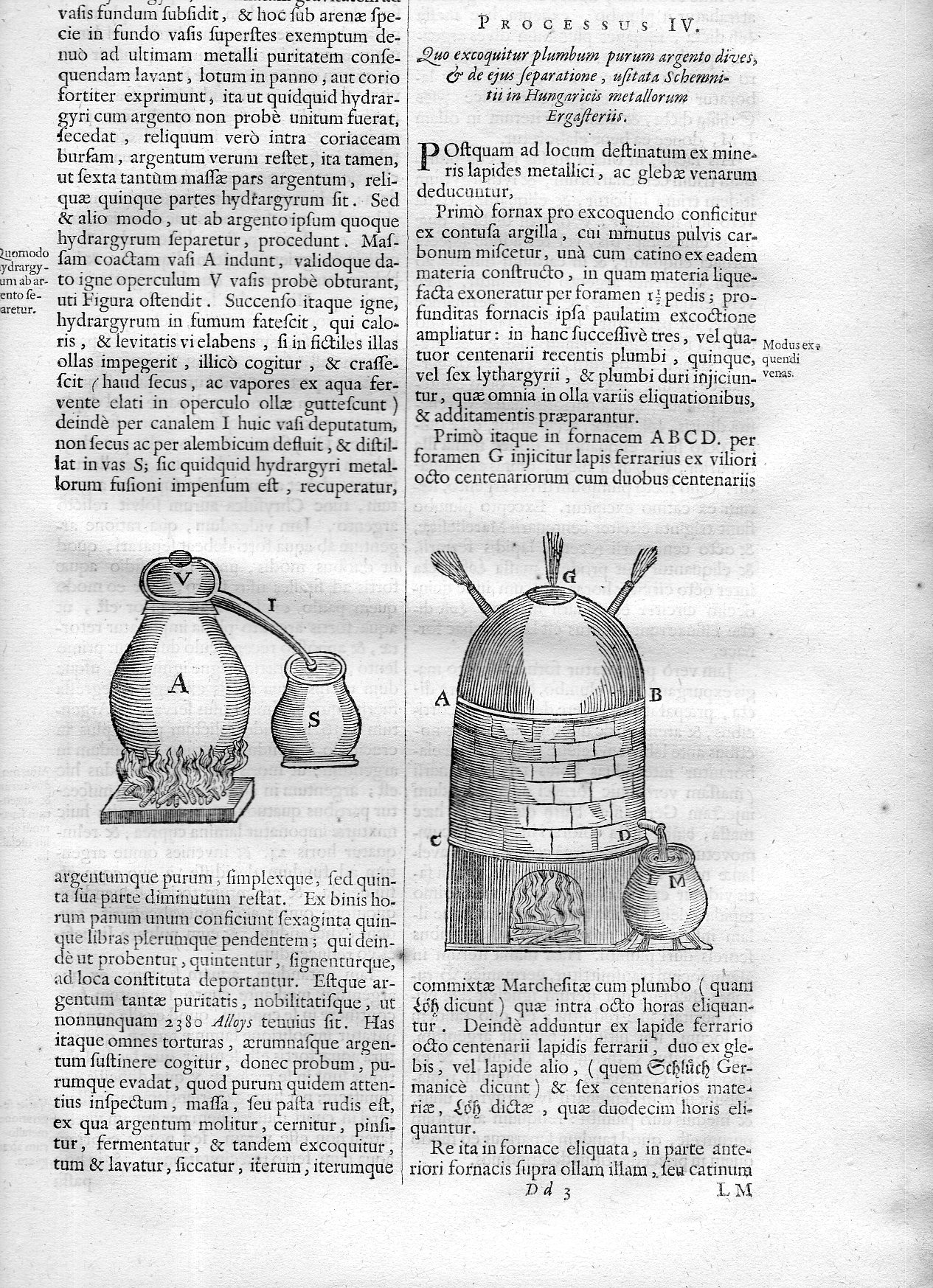
     (“Alchemical Furnaces”) in the chapter “De Fodinarum Conditionibus” (page 213):

    Kircher 214047Image  4×7″. 

    ·Posted by :

    ·in:

  • The Telephone-Wife (Lonely No More), 1925

    JF Ptak Science Books   Quick Post

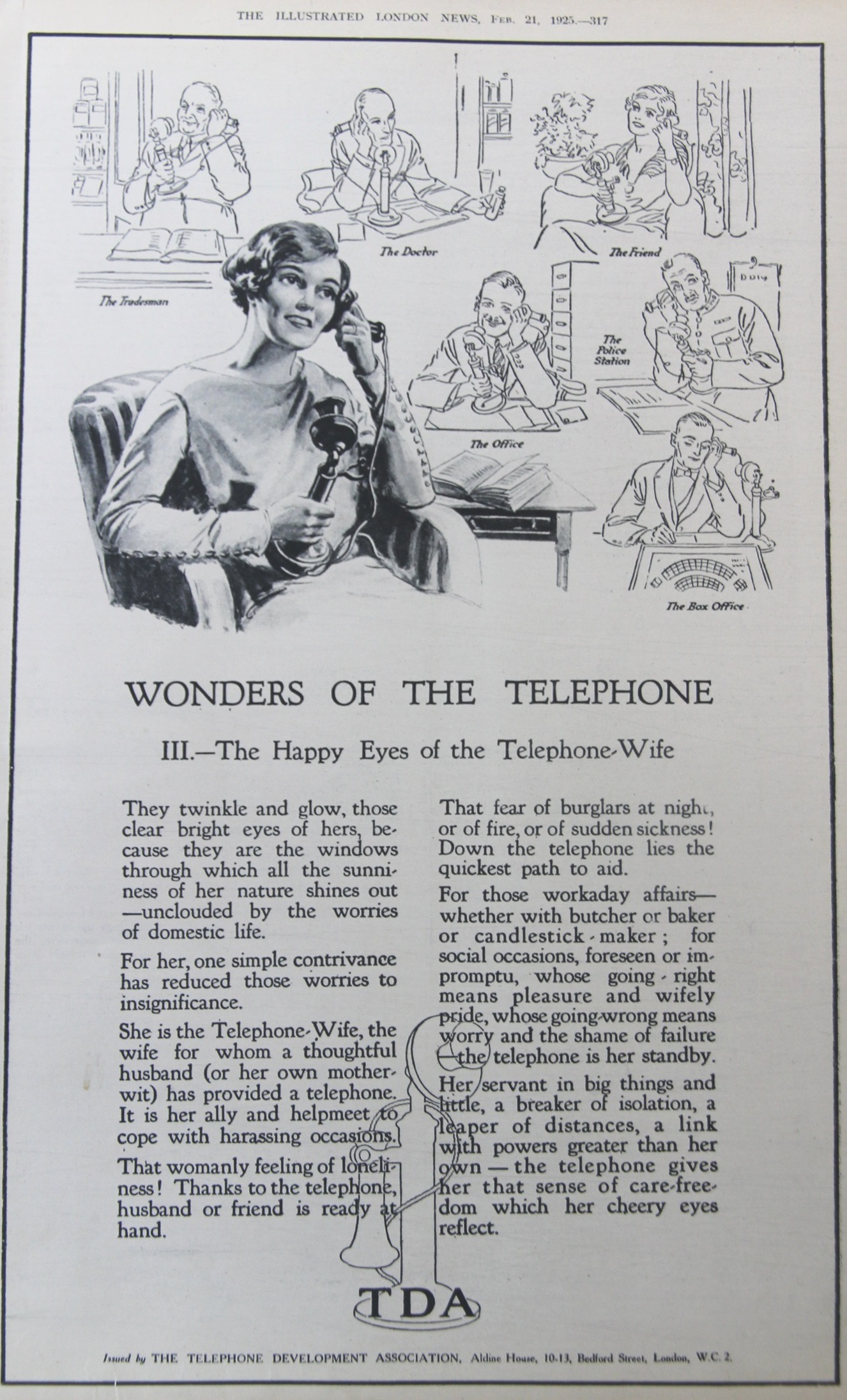
    I’m sure that there’s a song in this, somewhere, if only we had the power to return to 1925 to write the thing.  This add spoke to the married couples of the U.K., an appeal from the Telephone Development Association (TDA, of London), reminding people what the telephone was good for. Not the least of the reasons for installing a ‘phone in the house to help reduce worries to insignificance, and rid her of “that womanly feeling of loneliness”. 

    Telephone-wife[Source: The Illustrated London News, February 21, 1925.]

  • The Starship Enterprise, 1929

    JF Ptak Science Books,  Quick Post

    Starhip enterprisew 1929049

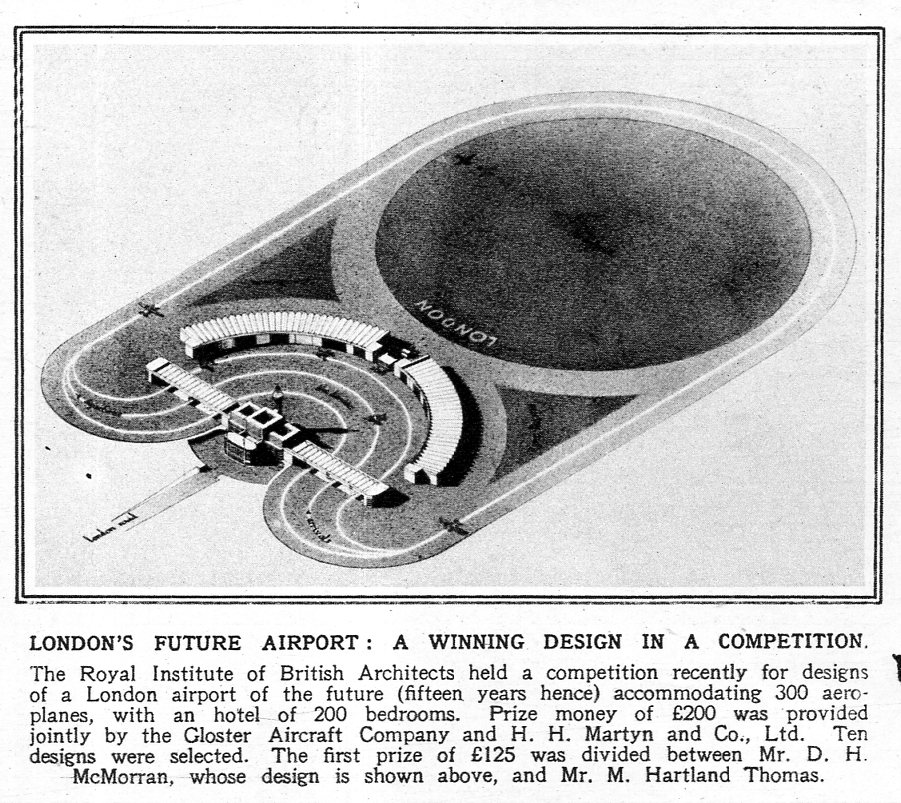
    I wonder if this design had anything to do with Captains Kirk’s/Picard’s great and lovely ship, the USS Enterprise?  It seems as though it is of a singular inspiration, this futuristic airport of London’s futuristic future, designed by Mr. D.H. McMorran.  Mr. Matt Jeffries, the man who design the Enterprise for Star Trek, was certainly alive at the time (1921-2003), though it seems a slim chance that the Illustrated London News for February 2, 1929 (in which this thumbnail image appeared) would have found its way to his boyhood hands in Lebanon, Pennsylvania.  More likely for his engineering/design muse is the electric range heating coil, which seems to be the standard story of where the design originated. Still, this airport design does bear a striking resemblance to the Starship.  

    StoveCoil1

    And just in case, here it is:

    Star trek uss enterprise 1920x1080 wallpaper_www.wallpapermay.com_50


  • The Nigerian Prince Scheme, 1937-Style

    JF Ptak Science Books  Quick Post

    Electronic racketeering has been around for as long as people have been able to use electrons.  A Wild West opportunity has always been possible for those seeking to exploit a hope or naivete or sorrow that is amplified or caressed by a new electrical advance in communication etc., so the Nigerian Prince Money Laundering Scheme is new in name only–the practice in general has been around for a long time. (Among the earliest uses of the telegraph was to perpetrate insurance frauds, for example.)

    Telephone rackets050
    Ted Salmon writes about telephone abuses from his chair at 1200 South Lake Street in L.A. in 1937–I am certain that there must be other earlier works on these frauds, but this is the one I have on hand.  Mr. Salmon promises “An Authentic Expose of all Telephone Rackets” in the sub title, and he seems to give it a good effort in the little pamphlet’s slim (and unnumbered) 28 pages.  Mostly, though, I’m posting this because of the excellent cover design. 

    ·Posted by :

    ·in:

  • The Proposed Balloon Car of 1859

    JF Ptak Science Books   Quick Post      The Atlas of Dead Ideas series

    Balloon tramway054

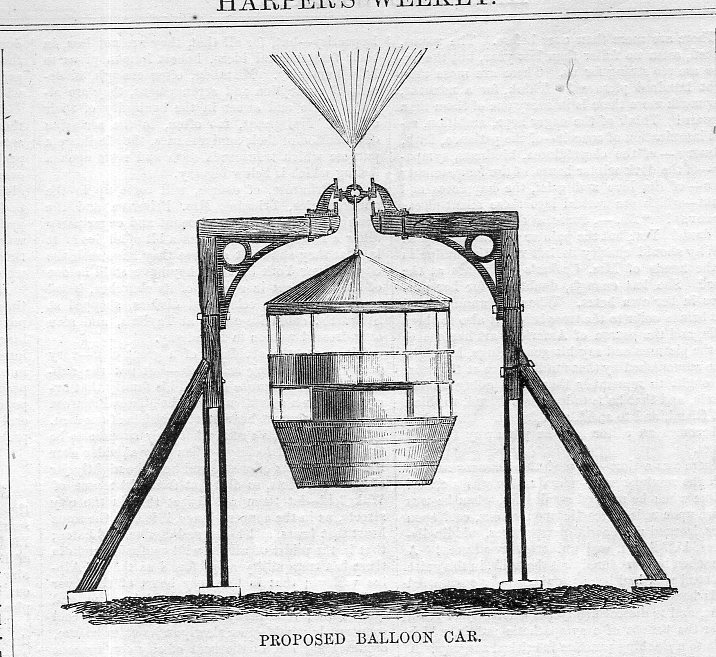
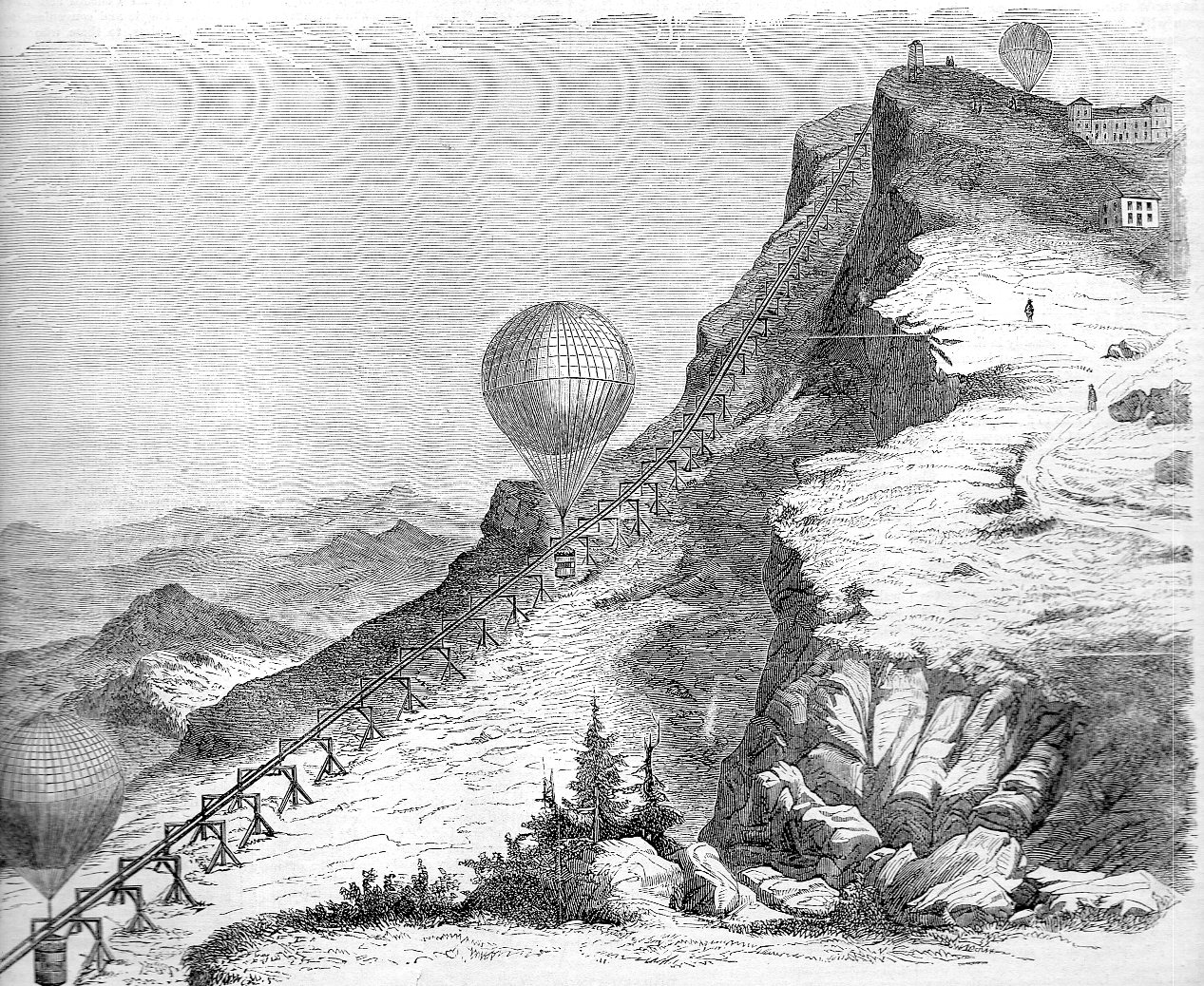
    Harper’s Weekly published an account of a proposed mountain tramway for Mount Rhigi, In Switzerland, almost two years and two weeks before the beginning of the U.S. Civil War.  The author of the report seemed not to hope so much that this would be the inauguration of land air-ships, but that  it would be “an important step toward the final perfection of a [flying] air-ship”.

    If nothing else the engraving of the perspective of the tram car is precise, and light, and lovely.

    Balloon tramway052

    [Source: Harper’s Weekly, April 30, 1859.]

  • Fr. Kircher’s Gulf Stream of 1668

    JF Ptak Science Books  Quick Post

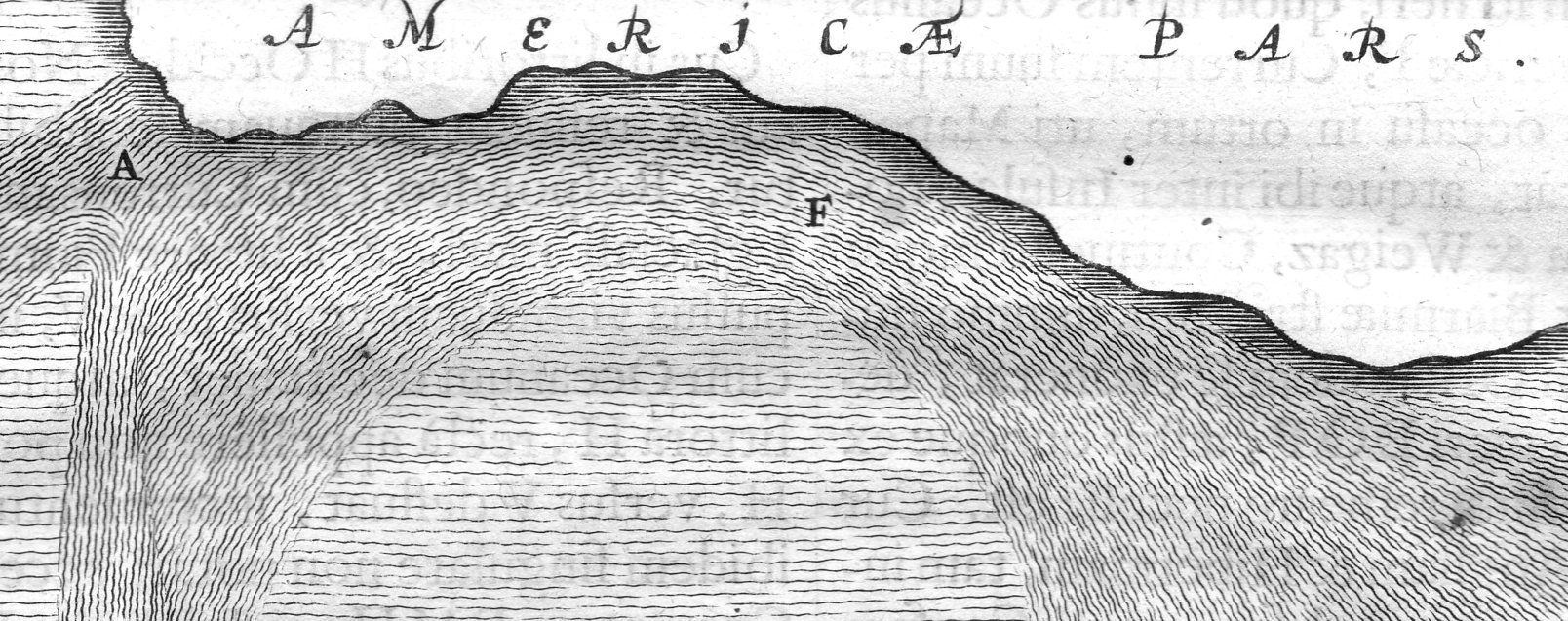
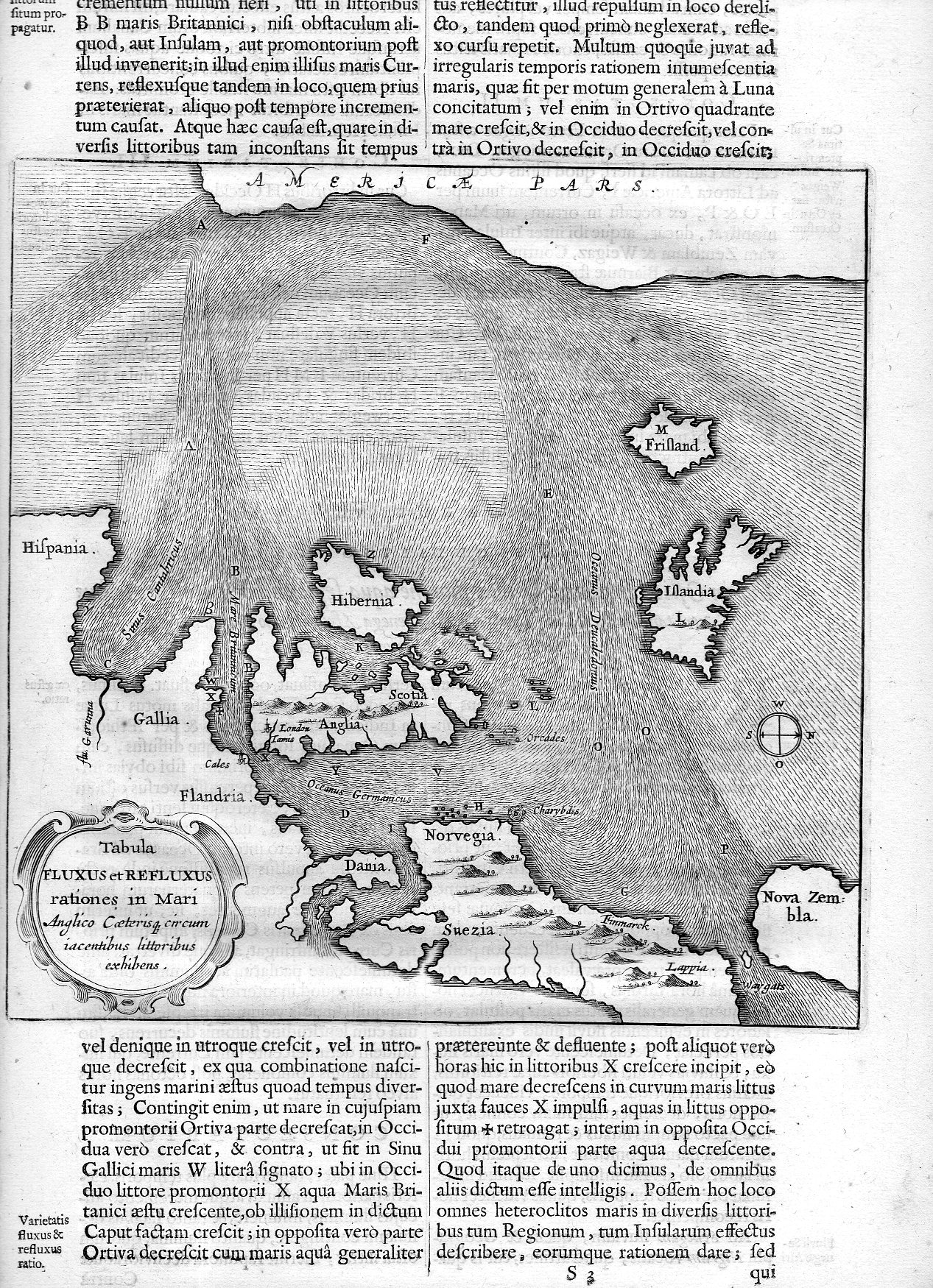
    Kircher gulf stream074This is one of the earliest depictions of what we know today as the Gulf Stream, and it appears one among many wonders in Fr. Athanasius Kircher’s Mundus Subterraneus (1668). The map appears about a century before the first map to truly distinguish the Gulf Stream (the B. Franklin/Folger map of 1768-1785) and shows the remarkable activity that must have come with the acquisition of the data necessary to show on even this popular map.  Given that teh data was necessarily spotty at this early period the Kircher effort was largely theoretical (and for what it was worth likened the currents to something similar to blood moving though the body, which at least used the work of William Harvey).   (Eberhard Happel is on a similar wavelength as Kircher with the currents map, and published his map a few years later, though he was mainly a science popularizer who “relied” heavily upon the Kircher map and was nowhere near to being Kircher’s intellectual rival, his map is still interesting given its very heavy lining and beauty.)

    • The original of this map is available at the blog’s bookstore, here.

    This is a detail of the larger map (below) with a East-West orientation for bottom-to-top, making  the northern North American coastline along the top of the map, with the European coast from Spain to Denmark, and then hopping over to the Nordic countries, and of course with England and Ireland, and lonely Iceland. 

    Kircher gulf stream073


  • Every U.S. Doctor Questioned About (Their) Cigarette Habits, 1946 (?)

    JF Ptak Science Books   Quick Post

    Seriously now–“every”?

    Every Doctor076Every doctor in private practice, unquestioned about their smoking habits, and happily the ones that answered positively selected Camel Cigs are their cig of choice. 

    Every Doctor075

     This ad comes from my own run of LIFE magazine and dates from January 7, 1946. It was a a massive campaign, begun at least by 1946 and establishing the tag about “More Doctors smoke Camels than any other cigarette!”, and is widely viewed as one of the most successful campaigns of any cigarette ever undertaken, which means it probably killed more people than did any other advertising campaign. This means too that more doctors were dying of smoking-related cancers, too, than by any other cigarette brand. 

    Plus, all that unfiltered tarry smoke makes the doctor a delight to smell, as well, especially if they were smoking through coffee grinds, in spite of that white rounds coat.  

    See the fine Stanford Collection of ciggie ads, here. 

    ·Posted by :

    ·in:

    —
  • Antique Chemistry Prints–Rees Cyclopedia, 1802-1920

    JF Ptak Science Books  Quick Post

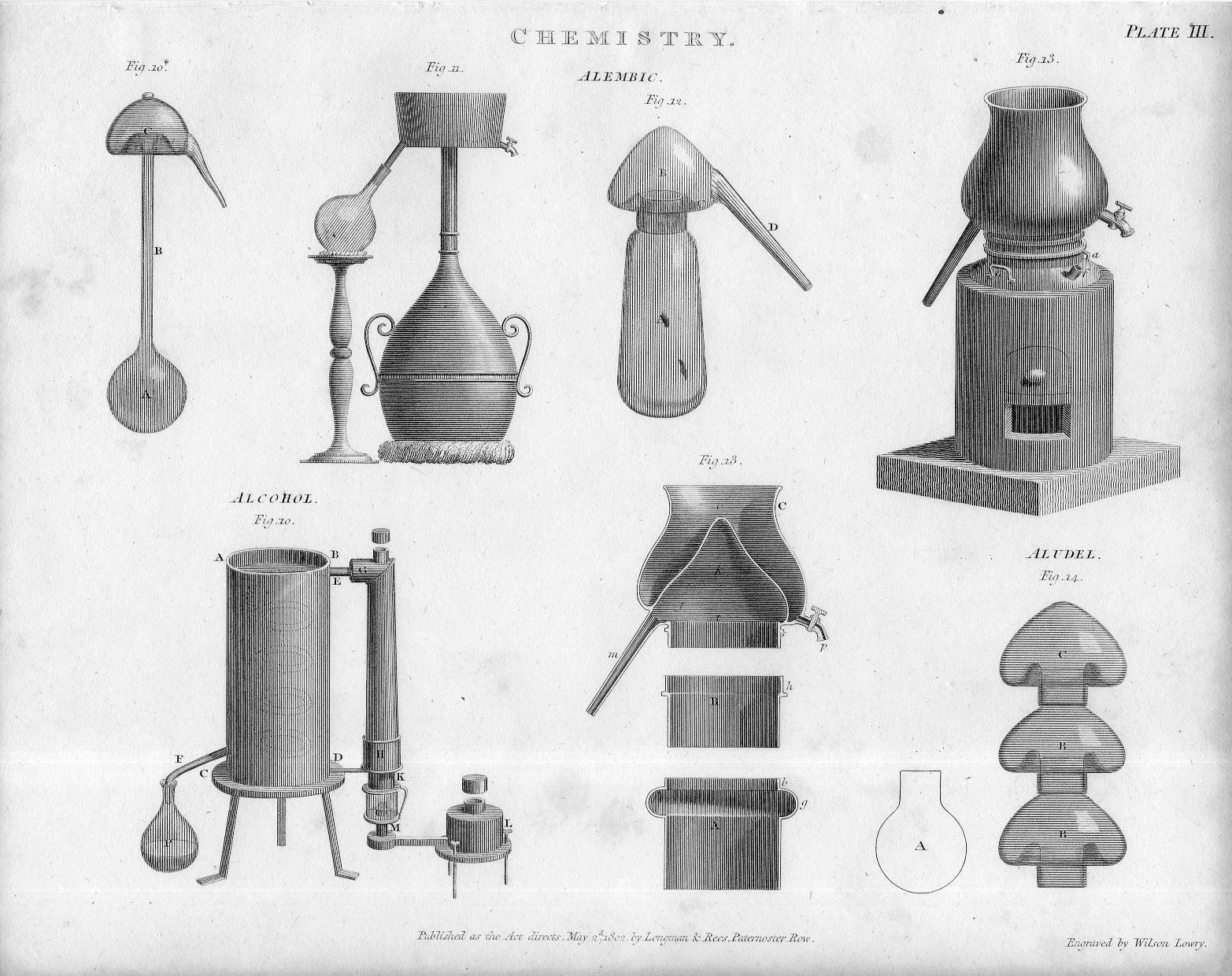
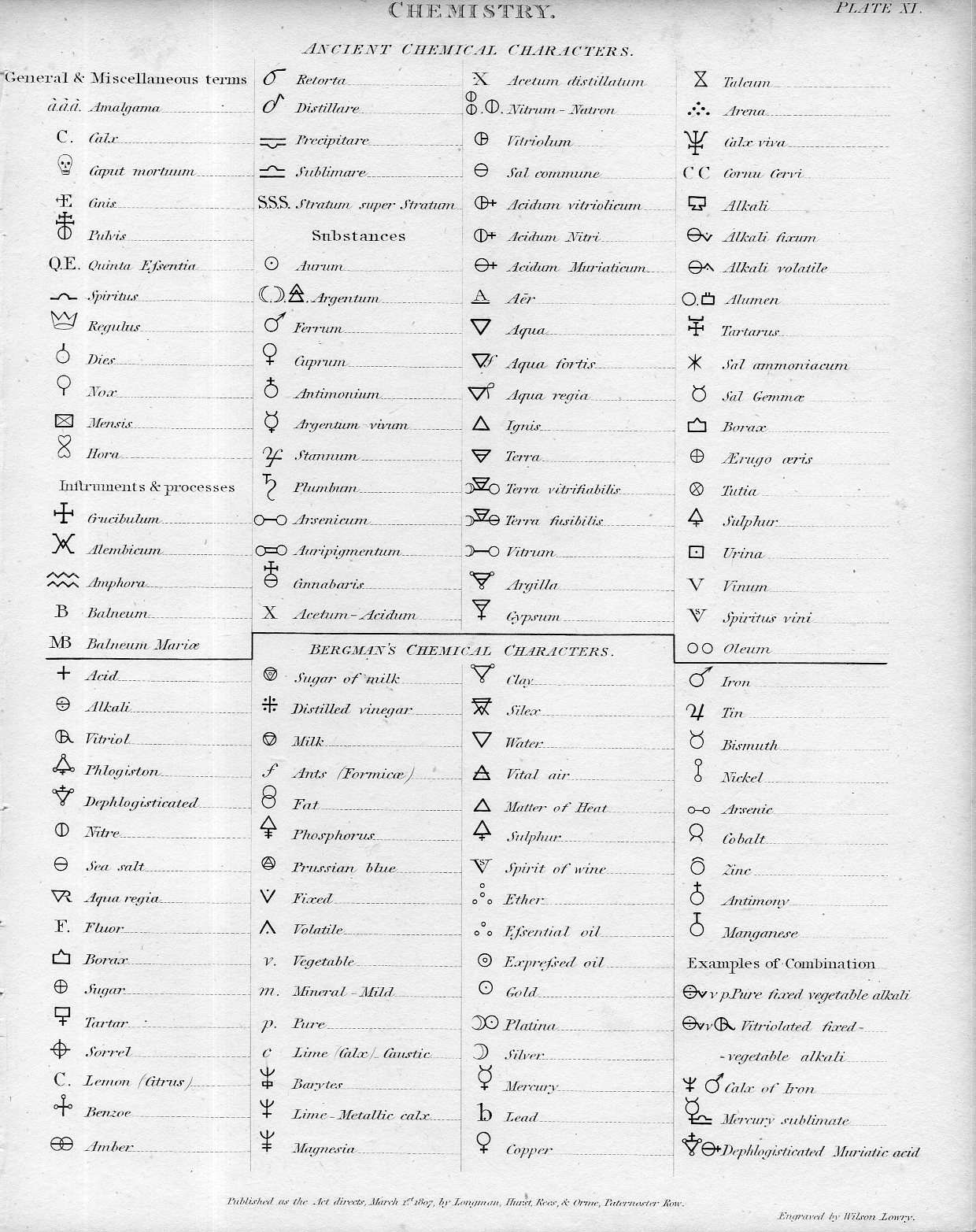
    The following images relating to chemistry were found in the illustration volumes of Abraham Rees’ (1743-1825) great work, Cyclopædia; or, Universal Dictionary of Arts, Sciences, and Literature. This was a massive undertaking for Rees, but his leadership and editorial skills were up tot eh task–in the end, 39 volumes were published containing nearly 40 million words, plus another six thick volumes contained the engraved illustrations to the monograph-length articles.  This section (below) displays some of the chemistry-related items.  Elsewhere in this blog Rees’ images relating to logic, math, and geography are displayed–just search under “Rees” in the Google search box at left.)

    • All of the following may be purchased via the blog’s bookstore, here. 


    Chremistry--alembics 1802 Rees063Rees, WIlson Lowry, London, 1802.

    Chremistry--symbols068Rees, WIlson Lowry, London, 1805.


  • Illustrious Crowded-but-not-So Technical Engravings, 1851

    JF Ptak Science Books

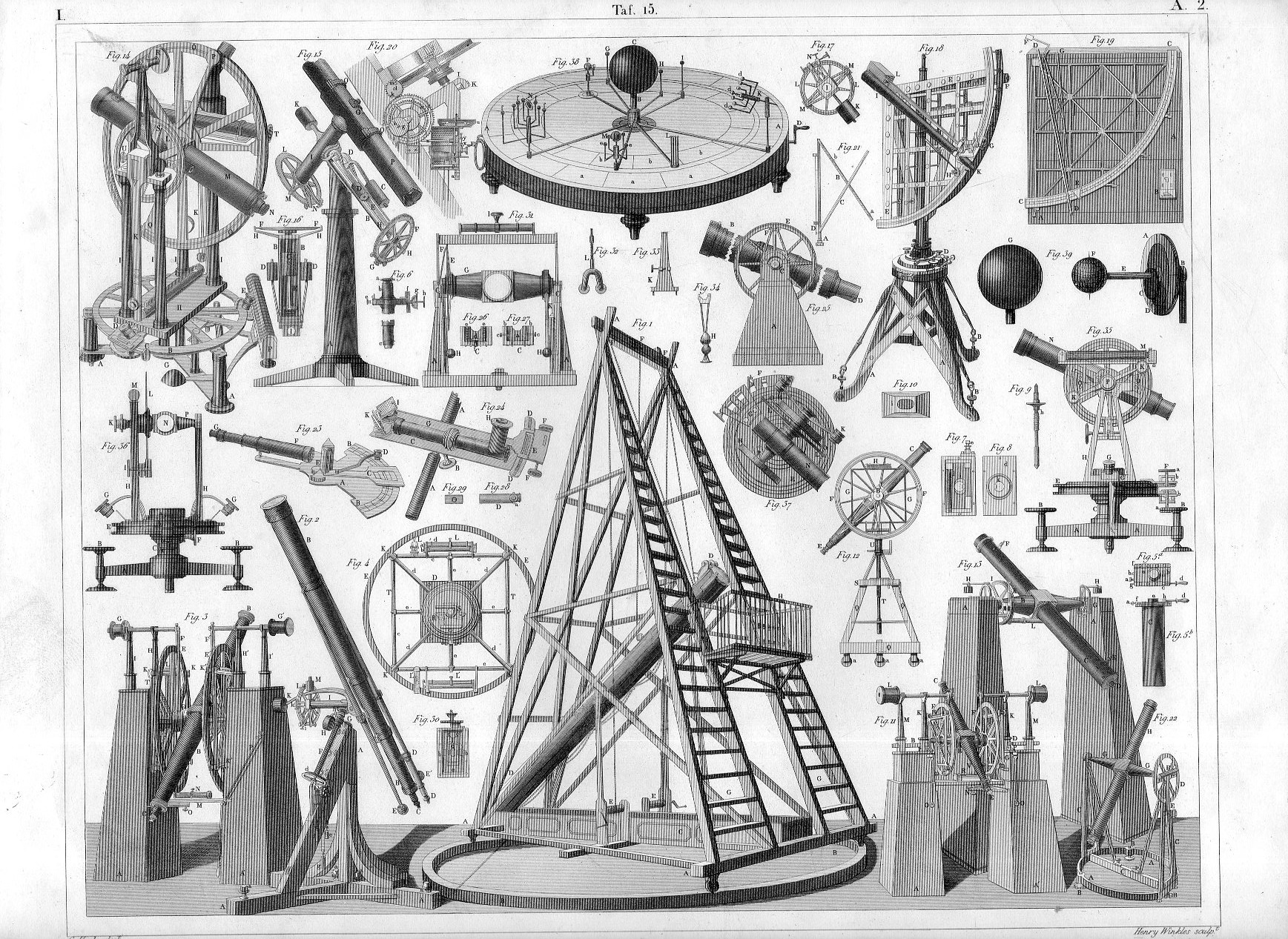
    J.G. Heck wrote and compiled a fascinating and complex work entitled The Iconographic Encyclopedia of Science, Literature and Art, and was published in America for the first time in 1851 following Spencer Baird’s translation from its original German.

    The key to his work is the amount of data displayed on each of the 500 engraved plates illustrating this work and the way in which it is arranged.  The design and layout of the 30,000 items on these 500 plates was a work of genius, and for my money it is easily the best-presented complex means of the display of data and objects that was published in the 19th century.

    Here are some general examples of scientific instruments and experimental display apparatus in the physical and chemical sciences. 

    • All are available for purchase via the blog’s bookstore, here.

    Heck astronomy077

    ·Posted by :

    ·in:

Recent Posts

Archives

Categories