A Daily History of Holes, Dots, Lines, Science, History, Math, Physics, Art, the Unintentional Absurd, Architecture, Maps, Data Visualization, Blank and Missing Things, and so on. |1.6 million words, 7500 images, 4.9 million hits| Press & appearances in The Times, Le Figaro, Mensa, The Economist, The Guardian, Discovery News, Slate, Le Monde, Sci American Blogs, Le Pont, and many other places… 5000+ total posts since 2008.

  • The Madonna in Stone, Again (1665)

    JF Ptak Science Books   Quick Post

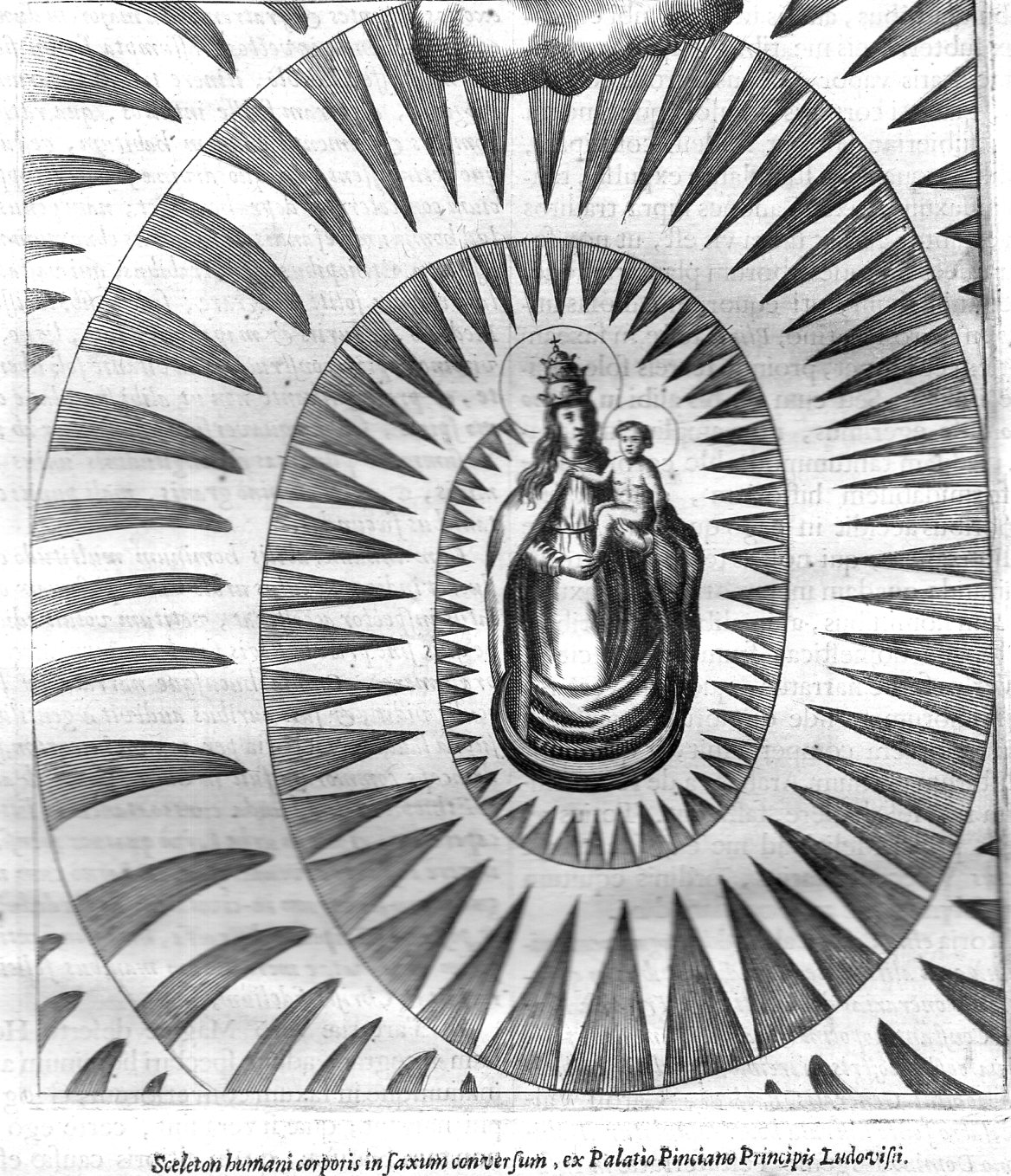
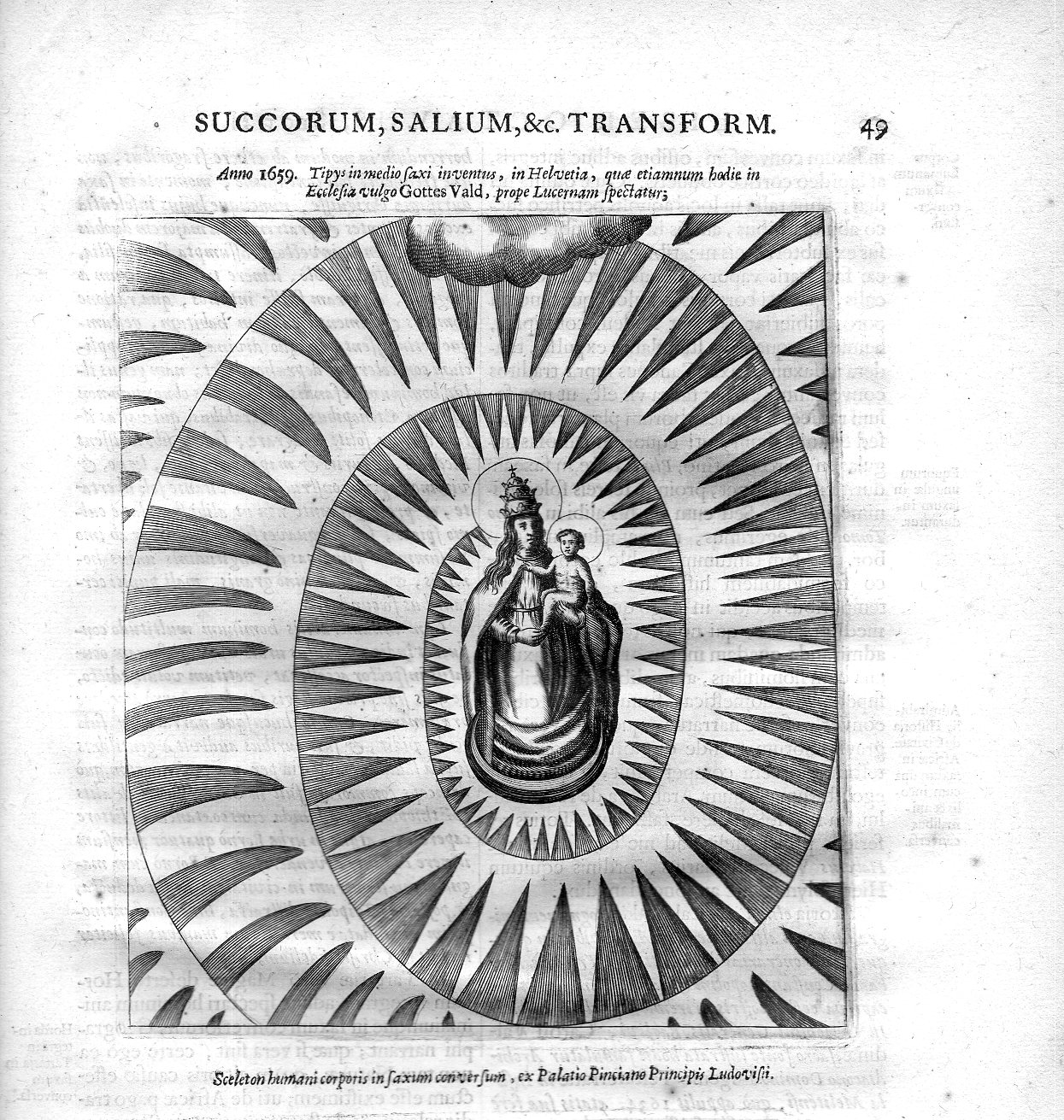
    Continuing this blog’s occasional thread on the great, idiosyncratic, and troublesome Fr. Athanasius Kircher, I report on this spectacular image. It is supposed to be an engraving of a found-image in a piece of agate or some such, showing the Virgin Mary and baby Jesus, surrounded by s curiously radiating display of “light”.  According to one reference the image first appears with Ulisse Aldrovandi (1522-1605) who must have included it with one of the natural histories before it founds its way into Kircher’s Mundus1.  

    The partial description above the print references the Church Grottes Vald (in Lucerne), where this relic was to be found.  

    Kircher 49b059

    And the full sheet, in two parts:

    Kircher 49057And the bottom half that wouldn’t fit on the scanner:

    Kircher 49b058In reality these are simply on the same sheet, uninterrupted.

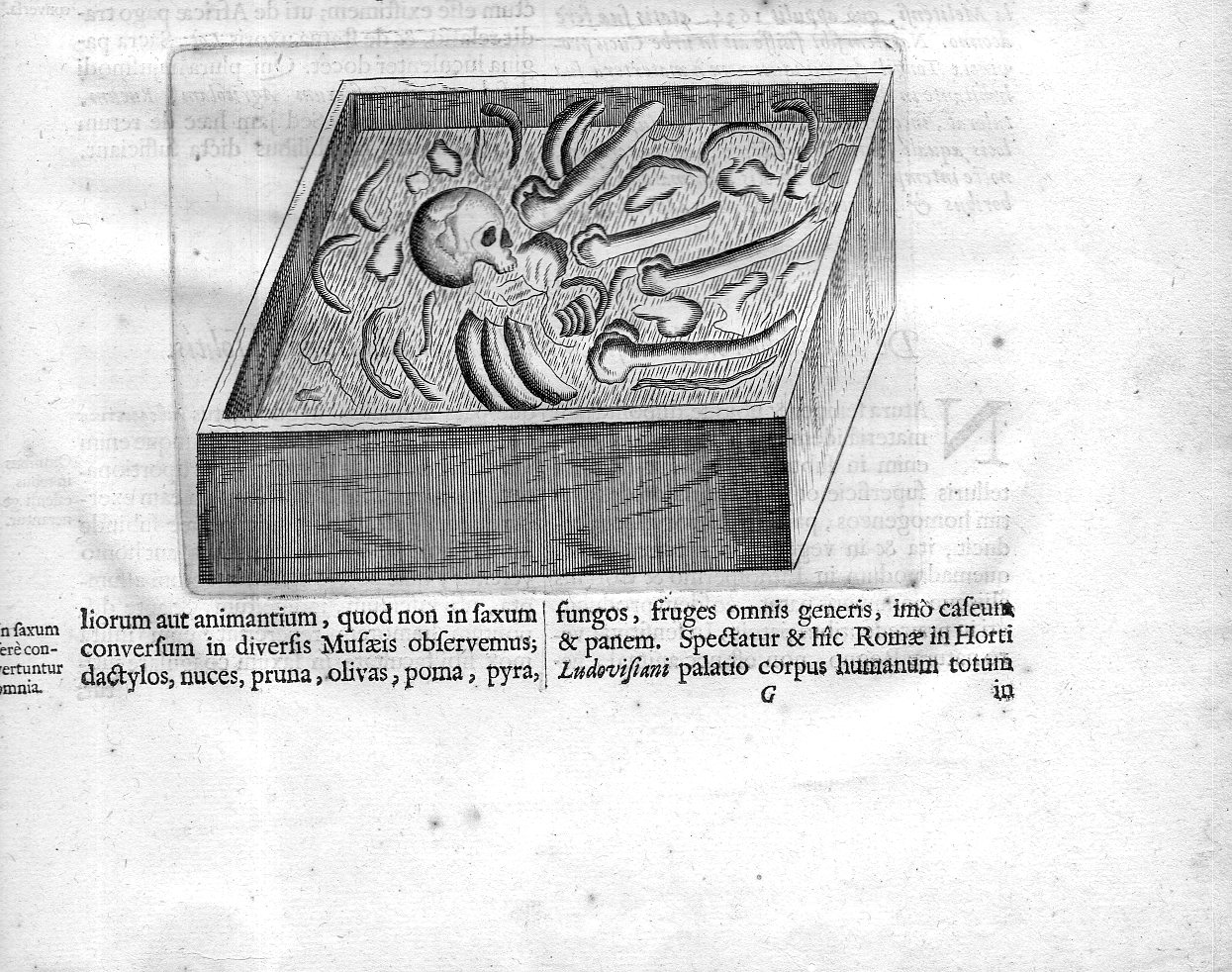
    The second image is identified so: “Sceleton humani corporis in saxum conversum…”2, and refers to what was supposed to be fossilized human remains covered by some sort of fossil -something.  The remains weren’t fossilized, of course, but in 1657, that was the difficult leap that was make. 

    Notes:

    1.  The full title by Kircher (1602-1680): Mundus subterraneus, in XII libros digestus : qvo divinum subterrestris mundi opificium, mira ergasteriorum naturae in eo distributio, verbo [pantamorphon] Protei regnum, universae denique naturae majestas & divitiae summa rerum varietate exponuntur, abditorum effectuum causae acri indagine inquistae demonstrantur, cognitae per artis & naturae conjugium ad humanae vitae necessarium usum vario experimentorum apparata, necnon novo modo & ratione applicantur. Ad Alexandrum VII. pont. opt. max, 1665. 

    2. This image can be seen in full text in a somewhat later edition of the Mundus of 1678 at Heidelburg http://digi.ub.uni-heidelberg.de/diglit/kircher1678bd2/0062 and another series of images at University of Oklahoma, http://hos.ou.edu/galleries//17thCentury/Kircher/1665-det-composites/. 

  • The Unresolved Creepiness of “Indoor Man”

    JF Ptak Science Books  Quick Post

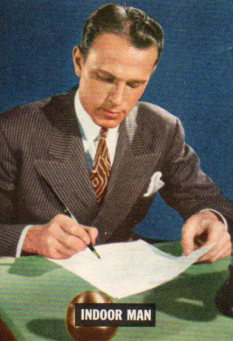
    There is an indeterminate quality of quiet malice in these pictures, somehow–they seem bland and also threatening in some way. Perhaps it is the assumption of these Human Types that is so off-putting, with this 1939 pamphlet happy to categorize people into three major “types”.  “Active Man” seems like an aspiring non-perspirer, eager to let someone else do it; “Thin Girl” seems to be daring her simple classification; the “Housewife” needs to prove her name is accurate not only with the apron, but with a pot as well; “Mature Person” is urgently directing attention to high-attentioned-bits while maintaining a stiff unwrinkled nature; and “Office Girl” is stiff-backed with a pencil knife at ready. The whole cover for this diet regimen just seems softly-defined creepy–perhaps not so much for the titles, or the postures, but for the aggressive contrasting color.  

    Indoor Man060


    ·Posted by :

    ·in:

  • Killing the Dead Poe, 1849

    JF Ptak Science Books   Post 2534

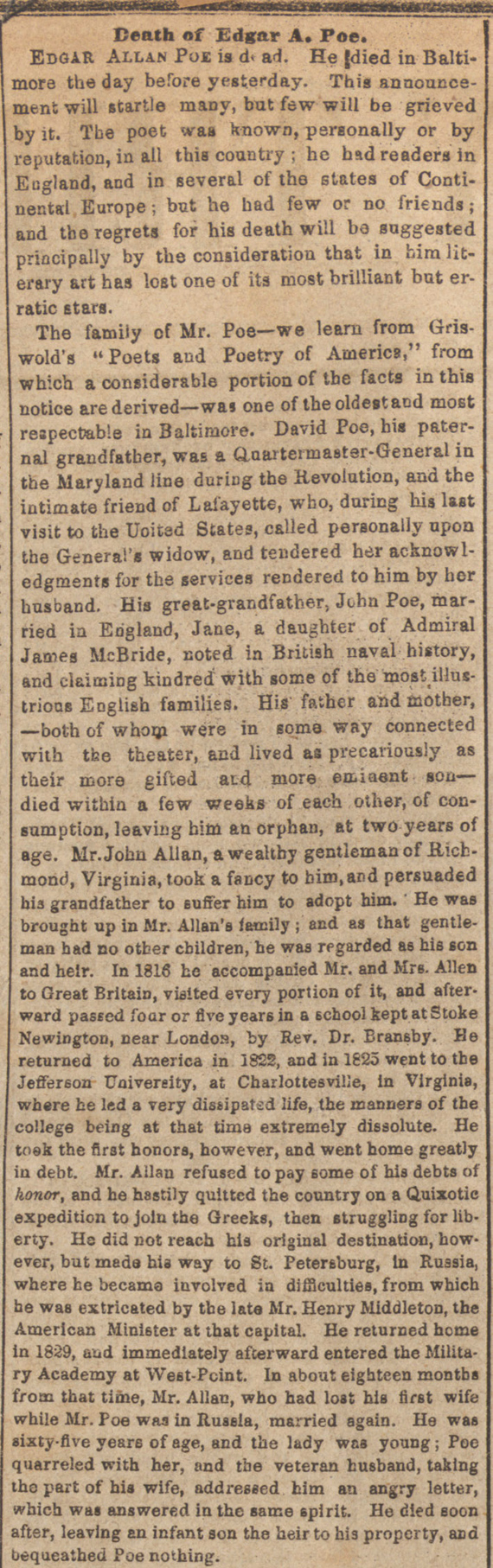
    Carl Sandburg (whose house is about 5 miles from here) wrote a long, light-but-heavy, airy three-volume biography of Abraham Lincoln that is said to have killed the president, again. Rufus Griswold, a once semi-friend of Edgar Allen Poe, became a bitter enemy whose hatred of the man extended pathologically deeply far into Poe’s death.  There are stories of cross-loved interests, and competition over a job, and the biggest (or more representative) thing–Poe’s lukewarm review of Griswold’s genre-twisting collection of American poetry, for which Poe was paid by Griswold, a bribe producing a coercion of Griwold’s work. Poe was evidently never forgiven for that, and probably never forgiven for being legions smarter and far more talented than Griswold–and for all of these real or imagined ills Griswold drove a stake through Poe’s eye in this very nasty obituary.  It was signed with a pseudonym, but it was soon discovered that Griswold was the author.  

    The obit is a diatribe, pure and simple, a revenge piece that pulled Poe from his grave and killed him again. You can tell that the long column will cleave Poe in two by the end of the second and third (short) sentences: “He died in Baltimore the day before yesterday. This announcement will startle many, but few will be grieved by it”.  You know at that point that whatever comes to follow will offer a rough ride, which indeed it was.  There’s a lot of stuff about his personal life, including a long an meandering section on his stepfather—and not one mention of anything that he wrote.  

    Griswold clawed his way into the heart of Poe’s remains like a meth addict tracking down a ten dollar bill under a soda machine, and proceeded to defame Poe and his life via forged letters, and thus creating Poe the madman/street-crawler/drug-addicted alchie who was a friendless and betraying  and brutal to anyone he knew. It took a while for Griswold’s crimes against Poe to be uncovered, but the damage was done, and life force thief Griswold was safely tucked into his own dirt nap.  No one deserves that sort of treatment, least of all Poe.  In the end the truth was outed, with Poe recognized as himself again, with Griswold becoming the pathological necro-killer.  

    Poe obitt


    [Image source: Awesome Stories,  https://www.awesomestories.com/asset/view/Poe-Obituary-by-Rufus-Griswold, reprinting the obit as it appeared in the New York Tribune, October 9, 1849.]

  • Unusual Maps: US Financial Impact on the World, 1929

    JF Ptak Science Books  Quick Post

    Map finance 1929251

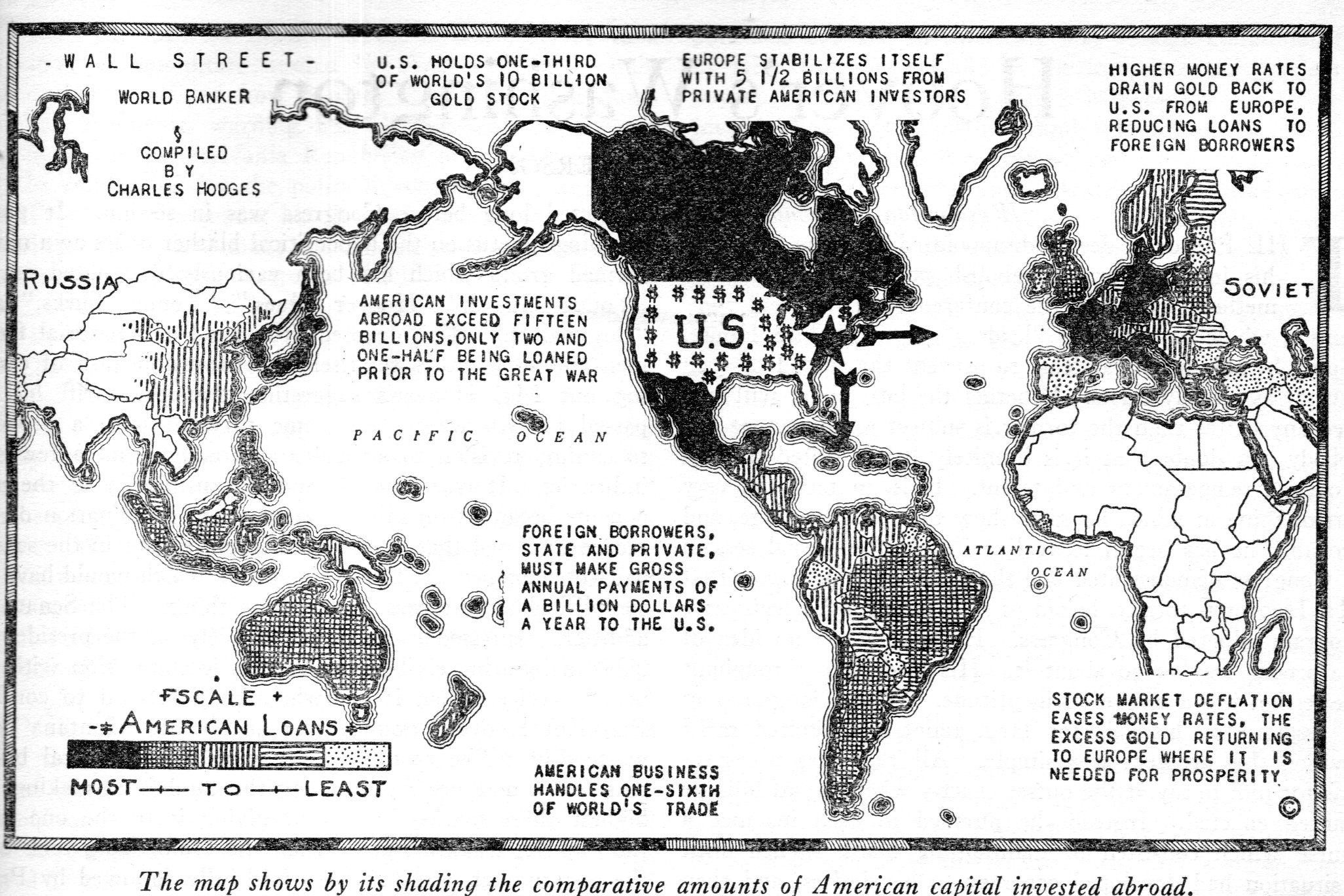
    By the time this map of U.S. foreign investments appeared in The Nation on December 4, 1929, the Wall Street Crash was 41 days old.  The giant ride to the top had pretty much dissipated by August 1929, and there was the beginning of the decline in September and October. October 24th was the beginning of the Great Crash–the 25th brought a glimmer of hope with buy-backs; but this was followed by Black Monday (the 28th) and then the bottom fell out of the bottom the next day (Black Tuesday, October 29).  There were some small fits and starts–at least enough for the columnists at The Nation to declare that the recovery had begum, as seem in a few articles in October–but they were sorely mistaken. 

    In any event, I haven’t seen this map before, and I thought to share.  

  • A Note on Memory

     JF Ptak Science Books   Post 2536

    • “I think it is all a matter of love; the more you love a memory the stronger and stranger it becomes” ― Vladimir Nabokov

    Objects are synesthesic things, in their own way, something other than themselves when we attach memories to them. Like how some people can see color in music, objects have the potential for being far more than they are, and their power as story-holders don’t necessarily have anything to do with their function. The old battered and painted-over light switch that I keep in my tool chest isn’t an old beaten up spare, because it holds the memory of where I got it–in this case, it was in a trash heap outside of 112 Mercer Street in Princeton, where Albert Einstein used to live. It was old enough to have been in the house in the 1950’s, and so perhaps the man flipped it on and off–that’s what the object holds in itself for me, that spot in time. No one knows that story, and could never know it by looking at the switch swimming around in my tools–but once the object has been recorded, and photographed, and the story told, it becomes much more than itself.

    • “God gave us memory so that we might have roses in December.” ― J.M. Barrie

    Everything has this potential if your memory is deep enough, but we really don’t want that as a superpower–like Borges’ “Fumes the Memorist”, there is a comfort zone to be experienced in memory, otherwise you may wind up spending your day remembering other days and not have any time to form new memories.

    As we find out with Marcel Proust, it isn’t necessarily the sight of an object that can lead you into a long experience of memory leading to memories–it can be the sound, or the texture, or an act involving the object. Like eating a cookie. “Touch has a memory” as John Keats sad, and everything may be open for interpretation—there are all manners of triggers, as in the protagonist in Frances Itani’s The Bone Diaries, where the recollection of every broken bone is like an anatomy of memory.

    It is hard to capture a smell as part of a collection of memory memes, but you can certainly have the thing that makes it, or the packaging that contained it, and so on. (For example you can open an old book and get that Old Book Smell, that transports you to a special place, all because of that book.)

    There are places that are dedicated to the memories of objects, memories that aren’t necessarily related to themselves. There are monuments to toys in Japan, distinguished from the monuments to lost and broken toys. This is a brilliant thing because the monument can stand in validation to that favorite toy that exists only in memory, but associating that memory with a slab of marble gives that gone-toy a physical presence, and honors the good time that you had with it. (There is an interesting story in Punch magazine for 1892, “Evolution of a Toy Soul”, that long before Toy Story explores the complex existence of the being of a toy as it passes from one sort of toy to another.)

    There have been thousands or perhaps tends of thousands of memory systems implemented through the course of human history–these were essential attributes before the age of having endless and easy access to paper and writing instruments. If these were very expensive, then you’d have to figure out a way of story this information. Some of these systems were mnemonics, and some were visual-mnemonics, where you would visualize a memory theater in your mind, the interior of a building with man rooms, an din one of these rooms were several cases, and within these would be associative memories. It was a way of story information for later access, and it was the way many people kept their memories for centuries. Even though this is not much practice–unless you enjoy committing poetry (“Poetry remembers that it was an oral art before it was a written art”–Jorge Luis Borges) etc to memory–the story of how people thought about saving memories is a fascinating and useful thing to hear.

    Frances Yates The Art of Memory and Jonathan Spence’s The Memory Palace of Matteo Ricci are two fine books to read on the concept of the memory palace, each a classic in its own way. Although it was not about constructing a mental architectural memory, Jorge Borges’ “The Infinite Library” will make a good read on how to think of the organization of memory, as it is very easy to assimiliate the idea of a physical library being an external organizing device for vast amounts of memory. It might also be worth considering the opposite of this, as in the entirely fabricated memories in P.K. Dick novels, or in the memory excisions of Orwell’s 1984.

    This is memory remembered twice–not like the John Yossarian from Catch-22 remembering stuff twice and being incapacitated, but remembering once for yourself and once for the telling of it.  

    ·Posted by :

    ·in:

  • The Illogical in Pursuit of a Logical End–a Note on the Snark.

    JF Ptak Science Books   Post 2537

       "Just the place for a Snark!" the Bellman cried,
              As he landed his crew with care;
         Supporting each man on the top of the tide
              By a finger entwined in his hair."

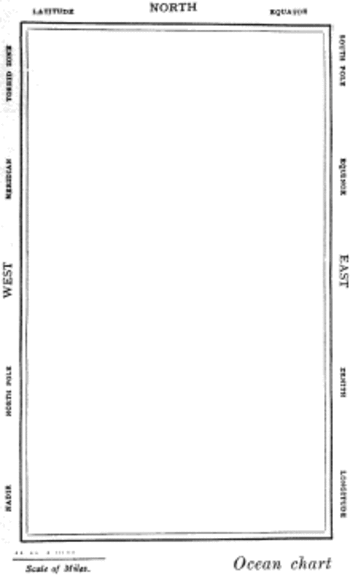
    So opens the semi- and fully-immortal The Hunting of the Snark. an Agony in Eight Fits, by the fully-and-not-partially-immortal Lewis Carroll, which (if it can said what the book is about) is about eight guys whose professions all begin with a letter “b” plus a beaver in search of a Snark.   In the second of eight Fits that comprise this lyrically nonsensical poem, we encounter a map of the route of possibilities taken by the group, this being in the charge of the Bellman. This is not only the finest map illustrating a Fit that exists, it is also (as I’ve stated earlier in this blog) one of the most beautiful maps ever published. It is a beautiful map of nothing, showing nothing, and marking the route of nothing.  Perfect for the Snark story.

    The Bellman himself they all praised to the skies-
    Such a carriage, such ease and such grace!
    Such solemnity too! One could see he was wise,
    The moment one look in his face!

    He had bought a large map representing the sea,
    Without the least vestige of land:
    And the crew were much pleased when the found it to be
    A map they could all understand.

    “What’s the good of Mercator’s North Poles and Equators,
    Tropics, Zones, and Meridian Lines?”
    So the Bellman would cry: and the crew would reply,
    “They are merely conventional signs!

    “Other maps are such shapes, with their islands and capes!
    But we’ve got our brave Captain to thank”
    (So the crew would protest) “that he’s bought us the best-
    A perfect and absolute blank!”

    Snarkmap

    Sometimes there is nothing so fine as something that beautifully illustrates the nothing that isn’t there, and this lovely map, unencumbered of all of the elements and details that define the mapness of something,  perfectly explains the origin of its need.

    The Snark evidently occurred to Carroll while he was out walking on one bright summer day, on a hillside–actually, it was one line of poetry, and it wound up being the closely line of the book.

      In the midst of the word he was trying to say,
              In the midst of his laughter and glee,
         He had softly and suddenly vanished away—-
              For the Snark was a Boojum, you see.
    
                       THE END

    So we had those eight guys and a beaver, setting out from points unknown and going to places not seen.  

    This was all started by that string of poetry that entered Carroll’s head on his walk.  He didn’t know what it meant, and didn’t know where it was going; he did however set out to figure it out for himself.  (“I know not what it meant, the; I know not what it means, now…”1) I find it such a lovely thing that Carroll would spend so much time trying to retrieve the intellectual evidence of where this line came from.  And what his investigation revealed was The Hunting of the Snark.  And at the end of the day, Carroll was no closer to knowing what a Snark was, in spite of all of the writing and commentary and criticism.  Throughout the rest of his life Carroll insisted that he didn’t know what the poem meant, though it could have meant something.  It was supposed to have been a work of nonsense and illogic, but I think it fits with the rest of his work on nonsense and the logic of it, so my best guess is that there was nothing quite so logically in his works as the reach of the illogical in pursuit of a logical end.  

    • Full text of the Snark, here, via Project Gutenberg. http://www.gutenberg.org/files/13/13-h/13-h.htm  Also a pdf with illustrations:  http://www.archive.org/stream/huntingofsnarkan00carruoft#page/n27/mode/2up

    Notes:

    1.  This line occurs in Morton Chase’s Lewis Carroll, a Biography, published by Macmillan in 1995, p 404.

  • Smell-o-Rama without the Rama

    JF Ptak Science Books  Quick Post

    “A true poet does not bother to be poetical. Nor does a nursery gardener scent his roses”Jean Cocteau.

    Maybe so and maybe no, and if not, maybe they should…especially for the poets.  But this come from the writer with only the memory of smell for an olfactory sense.  

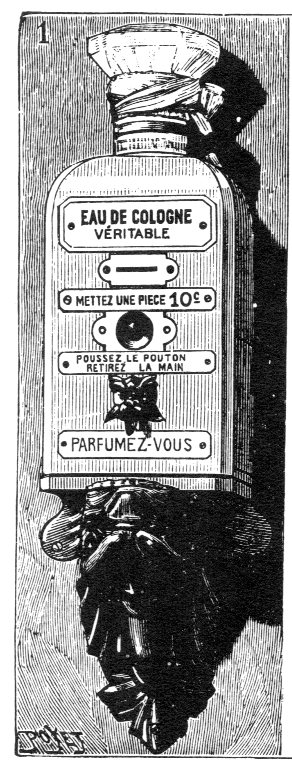
    I looked around without success in Walter Benjamin’s Arcade Project to find something about this image, which turns out to be a scent dispenser. These buggers were quite popular (at least in France) and used to be hung at entrances to popular venues where patrons could scent themselves with this-and-that for a few pennies. It seems positively Terry Gilliam-ish to me, but that’s what it was.  

    Scent dispensers260[Reprinted in Scientific American, 1895–sorry, no exact issue was recorded.]

    ·Posted by :

    ·in:

  • Forts of Nothing

    JF Ptak Science Books   Quick Post

    Part of the series on the History of Blank, Empty, and Missing Things

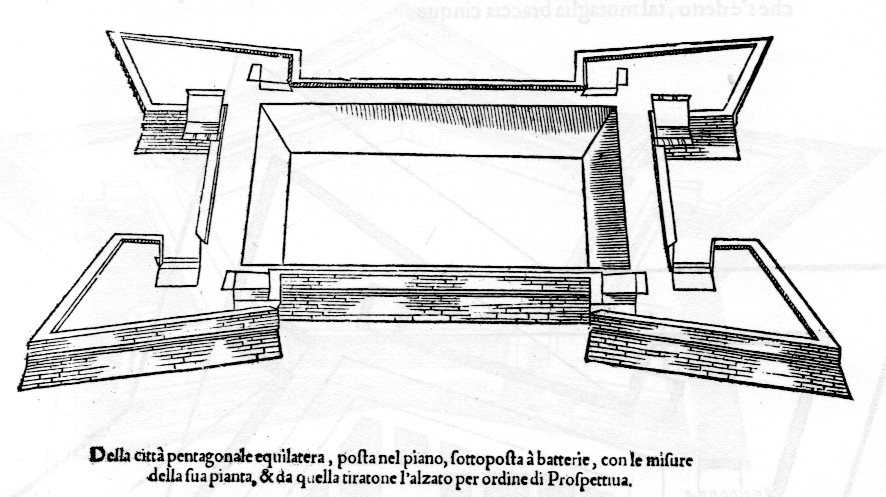
     These interesting images of fortifications–protective of nothing, staffed by no one, generally in no landscape–are very lonely design representations found in Pietro Cataneo’s I Quattro Primi Libris di Architettura, and printed in 1654.  They are forts that protect and capture nothing, at least in this book–they are simply perspectives for fortification design.  They float beautifully in the text, lifted somewhat from the pages unencumbered by any human detail. 

    Cataneo fort 265


  • The False Card Catalogs for the Library of Babel

    JF Ptak Science Books  Post 2538
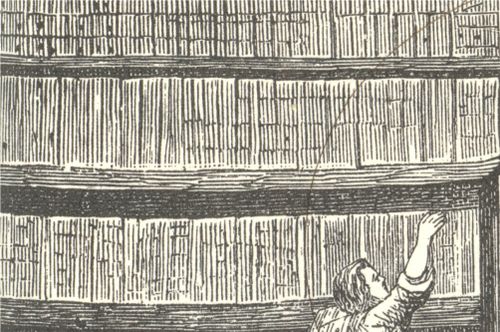
    Books

    “Cataloguing is an ancient profession; there are examples of such “ordainers of the universe” (as they were called by the Sumerians) among the oldest vestiges of libraries.” ― Alberto Manguel, A History of Reading (and also translator of Borges and co-editor of A  Dictionary of Imaginary Places, a book worthy of high consideration as the The Book that you could have with you on a desert island.)

    • [On the other end of the infinite library, see an earlier post here on “The Library of One Book”, here: https://historyofideasblog.com/thesciencebookstore/2009/10/the-library-of-one-book.html]

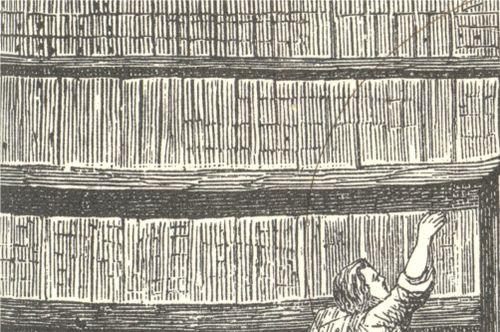
    In Jorge Borges’ “The Library of Babel” (published in 1944 and translated into English in 1962) we find that an infinity, or a universe, or a heaven, is declared to be a sort of endless library, stocked with hexagonally-shaped rooms books filled with books, all the same size, with the same number of characters. The rooms are endless, as are the books, which are written in every conceivable language and containing 29 necessary elements (including the alphabet, and the period, comma, and very interestingly concluding with the space). There are endless varieties of possibilities, and the place is staffed by librarians who have interests and obsessions from, well, A to Z, or Az^Z^Z^Z to ZA^A^A and so on, until we run out of time.  (Others have done some smart thinking on Borges’ great thought experiment/short story, and have estimated the size of the library in terms of stacked orders of magnitude beyond the atoms of the universe–but you can find all of that stuff elsewhere with a quick google search.)

    And then there’s this sample fro Borges on what sorts of books make up the library:

    “…the detailed history of the future, the autobiographies of the archangels, the faithful catalog of the Library, thousands and thousands of false catalogs, the proof of the falsity of those false catalogs, a proof of the falsity of the true catalog, the gnostic gospel of Basilides, the commentary upon that gospel, the true story of your death, the translation of every book into every language . . .”

    Here’s how you arrange an infinite library: you don’t.

    The books are not sorted to any sort of classification, only collected to the point that they are together.

    The many seem to be written in indefinable languages. Some of the librarians spent their time pursuing the holy grail–since all books that could ever be published would be present here, which theoretically include an index to library, or some sort of organizing principle.

    But since there was no verifiable organizing principle at play here, the library was useless as a “library”, though for the individual bits, it was perfectly fine. The structure though just turned into a long, endless, shelf.  This might explain why the caretaker/librarians of the place are so desperate.

    I cannot recall a mention of a card catalog, which I guess could be as all-powerfully impossible as the library, given that the library is not-classifiable. This is particularly true when you consider that there must also be a catalog of the arrangement of all possible false catalogs of all possible false books in the library, in addition to the true catalog. Perhaps the cards from this catalog would take up all of the space in the universe that would bump up against our own.  

    On the other hand, the logician W.V.O. Quine has written in a short piece that the Borges library is finite, because at some point there will come a time that all that can be written or will be written has been written:

    “It is interesting, still, that the collection is finite. The entire and ultimate truth about everything is printed in full in that library, after all, insofar as it can be put in words at all. The limited size of each volume is no restriction, for there is always another volume that takes up the tale — any tale, true or false — where any other volume leaves off. In seeking the truth we have no way of knowing which volume to pick up nor which to follow it with, but it is all right there.”

    He reduces this argument elegantly but completely without the humor of Borges, and says that all that is known can be represented in two symbols from which everything else can be derived–a dot, and a dash. He writes: 

    “The ultimate absurdity is now staring us in the face: a universal library of two volumes, one containing a single dot and the other a dash. Persistent repetition and alternation of the two is sufficient, we well know, for spelling out any and every truth. The miracle of the finite but universal library is a mere inflation of the miracle of binary notation: everything worth saying, and everything else as well, can be said with two characters.”

        “The ultimate absurdity is now staring us in the face: a universal library of two volumes, one containing a single dot and the other a dash. Persistent repetition and alternation of the two is sufficient, we well know, for spelling out any and every truth. The miracle of the finite but universal library is a mere inflation of the miracle of binary notation: everything worth saying, and everything else as well, can be said with two characters. It is a letdown befitting the Wizard of Oz, but it has been a boon to computers.” [Quine’s “Universal Library” is found at Hyperdiscordia, here: http://hyperdiscordia.crywalt.com/universal_library.html]

    Quine’s approximation cuts way down on the size of the library, which evidently would not fit in the known universe, which opens the gates for Heaven, which I think doesn’t depend on such restrictions–unless of course it was too big for that, which means believers would be in trouble, and none too happy with being kicked out of paradise to make space for a book.


  • A Massively Geared “Tricycle” of 1879

    JF Ptak Science Books  Quick Post

    Propeller bike266

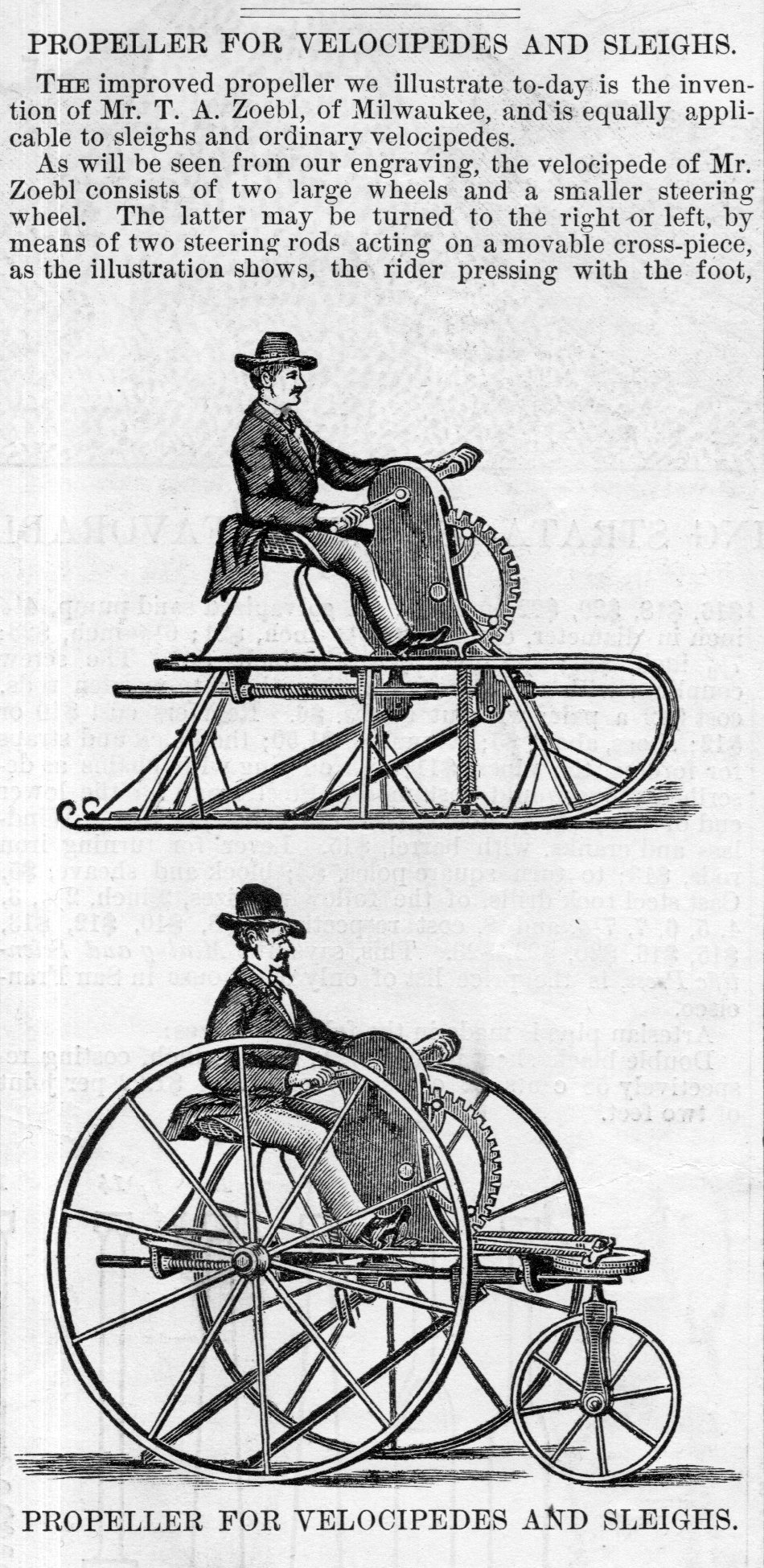
    Looking for illustrations of an enormous horse-drawn rangefinder in volume 7 (1879) issue of the Scientific American Supplement I came across these two unusual images of  a hand-powered sleigh and “bicycle”. The gearwork looks to be about the size of a modern bike wheel, perhaps even bigger–it certainly weighs more, and could weigh more than an entire (good) bike. I don’t really understand how the energy is transferred but it seems to be that the gear drives a toothed rod back and forth that reacts with a springed mechanism that in turn moves the wheels.  It is a huge gearwork, but that vehicle looks awfully big and not-so-mobile to be driven by that and the springs.  On the sleigh the gearwork seems to push a plane of some sort to push the sleigh forward. Even in 1879 there were better and simpler designs for bikes…I don’t know what to say about the sleigh….

    From the SA:

  • When U.S. Forces Occupied Los Angeles (1848)

    JF Ptak Science Books    Quick Post

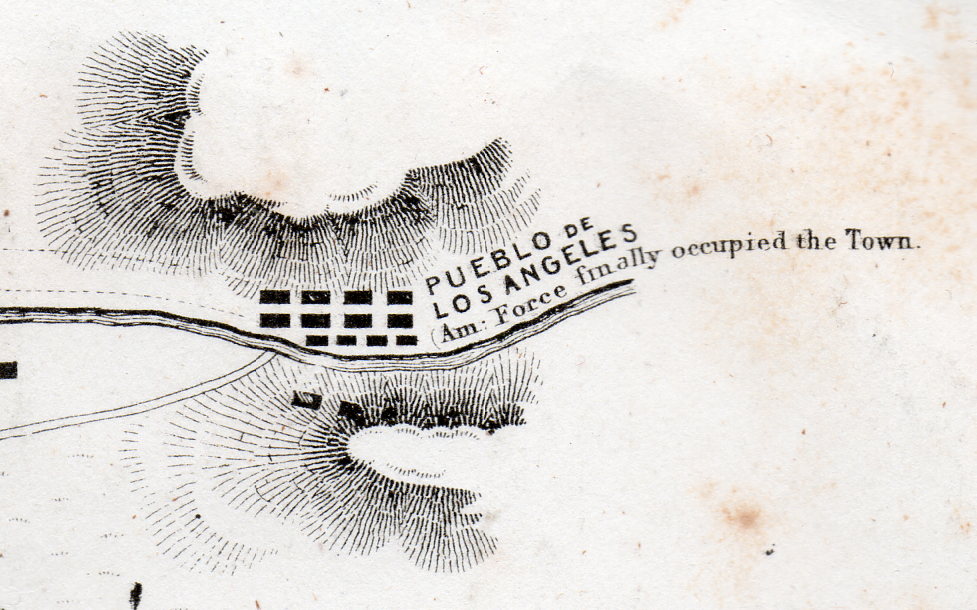
    Battle Los Angeles 1848926[Detail of a one square inch area in the original.]

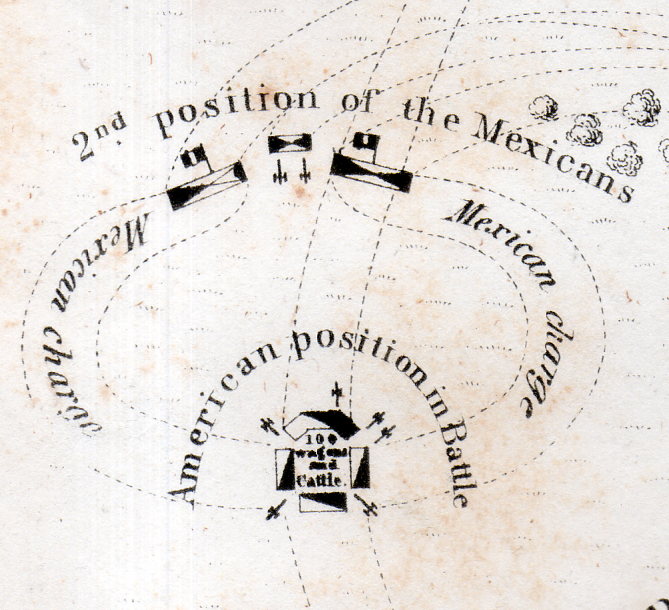
    This lovely map has a few tiny bits of unexpectedly weird details–I mean they’re historically accurate and all, it is just that removed and presented apart from the context of the rest of the map the details take on a peculiar–and attractive–surreal quality.

    Battle Los Angeles 1848927[Detail of a one square inch area in the original.]

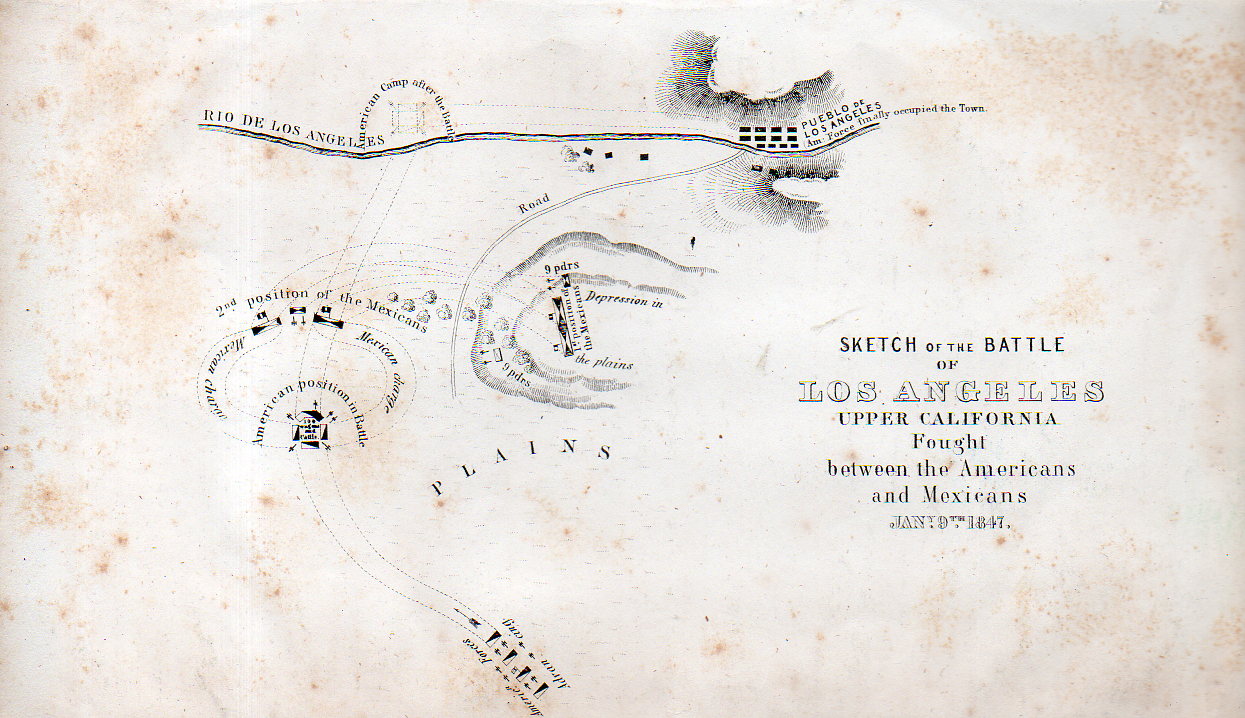
    The map is a Sketch of the Battle of Los Angeles Upper California fought between the Americans and Mexicans, Jan 9, 1847, and published in 1848. The map depicts the grounds of the Battle of the San Gabriel River, a victory for the United States, which resulted in the retaking of Los Angeles from the Californos a couple of days later, on January 10.  

    Full explanations of the battle can be found in a number of places, but this one is pretty concise and clear. 

    ,Battle Los Angeles 1848925

    Origin:  EMORY, W[illiam] H[emsley] (1811-1887). Notes of a Military Reconnaissance, from Fort Leavenworth, in Missouri, to San Diego, in California, Including Parts of the Arkansas, Del Norte, and Gila Rivers…Made in 1846-7, with the Advanced Guard of the “Army of the West.” Washington: Senate Executive Document No. 7 [30th Congress, 1st Session] Wendell and Van Benthuysen, Printers, 1848.  (13 x 22.2 cm; 5-1/8 x 8-3/4 inches). A bit of foxing, otherwise a good copy of this map.  

    This map is available from our blog bookstore, here.

Recent Posts

Archives

Categories