JF Ptak Science Books LLC Post 365
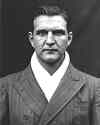
How does it come to be that Nazi doctors who did human experimentation and were convicted at Nurnberg, released early, and go on to extended medical careers and long lives? Case in point: Dr. Fritz Fischer, pictured here, convicted of crimes against humanity for performing terrible experiments on human beings; sentenced, relseased early, and then went on to a new career with an important pharaceutical company He may still yet be alive…
On the 70th Anniversary of Kristallnacht—the night of the broken glass, Crystal Night, the night on 9/10 November 1938 that the Nazis became the major physical offensive against the Jewish people–I’m thinking about how the German institutionalization of anti-Semiotics came to be. On that night 90 Jews were murdered, 200 Synagogues burned, and 25,000 other Jews rounded up for the first deportations to the concentration camps.
It was also the horror of thousands of businesses and homes being completely ransacked, cudgeled, broken, by tens of thousands of Stormtroopers throughout the Reich; the beginning of the Great Terror. (The map below shows the cities in which Synagogues were destroyed during Krstallnacht.)

Part of the reason for this hatred was that Hitler desperately needed a common, routable foe as a rallying
point for similarly-minded miscreants; another part was that there was considerable inferior work already being done on the behalf of racial-needs people. Mein Kampf was Hitler’s blueprint for returning Germany to power—a position that was not possible without the removal of the Jewish people, the group that had defeated the Reich in WWI and who would continue to do so as long as they were allowed to continue. These ideas were not especially needed during the Halcyon days of the Weimar Republic, but come the hyperinflation and the Crash of 1929, the ideas started to look pretty good to the voting population. The mortar for these puerile thoughts came via eugenics and racial studies that had been (basically) started in other countries—notably with the otherwise-fantastic Sir Francis Galton in England, and then a little later with the popular but intellectually challenged Popenoe in the United States—and began to take hold in Germany by the early 1930’s.
For example, human biologist and eugenicist Dr. Otmar Freiherr von Verschuer (16 July 1896 – 8 August 1969) was concerned with “racial hygiene” and twin research. He became the director of what would become the prestigious “Kaiser-Wilhelm-Institut für Anthropologie, menschliche Erblehre, und Eugenik” (KWIfA) (“Kaiser Wilhelm Institute of Anthropology, Human Heredity, and Eugenics”) in Berlin and the “Institut für Erbbiologie und Rassenhygiene” (“Institute for Genetic Biology and Racial Hygiene”), while he was on his way to forming the racial identity of the Nazi party. Also along the way he became the benefactor and benefiter of the work of his pupil Josef Mengele—partners in one of the century’s most horrendous crimes against humanity.
A not-terribly undercurrent and philosophical foundation to the anti-Semitic policies with the Nazis was the Law for the Prevention of Genetically Diseased Offspring (Gr. Gesetz zur Verhütung erbkranken Nachwuchses) or “Sterilization Law”. This was a statute in Nazi Germany enacted on July 14, 1933, which allowed the compulsory sterilization of any citizen who in the opinion of a “Genetic Health Court” (Gr. Erbgesundheitsgericht) suffered from a list of alleged genetic disorders. The elaborate interpretive commentary on the law was written by three dominant figures in the racial hygiene movement: Ernst Rüdin, Arthur Gütt and the lawyer Falk Ruttke.