JF Ptak Science Books LLC Post 644
Fortis imagination generat cassum (“A strong imagination begets the event
itself”)
from his youth (Genesis
8.21)*
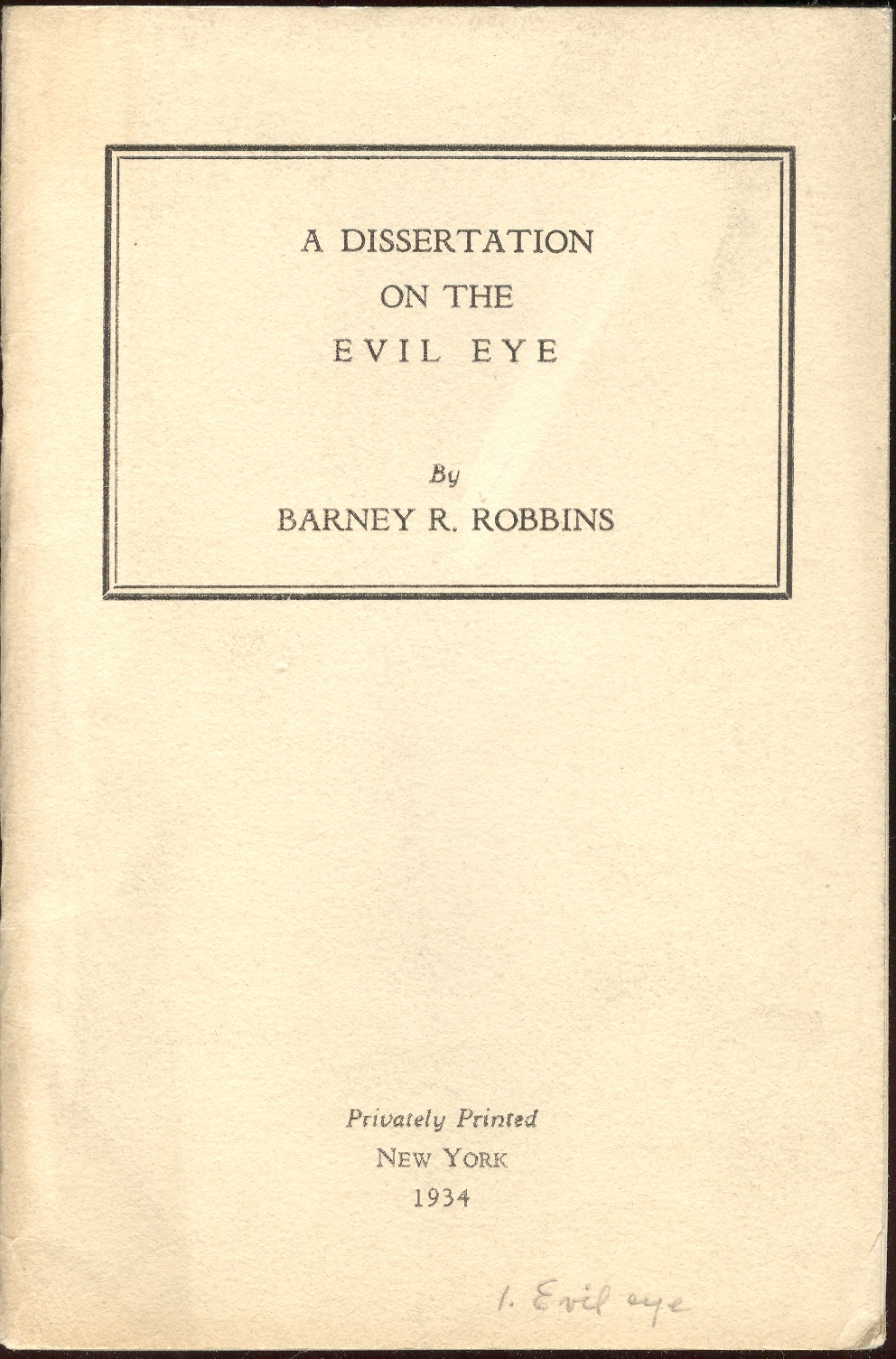
Barney Robbin’s A Dissertation on the Evil Eye was headed to my category on Icons of Shouted & Mysterious titles—until I started to read it. It turns out that Mr. Robbins wrote a fine, sort of brightly-written exegesis on the history of evil and its manifestation in the evil gaze—a tough thing to do in 40 pamphlet-y pages and still have lots of references to The Ancients. He also has a pretty liberal undercurrent towards the authenticity of the Bible, the basis of human history (“our human ancestors lived in savagery during practically the entire existence of the race”), the invention of the convention of privacy in human sexual affairs (and its representation in the OT vs NT), Old Testament superstition, and other varieties of contemporary social mores and their interaction with asceticism and pagan practices. He then deftly slides into the origins of “the preposterous belief” in and personification/transference of evil spirits, and in religious intolerance of the assumed imagination of the human mind and its role in rapturous misinterpretations of the Bible and the growth of redemptive evil.
The last fifteen pages are spent solely on the evil eye, and is a pithy statement on how it was “given” in various cultures, and how people protected themselves from it. “They have the plague, and caught it of your eyes” writes Shakespeare in Love’s Labor Lost (V II), and this is the least of it, though Robbins points out that in various cultures you could seal yourself from this ”plague” by spitting, wearing bright colors, collecting and spewing rainwater collected on the 27th of April, cross dressing, keeping a phallic amulet on the body, keeping salt and coal in the pockets of children, blessing wine, blowing smoke into a child’s mouth, and so on.
Robbins points to Francis Bacon, who wrote: ” It seems some have been so curious as to note that the times when the stroke or percussion of an envious eye does most hurt are particularly when the party envied is beheld in glory and triumph.” And of Robert Heron, who in his travels in Scotland in 1793 wrote : ” Cattle are subject to be injured by what is called an evil eye, for some persons are supposed to have naturally a blasting power in their eyes, with which they injure whatever offends or is hopelessly desired by them. Witches and warlocks are also much disposed to wreak their malignity on cattle. … It is common to bind into a cow’s tail a small piece of mountain-ash wood, as a charm against witchcraft.” And then to Thomas Lupton, who in his Book of Notable Things (1586) wrote : ” The eyes be not only instruments of enchantment, but also the voice and evil tongues of certain persons.” And so it goes, on and on. Entertainingly so.
But there is something of Robbins that doesn’t sit well; perhaps it is his book on the New Testament, or the sniffly jaundiced Immigration and Americanization which form the background for some of the man’s thinking when he veers from liberal interpretations to right-wing political statements. Out of nowhere comes the following gem: “Communism is the accursed offspring of the evil eye with all its implications. It is the collective evil eye of the masses…”
I think what Mr. Robbins is getting to, ultimately, is the delivery of his belief that savagery has continued for thousands of years and continued to his present, “flourishing long past its day”. Maybe so. In any event I found his work to be unexpectedly interesting, and was impressed that he was able to weave such a complicated summation of evil in such a small place.
______
[Mr. Robbins also lobs in a few unexpected grenades from the Old Testament, including this healthy reminder from the Book of Proverbs, which he uses in discussing a sidebar he pursues with Noah and the choice of god being evil and 58% alcohol:
It is not for kings, O Lemuel, it is not for kings to drink wine; nor for princes strong drink; Lest they drink, and forget the law, and pervert the judgment of any of the afflicted. Give strong drink unto him that is ready to perish, and wine unto those that be of heavy hearts. Let him drink, and forget his poverty, and remember his misery no more.]
*The imagination was also a source of sinful pride (Luke 1:51) and a source for idolatrous art (Acts 17:29), and still present in humans in spite of the cleansing flood, and in spite of the races of man having been scattered and completely dis-united by Babel.
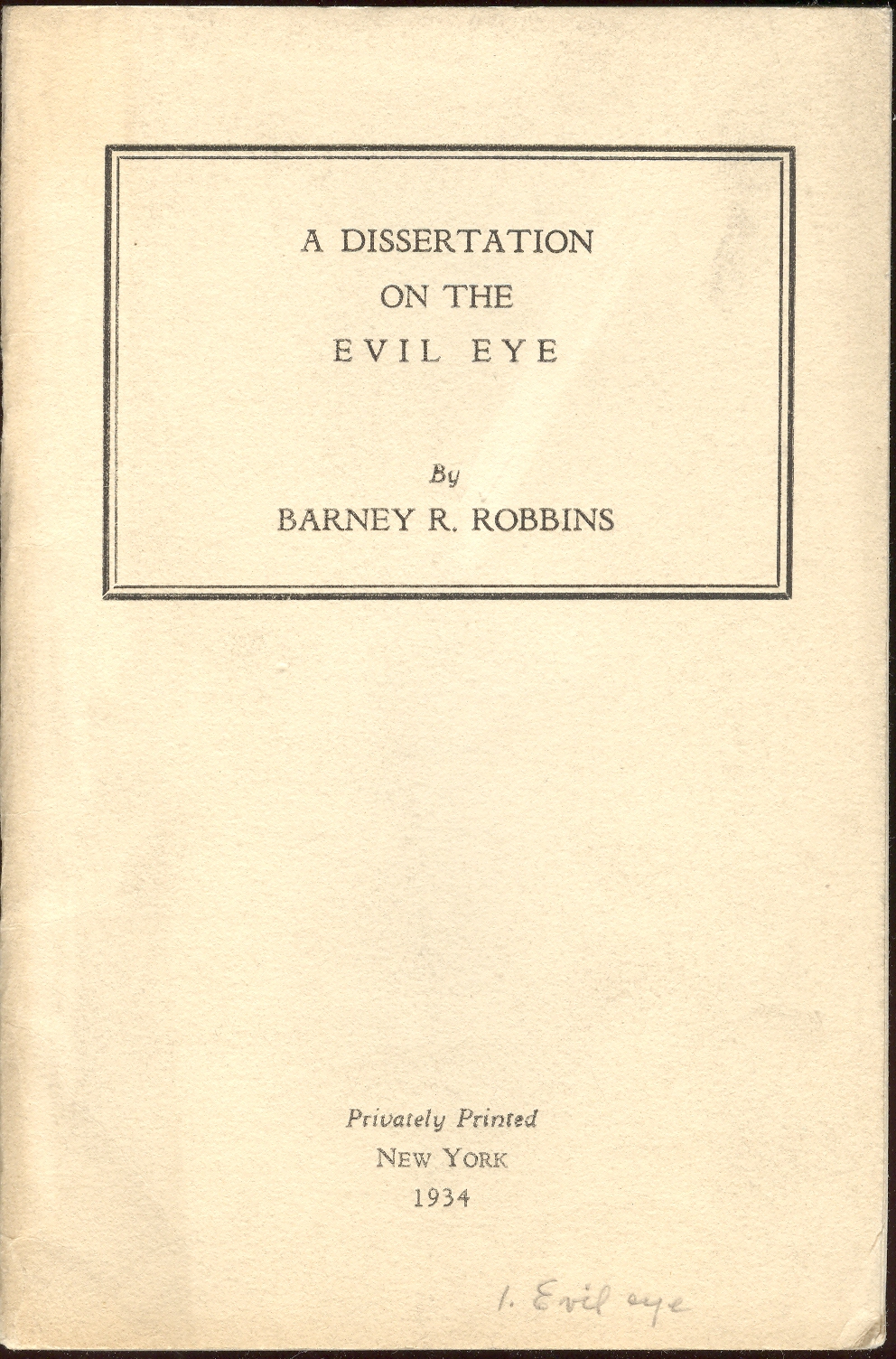
It turns out that the Robbins book is rare: only six copies have been located in OCLC/WordlCat: Stanford, Harvard, Yale, Chicago, NYPL, Libby Congress (although not the LC any more, as this copy used to be their’s.)