JF Ptak Science Books
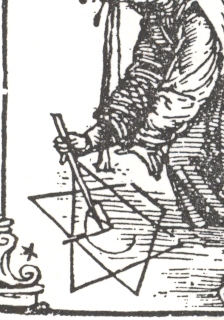
On the death of Archimedes, in Valerius Maximus
I’ve had this image in the back of my head for quite some time now–the image of the great Archimedes having his head cleaved in two by an attacking Roman soldier during the Battle of Syracuse
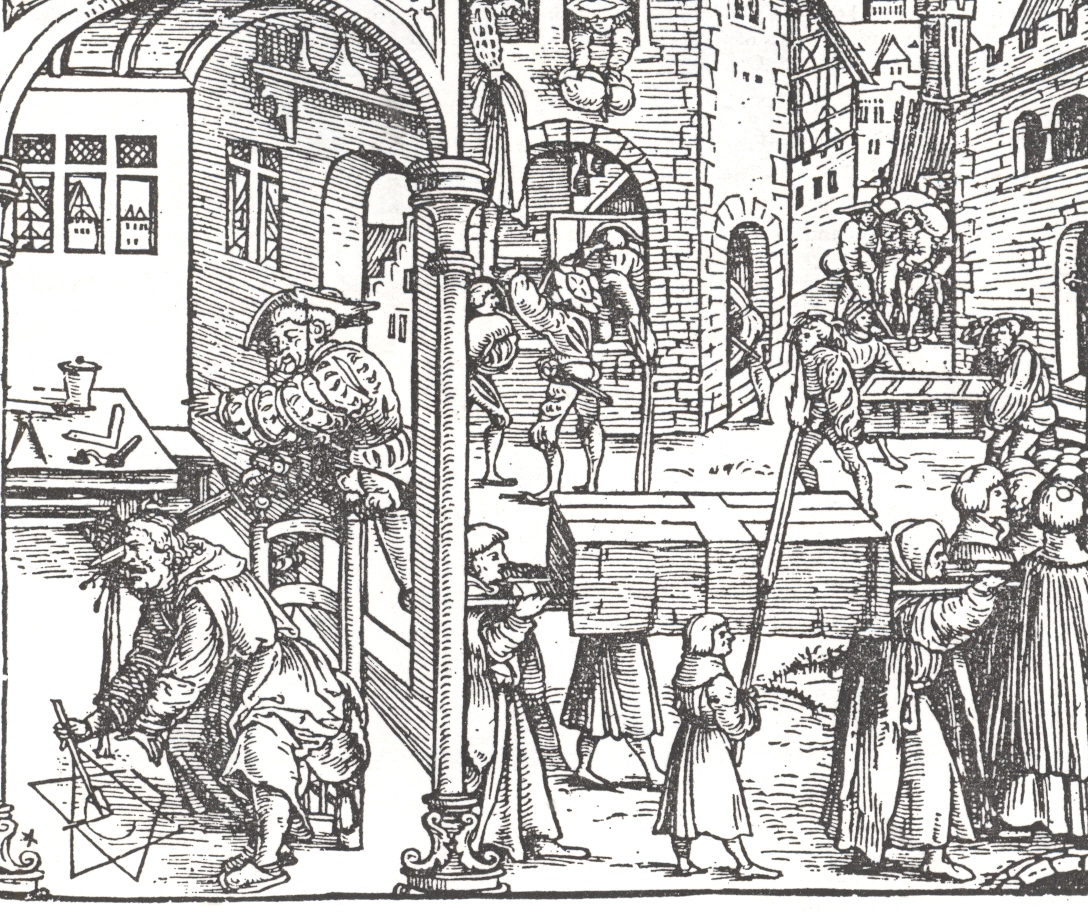 I include the following few quotes from classic sources relating this final scene:
“But as Archimedes was drawing diagrams with mind and eyes fixed on the ground, a soldier who had broken into the house in quest of loot with sword drawn over his head asked him who he was. Too much absorbed in tracking down his objective, Archimedes could not give his name but said, protecting the dust with his hands, “I beg you, don’t disturb this,” and was slaughtered as neglectful of the victor’s command; with his blood he confused the lines of his art.” Valerius Maximus (c. 20 BC-c. AD 50 ), Memorable Doings and Sayings, Book VIII.7.ext. 7
“Many brutalities were committed in hot blood and the greed of gain, and it is on record that Archimedes, while intent upon figures which he had traced in the dust, and regardless of the hideous uproar of an army let loose to ravage and despoil a captured city, was killed by a soldier who did not know who he was.” Livy (59 BC-AD 17 ), History of Rome from its Foundation, Book XXV.31
“a Roman soldier, running upon him with a drawn sword, offered to kill him; and that Archimedes, looking back, earnestly besought him to hold his hand a little while, that he might not leave what he was then at work upon inconclusive and imperfect; but the soldier, nothing moved by his entreaty, instantly killed him.” Plutarch (AD 45-120), Parallel Lives: Marcellus
“a Roman came up and began to drag him away to take him prisoner. But he, being wholly intent at the time on the diagram, and not perceiving who was tugging at him, said to the man: “Stand away, fellow, from my diagram.” John Tzetzes (circa twelfth century AD), Book of Histories (Chiliades), Book II, Lines 136-149
“He was constructing some figure or other, and hearing that the enemy were at hand, exclaimed: “Let them come at my head, but not at my line!” John Zonaras (circa twelfth century AD), Epitome ton Istorion, 9, 5
“The death of Archimedes by the hands of a Roman soldier is symbolical of a world-change of the first magnitude: the Greeks, with their love of abstract science, were superseded in the leadership of the European world by the practical Romans”. Alfred North Whitehead (1861-1947), An Introduction to Mathematics
“. . . he was a callous, obdurate, conceited midshipman, intent on his own discoveries, and caring as little for what went on about him, terrestrially, as Archimedes at the taking of Syracuse.” Charles Dickens (1812-1870), Dombey and Son, Chapter 19, (1846-48)