JF Ptak Science Books LLC Post 791 Blog Bookstore
I was on my way to something else when I stopped to look at
this engraving by Ulrich Pinder, his last supper, the Speculum passionale, published in
and a crowded table with very little on it in the way of food. And no forks.
Knives—yes of course—and big containers of some sort of liquid, but no
forks. As it turns out, the fork really
hadn’t made a strong appearance in northern Europe until the end of the
century, brought back evidently from travelers in
another Last Supper, I believe, occurs at least by 1599.
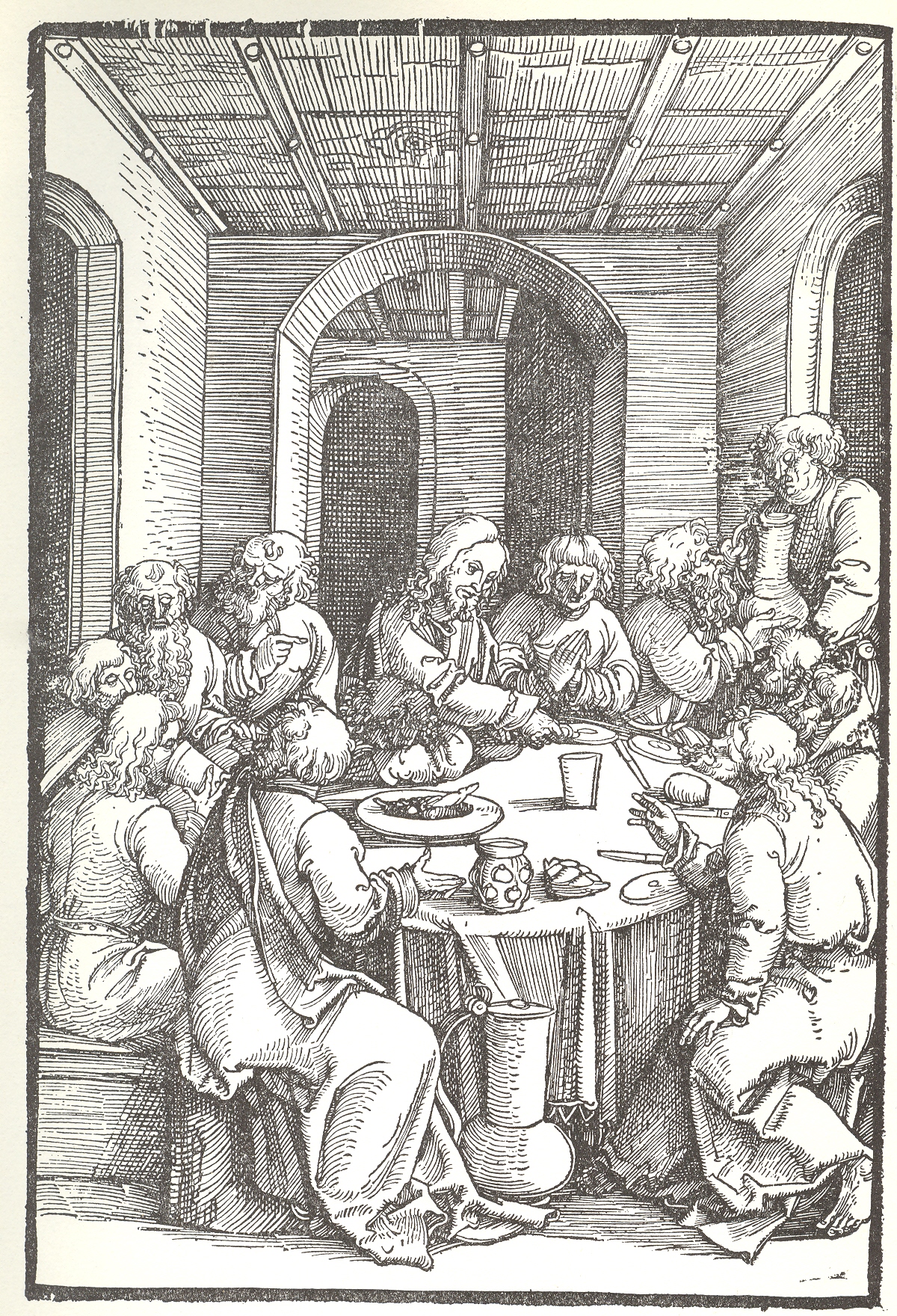
I know, there’s no spoons either, but they had been around
for a long time, and just didn’t make an appearance on this table for reasons
unknown.
“I observed a custome in all those Italian Cities
and Townes through which I passed that is not used in any other country that I
saw in my travels, neither doe I think that any other nation of Christendome
doth use it, but only Italy. The Italian, and also most strangers that are
cormorant in Italy, does alwaies at their meales, use a little fork when they
cut the meate . . . their forkes being for the most part made of iron or steel,
and some of silver, but these are used only by gentlemen. The reason of this
their curiosity is because the Italian cannot endure by any means to have his
dish touched by fingers, seeing that all men’s fingers are not alike cleane.
Hereupon I myself thought to imitate the Italian fashion by this forke cutting
of meate, not only while I was in
but also in
often-times in
since I came home.”Thomas Coryate, Coryat’s Crudities (1611)
See:
Forbes, R. J. “Food and Drink,” Charles Singer,
et. al. eds. A History of Technology.
Mediterranean Civilization and the Middle Ages, c. 700 B.C. to c. A.D. 1500: page 126.
Braudel, Fernand, Civilization and Capitalism 15th-18th
Century, vol. 1: The Structures of Everyday Life: The Limits of the
Possible,
Collins, 1981: page 209.