JF Ptak Science Books LLC Post 825 Blog Bookstore
This image from
Michael Lesy’s wonderful Real Life,
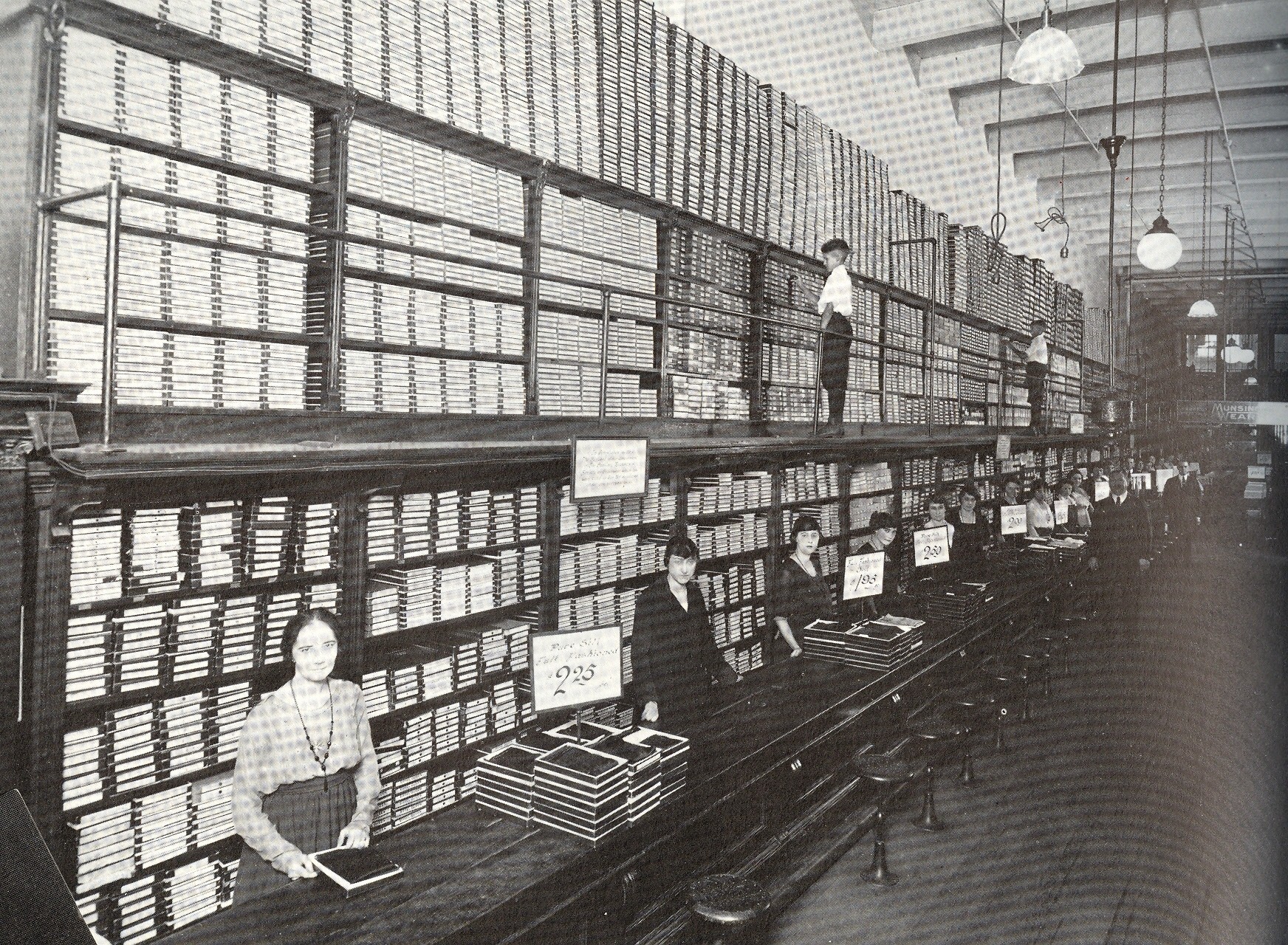
of interesting and naïve found photographs—has taken a life of its own. It is probably a photo of a hosiery
department (?) for a large clothing store taken during the great halcyon days
of advanced hosiery as this is a very serious collection and display with what
looks like waaay too many clerks to service god knows how many clients all
buying hosiery at the same time. Hosiery
or not, whatever skinny thing it was in those flat boxes looks as though whatever variety or size was needed
by whatever verity or sized customer could be accessed in a minute or less,
sending the customer on their way so that the next one buying unit could be
serviced and dispensed, and so on into the night.
But I prefer to
think of the stuff in the boxes as letters, or words, or just plain old
data: sat for instance instead of this
place being a clothing store it was a department store for writing, and this
was the Poetry Section, selling words by the order, one word at a time. Or perhaps the boxes held images. Or entire ideas—just not entire, finished
works.
And why
wouldn’t data and ideas have been stored and sold like this rather than hosiery
or handkerchiefs?
This got me thinking a little about the
storage and dispensing of information in antiquarian times, about how some of
the writers of great and high-erudite works were actually able to accomplish
their efforts. Deep into the early and future-vision-primitive history of
online digital exploration, it is difficult to imagine producing works of
sustained viability using combinations of only (private) libraries, memory palaces1, correspondence and notes. Today the internet accounts for less than 1%
of the time of advanced scholarship in all of
human history, but it has probably accounted for significant
contributions to half of all the academic stuff that has ever been written–and
we’re all probably terribly spoiled by the instant access to info in our
datacentric existence.
My own digital addiction in mind, I marvel at
the accomplishments of people like Vincent Placcius (1642-1699), a vastly
learned guy who sorted out 2,777 anonymous publications in 1500 pages, somehow,
three hundred years ago. He wrote a
monumental bibliographical work
(Theatrum Anonymorum et Pseudonynorum2) with superb references, and did so with what
we would today deem relatively nothing. Placcius
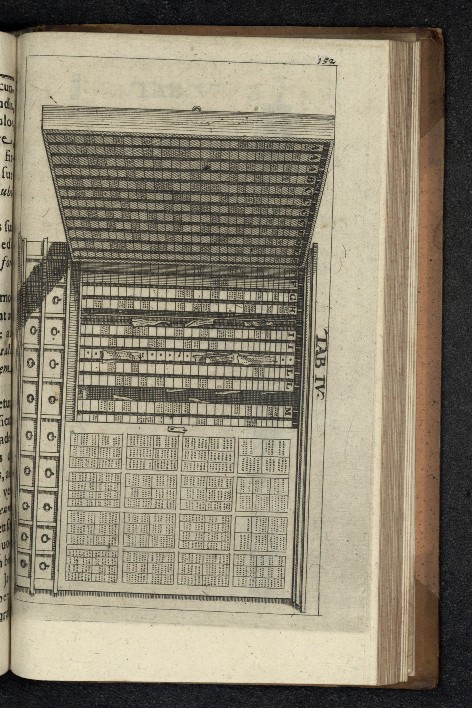
did have some sort chest-like devices with rods and pins and god knows what
that functioned in a way I don’t understand as a note-keeping/comparing
device. I’ve included images of the
device (below) in the hope that someone out there might recognize and explain
it. In any event, this superb piece of
scholarship—the first of its kind—had to have taken a lifetime of reading and understanding
and investigation to reveal. The
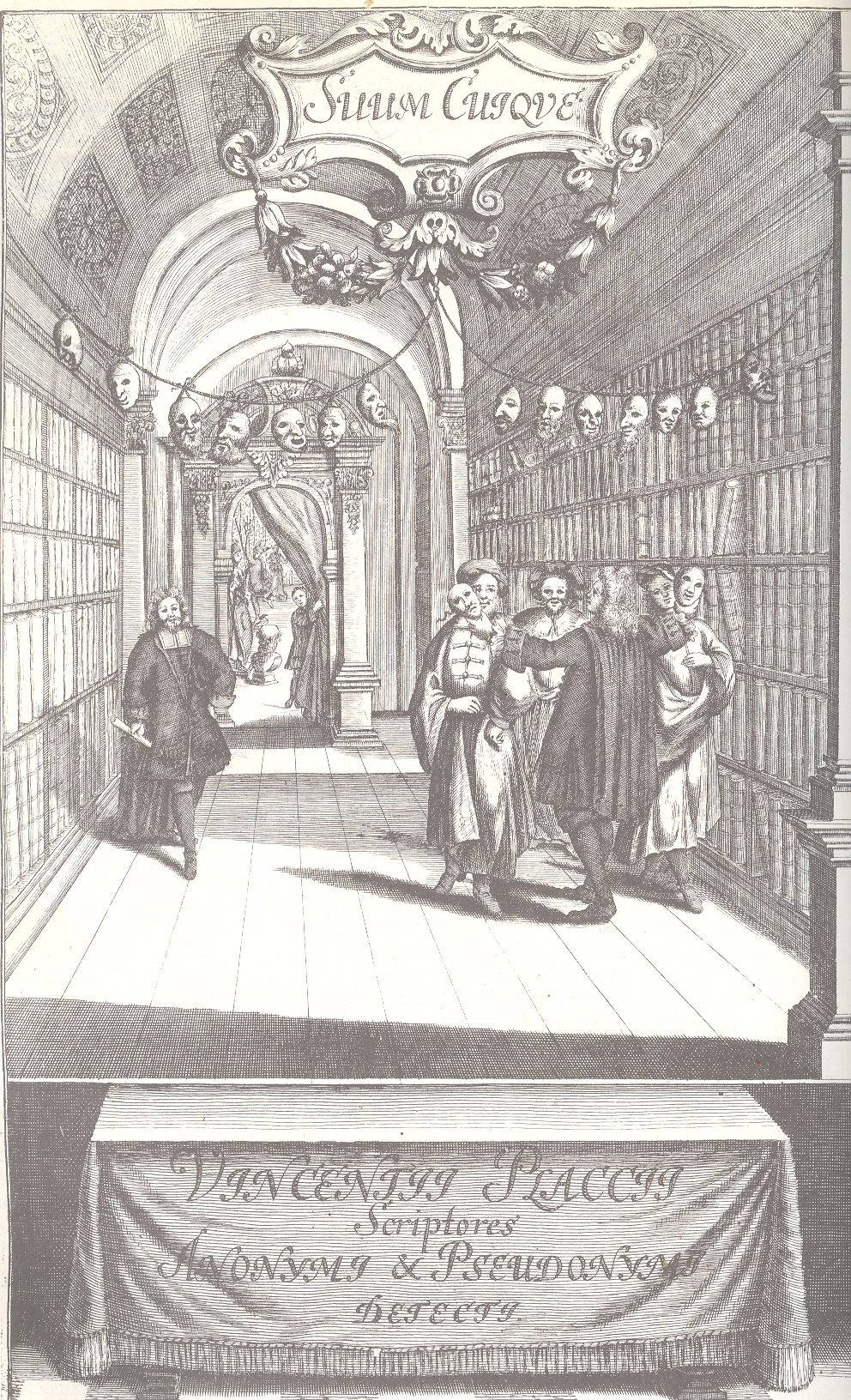
frontispiece to the book shows the author in
a library unmasking two anonymous authors, the masks of other conquests
linked above him on a chord.
Another example in the how-did-they-do-it
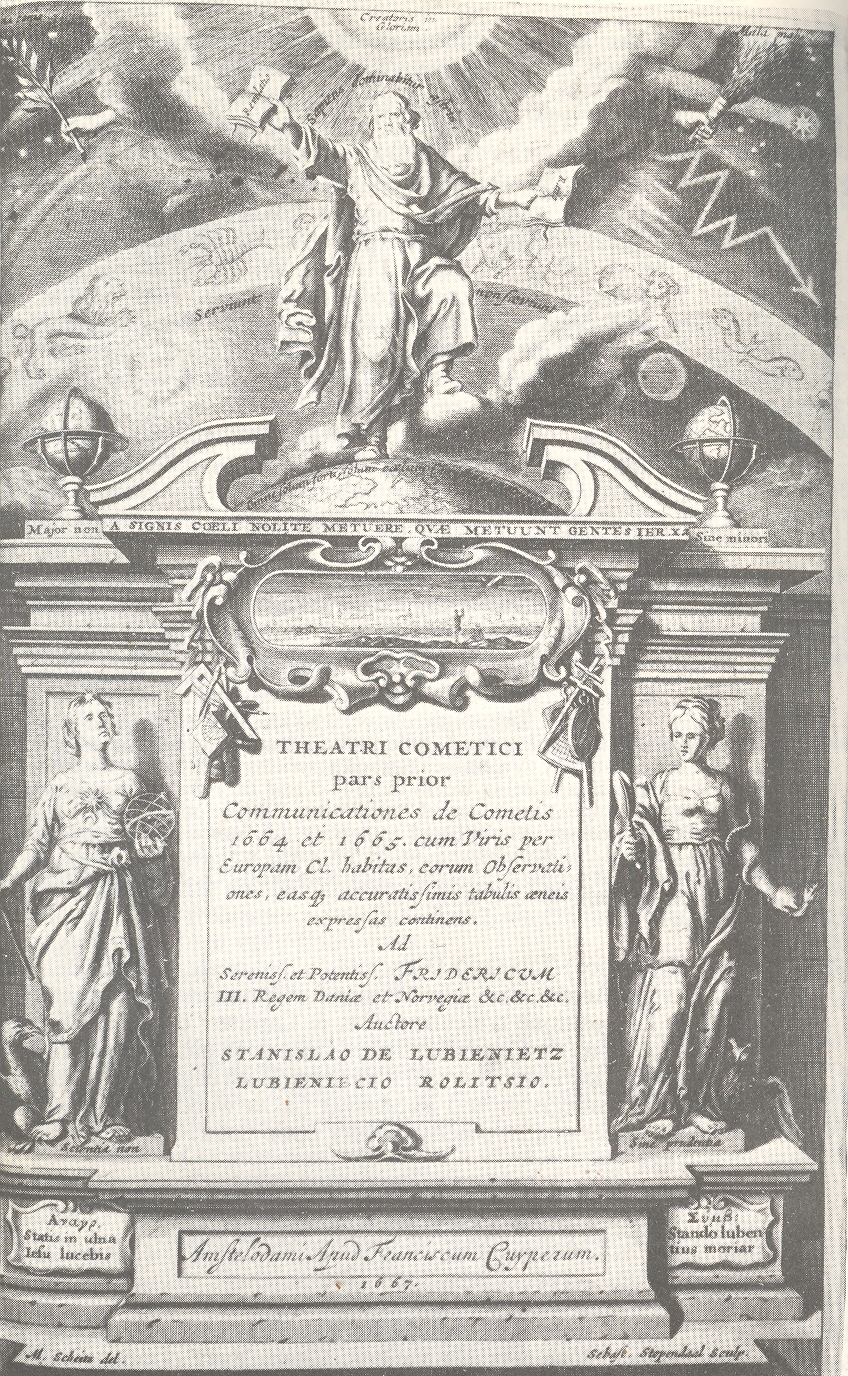
category is Stanislaus Lubienitzky’s (1623-1675) Theatrum Cometicum…(1667), a powerhouse of data on all things
cometary. Lubienitzky recorded all
manners of observations and reports of all comets ever recorded in extant
chronicle or published work. Ever. It is
a vast and learned work of incredible determination.
NOTES:
1. See Frances
Yates for the great standard on memory devices, The
Art of Memory (1966). And as
long as we’re at it, her Giordano Bruno and the
Hermetic Tradition (1964) and The Rosicrucian Enlightenment
(1971) are also terrific works on a very high order.
2. Theatrum Anonymorum et Pseudonynorum2, Ex Symbolis & Collatione
Virorum Per Europam Doctissimorum Ad Celeberrrimorum, Post Syntagma Dudum
Editum, Summa Beati Auctoris Cura Reclusum…1708