JF Ptak Science Books Post 1109
Here’s a bit of Custer legend that is true and seldom heard—if
left to his own devices in a Custer-filled world, the general would have “exterminated” everyone
in the South, every one (“men, women or children”) , “with an ounce of rebel
blood”, hanged dead. At that point the South
would be free, and would be repopulated with the “loyal and patriotic”.
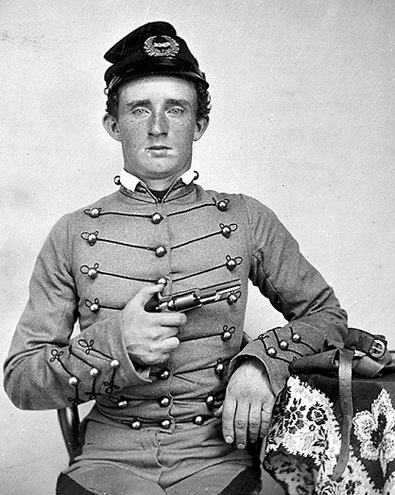 This was part of a
long letter (transcript below) to U.S. Senator Jacob Howard, written on
field. Custer was feeling on the ropes
at the time, needing to defend his loyalty to Lincoln and his policies,
and needing to distance himself from
election contender and inferior general, George McClellan. (Richard Slotkin, in
his fabulous The Fatal Environment, the Myth of the Frontier in the Age of
Industrialization, 1800-1890 notes that Custer needed “to justify himself…(and)
disabled his previous affiliations and the nature of his relationship with
McClellan…’)
Custer’s relationship–real and imagined–with McClellan was putting him in a stench void, creating the possibility of distance between himself and the powers that be–particularly with Senators like Howard and Zachariah Chandler, “who controlled army promotions” (Slotkin, page 384), which meant distancing himself from the higher rank he thought he was destined for. Custer had been on McClellan’s staff, and had aligned himself with his
war policies, though not necessarily so his presidential ambitions.
Howard, a Republican from Michigan and member of the Military Affairs Committee, believed that Custer was a “McClellan Man” and set against Lincoln, and for that was set to block
his promotion to brigadier general. Custer’s salvaging letter1 to Howard left no doubt about his supposed non-political feelings and where he stood on Lincoln, the Emancipation, and the treatment of the Confederates:
“If I could decide
the questions, I would offer no compromise except that which is offense at the
front of a bayonet, and rather than that we should accept peace, except on our
own terms, I would, and do, favor a war of extermination. I would hang every
human being who possesses a drop of rebel blood in their veins whether they be
men, women or children. Then after having freed the country from the presence
of every rebel, I would settle the whole Southern country with a population
loyal and patriotic who would not soon forget their obligations to their
country and to themselves.”
Slotkin points out that the letter to Howard was so well received that he wrote an update letter to the public-at-large, finding itself published in he Detroit Free Press in May 1865 (“and which was widely reprinted” (Slotkin, 384)) It read in part: “Extermination is the only true policy we can adopt towards the political leaders of the rebellion…Then, and not till then, may the avenging angel sheathe his sword, and our country will emerge from the struggle regenerated”.
Custer left out the women and children part of his Southern bloodbath, but left the “extermination” part in.
Custer was a man of short bursts with little imagination or capacity for extended action or thought–a difficult character, a limited man with no limits. This would come up again and again, more horribly so at Washita massacre2, and then, finally, the strength to endure his impulsive recklessness gone, at the Little Big Horn.
The entire letter (and notes) are included below: