JF Ptak Science Books Quick Post
In his long and vastly productive scientific life, Ernst Haeckel (1834-1919 ) produced this extraordinary work, Kunstformen der Natur, over a five year period from 1899 to 1904, a set of 100 images being published in 1904 (though a result of a long lifetime of work). Haeckel was a busy man working over a number of specialties, writing more than 40 books and a large number of contributions to scientific publication. He is perhaps best remembered early on in his career for a popular defense of Darwinism, writing Natürliche Schöpfungsgeschichte, (1868, nine years after the publication of the Origin, and translated into English as The History of Creation in 1876) which was a successful attempt to get Darwin’s complex ideas into public discussion. But all I want to do here is to surface his Kunstformen, which evidently served as a sort of wish-book for the imagination among many modern artists.
And so to the examples:
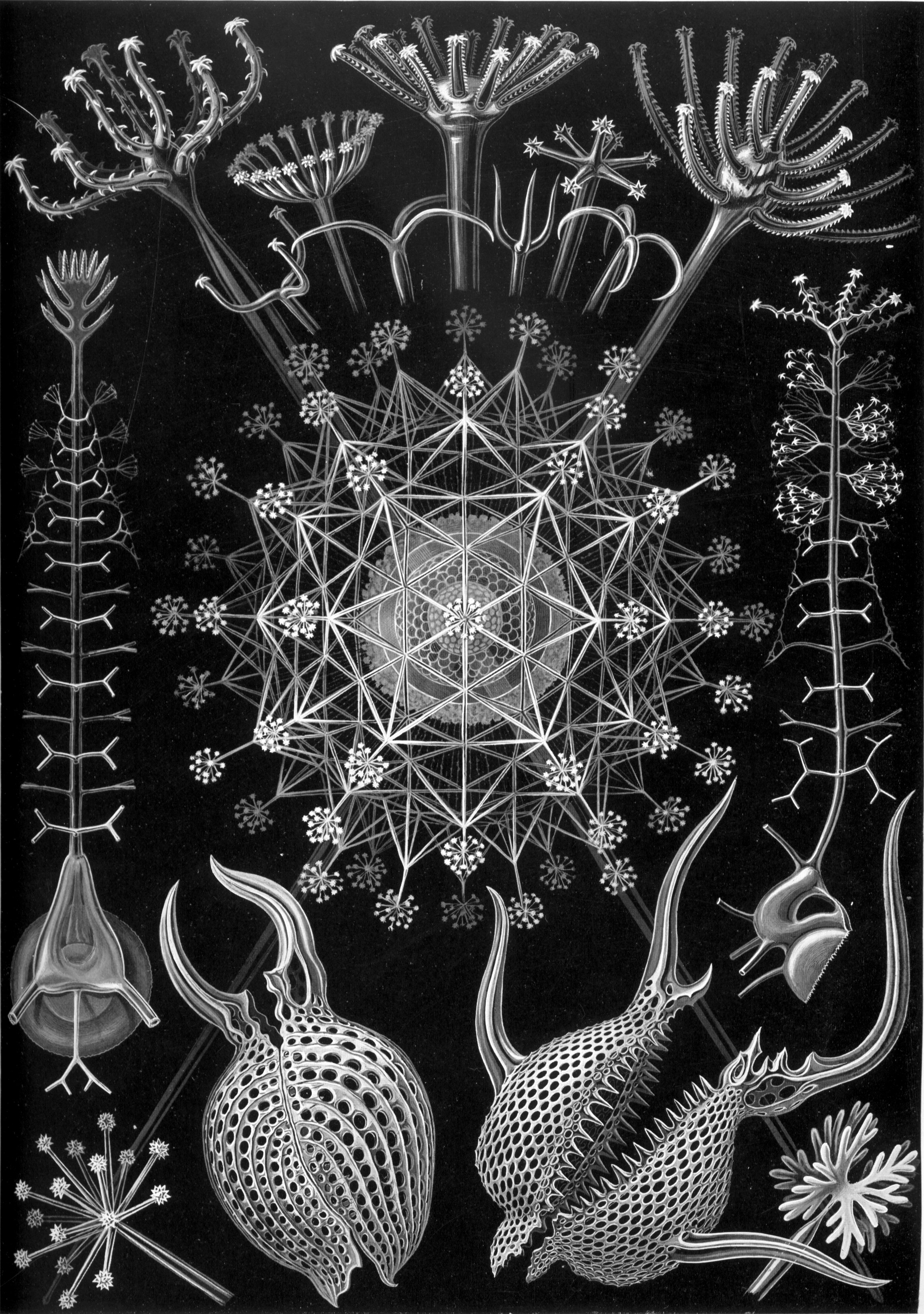
The phaeodaria:

and another example of phaeodaria:
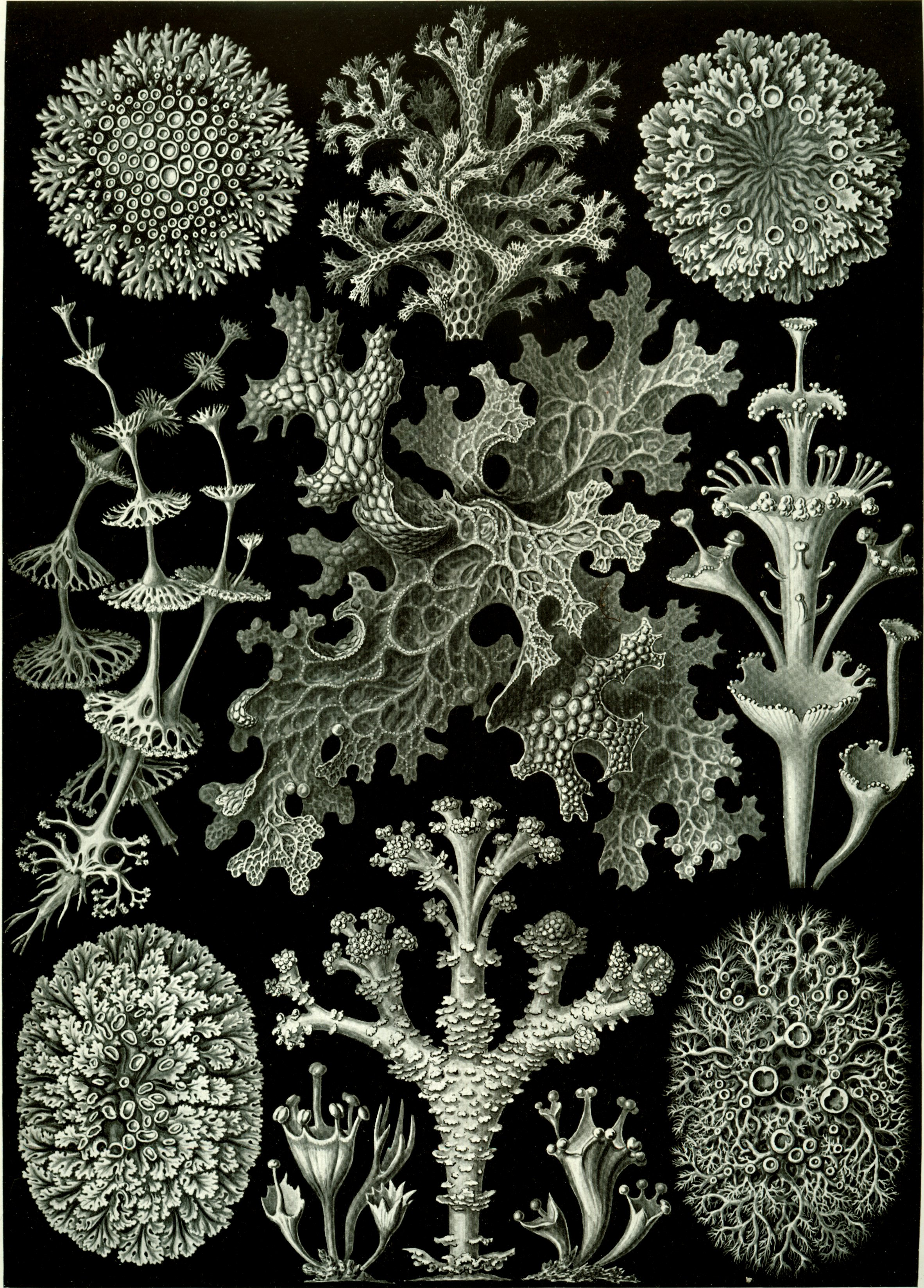
The Lichenes:
And the Stephoidea

And the ascidiae:
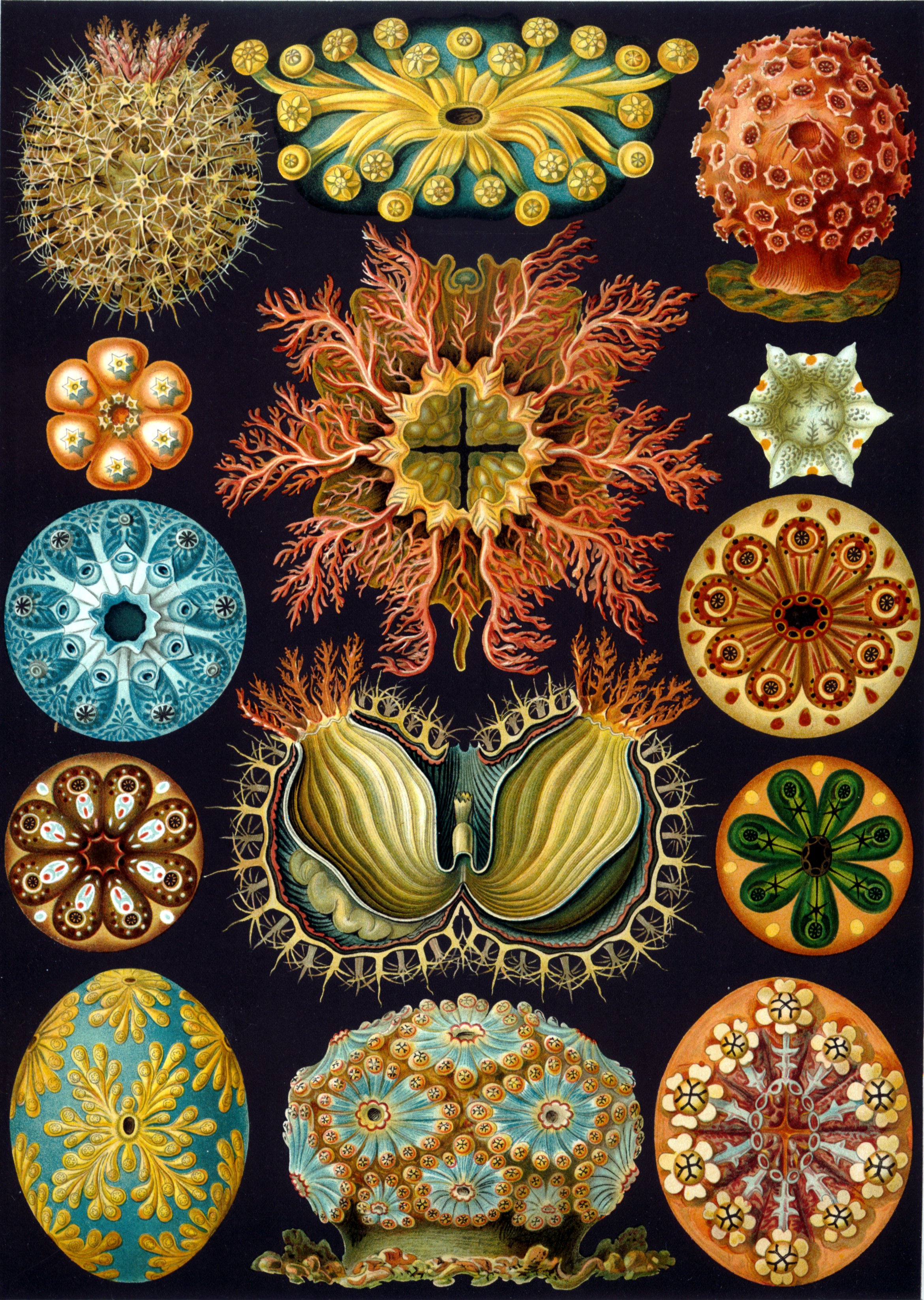
And some of the rest, which included all manner of other living things, big and small. The micrscopic organisms (and black-and-white) to me are the most fantastic, though the renderings of jsut about everyhting in the work are superb, and their placement, the design of each plate, is just magnificent.
For a collection of excellent 300 dpi scans see here: Kurt Stüber’s Biolib. The following images are located here.