JF Ptak Science Books Post 1471
It is interesting to see things as they aren’t, particularly when the time things were being what they weren’t was a long time ago. An example of this appears in an earlier post here about the use of red skies in Renaissance painting, which was something completely unexpected to me, a spectacular use of beauty found in an alternatively beautiful place, a reminder of why it looks so odd to us to see a clock running backwards.
Why does a clock run clockwise, anyway? It seems to me that most other things that go ’round seem to do so “counter clockwise”, and seeing a clockface with the hands sweeping themselves backwards ticking off the minutes and hours seems antithetcal, even though the same function is being performed–its just happening in a slightly different manner.
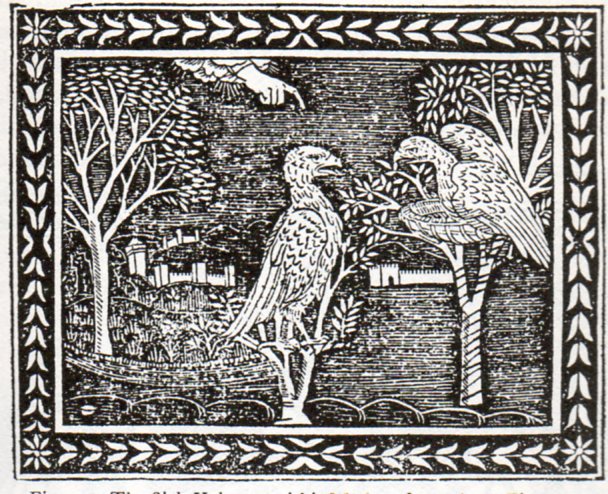
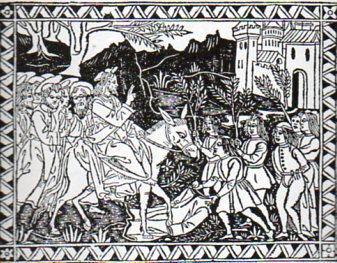
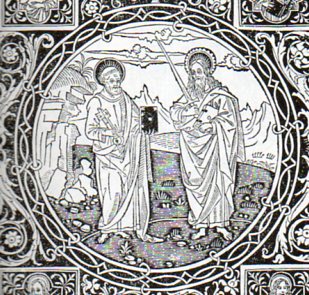
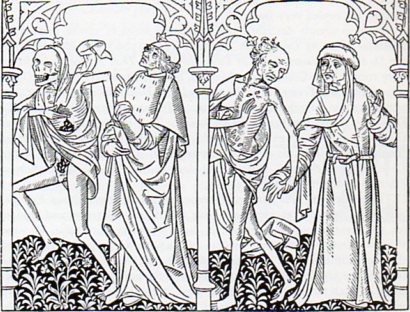
And so to the question of the ground. If skies can be red, why not the ground black? Especially in wood engravings that are 500 years old? No reason for it not to be so, especially when you’re working in black ink and nothing else but the suggestion of open, unused white spaces, with no midtones. And once you think about it a little, the use of black as a ground color makes perfect sense, differentiating it from the sky. Its just that we don’t think of the ground in that way, and so when it appears it seems quite out of place its a bit of a shock–but then we get over it, nearly instantly. And so the fortress of normalcy fails.
Here’s a few examples of Black Soils of the Renaissance.
“The Sick Vulture and his Mother”, from Aesop, Vita Esopi, printed in Florence, 1508:
“Christ entering Jerusalem”, from Bonaventura, Meditazioni sopra la Passione, printed in Florence, about 1494.
Detail of the frontispiece to Epistolo e Evangelii, printed in Florence in 1495:
Frontispiece to Frederico Frezzi, Il Quadriregio, printed in Florence, 1508:
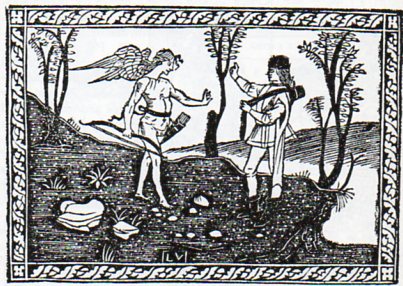
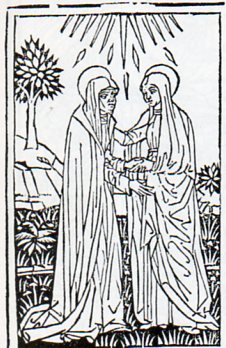
Christophoro Landinus, Formulario di Epistole, “The Visitation”, Bologna, 1485:
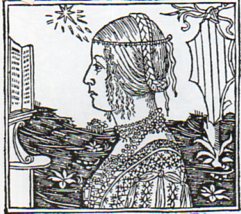
“Damisella Trivulzia”, image from Giacomo Filippo Foresti, De Claris Mulieribus, printed in Ferrara, 1497
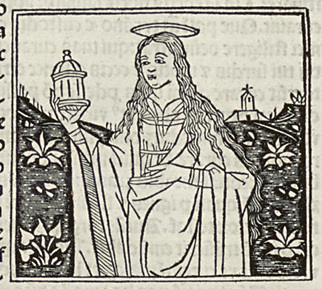
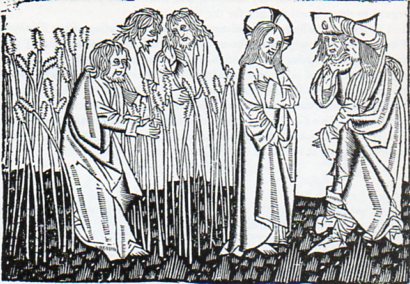
Ludolphus de Saxonus, Levenons Heeren, “Disciples Plucking the Ears of Corn”, printed in Delft, 1488.
The Danse Macbre des Hommes, printed in Paris by Couteau and Menard, showing Death visiting the astrologer and the bourgeoise, 1492.
There are no doubt many more, but these willl do for now.
Did anyone mention the Solids in Uccello?