JF Ptak Science Books Post 1901
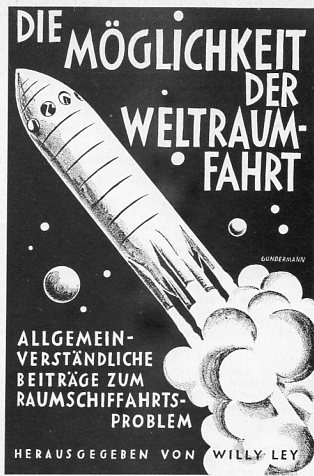
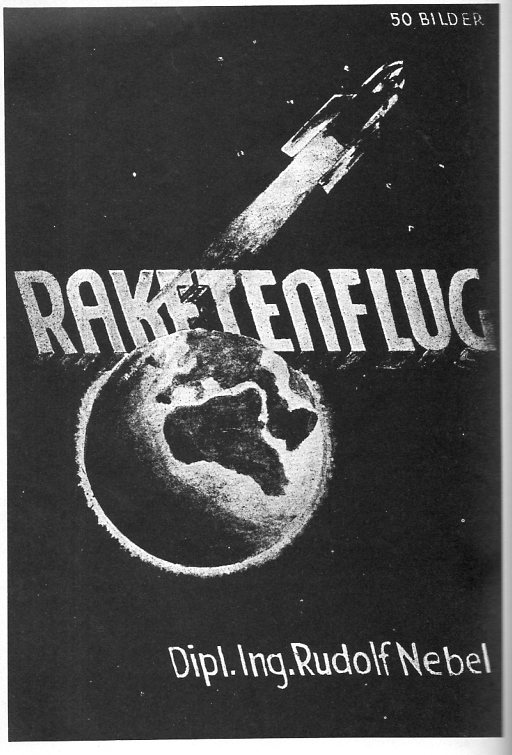
I’ve selected a few representatives of design for the covers of pamphlets and books published in the field of rocket development and space flight published in Germany in the 1920’s and 1930’s (with one from the 1951). They have a certain expectant sameness them, and, as leading publications in their field, have a remarkable similarity in their (black and white) design. The combined efforts of these works wound up in the engineering labs of Peenemuende and then int he V-1 and V-2 rockets that pulverized the United Kingdom during WWII. Later this same expertise, and some of the same engineers, “wound up” in the United States developing the American space program. The most famous of these Paperclipped scientists was Wernher von Braun, whose name is so intimately connected with the Vengeance Weapons as well as the Apollo space program. It is interesting to note that for many years if twas impossible to find von Braun’s name on any exhibition description in the Air and Space Museum in D.C.–it just wasn’t there, so far as I could tell, on no displays, even though I went looking for it pretty closely. On the 30th anniversary of the Moon landing, I went to von Braun’s grave to see if it had been remembered in any way–there wasn’t anything there, just his simple small slab, next-door to and within eyesight of a Jewish cemetery.
Rudolf Nebel (1894-1978), very early member of the Raketenflugplatz, assistant to Hermann Oberth and very nearly the first to successfully conduct an experiment with a liquid-fueled rocket, beaten to the finish line by a man whose work he was not familiar with, Robert Goddard. He defined right-wing in the Weimar era, and was part of a paramilitary organization called Stralheim; Wernher von Braun seems to have succeeded in the avenue that Nebel tried to travel along. Nebel published this work in 1932, a year before the Nazi party came into power, and before his crotchety problems with teh SA began.