JF Ptak Science Books Quick Post
This image comes right on the heals on what has been a much-shared image of the pre-Google Map Car of 1916:
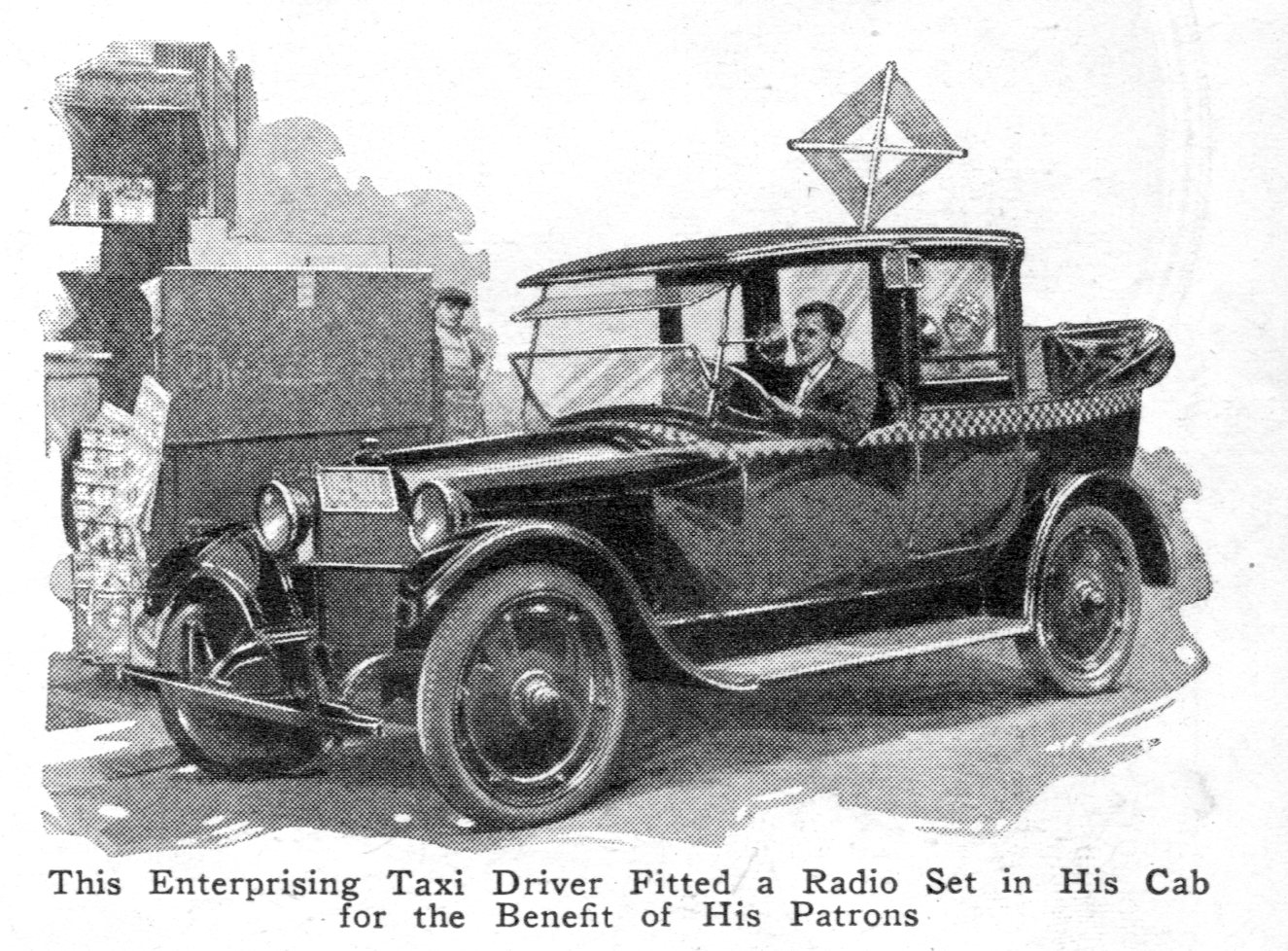
[Image source: Popular Mechanics, volume 44, October 1925]
And as you can see, it isn’t that at all, but the antenna on the roof of the cab does suggest itself on the odd-looking Googlemobile, and would have attracted as much attention as the Google car does today. At the time cars were not outfitted with radio set–this enterprising guy did so with his cab (mainly because he couldn’t bear to leave his wireless at home) and attracted a lot of attention and clients due to the novelty of having the still-relatively-new idea of wireless in a car (of all places).
Here’s that Google Map Car of 1916:
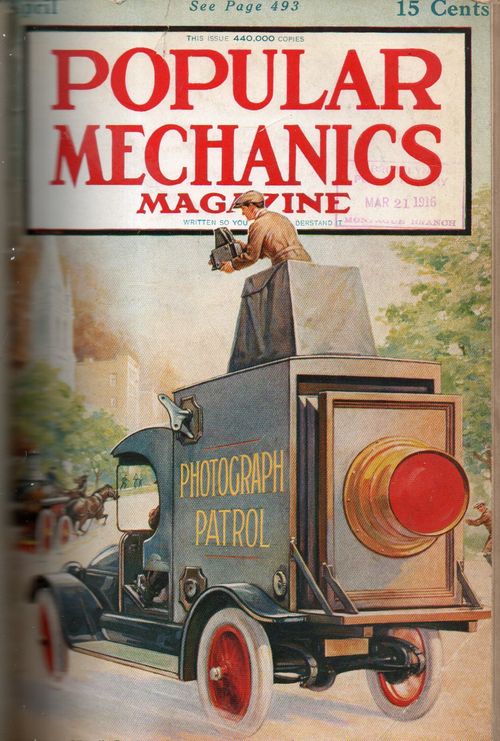
As I said in that earlier post, this was simply a darkroom on wheels, made to look like an enormous camera. If these folks were more enterprising they certainly could have made that darkroom into a camera, without that much fuss…except for the giant paper negatives, of course.
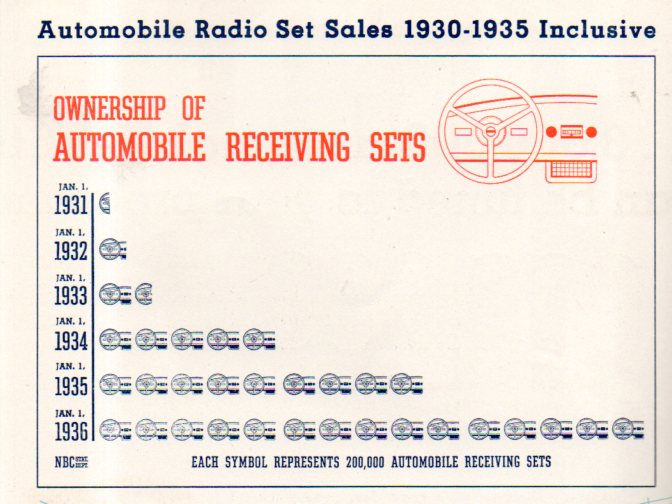
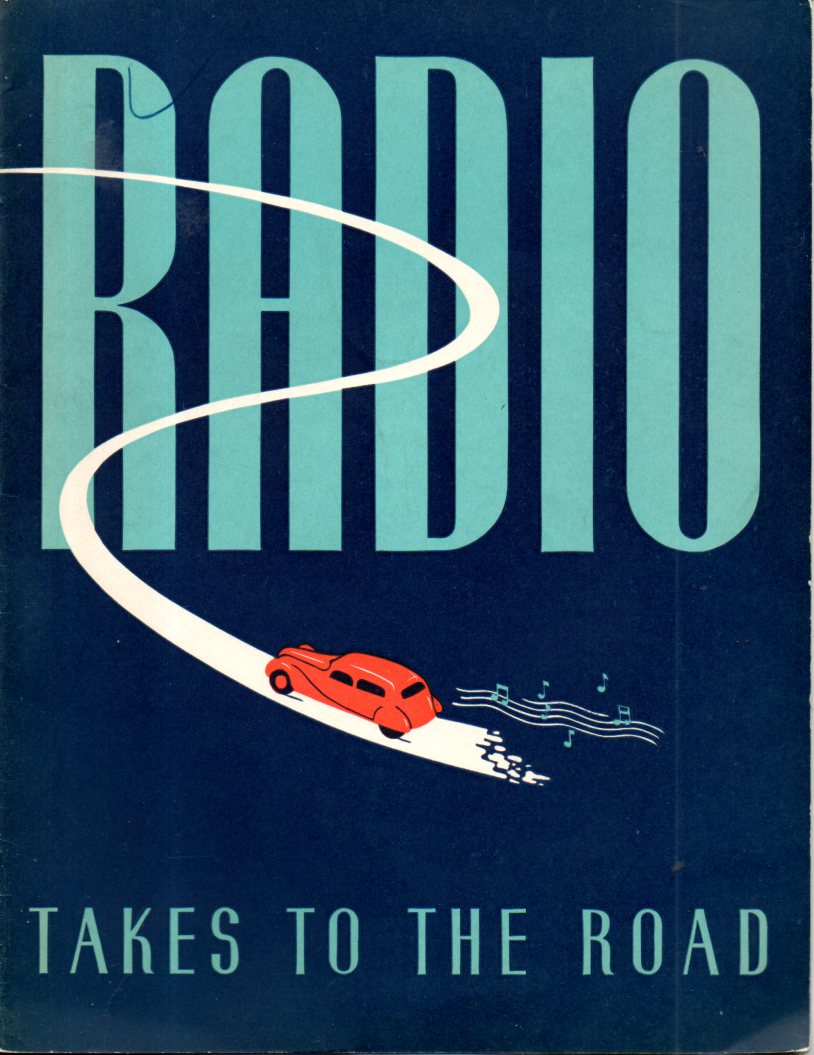
Radios in cars though was a breakthrough idea in 1925, and as we can see in this lovely pamphlet (published in 1936 by the National Broadcasting Company as a revenue-enhancer) the idea of the radio in the car was just beginning to fly. Shown in a delightful graphic display of data using auto steering wheels as a unit of measurement, there were about 100,000 cars with “receiving sets” in 1931, and by 1936 there ere 2.8 million, which is significant growth. NBC points out that there were 22,400,000 cars on the road in the U.S., which meant that there were 20 million cars that needed radios, which meant that there was another gigantic mobile audience of 20-60 million people, which meant that there was a big opportunity for more listeners and a fantastic opportunity to sell advertisements of a value reflecting that new huge audience.
And the delightful graph: