JF Ptak Science Books LLC Post 672 Blog Bookstore
It bothers me how
long people had access to something like a telescope and used it as a toy, or a
contrivance, or as an insurance tool or a gear in the machine of war before the
instrument made its ways into Galileo’s mind.
There are many rivalries for the term of “inventor” of the telescope,
with descriptions of undoubtedly very primitive telescopes going back to
Egyptian and Arabian legend, to Chaucer, to Roger Bacon’s “glasses or
diaphanous bodies”, to the theoretical accomplishments of Thomas Digges and
terrestrial interests of Dr. John Dee. These investigations no doubt made their
influence in the development of the telescope, but seem minor compared to great
strides made in 1608, when the telescope seemed to be everywhere (at least in
Germany and Holland and Italy and France) in advanced development. But particular high distinction goes to Holland
(was it in 1608?) filed petitions for the exclusive rights to sell their
instruments for seeing things at a distance.
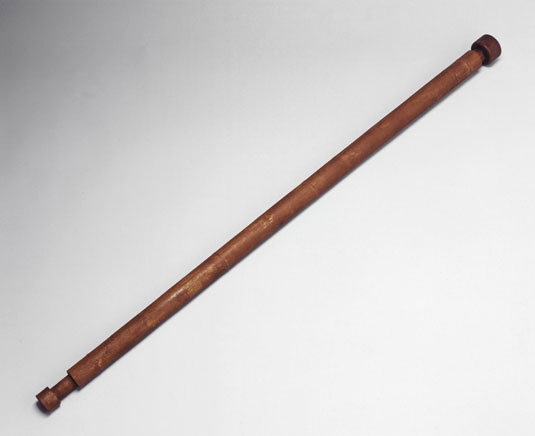
But still, people
were still not actually pointing these instruments “up”—and then there was a
class of aristocrats and well-do-dos who were shown these optical tools as toys
and pastimes. But all of this changed monumentally
when news of the telescope came to Galileo’s attention in May 1609—by August 29
he had fabricated one of superior quality and effect (three diameters and nine times
larger), though the first public demonstration was used to spot ships’ sails
over an horizon that was invisible to the naked eye. By 1610 he had produced his fifth and most
powerful telescope, allowing things one thousand times closer, which he
instantly used and made enormous discoveries of such significance that they are
hard to understand today in the context of early 17th century
knowledge.
comets and eclipses the sky had remained immutable, a perfect score of the
creator’s creation, until 1572, when Tycho Brahe noticed something new in Cassiopeia,
something that was not a comet—a something that was a star. This was momentous
because the night sky had been seen for centuries as being complete—a new star,
the Nova of Brahe, contradicted this high belief, offering the possibilities of
newness where there had not been one previously. And so too with Kepler’s new star of 1602.
One of the things
that Galileo brought to the world was an entirely new sky, revealed to him
through his telescope—so many stars that he could only guess (though Galleon
reckoned that there was an order of magnitude more stars than previously known “stars
in myriads, which had never been seen before….and which surpasses the old,
previously known, stars by ten times”).
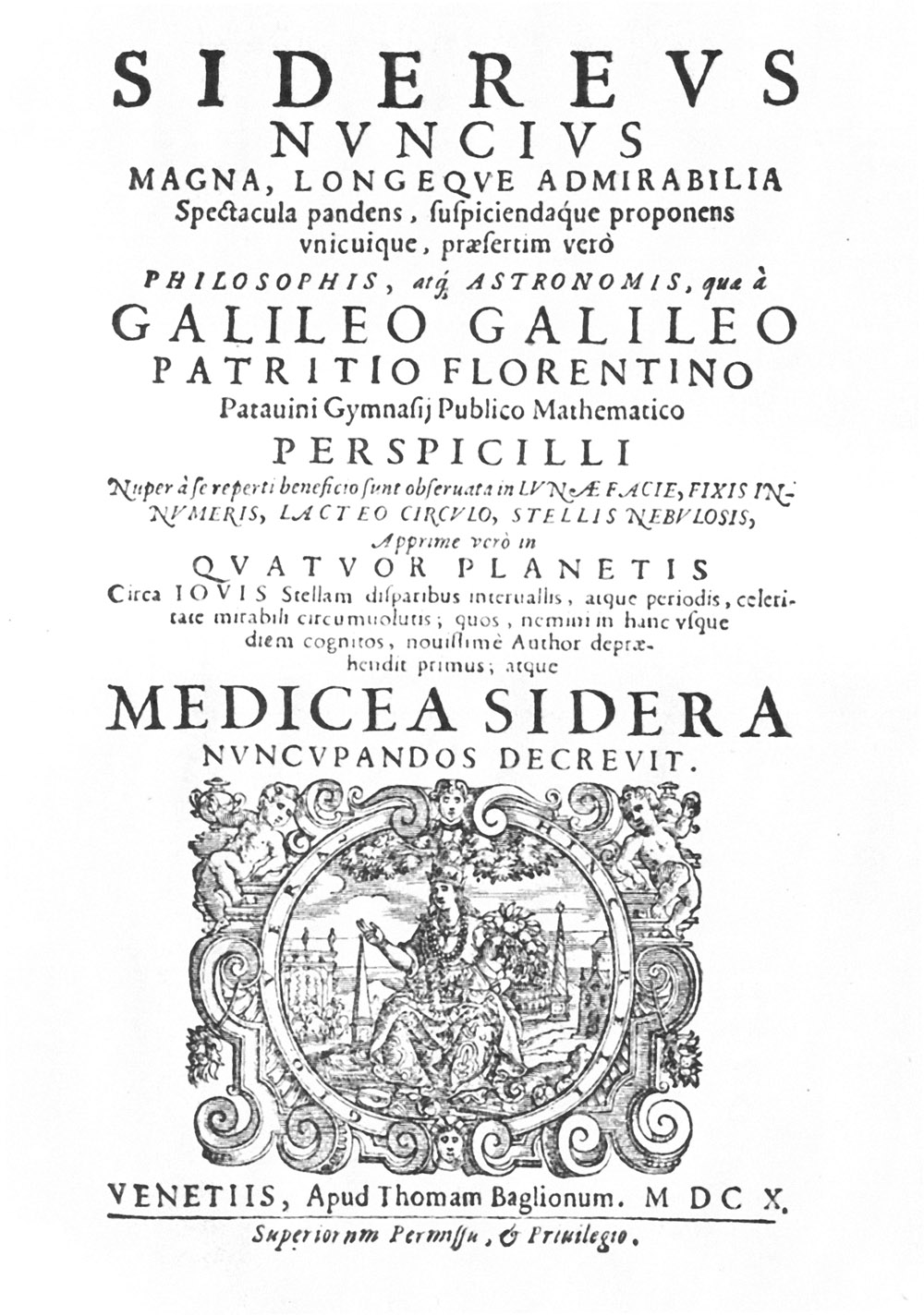
 All of this was
published in his fantastic Sidereus
Nuncius on March 4, 1610—extraordinarily, the very title page1 of the book
proclaiming some of the great discoveries of Galileo’s adventure. Of course there was also his investigations
of the Milky Way and the impossible discovery of four new “planets” (moons) around
Jupiter, and the disruption of the happy belief in a smooth and luminous
Moon.
It is difficult today to estimate the impact Galileo’s
innovation and the subsequent (and immediate) publication of Sidereus had on society. The challenges to long-defined orthodoxy and
the bending of theological constraints (though the church would have its turn
on Galileo later); expanding the size and scope of the universe, applying mathematics
to the study of physics, understanding the physics of motion, developing the
telescope and the microscope and other precision physical instruments, are all
such deeply important changes that it is difficult to resize them in terms of
21st century advancement.
- The title page reads: “great
and very wonderful spectacles, and offering them to the consideration of
every one, but especially of philosophers and astronomers; which have been
observed by Galileo Galilei … by the assistance of a perspective glass
lately invented by him; namely, in the face of the moon, in innumerable
fixed stars in the milky-way, in nebulous stars, but especially in four
planets which revolve round Jupiter at different intervals and periods
with a wonderful celerity.”