JF Ptak Science Books Post 1120
Rounding out the image dump from yesterday are these additions to the developing category “Strange Things in the Sky”. The odd things in today’s issue include floating tetrahedra, an exploding Moon, a hovering anti-gravity Dr. Seuss pool, a Russian rocket pioneer’s enormous apartment building-like dirigible, and a steamship balloon.
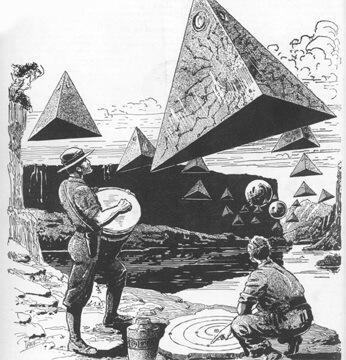
The first, without any explanation and offered as a pure art form, is this illustration by Frank R. Paul for Wonder Stories of November 1931.
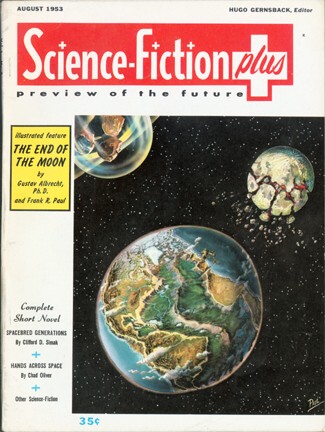
Next, another Paul cover for Science Fiction Plus for August 1953, illustrating a story where the Moon explodes
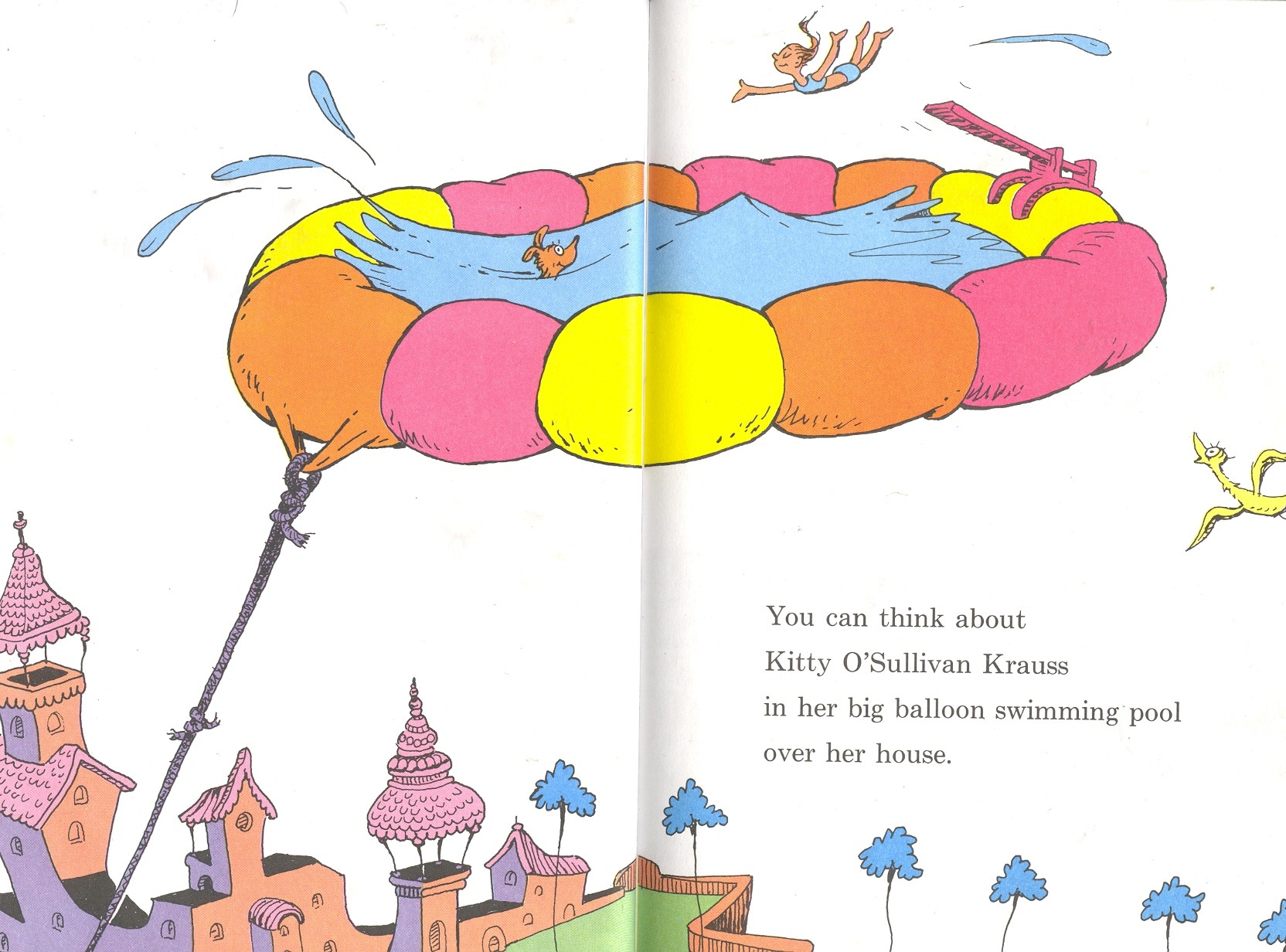
Other strangeness in the sky is Dr. Seuss’ swimming balloon pool from his Oh, the Thinks you can Think. . I’ve seen some interesting
images of balloons and dirigibles taken as serious efforts that reminded me of
that double-page spread by the good Doctor.
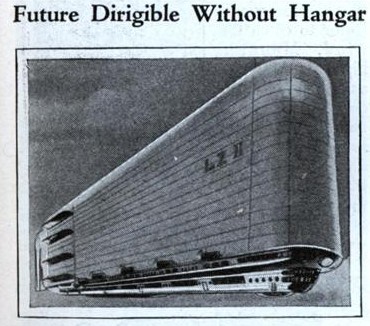
This may have been the Omega end
of bad ideas in the career of Zilkowsky, who is better known by the other
spelling of his name, Konstantin
Eduardovich Tsiolkovsky (1857-1835), a Russian misanthrope and space pioneering
genius who wrote more than 500 works on rocketry and exploration including what
is arguably the first tech word ever done in the field (in 1903, The
Exploration of Cosmic Space by Means of Reaction Devices). Tsiolkovsky somehow lasted through purges
and Stalinist tirades, while few of his colleagues did—many mysteriously
disappeared, while others went to prison and disappeared there. (Stalin’s crude and insatiable blood lust,
perhaps the worst of the century, knew no bounds, not even to the scientists
who could conceivably hand him reigns of rocket/missile-propelled power.) Anyway, Tsiolkovsky’s dirigible was composed
of a collapsible metal so that the aircraft could form its own hangar when “docked”. I don’t know where to begin with this one…
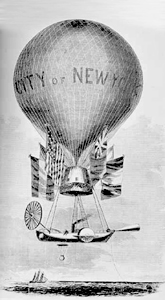
The next entry is the ship-balloon of Thaddeus Lowe
(1832-1913) One of Lowe’s great contributions in the
history of ballooning was providing aerial reconnaissance via (panoramic)
photographs to the Union army on Confederate army positions—particularly the
Rebel positions at Richmond (1864) and Fredericksburg (1862). (He had a wide
span of professional interests and wound up living the high life in
home.) This 130-foot diameter monster
with a steam-ship escape pod (named The
City of New York and then renamed The
Great Western after the city couldn’t supply enough gas to get the thing
inflated) was intended to be a transatlantic traveler. Ready to try this fantastic adventure in
1860, ready to take charge, ready to begin a very problematic trip across the
Atlantic in a balloon, Lowe, seemingly ready, had his balloon ripped apart
while waiting for launching by a chance and not-horrible wind. Lucky for Lowe and the Union Army, this didn’t
happen over the ocean somewhere out of reach, and the North’s important info-gatherer
did not sink like a stone in the cold dark sea.
(I’m very cynical that the 100-foot-long, bulbously heavy steam-powered “life
boat” would’ve landed right-side-up and softly enough to have been of any use
save for providing some floaty bits that survivors from the balloon could’ve
clung to for a while before being consumed by King Neptune.
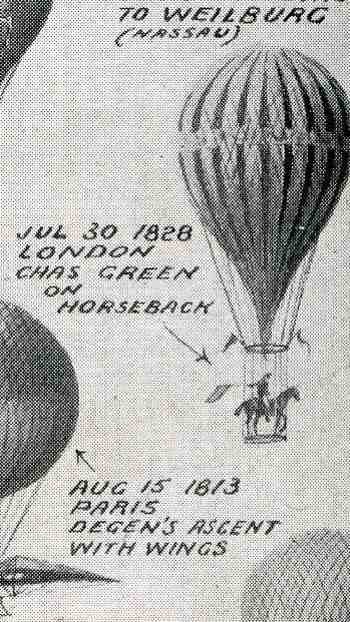
Lastly for today is this lovely history
of balloon and aeroplane flight published in The Illustrated London News
for 3 July 1909, called “The Evolution of the Great War-ships of the
Air: Balloons, Non-Dirigible and Dirigible, and Aeroplanes, from the
Seventeenth Century to the Twentieth Century”. It is more fully explained here in an earlier post I made to this blog, laboring the point that 8% of the 60 air vehicles involved a horse.