A Daily History of Holes, Dots, Lines, Science, History, Math, Physics, Art, the Unintentional Absurd, Architecture, Maps, Data Visualization, Blank and Missing Things, and so on. |1.6 million words, 7500 images, 4.9 million hits| Press & appearances in The Times, Le Figaro, Mensa, The Economist, The Guardian, Discovery News, Slate, Le Monde, Sci American Blogs, Le Pont, and many other places… 5000+ total posts since 2008.

  • 50-Year Single-Line Timeline of Physics, 1950-2000

    JF Ptak Science Books   Quick Post

    PHYSICS Timeline, 1950-2000 (adapted from the weburbia.com site)

    1950: Paul Dirac, first suggestion of string theory
    1950: Seaborg, Ghiorso, Street, Thompson, element 98, californium
    1950: Jan Oort, theory of comet origins
    1950: Bjorklund, Crandall, Moyer, York, Neutral pion
    1950: Albert Einstein, Einstein’s failed unified theory
    1951: Smith and Baade, identify a radio galaxy
    1951: Petermann, Stueckelberg, renormalisation group
    1952: Courant, Livingston, Snyder, Strong focusing principle for particle accelerators

    ·Posted by :

    ·in:

    —
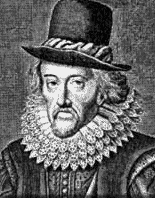
  • Francis Bacon on the Making of Gold. And Beauty.

    JF Ptak Science Books   Quick Post

    http://blogs.ub-filosofie.ro/pce/wp-content/uploads/sylva1.jpg

    The following extract is from the section “Century IV” of Francis Bacon’s Sylva Sylvarum, or a Naturall
    Historie in ten Centuries, published in London in 1627, and which was part of Bacon’s unfinished Instauratio Magna. Experiment Solitary, touching the Making of Gold.  The books was published just after Bacon’s death in 1626, and was as it turns out quite well-received, a best-seller even, going through ten editions to 1670.

    This section on the making of gold is included Century IV of Francis Bacon’s Sylva Sylvarum, or a Naturall Historie in ten Centuries… London, 1627, which was part of Bacon’s unfinished Instauratio Magna.

    ·Posted by :

    ·in:

  • The Unspoken Bits in Antique Historical Charts: Africa, 1826

    JF Ptak Science Books     Quick Post

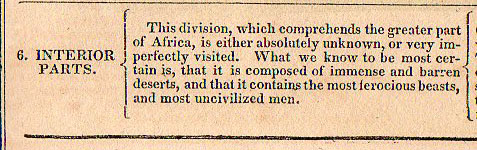
    John L. Blake’s Geographical Atlas is interesting for what it says and doesn’t say–granted, you can’t much take someone to task for things that they do not say, unless of course the unspoken bit makes a louder noise in its absence than in its presence. 

    Africa chrono816

  • The Invention of Satirical Photography (1840)

    JF Ptak Science Books    Post 1911

    “Nothing is falser than people’s preconceptions and ready-made opinions; nothing is sillier than their sham morality…”
    (atribued to) Petronius,

    The Satyricon

    Bayard, Hippolyte(Image source, Gerry Badger blog, who also has some interesting things to say about the work as
    momento mori.)

    The road in determining who was the first person to what discovery is sometime a bit rocky–so with the invention of the computer (ask Mr. Atanatsoff), and the telephone (ditto Mr. Gray) and the television (and so to with Dr. Korn).  This is also the case with photography, the rights for the discovery of the process contested in the first year following the announcement of the process. 

    The response to rejected claims for priority in discovery are almost (?) never recorded visually, but in he case of photography the rejected party did make a visual response, which I think was a prosimentrum of sorts, a photographic novella, and the appearance of the first use of satire in photography.

    Louis Daguerre’s epochal publication in the Comptes Rendus in 1839 would bring about the general recognition of the birth of photography–his process was described in that article and was immediately set to use by hundreds of adventurers people even in the first few weeks after publication. IT may well be that there are legitimate claimants working on the “photogenic” science before this time but it is Mr. Daguerre who published his findings first.

    Among the many “firsts” in the first year of photography (reckoned as PD or post Daguerre

    http://upload.wikimedia.org/wikipedia/commons/1/12/First_portrait_photo_Daguerre_Huet.jpg

    [Source here.]

    Generally though the first photographic portrait has been recognized as being the work of Robert Cornelius, who was among the earliest practioners of the new science of the Daguerreotype.  This is his work, dated 1839, made in his father’s gas light importing business on Chestnut Street, Philadelphia:

    The First Portrait Photograph Ever Made firstportrait

    (Both subjects have interesting hair issues.)

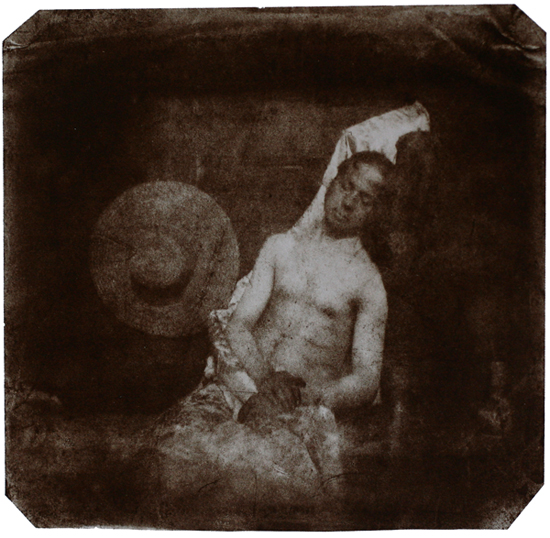
    is is fine and remarkable, though the images simply record the bodies of the humans that are pictured.  The first human portrait with an edge, with a political or social axe too grind and point to make, an  image bent on a decisive end, belongs to a man who mildly and then hotly contested Daguerere’s claim to the birth  of photography–Hippolyte Bayard. 

    Bayard (1807-1887) experimented in the photographic science before the publication of Daguerre’s paper and had shared some of his successes at this early date with members of the French Academy of Sciences (the publishers of  the esteemed Comptes Rendus, the vehicle for Daguerre’s paper). He was even in communication with Francois Arago, who as it turns out was the champion of Daguerre, and who introduced the paper to the world.  After the appearance of Daguerre’s paper Bayard–no doubt somewhat envious of the attention and money/funding that Daguerre was receiving) petitioned for help from Arago to establish his own claim and a chance for the experimenter’s lament (funding). He was told in no uncertain terms by Arago to cease the attention, as it would hurt the chances of Daguerre to establish his priority and have the honor of the invention of photography to stay in France.  It is a longer story than this, obviously, but suffice to say, Bayard’s interests were mostly ignored, his priority claims relinquished.  (He was later able to collect a few thousand francs for his scientific work, but the larger prizes eluded him.

    And so in 1840, full of his own defeat and thoroughly impressed by Daguerre’s success, Bayard composed the (above) portrait of himself as a drowned and dead man.  On the reverse he wote:

    “The corpse which you see here is that of M. Bayard, inventor of the
    process that has just been shown to you. As far as I know this
    indefatigable experimenter has been occupied for about three years with
    his discovery. The Government which has been only too generous to
    Monsieur Daguerre, has said it can do nothing for Monsieur Bayard, and
    the poor wretch has drowned himself. Oh the vagaries of human life….!
    … He has been at the morgue for several days, and no-one has
    recognized or claimed him. Ladies and gentlemen, you’d better pass along
    for fear of offending your sense of smell, for as you can observe, the
    face and hands of the gentleman are beginning to decay.”  
    (From Helmut Gernsheim, A Concise History of Photography, with Alison Gernsheim, London: Thames & Hudson, 1965)

    It seems that the use of satire in photography was not common in the first few decades following 1839, which makes Bayard’s first use of he genre in 1840 even more remarkable.  Satire in general has been aroudn for thousands of years, mostly in the form of drama and literature, and then in (Western, at least) painting in the Renaissance), right up through the Brueghels and Hogarth and Chaplin’s Great Dictator and Dr. Strangelove. But it seems to me that the first photographic use of the genre came with the overtaken Bayard, who at least deserves this honor of “firstness”. 

    Note:

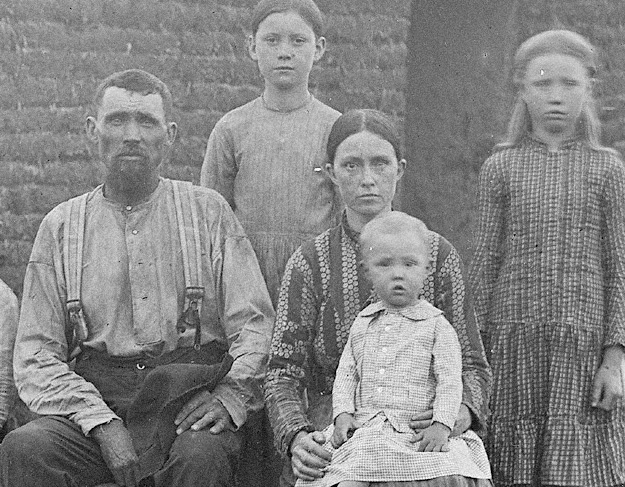
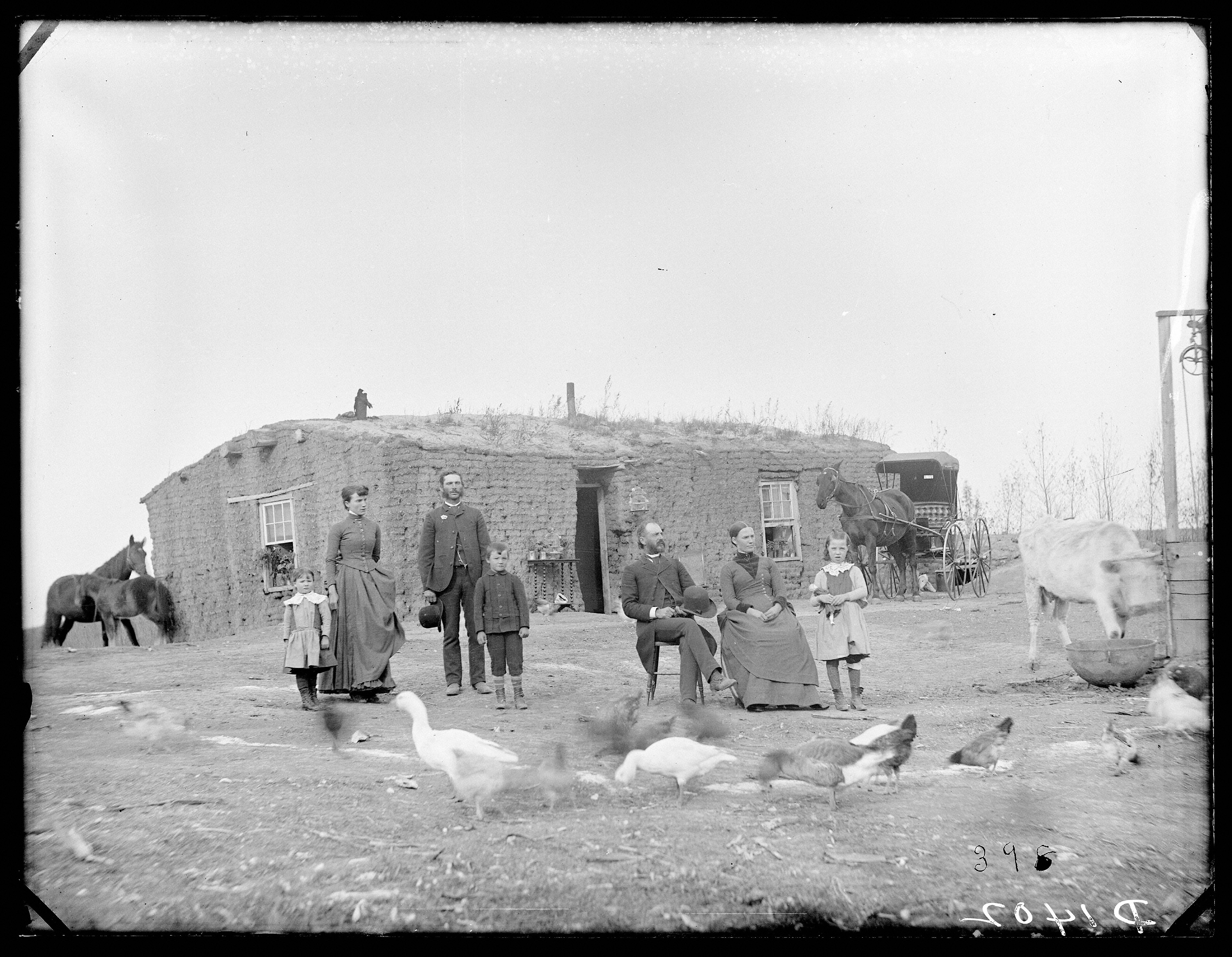
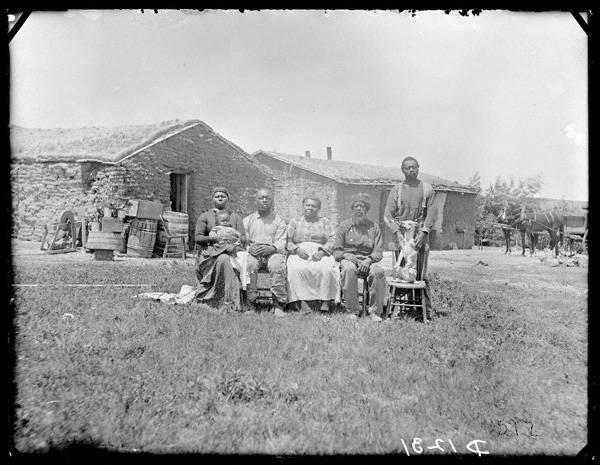
    I just wanted to remark on the hands and head of Bayard in his self-portrait–I believe that the man is just sunburned.  It si common to see in 19th century photographs of working people that–when their hat is removed and so on–we see a big sun/tan line ont heir forehead.  This is particularly the case in the work of Solomon Butcher, who recorded the lives of families on the SOdbuster Fronter in the 1880’s and 1890’s in Nebraska. 

    Harve Andrews and family by the grave of "Willie," photographed by Solomon Butcher, Victoria Creek Canyon, Custer County, 1887. NSHS RG2608-2360

    (Source, Nebraska State Historical Society.)

  • Art’s Other Dead End Kid: Alexander Rodchenko (Book Cover Designs)

    JF Ptak Science Books  Quick Post

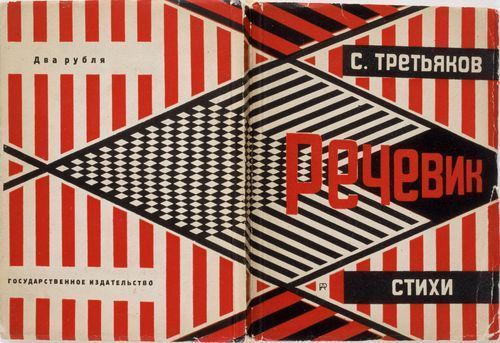
    The initial reaction to this fantastic set of book cover designs by Aleksandr Rodochenko (found at the FlyerGoodness blog, here) was for inclusion in this blog’s History of Lines series, given their high dependence on stark geometry and all. All of the designs are by Aleksander Rodchenko and are from the 1930’s and 1940’s.

    Rodchenko (1891-1956) was among the pioneers of modern art, filled up enough with it that by 1921 he and a group of other Soviet Artists gathered for a show called 5×5=25, which effectively was an anti-art show, declaring in its works the end or death or withering of art.  Rodchenko presented monochrome works1 deciding to abandon painting.

    [Source: FlyerGoodness, here–many more on that site.]

    He did not abandon other forms of art, however. (He was also a little late on the anti-art business, as the other Dead End Kid  M. Duchamp came to it in 1914, and then famously producing his L.H.O.O.Q. in 1919 as well as his series of Readymades to make his point razor sharp.  Duchamp was done with art and stayed done, making his anti-art into an expression, and then lived his life accordingly, filling it with not-art and chess.)

    Rodchenko continued in art though in other venues, working in sculpture and design in the 1920’s-1940’s,and returning to abstract expressionism in the 1940’s.

    In the middle he was very prolific. Some of his popular work in book design included the following terrific examples:

    http://dreamdogsart.typepad.com/photos/uncategorized/2008/05/19/aleksandr_rodchenko_poster.jpg

    Notes:

    “September-October: With Alexandra Exter, Lyubov Popova, Stepanova, and Aleksandr Vesnin, presents work in 5×5=25,
    a two-part exhibition held at the Club of the All-Russian Union of
    Poets (Klub vserossiskogo soiuza poetov). Each artist shows five works
    in each part. The first part opens in September and features works
    especially produced for the occasion; Rodchenko exhibits Line (Liniia,1920), Grid (Kletka, 1921), and the three monochrome paintings Pure Red Color (Chistyi krasnyi tsvet), Pure Yellow Color (Chistyi zheltyi tsvet), and Pure Blue Color
    (Chistyi sinii tsvet, all 1921), which are often referred to as a
    triptych…” from the Museum of Modern Art website presenting their 1998 Rodchenko Retrospective; this section being a useful chronology of Rodchenko’s career.

    More images following:

  • The Sunburn in the 19th Century

    JF Ptak Science Books  Post 1912

    Butcher new settlers on prairie det

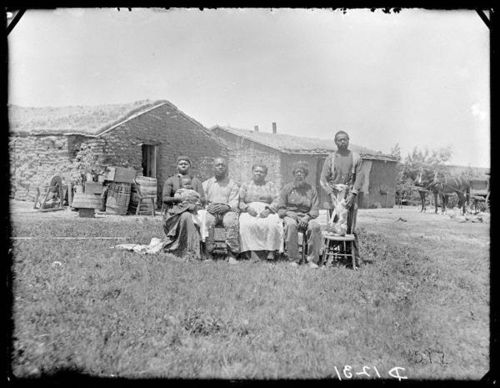
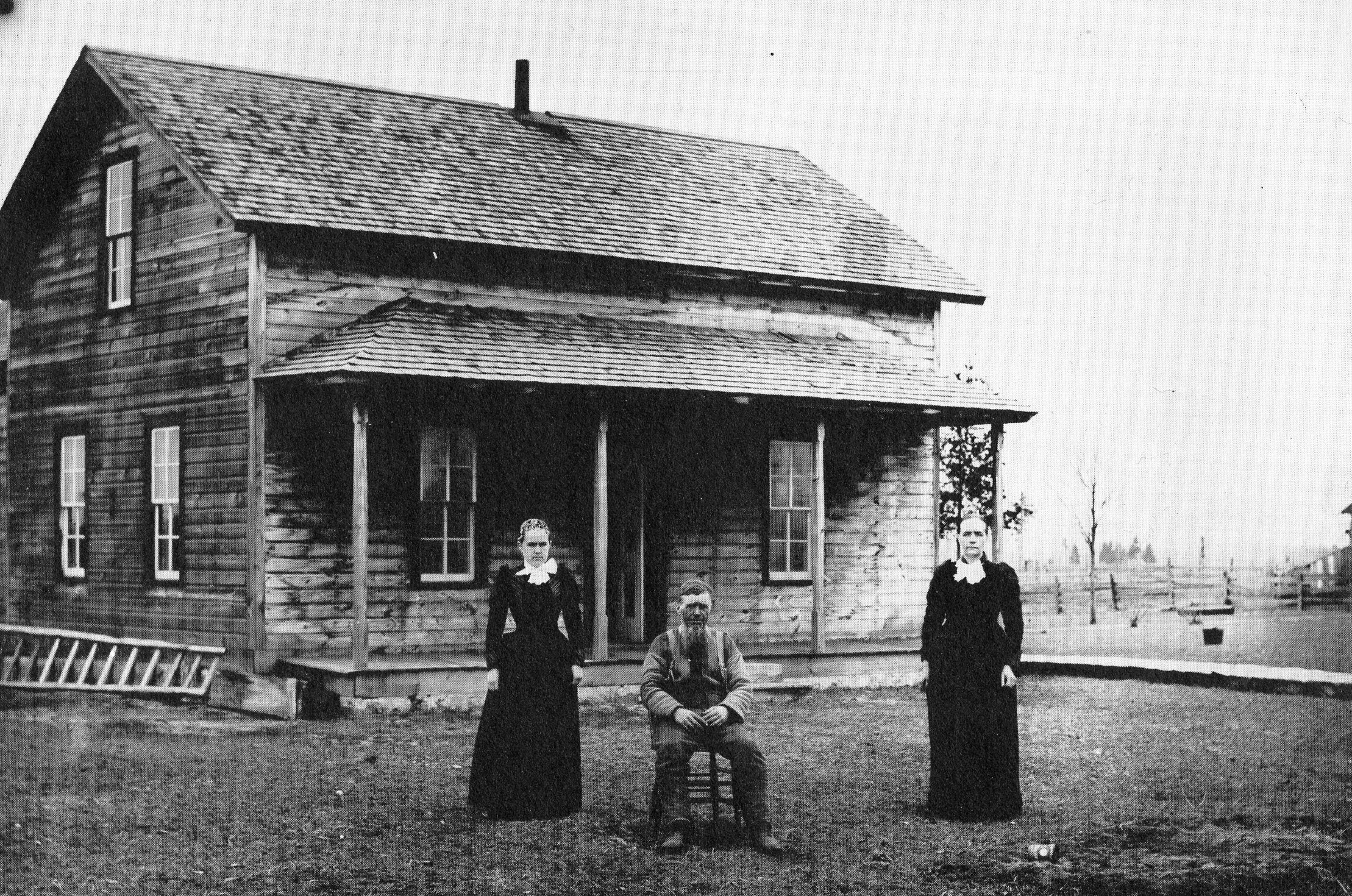
    When Solomon Butcher laid his head down on his final pillow he evidently thought of himself as a half-failure.  His work as a photographer in a life full of travel through the Great Plains lead to not-much-“success” save for one book1, and his work wasn’t recognized for the impact that it would have in the decades to come. Perhaps he wondered if his ways were all worth it, hauling his family and his enormously heavy collection of full-plate glass negatives from one house to the next.  Of course that would change in death–not the money part, but certainly the recognition.  His photographs are outstanding glimpses into late 19th century American frontier life, and especially so for the work he did making images of families and their belongings in the long rolling landscape of pioneer Nebraska.

    I’m
    not sure exactly what Solomon Butcher told his subjects when he photographed them
    outside of their frontier houses out there in the Great
    Plains in the 1880’s.  His spectacular
    portraits included not only the family of the house, but in many cases, everything
    that the family owned.  Possessions were

    Butcher

    (Image via the Nebraska State Historical Society, with caption2 below.)

    encumbrance making your way across the country in the mid/19th century,
    especially if you didn’t have very many to begin with.  These families—the first generation in their
    mostly sod-built houses—would’ve been farmers scratching out a minimum trade
    and decent subsistence.   City/town goods
    would’ve been not-usual in these circumstances, and evidently whatever it was
    they had of these things wound up outside, displayed around the house and on
    the roof, when Mr. Butcher arrived in his photographer’s wagon. 
    Butcher death trip859

    (Who
    was it, I wonder, who came up with the initial idea of displaying the
    family’s possessions:  did Butcher set
    out with that idea, or did it happen spontaneously?  I wonder what it was the families thought as
    Butcher was packing up his equipment, his horse fed, his cameras stowed away,
    climbing up onto the driver’s bench.  Did
    they wait until he was a spot on the horizon to put away their things?  Did they gather everything up as Butcher
    gathered up his own material, or did they just wait for the stranger to
    disappear before pulling the family back together? Sitting their surrounded by
    the things that they owned, did these families feel a quiet pride, or were they
    embarrassed have their pictures made together with their frontier opulence?)

    There’s much to look at in these images, and the Nebraska Historical Society does a very good job at it here, espcially when they work at some digital magic, making some of the disappeared stuff that lurks in the shadows of the interiors of the cabins appear. What is of interest to me today are the sunburns–this issue was brought up yesterday in another post on the invention of the satirical photograph, where the self-portrait shows a man with heavily sunned face and hands, the marks of a working man with dark settling on light becomes a little remarkable.

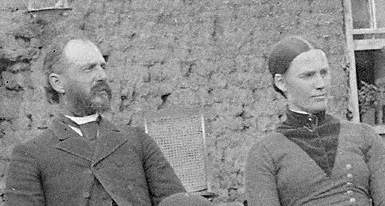
    This is seen in Butcher’s photographs from time-to-time. In the series of photographs of homesteads, he often captured images of men without hats–seldom the case, I guess, in the normal routine of a day.  The men’s faces are deeply tanned except for where the hat is pulled down to the middle of their forehead, where we see a much lighter complexion: 

    Harve Andrews and family by the grave of "Willie," photographed by Solomon Butcher, Victoria Creek Canyon, Custer County, 1887. NSHS RG2608-2360

    Which makes sense, of course, since these were pioneers and farmers, and working pretty much all of the time outdoors.

    I remember being surprised the first few times I noticed this, and then not so. This is much like seeing all of those non-smiling photographic portraits of the 19th century and wondering about the sombreness, when the general explanation for the seriousness was far simpler: given the length of time for an exposure, it was took simply too much effort to hold the same smile for a minute or three, and so the rigid face became a necessity. The brands of the faces of these men was there simply because they wore hats outdoors doing hard work in the High Plains sun. 

    There’s a world going on in these photographs, but for right now I’m just looking at faces.The Library of Congress site has an excellent collection of this images online, and there’s a lot of micro-photo inspection to be done. 

    Another example, here:

    Butcher sun det
    Which is a detail from: Butcher sun
    (Source: The Library of Congress, “Rev. and Mrs. E.D. Eubank on Clear Creek west of Lee Park, Custer County, Nebraska”.)

  • Feeling and Touching Calculated Numbers in the 18th Century: Palpable Mathematical Devices

    JF Ptak Science Books  Revisting/Expanding Post #76 (from 2008)

    Part I:

    Nicholas
    Saunderson (1682-1739)  was an extraordinary mathematical talent—he was
    also blind (from about the age of one), and invented, principally for
    his own uses, what I think is the first mathematical calculator designed
    specifically for the use of the blind.

    Blogblindsaunderson_calc
    He was supremely gifted and creative, and rose to become the fourth Lucasian professor at Cambridge, succeeding the expelled William Whiston, who had in turn succeeded Isaac Newton—Saunderson also held the post for one of the longest periods of time, 1711-1739.  He was friend and associate to Newton, Whiston, Roger Cotes, Halley, De Moivre and others during a particularly rich intellectual period in the history of physics and the maths. 
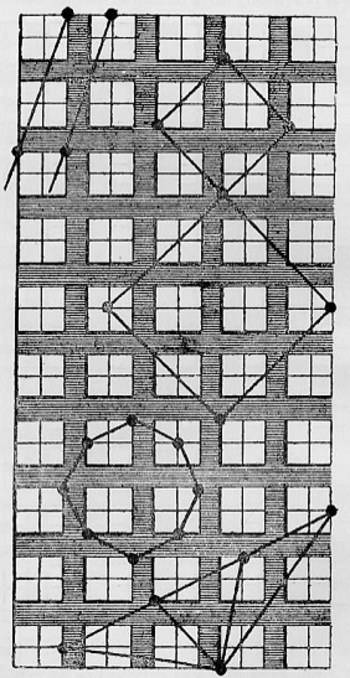
    Blogblindsaunderson_geo

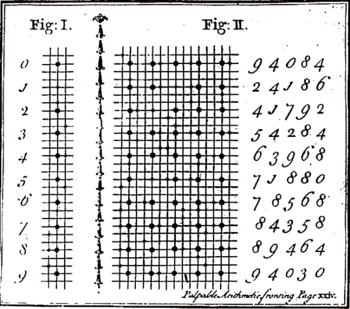
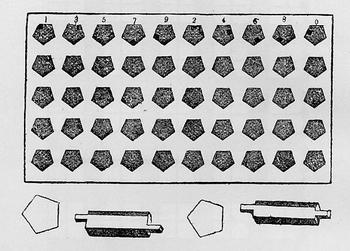
    His calculator was smart and simple, based on a cribbage-board –like device, that was able to perform arithmetical and algebraic functions—it consisted of nine rows and was worked with two pins, the positioning of the pins on the engraved board telling the user their value. (There was another calculator for the blind constructed by Meyer (below, left)  using a sort of reverse principle to the Saunderson model where it was the shape and placement (leaning or not, for example) of the pegs in the hole that annotated value rather than their placement on the board.
    Blogblindparis

    The Saunderson computer was described in his The Elements of Algebra…, published at Cambridge in the first edition just after the author’s death, in 1740.  The device was described in the book by John Colson (who succeeded Saunderson to the Lucasian chair), who commented that it was via the use of the device that
    Saunderson could compose his treatise on algebra. (Above  is another Saunderson-based calculator allowing for the construction and study of geometrical figures).  

    Part II:
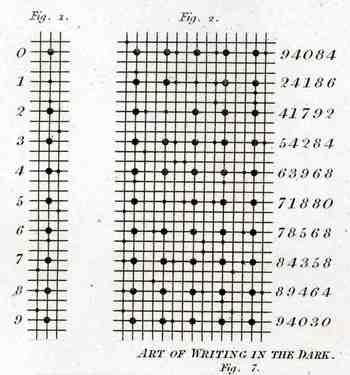
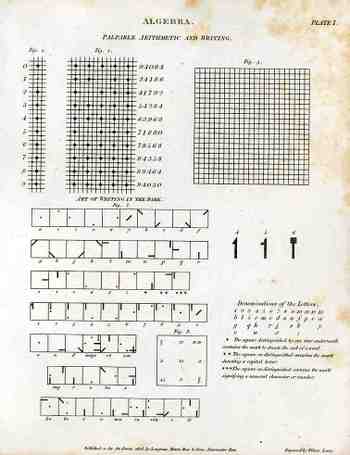
    Blog1sept_6_palpable_det516_2“Palpable Arithmetic”, the sub-heading for the sheet illustrating aspects of algebra for Abraham Rees’ (1743-1825) great if not problematic 45-volume Cyclopedia, is a system that  records and organizes and sometimes calculates using three dimensional objects.

    For example the Egyptians (for one) calculated with pebbles; then there was the ABAX of the Greeks, and the abacus (and also called the mensa Pythagoras) of the Romans (and of the Japanese and earlier still of the Chinese), the scaccarium of the English (via the Norman conquest), and innumerable other systems that performed arithmetic and recording and
    archiving functions via the employment of reeds, notches on a tree or cloth or stick (etc.), reeds, knots, fingers, beans,shells, string, sand, and on and on.  Palpable arithmetic also has a specialized meaning in places as a calculating device in which the numbers are recognized by touch and used by blind mathematicians or other parishioners. (Just for the record, there are a number of eminent blind  mathematicians including, for example,  Leonard Euler (1707–1783, who was blind in the last 17 years of his life), Nicholas Saunderson (who I wrote about in an earlier post), Louis Antoine (1888-1971), Lev Pontryagin (1908-1988.)) 

    An interesting and very large philosophical issue that comes up here with the blind mathemaitican is the concept of image formation and its dependence upon sight for intuition, as with geometry or topology.    Plato for one determined for himself that image formation issues were precognate and the same in sight and non sighted people.  How would you manipulate a geometrical form if you’ve never actually seen one, or how would you extend you spatial imagination of compex forms without a reference? 

    But my main issue here is the image from the hees book.  I’m by the meaning of this particular calculator or recording system–I just can’t tell what it is.  Can you?  If so I’d love to hear from you.

    Note on the Anthropology of Numbers:

    From Levi Leonard Conant’s The Number Concept Its Origin and Development we find these very descriptive definitions of words for numbers, all of which relate to the sort of implement that they were controlling
    their numbers with, or calculating:

    “in Javanese, Malay, and Manadu, the words for 1, which are respectively
    siji, satu, and sabuah, signify 1 seed, 1 pebble, and 1 fruit
    respectively. Words as natural and as much to be expected at the
    beginning of a number scale as any finger name could possibly be. Among
    almost all…the derivation of number words from these sources can constitute no ground
    for surprise. The Marquesan word for 4 is pona, knot, from the practice
    of tying breadfruit in knots of 4. The Maori 10 is tekau, bunch, or
    parcel, from the counting of yams and fish by parcels of 10. The
    Javanese call 25, lawe, a thread, or string; 50, ekat, a skein of
    thread; 400, samas, a bit of gold; 800, domas, 2 bits of gold.The
    Macassar and Butong term for 100 is bilangan, 1 tale or reckoning…”

    The full sheet from the Rees book:
    Blog1sept_6_palpable514_2

  • Index of the Scientific Papers of Max Planck (1900-1949)

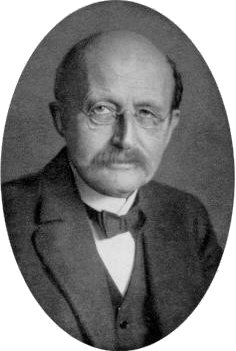
    Scientific Papers of Max Planck, 1900-1949

    Planck

    Arranged from the tremendous data haul at the HiteCite index at the University of Pennsylvania

    1900 ANNALEN DER PHYSIK 1 (1): 69-122
    Planck M    Irreversible radiation procedures

    1900 ANNALEN DER PHYSIK 1 (3): 621-U11

    Planck M    Comments on an essay on thermodynamics by Mr K Wesendonck

    ·Posted by :

    ·in:

    —
  • Index of the Scientific Papers of Ernest Rutherford, 1900-1942

    JF Ptak Science Books  

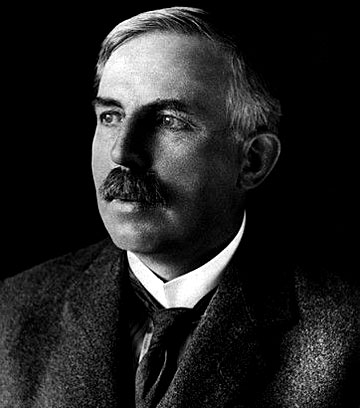
    Rutherford
    1900 PHYSIKALISCHE
    ZEITSCHRIFT 1: 347-348

    Rutherford, E
    Concerning radioactive thorium compounds

    1900 PHYSIKALISCHE ZEITSCHRIFT 2: 53-55
    Rutherford E; Kling RKM
    The energy of the becquerel-and x-rays and the necessary energy for the
    production of ions in gases.


    ·Posted by :

    ·in:

    —
  • Index of the Scientific Papers of Niels Bohr, 1909-1955

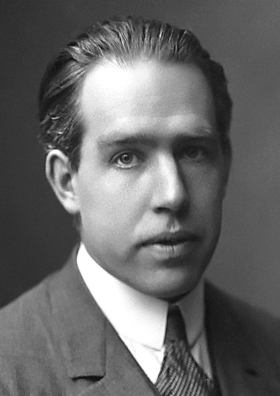
    Bohr

    Niels Bohr Works, 1909-1955.  This list is assembled from the data from the HistCite of the Garfield Library of the University of Pennsylvania. 

    1909 PHILOSOPHICAL TRANSACTIONS OF THE ROYAL SOCIETY OF LONDON SERIES A-CONTAINING PAPERS OF A MATHEMATICAL OR PHYSICAL CHARACTER 209: 281-317
    Bohr N
    Determination of the surface-tension of water by the method of jet vibration

    1910 PROCEEDINGS OF THE ROYAL SOCIETY OF LONDON SERIES A-CONTAINING PAPERS OF A MATHEMATICAL AND PHYSICAL CHARACTER 89 (572): 395-403
    Bohr N
    On the determination of the tension of a recently formed water-surface.

    ·Posted by :

    ·in:

    —
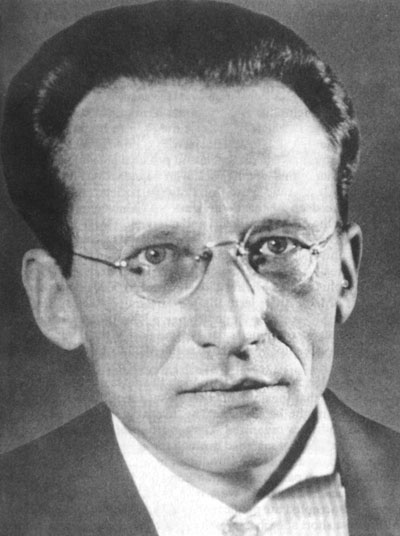
  • Index of the Scientific Papers of Erwin Schroedinger, 1914-1955


    Schrondinger3
    1914 ANNALEN DER PHYSIK 44 (14): 916-934
    Schrodinger E
    The dynamics of elastically coupled point systems

    1914 PHYSIKALISCHE ZEITSCHRIFT 15: 79-86
    Schrodinger E
    Acidity which produces interference patterns with x-rays.

    ·Posted by :

    ·in:

    —

Recent Posts

Archives

Categories