A Daily History of Holes, Dots, Lines, Science, History, Math, Physics, Art, the Unintentional Absurd, Architecture, Maps, Data Visualization, Blank and Missing Things, and so on. |1.6 million words, 7500 images, 4.9 million hits| Press & appearances in The Times, Le Figaro, Mensa, The Economist, The Guardian, Discovery News, Slate, Le Monde, Sci American Blogs, Le Pont, and many other places… 5000+ total posts since 2008.

  • Cigarette Women of the Second Dimension, 1940

    JF Ptak Science Books   Quick Post

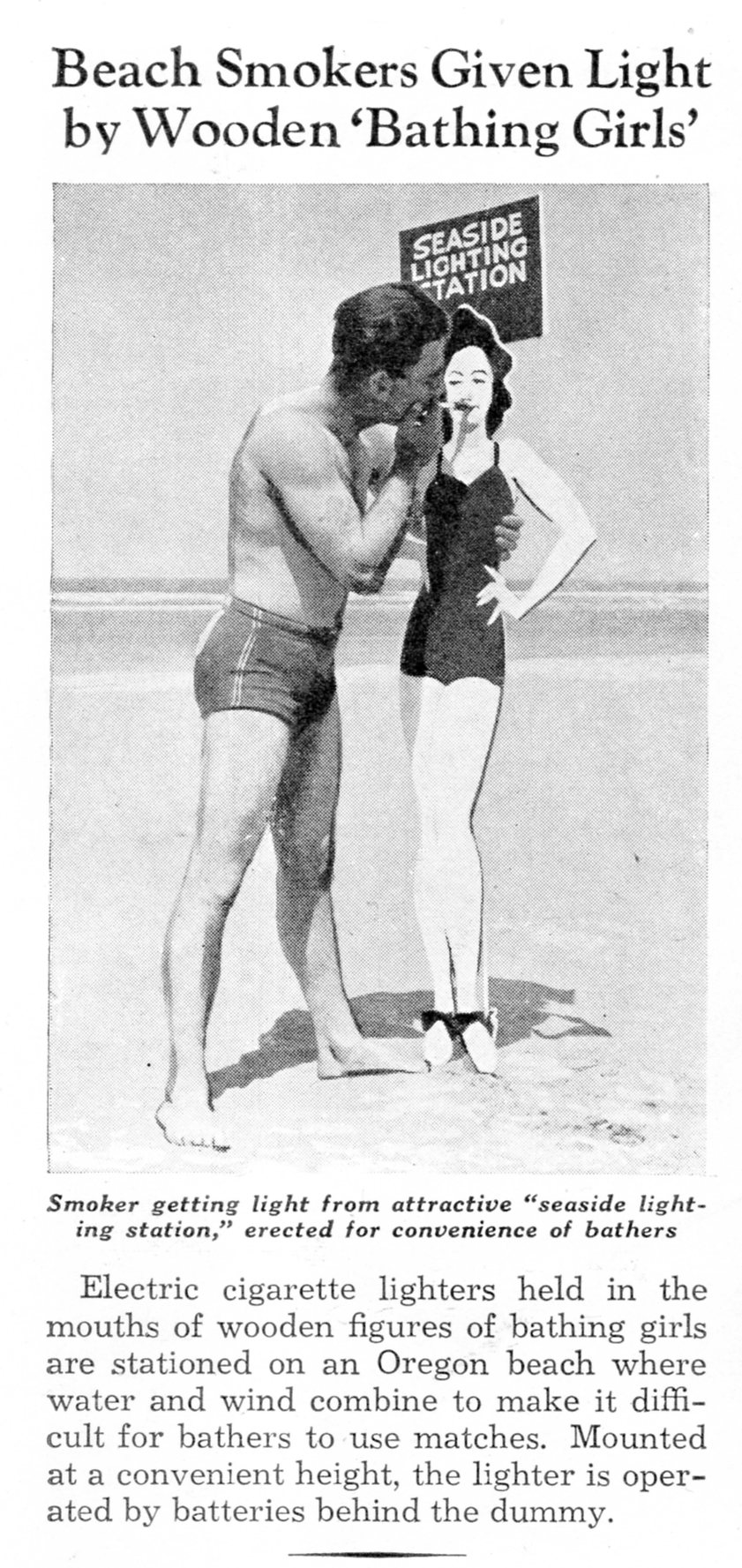
    Nothing quite spells out the duties of subjugation as being a one-dimensional-purposed two-dimensional object.  And in the world of these things few seem to come as close to becoming-a-real-girl in the Pinocchioiana sense than this item.


    Woman ciggie lighter corrected875

    It is a cigarette-lighting girl for beachgoers, found sleeping lightly on page 556 of the October 1940 issue of Popular Mechanics.  It seems that it is an issue for people being able to light their cigarettes on the beach, so cigarette manufacturers or their agents or agents of agents manufactured this device to make sure that no ill wind would come between the cigarette consumer and the uninterrupted consumption of cigarettes.  And so this device was created–the lightless ciggie smoker would come up to the cut-out and place their cigarette tip into the recesses of the lighting element in the cutout’s mouth.

    Weird, filled with dread, and true.  

    ·Posted by :

    ·in:

    —
  • Alphabetical Apocalypse(s): Apocalypse Now and Then

    JF Ptak Science Books   Post 2431

    “Just as psychoanalysis reconstructs the original traumatic situation in order to release the repressed material, so we are now being plunged back into the archaeopsychic past, uncovering the ancient taboos and drives that have been dormant for epochs… Each one of us is as old as the entire biological kingdom, and our bloodstreams are tributaries of the great sea of its total memory.”–The Drowned World, J.G. Ballard, Millennium 1999, p. 41.

    Is there a plural of apocalypse? Is there even a need for one (plural)? There is, of course, even if it is a word that is supposed to spell out the end of times–there can be more than one apocalypse, and they can happen at the same time, although given my very limited knowledge of the scifi genre I don’t know of any books addressing dual/multi-combative apocalypses. (And here I’m not talking about one apocalypse generating all manner of associated badness, but a second, completely unrelated, apocalypse.) 

    So in trying to understand the nature of apocalypse storytelling I decided to make a very abbreviated  overview of a vast literature of the end of times/apocalypse/technocaust/end of the world themes.  This is just a short working list, really, and includes only short stories or novels, and to keep it relatively crisp I’ve chosen the artificial delimiter of an alphabet of apocalypse types.  In many cases there is just one example (where there could be hundreds, so please don’t fault the list for completeness because that would take years of assembly and understanding). The same goes for the categories of apocalypse–I’m certain I not included the majority of them, though I think that this is a good start (There are no movies or television shows listed independent of a text, so Soylent Green will show up but under Harrison’s Make room! Make Room!. I think that tv shows/movies etc  must be enormously outnumbered and the scale of orders of magnitude by the print media.) 

    Evidently this list can be reproduced in the same spirit but with iterations–for example, Juvie Apocalyptic Lit (see here).

    Also–the list is a little heavy with Wells, Chrisopher, Aldiss, Heinlein, and Ballard; this simply because I’m a little familiar with these writers.  So, the list:

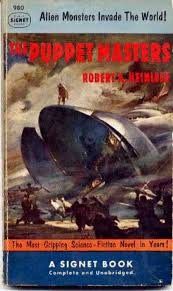
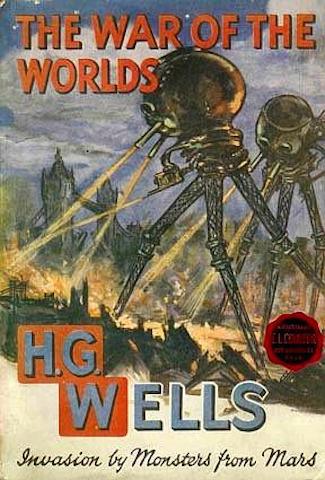
    Alien Invasion:  the great initiator, The War of the Worlds 1898, H. G. Wells; The Moon Men 1926, Edgar Rice Burroughs; The Puppet Masters, 1951, Robert A. Heinlein. There were other earlier incarnations of extra-terrestrial visits, especially if you considered religious/mythological aspects, though in literature it was far less common–like Swift’s mathematicians of Laputa and Voltaire’s titans in his Micromegas. For the modern era though it is Wells who seems to create this idea. 
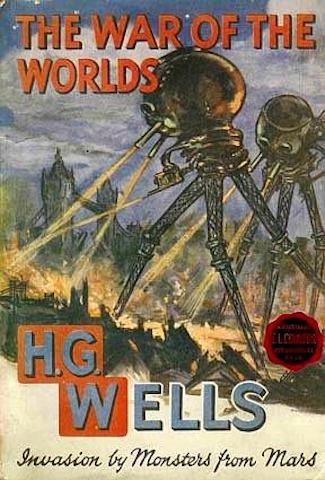

    Apoca war of the worlds Apoca--heinlein puppet
    [Of course this could not possibly be complete by the genre-bender/creator H.G. Wells’ War of the Worlds–Flavorwire has a selection of 15 different covers for this classic best-seller, here.  ]

    Botanical endgame virus destroying all plant life: The Death of Grass by John Christopher.  On the opposite end is  1962 novel Hothouse by Brian Aldiss where the plants take over everything.

    Apoca--aldiss hothouse

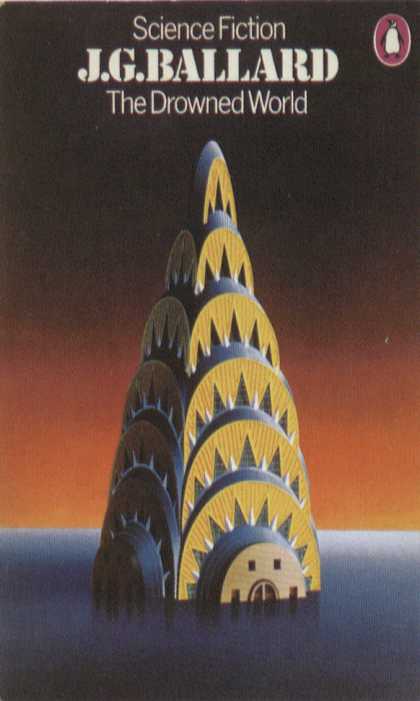
    Climate Change: apart from the state of globa;l warming as we know it now, The Drowned World by J.G. Ballard 1962 is perhaps the best and most well-known adventure in this field.. In this book in 2145 solar radiation has shrunk and mostly melted the polar ice caps, which is a lot of water, and has turned most cities into architectural swamplands of vertical mangrove. Conversely Ballard wrote the novel The Drought  in 1964 about all of the water on earth drying up.
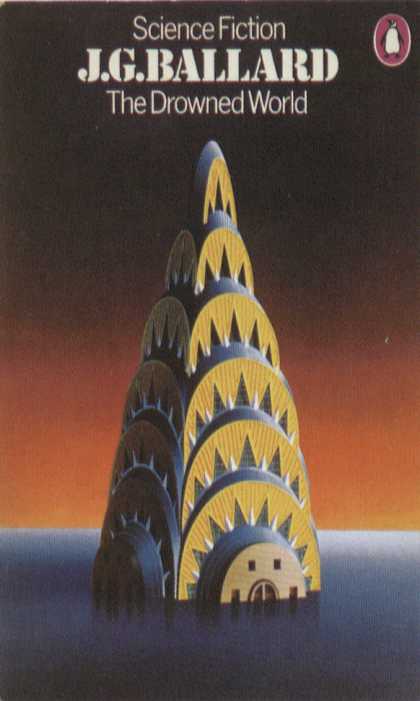
    Apoca--ballard drowned world


    ·Posted by :

    ·in:

    — —
  • Super Hero High Voltage Mask, 1941

    JF Ptak Science Books   Quick Post

    Mask878

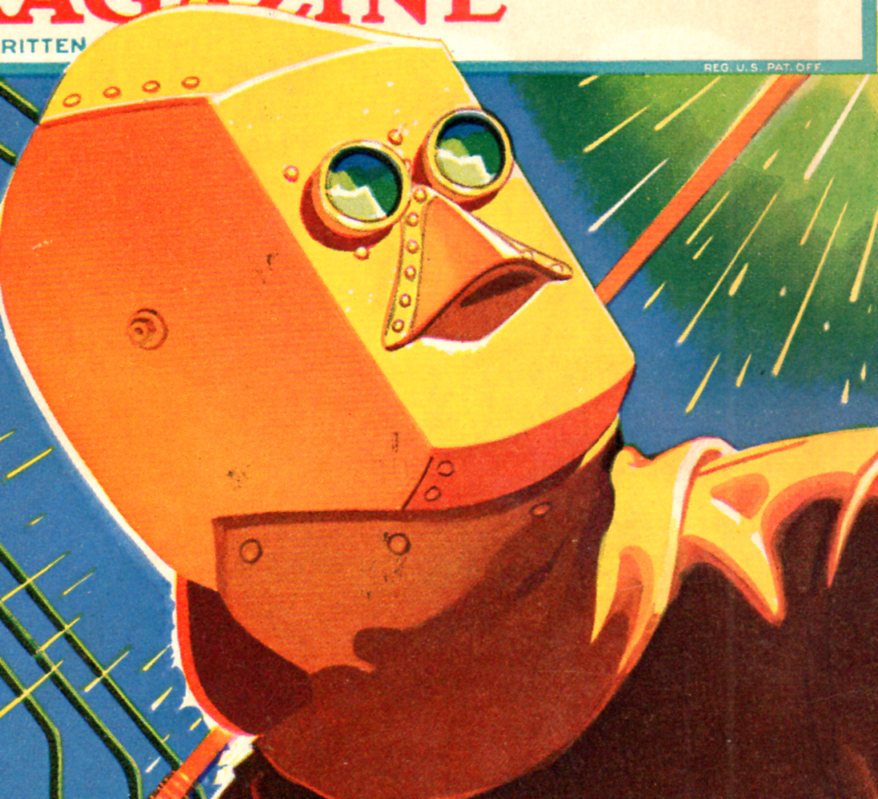
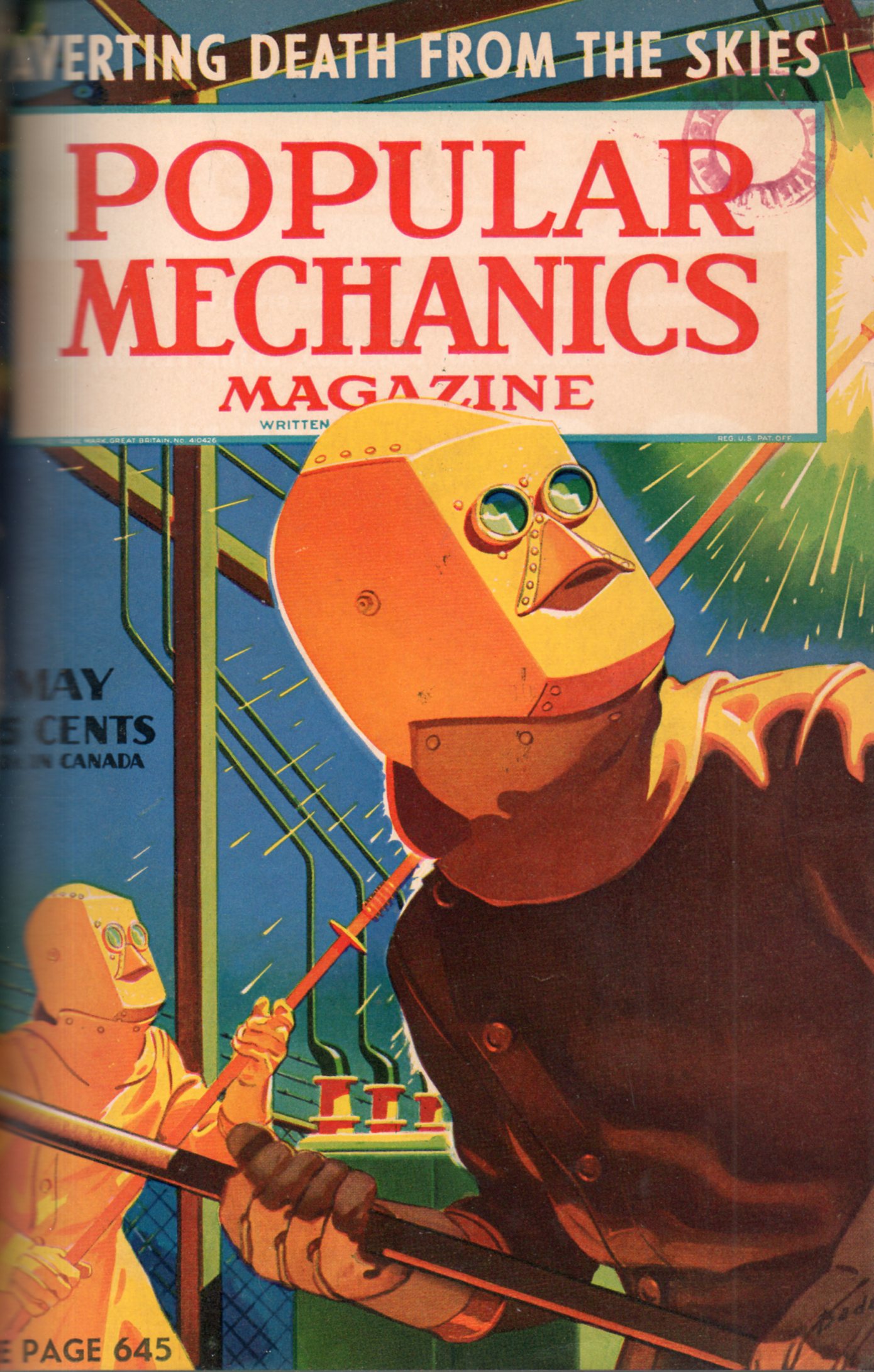
    I just couldn’t resist this.  And I don’t have much to say about it, either, except that it is a killer cover from Popular Mechanics for May 1941. Unfortunately it has nothing to do with my title for this Quick Post or the sub-head of the magazine–the men are dressed in protective gear to deal with high voltage electrical works,  though I have every expectation for these guys to take off with their rocket packs and punch-out Nazi dive bombers.  

    Mask877

    ·Posted by :

    ·in:

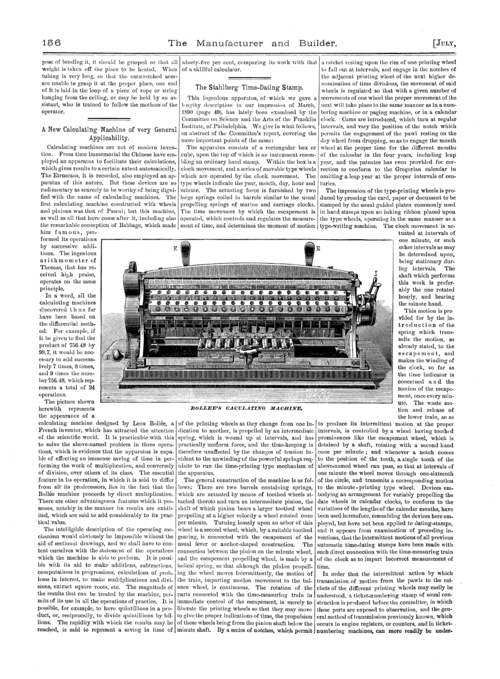
  • Bollee’s Calculating Machine, 1889

    JF Ptak Science Books   Quick Post

    Bollee
    [Image source: http://www.rechnerlexikon.de/artikel/Bild:Bollee-mit-Maschine-CNAM1990.jpg]

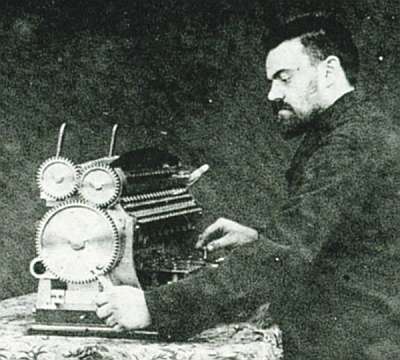
    This was a surprise, finding M. Bollee’s article (“Sur une nouvelle machine a calculer”) in the 1889 Comptes Rendus, pecking around in that big 10-pound volume looking for something else.  It was very easy to miss if you weren’t looking for it, just a few pages long in a 1000-page book.  But there it was, nestled comfortably in pp 737-739.  It these few pages Bollee describes his machine and with particular reference to his innovative approach to direct multipilication–a fine addition (ha!) to the long line of contributions by Babbage and Clement, Scheutz, Wiberg and Grant and Hamann. 

    Notes:

    Léon Bollée: “Sur une nouvelle machine a calculer”, in Comptes Rendus de l’Academie Sciences (Paris), volume 109, 1889, pp. 737-9.  (You can purchase the original paper if you’d like by following this link to our Books for Sale page, under “Bollee”.)

    An image of the machine from The Manufacturer and Builder:

    Bollee

    See:  the Making of America, http://digital.library.cornell.edu/cgi/t/text/pageviewer-idx?c=manu;cc=manu;rgn=full%20text;idno=manu0022-7;didno=manu0022-7;view=image;seq=0162;node=manu0022-7%3A21

    ·Posted by :

    ·in:

  • Cool Copyright Copy of a Significant Book in the History of Mathematics

    JF Ptak Science Books    Post 2432

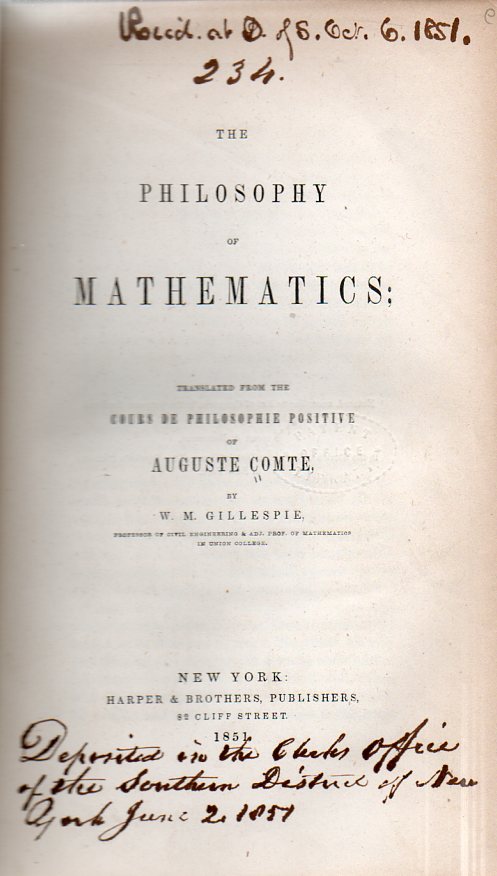
    Comte144

    Unusual marginalia in books is always interesting, especially when it is by the author, or from some official source. This example is a little more unusual in that it appears to a copy sent to assure copyright protection for the work–to me it gives the book a Bartleby-ian sense of place.  

    Isidore Auguste Marie François Xavier Comte wrote  The Philosophy of Mathematics, translated from the Cours de Philosophie Positive, which was translated by W.M. Gillespie and published in New York by the not-yet-venerable firm of  Harper & Brothers in 1851.  

    It just strikes me now that the “Bartlbey” reference above (from a Herman Melville short story) is even more appropriate than I thought, because just a few short months later, on November 15, 1851, Harper & Brothers would publish Melville’s Moby-Dick–which is a nice piece of serendipity.  I could say one other thing–I suspect that in the early stages the Comte might have sold more copies than the Melville.  

    • [Would you like to own the Comte? Just visit the blog bookstore and get in touch with us.]

    ·Posted by :

    ·in:

  • Popularly- and Commonly-Named Atomic and Nuclear Stuff

    JF Ptak Science Books   Quick Post

    Below are 66 examples of Cold War era stuff and consumer bits relating to atomic/nuclear and big-boom weapons.  All are found in my pinterest page, here, which also houses about 4,000 odd/interesting images that have been collected by Dr. Odd of the Unbelievablorium.  


    Superman in WWII


    Just 14 years before Slim Pickens in Stanley Kubrick's "Dr. Strangelove," Kirk Alyn (as Superman) took a somewhat less fatal missile ride in Columbia's "Atom Man vs. Superman," (Chapters 12-15). [pr]


    Canadian Cold War Poster: "Bea Alerte Says, 'Disaster May Never Occur Here...'"


    "ATO McBOMB" ATOMIC BOMB-INSPIRED MYSTERY CHARACTER BUTTON. ~1940s


    ·Posted by :

    ·in:

  • Preparing for the Possibility of the Invasion of the U.K., 1941

    JF Ptak Science Books   Quick Post

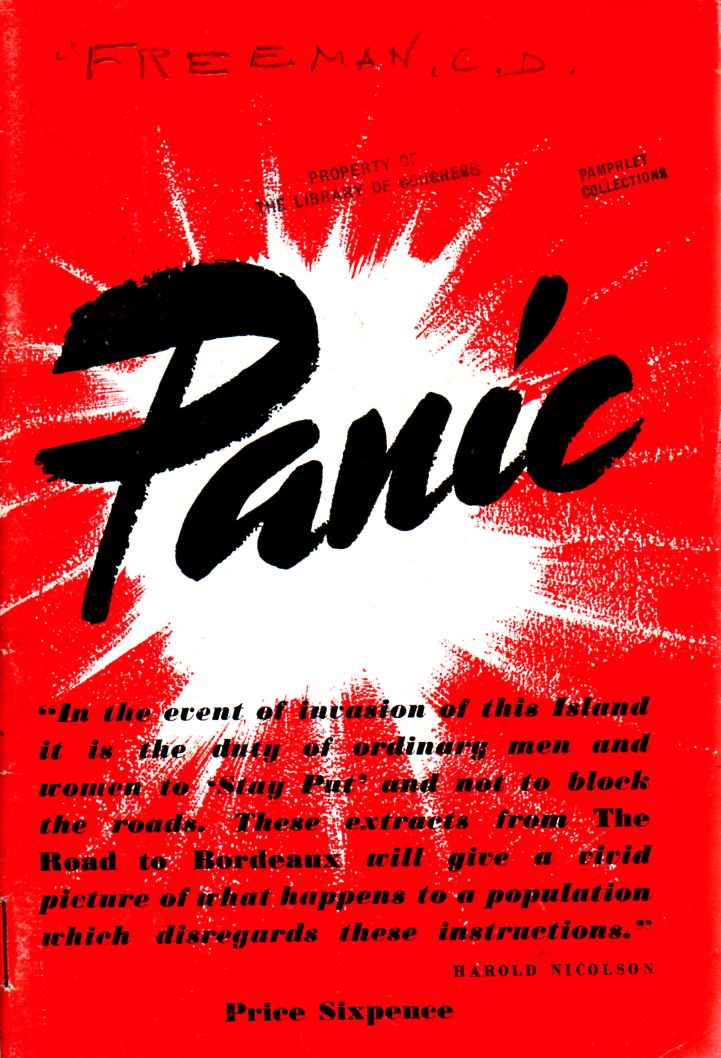
    Panic (publish in London in 1941) was a slim pamphlet containing the experiences of two British ambulance drivers working in France during the invasion by the Nazis in 1940.  They reported on their experiences there, which were grim. The major lesson that C. Denis Freeman and Douglas Cooper published was in the one-word title of their work–panic. They found that the French population in general reacted very badly–in a panic–in their response to the invasion. They found “the awful truths” that the population crowded roadways and made it difficult for the French army to maneuver, and also confounded efforts at organized resistance. 

    Panic879

    The lessons were learned in 1940, and I am sure that in the process of writing and publication through the end of 1940 and beginning 1941 that the general fear in the U.K. of a possible invasion by Germany had dissipated.  But the lessons were there to be learned, and Harold Nicholson (the the Minister for Information) declared that the lessons of France could be applied to the U.K.–namely that in the event of invasion that people should “STAY PUT’ and not block the roads.  Simple stuff, really, but mostly “simple” post facto.  

    [My copy was received by the Library of Congress on 8 August 1941, just a little beyond when the pamphlet could have done some better good…]

    ·Posted by :

    ·in:

  • Competing Similarities

    JF Ptak Science Books   Quick Post

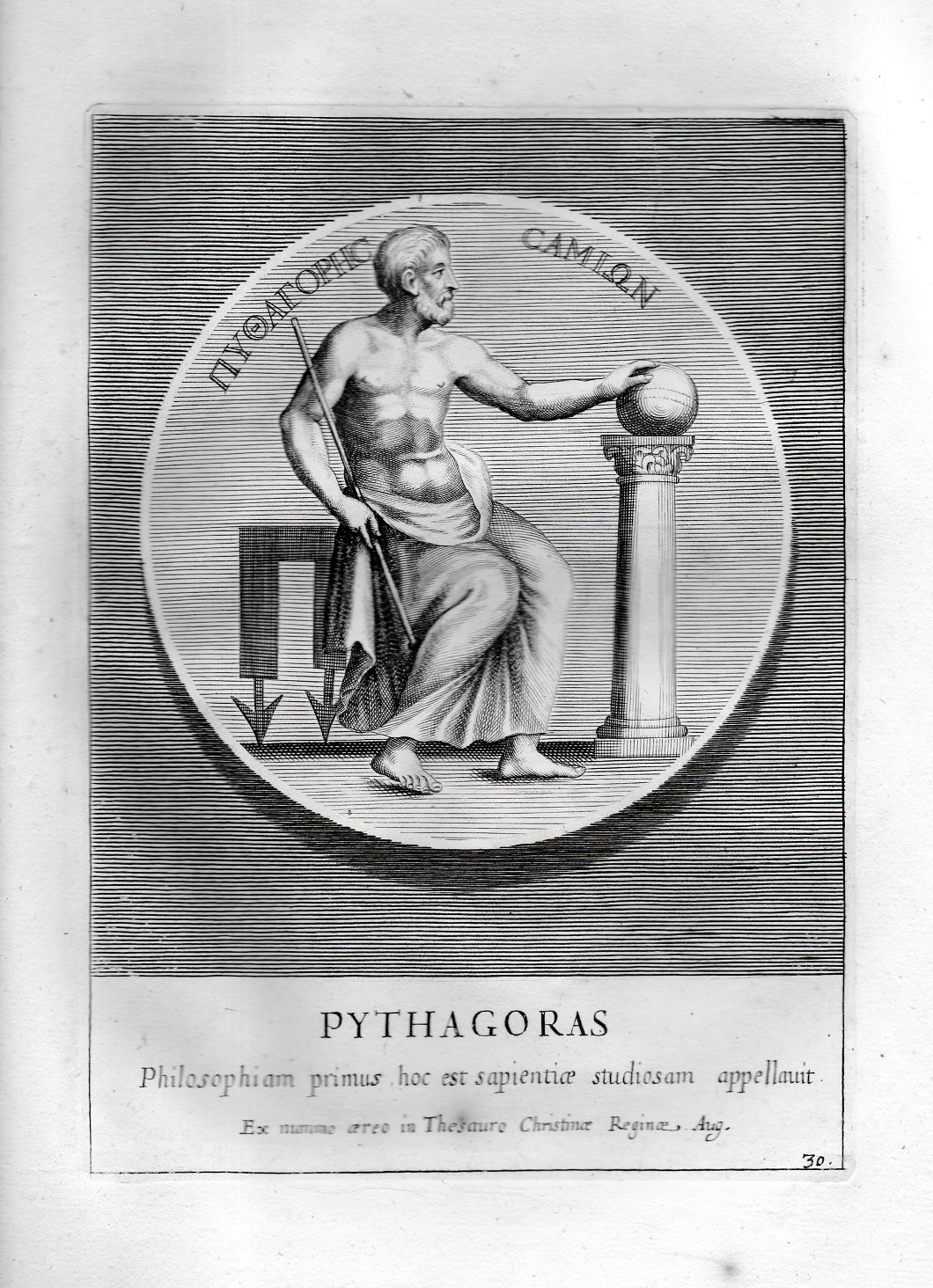
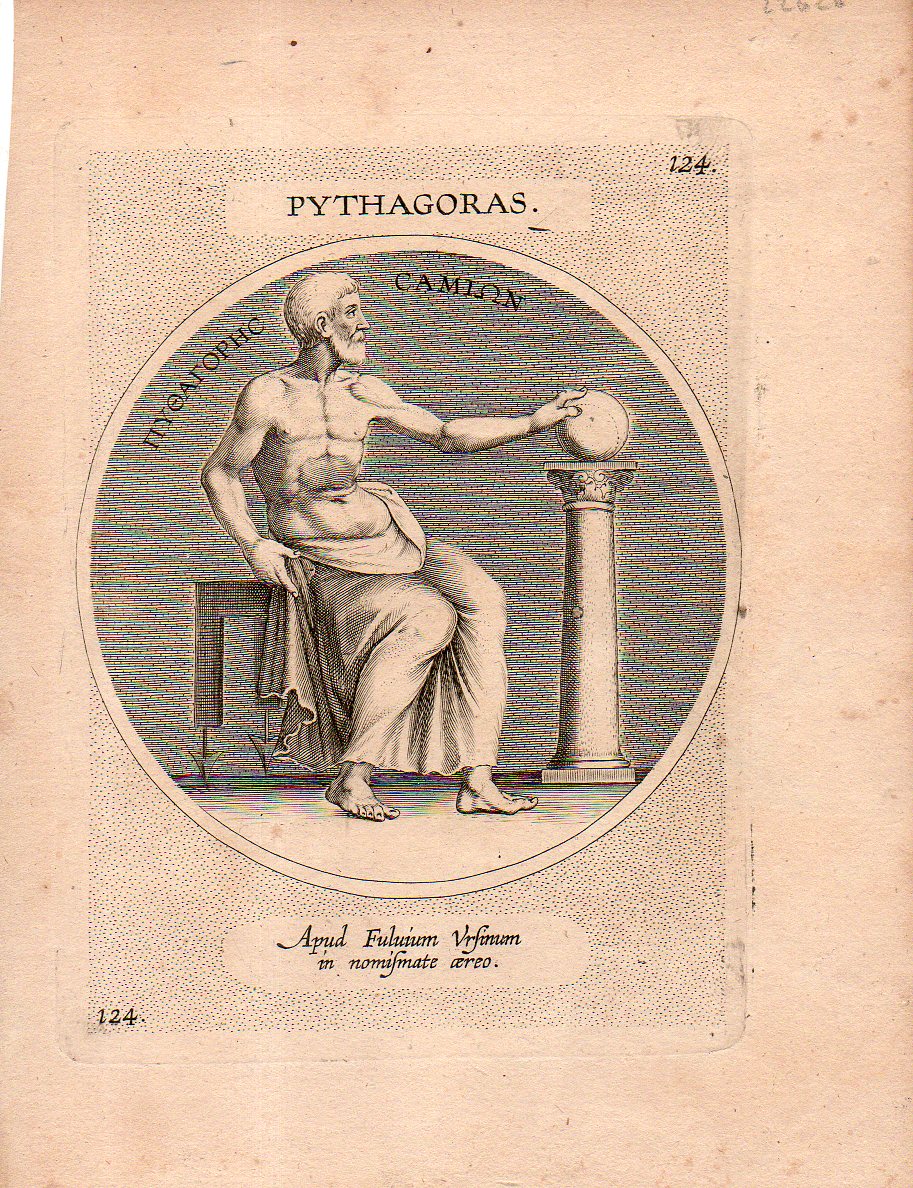
    This fine engraving of Pythagoras was printed in 1739  and appeared in Veterum Illustrium Philosophorum, Poetarum, Rhetorim et Oratorum Imagines…and published by Jo. Petri Bellorii, in Rome.  The engraving is very heavy and on a thick paper, and differs somewhat from  image that below, which is sharper, with greater detail. 

    Bike triplett188
     

    This second image I think was executed by an engraver copying Theodor Galle, which would make it 16th century, though for the life of me the print doesn’t feel to me to be that age–it is old, for sure, and I would’ve guessed 17th century, but not 16th.  I’ve not found this image anywhere though I’ve found similar that point to Galle in the 16th c.  

    I’m just sharing this here because it is unusual in my experience to see competing similarities in antiquarian  images of scientists–except if you’re talking about Newton, which is a different case.  

    Pythagoras168


    ·Posted by :

    ·in:

  • A Great Letter-to-the-Editor, 1: a Fundamental Contribution to Particle Physics

    JF Ptak Science Books   Post 2433

    James Chadwick’s introduction of the existence of the neutron made a “sly” entry into the general/popular scientific world–if such things could have personalities, then it would certainly be “humble”.  Except of course “humble” has no place in this vocabulary, except for instance like this, interpreting the poetry of the moment. Chadwiock’s “Possible Existence of a Neutron” appeared in Nature, 27 February 1932. volume 129,   the revolutionary contribution appearing as a Letter to the Editor, in 1.25 columns, on page 312 of this issue of the journal. And in the “tradition” of the Alpher-Bethe-Gamow paper (the great paper on the Big Bang, appearing on April 1st 1948 in the Physical Review), it is another of very many instances of a major announcement being made as a “simple” letter to the editor. (Well, in the case of scientific letters, this is really just a shorter, quicker-to-publication avenue to publication, and not much at all like a letter-to-the-editor of the NYT. Still, the description has a nice ring to it.)  This was the description of the neutron made after only about two weeks of experimentation.

    “In 1932, Chadwick made a fundamental discovery in the domain of nuclear science: he proved the existence ofneutrons – elementary particles devoid of any electrical charge. In contrast with the helium nuclei (alpha rays) which are charged, and therefore repelled by the considerable electrical forces present in the nuclei of heavy atoms, this new tool in atomic disintegration need not overcome any electric barrier and is capable of penetrating and splitting the nuclei of even the heaviest elements. Chadwick in this way prepared the way towards the fission of uranium 235 and towards the creation of the atomic bomb.”–NobelPrize.org

    His next paper1–and perhaps the more famous of the two–appeared a few months later in May and contained the proof of the existence of the neutron, and was an epochal achievement int he understanding of the nucleus.

    For this epoch-making discovery he was awarded the Hughes Medal of the Royal Society in 1932, and then the Nobel Prize for Physics in 1935. I think he may be the only recipient of the award who was also at one time a POW. (1914-1918 in Chadwick’s case, going from there to a Ph.D. at Cambridge in 1921 and then to Rutherford’s assistant shortly thereafter.)

    Notes:

    1. Chadwick, J. (1932). “The Existence of a Neutron”. Proceedings of the Royal Society A: Mathematical, Physical and Engineering Sciences136 (830): 692. Another paper appeared int he next year, (1933). “Bakerian Lecture. The Neutron”. Proceedings of the Royal Society A: Mathematical, Physical and Engineering

    ·Posted by :

    ·in:

  • A Black-on-Black Detail in a Sea of Hats Panorama, 1912

    JF Ptak Science Books   Quick Post

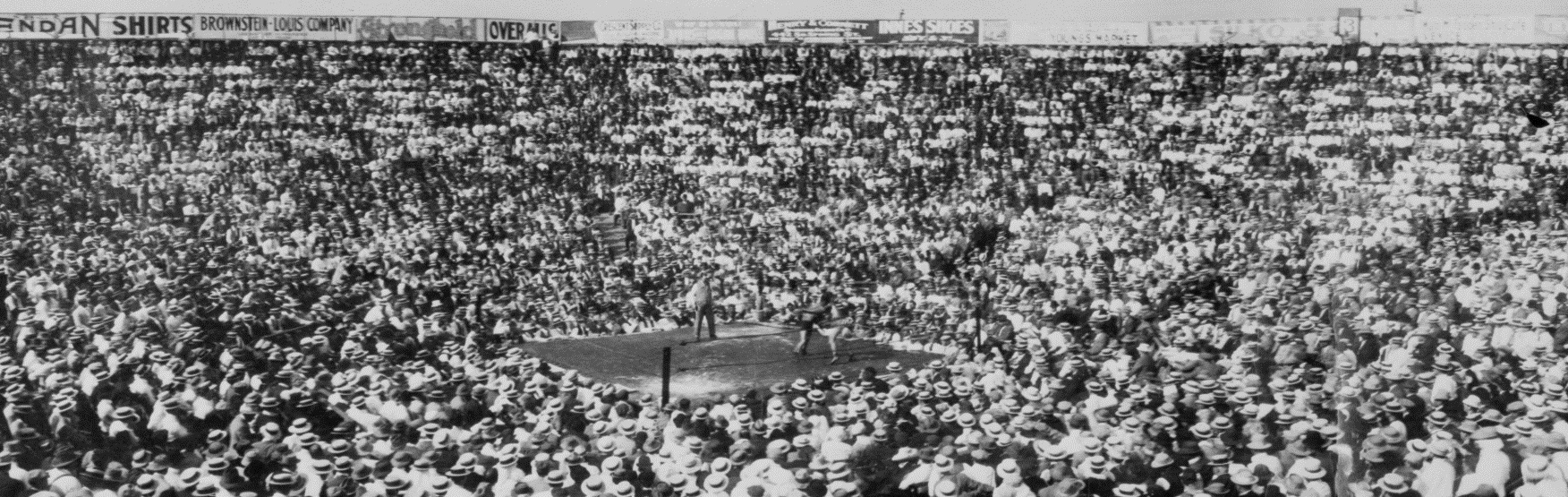
    In my long exposure to antiquarian prints I’ve long paid attention to images with a lot of black in the engraving or etching or woodcut–nighttime, caves, underwater, windlowless low-light interiors, and so on.  It is a definite challenge to accomplish these images, as well as a high use of ink–in any event, my eye is set for black details in black images in black prints. And so it came to be that I noticed this very small detail in the backdrop for the photo-copying of this fine panorama below, found at the Prints and Photographs Division of the Library of Congress (here). 

    Black on black of Boxing Day

    It is basically invisible to inspection in the version of the full print, below, but in the 80 mb examples it pops right out. (It certainly occupies less than 1% of the image space, but up-close it takes on a bit of its own life and legacy.) 

    The full photograph (45″ long)  shows a boxing match between Wolgast and Rivers at the Vernon Arena in 1912:

    Boxing sea of hats

    I was originally attracted to the photo by the hats, but the black blotch on black won out.  

    Panorama boxing vernon arena detail A

    For a wonderful essay on Black on Black art, see Public Domain review, here.  

    • Title: Vernon Arena, Wolgast – Rivers boxing match
    • Related Names: 
         Prince, Geo. (George), 1848- , copyright claimant
    • Date Created/Published: c1912.
    • Medium: 1 photographic print : gelatin silver ; 8 x 45.5 in.
  • A Cutaway Infographic of the RAF Wellintgon, 1941

    JF Ptak Science Books  Quick Post

    Bombardier881

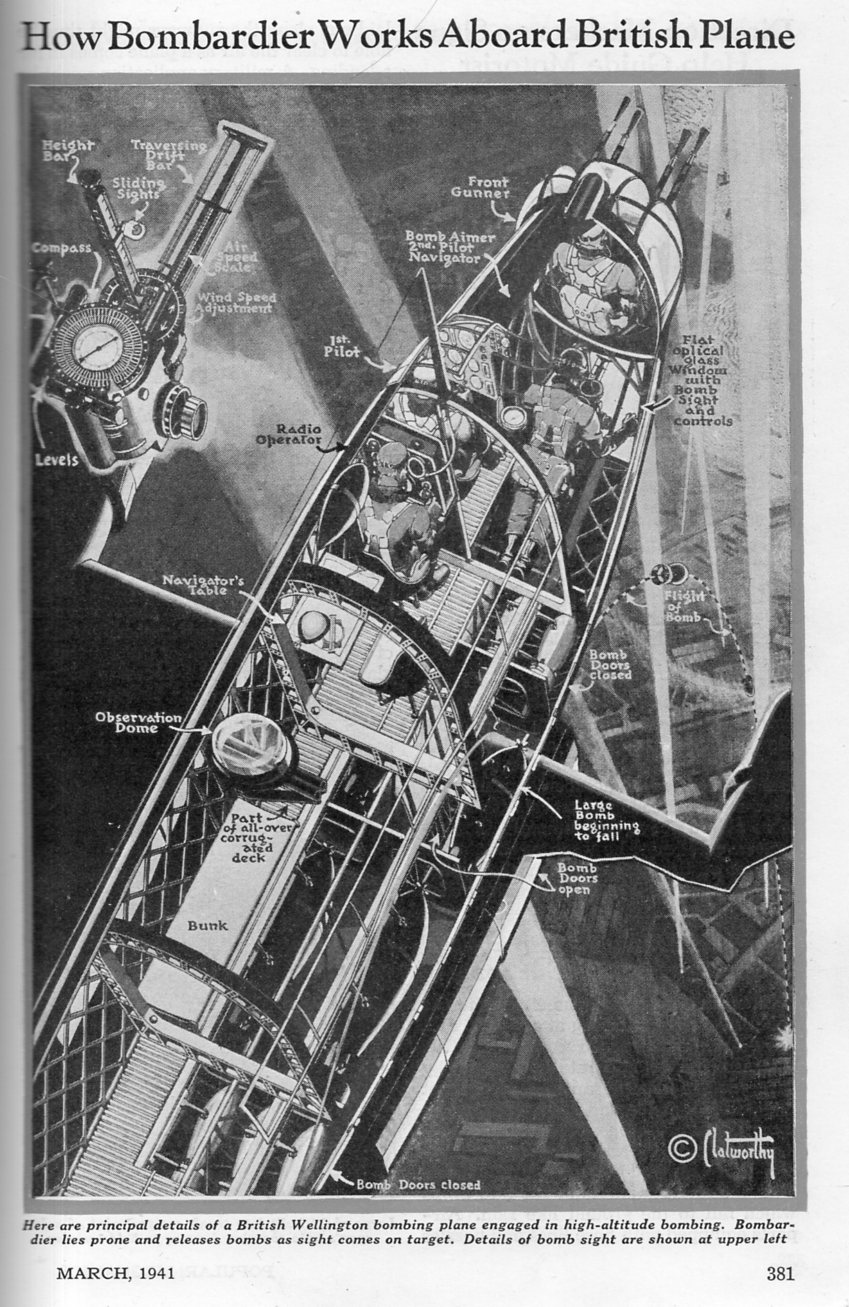
    This great cutaway by the prolific S. Clatworthy appeared in the March 1941 issue of Popular Mechanics. It illustrates a  section of the Vickers Wellington light bomber–a 6-man, 6’4 long and 86′ wide medium distance aircraft that saw service from the mid-1930’s and served with distinction throughout the entire duration of WWII.  It is an unusual view through the plane, an oblique but nearly straight-down view showing the position of members of the crew and most especially the bombardier.  

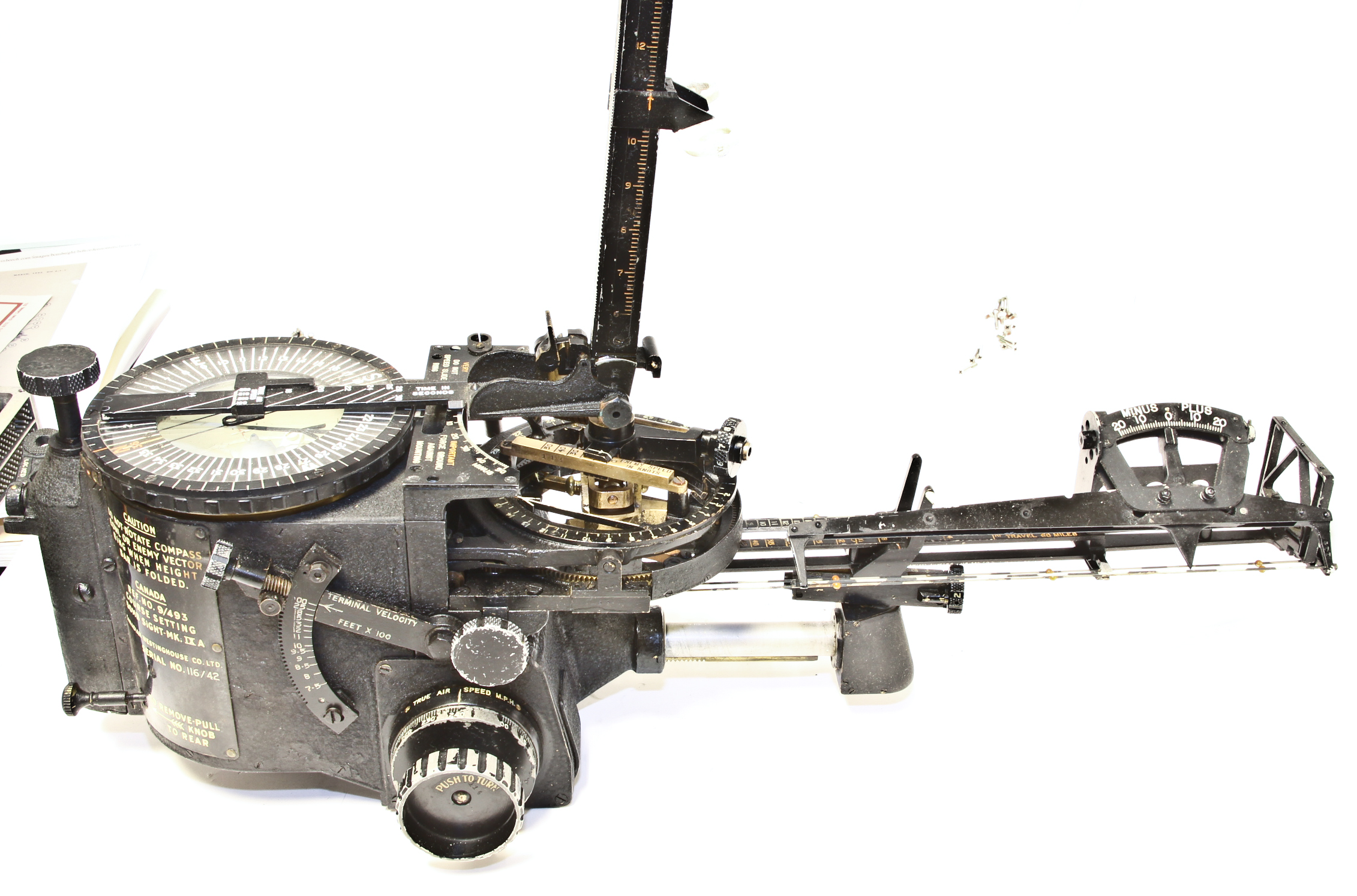
    Here’s a very nice presentation of the (Mark IX) bombsight shown in the inset of the cutaway, this from the Glenn’s Museum site, here: http://www.glennsmuseum.com/bombsights/pics/mark_ix_side.jpg

    “The British-designed RAF Mark IX bombsight was first introduced in 1939. It was used on Canadian and Great Britain planes in World War II: in particular Lancaster, Wellington and Sterling bombers, and Mosquitos, Beauforts and Beaufighters fighters. This was an early preset vector bombsight that involved squinting through wires that had to be manually set based on aircraft speed, altitude and bombload. The sight lacked tactical flexibility as it had to be manually adjusted if any of the parameters changed.”

    Bombsight mark_ix_side


    A nice image of a Wellington on the cover of Popular Science this same year (1940), here: http://www.popsci.com/archive-viewer?id=oScDAAAAMBAJ&pg=0&query

Recent Posts

Archives

Categories