A Daily History of Holes, Dots, Lines, Science, History, Math, Physics, Art, the Unintentional Absurd, Architecture, Maps, Data Visualization, Blank and Missing Things, and so on. |1.6 million words, 7500 images, 4.9 million hits| Press & appearances in The Times, Le Figaro, Mensa, The Economist, The Guardian, Discovery News, Slate, Le Monde, Sci American Blogs, Le Pont, and many other places… 5000+ total posts since 2008.

  • In the Comics: NYC Destroyed in “Atomic War”, 1952/3

    JF Ptak Science Books  Post 2580

    I have been collecting images of destroyed Manhattan since this blog was started, and at this point there must be two dozen pre-1965 images. Mostly they are located in the Atomic/Nuclear Weapons series, as well as A History of Blank, Empty, and Missing Things, and lastly in the History of Holes series, all of which are browsable in the right-hand “categories” column.

    Today I’ll add two very strong Cold War images that leave no bit of interpretation to chance.  The first is a cover story for a four-issue short-lived comic called Atomic War, which was published in 1952 to 1953.  There is an enormous amount of red-baiting–no surprise given the period–and we find the Soviets initiating several varieties of preemptive strikes, including one in West Berlin in 1945 (the Soviets didn’t get the bomb until 1949). In any event it is a very strong push to patriotism and Red-hatred aimed of course at kids. No doubt an 11-year-old seeing this cover at Christmas time 1952 would remember it.  
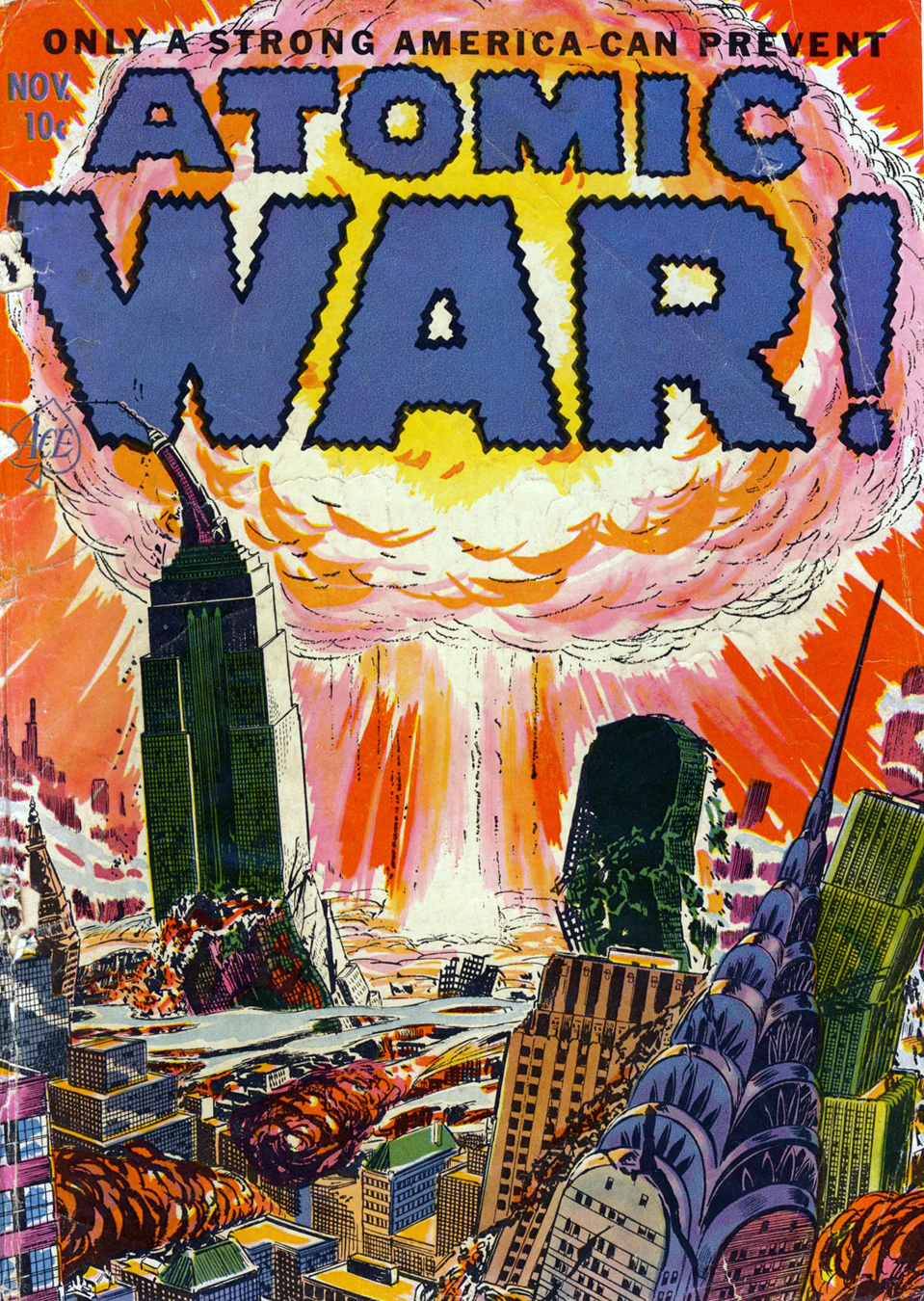
    Atomic war nyc

    [Source: http://falloutshelternyc.blogspot.com/2011_02_01_archive.html. Another image source with some history:  Wiki  http://en.wikisource.org/wiki/Atomic_War!]

    The second piece is another example of indelible impression possibilities. a very disturbing cover showing the effects of a nuclear attack on Manhattan, which turns pretty much all of midtown into a hole–a hole that was starting to fill up with the Hudson River:

    Atomic weirdness NYC nuked[Cover by Al Feldstein, January 1952. Source: http://atomik67.altervista.org/COMICS-EDITORI/EDIZIONI_001/WEIRD_FANTASY-DOCUMENTI/Fantasy_Crono.htm]
    ·Posted by :

    ·in:

  • A Beautiful Infographic With Little Info to “Graph” (1835)

    JF Ptak Science Books  Quick Post

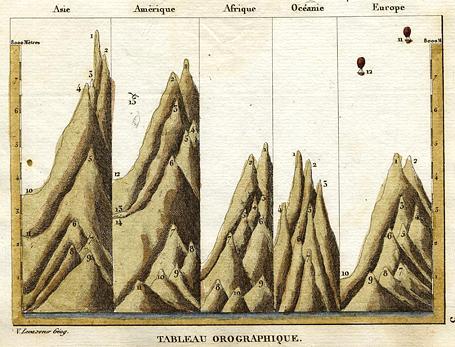
    Victor Levasseur (1800–1870) was a French cartographer who crippled and broke the modern line about not spending ink on a informational design that did not carry some sort of specific and necessary data. It seems that most of Levasseur’s ink was decorative–but that’s okay, I guess, because the effects today look quite handsome–and also it should be remembered that at the time the man was not exactly awash in detailed data. That said, he produced this beautiful little miniature map showing the comparative heights of mountains, though the detail is more-or-less generally lacking, and frankly I’m comfortable with that.  

    Maps Mountains Levasseur

    [Source: “Tableau Orographique” a miniature map by Victor Levasseur (1795-1862), published in his Atlas Classique Universel de Geographie …, about 1835]


  • “Curtain of Death Drawn Before the Flying Huns” 1918

    JF Ptak Science Books  Quick  Post 

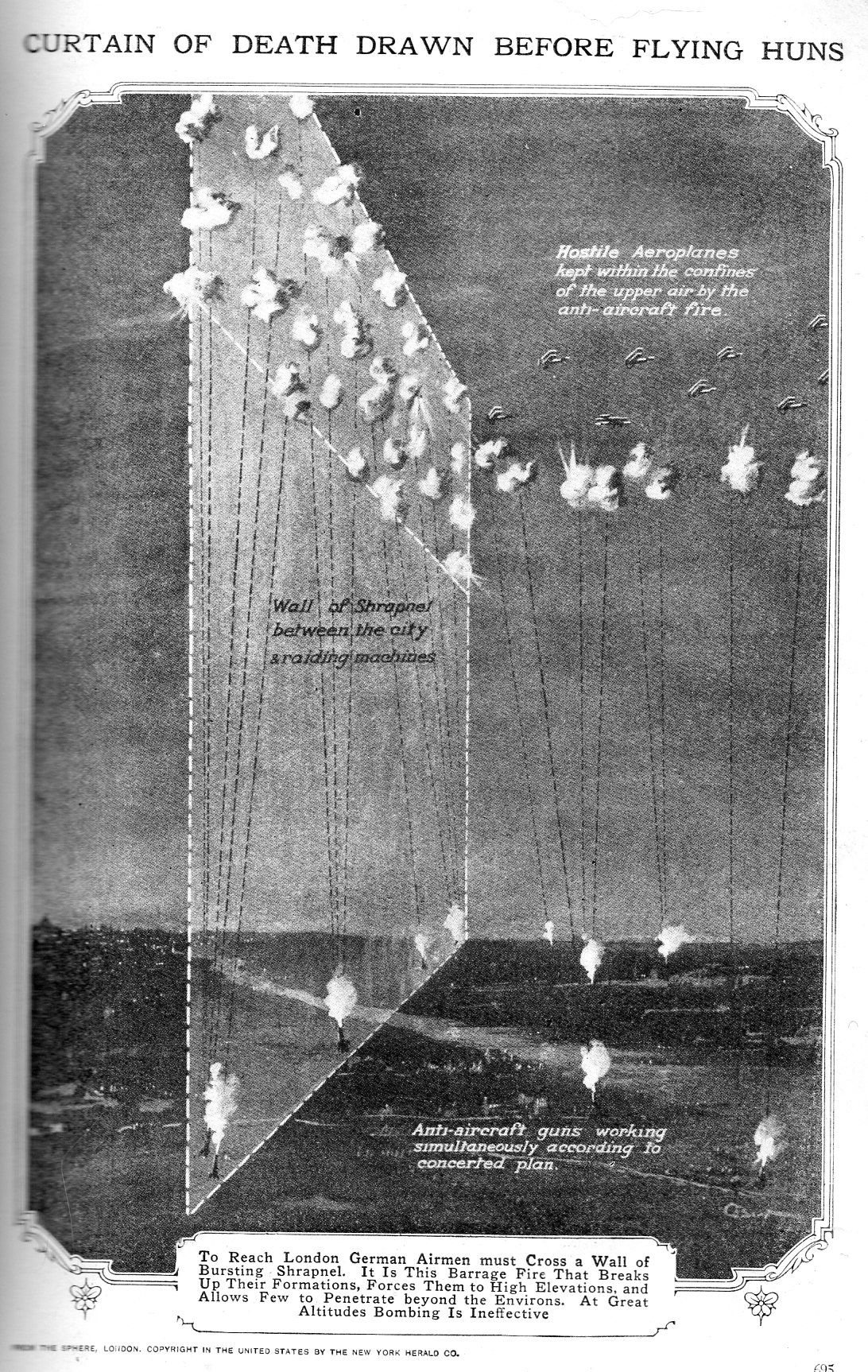
    It is difficult to appreciate the incredibly quick and adaptable nature of the airplane as it progressed in the 15 years between the first Wright Brothers powered flight in 1903 to the end of WWI. One of the issues that became immediately apparent at the beginning of the war in recognizing the offensive capacity of the airplane were the defenses needed to combat it. Balloons have been shot down since (at least) the U.S. Civil War, but the airplane of course presented an entirely different threat. Part of the big realization in creating ground-based anti-aircraft weapons was that it was necessary to develop something that would be sent skyward and exploded, a wall-of-not-sound-but-metal that could and would rip apart enemy fliers.  And so we find such a thing here in the mass-produced everyman’s technoid magazine, Popular Mechanics, in May 1918.  The illustrator/editor used both the words “curtain” and “wall” though I am sure that curtain is more descriptive. In the illustration (on page 695) we see AA battery emplaced in defense of London firing “bursting shrapnel” that were to act as a kind of fence, keeping the enemy aircraft “in the upper air”–forced into higher elevations by the anti-aircraft fire severely affected the (non-) precision bombing of the day. Lower approaches would leave the aircraft open to other sorts of withering defensive responses.

    The legend reads that the high altitude bombing was “ineffective”, though it doesn’t indicate whether the bombing was still attempted, or not. 

    Wwi aa fire462


    ·Posted by :

    ·in:

    —
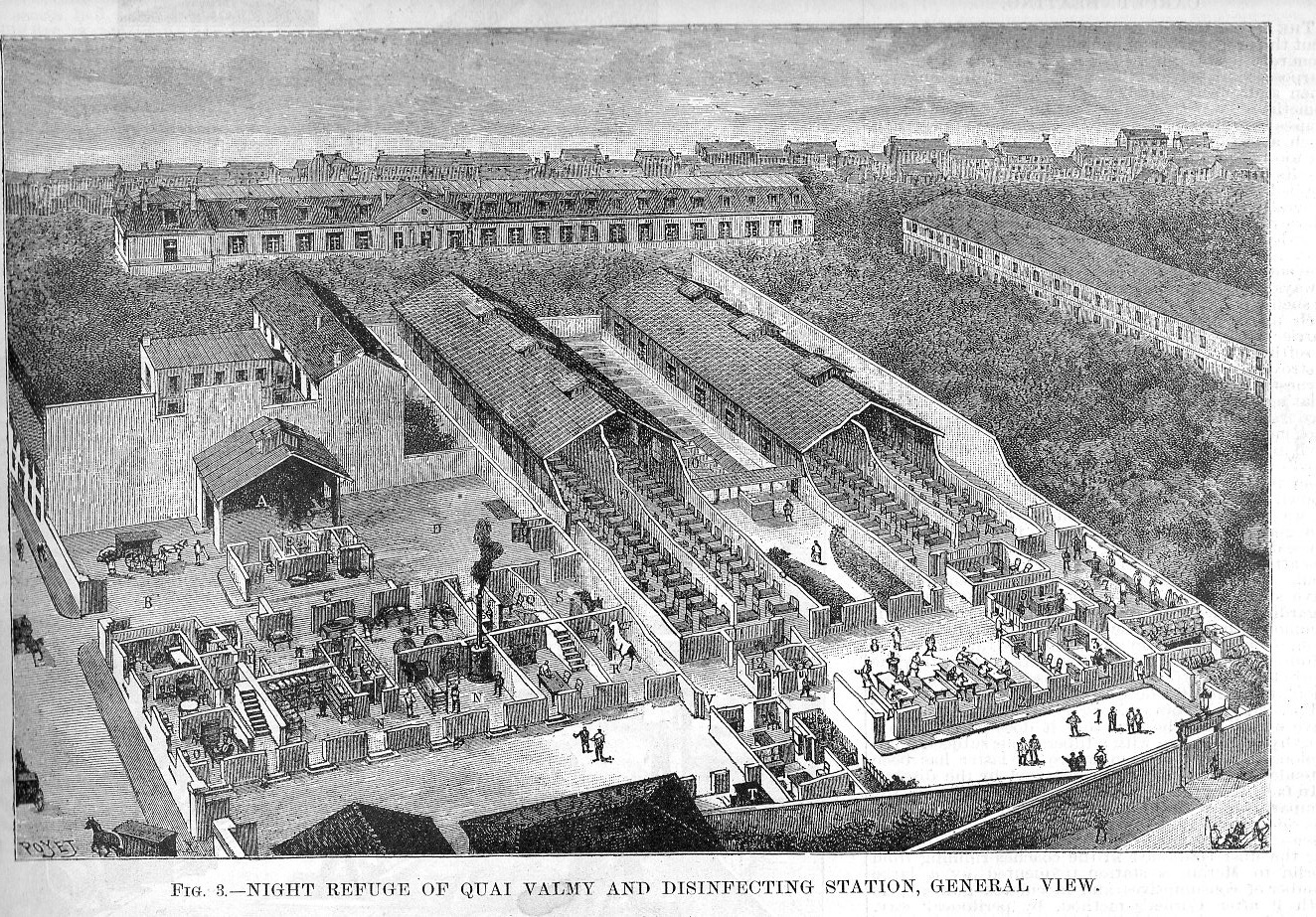
  • A Cross Section of Poor Relief: Paris, 1892

    JF Ptak Science Books  Quick Post

    Disenfection station431

    [Source: Scientific American Supplement #842, February 22, 1892]

    Browsing through the Columbian year of 1892 in the Scientific American Supplement I came across this interesting social-architectural cross section and story of poor relief (for men) in Paris.  It was seen as a great of comfort for men who had none, and model for how men of no means could be accommodated and assisted.  The poor refuge at Quai Valmy would be the nighttime home of 200 men for three consecutive nights every two months. They were provided with a bed, clean bedclothing while their own clothing was disinfected and washed, dinner, and a breakfast, and then sent again on their way.

    The description of the experience follows (the bold numbers refer to the numbers in the cutaway view):

  • The British Bicycle Airborne, 1944

    JF Ptak Science Books   Quick Posts 

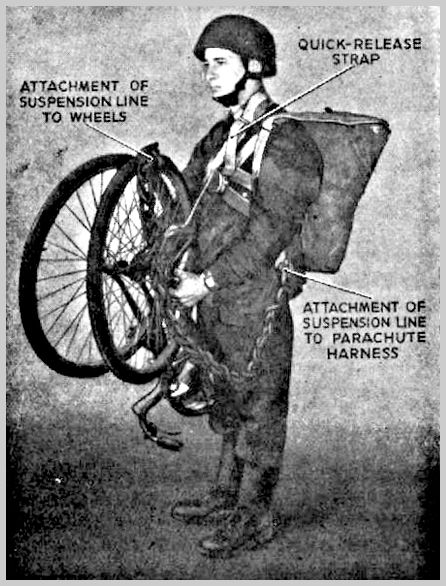
    I’ve posted a number of times in this blog on military uniforms/what-they-carried for WWI and WWII and thought to add this top that small collection. It is difficult to imagine climbing into a plane and dropping down behind enemy lines in the middle of the night by parachute carrying a bicycle. Equally difficult to imagine is the thought of actually being able to use it, that you would be delivered to an area where there was a possibility for you to survive the drop and with the rest of your stick expect to find a usable Nazi-free road to peddler your way someplace on your 23-pound bike. Man. My hat is off to these men for trying this. 

    What they carried brit paratrooper

    “British WWII Airborne BSA folding bicycle was used from 1939-1945 in WWII by British paratroopers. A folding bicycle was developed as a small size was needed to enable it to be taken on parachute jumps from aircraft. The War Office called for bike weighing less than 23lb + which would withstand being dropped without protection by parachute so BSA abandoned the traditional diamond design. The frame weighed 4¾lb. The bicycle was used by British paratroopers on  D-Day landings and at the Battle of Arnhem.”

    ·Posted by :

    ·in:

  • The History of the Future of Massiveness (1907)

    JF Ptak Science Books   Post 2580

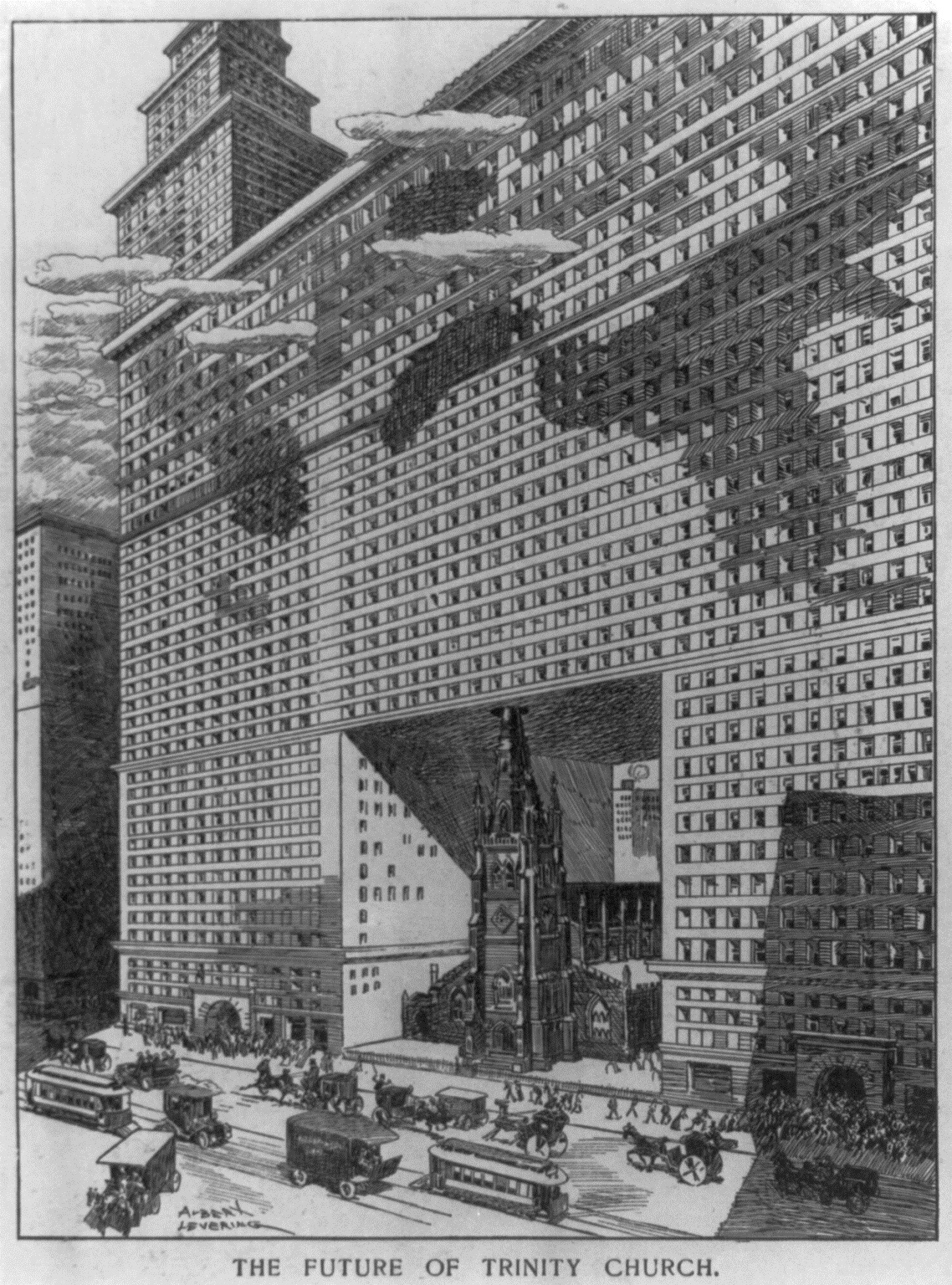
    For many years the steeple of Trinity Church was the tallest object in Manhattan, but by 1907 when the city was entrenched or engulfed in a skyscraper building adventure the future of massiveness and of height knew no bounds, especially when the limits of those boundaries were attainable.  And so this enormous structure grew around the church, with room-enough-for-steeple, built among the clouds.  It turns out that the 284′ spire was the tallest thing in Manhattan until 1890, when the World Building was completed (17 years before the publication of this engraving) raising the new highest heights ceiling to 348′.  If you iterated the scale of Trinity (below) to the rest of the imaginary building, the new structure would be about 750′ tall–the Metropolitan Life Insurance Company Tower would come close to that in another two years (and be the tallest building in the world until 1913), so the building shown below would have been probably the world’s largest in 1907, and easily the most massive.  


    Future of trinity church

    [Source: Puck magazine, March 6, 1907, wood engraving by Albert Levering]

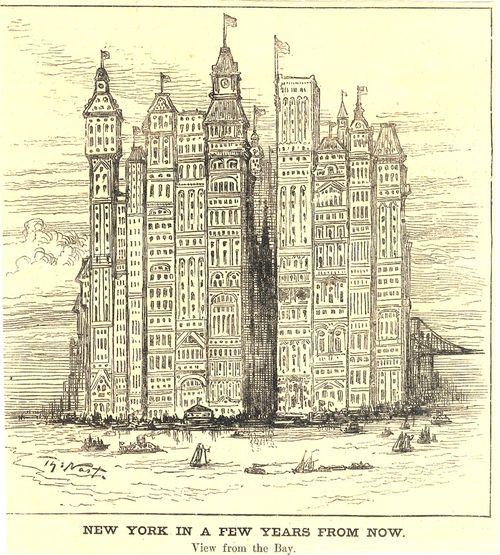
    This reminds me somewhat of an earlier vision of an engulfed Trinity–Thomas Nast’s future Manhattan skyline of 1881 for Harpers Weekly, where the church is visible still but crowded out almost entirely by enormous structures which were still/only decades away:

    Trinity Manhattan skyline


    [Source: an earlier post on this blog https://historyofideasblog.com/thesciencebookstore/2009/12/the-history-of-the-future-of-skyscrapers-thomas-nast-1881.html]

  • An Escher-Like Non-Escher Architectural Image

    JF Ptak Science Books  Quick Post

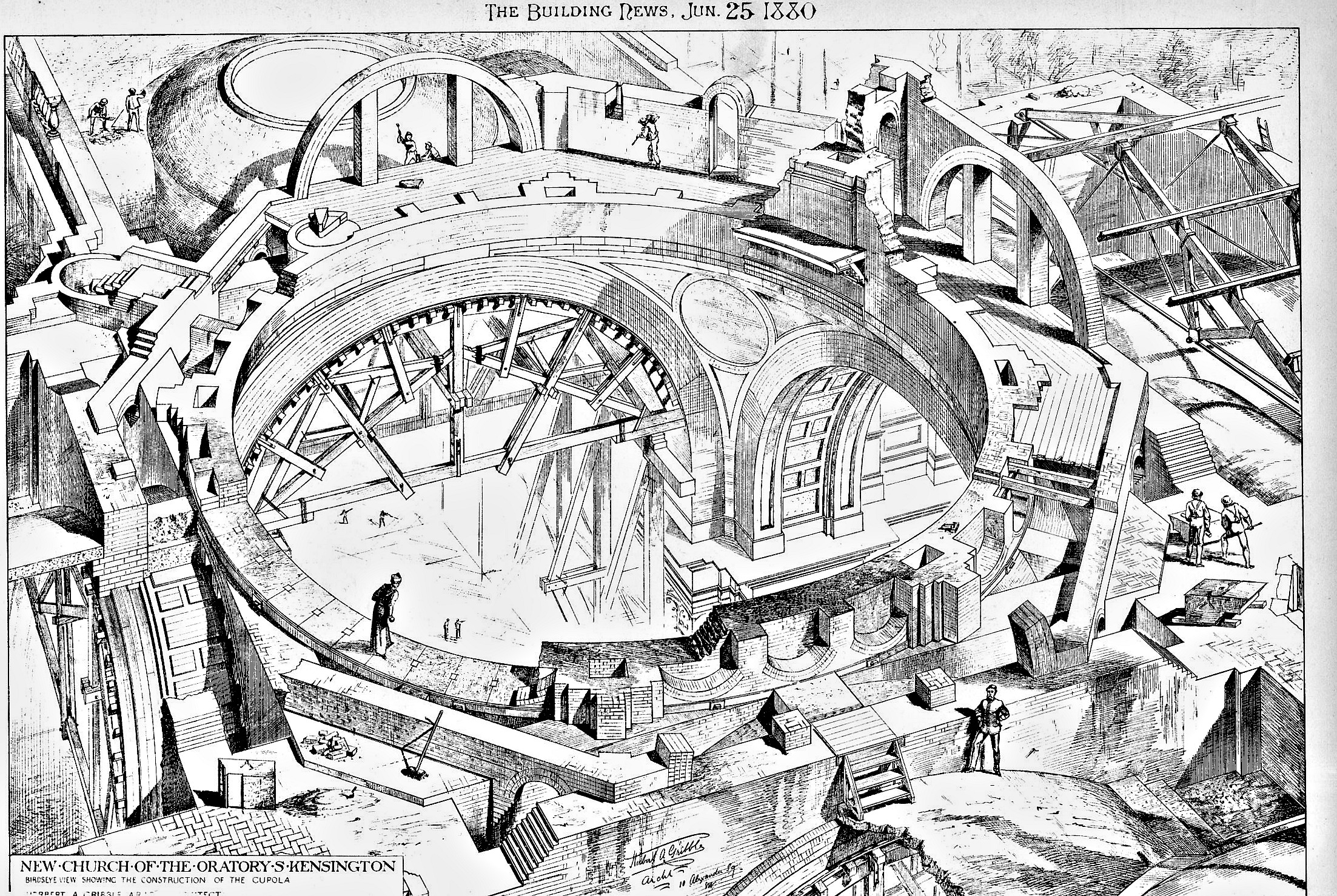
    This image really lifted itself from the page–it is from 1880 and has to me a very heavy scent of M.C. Escher to it.  This would be a very “found” aspect of pre-Escher (1898-1972), but it does have an indefinable quality to it that seems very 20th-century. What we are seeing here is a perspective of the construction of the “New Church of the Oratory of South Kensington” (known as the Brompton Oratory), but I think given the various stages of completion of the structure the whole of it takes on a spherical, three-dimensional quality, and has a somewhat impossible-looking aspect, as though from multiple viewpoints. I think we’re looking down through the naive, and though it is supposed to be representating a three-dimensional figure it seems profoundly not so. 


    Escher architecture463

    [Source: The Building News, June 25, 1880; Herbert Gribble, architect.]

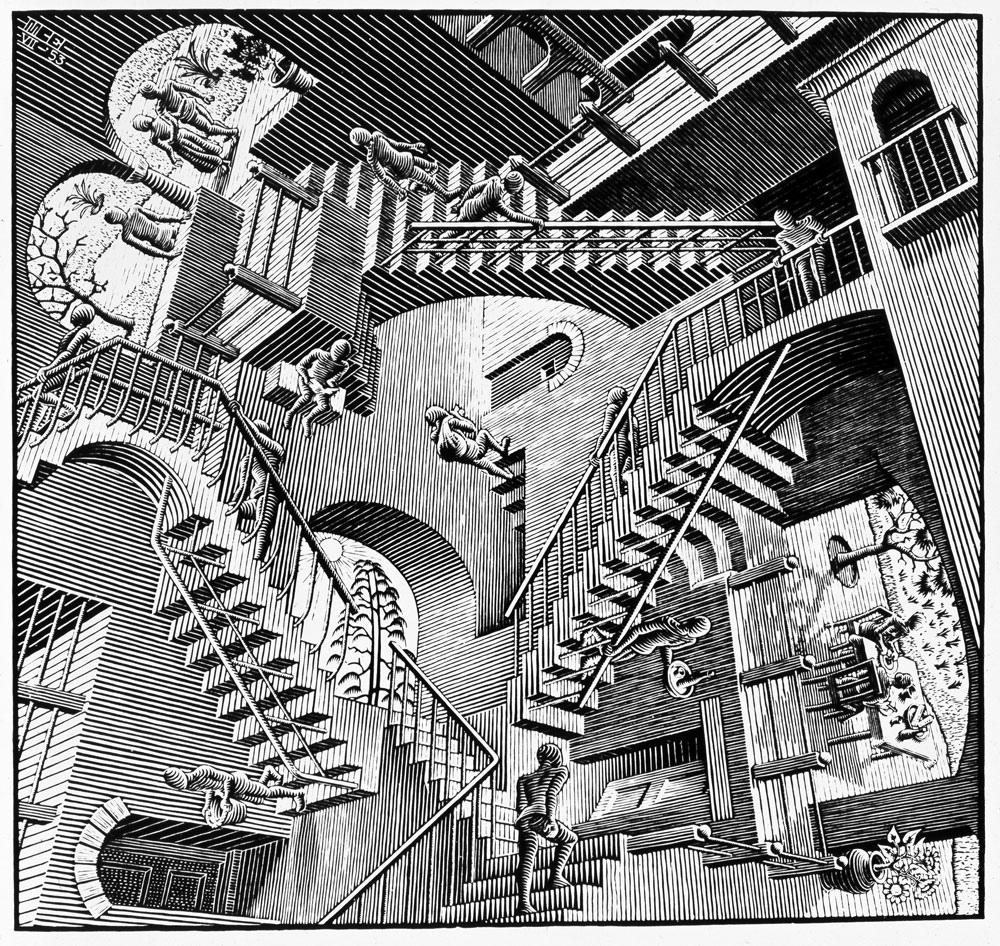
    What it reminds me of directly is Eshcer’s  relativity, from 1952:

    Escher relativity

    I know that what I’ve said about the Building News image is reaching, and it wasn’t dealing with unusual geometries, or tessellations, or the oddish curved perspectives of Escher, but, well, it does somehow have that quality.  

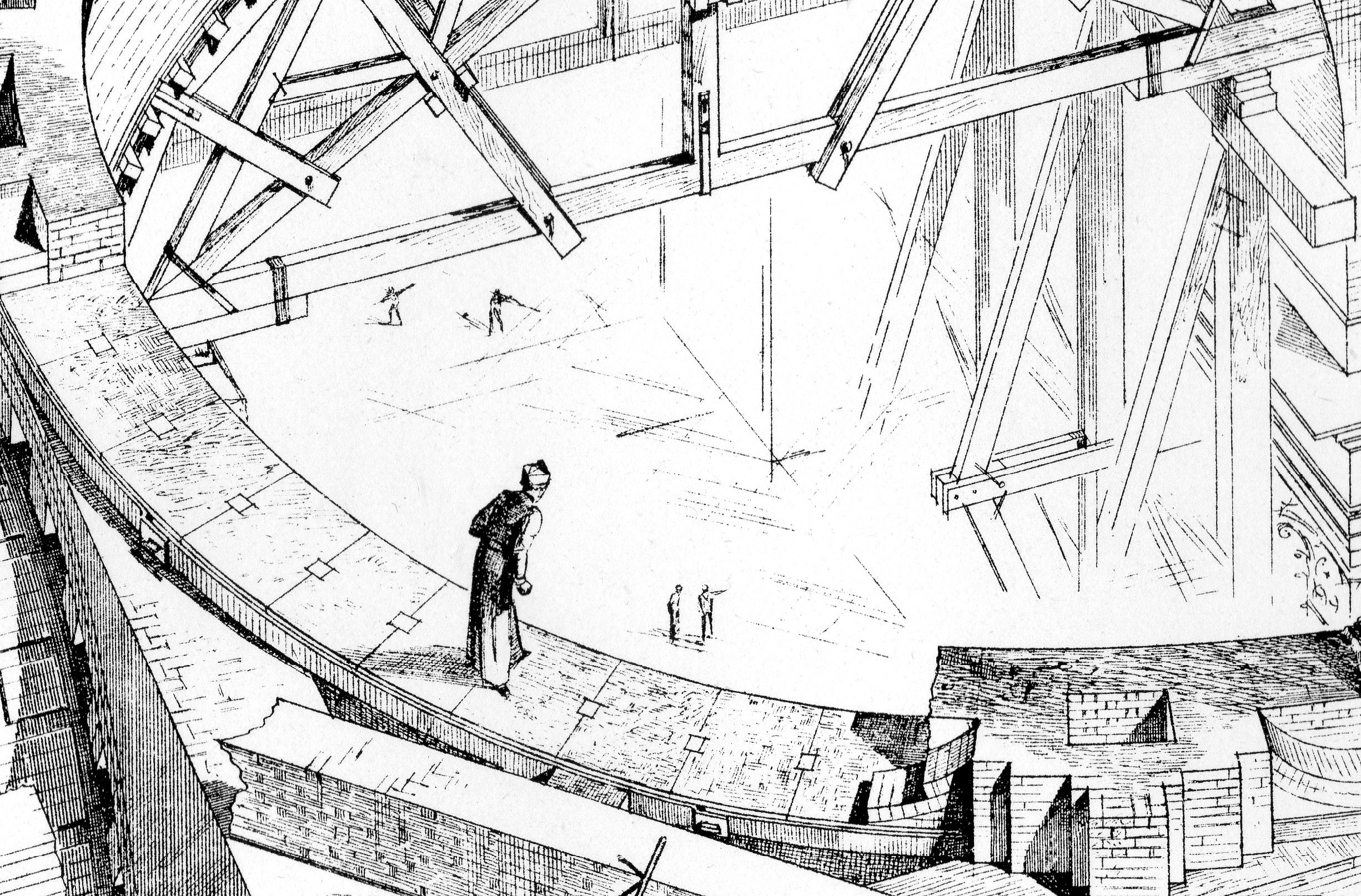
    And an interesting detail:

    Escher architecture464


  • A Foundscape Vermeer in as Sea of Hats, 1903

    JF Ptak Science Books  Quick Post

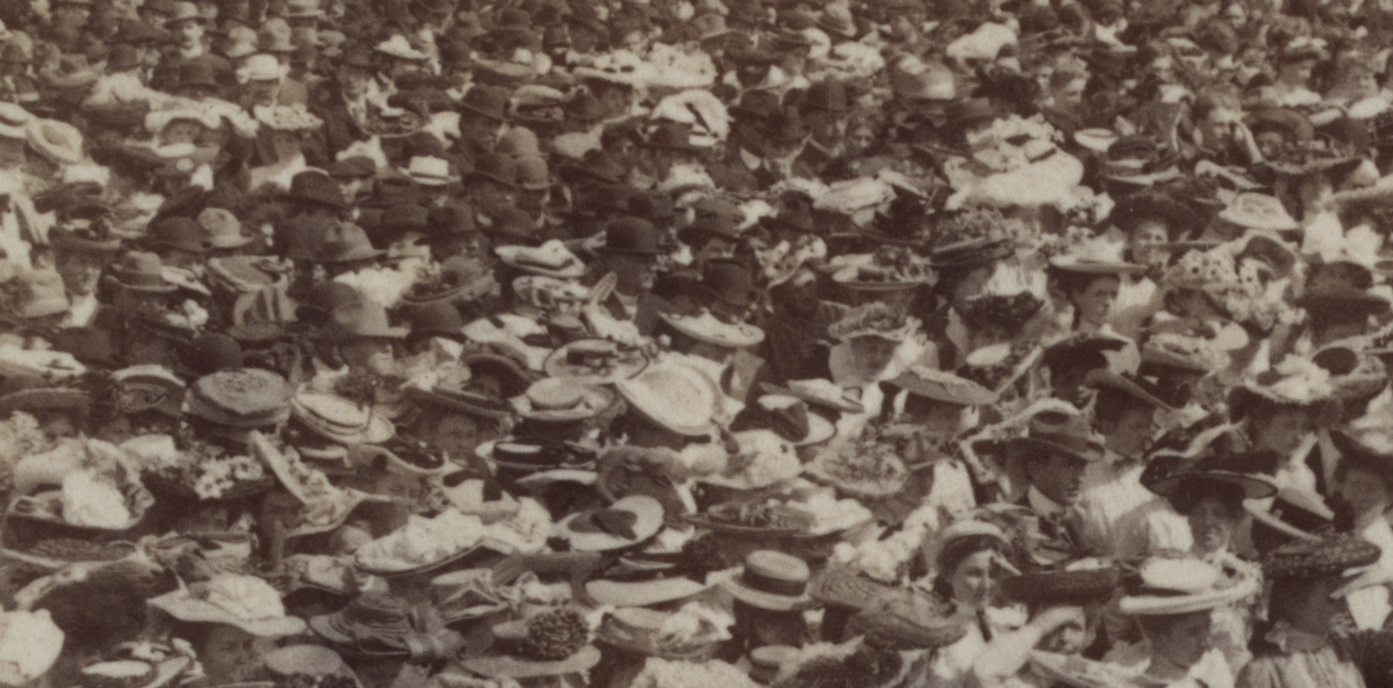
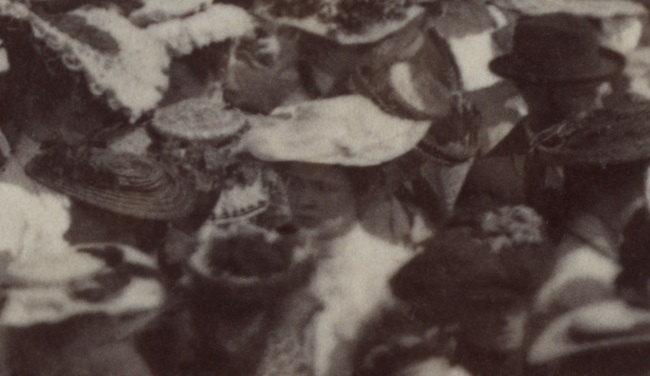
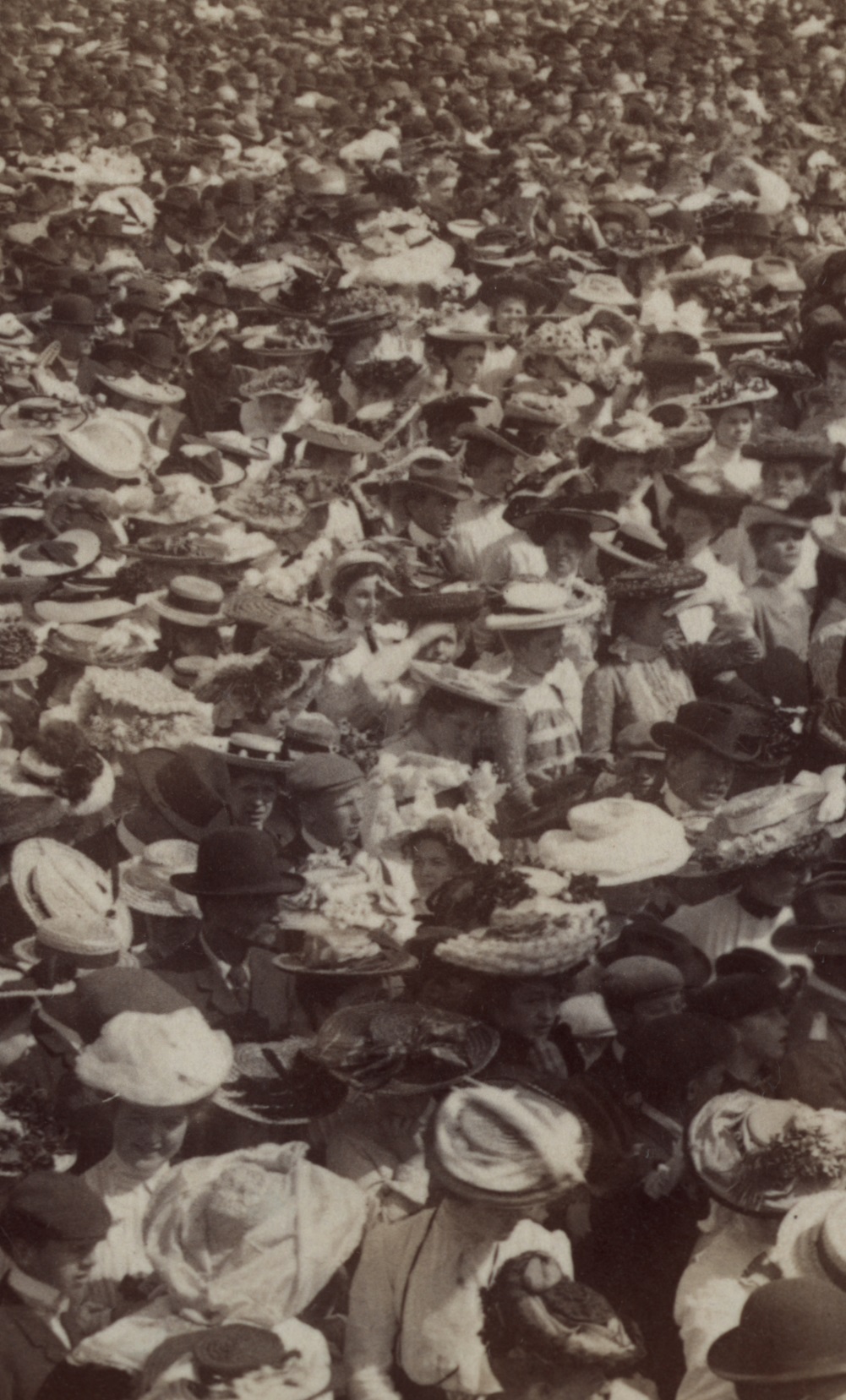
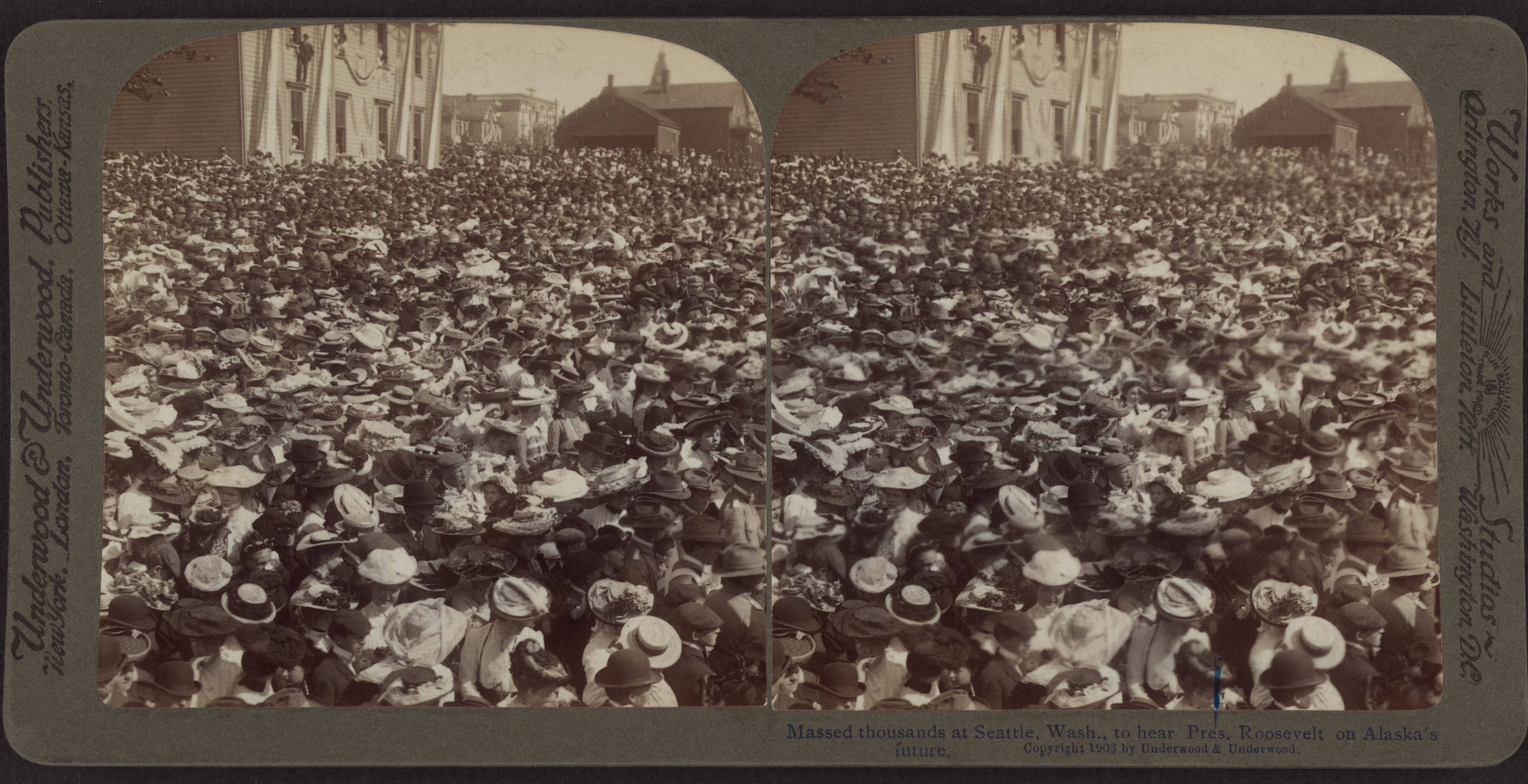
    I’ve written numerous posts to this blog on very dense crowd images (just google “crowds” in the search box at left), mainly because of the endlessly interesting vignettes and foundscapes that are located int eh buried sections. Int his stereocard of a large, massed crod waiting to hear President Theodore Roosevelt speak (1903) there are a number of such finds–including what seems to be included in just about every variety of massed images, a subject from a Vermeer painting.  

    A detail giving a real expression of the compactness of the crowd:

    Crowds hats roosevelt detail

    And our Vermeer:

    Crowds hats roosevelt detail Vermeer jaypeg


    Crowds hats roosevelt detail looking at cam

    …and the full image: 

    Crowds hats roosevelt overall

  • The Coming Threat from the Air: Austria, 1935

    JF Ptak Science Books  Post 2582

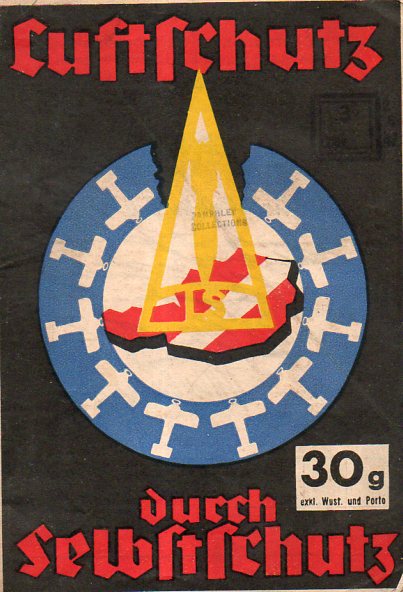
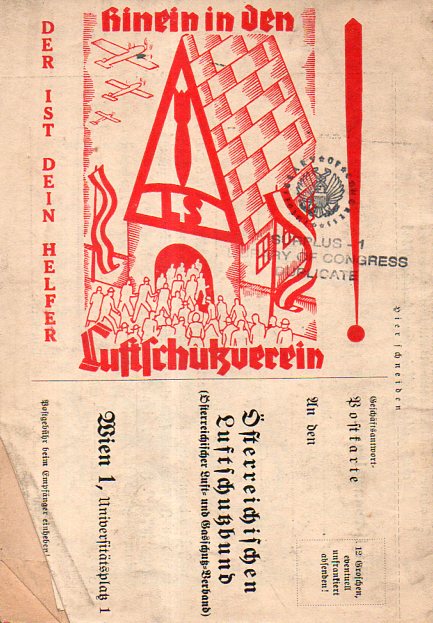
    1935 was not a particularly good year for Austria.  The country was fighting off the threat of Anschluss–the occupation of Austria by Nazi Germany–for several years, the cause hurt by the infamous assassination of the federal chancellor Englebert Dollfus in July 1934.  When this pamphlet was printed in 1935, the threat to Austria from Germany was real and advanced.  This publication, Luftschutz durch Selbstschutz (“Self Protection by Anti-Aircraft Defense” or so) addressed part of this issue. It sounds more militarily-based than it is; the story though is that the pamphlet was intended as a sort of civilian defense piece, for example, asking people to join an air defense club (“hinein in dem Luftschutverein”) for the protection of all (“Schutz fuer jedermann”) and to be general aware and prepared for the possibility of air raids.

    Austria air defenses cvr map001

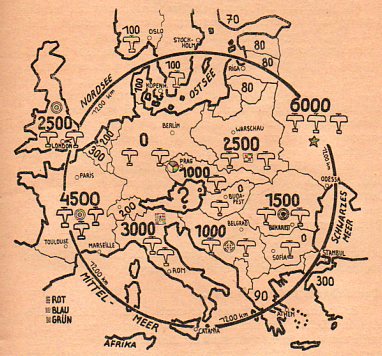
    What attracted me from the outset was the cover design which at first doesn’t actually appear to be a map, though it is–and an effective one at that.  In the middle of the circle is a red Austria with a white bar; on top of that, in yellow, is a bomb in a triangle; and surrounding Austria in a blue circle are the possible approaching/attacking/threatening air forces of its neighbors. Inside the pamphlet is another, more detailed map (below) showing the disposition of opposing air forces. It is interesting to note here that Germany is shown as having zero aircraft as dictated by the Treaty of Versailles, though it was in February of this year (1935) that the Luftwaffe was organized thus disbanding part of the treaty–at this point in 1935 the threat from Germany was not presently from the air.

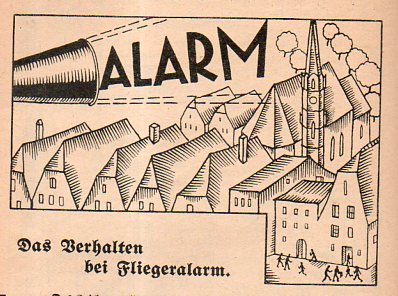
    The pamphlet runs 64 pages and contains information for Austrians in preparing for aerial assault, in general: what to do when the bombs fall, how to prepare, what sort of supplies are needed to survive a sustained attack, and the like–plus ads for gas masks, survival goods, and such.  

    In the end, Germany did not bomb Austria–it disappeared as part of the Reich in March 1938 as a result of intimidation, embargo, political subterfuge, and finally the threat of war.  

    Austria air defenses cvr map003


    Austria air defenses cvr map004


    Austria air defenses cvr map002

  • History of the Future of Massiveness: Stadium-Seating Skyscrapers, NYC, 1938

    Imaginary New York City Landscapes from CON-ED, 1938

    JF Ptak Science Books  Quick Post   

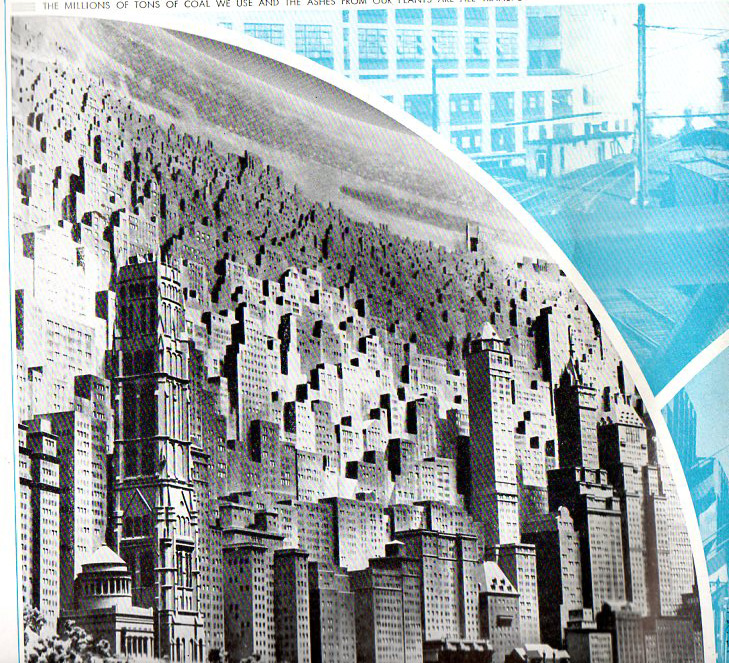
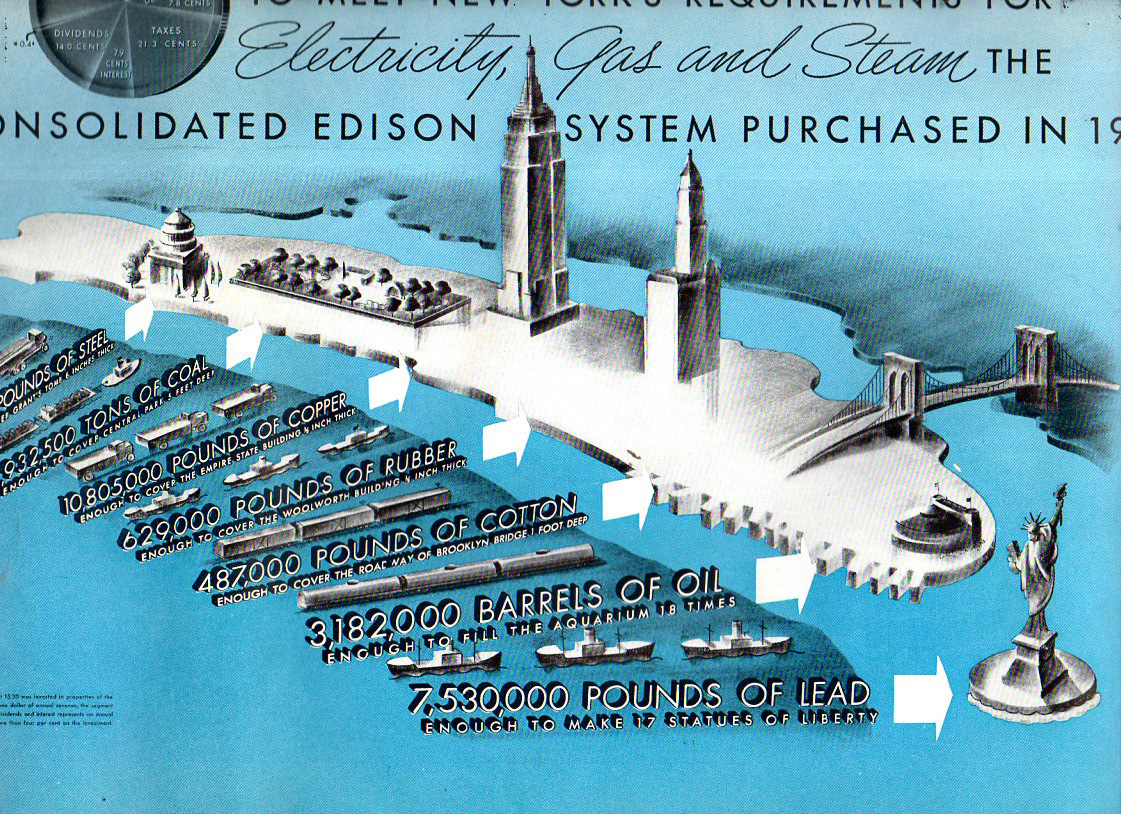
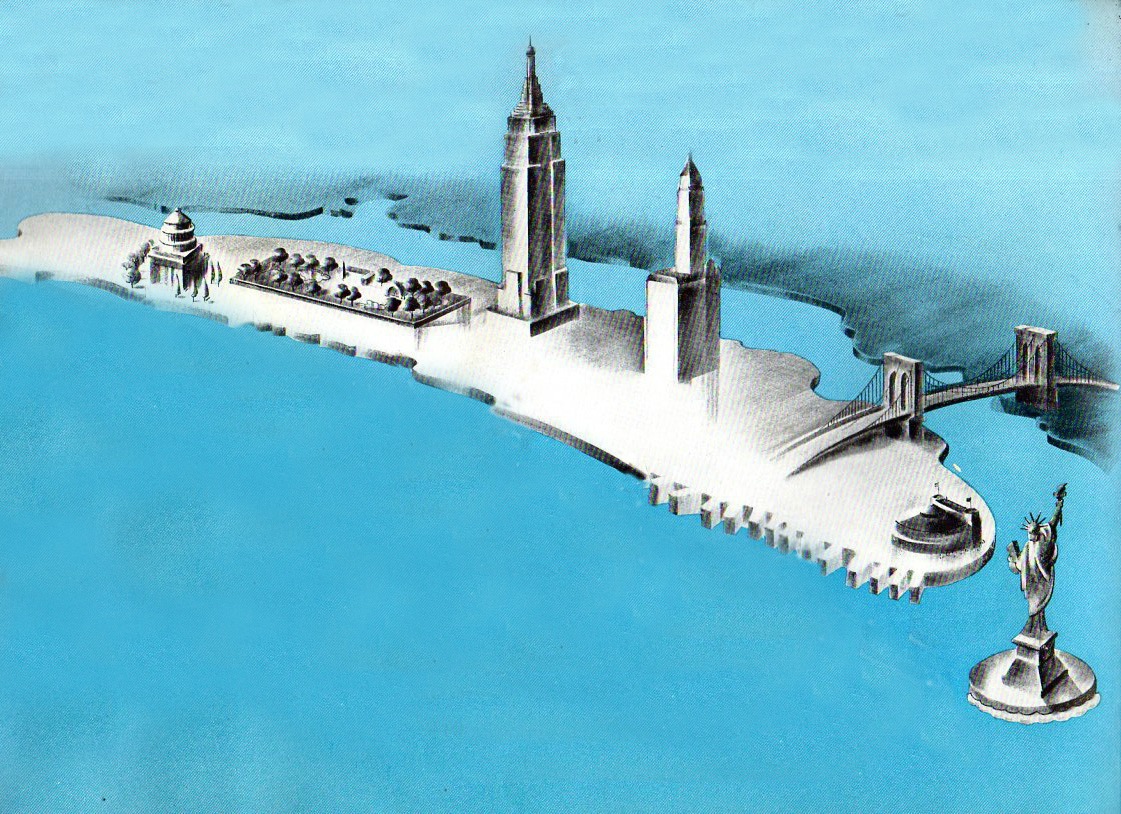
    These lovely images are found in a long, shining and slightly darkroom-scented The City of Light, which was a pamphlet made for the Consolidated Edison exhibition at the New York City World’s Fair of 1939.  Con Ed I think just wanted to get the point across that they saw into the future and were getting ready for it, NYC being stuffed to the gills with buildings and each window stuffed and outlined in Con Ed-supplied electric light.  The vision is vaguely threatening to me, though, the buildings are drawn in a very odd perspective giving the city a stadium-seating arrangement that is unsettling, like they’re part of our robot-overlord future–someone or something must be living in those room filled with Con Ed light, though…

    Nyc544

    Nyc547
    Nyc548
     
     
    And here’s the version of the map above with text removed–given that it looks as though it is a chromed-over Manhattan of some sort of future:
     
    NYC simplified edited

    Nyc546

  • A Concentration Camp Burned by the Nazis (1938)

    JF Ptak Science Books  Quick Post

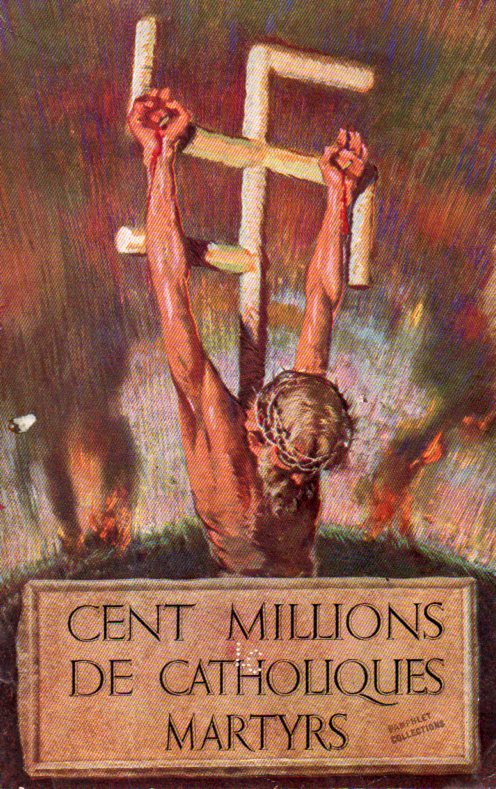
    Poster--100 million catholics dead449

    Needless to say, the cover design for Cent Millions de Catholiques Martyrs (published 1943) is very striking, and very unusual.  I’ve noticed the swastika/crucifix motif before, but not this bloody, and not with Jesus on it. (This is a relatively rare publication: only six copies are located in WorldCat, and all quite good libraries, too, including the LC, Newberry, NYPL, Harvard, Stanford/Hoover, and WVU.)

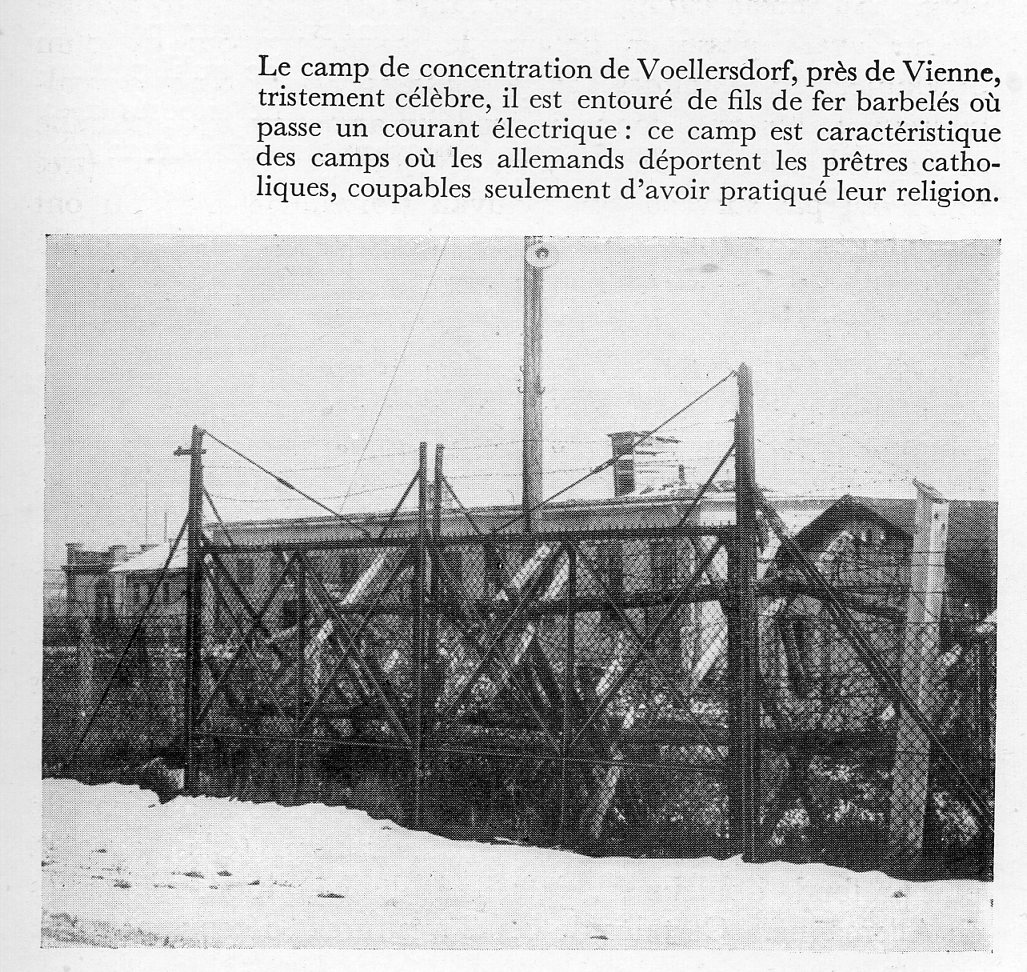
    The other thing of interest is a discussion of concentration camps–in particular, the Voellersdorf (Wollersdorf) concentration camp in Austria, which was used for political prisoners, including fascists. As a matter of fact, the camp was liberated after the Anschluss, and the Nazis took great pleasure in burning the camp to the ground…to high propagandistic value.1 

    The camp evidently was burned after all of the useful stuff was removed. It has been reported that furniture stamped “Voellersdorf” were found in Dachau.

    Also sent to Dachau was the commandant of the “detention” camp Voellersdorf, Emanuel Stillfried. He was sent to Dachau on April 4, 1938 (and given the “matriculation” number 13808) and interned as a political prisoner (under “protective custody”) partially for his role in imprisoning “illegal” Austrian Nazis.  He was released from Dachau on September 13, 1943.2  

    It is not a terribly common thing to encounter a concentration camp photo in a pamphlet like this during the war, so I’ll share it here–

    Voellersdorf (near Vienna), described as the principal concentration camp in Austria:

    Concentration camp austria005

    Here’s a very interesting British film on the Nazi burning of the Austrian concentration camp:

    Notes:

    1.  See  Society of Terror: Inside the Dachau and Buchenwald Concentration Camps, Paul Neurath, Nico Stehr, Christian Fleck; Routledge, 2005, page 21.
    2.  See  http://www.polizei.gv.at/sbg/publikationen/geschichte/gendarmerie.aspx

    ·Posted by :

    ·in:

Recent Posts

Archives

Categories