JF Ptak Science Books Quick Post
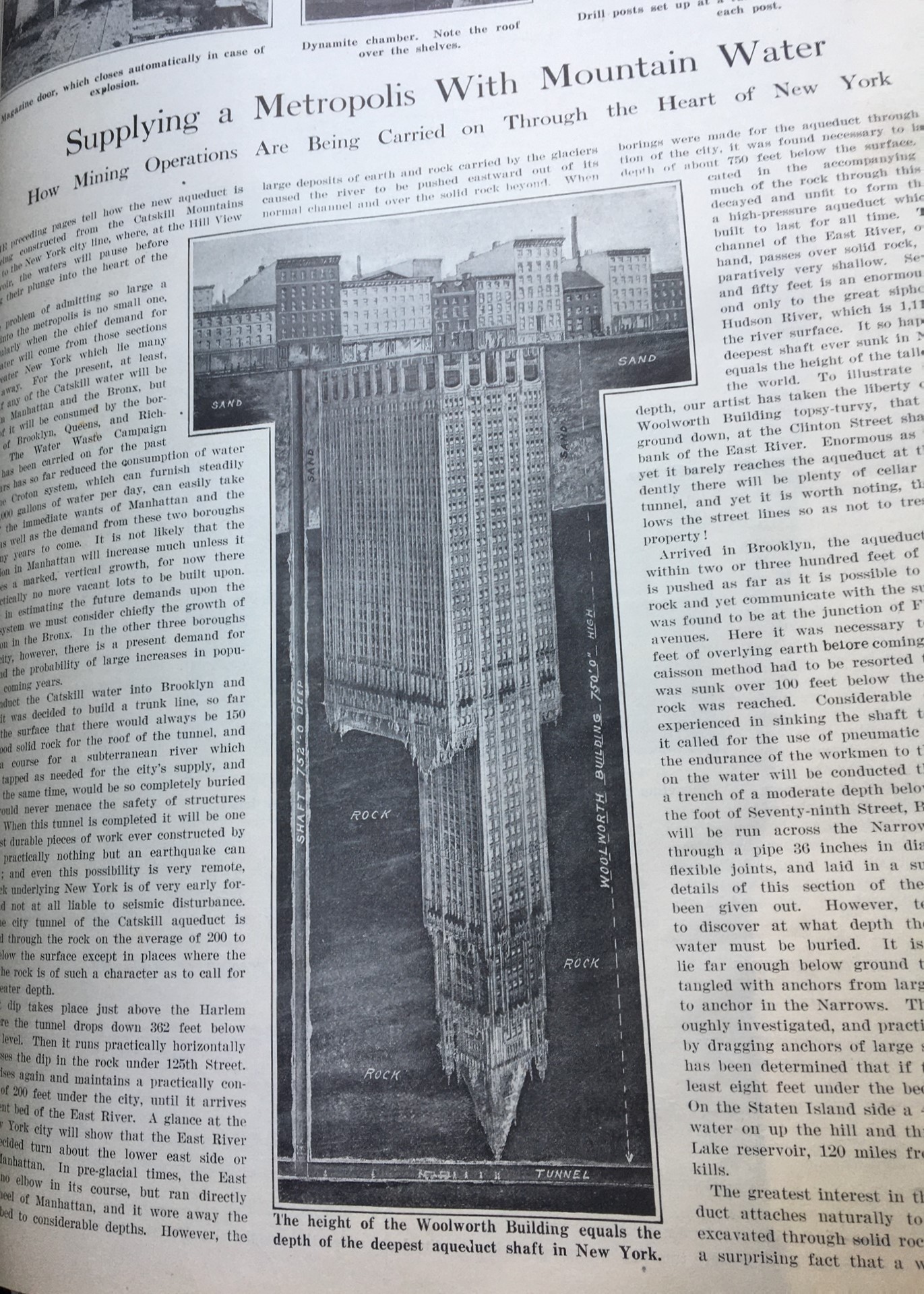
I’ve made a dozen (or two?) posts on this website on measuring things with other thigs. And by that I mean instead referring to something in terms of measurement units like miles or tons or other standards, the item in question is measured against some well-know object for a side-by-side comparison. These units of measurement do seem a little odd, but they really have a capacity to humanize inescapably difficult numbers by putting them in context with a known entity, like Trinity Church. In the past I’ve seen graphical/comparative displays of information the Eiffel Tower, gargantuanly-oversized bread, enormous nails, collections of beef, miles of soldiers, Hoover Dams, Eiffel Towers, mountains, 400′-tall cars, train gangs, and such. Today’s new entry is the newly-built Woolworth Building in NYC from a 1913 issue of Scientific American. The Woolworth Building got quite a bit of ink as it was the world’s tallest structure (for a few months, anyway) so it was a pretty well-known phenomenon by the summer of 1913. This entry is a little more unusual in that it used the Woolworth upside down to show the great depth of tunnels being built under Manhattan:
And a closeup of the figures at the bottom/top of the building, showing human workers and a cart:
This is a striking image that really does gets its message across.