JF Ptak Science Books Post 2640
I bought this pamphlet many years ago in a very large collection of other pamphlets. Pamphlets in stacks are nearly impossible to identify individually because, well, they are mostly indistinguishable from one another in their slim anonymity…especially so when their in boxes. Seriously, though, it is very easy to lose track of these when there are many thousands of them waiting or attention.
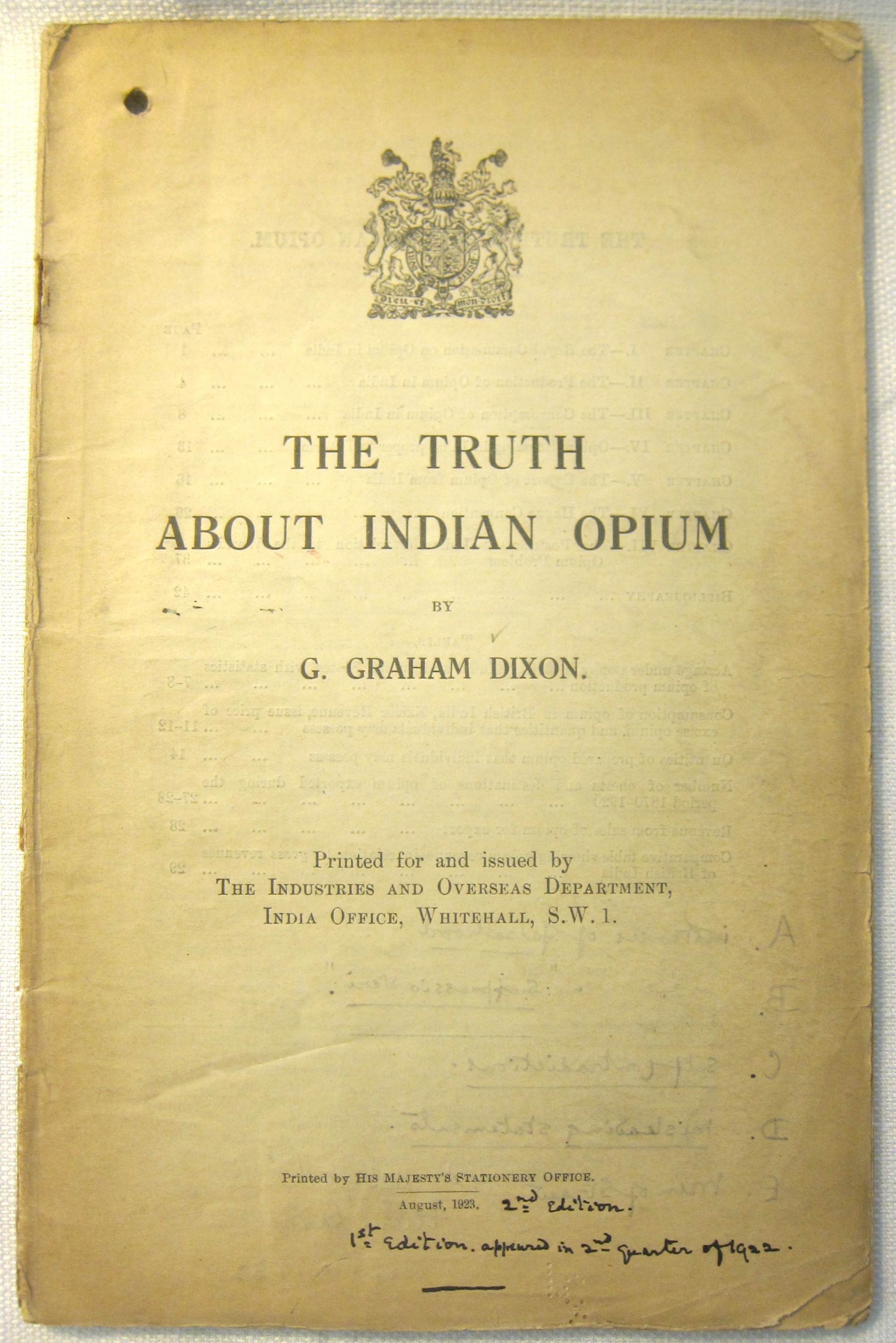
And so with this one, an interesting-looking/sounding work written in 1923 by G. Graham Dixon, The Truth About Indian Opium, had its chance in the light yesterday.
I ‘ve seen this pamphlet before, taking note of it, but never opened it.
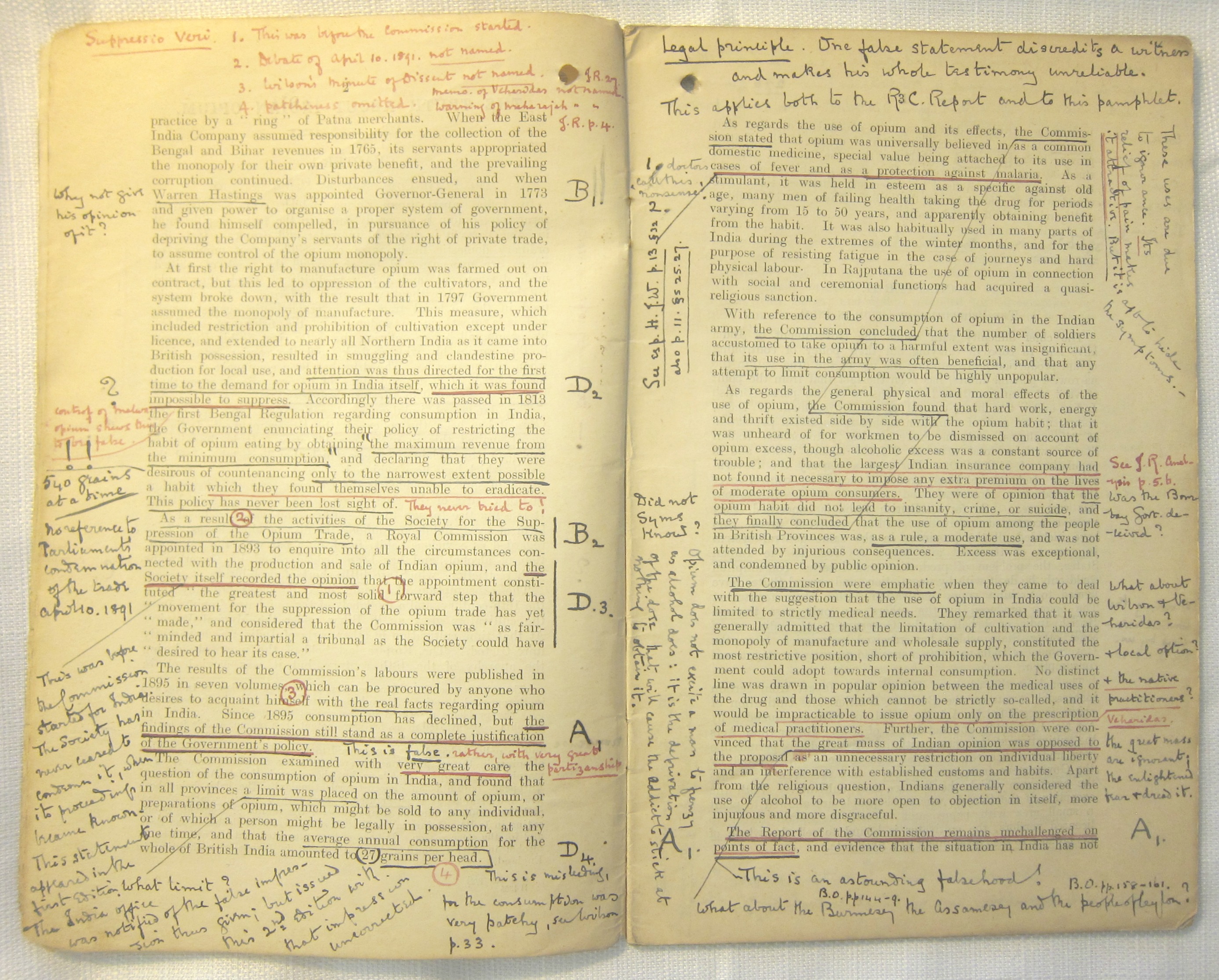
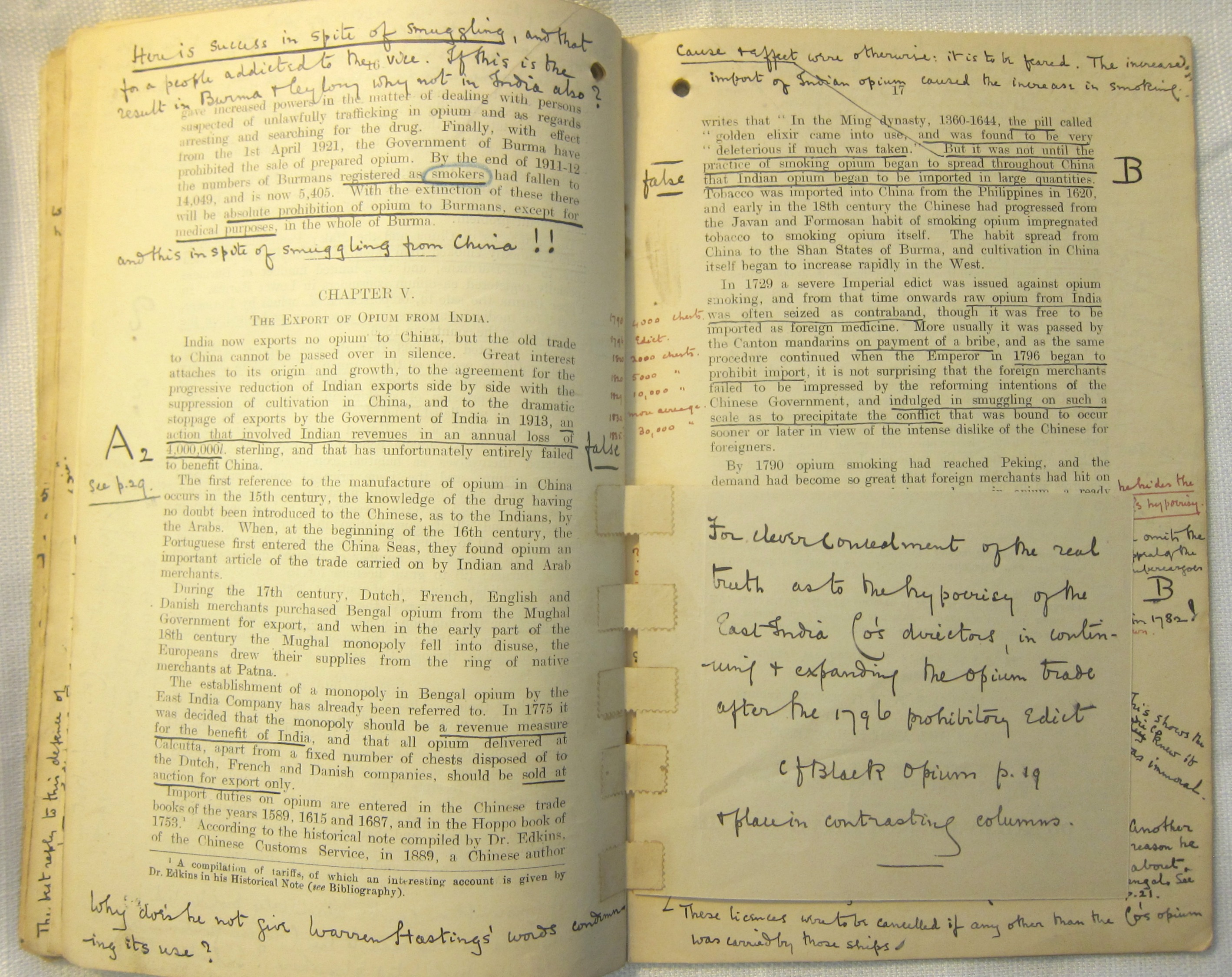
When I did I was shocked to see that it was very heavily annotated by the last owner. As you can see, this was far beyond marginalia—the reader took the author to task on a lot, everywhere. This practice was so extensive that the reader/annotator had notations and marginalia for her (as it turns out) marginalia.
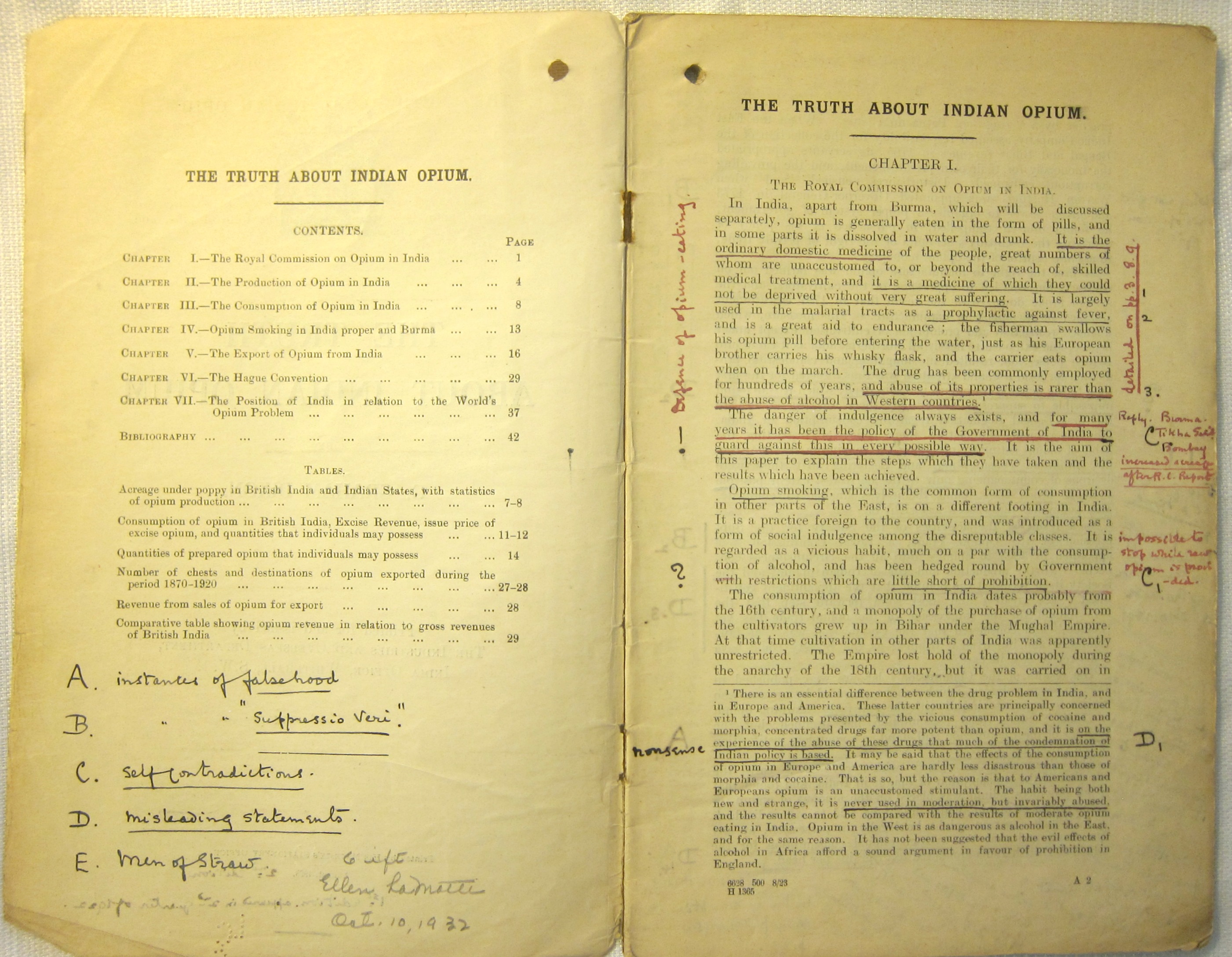
The notes were provocative, insightful, incisive. My copy came from the Library of Congress, and I could see on the back of the title that the pamphlet was given to the LC by “Ellen LaMotte” in 1932. Ms. LaMotte, born in 1870, was quite a person: among other things she was a nurse who was among the first to U.S. Citizens to volunteer for battlefield duty in WWI, arriving there in 1915 (at age 45). Her experiences were wide and traumatic, and she expanded her diary into a book The Backwash of War, The Human Wreckage of the Battlefield as Witnessed by an American Hospital Nurse.
that was published in 1915, though evidently it was too truthful and brutal a story for general consumption and was therefore lifted from publication, and didn’t see republication until 1932. There’s much in this book to recommend itself, from an overall sense of this nurse’s view of the war to the details of the minute. (For the later, I found out from Ms. LaMotte that in her experience lightning speed for the delivery of a severely injured man at the front line to an aid station where he could receive proper treatment for a major wound was six hours.)
She went on to become an expert in the opium and drug problem then existent in England, publishing six books on the topic during the 1920’s and 1930’s. I assume that this was a source for a part of her work, and certainly explains the deep insight and knowledge evident in her annotations.
She did not think much of this work by Graham Dixon, who it seems to make the argument that alcohol and cigarettes were a more pressing problem than opium—LaMotte did not agree, and pressed her opinions, questioning the unattributed quotations and statistics and assumptions and conclusions. As annotated/marginalia goes, this is a tour de force.
Notes:
LaMotte’s WWI book is available in full text online at Project Gutenberg http://www.gutenberg.org/files/26884/26884-h/26884-h.htm
Also see: Hazel Hutchinson, The War That Used Up Words: American Writers and the First World War. New Haven, CT: Yale University Press, 2015.