JF Ptak Science Books Quick Post
This aircraft not only moved, but flew:
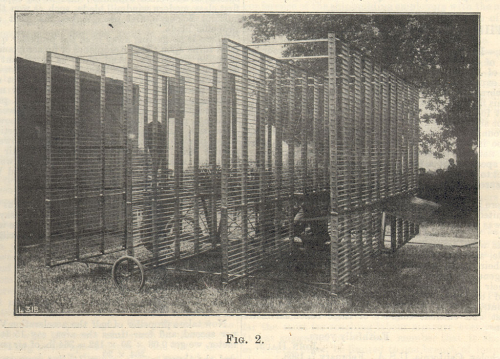
Source: the 1907 Philips flying machine, https://en.wikipedia.org/wiki/Horatio_Frederick_Phillips
Offhand it seems to be the winner of an award for the design of the most unflyable-looking aircraft award where the aircraft had some chance of actually lifting off and was not made of cement and hope.
The design belongs to Horatio Philips (1845-1924), a jolly-looking pioneer whose belief in multiple layers of lifting surfaces working together brought him to this aircraft, which in 1907 flew about 150m, and became the first powered aircraft created by a Brit to fly in England. Evidently the 200-wing aircraft powered by a 22-hp engine was basically not-controllable, but it did fly, and Philips experiments and practices (if not the aircraft themselves) and particularly for airfoil research were of some importance in the history of aviation.