JF Ptak Science Books Post 2467
Pueblo Bonito–built between 840-1100 SCE– is a ruin of the ancestral Puebloan peoples and is located in northern New Mexico. It is situated on a small rise in the long Chaco Canyon, and I’d say that viewing the ruins from photos or maps doesn’t convey the grandeur as you approach it walking up the slight rise–it really does sit prettily in its environment, and is very impressive. (The ruins are about 50 miles east of Canyon de Chelly and about the same distance from the Four Corners.)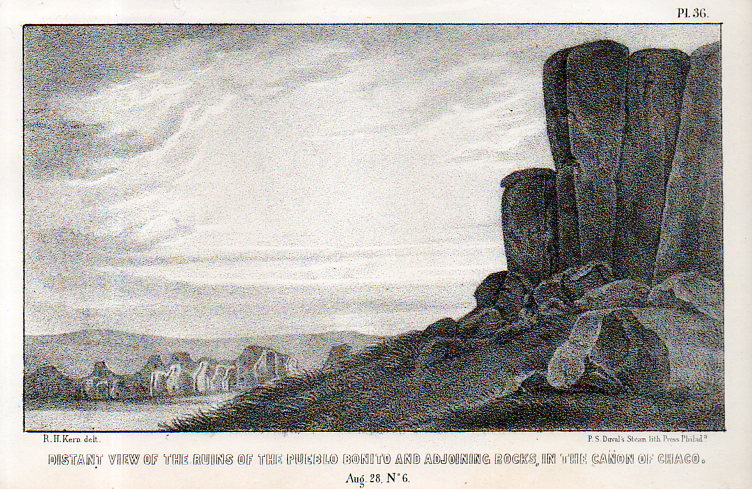
This image–the first ever published of the structure?–appeared via the military and government exploring expedition and published in the report Journal of a military reconnaissance, from Santa Fé, New Mexico, to the Navajo country, by J.H. Simpson. Simpson was in charge of the exploring party, assisted by the guides Sandoval (Navajo), Hosta (Jemez Pueblo), and Carravahal (Mexico)1.
The artwork is by Richard Kern (d. 1853) who along with his brother Edward (1822/3-1863) led extraordinary and near Zelig-like lives of exploration, and were among the first to provide accurate, scientific visual reports of the environment, architecture, and people in the Arizona, New Mexico, and southern Colorado areas (and especially in the Four Corners region).
- Full text of the report can be found here: https://archive.org/details/journalamilitar00simpgoog
This is one of the many images made for the work, undertaken under great duress at times, and under severe hardships, by Richard and Edward Kern during this reconnaissance of the Navajo lands of the Southwest. The remarkable thing is not only how they survived, but also how truthful the published images are to the original drawings.
And the original black+white wash, found int eh collections of the Academy of Natural Science of Philadelphia:
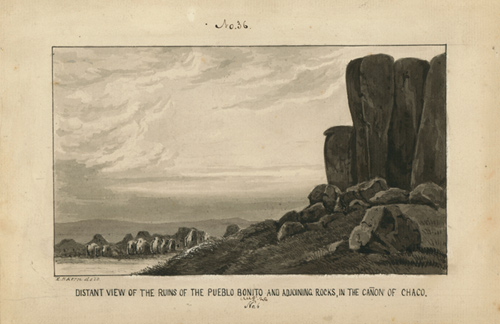
[Source: Academy of Natural Sciences, Philadelphia, Everett Sale Library http://www.ansp.org/research/library/archives/0100-0199/kern146/]
And the text associated with the drawing, pp 40-42: