JF Ptak Science Books Quick Post
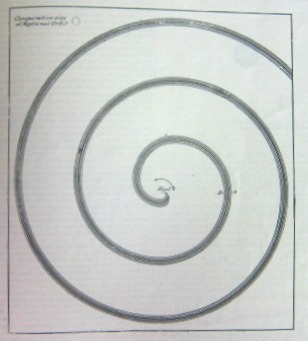 Here we have another example of Found-Art in a scientific paper–this one looking Duchampian (again, especially if it were spiraling), or perhaps Dadaist, or Futurist. In actuality it is something both “harder and simpler if you think about it) (referencing not-Duchamp) and “harder but simpler if you don’t think about it” (referencing not-Yogi Berra): it is an article meant for the general masses of pop science reading in the Scientific American Supplement for September 11, 1886 and it is trying to make sense of the famous and mysterious behavior of the star Algol. This is star B Persei, in Perseus, the constellation’s second brightest star, and as it would turn out it is an eclipsing binary star. The image below tries to make sense of the behavior of the star–the observation of which was published in 1671 (though the true first accounts may well be ancient.) The variability of the star would only be confirmed 60 years later, and then 50 years later until the remarkable John Goodricke determined the periodicity of the star.