JF Ptak Science Books Quick Post Overall Post 5121
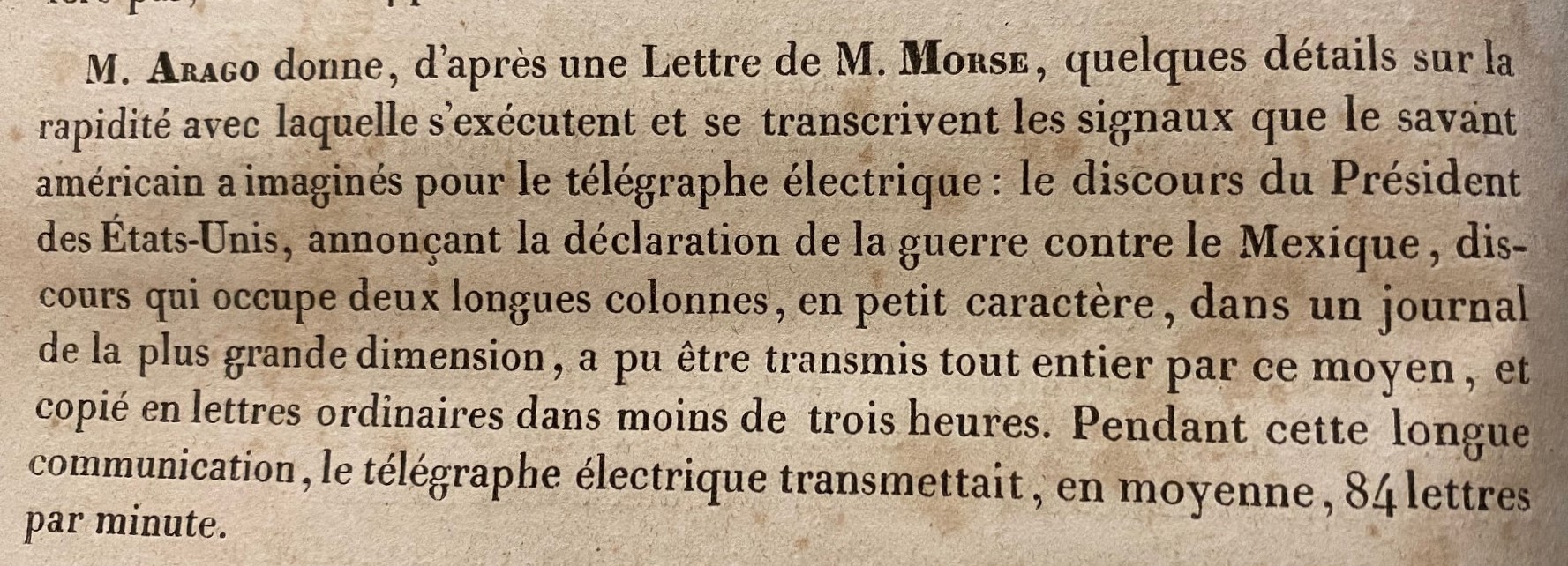
Here’s probably an obscure bit on the coming of a very large change in journalism and the dispersion of information: a short announcement of the use of the electric telegraph in the rapid reporting of war news. The notice appeared in the Compte Rendu des Seances de l’Academie des Sciences 15 June 1846 (volume 22 no. 24, p 1004), and it is communicated to the Academie by Francois Arago, and runs for only about 100 words. Arago mentions how quick the operation of the electric telegraph was (citing our Mr. Morse), basically drawing attention to this new mode of data dispersal. He uses the example of the speech of the U.S. President (James Polk) on the new Mexican-American War, which was begun 25 April 1846, just weeks earlier than this report was published. Arago doesn’t mention the very dramatic spread of telegraphy lines and far-reaching nodes that blossomed in the U.S. Earlier in 1846…maybe he didn’t know of them, yet. What he does talk about is the astonishing bit of the Polk’s war address being disseminated so quickly—evidently the whole thing was transcribed and telegraphed in three hours. That seems today to be quite glacial, but this was done at a time when news was coming by packet steamer, Pony Express, and the U.S. Post by horse and wagon. To be suddenly able to disseminate news from Washington DC to Richmond and Albany and NYC and Boston all in a matter of hours from Morse to text was really quite astonishing.