JF Ptak Science Books Quick Post
- This is a slight deviation from the Ships in the Skyline series: the first difference is that the “ship” is an airship; the second is that in the next example there is no “ship” at all, though the enormous sacks of agricultural goods pictured there are measured against the Metropolitan Life Tower, the standard of measurement used in the first example.
This is another segment in the series of measuring newly-constructed monster ships against familiar architectural objects–like the Woolworth Building, Eiffel Tower, the Hoover Dam, and such–to use for a sense of perspective in judging the size of the naval wonders. In this example, found in Scientific American (June 26, 1909) reckons another sort of ship–an airship–and in this case, it is the Zeppelin ZII being measured against the newly familiar Metropolitan Life Tower, which was just finished that year. (Unfortunately, the Zeppelin met with disaster, crashing jus tweeks prior to the publication of this image.) The Met Life building stood 700′ feet tall and was the world’s tallest from 1909-1913, when it was superseded by the Woolworth Building. (Interestingly the Met Life was patterned after the companie of St. Mark’s Basilica in Venice (323′) which at about a thousand years old was patterned after the older-still St. Mercuriale.) The Zeppelin was 436′ long, which was an enormous flying machine in 1909, and more than 60% of the length of the laid-down tallest skyscraper.
Here’s a variation on this measured comparison, an image category that I’m pretty sure I’ve not seen before–laying down a tall building:
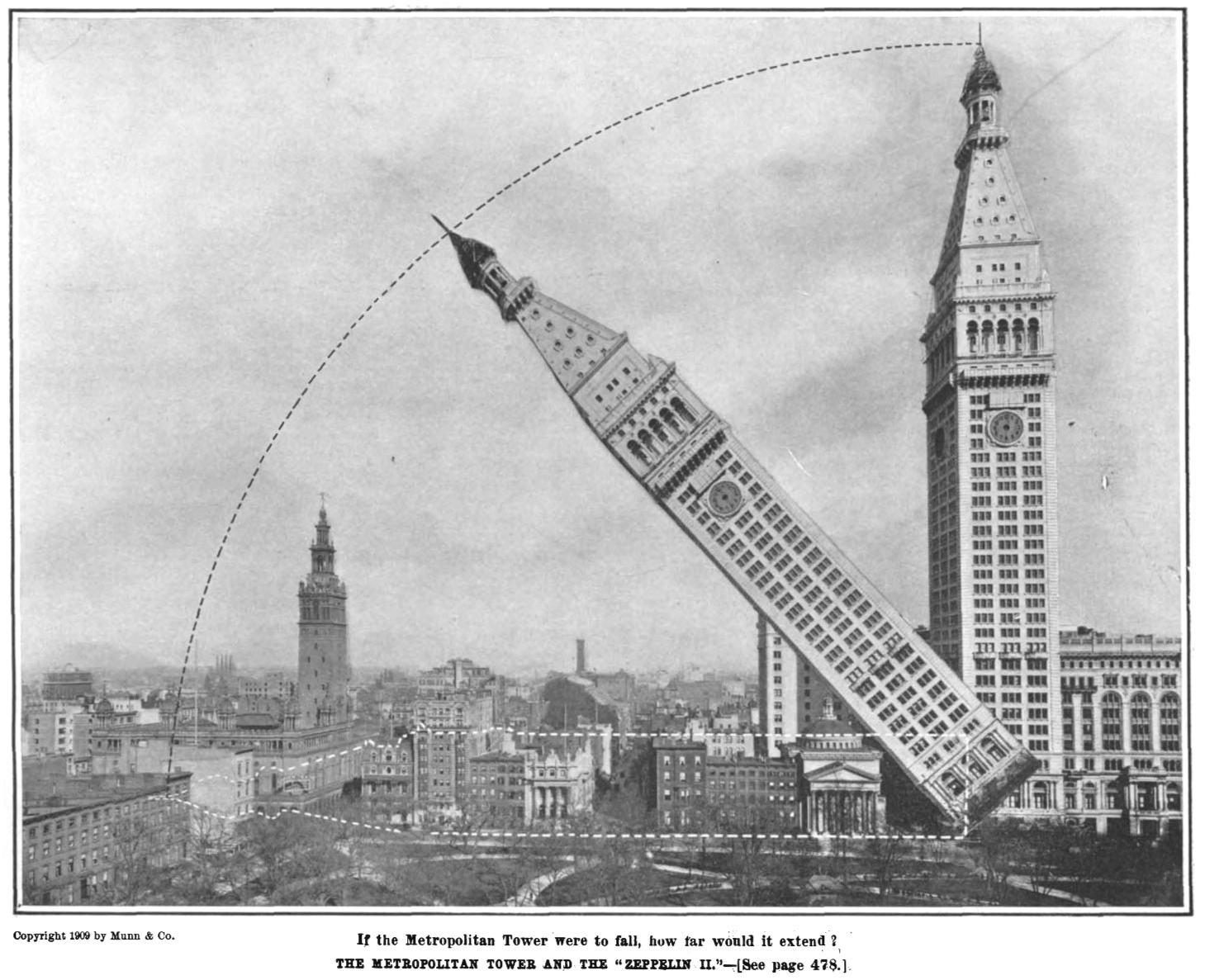
This is a detail from the front page:
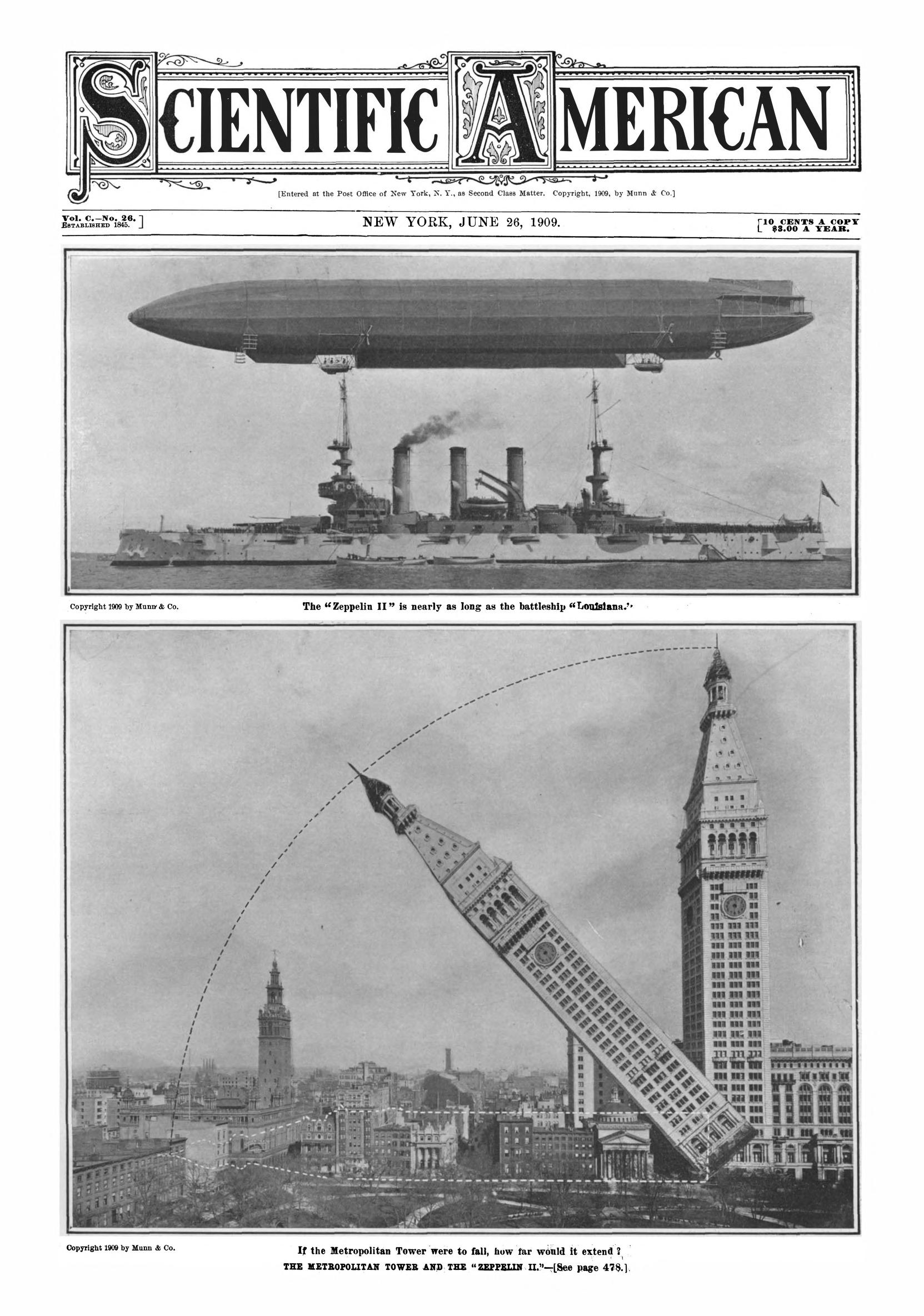 In any event, this is a terrific image.
And as long as we’re at it, here’s another data visualization from the same year of Scientific American, this one again using the Met Tower to compare the amount of barley, flaxseed, rye, buckwheat, potatoes, wheat, oats, and corn produced in the U.S., the output collected in gargantuan city-crushing burlap sacks and 1700′-tall corn cobs:
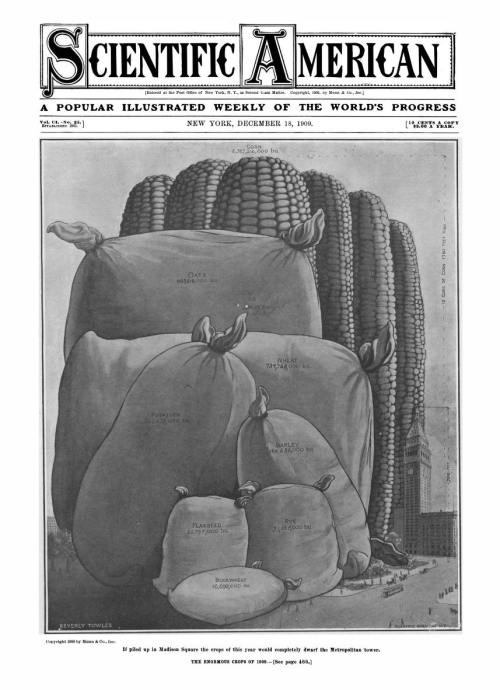
The image was irresistible!