JF Ptak Science Books Quick Post Overall Post 5125
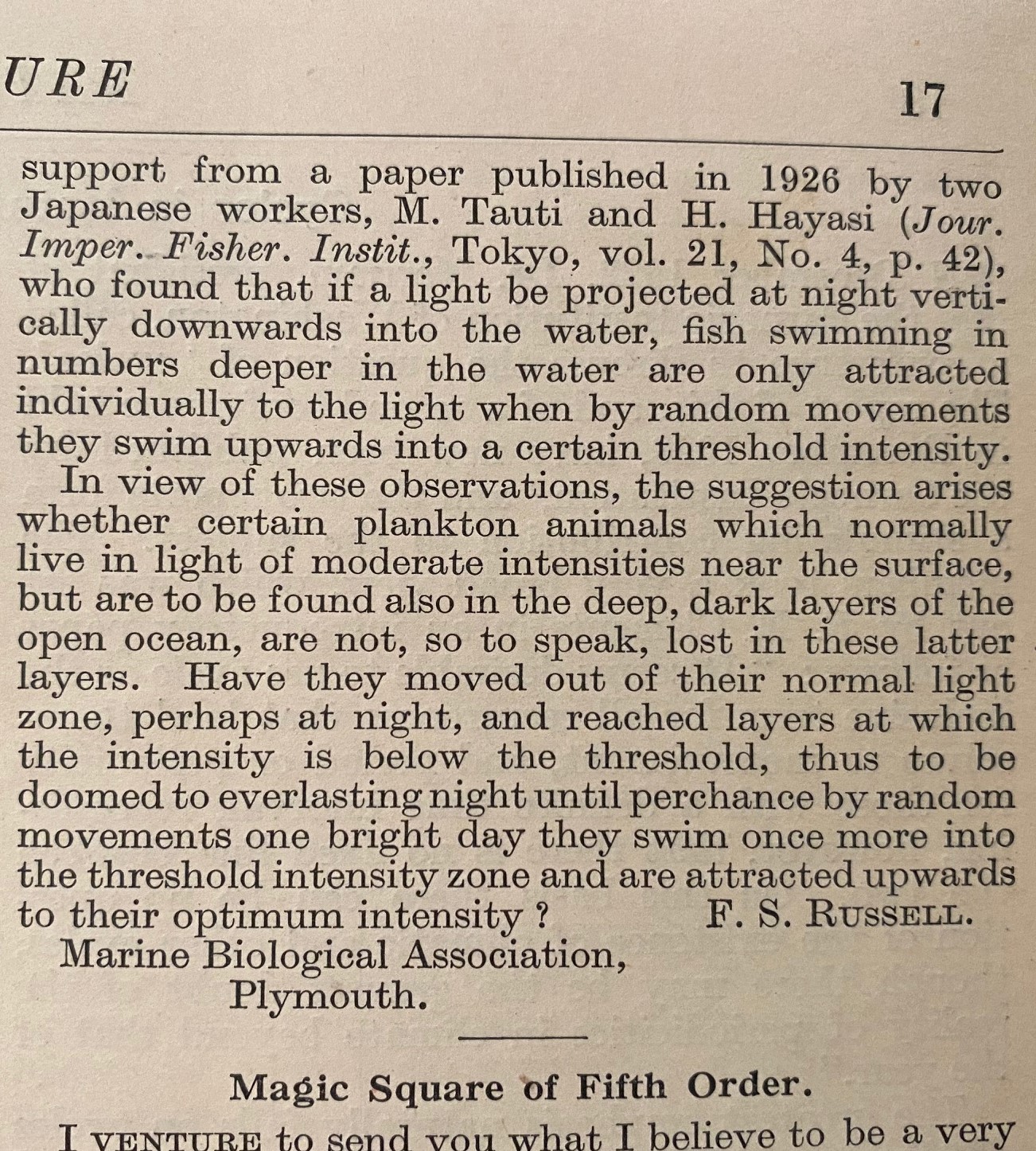
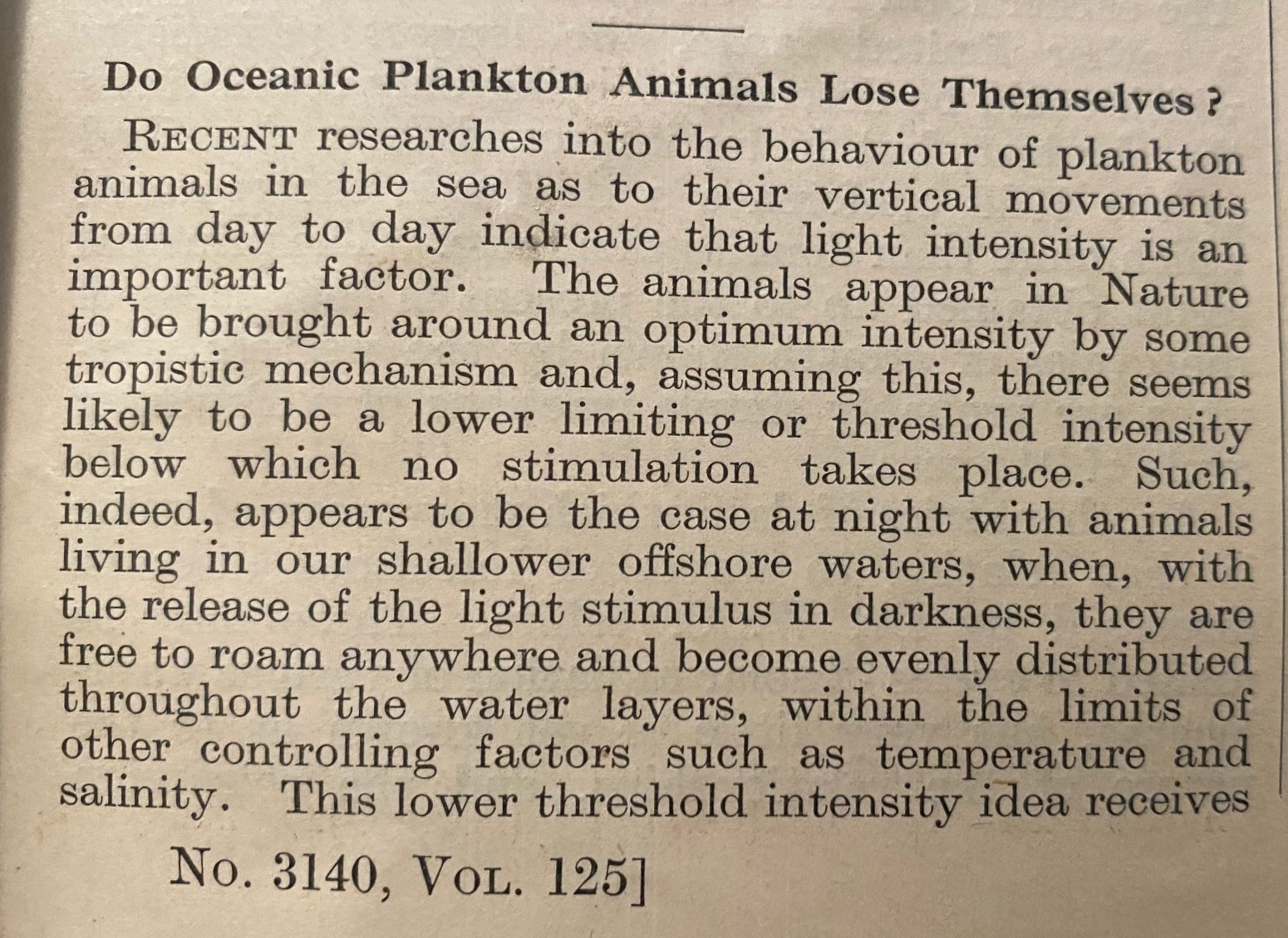 Over on my blog I’ve made a number of posts on “Found Poetry”–phrases and constructions of interesting structural images that when removed from a narrative form and subjected to a different display find a sort of light art form in themselves. The phrases and sentence are in their original order—spacing and delineation have changed a bit to focus their attractiveness. There have been posts on “Found Poetry” in the (sometimes very extended) titles of Renaissance books, recipes and instructions on cooking dainty sardines, a disintegrating machine from 1877, descriptions of clouds from 1726, and well, you get the picture. “Found art is where you don’t find it”, as M. Duchamp didn’t say—sometimes the found poetry is pretty obvious, sometimes not. Today’s entry has a terrific title, though the text lets us down a little, but then closes up very strong in the last paragraph. And so, from Nature, 4 January 1930, volume 125, no. 3140, the last sentences of the last paragraph:
“Do Ocean Plankton Animals Lose Themselves?
Have they moved out of their normal light,
and reached layers at which the intensity
is below
the threshold, thus to be doomed
to everlasting night until perchance by random movements
one bright day
they may swim once more
into the threshold intensity zone
and attracted upwards
to their optimum intensity?”
–F.S. Russell, Marine Biological Association, Plymouth