JF Ptak Science Books LLC Post 600 Blog Bookstore
There are many histories of photography in wartime: early images show cavalry standing at the
ready, troops marching, piles of munitions, heaps of food; later on (as late as
WWI) come actual scenes during the course of battle. War photography changes forever beginning in
the Spanish Civil War, and then of course WWII.
Korea,
and then into the more recent past elevates the camera to being a third-person
and fifth column.
London News I experienced a creeping realization of a different sort of
perspective in war photography: turning
the camera to look behind the battle.
Turning the camera exactly around, away from the action, hasn’t a good
history in itself. There are some great
examples: when the Golden Spike was
driven at Promontory Point in 1869 someone had the foresight to look the other
way and make a photo—it shows a vast plain, a long double ribbon of rail, a
long series of telephone poles receding into the horizon, and one man. It is
also a scene that looks pretty much the same today, if you took away the small
dedication center that is there. That
was the reality of the day, not all of those RR workers gathered around the two
hot locomotives, the cleanest of them toasting each other and the camera. (If
you look closely you can find some Chinese laborers in among the crowd and also
occasional bits of Confederate uniforms.)
Elsewhere in this blog I told the story of Ed Clark, the LIFE
magazine photographer who wheeled his camera away from where the hundreds of
other cameras were recording the removal of Franklin Roosevelt’s casket from
perhaps the greatest photograph of the FDR years.
But it is a different sort of turn-around that struck me for WWI. These are the photographs of the liminal
spaces after the fight, the clean up, the gathering of spent ammo, the cleaning
of the clothing, the care of the soldiers, the rehabilitation. And I’m not talking
about the Matthew Brady after-battle battlefield photograph style. What I’m referring to is all of the “little”
things that happen when the battles aren’t being fought and the troops weren’t
on the move. There some images for thing that appeared in Harper’s Weekly and
Frank Leslie and so on during the U.S. Civil War, but so far as I can tell the
vast majority of them are drawings.
Having looked through popular illustrated magazines that covered the
Franco-Prussian War, the Spanish American War and all of the conflicts
in-between, I just don’t have much of a sense at all that this life was
recorded very well photographically.
I can understand this—there’s not that m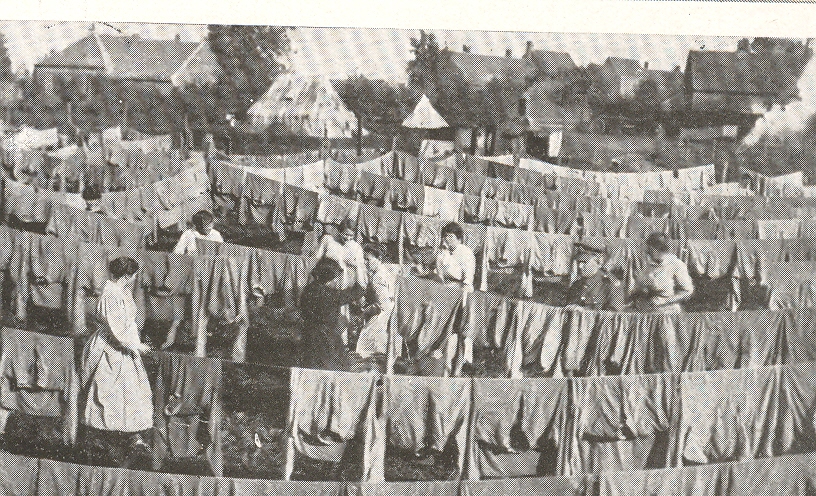 uch glory in sandbagging Red Cross
stations, or hauling away dead horses by the thousands, or cooking thousands of
loaves of bread in primitive conditions; they certainly aren’t a good case for
a hearts-and-minds campaign. The camera
has enough power to go ‘round, giving and taking, usually at the same
time.
But to my brain these photographs really come into being in the second half
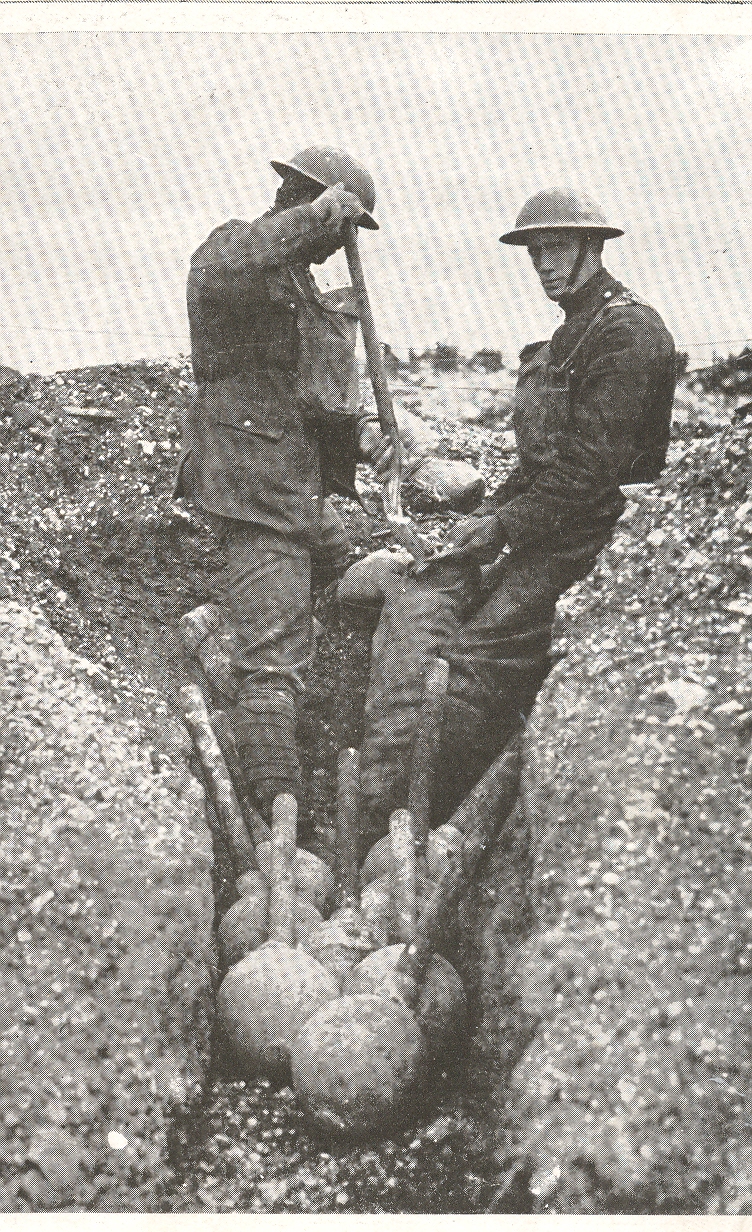
of WWI., and they tell an other, integral, more human story of that same war. The first image (above) shows two soldiers
cleaning up cartridge cases after a fight—when you look closely at the photo
you see that the place is littered with those cases. I suspect that there were hundreds of
millions of these cases ejected from rifles.
Billions, probably. I wonder how
long it would take a thousand soldiers to shovel a billion shells into canvas
bags? The picture reveals a very deep
image of the ways of war at the most basic level. 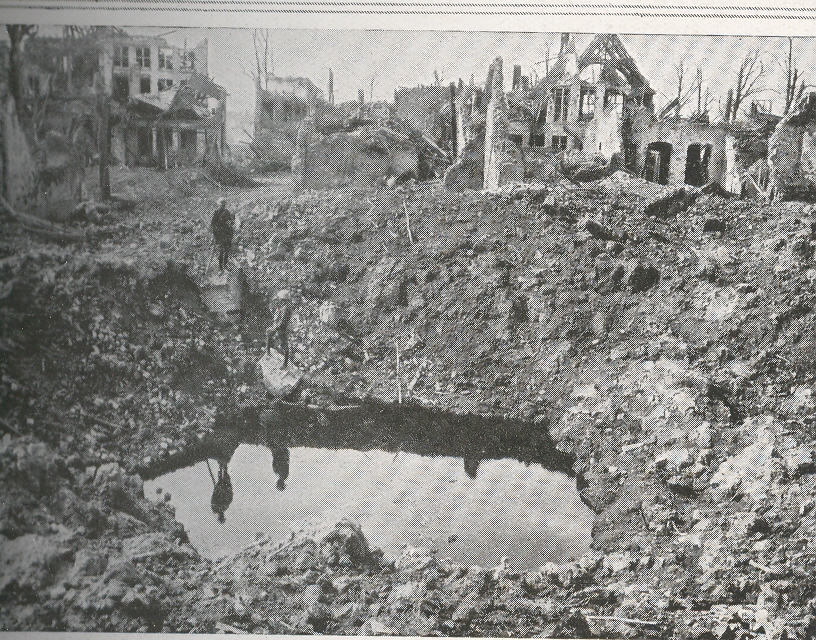
The next photo is a “simple” image of clothing out for a dry—except of
course that the clothing lines go on and on, railroad tracks into the sun,
tended by hundreds of women, getting the shirts ready for the “men in the trenches”, many of whom won’t need those shirts by the
end of the month.
Many of these men and women wound up being consumed–this photo at right shows one of the ways how that happened. It is an extraordinary crater some 75 yards in circumference created by a massive shell. It is a massive image–brutal, lonely, and speaking the quiet of the end. And it was a different sort of image that people were used to seeing in war reporting.
These three photos appeared on only three successive pages of the 15 October 1917 issue of the Illustrated London News.