JF Ptak Science Books LLC Post 732 Blog Bookstore
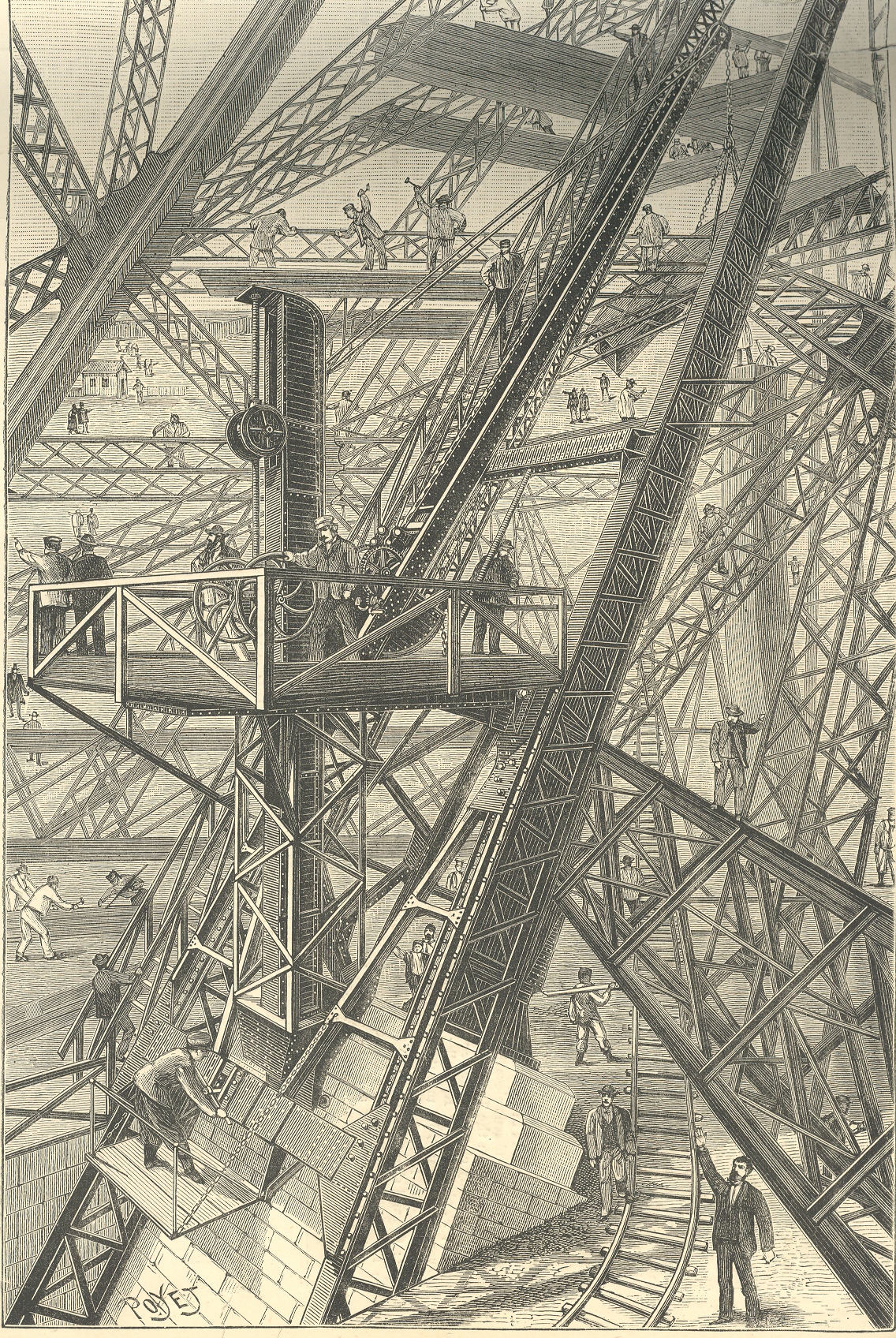
This image of the building of the foundation of the
Scientific American in 1888, appears both orderly and chaotic, a dizzy miasma
of activity and a confusion of right angles.
(My six-year-old Tess says that it looks “worky”.) Part of the issue is the fine quality of the
jumble, with 90-degree angles everywhere, which confuses the eye. Another part is the perspective, which is odd
in places, and which takes the whole of it and makes the print into a near
Escher-like experience of impossibility.
IT is this spatial confusion which makes this print so uncomfortable to
me. For instance it seems that the observer’s point of view may be in several
different positions, depending
on where you resolve to fix our eye: if you choose
the worker’s shed in the upper left corner as a reference point, the height of
you viewpoint will be different than if you used, say the first pointing man in
the foreground as reference. Also that
pointing man sands next to a little rail track that seems to hoist itself into
the air before disappearing. There’s
much else, but these examples will do for present.
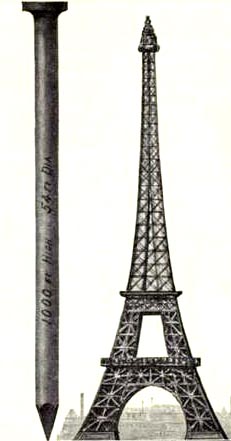
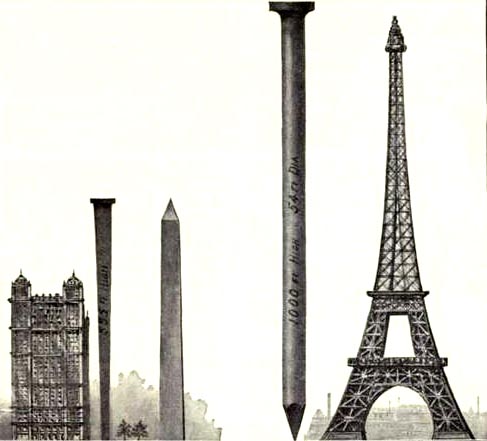
These other images are the first nail & Eiffel Tower images I’ve ever seen. The explanation is simple enough, though I think I’d much rather not know.
This image and data is from the generally useful data and
interesting if not useless info Scientific
American Reference Book. A Manual for the Office, Household and Shop,
by Albert A. Hopkins, and published in 1903. It gloriously depicts the annual American finish nail production in terms of Eiffel Towers: there were evidently 10-million 100-pound kegs of these nails made in 1902; if they were made into one big nail, it would be this one–52′ in diameter and 1000 feet tall. I guess another useful visual bit would be the representation of the number of new houses built/kegs of nails, which would make this image a little more meaningful; though, perhaps, we may not be going for meaning, here, necessarily.