JF Ptak Science Books LLC Post 772 Blog Bookstore
My friend Jeff Donlan sent me a link to a site in which librarians-on-coffee-breaks
were busily renaming classic book titles as they might be re-titled today. For
example, we have:
Old: Richard III ;
New: R3: Judgment Day
Old: Frankenstein, or
The Modern Prometheus; New: Frankenstein:
Wrath of the Supercorpse
Old: Das Kapital;
New: Labor Value: How Today’s Companies
Get the Most out of Their Workforce.
You get the picture. And so it was with this in mind that I
came across this unusual woodcut in the delightful publication called The Mirrour of Literature, Amusement and
Instruction, published in London on 25 January, 1840. There are all
manner of fringe-interesting and ephemeral materials here—necessarily
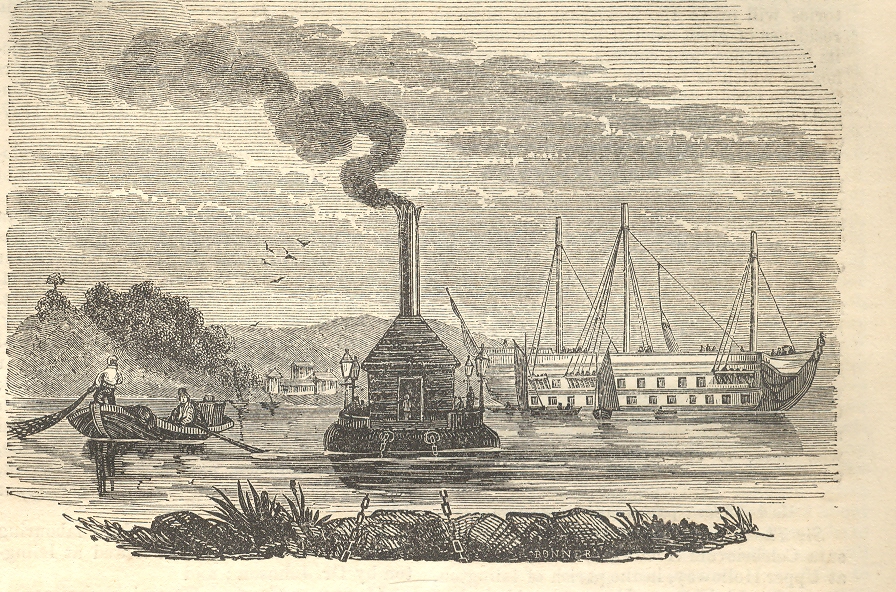
unexpected, as in this short article about “The Steam Floating Bridge”
(of Torpoint, Cornwall to Devonport, Devonshire crossing the Hamoaze).
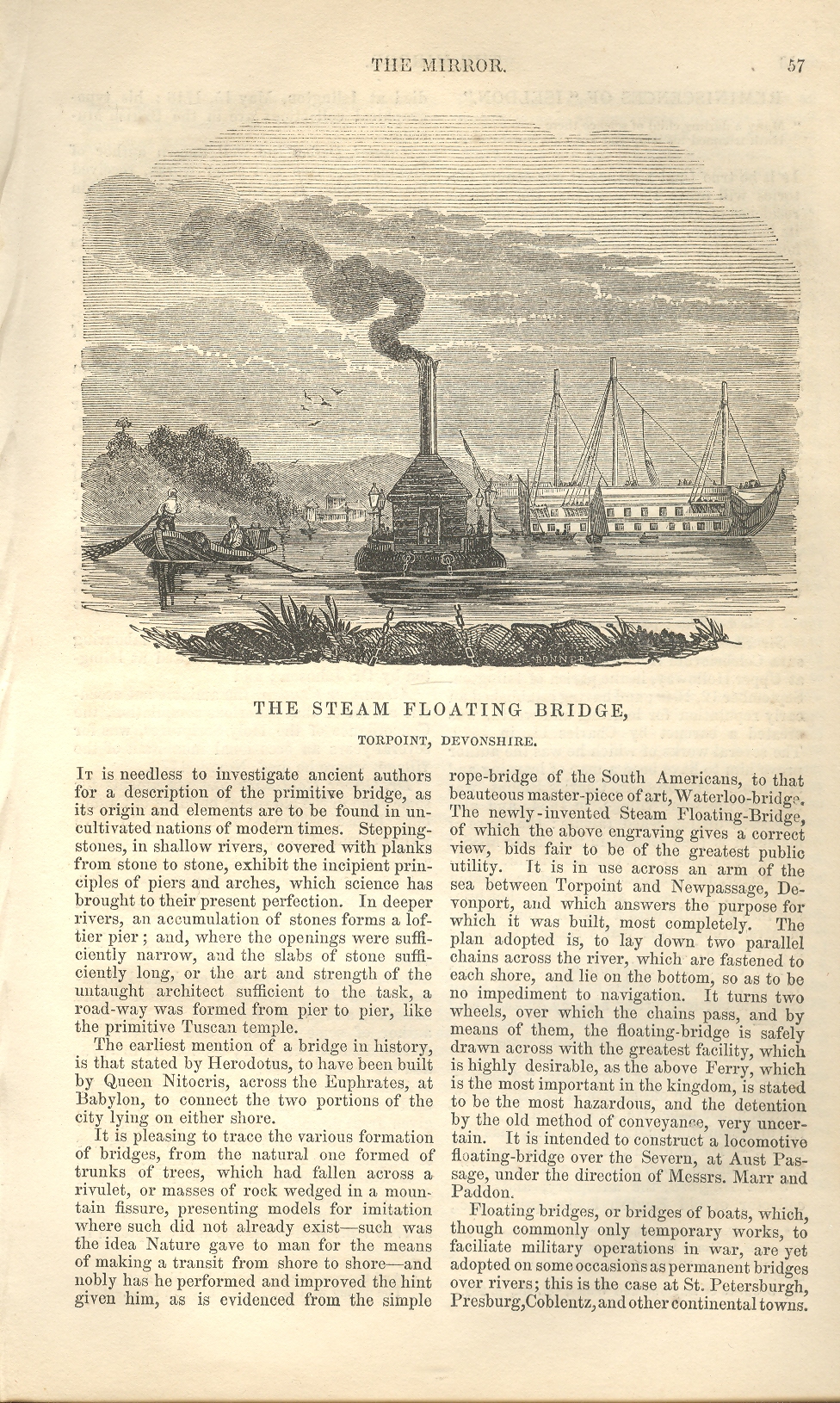
At first glance
this looked like a remarkable modernized way of reformulating the word and concept
for “boat” or “ferry”. (What audacity!—though perhaps it was someone trying to
evade patent protection by calling a boat “a bridge”, leading an entirely new
wave of renamed inventions into a shadow industrial revolution…) But luck on this was only half-full—on closer
inspection (and of course before actually reading the article, set aside like
so many instructional manuals) you can see the “bridge” part of the
steam-driven barge: two chains leading
from the land, then under water, then up again on the bow/stern of the business
end of the barge, then down again, and then on to the other shore. This all does sound quite like an old common
ferry to me, but if the good Cornish people felt it to be a bridge, then a
bridge it is.
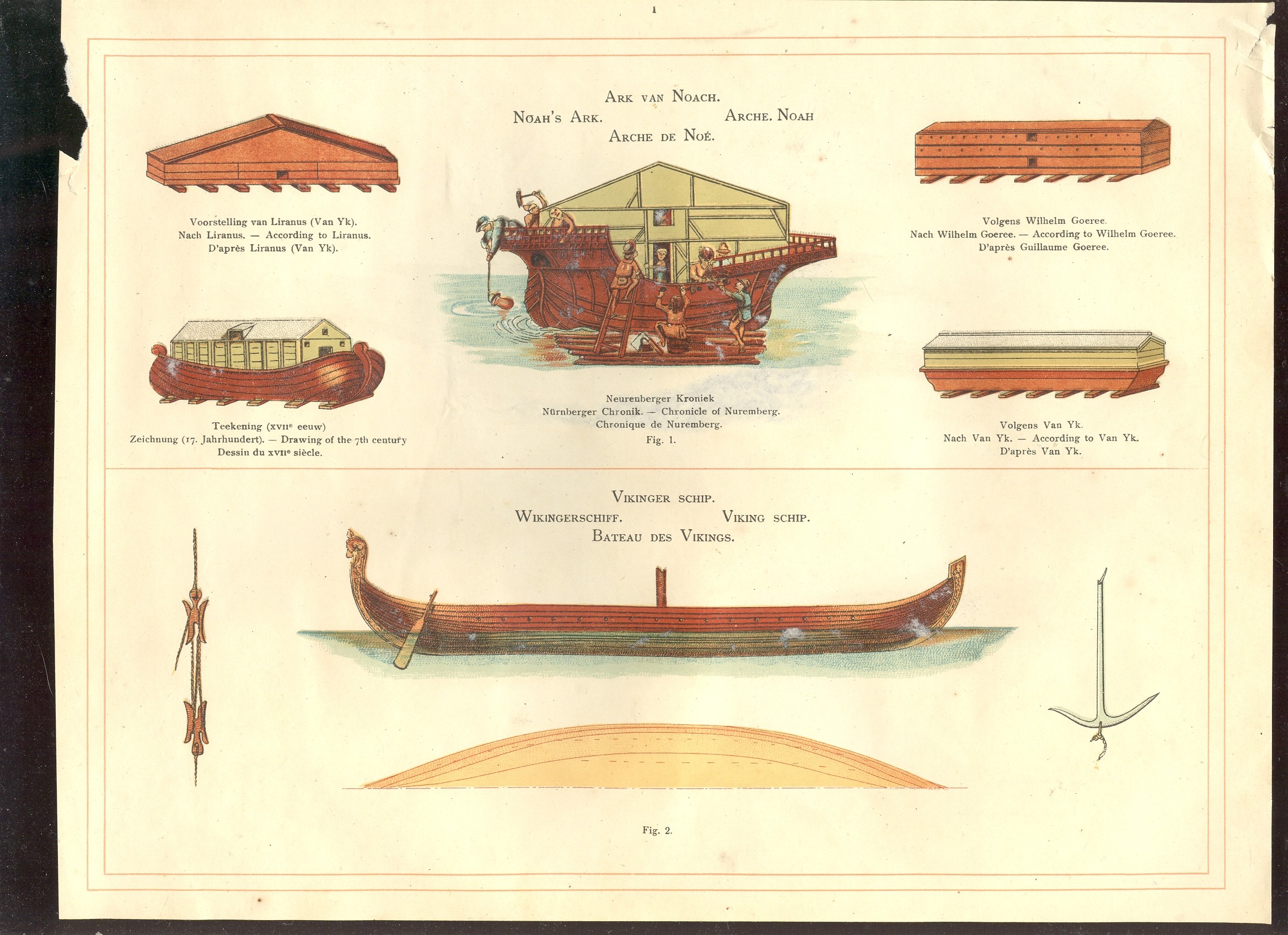
Loosely connected to this floating “bridge” is the so-called
floating “land” used by associates of the mystical Noah to help in the
last-moment construction of the great ark.
The activity on board is a little confusing to me, as is the
room-enough-for-three bit of floating “land”, which I would hazard to call a “raft”.
I
should point out that the guy with the hammer-like tool is working on the roof
and not the head of the person in the flattened foreground, though this would
make for a better story, taking a step towards an ancient Murder on the Orient Express.
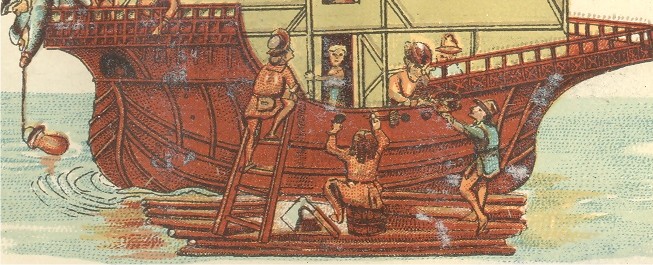
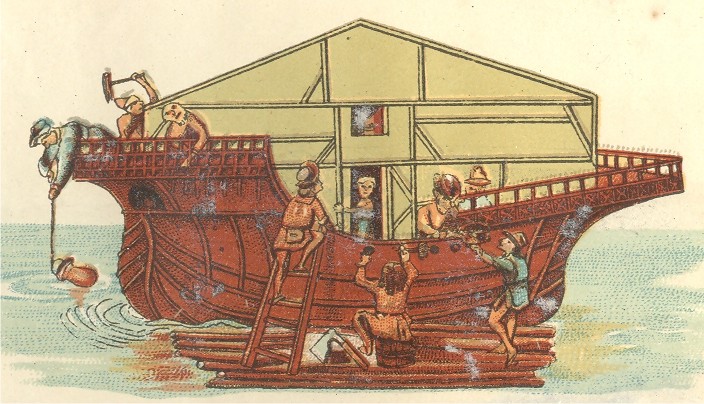
I wonder also about the guy collecting water with the jar, as it seems
that if he waited for just a little bit longer the water would be coming to
him. (This image is a 19th-century republication of the scene from the 1493 Nuremberg Chronicle.)
**A longer and fuller description of the “bridge” is found in
the Saturday Magazine for 1842, here.